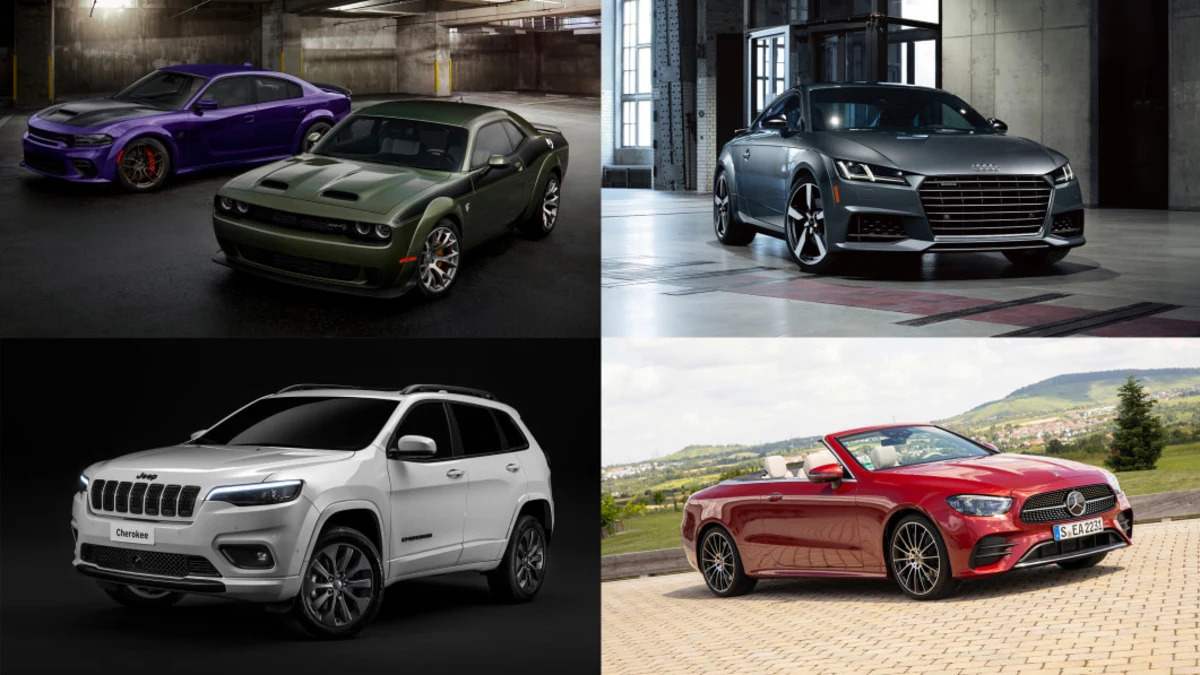


The automotive sales sector is in a major state of flux as consumers continue to run from SUVs and pickup trucks into smaller, more fuel efficient cars. One manufacturer hit especially hard by this transition is Chrysler, a company that recently posted the worst fleet average fuel economy numbers of all major automakers in the U.S. due to its truck-heavy lineup. Still, the automaker has built up a large supply of Chrysler, Dodge and Jeep utility vehicles that they have got to get off dealer lots somehow. To ease consumers into the fuel-thirsy utes, Chrysler has introduced new incentives of zero-percent financing for 72 months on the 2008 Dodge Durango, Chrysler Aspen and Jeep Grand Cherokee and Commander.
While the lack of any financing charges will certainly impact the bottom line, it is nothing compared to the losses the automaker has been hit with over its past lease deals. In fact, truck and SUV residuals are so bad these days that Chrysler Financial has gone so far as to completely cut leasing out of its available portfolio starting August 1. The financing deals announced today are scheduled to continue through Thursday, July 31.
Chrysler LLC's financial division will no longer be offering leases to U.S. consumers on Chrysler products as of August 1st. The automaker will be holding a conference call with dealers later today to go over the changes and the reasons behind the decisions, but Chrysler spokesperson, Bill Porter, told Reuters "We are shifting our strategy to focus on retail products."
The move comes amidst Chrysler's attempt to get 20 banks to renew a $30 billion credit facility for the automaker's financial arm. The rise in borrowing costs next month will make it more difficult for Chrysler to offer low-interest loans and could spell further disasters on the sales front.
Normally the privately owned Chrysler LLC is under no obligation to reveal its financial performance to Wall Street, but yesterday the Cerberus-owned automaker was forced to show a few pages from its accounting books thanks to one of its largest stakeholders and former owner, Daimler AG. The German automaker revealed that in the last six months, its 19.9% stake in Chrysler has cost it $585 million. To clarify Daimler's numbers, Chrysler also revealed yesterday that the loss being attributed to it, all of which was incurred in Daimler's first fiscal quarter of the year, is around 65 million euro, or $103 million, using American accounting standards. Perhaps realizing that all analysts had to do was multiply Daimler's loss by five to arrive at Chrysler's total loss for the last quarter, the automaker just came right out and said it lost about $515 million. While a mere pittance to the $8.7 billion worth of red ink Ford spilled during Q2, it was enough to drag down Daimler's numbers halfway around the world.
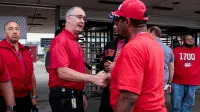
Chrysler is losing money by the truck-load, and its vehicles aren't selling, so common sense dictates that team Pentastar was going to start making cuts soon. That time is now, when Chrysler notified workers that it would be cutting 1,000 white collar workers. Chrysler spokesman David Elshoff told employees that the company would achieve its cut target through retirements, attrition, and buyouts, which means people won't be handed boxes and receive security escorts just yet. Chrysler management is making the cuts with the belief that the current economic situation here in the States isn't going to improve any time soon. A quick look at the Pentastar's car lineup shows the privately owned company would be in trouble even if the economy had a rosy outlook. No timetable was given for the white collar cutback.
After nearly eight years of getting little or no attention from the White House, it seems as though Detroit's automakers will be a major focus the 2008 Election. With the economy looking worse by the day, lawmakers in Washington have been kicking around the idea of a second economic stimulus package to get people shopping again, and Mowtown's lawmakers want in on the money. Michigan's two Democratic senators are attempting to use the prospect of such a bill to include federally-backed loans to help automakers and suppliers build new factories and engineer new models. The $4B would be used to offset the costs associated with the Treasury Department giving automakers $25B in loans at a discounted rate. Automakers have been against such a loan in the past, but with worsening conditions and tighter lending practices the idea is likely to sound much more exciting this time around.
Presumed Democratic Presidential candidate Barack Obama told the UAW in a letter that he supports the $4B in federal aid, stating that he would "provide real solutions necessary to help this industry compete and win in the global economy." Obama also promised tax breaks for consumers that purchase ultra fuel efficient vehicles and tax credits for automakers as well. Presumed Republican nominee John McCain opposes the idea of federally backed loans, but he does support tax breaks to those that purchase fuel efficient vehicles and a $300M in prize money for electric battery powered vehicles
In the wake of GM's Tuesday press conference detailing its plans to have enough cash on hand through 2009, politicians have been eager to voice their thoughts regarding the possibility of a government bailout. President Bush gave the possibility a strong no, but the two guys in line for his job have taken a different route.
Senator Obama has said that he supports automaker's attempts to restructure without outside help, but says he's willing to work with the companies on fuel saving tech. Republican Senator John McCain took an even stronger pro-automaker stance, saying "if it looks like it is approaching that, everyone has to consider every option." The Arizona Senator and presumed Republican nominee has stated in the past that he wouldn't support a buyout, but would instead provide tax breaks and infrastructure support to create more fuel efficient vehicles. McCain's "every option" comment may not sit well with his party, but it could sound good to Detroit automakers. McCain is visiting the GM tech center today. Both presidential candidates are working hard to woo Michigan voters, which will be a key state to win in the November election. Even though GM has stated it isn't looking for a handout, Michigan residents would love to know that the automaker would get one if it really needed it.
Gas prices are up, which has led to increased interest in midsizers, more specifically, the midsize offerings from Chrysler's competition. The Sebring has taken a 30 percent sales whack this year, mostly due to reduced fleet sales. The Avenger's year has been a little brighter, posting a two-percent gain. Contrast that with everyone else; Malibu, Fusion, and Accord are up ten percent or more this year; and therein lies Chrysler's problem. Ditching Chrysler's outmoded V6 for the four-cylinder powertrain will deliver more competitive fuel economy, if you can stand the NVH increase.
Top heavy with trucks and taking fire over the Avenger and Sebring's interior quality and efficiency, Chrysler's seriously looking at re-jiggering the sedan twins, killing the top R/T and Limited trim levels and sliding some of the good stuff down to the SXT and Touring trim levels. The 3.5-liter V6 will be left out as standard equipment, though, as it doesn't post great fuel economy. The goodies that normally accompany the six, like heated leather power seats, dual exhausts, and 18 inch wheels, will end up as standard gear on the Sebring Touring and Avenger SXT. The prices of those models get bumped - 9.9 percent for the Dodge, now starting at $21,750, and 3.4 percent for the Sebring, offered for $21,670. What's up with the Avenger costing more than the Sebring? We don't know. The Journey is also being considered for this initiative, rumored to be called the "Fight Back" plan, and suppliers had until yesterday to give Chrysler a yes or no on feasibility.
We busted our humps getting to Podcast #100, and then promptly slacked off. Chris Shunk and Dan Roth make the effort this week to get Autoblog Podcast #101 out the door while the rest of the team remains difficult to corral. The usual banter about what's been in the Autoblog Garage starts us off before we dive headlong into the pithy GM news from earlier this week. Love it? Hate it? Send your comments, suggestions, or anything else to podcast at autoblog daht kahm. Thanks for listening!
SUBSCRIBE to the Autoblog Podcast in iTunes ADDthe Autoblog Podcast feed to your RSS aggregator DOWNLOAD the show now
Despite recent rumblings to the contrary, both General Motors and Chrysler claim that they will not be going bankrupt any time soon. Still, as much as the two American automakers would love to quell fears of unsustainable liquidity, questions remain, especially as the pickup market in the United States continues to dwindle. In a note sent out to dealers, Chrysler's Jim Press and Steven Landry say that the automaker will focus its efforts on small cars for the rest of this year, though the current pickings from the automaker's stable seem a bit slim. Chrysler is surely banking on its alliances to bolster its line of small car offerings, which could help to dampen the blow of lost truck profits -- somewhat. General Motors, for its part, has invested heavily into its upcoming Delta platform vehicles, which will include a compact Chevrolet-branded car known as the Cruze as well as the Chevy Volt electric vehicle.
[Source: Automotive News (Chrysler and GM) - Sub. Req.]
UPDATE: We've been informed that the 0% financing for 72 months offer is only available for the 2008 Dodge Ram. Financing details for the 2009 Dodge Ram will be announced at a later date.
The 2009 Dodge Ram appears to be a top-notch competitor in the light truck market, but that won't keep the soon-to-be-released model from feeling the pinch of high gas prices. Chrysler told dealers in a July 8th conference call that the new Ram would be launched with 0-percent financing... for 72 months. To put this into perspective, an all-new $30,000 vehicle with 7-percent financing would translate into a $511 per month car payment over 72 months. With 0-percent financing, the payment would be only $417, for a savings of nearly $7,000.
When the 2009 Dodge Ram was unveiled to the public at the Detroit Auto Show, it was looked at as a potential savior for the Pentastar. Only seven months later and two months before its scheduled to go on sale, It's going to be launched with the same financing as the slow-selling outgoing model. Ouch.