Click above for massive gallery of Fords from SEMA
What recession? Perhaps anticipating the euphoria that will follow the end to the seemingly decades-long Presidential race today, Ford decided to throw a huge tuner party at SEMA this year, and they invited ALL of their friends. The Ford booth always houses a bunch of tuned blue ovals, but they generally tend to be grouped around a central vehicle. Last year it was the Mustang. And the year before. And probably the year before that, too. But this year they gave the ol' spit shine to virtually every model in the lineup. Ford even threw in a Lincoln or two for good measure (above).
Click above for high-res gallery of the Euro-spec Ford Kuga
The grass, they say, is always greener on the other side of the fence. Though that often appears to be the case, most of the time it isn't. Dearborn's new "One Ford" initiative promises that we'll soon be able to stop gazing longingly across the ocean at what the company offers overseas buyers, as Ford endeavors to integrate its global product line-up into one cohesive range for every market around the world. In the case of the new Fiesta, that's a good thing. Less so with regards to the Kuga. Follow the jump to read why.
Conspiracy theorists have long insisted that automakers could push their vehicles to achieve better fuel economy, and as it turns out, they were right. Of course, it isn't as easy as flipping a magic MPG switch, but automakers are making incremental gains on vehicles even between redesigns. Techniques like changing gear ratios, lowering revs at highway speed and using lower rolling resistance tires are helping drive up efficiency a few percentage points at a time.
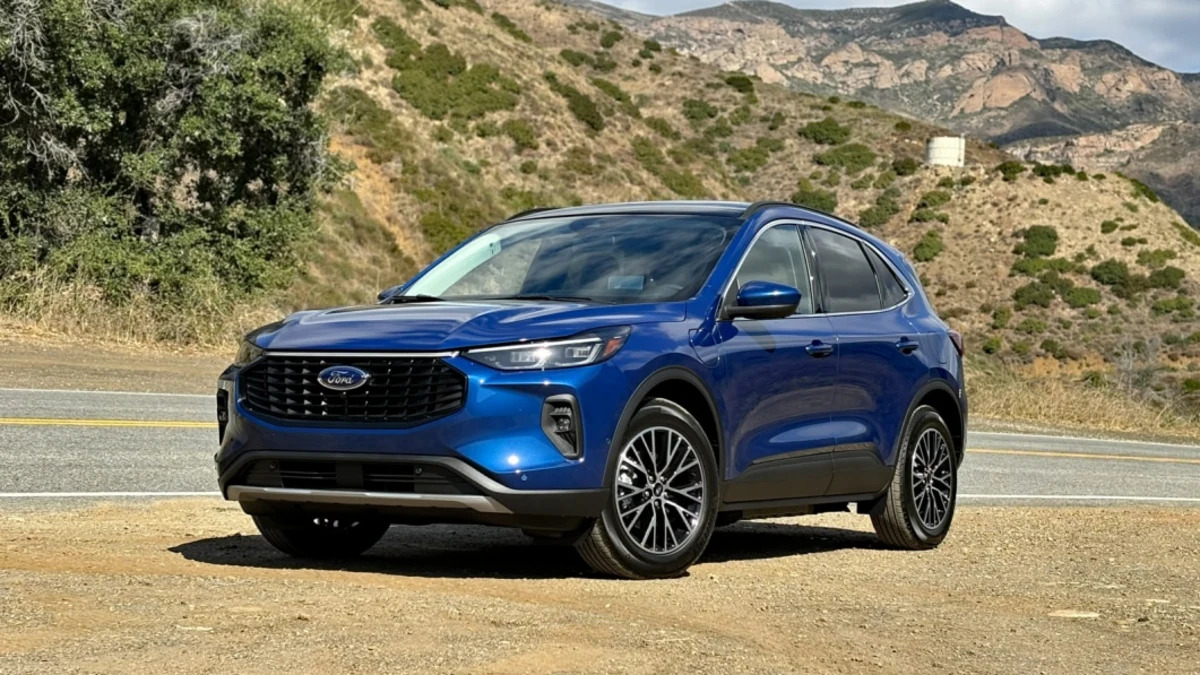
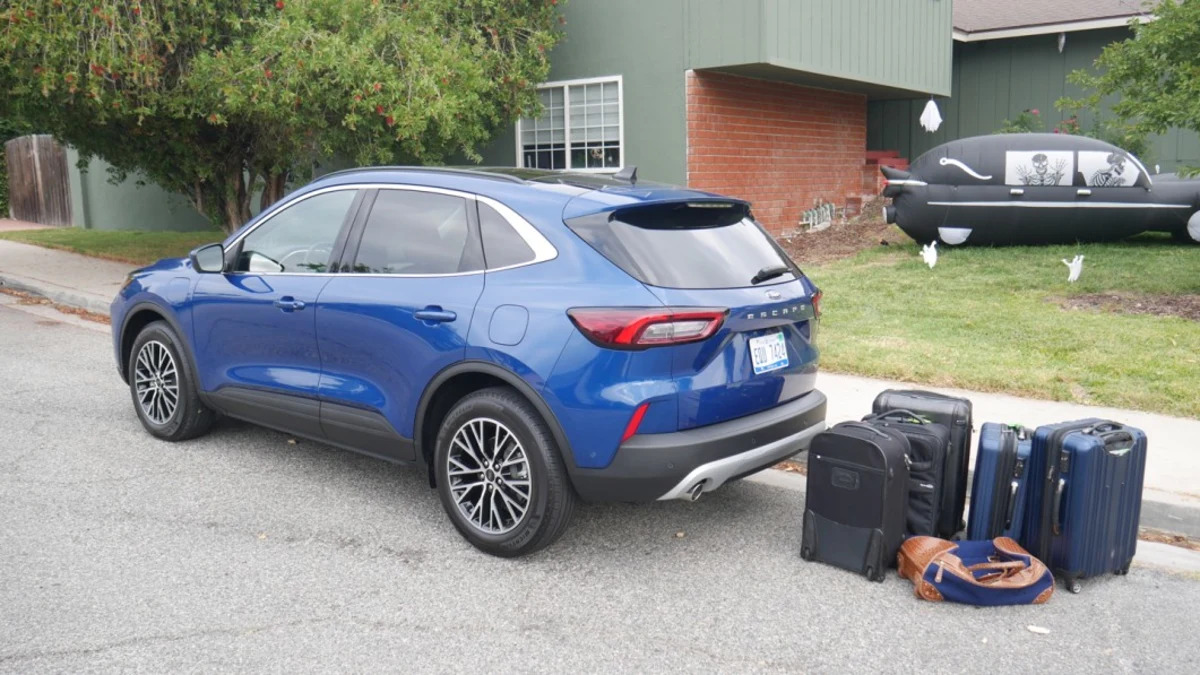
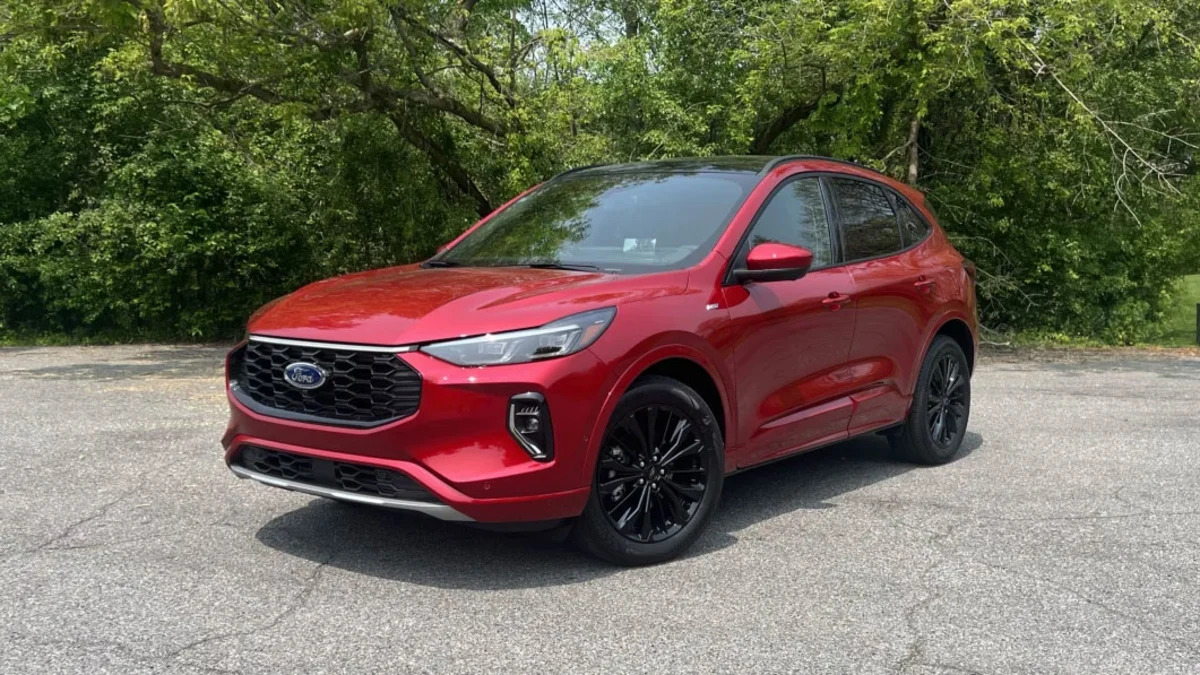
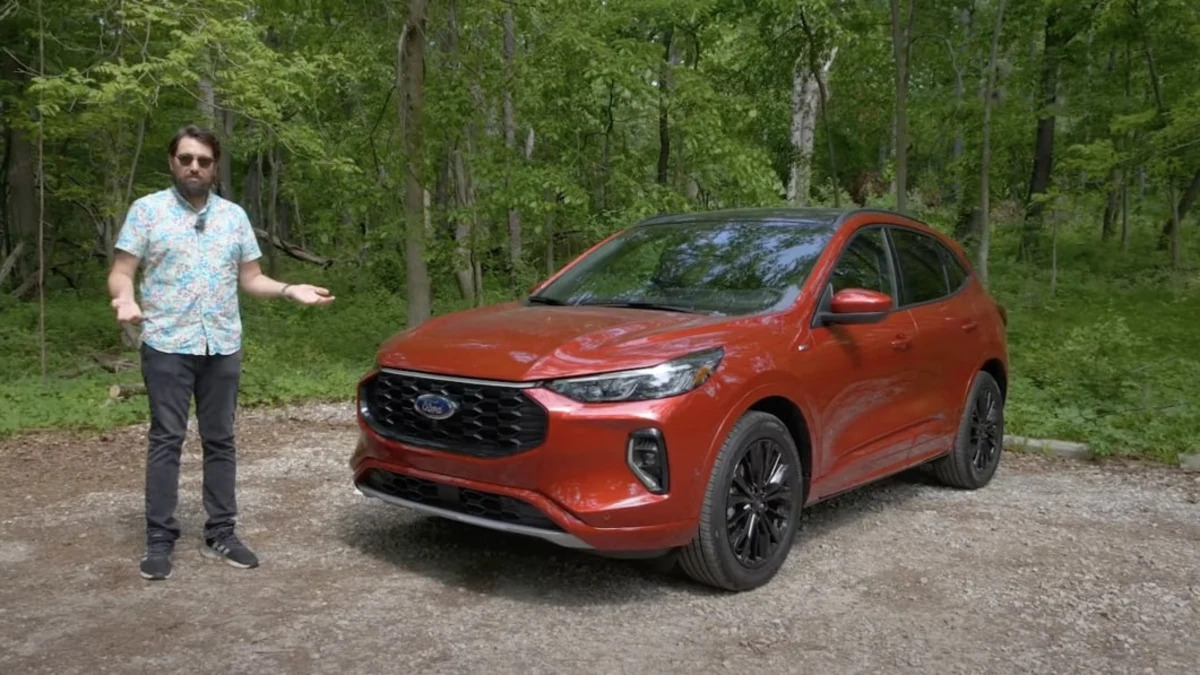
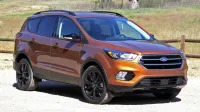
For example, the 2009 Cobalt XFE (above) achieves 37 mpg on the highway compared to 36 mpg for the 2008 model with minimal aero and mechanical changes. Ford made similar changes to the 2009 Escape, enabling the Blue Oval's smallest crossover to hit 28 mpg in 2WD four-banger guise. Honda achieved similar incremental improvements when it introduced cylinder deactivation on the 2008 Odyssey. Chrysler will show 1 mpg improvement on the 2009 Avenger and Sebring four-cylinder model, which will bring the Pentastar's midsize sedans to 31 mpg.
The car-buying public has put its collective foot down and demanded fuel-efficient vehicles, and automakers are likely to do anything to answer customer demand. That may include reinventing the wheel, as more automakers look into incorporating low rolling resistance tires into non-hybrid vehicles. The high-pressure rubber can return fuel economy improvements of 1-2 mpg in most instances, giving automakers that use them a leg up on the competition when comparing EPA data. The new four-cylinder 2009 Ford Escape eked out an additional 1 mpg with the new tires, giving the CUV 21 mpg in the city and 27 mpg on the highway. Michelin estimates that low rolling resistance tires can save $300 in fuel costs at $4 per gallon over the life of tire, which is fairly substantial.
There are drawbacks to low-rolling resistance tires, too. They're more expensive than standard rubber, the ride isn't quite as comfortable, and the tires cause longer braking distances. In fact, Consumer Reports gave the Escape a lower rating because it had such poor stop times. The bottom line is that customers are looking for improved economy at all costs. Since low rolling resistance tires improve fuel economy, the cars that have them and achieve superior fuel economy as a result will be more attractive to mpg-conscious buyers.
One of the cool features that Ford is introducing for the 2009 model year is its updated navigation system with Sirius Travel Link. When we went out to drive the updated 2009 Ford Escape this week, Ford's chief technology spokes-model Alan Hall gave us a guided tour of the system. The next generation nav unit takes the traditional touch screen GPS unit and integrates it with the popular SYNC system that debuted last year, while adding real time downloadable information from Sirius and a 10GB jukebox. The Sirius system provides information such as live weather maps overlaid on the navigation data, current fuel prices, movie listings and more.
With the jukebox, you can insert an audio CD and automatically rip it to the internal hard drive like you can in the Cadillac CTS. The full Gracenote CDDB database is incorporated so that the meta-data can be automatically added. The screen can even display the album artwork. The system can even play DVDs with the video only being visible on the front seat screen when the car is in park. As soon as the transmission is shifted into gear, it only plays the audio track. If you pull up a restaurant listing, it can automatically dial your bluetooth phone through the SYNC system. Like SYNC, the whole system can be controlled by voice commands so you don't have to take your hands off the wheel. The new setup will be on most 2009 Fords, with bigger vehicles like the new Flex and the MKS getting an 8-inch touch screen while the smaller Escape makes do with a 6.5" inch screen. Ford will be charging $1,995 for the full system including SYNC, the nav system, Travel Link and the jukebox. Check out a pair of video run-throughs of the system after the jump.
Product placements in films get a lot of virtual ink here at Autoblog, probably because we all like cars (obviously) and are, for the most part, movie buffs. The carmaker placement king over the last year was unquestionably Transformers, which did more to expose (and evangelize) the new Camaro to the masses than GM's marketing department could ever have hoped. The Bond films are always good for some car-related water-cooler discussion, and last year also saw VW use The Bourne Ultimatum to shill for the Touareg 2. Ford's been kind of off the blockbuster radar since Casino Royale, but makes a tidy comeback in the new Will Smith thriller, I Am Legend.
Over the holidays, I managed to slink away from the wife and kids for a couple of hours to catch the film with some friends. As a movie it's imperfect but very entertaining, with a nice performance by Will Smith. The Ford stuff is very noticeable if you're aware of this sort of thing, and for the most part the cars are used well.
NOTE: Since I'm going to reference some scenes and elements that are spoilerish in nature, including the film's ending, I'll give the rundown after the jump.
The small utility vehicle market is booming right now, and there may be none better in the non-luxury space than the fuel-sipping Honda CR-V. Honda has to be thrilled with their little 'ute, mostly because customers are snatching up the vehicle with little or no incentives, and it's far and away the best-selling CUV in the US. The CR-V has been so successful that Honda has increased production in Mexico by 20,000 units annually to expand sales into Brazil and Argentina. Honda is hiring an additional 600 employees to its El Salto plant in Mexico to account for growing production. The move is part of Honda's plan to double North American production of the CR-V.
Ford is recalling more than 500,000 Escapes after receiving reports from 50 owners of engine fires from 50 owners. Ford says the fires were caused by improperly installed ABS units on 2001-2004 models, and did not result in any accidents or injuries. Missing or improperly installed seals could allow water or other liquids could get into the units' wiring harnesses, causing a short, and possibly, underhood fires.
Ford dealers will inspect each of the recalled SUVs and repair or replace faulty ABS modules. The recall potentially affects 488,480 Escapes sold in the U.S. and about 75,000 sold in Canada, Mexico and Europe. Hybrid Escapes are not included in the recall.
Senior researchers from automakers around the world agree that internal combustion engines will dominate the automotive market for decades to come, even though hydrogen fuel cells are becoming an attractive replacement technology.
Volkswagen's Wolfgang Steiger predicted that fuel cell cars will not reach 1 percent of new car sales before 2030, growing to a 50 percent market share 20 years later. A DaimlerChrysler researcher was slightly more optimistic, forecasting a single-digit share of the new-car market as early as 2020. Ford Motor's Gerhard Schmidt swung the other way, saying a 50 percent market share by 2050 seemed optimistic.
Filling the gap? Hybrids. Toyota expects its hybrid sales to blow through the 1 million units a year milestone early next decade, with auto parts supplier Bosch forecasting hybrid sales of 2.4 million units a year by 2015.
Meanwhile, dramatic improvement in the efficiency of gasoline engines, together with the development of clean diesels, is giving the internal combustion engine a new lease on life.
With U.S. automakers well behind the power curve of hybrid technology development and product rollout (Ford's hybrids notwithstanding), basing their strategies on an ethanol-based transition to a hydrogen future could leave them on the outside looking in, provided hybrids gain the hearts and minds of car buyers in the next decade.
Suffice it to say that Suzuki has never stunned North American consumers with beautiful automotive designs. In point of fact, reviewing their history reveals a certain manic quality, little of it pretty. Oddball propositions like the toy-like X-90 and character-free Esteem have given way to the likes of Suzuki's ill-proportioned Aerio and milquetoast non-statements on the order of the Verona and Forenza. But there are tangible signs that the automaker is finally finding the plot– the inexpensive Italdesign-penned Reno and the tweener SX4 crossover are both attractive propositions. But the offering most likely to become the company's poster child is the all-new-for 2006 Grand Vitara.
A direct replacement for its tired, boxy predecessor that reigned from 1999-2004, the new Grand Vitara is infinitely more compelling with even just a cursory glance. By comparison, yuppies ought to be clamoring for the reborn GV like it's next year's Ikea catalog. Simply put, it's a looker. The strong lines of its clamshell-style hood set the tone, creating a defining ridge across the top of the rectilinear grille, lending the clear-lensed headlamps a bit of edge. The former element is of the blacked-out cross-hatch variety, with a thin, u-shaped chrome lip adding definition and a bit of class. Even when viewed from the dead-on, the GV's meaty fender flares lend it a properly butch stance, particularly as they mold so nicely into the bumper, itself augmented by a pair of blisters housing auxiliary driving lamps. Complaints? Well, the chrome 'S' badge on the nose is a bit outsized, coming across like a Superman logo reinterpreted by an anime artist. But it's hard to blame Suzuki's designers for wanting to get the message out that they're finally in the business of making attractively styled vehicles.