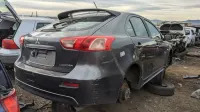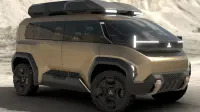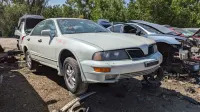
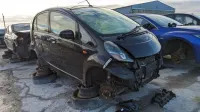
There's an old saying, you only want what you can't have. It holds particularly true in the context of Australia's Mitsubishi 380. The vehicle's Adelaide manufacturing facility was recently shuttered, partially due to lack of interest in the six-cylinder sedan. However, the vehicle's cancellation announcement ended up increasing demand for the final batch of 380s to roll off the assembly line. For that reason, Mitsubishi decided to auction off the final car to its suddenly sentimental Aussie dealers. The last domestically produced 380 ended up fetching $100,000 Australian dollars ($93,364) after all was said and done, which is more than three times its MSRP. John Hughes Mitsubishi, a Perth, Australia dealership, coughed up the cash for the winning bid. Mitsubishi also gave it the honor of choosing a charity to benefit from the proceeds of the sale. Knowing that the 380 in Australia is basically a Down Under-ified version of the Galant on sale in North America, is there any circumstance under which you could imagine paying that much for a Galant?
Click above for a few more pics of this EVO's severed limb
...your accelerator pedal breaks clean off. Actually, the owner of this 2008 Mitsubishi EVO X GSR swears he wasn't caning the car excessively hard when his go pedal snapped in two. Posted on the evolutionm.net forums by 'DRAG', these pictures show the severed pedal in question. DRAG claims he was at a stoplight at the time (in front of some STI owners, no less) when he started to leave the light with a little "enthusiasm". As he pushed the GSR's accelerator to the floorboards, the thing's plastic arm broke off clean. Clearly frustrated with his $40,000+ automobile, DRAG called the dealer and waited for some roadside assistance that never came. To make a long story short, Mitsubishi refused to replace the pedal under warranty, but the dealership decided to pick up the tab anyway. Hopefully Mitsubishi doesn't view this case as an isolated incident caused by someone pushing their EVO too hard, because A) you should be able to push an EVO really hard and B) EVOs have been pushed to their limits while being tested by members of the automotive press and we've never heard of anything like this happening. Take a peek at some more pics of the completely cracked pedal in the gallery below. Thanks for the tip, thedriver! UPDATE: It was actually the accelerator pedal, not the clutch pedal as originally stated. Post above has been corrected.
Click either image for a high-res rendering of each model at AutoExpress.
Mitsubishi and Subaru are entering round two of the newest battle for all-wheel-drive supremacy and AutoExpress has ringside seats. Both automakers are preparing hard-core versions of their turbocharged, rally-bred road rockets and that means more power, more aerodynamic mods and, in the case of Subaru, less weight.
The Lancer Evolution X MR is on the way, with a new fascia equipped with extra venting and a new air intake, while a revised rear wing, side skirts and blacked-out wheels complete the exterior makeover. Output is increased by 20 hp (in JDM spec) to 305 hp and the mid-range has been tweaked to provide more low-end torque, dropping the 0-60 time to under five seconds. The paddle-shifted SST twin-clutch transmission transfers over from the GSR model (likely with some software revisions) and the body has been stiffened to maximize the MR's handling.
Subaru is taking a different tack, keeping power upgrades to the STI's turbo'd 2.5-liter boxer to a minimum and instead focusing on weight reduction. The Impreza WRX STI Spec C will get a slightly revised aero kit, with a roof scoop (functional?), standard gold wheels, a lightweight roof, aluminum trunk lid, compact battery, smaller fuel tank and thinner compartment glass all around. All that work is expected to result in a 154-pound drop in weight, so the Spec C will tip the scales at just over 3,000 pounds.
Subaru is also planning to equip the new Legacy with the STI's drivetrain, a revised suspension and slapping on an "S402" badge on the back, along with a sporting interior with more grippy seats. All of this is only for JDM consumption at the moment, but we'd expect to see both the MR and Spec C hit the UK next year, with sales in the U.S. of the MR coming around the same time.
Click above for a high-res gallery of the Colt Ralliart Version R Special.
Alex and I share an unbridled lust for the Mitsubishi Colt Ralliart Version R. We've imagined a death match between the souped-up Colt and the Honda Fit, but Mitsu insists that there's no market for a flickable fuel miser here in the States. They're wrong.
Regardless, since its introduction two years ago, the Ralliart Colt has already been kitted out by Recaro and now, they've decided to send out an even more limited edition that's boasting a 10-percent stiffer body through the use of some extensive seam welding. Aside, from that, not much has changed. It's still powered by the same turbocharged 1.5-liter four, sending 154-hp to the front wheels through a Getrag five-speed manual. To drum up a bit more enthusiasm about the limited run of 300 Mitsubishi Colt Ralliart Version R Specials, Mitsubishi set out to break the 1:10 mark at the Tsukuba circuit in Japan. That's enough to make Skylines, NSXs and all manner of JDM exotica chuckle underneath their burbled exhausts, but as any true pistonhead knows, driving slow cars fast has a perverse appeal that even the most high-powered uber-whip can't match.
You can check out three Japanese-language videos of the Colt at Tsukuba after the jump.
Gallery: Mitsubishi Colt Ralliart Version R Special
Mitsubishi's president, Osamu Masuko, addressed the assembled masses in Beijing to inform them of plans to create a new subcompact car destined for Europe, China and Southeast Asia. The new platform will fit the standard dimensions of a Kei car in Japan (no more than 11.2-feet long and five-feet wide) and will come equipped with either the Japanese-mandated 660cc engine or, in markets outside of Japan, a 1.0-liter engine. Power will be sent to the rear wheels and the architecture will be flexible enough to be sold in several other markets. Masuko didn't mention the possibility of exporting the model to North America, but our friends abroad will be able to purchase the new subcompact in 2010.
The Smart fortwo is an adorable little transportation pod that can get two people wherever they care to go in style, but there are a lot of cheap, efficient four-seaters with more room for people and their stuff. The auto enthusiasts over at 5th Gear rectified the fortwo's apparent disadvantage by creating a smart double decker using four bolts to attach the roof of one car to the floor of another. The experiment is ridiculous enough on its own, but 5th Gear brought it over the top by putting the fortwo+two through a battery of tests versus a four-seat Mitsubishi i. Watching stacked Smart cars doing moose avoidance tests at 40 mph is hilarious, and at 50 mph, you can probably guess what happens. Hit the jump to watch the video.
Click image for a high-res gallery of the L200 Savana
This week, Mitsubishi's Brazilian operation announced the return of the L200 Savana (the model had been previously available). While it shares its name with the snazzy-looking L200/Triton sold in many other markets (including Brazil), the offroad-flavored Savana variant is based on the last-gen truck. While the ultra-1990s interior is indeed dated, the overall package is pretty bitchin'.
Power comes from an 2.5L SOHC turbodiesel making either 121hp/189 lb-ft or 141 hp/221 lb-ft. An "Easy Select" transfer case lets the driver choose between 4x2, 4x4H and 4x4L modes, and shifts come courtesy of a 5-speed manual. Other standard features include a strengthened chassis, snorkel, roof basket (220 lb capacity), and in-bed storage boxes. The Savana's look is all-business, with charcoal wheel flares, bumpers, taillamp housings and grille trim. Knobby rubber adorns the 16-inch black-painted steelies and the headlight surrounds and hood scoop are finished in the primary body color. The spec sheet also tells us the L200 Savana has 9 inches of ground clearance, a 35-degree approach angle, and 26-degree departure angle.
All of this does not come cheap, mind you. Pricing starts at 86,990 Brazilian reais, or $50,255 USD if you were to do a direct currency conversion (for what it's worth). The price is the only thing we don't really like. The rest makes us wish we had a set of keys and a jungle nearby.
Click image for a high-res gallery of the turbocharged Mitsubishi i
I'm the resident kei car obsessive here at Autoblog. That means I'm the guy who actually thinks, "That is awesome," when he reads the (Google translated) announcement of yet another Suzuki Wagon R variant. Hell, I did twoposts on the one-off Hello Kitty Mitsubishi i. Keis are cool. So, you can imagine how happy I was to see that Mitsubishi brought along a small fleet of its i minicars to the New York Auto Show this year.
Mitsubishi's focus at the show was squarely on the the all-electric i MiEV, which goes on sale in Japan next year and will be tested in North America this fall. The gasoline-powered version was on hand, too, though. I drove the i MiEV for AutoblogGreen, and was a passenger in a black i Turbo. Head over to AutoblogGreen for driving impressions of the i MiEV, and note that many of the observations there apply to both the electric and gasoline-powered cars.
The i Turbo you see here is powered by a 660cc 3-cylinder that delivers around 64 horsepower. It's got around half the torque of the electric i MiEV and it's buzzier-sounding (obviously), but it felt just as well-suited to city driving in New York as its battery-powered counterpart. It can comfortably transport four adults and a bit of cargo, too. Try doing that in a smart.
Mitsubishi is monitoring public reaction to the cars this week, so if you go to the show and like what you see, make sure to let them know. Me? I'll happily take one in black -- with a DAMD kit for optimum not-exactly-badassedness.
Click above for a high-res gallery of the Mitsubishi Prototype-S.
Mitsubishi's revised strategy for the U.S. market was outlined last month in its "Step Up 2010" business plan that seeks to renew the automaker's focus on competing with the major players in North America. The one bit of information that caught out eye in Mitsu's press release was a plan to offer a hatchback Lancer into its range. While the Prototype-S whet our appetite, there was no definitive confirmation that the Ralliart drivetrain in the concept would be fitted to the five-door when it makes its production debut, likely sometime next year. According to a Mitsubishi spokesperson we talked to here in New York, the wagon is coming, and when asked if it would be equipped with the 235-hp turbocharged four and all-wheel-drive system, his response was, "Probably Ralliart. But you can only speculate on that." Good enough for us, but from what we've heard ourselves, a U.S.-market Sportback is past the speculation stage already..
The first event of the series, the Central Europe Rally, will begin on April 20th and run through the 26th, and Mitsubishi is one of the first major teams to confirm participation. Mitsubishi walked away with the Dakar title last year and had already been signed up to compete in the traditional Dakar Rally before its untimely demise. The Central Europe Rally won't replace the Dakar event, as it's been rescheduled for a future date in South America.
Mitsubishi's press release is posted after the jump with the team's complete driver lineup. And we're still waiting to see if BMW, Volkswagen and KTM are planning to participate.