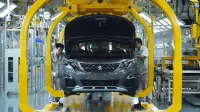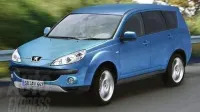
Peugeot is a long way off from its ambitious target of selling 4 million units annually by the end of the decade. This year its sales projects put it at 2 million, but chief executive Jean-Philippe Collin has a plan in place to reach the targets set out by parent company PSA.
The plan involves expansion on two fronts. Firstly, Peugeot plans on developing new models to compete in segments where it currently does not compete. Collin figures the French automaker currently competes in 72% of market segments, but wants to get that figure up to 90%. Despite Peugeot's sportscar racing program, the company is not prepared to build a pure sportscar any more hardcore than the upcoming 308 RC Z sports-coupe. It is pursuing government funding to develop a diesel-hybrid drivetrain, however, which might be key to its expansion.
Peugeot is also planning on pursuing new markets, namely in China, Russia and South America. However, while a return to the North American market is being considered, especially in light of the weak American dollar, Collin maintains that such a move would still be several years off.
BMW and PSA teamed up to produce the 1.6-liter four-cylinder currently found in the R56 MINI Cooper, but according to an interview with BMW CEO Norbert Reithofer, the four-pot will also find its way into the BMW 1-series. The pre-release of his interview in the Frankfurter Allegemeine Zeitung didn't divulge which models would benefit from the four-cylinder engine, whether it will be available in both naturally aspirated or turbocharged guise or what markets in which it will be sold.
Reithofer also mentioned that the next generation 7-series, due to be released later this year, would be equipped with a new hybrid drivetrain. No timeframe was outlined as to when the hybrid 7 would be released, but when it is (likely next year), it's expected to be the mild-hybrid, co-developed with Daimler, originally shown on the X5 Vision EfficientDynamics concept.
click the picture to view a Google translated version of the source
PSA is putting its very attractive 308 RC-Z into series production, and will make a formal announcement at the upcoming Geneva Motor Show. When we saw this curvaceous coupe in in Frankfurt last year, German flooded our imagination. As has been previously pointed out, there's a lot of Audi TT in the roofline, and the side elevation evokes the Karmann Ghia. We can give Peugeot a pass on that, since the car's designer is German, and there are worse fates than aping two very stylish coupes.
The design hides easter eggs for alert viewers, too. The roof and backlight are formed from polycarbonate and use a double bubble shape to increase headroom for occupants, while at the same time evoking racers by Zagato. The upkick in the doors where they meet the rear quarter windows also offers visual amusement, too. Underhood is a direct-injected, 218-horsepower 1.6L four-cylinder that's shared with the MINI. With less than 2,700 pounds to haul around and Peugeot's storied suspension prowess, the grin might never leave your face.
The 308 RC-Z would be a great vehicle to lead Peugeot's return to the North American market. Many may remember unreliable chariots of woe when they think of Peugeot, but we can't shake our affection for the 405 Mi16. With small cars and coupes showing signs of life, now could be the time, and we think this car would sell better than useless crap on eBay. Thanks for the tip, vlatko!
If your inner rally driver lusts for something different than the run of the mill Subaru or Mitsubishi, there's a tasty new Gallic morsel to spice things up. Citroen is taking their C2 to the FIA Junior World Rally Championship this year, and the C2-R2 Max Rally kit is their ticket to homologation. The kit keeps the price down, but doesn't skimp on serious pieces. The 1.6-liter engine belts out 190 horsepower, and there's larger brakes and a hydraulic steering rack to keep that power in check and make sure it's properly directed. There's also an adjustable rear suspension to help fend off competitors on the track. All of our puppy-dog enthusiasm is for naught; we can't get this un-subtle killer hatch in the United States. C'est la vie.
Where there's smoke, there's fire. And while most wouldn't think of a miniscule European van as hot, PSA's Peugeot brand has its day in the sun with its new Partner vans, unveiled together with its sister-company Citroen's new Berlingo.
The new Partner is virtually identical to itspartner, the Berlingo, but is distinguished by some unique features and sheetmetal. The passenger version is labeled the Partner Tepee and gets a multi-function roof called "Zenith". It's also available with a pseudo-off-road package called the Partner Tepee Outdoor. The outgoing version, on the market since 1996, continues on as the entry-level Partner Origin (like the Berlingo First). And, of course, there's a utilitarian version set up for light commercial use with a 1.8-meter long cargo floor that can be extended to 3 meters by dropping the Multi-Flex passenger seats, which gives the Partner LCV an additional 400 liters (14 cubic feet) of cargo space on top of the 3,300-liter (116 cubic-foot) conventional capacity.
More news from the advancing front of European carmakers expanding eastwards: PSA, Europe's second largest automaker and the French parent company of Peugeot and Citroën, is considering opening its new plant in Russia to partnerships with rival carmakers.
The new factory is located in Kaluga, some 180 km outside of the capital, Moscow. Russia is considered one of the fastest-growing markets worldwide, alongside India and China, where Western automakers have also been setting up factories, principally through joint ventures with local manufacturers. PSA's Kaluga plant, scheduled to begin production in 2010, will start out building only Peugeots and Citroens, principally mid-size automobiles which PSA says accounts for 60% of the Russian market for new cars.
If PSA did look to partner with another automaker for production at Kaluga, it could go even father east to Japan's Mitsubishi, which recently obtained financial incentives from the Russian government to assemble cars there and with which the French carmaker already partners on its SUVs.
[Source: Automotive News Europe – subscription required]
The 308 RC-Z concept was unveiled just a few months ago at the Frankfurt Motor Show and showed the world what the French automaker can do with the 308's new platform, all the while teasing us with its arrogant air of production feasibility. If the buzz around the French motoring press is to be believed – and we certainly hope it is – Peugeot has decided to put the shapely 308 RC-Z concept into production. Magnifique!
The TT-esque 2+2 is based on the underpinnings of the 308 hatchback but with some revised bodywork, including lines highly reminiscent of Audi coupés (that's a good thing). While the show car used the 218-hp turbo four out of the race-prepped 207 RC, the production version could offer any number of powertrain options to our lucky friendsacross the pond.
Insiders expect the production 308 RC-Z, tipped to be built by Magna in Austria, to hit the French countryside sometime in 2009. We'll start saving our Air France air miles to check it out now.
Fiat's new car-derived utility truck, the Fiorino Mk IV, has been revealed in all its Chiclet-colored glory. These small car-based working vehicles are just right for businesses that don't need the heft of the ubiquitous pickup-based cargo van here in the states, or larger Continental vehicles like the Sprinter. Horsepower will be around 75 whether buyers choose the 1.4 liter gasoline or 1.3 liter turbodiesel, plenty to haul all those tiny die-cast Eiffel towers down from port to the Champs Élysées. Continuing on the French tip, it's worth noting that the Fiorino was co-developed with PSA, which means there's also Peugeot and Citroen variants of the little van. If you don't want people to laugh at you when you tell them what you drive, you'd be best to stick with the new Fiat, though. The Citroen is named Nemo, ever so cute. Peugeot picked a moniker that sounds possibly lewd: Bipper. Call it whatever, the Fiorino blends utility, more style than you'd expect in a commercial vehicle, and a comfortable interior with carlike dynamics. Coming soon on the heels of the Fiorino will be the announcement of the "Adventure" package, which will outfit the small wagon for duty on less-improved roads in rural areas. The closest thing we've got to this in the States is the HHR Panel, cool in its own right, but alas, no feisty Italian.
Renault and Citroen are winding up to launch a frontal assault on the German car market. Germany is Europe's largest automotive market, filled with über-drivers that demand cars that set the performance and luxury standard for the rest of Europe, and arguably the world. The French automakers want a larger piece of the German market, as well as further global expansion, too. Renault is bringing the fight to Germany with their new Laguna. The Laguna was designed specifically to appeal to the tastes of German buyers, with Renault's German marketing department making sure the car met the needs and desires of the Deutschland buyer. Hopes are high that the Laguna will bolster profits for Renault. It's an attempt to crack into the $35,000 price range, where profits are fatter, yet buyers are more demanding.
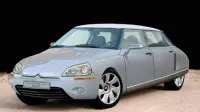
Citroën is also trying to push into the luxury market. Long known for small and medium-sized cars, the brand's C6 is attempting to mix it up on Mercedes, Audi, and BMW's turf. Citroën has a plan to bolster its credibility as a maker of luxurious cars, such as drawing the line from the DS to the C6, while also improving the dealer and support experience to keep customers smiling. Both brands don't yet have the volume in the German market that they desire, but have pledged that Germany is crucial to their survival plans.
Click on the image above for all our high-resolution image gallery.
Peugeot will drop its latest hot hatch on us at Geneva next month with the debut of the 207 RC. After bringing you the skinny on the peppy little hatchback last month with early leaked photos, parent company PSA has been nice enough to give us the full monty ahead of the show, where they'll be releasing a number of new models.
The heart of the 207 RC is the same engine as the top-of-the-line MINI Cooper S, a 1.6-liter high-pressure turbo four pumping out 175 stallions. The engine was co-developed by PSA and BMW, and although the MINI's is coupled to a six-speed shifter, Peugeot has opted for five ratios instead. The corporate spec sheet claims the new Pug makes the run to 62 mph in 7.1 seconds and tops out of 136 mph.