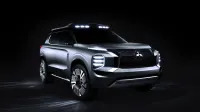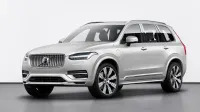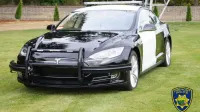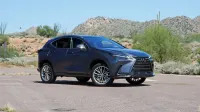

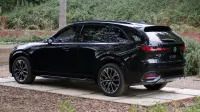





Click above for high-res gallery of Chrysler's three new EVs
Legislation that includes tax credits for plug-in electric vehicles has passed the Senate. Now the House gets a chance to look things over and put it to a vote. The tax credits allow buyers of PHEVs to receive a credit as high as $7,500 and as low as $2,500 depending on the capacity of the vehicle's battery. Toyota had raised concerns that the bill focused solely on battery capacity, as its currently announced hybrid plans do not include anything that would approach the maximum credit. In fact, the Chevy Volt sits alone as the only product that has enough battery capacity for the top tier. Chrysler's recently shown electric vehicles would theoretically qualify if they ever see the light of day.
Once 250,000 qualifying PHEVs are sold, the credits begin to get smaller until they go away completely. At this point, the legislation -- and the vehicles -- have a long way to go before anybody could actually purchasing a qualifying car, but the framework is now in place.
Click above for high-res gallery of the plug-in Prius
Toyota has been testing plug-in versions of its Prius hybrid sedan on public roads in Japan for quite some time and the models have made it Stateside for testing, as well. Now Toyota has begun testing its PHEV in the U.K. Along with EDF Energy, the Japanese automotive giant and undisputed hybrid development leader plans to run the plug-in Prius on public roadways for at least a year, starting today. As the car, with its very unfortunate paint job, is driven by EDF employees as part of the energy company's fleet of vehicles, both its capabilities and the cost savings to run the PHEV will be recorded and hopefully provide some sort of useful data to Toyota. Seriously guys, enough teasing. The real question is when Toyota will find enough reason to actually start offering the plug-in Prius for sale.
Click above for high-res gallery of the Fisker Karma
Fisker Automotive is going to have its work cut out for it when it comes to meeting its self-imposed deadline of bring the Karma sedan to market by the fourth-quarter of 2009. To complicate matters even further, the automaker is now rumored to be working on three more plug-in hybrids. That would represent a truly serious undertaking for such a small automaker. To ease matters slightly, all four models would use the same basic underpinnings -- including the most important piece of all, the lithium ion battery and its assorted bits. Fisker has recruited Quantum Technologies, a company which has seen success building vehicles for the military, for help in creating the drivetrain for its electric vehicles. Reportedly on the drawing board are a coupe, a convertible and an SUV, all of which should go a long way towards meeting Fisker's goal of selling 15,000 vehicles a year by 2011.
Click above for more shots of the Ford Escape PHEV
In what seems like a convenient answer to Mark Fields' request just yesterday for government assistance for the development of plug-in hybrids, the Department of Energy has just announced that it will be granting up to $30 million for just this type of vehicle. Not that thirty-mill is a small sum or anything, but that amount of money will be spread rather thin, being divided across three separate projects from three different manufacturers. Ford is one of them, while General Motors will receive funding for battery development and Chrysler, in partnership with General Electric, will also get some love.
The end-goal of this funding is a plug-in hybrid vehicle that is capable of traveling 40 miles on electric power alone. The DOE hopes that these specifications can be cost-effective by the year 2014 with vehicles on the road around 2016. We're a little puzzled, however, by the relatively small amount of money being handed out to reach these goals. Hydrogen fuel cell technology has received over four times as much funding and is nowhere near as close to production as PHEVs. Regardless, we look forward to seeing some of these investments bear fruit as soon as possible.
In these days of nearly nonexistent profits for every one of Detroit's Big Three automakers, R&D funds must be allocated very carefully. In contrast, Japanese manufacturers such as Toyota and Honda have been earning profits on a yearly basis. Not long ago, a mild spat arose regarding whether or not the Japanese government helped fund the development of Toyota's Hybrid Synergy Drive. Even if they didn't do it in the past, Ford's President of the Americas Mark Fields indicated that they are doing it now at a conference held today in Washington, D.C. by Brookings and Google.org titled Plug-In Electric Vehicles 2008: What Role for Washington?
Fields called on the U.S. government to step up to the plate, mentioning tax breaks and incentives as one option to aid consumers who'd like to purchase these ultimately expensive vehicles one day. On the manufacturing side, Fields suggests that plug-in hybrids should be a "national priority", with Washington needing to allocate funds for research and development. Another area singled out is a domestic supply of batteries, since most of the units used in today's hybrids are being manufactured overseas.
It should be noted that General Motors already has a head start towards PHEVs with its upcoming Chevy Volt. As far as we're aware, the development costs for this vehicle and its batteries has been moving forward without direct assistance from the government. Feel free to read Field's entire speech after the break.
Maybe they should've called it the "Volt-vo." In Frankfurt, Volvo will pull the wraps off the ReCharge concept, a C30-based plug-in hybrid vehicle that combines a 1.6L flexible-fuel engine connected to an auxiliary power unit (APU), which is in powers a set of in-wheel motors. It's a series hybrid, much like the Chevy Volt. The ReCharge's EV-only range on a full battery is said to be 62 miles, and under normal operating conditions, the car's engine wouldn't be activated to help with recharging until 70% of the battery's charge has been exhausted. Volvo says that on a 90 mile trip (150 km), for example, the ReCharge would essentially average 124 mpg (1.9L/100 km).
A full charge when plugged into a standard power outlet takes approximately 3 hours, but Volvo says that even 1 hour plugged in gives the car a 50% charge. Regenerative braking while underway helps charge the battery pack on the fly, and the driver can summon the combustion engine at any time to maximize charging if the situation is favorable (such as during highway driving) to get the car ready for straight EV duty at the next local stop. The ReCharge uses a lithium-polymer battery designed to last longer than the car's operating life. CO2 emissions, a key concern in Europe where the concept is being unveiled, are 66% better than what's afforded by current hybrid cars in the marketplace. We'll be on hand to bring you full details on Volvo's answer to the Chevy Volt next week.
Last week Ford unveiled the Airstream concept at the Detroit Auto Show, which marked its first public attempt at a plug-in hybrid. Like the Chevy Volt, it's primarily battery-powered with an auxiliary power unit to charge the battery on the go. The Airstream, howver, differs from the Volt in that it's equipped with a hydrogen fuel cell instead of an internal combustion engine.
This week at the Automotive News World Congress, Ford's hybrid vehicle manager Nancy Gioia delivered an address where she indicated that Ford is seriously considering a production plug-in hybrid vehicle. The battery, of course, is the main hold up. Because of the added complexity of a PHEV, a strong, affordable, reliable battery is critical to getting enough battery range to make such a vehicle worthwhile. Gioia indicated that additional tax credits may be necessary for buyers to find such a vehicle economically viable.
Ford was no doubt spurred to make this statement concerning the future viability of a plug-in hybrid based on the warm reception of the Chevy Volt Concept at the 2007 North American International Auto Show. Ford was the first domestic automaker on the scene with a hybrid when it introduced the Ford Escape Hybrid a few years ago. Eager to maintain its image as the greenest automaker based in the U.S., announcing the potential for a plug-in hybrid puts it somewhat back on par with General Motors, though the General has actually produced the Volt Concept, which is much more production feasible with its E-Flex chassis than Ford's Airstream Concept.
The lovable curmudgeon Jerry Flint directs his keen analytical eye towards plug-in hybrid electric vehicles (PHEV) and why the market shouldn't expect them any time soon. The concern seems to mainly revolve around battery technology, or rather the lack there of. If one simply looks at the current state-of-the-art in nickel metal hydride (NiMH) cells, it's an understandable source of skepticism, but one that is almost certainly on the verge of becoming an outdated argument. For proof of this, we simply need to take a look at two markets that have recently taken advantage of significant leaps forward in lithium battery technology - RC models, and power tools. We're guessing that Flint doesn't play with many toy cars or gut his bathroom on a regular basis, and that's understandable. But for anyone that has seen what modern lithium-polymer and lithium-manganese battery technology can do when combined with the latest in motor technology, it seems almost laughable to ignore the possible applications for PHEVs.
Certainly, there's a large difference between getting a Sawzall to cut through more walls per charge and somehow incorporating the same technology into an automobile, and Mr. Flint is technically correct when he says that PHEVs are "not now" viable. But give battery technology a few more years to mature, and we suspect that the anti-anything-new crowd will need to find some other reason to complain.