

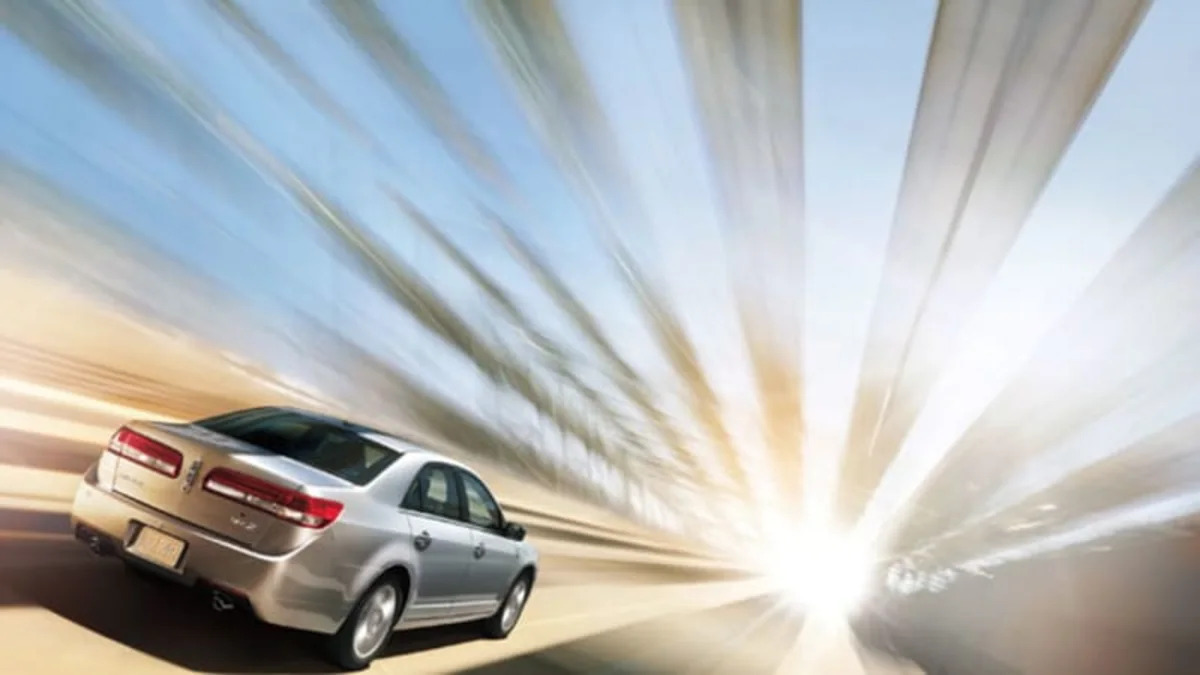
This is going to be a serious effort, and the early signs are encouraging.
The Ford Motor Company is finally marshaling the resources and money to transform Lincoln into a true luxury brand again. While the company is guarded in discussing the full details of its plan, it's divulging enough for now to let the world know that this is going to be a serious effort. And the early signs are encouraging.
The linchpin to this turnaround will be daring new products and significantly upgraded dealerships. And the key to accomplishing that is a new organizational structure for Lincoln. Up through the 1950s, Lincoln was a stand-alone "house" with its own headquarters, designers, engineers and assembly. The new organization will not recreate that original "house" concept, but it's a big step in the right direction.
Lincoln says it will not abandon its traditional customers, but it must attract a new generation of buyers, people with a different psychographic mindset than those who have been buying Town Cars for the last quarter century. Yet, while it may not abandon those buyers, saying they'll suffer from benign neglect may not be too far off the mark.
Of course, other luxury brands are not sitting still, and new entrants like the Hyundai Equus are getting into the game. Everyday that goes by only makes Lincoln's comeback all the more difficult. Even so, the Ford Motor Company has formidable resources and here's how it plans to put them to work.
 John McElroy is host of the TV program "Autoline Detroit" and daily web video "Autoline Daily". Every month he brings his unique insights as a Detroit insider to Autoblog readers.
The brand will be run by a core team of execs whose careers are inextricably linked to Lincoln's success.
As already reported by Autoblog, Lincoln is getting its own design studio within Ford's Product Development Center in Dearborn, Michigan. It's also getting its own dedicated design staff, headed up by Max Wolff, who was head-hunted away from Cadillac where he ran exterior design. Wolff joins a growing cadre of Lincoln executives who bring extensive overseas experience to their new assignment. This crucial development can not be over emphasized, especially the "international experience" part of it.
In recent times Ford has used a matrix organization to run Lincoln. Designers, engineers and managers would be brought in on an as-needed basis, then would transition back into the Blue Oval mothership to work on other products and projects. No one was truly in charge of Lincoln and the lack of leadership and accountability easily explains the brand's malaise. Now the brand will be run by a core team of executives whose careers will be inextricably linked to Lincoln's success - or lack thereof.
I've seen the new MKZ and the change is stunning to behold.
Lincoln will continue to build its products off corporate platforms, but we're going to see significant differentiation from Ford-branded vehicles. The real sin in platform sharing typically comes from financially-focused management that tries to take cost savings too far. They'll force program managers to use common body side apertures, common doors, and common greenhouse structures, even on cars sold under different brand names. So even if the headlamps, tail lights and ornamentation are different, the silhouettes look the same and that low-cost "differentiation" fails to fool discerning customers. Ford says it's now willing to spend real money on hard tooling that will provide noticeably different exteriors with unique sheetmetal and greenhouses. I've seen the new MKZ and the change is stunning to behold.
Inside, Lincolns will use push-button transmissions across the line-up, eliminating the gear shift lever on the console. That gives designers more freedom to change the console and instrument panel to separate them from Fords, which will continue to use gearshift levers. Under the hood, Lincolns will have unique powertrain variants from their Ford counterparts, though in some cases that variation may only be a few more gears in the transmission.
You can expect startling improvements in fuel economy.
Just as Ford has done, Lincoln will focus far more on fuel economy than it has in the past. The 2.0 liter Eco-boost engine will find its way into some surprising applications and you can expect startling improvements in fuel economy. Market research shows that automakers with superior fuel economy also benefit from improved public perceptions on quality and brand image.
The company is also in the process of slashing the number of dealers it has in the U.S. It's already cut hundreds of them and over one hundred more will get the heave-ho. The goal is to pare the list down to 325 dealers, about the same number that Mercedes-Benz has in the U.S. Then, Lincoln wants them to invest in new facilities, following an inviting design theme that it has selected. The new dealerships will look a lot like the inside of an upscale boutique hotel, replete with amenities like reading rooms and coffee bars that cater to an upscale clientele.
The plan is to transform Lincoln into a true luxury brand that can go toe-to-toe with Mercedes, BMW and Lexus.
Lincoln is also boring in on a sub-set of luxury buyers, a cohort it describes as progressive, open-minded and willing to consider new brands. These buyers are somewhat younger, somewhat wealthier and found more on the coasts than Lincoln's current customers. They represent about 25% of all luxury buyers and are the fastest growing cohort in the segment. Since Lincoln currently captures about 8% of all luxury-brand buyers, they potentially represent a much bigger customer base.
The plan is to transform Lincoln into a true luxury brand, one that can legitimately go toe-to-toe with Mercedes, BMW and Lexus. Then, if they achieve that, the idea is to expand into markets outside of the U.S.
The plan sounds solid and the first steps look good, but I wonder whether the Ford Motor Company has the stick-to-it-ness to see this come to fruition. Lincoln's turn-around will not come overnight, and American corporations are not admired for their long-term patience. No, not even Ford. Even so, the company has a legitimate shot at reviving a brand that can trace its heritage back to the earliest days of the industry. Now let's see if they can do it.
Autoline Detroit
Airs every Sunday at 10:30AM on Detroit Public Television.
Autoline Detroit Podcast
Click here to subscribe in iTunes
Follow Autoline on Twitter for ongoing updates every day!
Autoline Daily
The video meant to be presented here is no longer available. Sorry for the inconvenience.

Sign in to post
Please sign in to leave a comment.
Continue