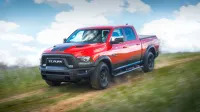
Ford Motor Company is recalling a whole herd of trucks to see the team doctors over concerns about a hose in the braking system that could adversely effect the vehicles' braking power. According to the NHTSA, about 605,000 2005 and 2006 model year Ford F150 and Lincoln Mark LT trucks equipped with the 3-valve 5.4-liter V8 will receive a hose replacement free of charge. The problem hose supplies the brake booster with engine vacuum, and could swell over time and eventually become disconnected. While the hydraulic braking system will function without the power assist, pedal effort will be significantly increased, and if drivers are taken off-guard by the problem an accident could occur. Ford will start notifying owners in June, and the recall campaign will kick off in July. According to FoMoCo, there have been 11 minor accidents related to the issue. Check out more details from the NHTSA after the jump.
Under proposed new fuel economy rules set by the National Highway Traffic Safety Administration (NHTSA), automakers with powerful short-wheelbase models are going to feel some pain. The agency is considering a plan to create two sliding scales of efficiency for cars and trucks of different sizes. Automakers will be assigned fuel economy standards based on the "footprint" (short wheelbase = small footprint) of their vehicles, and the number of vehicles they sell. Companies like Porsche, BMW, and Mercedes-Benz, independent luxury brands with high-performance models, will be hit the hardest. Interestingly enough, Toyota, Chrysler, and General Motors, big players with diverse model lineups, won't feel as much pressure.
Conforming to the tough new proposed rules may be very expensive. As a result, some industry executives expect some automakers, such as Porsche, just to pay the fines--it's less costly than changing a model lineup. Regulators are under the gun to adopt a policy by April 1, 2009. In the meantime, the NHTSA will be taking public comments over the next two months. Time to send 'em a letter...
Last December, President Bush signed a new energy bill into law that requires automakers to achieve a Corporate Average Fuel Economy standard of 35 mpg by 2020. This historic stiffening of CAFE standards set a lofty goal, but left plenty of time to get there and new standards of any kind won't begin until the 2011 model year. Today, which happens to be Earth Day, U.S. Transportation Secretary Mary E. Peters laid out the first set of new CAFE rules that will be implemented for passenger vehicles and light trucks from 2011 through 2015.
The first step on the path to 35 mpg by 2020 will be increases of 4.5% in CAFE standards for passenger vehicles and light trucks over the five-year period spanning 2011 and 2015. This means that standards for passenger vehicles will rise from the current 27.5 mpg to 35.7 mpg by 2015, while light trucks will go from 23.5 mpg to 28.6 mpg. The NHTSA claims the new interim standards will save 55 billion gallons of gasoline and reduce carbon dioxide emissions by 521 million metric tons. They also claim that drivers will save $100 billion in fuel costs over the lifetime of vehicles that fall under the rule.
We decided to reach out to the Big 3 automakers in the U.S. to ask for a comment, and both Ford and Chrysler are keeping mum until they've had a chance to read over the new rules. General Motors, meanwhile, already released a statement reiterating what it said last December, which is that it will meet the new standards despite how tough they are.
Automakers are also able to earn credits when they happen to exceed the CAFE standards, and can either bank those for a time when they won't meet them or even sell the credits to other automakers at a cost below what the fine would be for not meeting the standards. We've heard rumors, for instance, that Honda's sitting on a healthy pile of credits.
Now that we have an actual CAFE target for the auto industry to hit in the near term, expect to see a flurry of activity from automakers. Lithium-ion plug-in hybrids, series hybrids, diesels and all-electric cars will likely be the new technologies that help the industry meet these new interim CAFE standards by 2015, and the first change set for 2011 is not far away at all.
The Bush camp hasn't exactly been extolled for its green virtue over the past seven years, but the administration is trying to make up for lost time by announcing 2011-2015 CAFE targets on Earth Day. Department of Transportation Secretary Mary Peters is scheduled to announce the targets, which are expected to be differentiated by vehicle size, by the National Highway Traffic Safety Administration. Automakers already know they have to get to 35 mpg by 2020, so the 2011-2015 targets should be somewhere between the magic number and today's 27.5 mpg for cars and 22.5 mpg for trucks.
While news of 2011-2015 fuel economy standards isn't exactly the stuff that makes blood boil, today's announcement will help shape what vehicles you'll be able to buy in the years ahead. Something tells us the horsepower war is almost over.
Click above to view video of the 2008 smart fortwo crash test
The National Highway Traffic Safety Administration recently conducted crash tests for the 2008 smart fortwo. Anyone who has laid on the tiny two-seater will probably tell you that safety is a major concern considering that the average vehicle size in the U.S. is much larger than in the fortwo's native European market, and the thought of being in one that's sideswiped by a Suburban is not pleasant. Daimler was confident that the fortwo would perform well in federal crash tests, and it actually did earning four stars in the front crash test for both the driver and passenger and five stars in the side crash test, the highest number the federal agency gives. During the side test, however, the driver door opened, which the NHTSA cites as a safety concern. If the door of a vehicle opens during a crash, the chance that a passenger could be flung from the car is obviously higher. After watching the videos of both crash tests (check 'em out after the jump), we're actually impressed with how well the fortwo handles blunt impact trauma thanks to its safety cell. Being as small and lightweight as it is, however, the car surrenders to inertia and quickly heads the opposite way when struck. Thanks for the tip, Noel!
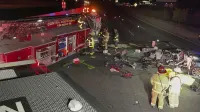
Crash safety ratings are a big selling point – who's going to buy a car with just two stars? In pursuit of salable collision performance, automakers have turned to stronger metals and better construction, and consumers can reap the benefit by choosing from a panoply of highly rated vehicles. A problem arises, however, if that safety design is ever called upon to perform. Lots of vehicles now sport high strength steel in critical areas like roof pillars, and while it certainly helps protect occupants, it could hinder rescue crews. Tools that once made quick work of crashed vehicles are now having trouble shearing through modern cars. Not only that, modern cars have lots of airbags around the cabin, and there are also worries about cutting high-voltage electrical cabling in hybrid or electric vehicles. Rescuers need to know where all the potentially hazardous equipment lies within a vehicle so that they can safely retrieve human cargo without creating a further tragedy.
What was once a simple matter of cutting a roof off to get passengers out can now become a sawblade-eating saga that takes double or triple the time. Taking more time at an accident scene has repercussions that put recovery or even survival at risk by delaying treatment. Automakers are aware of this, and they're working with public safety entities to provide training and information. Schematics and build details of vehicles are being made available to first responders by the non-profit group COMCARE Emergency Response Alliance. The ability to research where and how a car should be taken apart in an emergency could buy injured people critical minutes, so Ford, for instance, is asking for a dialogue with rescue crews and the makers of their tools by offering a look at the construction of the 2009 F-150. Upgrades to rescue tools are also necessary, but the flip side of the harder rescue is that the death rate from passenger car accidents is historically low. So buy that five-star vehicle and try not to hit anything. Thanks for the tip, Juan!
Click above to view high-res gallery of crash-tested Ford Taurus
Ford has been very quiet about what it will have onstage at the New York Auto Show tomorrow, but one vehicle we do know that will be under the lights is the Ford Taurus. While there will certainly be a number of Taurus models waxed, polished and placed just so in Ford's display at the Jacob Javits Center, one in particular will be a mess. Ford will display a crash-tested Taurus in New York to show off the big car's five-star rating for frontal and side crash tests from the National Highway Traffic Safety Administration. Unlike the mangled Celica that used to sit outside your highschool at prom time, the crash-tested Taurus on display in New York will be interactive. Show goers will be allowed to sit in the post-crash Taurus to see what a crash test dummy sees after a 35-mph meet up with an offset concrete barrier. Looking at the pic above, it is pretty impressive that the passenger compartment remains untouched after such an event. We're looking forward to our seat time with this one, though any trip to the Autoblog Garage might necessitate a tow truck.
If you drive a Ford product built before 2005, do us all a favor and give your dealership a call. Ask them if your car or truck is one of the 10 million vehicles out there recalled for repair of a cruise control switch. Trust us, this is not something you want to ignore, as there have been fires, lawsuits, and deaths attributed to this issue.
Word from Washington is that federal safety officials are concerned as less than half of the recalled vehicles have been returned to dealerships for repair (come on people, we told you about this in August, 2006!). This has triggered a rare "consumer advisory" from the National Highway Traffic Safety Administration who are urging motorists to take action. Ford is also re-notifying owners. The NHTSA is also quick to point out that there is no need to schedule an appointment for the repair as some dealers are even providing quick drive-through services for the fix.
The long list of recalled vehicles has been included after the jump.
Investigators for the National Highway Traffic safety Administration are taking a closer look at 2007 Chrysler Pacificas equipped with the 4.0-liter V6. There is a concern that the vehicles could be prone to engine bay fires. A cross-threaded power steering fitting that prevents proper sealing of the hydraulic system could be the root cause. Chrysler has received 166 warranty claims and 25 complaints reporting smoke and fire breaking out. NHTSA has also received three complaints, and the fires seem to be localized to the front of the vehicle, indicating that a power steering leak could indeed be to blame.
Chrysler is aware of the problem, which is specific to the 4.0-liter equipped Pacificas, and traced it to a tube nut on the high pressure power steering line. The nut was found to have been cross threaded when attached to the steering gear, which prevents the o-ring from sealing. Chrysler has put extra quality assurance and assembly processes in place to solve the problem. The automaker also explained that owners should monitor the level of power steering fluid and listen for a noisy pump; both telltale signs that offer a degree of early warning before the Pacifica goes up in smoke. If NHTSA continues to see a problem, a recall of the 2007 Pacifica could be imminent.
Thanks to Autoblog reader Thedevil (we don't make this stuff up) for the tip.
Toyota's Matrix wagon, Corolla sedan and its mechanical twin the Pontiac Vibe sport wagon are all in hot water after motorists have begun to issue complaints about their power side-front windows. Reports indicate the windows are getting stuck, making popping noises, and in some cases shattering and injuring passengers. To date, more than 503 complaints have been received by the National Highway Traffic Safety Administration (NHTSA), which is currently looking into the issue. Ultimately, the investigation may trigger a recall affecting 676,747 vehicles manufactured during the 2003 and 2004 model years at NUMMI, the GM-Toyota joint-venture plant that found itself in a pot of hot water after an employee accused her superiors last November of letting defective vehicles leave the facility.
Interesting to note: This may become the first windows recall that doesn't require PC owners to download a patch. (Hardy har har.)