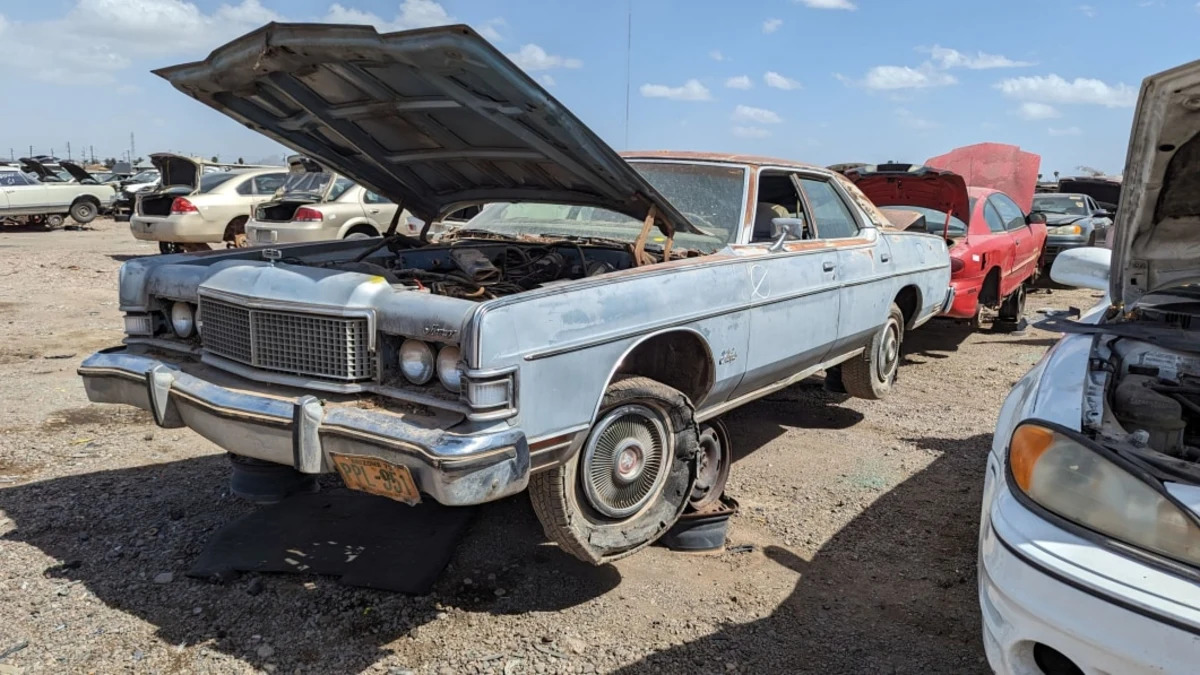
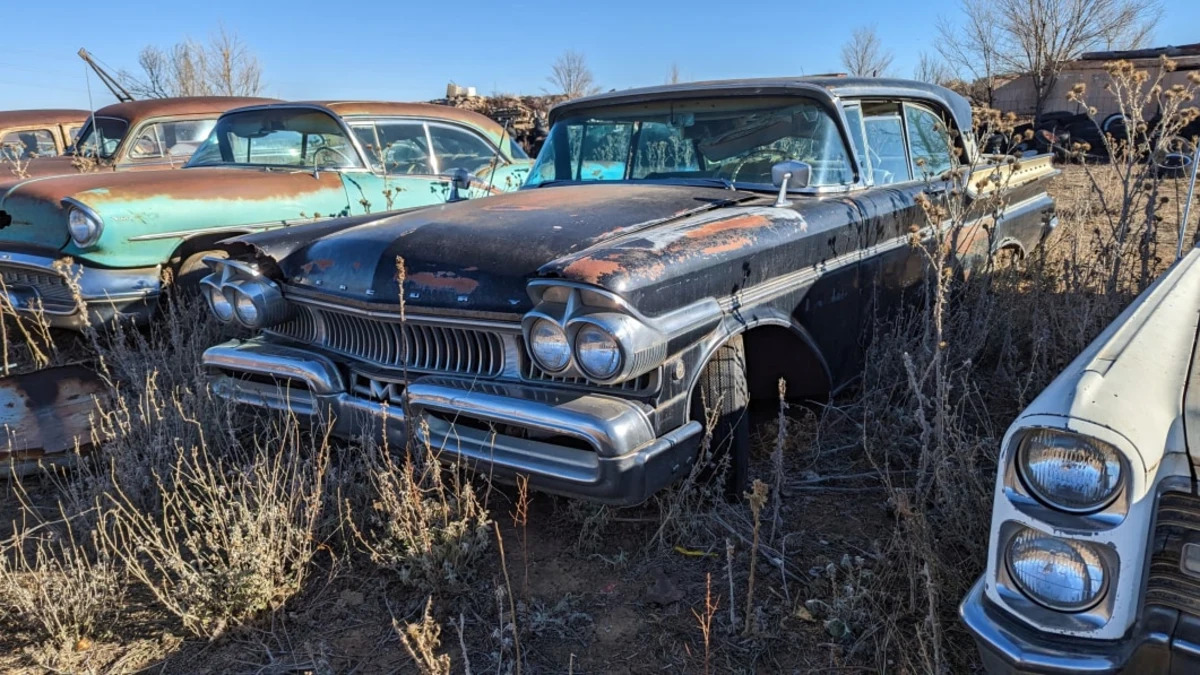
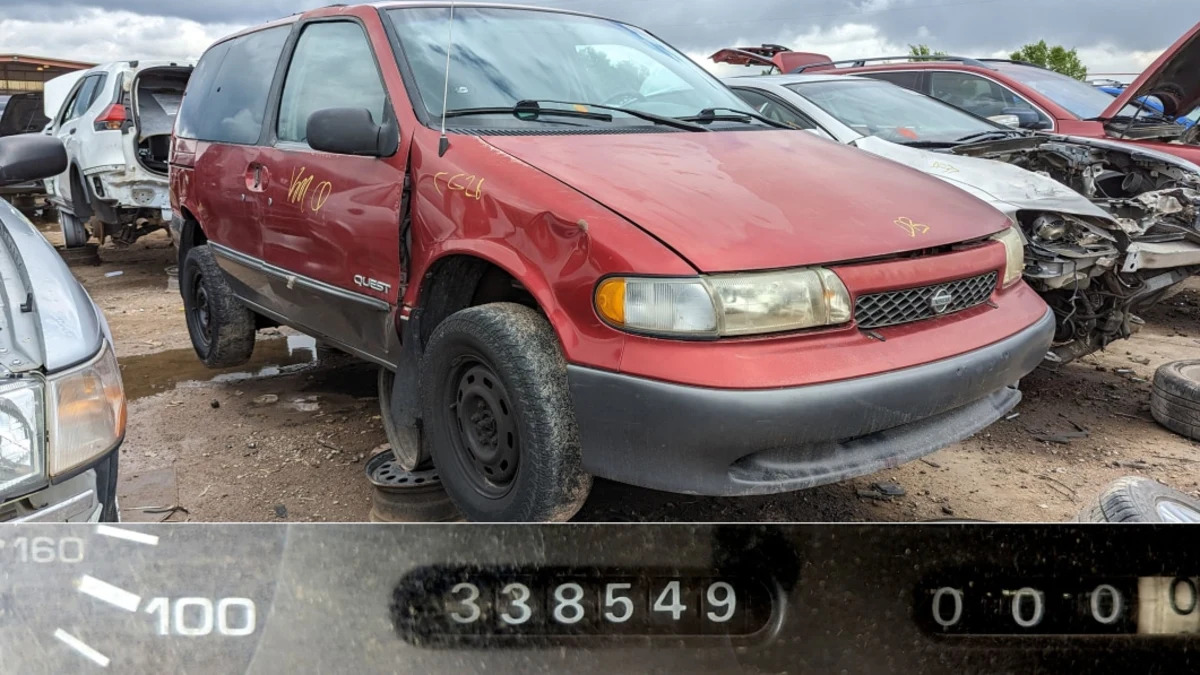
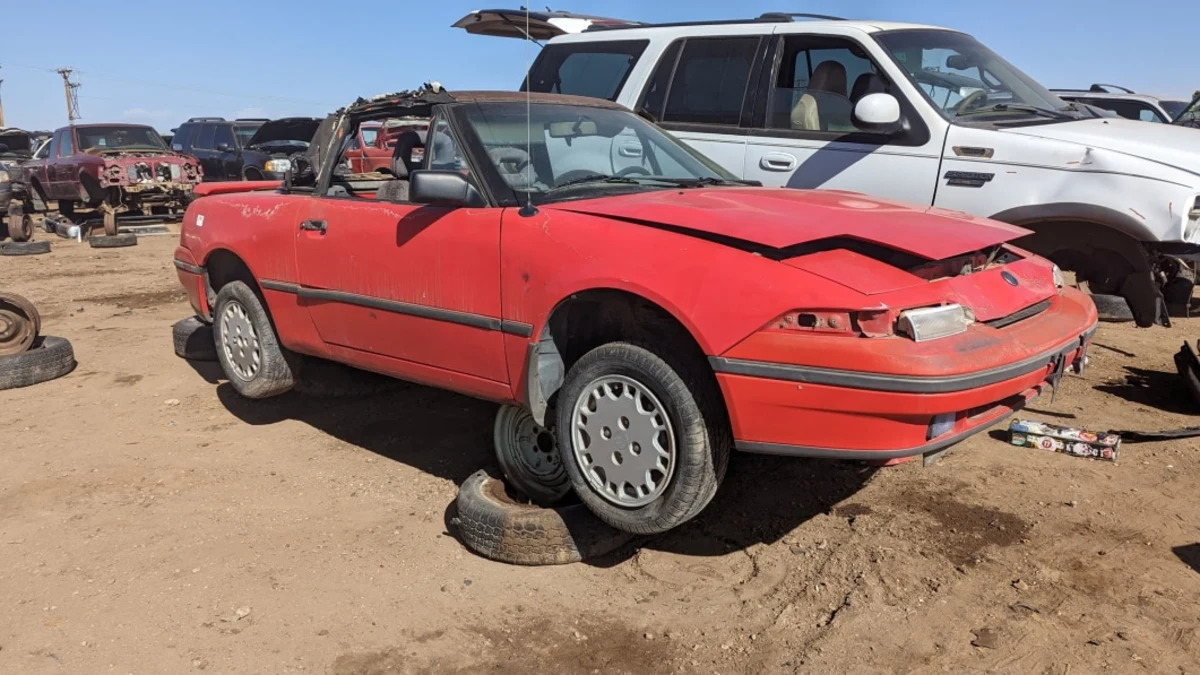
Kirk Kerkorian's associate Jerry York stated last Thursday that Ford would do well to sell Volvo and extinguish Mercury. Coincidentally (or not) Ford's stock zoomed up to one of the highest price levels it's seen in the last six months. Tracinda Corporation, Kerkorian's firm, has expressed faith in Mulally's leadership and his plan to strengthen the automaker. There has been speculation about a sale of Volvo in the past, and punditry has been begging the Blue Oval to do something with Mercury, or put it out of its misery, for years.
While York seems certain that Volvo will be on the market in less than two years time, Ford continues to state that the Swedish subsidiary is not for sale. Looking at the Premier Auto Group shuffle of the last year, though, it could certainly be deduced that Volvo will indeed go on the market soon. Moving the brand out of the PAG location in Irvine, CA and back to Rockleigh, NJ, where Volvo had set up shop when it first started selling cars in the United States, is a move that set off whispers of impending sale. While it might be nothing more than right-sizing office space for Volvo now that the rest of the Premier Auto Group is gone, a cross country move is a deft way to trim operational fat without layoffs, and divorcing Volvo's North American operations from Ford locations makes an ownership transition easier, too. While Ford and Volvo products share a lot of engineering and parts, a well-negotiated deal wouldn't preclude a sale that gently phases out the currently entwined platforms as they age and replacements are brought to market.
Click image for a gallery of thr 1954 Mercury XM-800
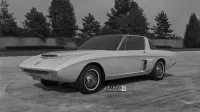
The John Najjar-designed Mercury XM-800 concept was an auto show staple in 1954. With its covered whitewalls, sleek profile, detailed greenhouse, and a rear end that's even better looking than its nose, it caught the eye of many a showgoer. It also appeared in the 1954 feature, Woman's World (movie buffs, take note). As you likely know, most of the fabulous show and concept cars of the era wound up in the crusher, lost forever. As such, when a survivor pops onto the radar, it's a matter of interest. When its life on tour was complete, Ford Motor Company donated the XM-800 to the University of Michigan's Engineering School/Automotive Engine Laboratory School. Later, when the school closed, it was sold off to a private individual who later sold it off again. According to the auction listing, the most recent owner has had the car for the better part of the last three decades.
Now, it's on the market again, and it can be yours via eBay. It's in obvious need of restoration, but the car's bodywork is rust-free (it's fiberglass), and despite its age and general lack of use (it has reportedly been driven under five miles in its 54-year life) it's a runner. The current bid is $40,100 with the reserve not yet met. Even in its current state, the car's uniqueness means that the seller's probably looking for something a lot more substantial. Here's hoping someone with the means picks it up and takes the considerable financial plunge required to return it to its former glory.
Turbocharging has long been associated with performance, but the 103-year-old technology is also very efficient. A small displacement gasoline engine with a turbocharger can equal or out-perform similarly sized naturally aspirated motors while also saving fuel. Europe is all over turbo engines for everything from high-performance Porsches to family wagons, but here in the States, force-fed engines are mainly sold in low volume sports cars.
Ford intends to jump into the turbocharging arena in a big way with "EcoBoost", and is planning to move up to 500,000 vehicles in the U.S. annually with twin-spool technology. Ford claims its EcoBoost suite of engine technoloies will give customers fuel savings of up to 20% versus a like-powered naturally aspirated engine, and the first samples are scheduled to go on sale in about a year. We wanted to learn more about Ford's plan, so we accepted an invitation to speak with Ford's director of Advanced Powertrain, Dan Kapp. Click play on the video above to see what Dan has to say about EcoBoost.
Well look at that, the quarter panel vent from the new Focus can look good! No need to complain yet that this is but another Ford we'll never see, as it may not happen on any continent. Auto Bild has gone to press with shots of a new Mercury Capri concept that is rumored to be the work of an extremely skilled PhotoChopper. We're also unsure if the details they cite about the car being a sub-3,000 pound 2+2 with 140-250 horsepower and a production date of 2012 are fanciful or rooted in truth, but none of that matters. This thing is off the hook to our puppy-dog enthusiastic eyes. Mercury has nothing badass in its lineup, and while it'd be weird to be proffering this car with KISS makeup next to an entire lineup of handsomized Fords, we think it might be a way for Ford to reel in some new blood to the brand. Just don't call it Cougar. Cougars drive Mercurys - though probably while smoking Capris. Call it whatever, just put it on sale.
If you drive a Ford product built before 2005, do us all a favor and give your dealership a call. Ask them if your car or truck is one of the 10 million vehicles out there recalled for repair of a cruise control switch. Trust us, this is not something you want to ignore, as there have been fires, lawsuits, and deaths attributed to this issue.
Word from Washington is that federal safety officials are concerned as less than half of the recalled vehicles have been returned to dealerships for repair (come on people, we told you about this in August, 2006!). This has triggered a rare "consumer advisory" from the National Highway Traffic Safety Administration who are urging motorists to take action. Ford is also re-notifying owners. The NHTSA is also quick to point out that there is no need to schedule an appointment for the repair as some dealers are even providing quick drive-through services for the fix.
The long list of recalled vehicles has been included after the jump.
If SYNC sells cars for Ford, the Blue Oval is now going to see how well its latest electronic add-on moves the metal. In an effort to compete with OnStar, Ford has developed SmartAlert with a company called SkyWay Systems, Inc., of Colorado. Available to be installed by dealers by Ford, Lincoln, and Mercury dealers, SmartAlert uses GPS and can operate as a stolen car tracking service, and it will be connected to a call center that can unlock your doors for you. The system can also keep track of your speed, so teens beware: parents can set the system up to alert them to your lead-footed ways via cell phone, e-mail, or text message. To have SmartAlert installed will cost from $700 to $1,200 for the first year, after which, as with OnStar, customers will pay a monthly fee. Add this to the new features coming in SYNC 2.0 like 911 Assist, and it appears we have a nice little rivalry going in the field of in-car telematics.
Not long ago here on Autoblog we wondered, what exactly is the point of the Mercury brand? As it turns out, dealers have nearly the same question, and they aren't getting any clear, compelling answers. At the Chicago Auto Show, Ford's Group Vice President Jim Farley said "Its role is changing, but we're not going to compromise Mercury." Around the Detroit Auto Show, CEO Alan Mulally said Ford remains committed to Mercury. Of course, Mulally also said Jaguar was part of The Way Forward -- no one knew that he meant it was the way forward for Tata.
There is only one problem with Ford's statements of support: there's no new product in the Mercury pipeline (the upcoming hybrid Milan doesn't count as a new piece of original product), and no one at Ford is giving any indication of when there will be. A huge amount of elbow grease is being expended to polish the Ford brand, and after that, Lincoln is taking up all the space on a second stage. It's clear that Ford would rather sell Lincolns than Mercurys. Last year, Mercury sales dropped almost 7 percent, while Lincoln sales rose more than 9 percent. Still, Lincoln sold 37,000 fewer cars than Mercury.
But all of this, understandably, has dealers wondering what's really going to happen with Mercury. People who buy Mercurys want Mercurys, with its "independent-minded" image and greater percentage of female buyers "very loyal to the brand." Ford can't afford to shed Mercury sales while it works to shepherd Lincoln to the top of the heap. Yet until Ford reveals what it's going to do with the house of the Grand Marquis -- indeed, that it's going to do anything at all -- then one can only assume that brand interest will suffer... and with it, sales.
Fresh off news that Ford Motor Company was raising prices by an average of $502 per vehicle, the Dearborn automaker told dealers that the company would significantly increase incentives. The goal is to keep older vehicles like the Mercury Milan and Ford F-150 moving off dealer lots while also appeasing a hurting dealer network. Ford plans on using marketing dollars to target specific regions of the US where a particular vehicle may be struggling. That may mean that in Chicago you can get $2,000 on the hood of a Milan, but in California incentives could reach $3,000. CNW Marketing Research President Art Spinella points out to The Detroit News that this selective spend approach is a lot like what new top marketing guy Jim Farley did successfully during his time at Toyota.
After looking at all the red arrows in January's "By the Numbers" report here at Autoblog, we're guessing Ford isn't the only company looking to bump incentives. How many times do Toyota, Honda, and Nissan all report down sales in the same month? At least Ford bumped prices first so the upcoming price battle could be mitigated somewhat.
Ford Motor company has bumped the prices of its domestic vehicles by an average of $198 fleet-wide, bringing the overall model year increase to $502 per car, truck, van, and utility vehicle. The only vehicles not effected by the latest increase are the Lincoln Town Car, the E-Series vans, and the soon to be defunct Lincoln Mark LT. While half a grand sounds like a lot of money, it only represents a 1.8-percent increase over last year's overall costs, which is a full percentage point less than the average inflation in the past year. While nobody likes to see prices go up, it's hard to fault Ford for attempting to keep up with the financial times. The big question is whether customers will be willing to pay for the hike in a soft car market, or if Ford will need to put more cash on the hood to move metal.
click above to view more high-res pics of the 2009 Ford Escape Hybrids
As AutoblogGreen points out, Ford will soon be facing tough competition in the compact hybrid CUV segment with the introduction of the Saturn Vue two-mode hybrid. What better time, then, to update the Ford Escape Hybrid and Mercury Mariner Hybrid for 2009? The big news is the addition of a new 2.5L four-cylinder to replace the old 2.3L engine. Not only is the new engine larger, but it also adds variable valve timing on the intake to boost power by 17 up to 170 horsepower. The 2.5L also serves as the new base engine for the standard Escape and Mariner, but uses the Atkinson cycle in the hybrid models. Ford's hybrid CUVs also get a new six-speed automatic (correction: only the gas-powered models get the new six-speed automatic), aerodynamic upgrades and new 16-inch low-rolling resistance tires from Michelin. All of these improvements add up to a one mpg gain in fuel economy (correction: fuel economy remains the same for the hybrid models while power goes up), plus more power and usability. Ford hasn't released official fuel economy numbers for the 2009 Escape Hybrid, but it should maintain the same numbers as before, and likewise for the new Mercury Mariner Hybrid.