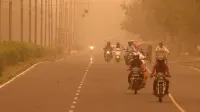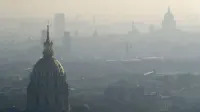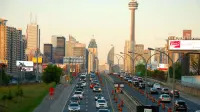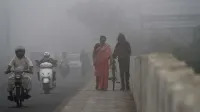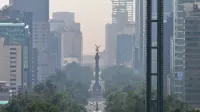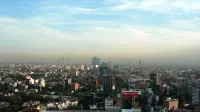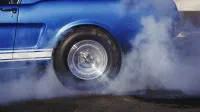
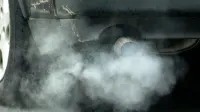
The city of Beijing has drawn widely-publicized controversy due to its poor air-quality leading up to the 2008 Summer Olympic games. In fact, the air pollution is at least two to three times higher than levels deemed safe by the World Health Organization at this very moment. To ease the minds of the competing athletes, the city of Beijing is taking steps to improve the situation and has promised clean air for the games. Officials in Beijing have already cut the number of vehicles driving in the city in half by alternating what vehicles are allowed to drive each day and have asked more people to ride bikes. Now, they've banned car repairs and spray painting until after the games are over. We are all for the athletes rights to breathe clean air, but we also have to wonder about the economic cost associated with cutting out all automotive repairs and painting.
In an interview with Whatcar?, Ford's global product development boss Richard Parry-Jones said car buyers need to embrace greener cars if global warming is to be overcome. In fact, Parry-Jones goes on to say it's the role of the consumer, not car manufacturers, to save the planet from polluting automobiles. Government incentives for eco-conscious car shoppers, not punishment of manufacturers, is the way to go, he said.
This environmentalist push is brought to you by a company producing at least 40 Ford-branded models rated at less than 20 mpg city by the EPA. Only eight 2007 Fords get more than 30 mpg on the highway. Though to Ford's credit, Parry-Jones says 66% of his company's future R&D budget is devoted to increasing fuel-economy and reducing emissions. We've reported in the past, however, that not all agree with Ford's green push.
DaimlerChrysler is on the receiving end of some flack from Germany's own Federal Emissions Agency, which is accusing the automaker of inadequate pollution controls on the European-market Chrysler PT Cruiser.
The debate centers on the function of the PT's catalytic converter at high rates of speed. According to the agency, heavy acceleration above 72 MPH (and any acceleration in a PT at that speed probably counts as "heavy") results in excessive carbon monoxide emissions. A spokesperson for Chrysler claimed that such a scenario was not part of the emissions certification process, but the environmental agency rejects this claim and states that the pollution limits apply to any part of the drive cycle. It would seem that the agency is ignoring the fundamentals of engine management; heavy acceleration calls for fuel enrichment to avoid engine damage, and that will cause CO emissions given a sufficiently long application of wide-open throttle.
The Seattle
Times reports that the Washington State Department of Ecology has sent a warning to a biodiesel-crushing plant in
the state that it is releasing methanol, a toxic vapor, without a permit. Further investigation has shown spilled
vegetable and biodiesel oil on the premise, as well. The landlord has ordered a halt on all biodiesel production.
The investigation comes at a bad time for biodiesel supporters. Plans such as building ten biodiesel plants in
other parts of the state are threatened as the State Department and biodiesel companies such as Air-Energy, which had
invested in such plants, clash over issues from lack of permits to proper waste management.
On Fox
News, Steven Milloy writes about the backlash suffered by Ford CEO Bill Ford, Jr. at the hands of various
environmental groups. The organisations have expressed their displeasure by pointing out that the Blue Oval
still produces too much pollution from its manufacturing (“more heat-trapping pollution into our skies each year
than the entire country of Mexico”); continues to produce gas-guzzling SUVs; and argues that the
automaker opposes proposed California legislation requiring reduction of carbon dioxide emissions by 2016.
The ridicule climaxes adjacent to the pictured ad in the New York Times.
However, Milloy takes issue with
the criticism, pointing to what he considers the fallacies of the groups' talking points. But he reserves the bulk
of his ire for Ford himself, who he believes is too 'occupied' trying to appeal to the environmental groups,
even when such overtures threaten the company's bottom line. For example, Milloy points out that according to the
Alliance of Automobile Manufacturers, complying with the California law may reduce CO emissions by a 'minuscule' amount
while raising vehicle costs by thousands of dollars.
Specific details can be found at the link. When you come
back, fire off in Comments.
U.K. Channel 4 reports
that Ken Livingston, the mayor of London, England, is questioning the exemption status of the Lexus RX400h SUV. Owners
of the hybrid do not pay the normal eight pound ($14 USD) daily "congestion charge" levied on London drivers
by the city.
The reason for this reexamination? The RX400h uses more fuel and releases more carbon dioxide
in its non-electric mode than many non-hybrid vehicles according to the article. Also, Jenny Jones, an adviser to
Livingstone, states, “…Its size means it causes more congestion and it also poses a danger to pedestrians
and cyclists because of the high, unforgiving bonnet.”
The U.S. National Research
Council released its much-anticipated study of emissions standards Thursday, and its recommendations are a major
disappointment to automakers. The NRC study backed the rights of individual states to set their own tough vehicle
pollution standards independently of the federal Environmental Protection Agency, following the lead of California.
California implemented pollution regulation before the federal government, and has been granted the authority
to continue setting its own standards. Other states can choose between federal standards and California's tougher
rules.
The NRC found California's approach to be both scientifically valid, and necessary because of
persistent pollution problems in some parts of the state. California in 2004 approved the world's most stringent rules
to reduce greenhouse gas emissions, and automakers have been lobbying hard to restrict their adoption by other states.