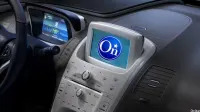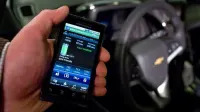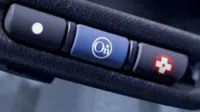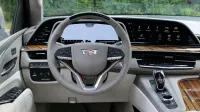
We always wondered how a phone-based concierge service would fit into a world that's populated with DVD-based navigation systems that contain millions of points of interest. General Motors' OnStar service, however, has weathered the arrival of in-dash and third-party nav systems quite nicely, thank you very much. Today the service announced a trio of new features, including one called OnStar Destination Download that marries its main selling point (speaking with a human being) to the power of GM vehicles equipped with a screen-based nav system. Unlike with most vehicles that feature a built-in nav, OnStar subscribers using this new service don't have to stop their vehicles to input a destination. They can push the little blue OnStar button and give the destination verbally to an advisor who will then download it into the car's screen-based nav. All this happens on the go and is completely hands-free, except for pushing the OnStar button.
The second service is called OnStar eNav, which was first announced almost a year ago, that lets subscribers plan their trips on MapQuest (disclaimer: MapQuest is owned by AOL and so is Autoblog. Small world, huh?) and call them up later from within their vehicle. A user will again push the OnStar button and follow voice commands to retrieve their directions. This service, however, does not input the directions into your screen-based nav system, but instead uses OnStar's Turn-by-Turn voice navigation to guide you.
Finally, OnStar subscribers with screen-based nav systems will also benefit from the company signing up with the XM NavTraffic service. This service, which allows the nav system to reroute around poor traffic conditions, is already used on a small handful of GM vehicles, but will expand in 2009 to all 22 vehicles the automaker offers with screen-based nav systems. [Source: GM]
If SYNC sells cars for Ford, the Blue Oval is now going to see how well its latest electronic add-on moves the metal. In an effort to compete with OnStar, Ford has developed SmartAlert with a company called SkyWay Systems, Inc., of Colorado. Available to be installed by dealers by Ford, Lincoln, and Mercury dealers, SmartAlert uses GPS and can operate as a stolen car tracking service, and it will be connected to a call center that can unlock your doors for you. The system can also keep track of your speed, so teens beware: parents can set the system up to alert them to your lead-footed ways via cell phone, e-mail, or text message. To have SmartAlert installed will cost from $700 to $1,200 for the first year, after which, as with OnStar, customers will pay a monthly fee. Add this to the new features coming in SYNC 2.0 like 911 Assist, and it appears we have a nice little rivalry going in the field of in-car telematics.
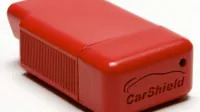
That little red box contains a lot of electronic goodies that, until now, were only available as options on newer vehicles. Plug that plastic rectangle into your car's diagnostics port and CarShield puts you in touch with your car like never before.

Like most simple telematic systems, it contains cellular capabilities, GPS and Bluetooth. Those technologies allow car owners to open locked car doors with a Bluetooth mobile phone and track where there car is, has been or is going. Got a teen driver? If the little brat ventures outside your pre-determined boundaries, the CarShield will send you a text message to let you know.
Perhaps more useful to the general population, though, are CarShields diagnostic features. It monitors your car's health, and alerts you via text message if your battery is getting weak, if your tires are low or, in some cars, if you need an oil change.
Posted Dec 27th 2007 10:57AM by John Neff Filed under: Tech, GM
If this affects you, chances are that you've already received a letter in the mail from General Motors and OnStar informing you that the analog network supporting older GM models with the OnStar service will be turned off on January 1st, 2008. The reason is because the Federal Communications Commission ruled in 2002 that cellular companies could stop supporting their analog networks in favor of digital ones, and OnStar was originally set up on an analog network owned by Verizon Wireless in 1996.
GM began selling vehicles with dual-mode (analog/digital) hardware in 2004 after all appeals to the FCC to overturn its ruling had failed. All GM cars and trucks are now likely sold with digital-only equipment. Some GM vehicles produced between 2002 and 2004 may have been equipped with analog hardware that is digital ready, meaning it can be upgraded to accept a digital signal. To find out if your vehicle is digital-ready, click here and have your VIN ready. If you do have equipment that can be upgraded, GM will do it for you, including parts and labor, for only $15 if you agree to a $199 1-year subscription to OnStar.
Nevertheless, it's a bum-deal for those GM customers with older OnStar models that can't be upgraded, as their service will ride off into the sunset on New Year's Eve thanks to the FCC.
We're not going out on a limb by saying that the future of in-car technology is connecting all our electronic detritus into a cohesive network. Ford's Sync system has already made that possible on many fronts and GM's OnStar has set a new standard for safety, navigation and communication. Atlanta-based Hughes Telematics is announcing a new system that will fuse both of those systems into a comprehensive whole and selling a subscription service akin to OnStar's arrangement.
The Hughes setup will integrate turn-by-turn navigation, voice commands for phones and iPods, plus provide emergency and roadside assistance. Additionally, it will allow users to purchase certain features – from directions to songs from Sirius – on an ala carte basis, neglecting the need to spend extra cash each month for products you rarely use. The system will also integrate with the vehicle's ECU to allow diagnosis and problem solving that could avoid a trip to the dealer.
Hughes will be releasing all the information about the new system, including the details on it partnership with Chrysler (announced earlier this year) and a major luxury brand, later this week.
As if offering Buicks that people would actually buy isn't enough, the General is upping the ante in the ultra-competitive Chinese market by announcing that Chinese customers will be able to subscribe to its OnStar service beginning in 2009. The safety and telecommunications service will be jointly provided by GM and its Chinese partner, Shanghai Automotive Industry Corp. (SAIC), each of which will own 40% of a new joint-venture called Shanghai OnStar Telematics Company Limited. The remaining 20% of the new company will be owned by GM and SAIC's other joint-venture company, Shanghai GM. We now sit back and await the day that someone driving an Envoy in Tennessee hits the little blue button on his rearview mirror and is greeted in Mandarin.
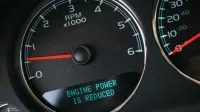
OnStar debuted a new service today for its subscribers that allows the company to remotely slow down your vehicle if it's been stolen and the cops are in pursuit. Dubbed Stolen Vehicle Slowdown, the new technology works with the already available Stolen Vehicle Location Assistance to help police locate and then gradually slow down your vehicle in a chase. OnStar is able to remotely send a signal to your car's engine management system and reduce engine power gradually, so a perp on the run will suddenly find the throttle less and less responsive. It won't prevent the criminal from crashing your new CTS into a pole, but it will end a hot pursuit much quicker than the cops could do alone and therefore reduce the risk of a high-speed accident that could injure innocent bystanders.
Stolen Vehicle Slowdown sounds pretty trick and certainly useful, but it is an additional service that will likely be available in an optional package, though OnStar didn't mention any pricing details.
Also, and perhaps we're just being paranoid, but it's a little unsettling to know that a service center rep in a cubicle somewhere has the ability to disable your engine at a moment's notice. We wonder if there's a slippery slope here that should be considered. For instance, can the service be used against the owner of the car who is paying for it? We can imagine a situation in which a divorced parent abducts his or her own child and takes off in a 2009 Malibu equipped with OnStar. The cops give pursuit and realize the car is equipped with OnStar. Could law enforcement then contact OnStar without the subscriber's permission if he or she is breaking the law and giving pursuit. It's something to think about before you subscribe and a question OnStar should answer before the case arises.
Stolen Vehicle Slowdown will start debuting on 2009 models, mostly Chevys, before it's rolled out across General Motors' entire vehicle lineup. It won't work on vehicle's using OnStar's analog network, only those that are on the digital network. Check out the press release after the jump to learn more about how it works.
As we all know, GM's OnStar service in analog-only cars -- those pre-2004 -- will end in a few months. Based on the comments we've seen, there are quite a few owners who are miffed that there's no upgrade or retrofit available. For you, Popular Science has posted the instructions on how to hack your analog system so that it can at least receive GPS signals on a laptop. Warning: it requires removing equipment from the OnStar system, followed by electrical wizardry that not everyone will have the chops to handle. And, as if trying to keep track of things on the little screen wasn't bad enough, it looks like you always have to have a laptop with you -- maybe on your passenger's lap. It's not exactly OnStar, but it's a start.
Of all the ways an insurance company calculates a driver's premiums, the one factor that's been left out of the equation is real world mileage. Sure, we tell the our insurance provider how many miles we travel, but if its less than the stated minimum, there's no way to prove we've been on the road less. GMAC and OnStar are planning to rectify the matter, post haste.
The plan, which has already been employed on 10,000 drivers in 2004, is to allow subscribers to GM's OnStar system to submit their mileage, and if its less than the 15,000 miles specified in the year-long contract, a discount will be dolled out.
The breakdown will allow drivers who travel between 12,001 and 15,000 miles a year to get a 13-percent reduction, while drivers who clock under 2,500 miles will get a discount of 54-percent.
Of course, this is all assuming that you're driving an OnStar-equipped GM product and your insurance is through GMAC, but with GM's planned push of the OnStar system, it might be just another reason for drivers to head on down to their local dealer.
The latest engine of growth in GM's efforts to reclaim its lost crown: OnStar. The 12th floor of the Renaissance Center is the OnStar Command Center where minions gather, mission-control style, to make sure that all is running smoothly for the 4.8 million subscribers to the OnStar empire. Eleven years into its life, OnStar's services now include keeping track of traffic jams, news, missing persons alerts, weather emergencies, giving turn-by-turn directions, and providing monthly diagnostic reports. On a busy day, the center gets 100,000 calls.
GM wants people to start buying its cars specifically because they come with the service. By the end of this year, 95-percent of GM cars sold in the US and Canada will have OnStar standard. The first year of service is free, and the hope is that by the end of 12 months the customer will find it indispensable. In case that isn't enough, in addition to the word-of-mouth advertising by 80 million people who have already been assisted by OnStar, GM is providing dealers with more training and increase its marketing of the service, noted primarily by moving Tiger Woods from the Buick campaign to OnStar.