

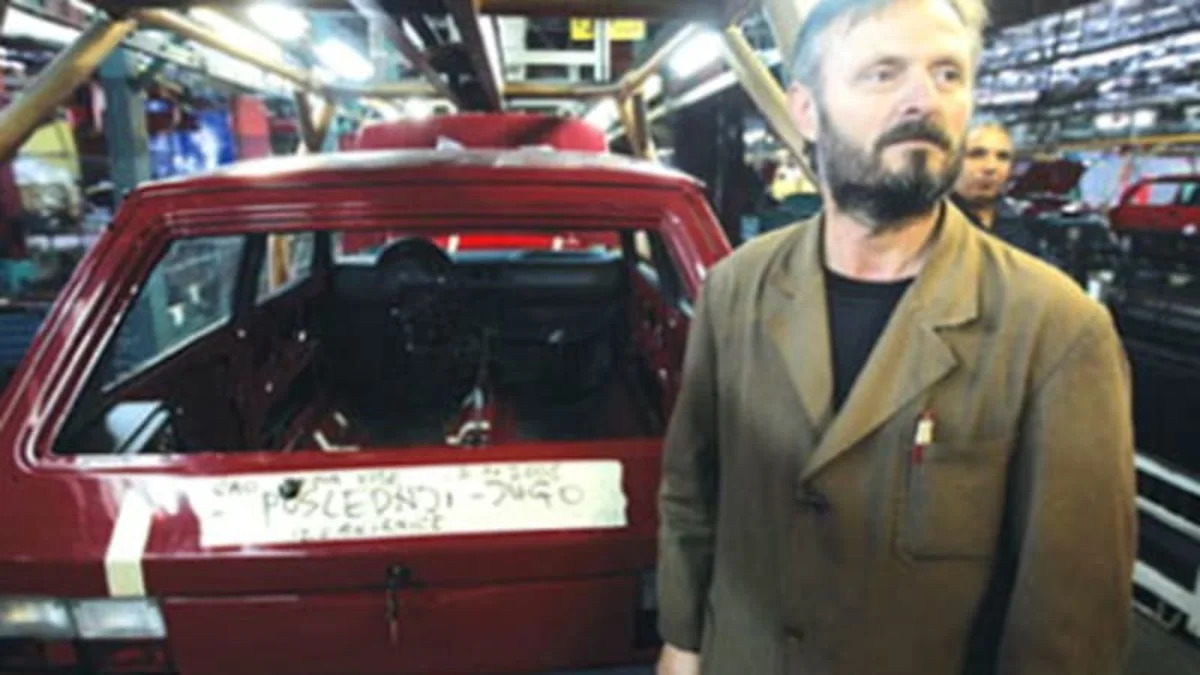
"Cao, nema više" reads the piece paper affixed to the tailgate of the red Serbian hatchback, as a small throng of proud workers gathered around the car to bid it "Goodbye, no more" this week. After a 20-year run, the last Zastava Koral, #794,428, quietly made its way to the Zastava museum and the scrappy Eastern European automaker has wound down production on all but one of its models. The very last Zastava, a Skala 55, will be the last of its kind when it makes its way down the production line on November 20th. After that, the proud, tenacious people who have been working at the Kragujevac factory aren't sure of what the future holds. Zastava has long been linked to Fiat, and when the lines restart, the Zastava 10 will be badged as a Fiat Punto, which it is.
Make as many Yugo jokes as you'd like, but Zastava has a long and fascinating history, and the company has managed to produce automobiles through several periods of war, even after the factory sustained bombings. The now classic Zastavas will live on; the company is working on setting up Skala 55, Koral In, and Florida In production lines in Africa and the Zastava 128 is still being produced in Egypt. In those climates, we figure they won't need to come with defroster grids to keep your hands warm when pushing.
[Source: Zastava]
November 14th, 2008 - KRAGUJEVAC, Serbia - At 9am on November 11th, 2008, Yugo
#794,428 – a red Koral In1 – left the lines at Zastava Automobili's factory in Kragujevac.
The first Yugo, a hand-built prototype, emerged on October 2nd, 1978.
Zastava workers affixed a small piece of paper to its tailgate, labeled "ćao, nema više"
("goodbye, no more"). Thus did the famous budget car, once the pride of the former Yugoslavia,
drive into history.
A few tears were shed; the machines ceased whirring, and the group that had gathered around the
car slowly dispersed, somewhat stunned that no formal event had been prepared. While the last
car headed to Zastava's museum, the men and women who built it were given the task of
preparing the space for Fiat's purposes.
55 years ago, the late Prvoslav Raković founded Zastava Automobili from the WWII ruins of
century-old Zastava, a cannon foundry and producer of some of the best rifles in the world.
Automobiles. Trucks. Buses. Architecture and construction. Horticulture. Zastava did it all. Well
before World War II, 400 Chevrolet trucks rolled off Kragujevac lines, slated for the Yugoslav
Army. Postwar production began in 1953, when Zastava built 162 Willys jeeps, before
inextricably tying itself to Fiat. 1955 saw the first fruits of this agreement: the Zastava 600D, a
car for the people, and the Zastava AR-51, the truck which would drive Yugoslavia's postwar
reconstruction.
With production beginning in 1955, Zastava ventured into front-wheel drive in 1971; Europe, in
1972; America, in 1985, and fuel injection, in 1988. As their world imploded in the '90s,
Zastava's workers continued to come to work each morning. When in 1999 NATO used the
factory for target practice, they dutifully cleaned up the damage and, seemingly without need for
dollars or euros, managed again to turn out their budget cars.
In 1945, Toyota could make no more than fish paste. BMW built pots and pans. Volkswagen
produced nothing. Yet bombs could not stop Zastava. Even without the foreign investment
enjoyed by Toyota and Volkswagen, a Zastava Skala 101 rolled off the line just six months after
the factory had been ripped apart.
For an encore, Zastava's engineers forged an alliance with PSA/ Peugeot-Citroen, and developed
Europe's most affordable diesel car, the Florida TDC, a five-door hatchback which was praised
by Britain's Autocar magazine (in its February 20th, 2008 issue) in the last throes of the
company's independence. Zastava also builds the Oktopus Finiss which, being rated for 150 km/h, is the world's fastest professional-driver training device.
On November 11th, 2008, the final Yugo followed the last Florida2, number #29,950.
The last Zastava 10 (Fiat Punto II.5) was built a few days earlier. When production restarts
(expected to be by the end of the year), it will be rebadged, Fiat Punto.
The last Skala 55 (#1,273,532) will be built on November 20th, marking the last Zastava after 4.2
million cars, of which 700,000 were exported (145,511 to the United States).
Zastava Automobili is currently working with authorities in Congo, Africa, to transfer Skala 55/
Koral In/ Florida In production lines there.
Meanwhile, the Zastava 128 is still assembled in Egypt by El Nasco, where it is a favorite among
taxi drivers.
The success of Zastava is important not only for its Kragujevac home (where metalworking, in
2007, still accounts for 70% of industry), but for Serbia as a whole. Roughly 100,000 people
across 56 towns are directly and indirectly employed by Zastava. Their fate remains unclear. For
them and their families; for Kragujevac, and for Serbia and its economic recovery, it is hoped that
Zastava's rollercoaster ride over the last quarter century is again trending upward.
###
For fifty-five years, since 1953, the Zastava marque has been known for affordable, durable
vehicles. Zastava specializes in cars priced under 10,000 euros, cars which promise easy
maintenance and unbeatable value.
For more on Zastava history, please see
http://www.zastavanacionale.com/Default.aspx?lng=en-us&mode=heritage
Zastava Automobili has entered into a joint-venture agreement with Fiat S.p.A. of Italy. The
agreement will see the production of a new A-segement model in Kragujevac by 2010.
Make as many Yugo jokes as you'd like, but Zastava has a long and fascinating history, and the company has managed to produce automobiles through several periods of war, even after the factory sustained bombings. The now classic Zastavas will live on; the company is working on setting up Skala 55, Koral In, and Florida In production lines in Africa and the Zastava 128 is still being produced in Egypt. In those climates, we figure they won't need to come with defroster grids to keep your hands warm when pushing.
[Source: Zastava]
Serbian automaker Zastava Automobili
announces end of Yugo production
###
announces end of Yugo production
November 14th, 2008 - KRAGUJEVAC, Serbia - At 9am on November 11th, 2008, Yugo
#794,428 – a red Koral In1 – left the lines at Zastava Automobili's factory in Kragujevac.
The first Yugo, a hand-built prototype, emerged on October 2nd, 1978.
Zastava workers affixed a small piece of paper to its tailgate, labeled "ćao, nema više"
("goodbye, no more"). Thus did the famous budget car, once the pride of the former Yugoslavia,
drive into history.
A few tears were shed; the machines ceased whirring, and the group that had gathered around the
car slowly dispersed, somewhat stunned that no formal event had been prepared. While the last
car headed to Zastava's museum, the men and women who built it were given the task of
preparing the space for Fiat's purposes.
55 years ago, the late Prvoslav Raković founded Zastava Automobili from the WWII ruins of
century-old Zastava, a cannon foundry and producer of some of the best rifles in the world.
Automobiles. Trucks. Buses. Architecture and construction. Horticulture. Zastava did it all. Well
before World War II, 400 Chevrolet trucks rolled off Kragujevac lines, slated for the Yugoslav
Army. Postwar production began in 1953, when Zastava built 162 Willys jeeps, before
inextricably tying itself to Fiat. 1955 saw the first fruits of this agreement: the Zastava 600D, a
car for the people, and the Zastava AR-51, the truck which would drive Yugoslavia's postwar
reconstruction.
With production beginning in 1955, Zastava ventured into front-wheel drive in 1971; Europe, in
1972; America, in 1985, and fuel injection, in 1988. As their world imploded in the '90s,
Zastava's workers continued to come to work each morning. When in 1999 NATO used the
factory for target practice, they dutifully cleaned up the damage and, seemingly without need for
dollars or euros, managed again to turn out their budget cars.
In 1945, Toyota could make no more than fish paste. BMW built pots and pans. Volkswagen
produced nothing. Yet bombs could not stop Zastava. Even without the foreign investment
enjoyed by Toyota and Volkswagen, a Zastava Skala 101 rolled off the line just six months after
the factory had been ripped apart.
For an encore, Zastava's engineers forged an alliance with PSA/ Peugeot-Citroen, and developed
Europe's most affordable diesel car, the Florida TDC, a five-door hatchback which was praised
by Britain's Autocar magazine (in its February 20th, 2008 issue) in the last throes of the
company's independence. Zastava also builds the Oktopus Finiss which, being rated for 150 km/h, is the world's fastest professional-driver training device.
On November 11th, 2008, the final Yugo followed the last Florida2, number #29,950.
The last Zastava 10 (Fiat Punto II.5) was built a few days earlier. When production restarts
(expected to be by the end of the year), it will be rebadged, Fiat Punto.
The last Skala 55 (#1,273,532) will be built on November 20th, marking the last Zastava after 4.2
million cars, of which 700,000 were exported (145,511 to the United States).
Zastava Automobili is currently working with authorities in Congo, Africa, to transfer Skala 55/
Koral In/ Florida In production lines there.
Meanwhile, the Zastava 128 is still assembled in Egypt by El Nasco, where it is a favorite among
taxi drivers.
The success of Zastava is important not only for its Kragujevac home (where metalworking, in
2007, still accounts for 70% of industry), but for Serbia as a whole. Roughly 100,000 people
across 56 towns are directly and indirectly employed by Zastava. Their fate remains unclear. For
them and their families; for Kragujevac, and for Serbia and its economic recovery, it is hoped that
Zastava's rollercoaster ride over the last quarter century is again trending upward.
###
For fifty-five years, since 1953, the Zastava marque has been known for affordable, durable
vehicles. Zastava specializes in cars priced under 10,000 euros, cars which promise easy
maintenance and unbeatable value.
For more on Zastava history, please see
http://www.zastavanacionale.com/Default.aspx?lng=en-us&mode=heritage
Zastava Automobili has entered into a joint-venture agreement with Fiat S.p.A. of Italy. The
agreement will see the production of a new A-segement model in Kragujevac by 2010.

Sign in to post
Please sign in to leave a comment.
Continue