
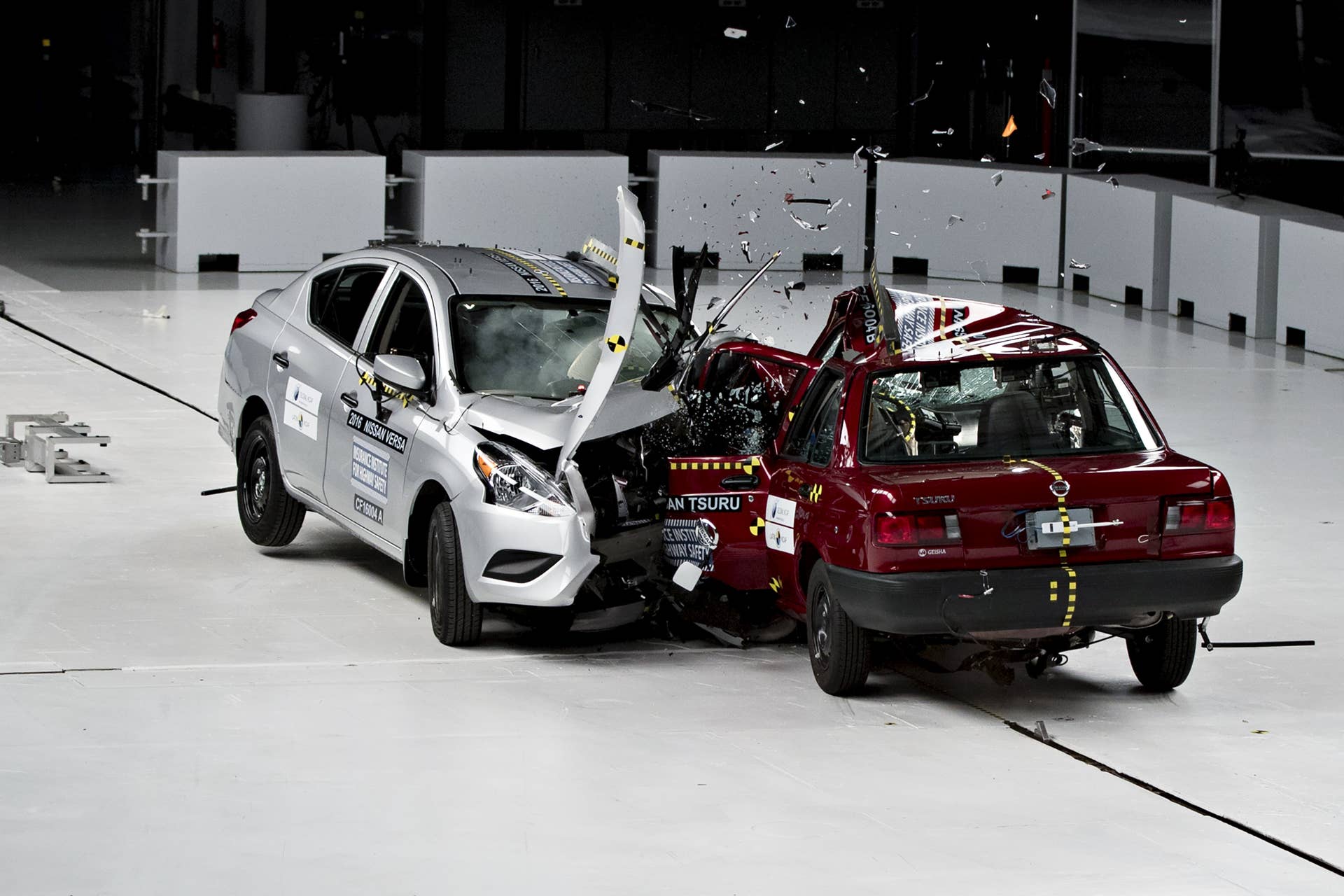
The prospect of being involved in a head-on collision is horrific. Even the small overlap
crash test videos give us the heebie-jeebies, and that’s with a dummy behind the wheel. Safety systems like lane-departure warnings are meant to help prevent these nasty accidents and
according to the Insurance Institute for Highway Safety (
IIHS), they’re working. It’s not really surprising, as that’s the whole reason they exist, but what is notable is their effectiveness.
In the United States, lane-departure warnings reduce single-vehicle, sideswipe and head-on crashes by 18 percent and they lower injury rates by 24 percent, according to an IIHS study. While the sample size was smaller for fatal crashes, the fact that they were reduced by 86 percent in cars with lane-departure warning systems is impressive. (While the IIHS doesn’t mention it, the fact that cars with driver assistance systems also tend to be newer could feasibly be a reason why cars equipped with them are safer. Older cars just
don’t
fare
as
well in crashes.)
Trucks equipped with lane-departure warnings had relevant crashes reduced by half in the United States in 2015. A study by Volvo showed that passenger cars equipped with the tech had injuries reduced by 53 percent in Sweden. American drivers often turn their warning systems off, but if they didn’t, they’d likely see further reductions in crashes and injuries. Also, avoiding driving when sleepy or ill would further prevent such crashes, as alert drivers can better respond to warnings (several car companies offer driver inattention and drowsiness warnings).
As for blind-spot detection, these systems reduce lane-change crashes by 14 percent, and injuries by 23 percent. Previous IIHS studies found that automatic braking cuts front-to-rear crashes in half, and that rearview cameras prevent about 1 in 6 relevant crashes.
It’s good to know that these systems do more than just give the impression of safety. They’re actually saving lives. Keep that in mind next time you go to turn your lane-departure warnings off.
Related Video:
Video ID:
d6a582fa-56ed-304f-889a-6d0ea4ef6b77
Playlist ID:
Autoplay:
false
Mute:
false
Continuous:
false
Ad Key:
Ad Value: