
Fuji Heavy Industries




Fuji Heavy Industries changes name to Subaru Corp. in 2017
The Subaru name will be used for the entire company.

Subaru boosting US capacity thanks to strong sales
Subaru will hit a North American sales goal five years ahead of schedule, and is celebrating that fact by expanding production at its Indiana factory.
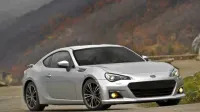


Subaru BRZ to get second generation, says exec
Hallelujah friends, hallelujah. One of the highest voices in Subaru's parent company, Fuji Heavy Industries, has just said that the boxer-obsessed automaker will release a second generation of the lovable BRZ.

Subaru planning modular platform, seven-seat SUV, plug-in hybrid
Fiat Chrysler Automobiles isn't the only big name in the auto industry releasing details on its future plans. Subaru, and its parent company Fuji Heavy Industries, is aiming to bump its North American sales up from 478,000 to
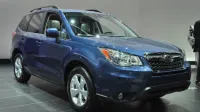


Subaru mulling expanding Indiana plant for Forester, Impreza
Thanks to currency fluctuations and their impact on the bottom line, a growing number of Japanese automakers are starting to increase vehicle production in the US, and it appears Subaru could be the next to do so. According to Bloomberg, Subaru is looking into expanding production capacity at its Lafayette, Indiana assembly plant, which currently builds the Outback, Jeffrey N. Ross
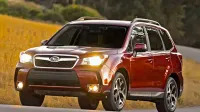


Subaru to raise US production from 130,000 units to 300,000 by 2016
Ask Subaru about the difficult car market and it is likely to ask in response, "What difficult car market?" The little Japanese brand has its XV sitting on top of sales charts in (one small corner of) Europe, the BRZ is still allergic to sitting on dealer lots, the company has Jonathon Ramsey
Subaru raises forecast on strong US transaction prices
Fuji Heavy Industries has raised its projected operating profit for the next six months due to higher transaction prices for its Subaru vehicles in the US, according to Reuters. Subaru sales jumped by 27 percent between April and September, thereby exceeding the manufacturer's early estimates. Much of that gain came without heavy incentives, which helped FHI increase its earnin

Subaru mulling new plant in U.S.
In mid-May, Subaru announced plans to expand its Lafayette, Indiana factory where it builds the Legacy, Outback and Tribeca, along with some Chris Paukert
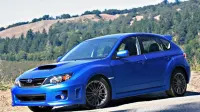


Next Subaru WRX to use electric turbocharger?
Subaru has been trying to figure out the direction for its three-headed monster, as the Impreza and its WRX and WRX STI variants have grown increasingly at odds over the past two generations.

No longer o-kei, Subaru steps away from minicar production
Subaru is walking away from minicars. According to Just-Auto.com, parent company Fuji Heavy Industries is looking to concentrate its efforts small and mid-sized vehicles moving forward. While Japan still enjoys a thriving kei car market, the vehicles aren't as profitable as their larger counterparts and require the same level of engine
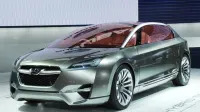
Subaru promises four new models by 2016
Fuji Heavy Industries has just released a new five-year plan for Subaru under the banner "Motion-V," and the blueprint calls for at least three new models and a hybrid vehicle to be on dealer lots by 2016. The move is part of a strategy to draw in an ever-larger brand fan base in an attempt sell 900,000 units by that date – a 40 percent jump over current figures. That means i
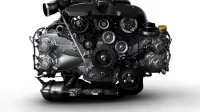
Subaru debuts third-generation boxer four-cylinder engine
Subaru's Third-Generation Boxer Engine – Click above for high-res image

Report: Toyota to build Ractis subcompact for Subaru in Japan
Toyota Ractis – Click above for high-res image gallery

STI-tuned Subaru Legacy B4 2.5GT tS released in Japan
Subaru Legacy B4 2.5GT tS – Click above for high-res image gallery
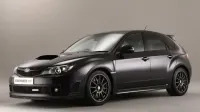
Cosworth puts the spurs to Subaru's Impreza WRX STI
Cosworth Impreza STI CS400 – Click above for image gallery

Spy Shots: Toyota-Subaru coupe prototype caught ringin' der Nürburg
Toyobaru testing on the 'Ring – Click above for high-res image gallery
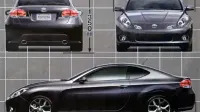
Report: Toyobaru delayed until 2012 or later
The rumors of the sports car that Toyota and Subaru were working on have been replaced by rumors that the car has been put on hold. Earlier news had posited a rear-wheel-drive sports car with "wonderful style," based on the current Subaru Legacy platform, with a boxer engine putting out around 200 hp through a six-speed manual. Originally due in 2011, now, according to Nikkei