

Listen to the Joystiq Podcast (because your ears can't read)

Posts with tag epa

Automotive X-Prize recommends EPA adopt MGEe rating


Click above to view high-res gallery of the 2011 Chevy Volt

Now that the California Air Resources Board (CARB) has an agreement with General Motors regarding how to measure the fuel mileage of the 2011 Chevy Volt, our attention turns to the EPA, which now has to decide what official mileage rating will appear on the new car's window sticker and how to determine what that number will be. The first recommendation comes from the Automotive X-Prize, the foundation of which will award $10 million from Progressive Insurance to the winner of its competition to design a production-viable car that people would want to drive that gets 100 MPGe or more.

What's with that little 'e' after the familiar miles per gallon? Basically, the X-Prize crew wants to convert all units of energy to a figure that's equivalent to the power from a gallon of gas. That way, a car's powerplant – regardless of where it gets that energy from – earns a rating that can be easily compared with everything else. So, EPA, the ball's in your court... still.

Psst - GM, maybe you should enter the Volt in the X-Prize competition. Just a thought.

Gallery: 2011 Chevy Volt - Live Reveal


[Source: Automotive X-Prize via AutoblogGreen]

Continue reading Automotive X-Prize recommends EPA adopt MGEe rating

CARB requires all new cars in California to bear "green" labels


As of January 1, 2009, all vehicles sold in California will be required to display a window sticker that rates the "environmental performance" of the new car or truck. Initiated by the California EPA Air Resources Board (CARB), the label is designed to "...arm consumers with the information they need to choose a vehicle that saves gas, reduces greenhouse gas emissions and helps fight smog all at once." Each vehicle will receive two different scores. The first will be a "Global Warming Score" based on greenhouse gas emissions from operating the vehicle and fuel production. The second score will be a "Smog Score" that is determined by the smog-forming emissions from operating the vehicle. The scale, based on a 1-10 rating, allows consumers to see how their vehicle fares when compared to other vehicles in the class. Like the new governmental crash test data now displayed on new car windows, the disclosure will be effective on two fronts: it will educate concerned buyers, and unofficially call-out those manufacturers that fall below the average. In this environmentally-conscience environment, there is nothing quite as effective as public shame...

[Source: The Detroit News]

Automakers facing a 75 mpg CAFE rating by 2030?

The Big Predictions for the Future have begun. This is the numbers game where eye-popping numerical targets start being thrown around before we've come anywhere close to achieving the eyebrow raising targets that are still 14 years away. According to Margo Oge at the EPA, the CAFE standard will need to jump to 75-MPG by the 2030s to meet greenhouse targets.

There is, somewhere, a "widely backed scientific-community proposal to cut greenhouse gas emissions by 50 to 80 percent by 2050 from 2000 levels." Based on current realities, the EPA has reckoned that the fleet average for fuel economy would need to more than double from the 2020 target of 35 mpg in about 15 or so years in order to achieve even the minimum standard.

The EPA is looking at a variety of alternative fuel options as a way to make the plan work. Yet we have no idea whether this is being looked at as a serious long term plan, or whether grand pronouncements are being made because it's the thing to do right now. While we freely admit that the world of cars could use some cleaning up, we do wonder... is any other industry going to be on the hook for reducing greenhouse gasses?

[Source: Detroit News]

EPA officially defends denial of CA request to regulate emissions

California and 18 other states have been waiting patiently for a reason why the EPA denied them emissions waivers even after the government agency's own scientists recommended that the waivers be granted. EPA chief Stephen Johnson finally provided that answer last Friday, which allowed the 19 states' lawsuit against the EPA to move forward. Johnson's basic argument for denying the waiver centered on numbers stating that California's pollution and global warming problem is no greater than that of many other states, and that his decision was based on the facts and the law.

California Attorney General Jerry Brown called Johnson's response "obfuscating, sabotaging, specious, and ill-founded," which we think means that Brown believes Johnson is full of it. We don't have a position on the California vs. the EPA waiver war, but it'd be nice to have just one regulation for all United States whether it's California's standards or that of any other state. That way automakers have but one mark to aim for, and Price is Right doesn't have to mention "California Emissions" when someone wins a new car.

[Source: LA Times]

California regulators shooting for 40 mpg by 2020

The recently passed federal regulations adjust the average vehicle fuel economy standards to 35 mpg by 2020. Long before the Federal Government passed the new standards, the State of California had their mind set on enforcing their own rules. In order to individualize the regulations, California and the 15 other states following on its heels, needed a waiver from the EPA. The Golden State had never been previously denied a request, but the EPA lagged in issuing an approval. After all that waiting the waiver never came. Shortly after President Bush signed the new federal standards into law, EPA Administrator Stephen Johnson shot down the request.

Now as politicians battle over the right to gain state control on vehicle carbon dioxide emissions, California legislators arelooking to expand upon their intended greenhouse gas controls. The original plan outlined adjustments from 2009 through 2016, but the revised outlook will shift focus up to the year 2020, which lines with the target date of the federal regulations. The major difference is that the California Air Resources Board believes cars and trucks should average close to 44 mpg by 2020. That breaks down to a 50.8 mpg car and small truck average and a 33.5 mpg average for vehicles tipping the scales. Considering variations across the country it's estimated to be an average of about 40 mpg for the whole of the United States. It also makes for an enormous 62-percent improvement upon today's vehicles.

[Source: Automotive News - Sub. Req.]

EPA seeks armistice in horsepower wars

Margo Oge, EPA director-office of transportation and air quality, has made a plea to the auto industry to end the current horsepower wars that have produced such vehicles as the 620-hp Corvette ZR1. Instead, she hopes the industry, specifically domestic automakers, will start a new war, a green war, to create the "most affordable and desirable, low carbon-vehicle each year." Such a challenge, she claims, could help spark economic growth and see the transportation sector "reclaim the mantle of the country's economic growth over the next decade."

Her arguments, which can be read in more detail at Ward's Auto, are well reasoned, and while automakers can hardly deny their part in an arms race for more horsepower, many are also on the front lines of a battle to make green vehicles that are more desirable than their competitors. One need only look at the squabbling that goes back and forth between GM and Toyota over which is better, a series hybrid like the Volt or a parallel hybrid like the Prius. The latter two automakers, being the largest full-line automakers in the world, are forced to deal with the dissonance of producing desirable, high-horsepower sports cars and full-size trucks while at the same time being on the cutting edge of new green technology. It's not hypocrisy, it's the reality of offering many different types of vehicles to the widest range of customers.

And despite Oge's plea, automakers are keenly aware of what needs to be done in order to meet new, stricter CAFE standards by 2020. GM has already cancelled plans for a new V8 and Ford has practically committed itself to replacing eight-cylinder engines with more efficient turbocharged, direct-inject V6 powerplants. The rub is that any progress made by an automaker to make its vehicles more green cannot happen at the expense of performance, reliability and comfort. We want our new cars to be as good as they were last year in every way, with better fuel economy and cleaner emissions. It's a tall order, but don't worry Margo. Both federal regulations and consumer pressure guarantee they're working hard on it.

[Source: Ward's Auto]

Senate working to force EPA to grant California a waiver

Senator Barbara Boxer said regarding the EPA's denial of California's waiver request: "Administrator Johnson's decision to deny the waiver was not supported by the facts, by the law, by the science, or by precedent. I will use every available tool to ensure that California and the nation are able to reduce the pollution that causes global warming. One of those tools is legislation that essentially overturns Mr. Johnson's actions."

The bill is in response to the discovery that the EPA's own documents that say that California has "compelling and extraordinary conditions" that would satisfy reasons for granting a waiver. In spite of those internal findings, Steven Johnson, EPA chief, denied the waiver, saying "it is my view that California does not have a need for these greenhouse gas standards to meet compelling and extraordinary conditions."

The internal EPA briefings also conclude that if the auto industry sued the EPA to overturn its new regulations, that the EPA would win. However, if California were to sue for its own standards, that California would win. So Boxer and seventeen senatorial colleagues (15 D, 2 R) have introduced a bill that would compel the EPA to grant the Golden State its wishes. And if California gets what it wants, then 18 states are in line right behind it to adhere to the higher standards.

[Source: Green Car Congress]

Corvette C7 in holding pattern due to CAFE regs


The Impala isn't the only RWD car stuck in limbo while GM waits for the fog of new CAFE standards to lift: Motor Trend reports that now the C7 Corvette program has been put on hold, as well. We reported yesterday that the next generation C7 Corvette will bow out of the horsepower brinkmanship game and instead shed weight, engine displacement and ponies. The interim issue is that GM doesn't know what its EPA gas mileage targets are during the run-up to the 35 mpg fleet average in 2020, and those won't be sorted out until 2009. Until they are, GM is content to wait to sort out the next 'Vette, including whether or not it will retain its traditional layout, switch to a mid-engine layout or be offered as both. As a Vette owner and fan, this blogger is not against high-horse performance, but the idea of a light(er) C7 that focuses on power-to-weight and is "more fuel efficient [and] even nimbler than it was before" is an exceedingly tasty proposition.

[Source: Motor Trend]

Sixteen states tell the EPA: We'll see you in court

The new CAFE legislation contains a provision to keep individual states from coming up with their own standards. California applied to the EPA for a waiver to enforce its own stricter emissions standards. When the EPA administrator, Stephen Johnson, planned to deny that waiver, Johnson's in-house team told him he could expect states to sue the EPA. He did it anyway. And now sixteen states and five environmental groups are suing the Environmental Protection Agency.

The legal charge is being led by California, which has never been denied a waver before, and can't understand why it's being denied now (cue: conspiracy theories). Johnson said the EPA's own rules will do more to prevent global warming than the stricter standards California wants to adopt. Jerry Brown, California's Attorney General, called the EPA's action "shocking in its incoherence and utter failure to provide legal justification for the administrator's unprecedented action."

The Golden State is being joined by Arizona, Connecticut, Delaware, Illinois, Maine, Maryland, Massachusetts, New Jersey, New Mexico, New York, Oregon, Pennsylvania, Rhode Island, Vermont and Washington in the lawsuit. The auto industry, which spent a lot of time, money and manpower to keep states from being able to choose individual standards, will be watching this closely. If California wins, though, it doesn't appear the industry will have any recourse but to lift its game that much further... and charge consumers for it.

[Source: Automotive News - Sub. Req.]

'Splain Yourself: Senator invites EPA chief to California


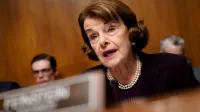
Environmental Protection Agency Administrator Stephen Johnson (shown above) has found himself with few friends after denying California's request for a waiver to regulate its own emissions. The denial was issued shortly after President Bush signed the new energy bill into law, leaving some to wonder if the auto industry struck a deal with the White House - we'll give you your energy bill if you give us one national emissions standard to follow, i.e. don't allow California to set its own set of stricter emissions standards. How did the White House get involved? A few newspapers have reported that Vice President Dick Cheney met with each of the Big 3 domestic automakers in the months leading up to the energy bill's passage. Did Cheney order EPA chief Johnson to deny California's request against the unanimous counsel of his advisors? Who knows, but the appearance of impropriety is there.

Johnson, however, is the one who has to back up the decision to deny California the ability to set its own emissions standards. As such, Senator Barbara Boxer (D-CA) has invited him to the Golden State to explain his decision to an eager audience that includes Edmund G. Brown Jr. (Attorney General of California), Mary Nichols (Chairperson of the California Air Resources Board), Fran Pavley (Senior Advisor, Natural Resources Defense Council), and Carl Pope (Executive Director of the Sierra Club) – a truly hostile crowd if ever there was one. There will no doubt be other curious senators in attendance for this field briefing, scheduled for January 10th. Since it's just an invitation, we're fairly certain that Johnson doesn't have to go, but for his own safety he better not show up with the automakers' interests as his only justification for the controversial decision.

[Source: Senate.gov via AutoblogGreen, Photo by Jonathan Ernst/Getty]

Next Page


Autoblog Features


Featured Galleries

Ford Fiesta Sedan
Audi R8 GT3 - spy shots
2010 Nissan Cube (JDM)
In the Autoblog Garage: 2009 HUMMER H3T Alpha
Ford Fiesta Sedan LIVE
2010 Ford Mustang - sneak peek
2010 Ford Mustang - LIVE
2010 Ford Mustang
Rolls Royce RR4 - spy shots II
In the Autoblog Garage: 2009 Mercedes Benz C63 AMG
Aston Martin Racing Vantage GT4
Scion xB Taco Truck


Find Your Next Car


Autoblog Video

Sponsored Links

Autoblog bloggers (30 days)

#BloggerPostsCmts
1Jeremy Korzeniewski895
2Damon Lavrinc742
3John Neff640
4Noah Joseph620
5Chris Shunk600
6Frank Filipponio583
7Jonathon Ramsey571
8Drew Phillips460
9Dan Roth398
10Sam Abuelsamid387
11Michael Harley245
12Sebastian Blanco220
13Alex Nunez2215
14Chris Tutor201
15Merritt Johnson64
16John McElroy40