
If it's direct-injected and sold in America, it's on this list

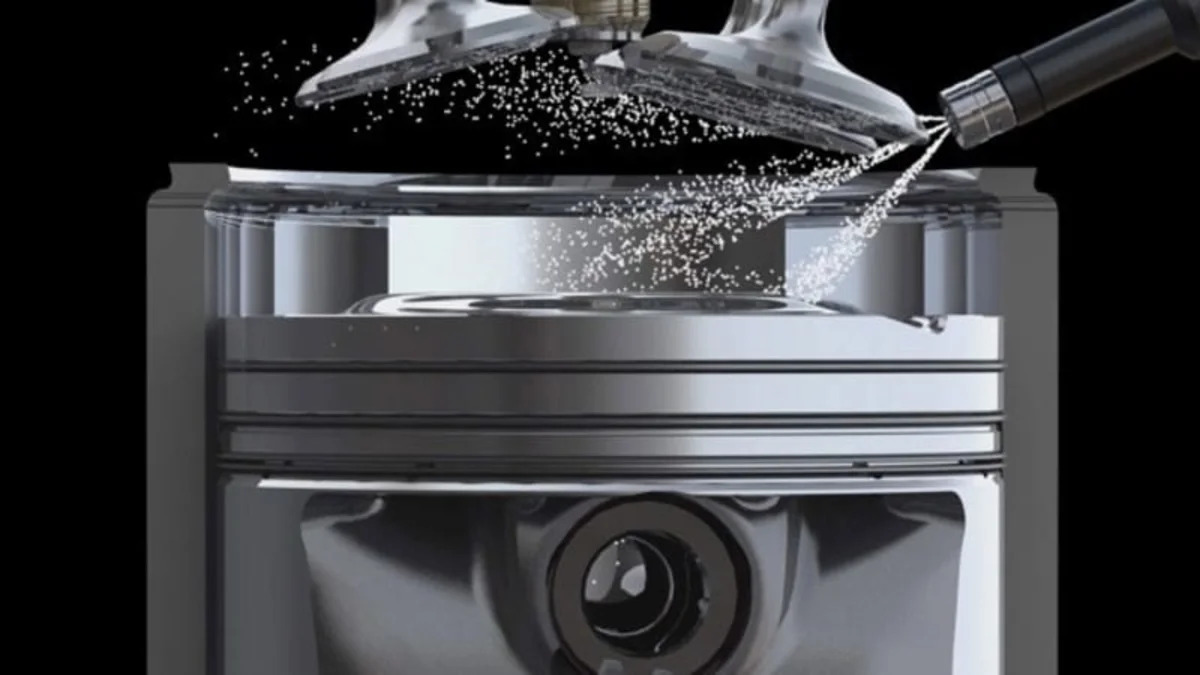
Direct injection is exciting technology in that it allows car enthusiasts to have their cake and eat it too. How so? By both improving fuel efficiency and increasing horsepower. This being the case, it's not surprising that automakers from all ends of the world are embracing the tech and selling their resultant wares right here in the U.S. of A.
While Ford has made lots of noise as of late with its so-called EcoBoost power-adding system, the Blue Oval is hardly the first automaker to offer direct injection to the masses, even with forced induction. For a complete rundown of all current passenger cars sold in America with direct injection engines, our friends over at Winding Road have compiled what looks to be a pretty complete list in their latest issue. Expect this to be a rapidly expanding list as more and more engines are fitted with direct injection to yield greater fuel efficiency, lower emissions, and more power.
[Source: Winding Road - NOTE: Link launches magazine e-reader]



Get a WordPress.com Blog


Reader Comments (Page 1 of 2)
bart 4:25PM (8/20/2009)
TDI = turbo direct injection ;)
Reply
stealthcorvette 9:52PM (8/23/2009)
turbo diesel injection
Steven 4:27PM (8/20/2009)
Maybe someone who knows better can inform me...
From a power standpoint, direct injection seems a bit counter-intuitive to me, as I am under the impression that you want the fuel injection to be far upstream of the cylinder, as it allows for better atomization and fuel "shearing." Note formula 1 cars have the injectors high above the intake runners. It is also who carbureted cars can produce more peak power than the equivalent fuel injected motor.
Direct injection seems like it would be much harder for fuel to atomize, and thus, combust.
Reply
montoym 4:29PM (8/20/2009)
I believe the high psi of the injection performs the majority of the atomization and rectifies the issue.
why not the LS2LS7? 4:52PM (8/20/2009)
The force the fuel through much smaller holes and thus it atomizes a lot better with DI. This is possible since DI has such high fuel pressures (too high to reach with an electric fuel pump).
henrykrinkle 5:31PM (8/20/2009)
I believe the big thing is that the relatively cool fuel is being injected after the heat-generating compression stroke. This cools the combustion chamber and allows for more aggressive timing which generates more power without increasing detonation.
Or something. Magic, maybe.
PACOBELL 7:18PM (8/20/2009)
If I understand correctly,
The easiest way to explain direct injection in understandable terms is to say that it makes a gasoline powered engine closer to a diesel engine.
Not in all aspects though, but it allows the fuel to be injected into the cylinder after the piston compresses, whereas a normal gasoline engine must put in the fuel with the intake air through the intake valve before the piston compresses. Whenever a piston compresses the air and fuel mixture, heat is added as well as pressure, the pressure allow the fuel to ignite more powerfully, but the heat causes instability known as knock. Direct injection allows the engine to take advantage of the pressure without adding heat to the fuel, reducing knock. This allows higher compression ratios to be used, thus making an engine run more efficiently.
FYI, the lead previously used in gasoline reduced the knock effect, and used to allow engines to run more efficiently.
camarobuff67 8:17PM (8/20/2009)
Direct injection is good for gasoline engines because it allows for more air to be inducted into the cylinder while the intake valve is open. This means all air is inducted as opposed to a fuel/air mixture with port injection or carbeuration. In engineering speak, this is higher volumetric efficiency. Additionally, there is some charge cooling that occurs when the fuel is injected since fuel vaporizes in the cylinder and not in the intake ports. This allows for potentially higher compression ratios to be run without pre-ignition. This can be seen in engines such as the one used in the Mazdaspeed3 which has a compression ratio of almost 10. These effects are the main drivers for greater power and economy.
DI engines use higher fuel pressure to overcome the increased cylinder pressure compared to the intake ports. Additionally, the higher fuel pressure is used to ensure that the fuel is well atomized before combustion starts. I should note that DI engines right now inject fuel around the end of the intake stroke. This provides the charge cooling capability mentioned above and still allows for mixing while the charge is being compressed. A spark plug is still used to ignite the fuel/air mixture like a port fuel injected engine. This also still uses a stiochiometric air/fuel ratio like most gasoline engines today.
DI engines have the capability to run stratified. Meaning that they can run very lean. In this case, the direct injector sprays fuel when the piston is very close to top dead center. The injector is also aimed at an exact location to ensure that the spark plug will see the right air/fuel mixture to start combustion. This strategy has the benefits of running very lean like diesel engines and thus yielding very good fuel economy. The downside is that it can produce diesel like emissions - mainly particulate matter and NOx emissions. Mitsubishi tried this strategy in the early 90s with the GDI engine available in Japan. This engine was cancelled due to emissions constraints. It is doubtful that we will see stratified gas engines again unless there is a breakthrough in exhaust aftertreatment technology.
You can read the Wikipedia link about DI engines. It gives a little more background that I can type here:
http://en.wikipedia.org/wiki/Gasoline_direct_injection
Nixapatfan 4:36PM (8/20/2009)
Damn all these years I was lead to believe the Japanese were so technically advanced, and GM was the one that had ancient powertrains. I think this list is biased. LOL.
Reply
the4thheat 9:47PM (8/20/2009)
http://en.wikipedia.org/wiki/Gasoline_direct_injection
I think you should take a look at when and by who direct injection was first added to cars there. And also the fact that much like everything else not every direct injection system is equal, so the companies that pioneered it have more advanced systems now (like the Lexus 2.5L plant's dual injection).
Direct Injection would probably have been found on more import engines if it weren't for the fact that they didn't have to add it to compete since the domestic competitors were running pushrods.
MikeW 10:44PM (8/20/2009)
Maybe if the US fuel wasn't so crappy, we would have the good japanese/german engines.
TT 8:45AM (8/21/2009)
There were only 4 engines on that list from GM. It's just that they use them in 5 times as many models because they're the biggest platform whores in the business. The only thing on their list I would consider buying is the Solstice.
GM needed DI just to catch up to where the Japanese were without it.
Farmboy 4:36PM (8/20/2009)
Isn't it "have your cake and eat it too"? Not sure, dyslexia is a bitch. :P
Still, direct-injection is exciting, and Ford knows it. EcoBoost is Ford's best V6 by a long shot. The Vulcan was decent, but the Duratec is a nightmare. I hate that engine.
Reply
Audi-Mad 4:45PM (8/20/2009)
Didnt Volkswagen introduce direct injection for a petrol engine in late 2000?
They also made direct injection diesel mainstream around 1990.
Reply
why not the LS2LS7? 4:56PM (8/20/2009)
1990? No. You're thinking of pumpjets, which had a prechamber.
In 2001 the Audi R8 (race car, not street) got direct injection. Audi then shipped it on Diesels soon after, the the gas direct injection engines (FSI) showed up in Europe in 2005 or so and the us a bit later.
I think Mazda was first with direct injection in a gas car on the US market with the DISI engine. They didn't embrace it like VW/Audi did though. I believe GM was the 2nd company to ship it in wider use in the US (3rd overall) with the 2.0 Turbo Ecotec (LNF/SIDI) and then the 3.6L V6 in the CTS. Only a year or two later most everyone else jumped in.
why not the LS2LS7? 5:07PM (8/20/2009)
That 2nd paragraph reads awkwardly.
I was tying to say this:
In US market for gas engines:
1st - Mazda DISI (FZR) engine, but not widely used.
1st company to widely embrace DI: VW (including Audi and other subsidiary companies).
GM was the 2nd to widely embrace DI in the US market.
My previous paragraph kind of left out where VW was in this order.
katatonics 6:56PM (8/20/2009)
Actually the third generation Golf had a TDI diesel in 1991. I believe it was introduced on the Audi 100 in 1989.
why not the LS2LS7? 9:46PM (8/20/2009)
VW used pumpjets until about 1996, then went to common rail (direct injected).
A 1991 VW would be a pumpjet, which injected into a prechamber. Even if it has the name TDI.
why not the LS2LS7? 9:49PM (8/20/2009)
I take it back. They were pumpjets in 1991, but apparently pumpjets were direct injected. Before the pumpjets, they used prechambers.
So there were direct injected VW Diesels in 1991. They didn't work like the current ones, but they were direct injected.
superdave 4:54PM (8/20/2009)
Yay, bring on the intake valve deposits!
http://forums.vwvortex.com/zerothread?id=4508464&postid=59959004#59959004
http://www.bobistheoilguy.com/forums/ubbthreads.php?ubb=showflat&Number=1414263
Reply