
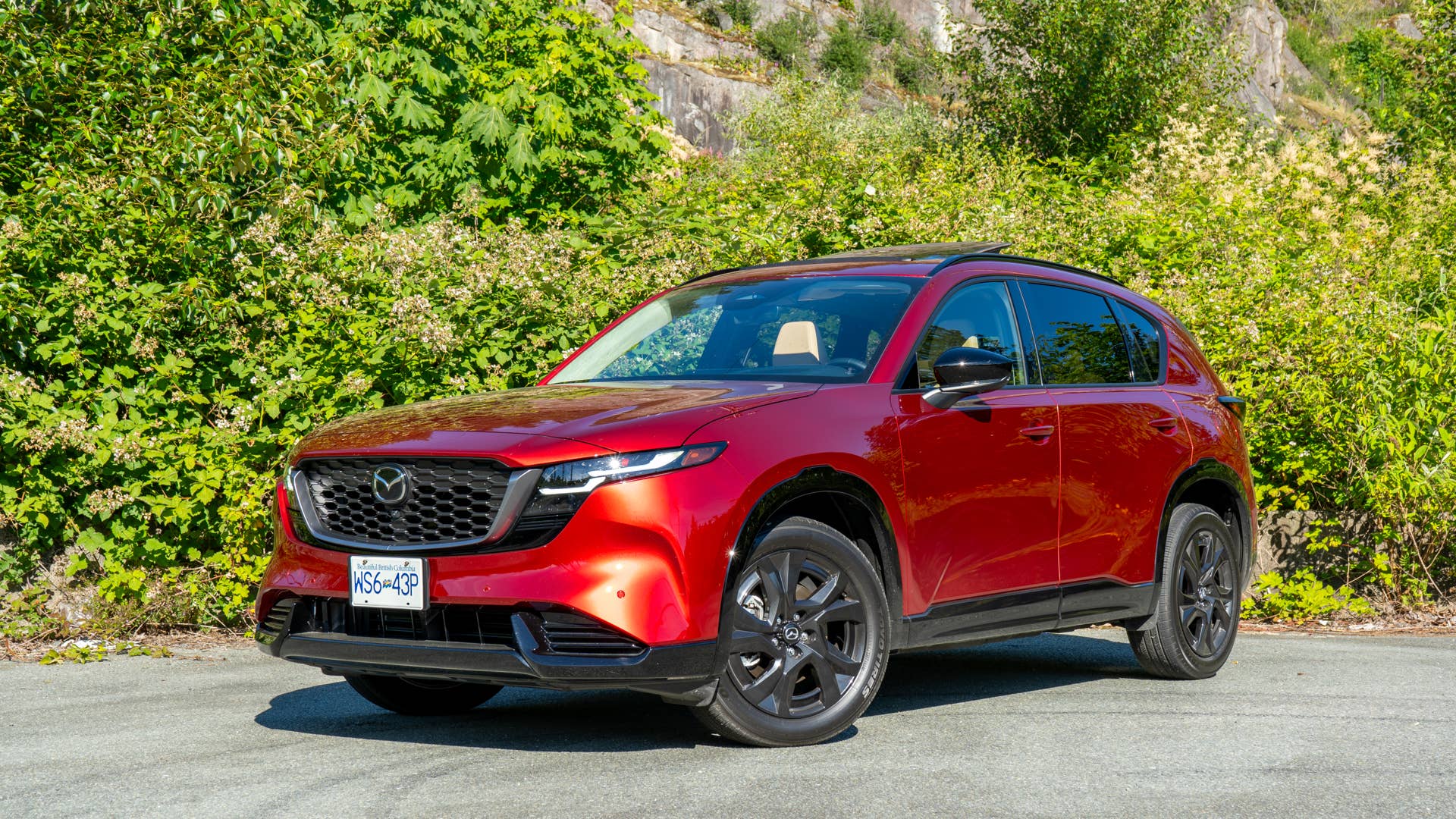
The Mazda CX-5 feels personal to me in a way most compact SUVs do not
In a past life, when I was still working the showroom floor at what was then Western Canada’s top-volume Mazda dealership, the CX-5 wasn’t just another crossover parked among many on the roadside frontline. It was the car that kept the lights on. We sold more CX-5s than any other Mazda model, and I even leased a 2021 CX-5 Turbo for a while and later sold one to my mother, who enjoyed hers for four years before replacing it with a Mercedes-Benz GLC, as she wanted something that felt like the next logical step up. In other words, my relationship with the CX-5 hasn’t been formed over just one week behind the wheel of one of Mazda’s latest press cars; it’s been established through years of watching real people choose one, drive one, and explain why it worked for their lives, in their own words.
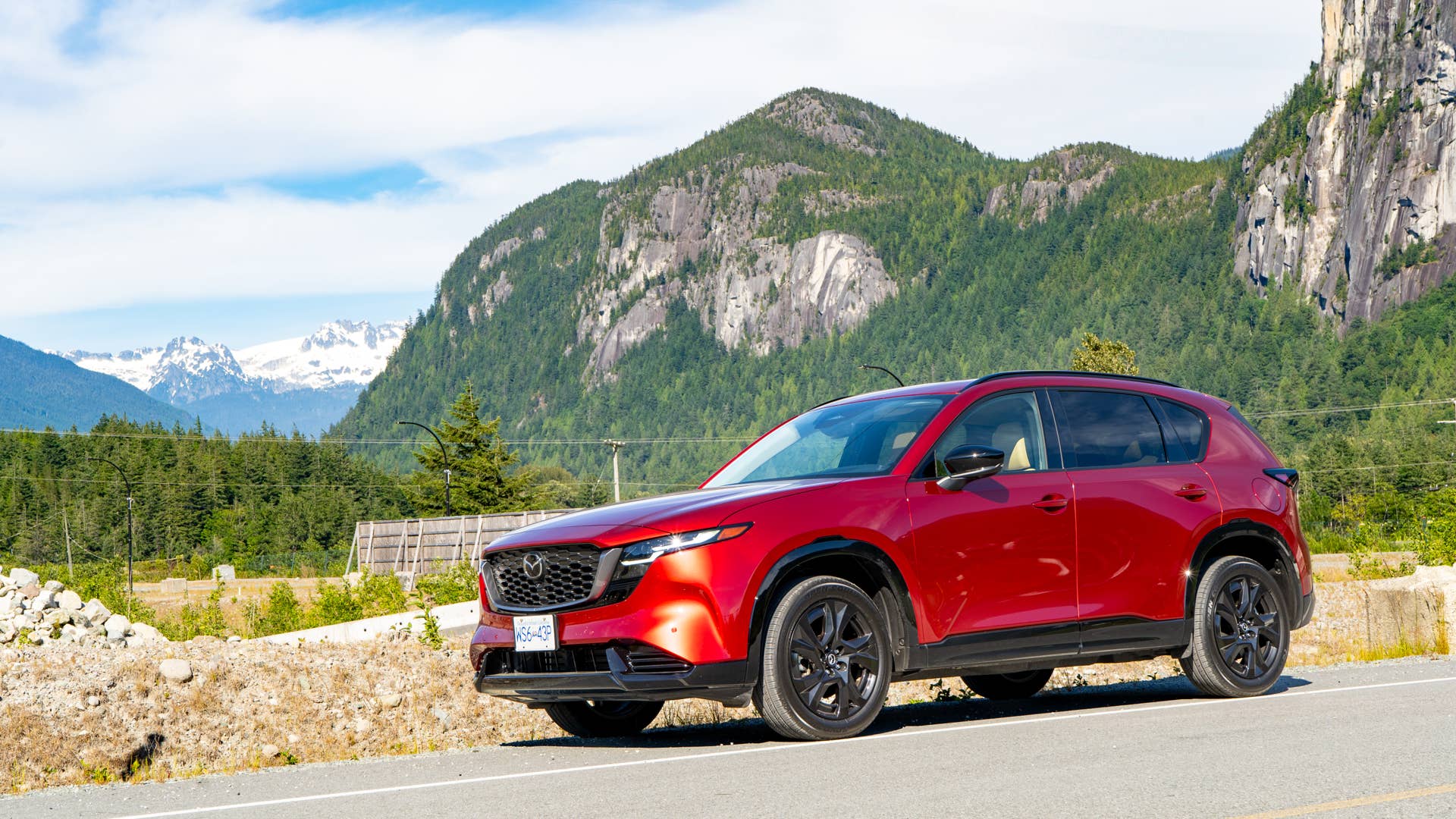
Driving the all-new 2026 Mazda CX-5 felt like doing more than curating a story for yet another compact crossover review. Instead, it felt more like a check-in on one of Mazda’s most important vehicles, a model that has always embodied the brand’s grandest ambition: making normal cars feel less normal. After a week with a Canadian-market 2026 Mazda CX-5 GT AWD Premium Package in Soul Red Crystal Metallic (the equivalent of the U.S.-market Premium Plus), plus some prior seat time in one at NWAPA’s Mudfest, I am convinced Mazda has made the CX-5 better in almost every dynamic and visual way. It’s sharper to drive, nicer to look at, roomier inside, more mature on the road, and still the compact SUV I would choose if I wanted an affordable, headache-free family crossover that didn’t make driving feel like a chore. But, as with many great things, there is a catch.
For years, Mazda preached the gospel of human-centred interior design. Physical controls mattered, and touchscreens were never supposed to replace every useful button. Volume knobs, climate controls, and satisfying little pieces of switchgear were part of what made Mazda interiors feel more premium than their prices suggested, and this was always an effective element of my sales pitch back in the day. The new CX-5 walks away from much of that philosophy, replacing most of the old cabin’s tactile charm with one enormous touchscreen. That screen at least works competently, unlike previous Mazda infotainment software, but it also cheapens the everyday experience in a subtle yet frustrating way. The 2026 CX-5 may be the best CX-5 Mazda has ever built thus far, but there are still things I will miss about the old one.
Cole Attisha
2026 Mazda CX-5 GT AWD Key Specs
| Specification | 2026 Mazda CX-5 GT AWD |
|---|---|
| Engine | 2.5-litre Skyactiv-G naturally aspirated inline-four |
| Horsepower | 187 hp @ 6,000 RPM |
| Torque | 186 lb-ft @ 4,000 RPM |
| Transmission | 6-speed automatic |
| Drivetrain | i-Activ AWD |
| U.S. fuel economy | 24/30/26 mpg city/highway/combined |
| Canadian fuel economy | 9.8/7.4/8.7 L/100 km city/highway/combined |
| Max towing | 1,500 lb |
| Seating | 5 passengers |
| U.S. starting price | $29,990 before destination (2.5 S) $38,990 before destination (2.5 S Premium Plus) |
| Canadian GT AWD Premium Package MSRP | $46,700 before freight/PDE/options |
Cole Attisha
Powertrain: 9.4/10
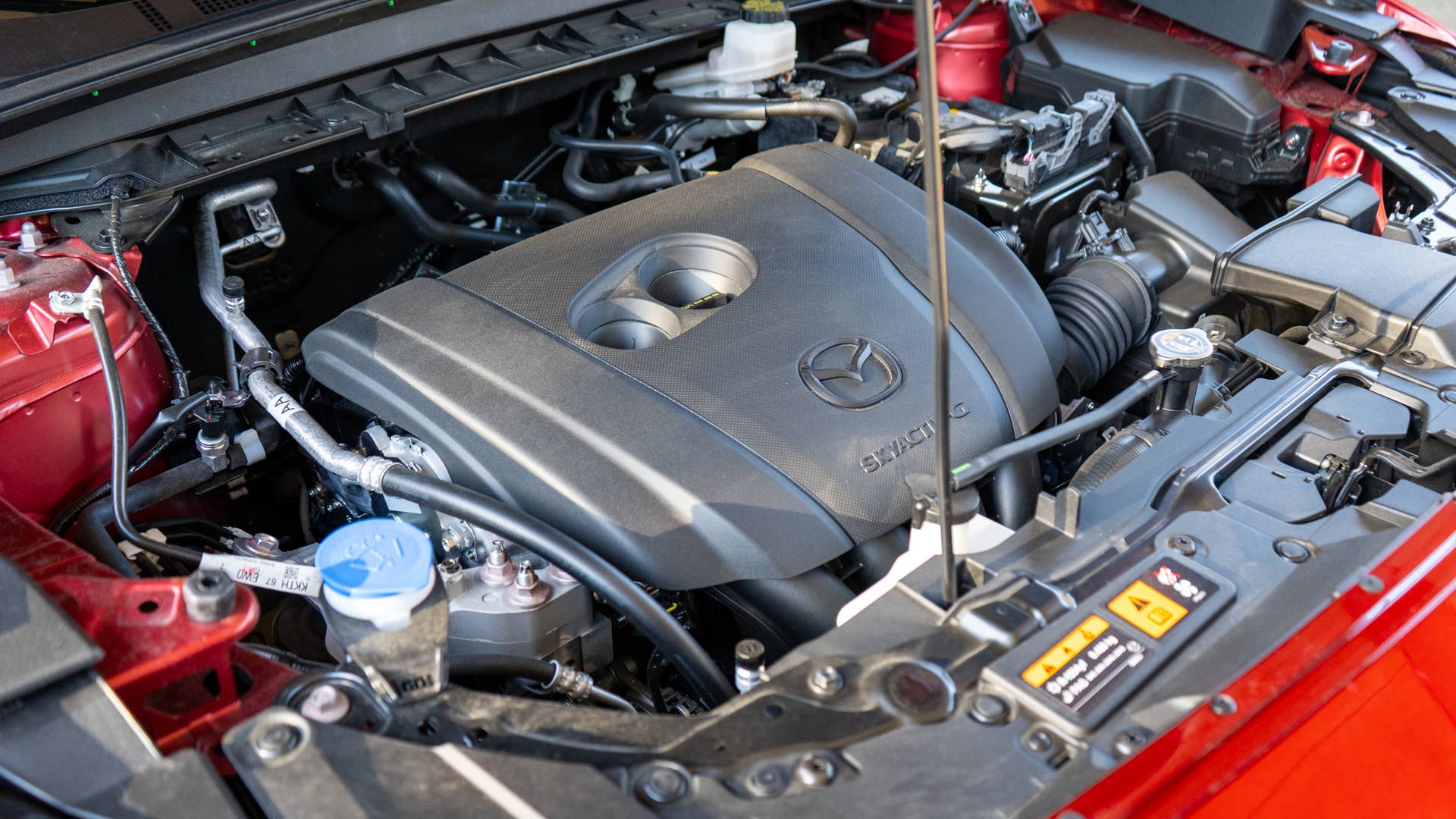
I expected to miss the turbocharged engine, but I didn’t miss it nearly as much as I thought I would. Thanks to Mazda’s enticing employee lease programs, my own CX-5 was a top-of-the-line turbo model, so I went into this test expecting the naturally aspirated 2.5-litre Skyactiv-G four-cylinder to feel a bit dinky and underpowered by comparison. Instead, it felt smooth, surprisingly refined in normal driving, and perfectly matched to the vehicle’s character. It only felt lacking when I asked for a real surplus of power, such as when I was trying to pass a left-lane hogger on an uphill section of the Sea-to-Sky Highway. In that moment, I had to floor it and let the engine work hard to barely squeeze past.
That is the exception, however, and not the rule. Around Vancouver, the 2.5-litre felt effortless, and on the highway, it had ample power most of the time. Through sweeping coastal bends, it never felt like it was spoiling the CX-5’s rhythm. The engine does get louder than some rivals under load, and Mazda could probably use a bit more sound insulation under the hood, but the powertrain tuning is excellent. The six-speed automatic is also better than its age would suggest. Many buyers might look at the spec sheet and assume a six-speed automatic is outdated in 2026, especially when rivals use eight- or nine-speed automatics, eCVTs, hybrids, or fully electric setups. But in the CX-5, the transmission feels natural, smooth, and responsive enough, and is beautifully suited to the engine’s torque curve. Sport mode sharpens the throttle, steering, and shift behaviour without making the vehicle feel jerky or twitchy.
Cole Attisha
I also appreciate Mazda’s strategy here regarding powertrain packaging. The naturally aspirated 2.5-litre gives buyers a simpler, more affordable, easier-to-trust powertrain, while a proper hybrid version is coming later. That’s an important clarification because the CX-5 won’t use Toyota hybrid hardware, unlike the U.S.-built CX-50 Hybrid, which does. Mazda has said the upcoming CX-5 Hybrid will use its own Skyactiv-Z engine with Mazda Hybrid System technology, intended to improve performance, efficiency, and driving engagement. After driving this regular 2.5-litre CX-5, I am more excited about the upcoming hybrid than ever before. If Mazda can add meaningful power and efficiency without diluting the driving experience, the CX-5 Hybrid could become one of the most interesting mainstream family SUVs in the coming year.
For now, though, I still wouldn’t dismiss the naturally aspirated engine. In fact, after this week, I almost think I would choose it over the old turbo for its simplicity, lower fuel consumption, and the fact that it’s satisfying enough to still feel authentically Mazda.
(C) 2026 Doug Berger | DBPics
Driving Dynamics: 9.9/10
This is still, undoubtedly, the compact SUV for people who actually enjoy driving, perhaps more so now than ever. Mazda’s signature trick has always been making ordinary cars feel slightly extraordinary, and the CX-5 remains one of the clearest examples of that philosophy. A Toyota RAV4 or Honda CR-V can make driving satisfying, but the CX-5 makes it enticing. One might make the commute less frustrating, but the other inspires you to take the long way home.
On British Columbia’s Sea-to-Sky Highway, the CX-5 reminded me why I have always liked this model so much. The steering is the best in its class: nicely weighted, accurate, and more connected than nearly anything else in the compact SUV segment. The suspension feels laterally tight, with excellent control through corners, but the ride remains plenty comfortable for daily family use. Body control is phenomenal for a mainstream crossover, and the i-Activ AWD system helps weight transfer feel predictable and easy to manage.
(C) 2026 Doug Berger | DBPics
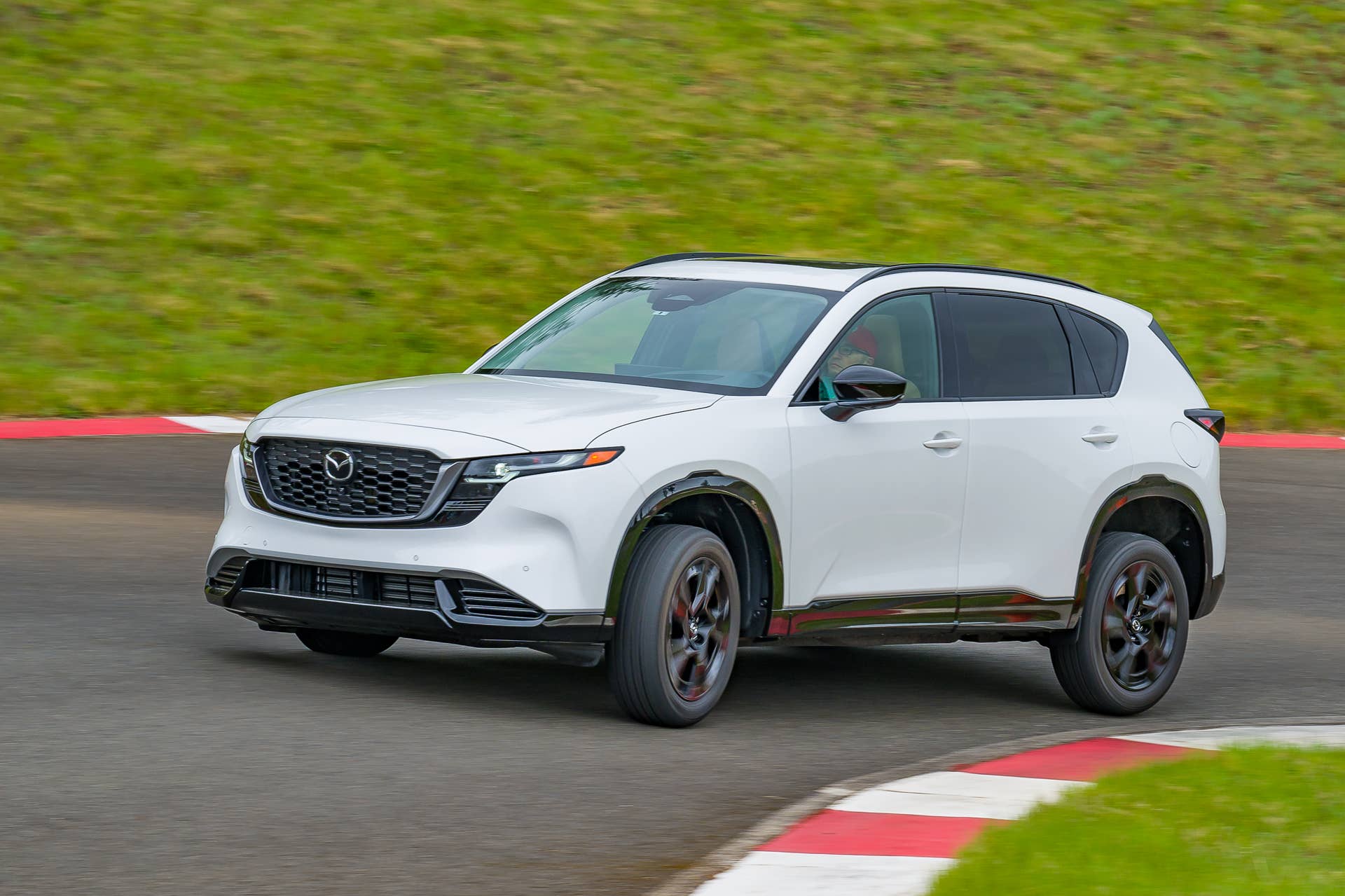
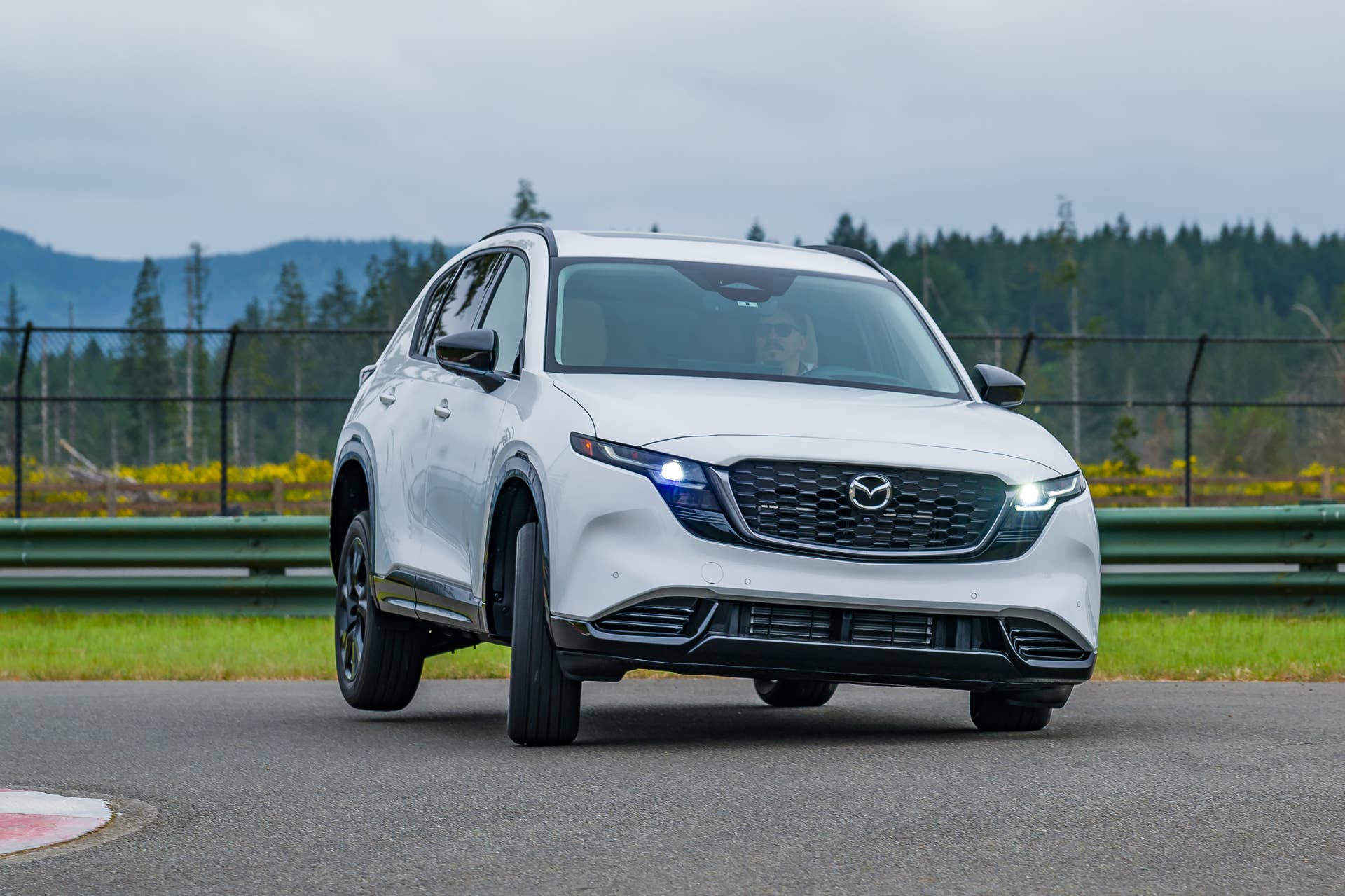
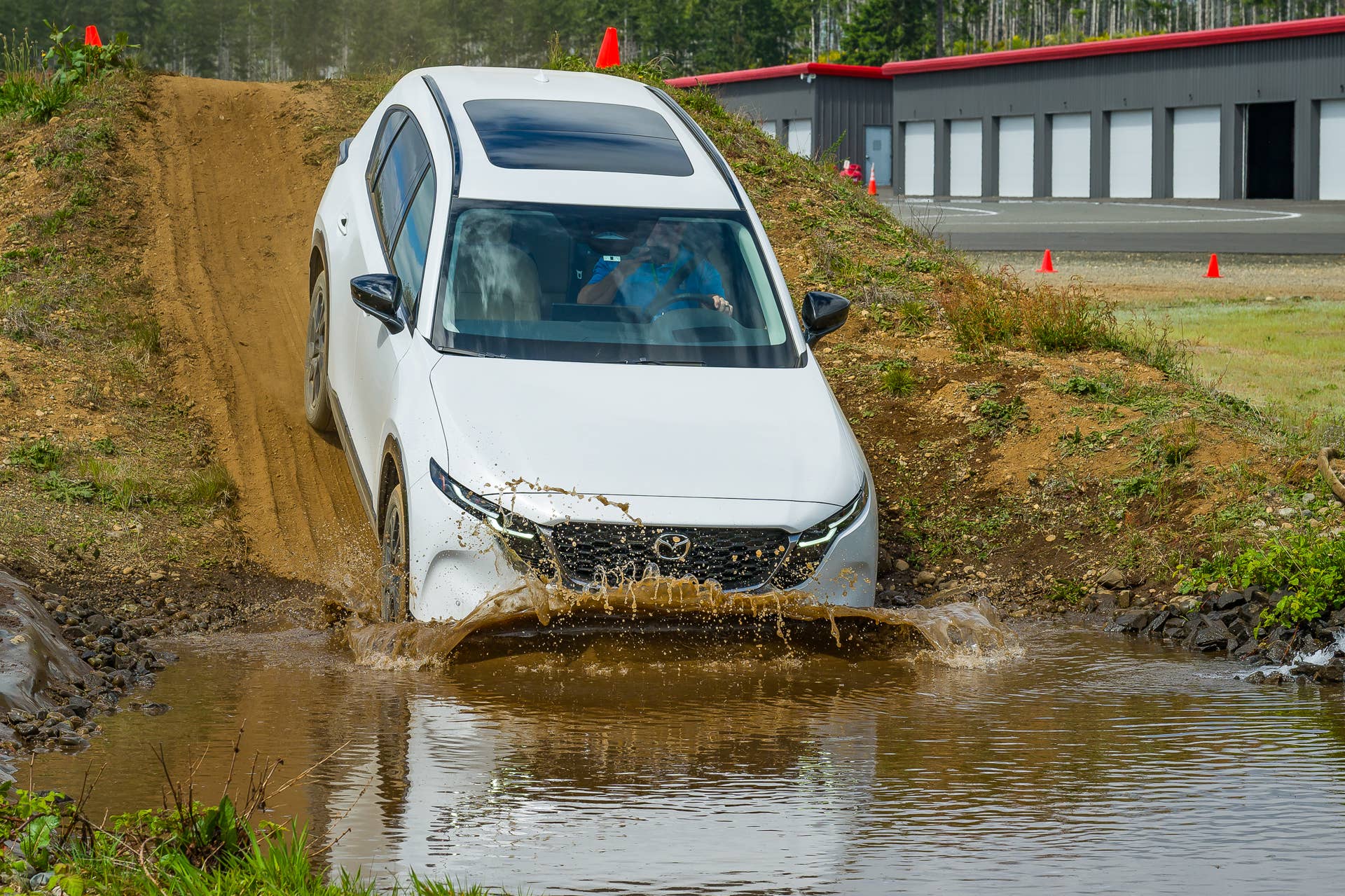
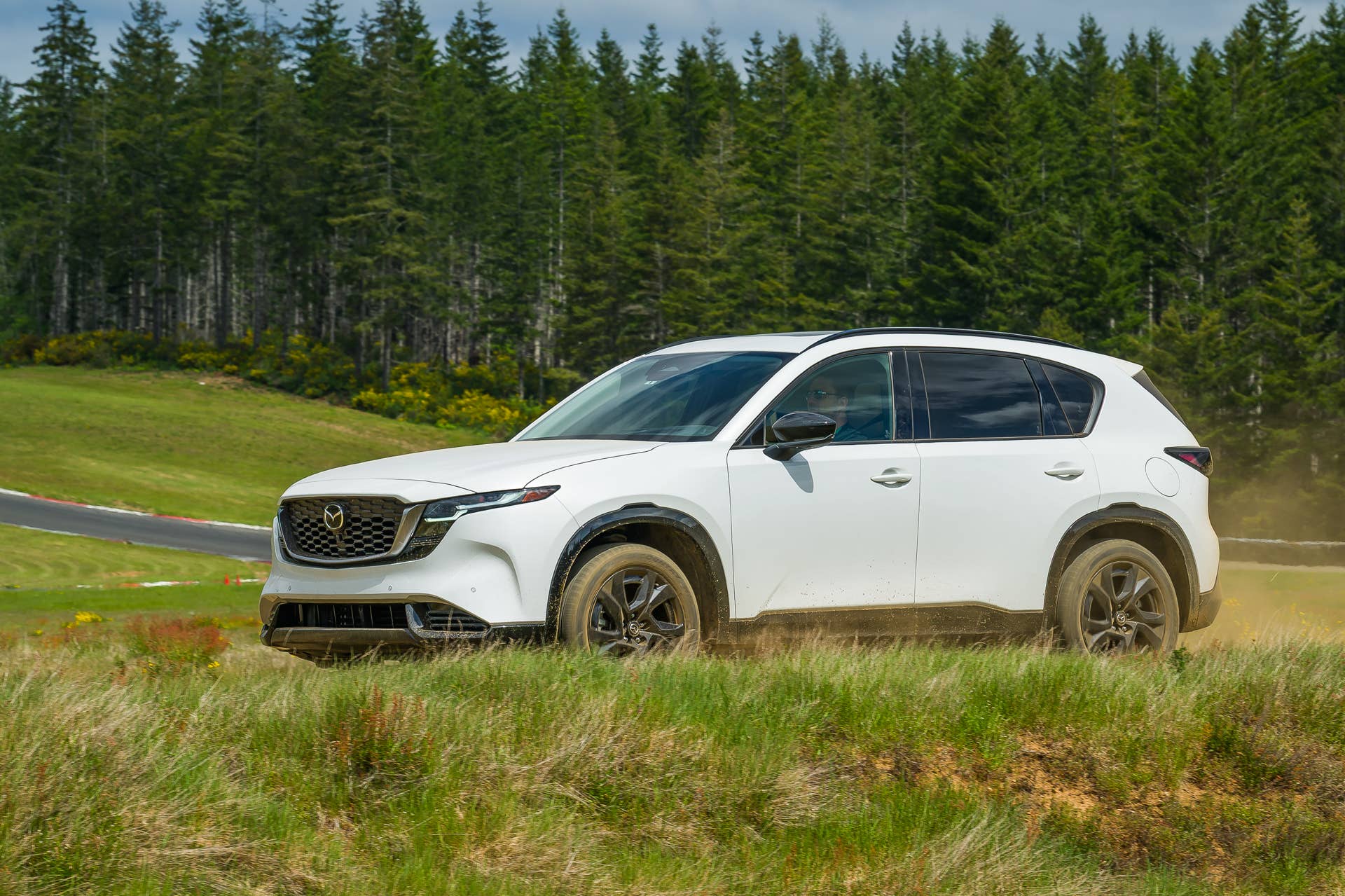
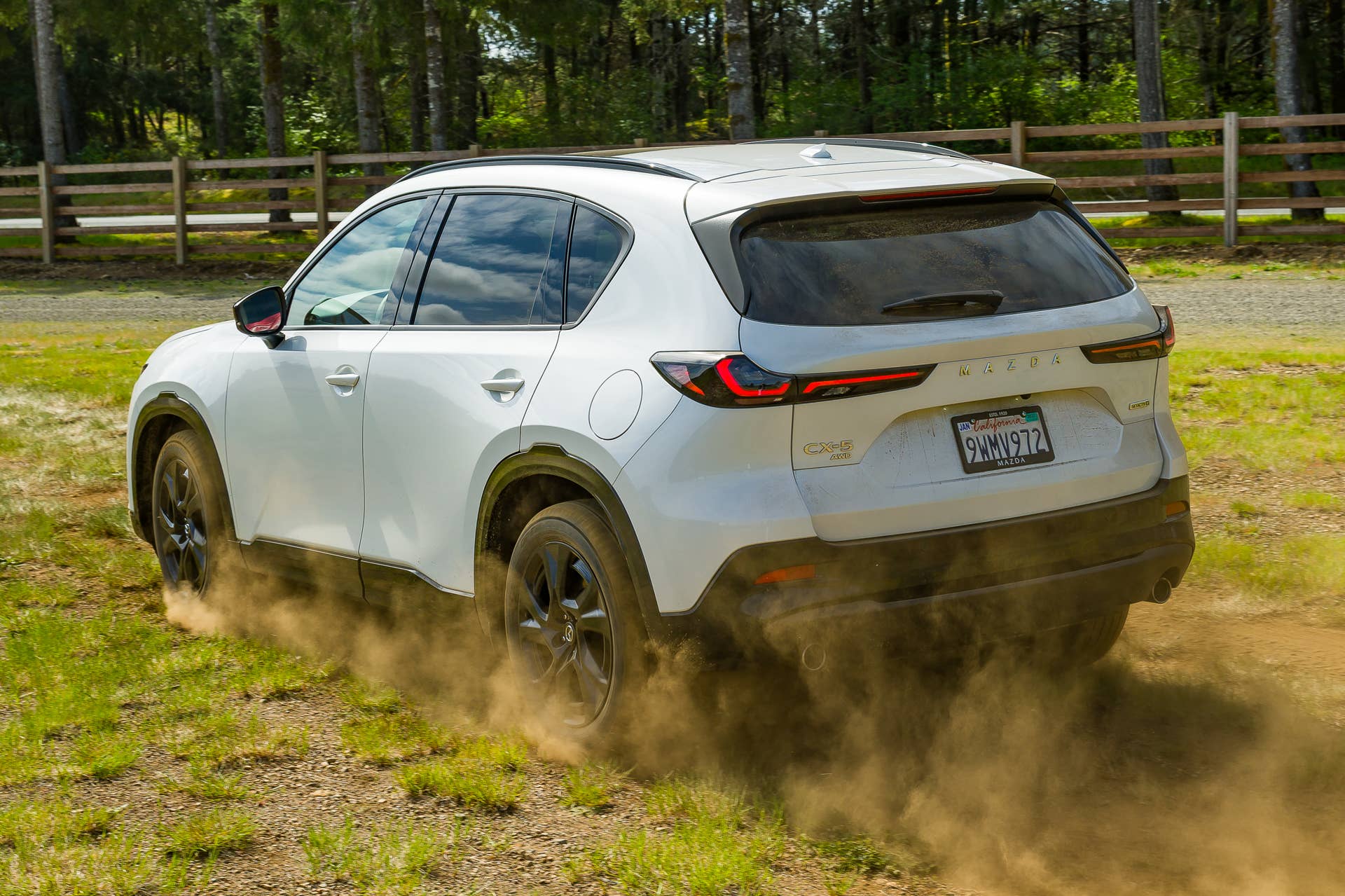
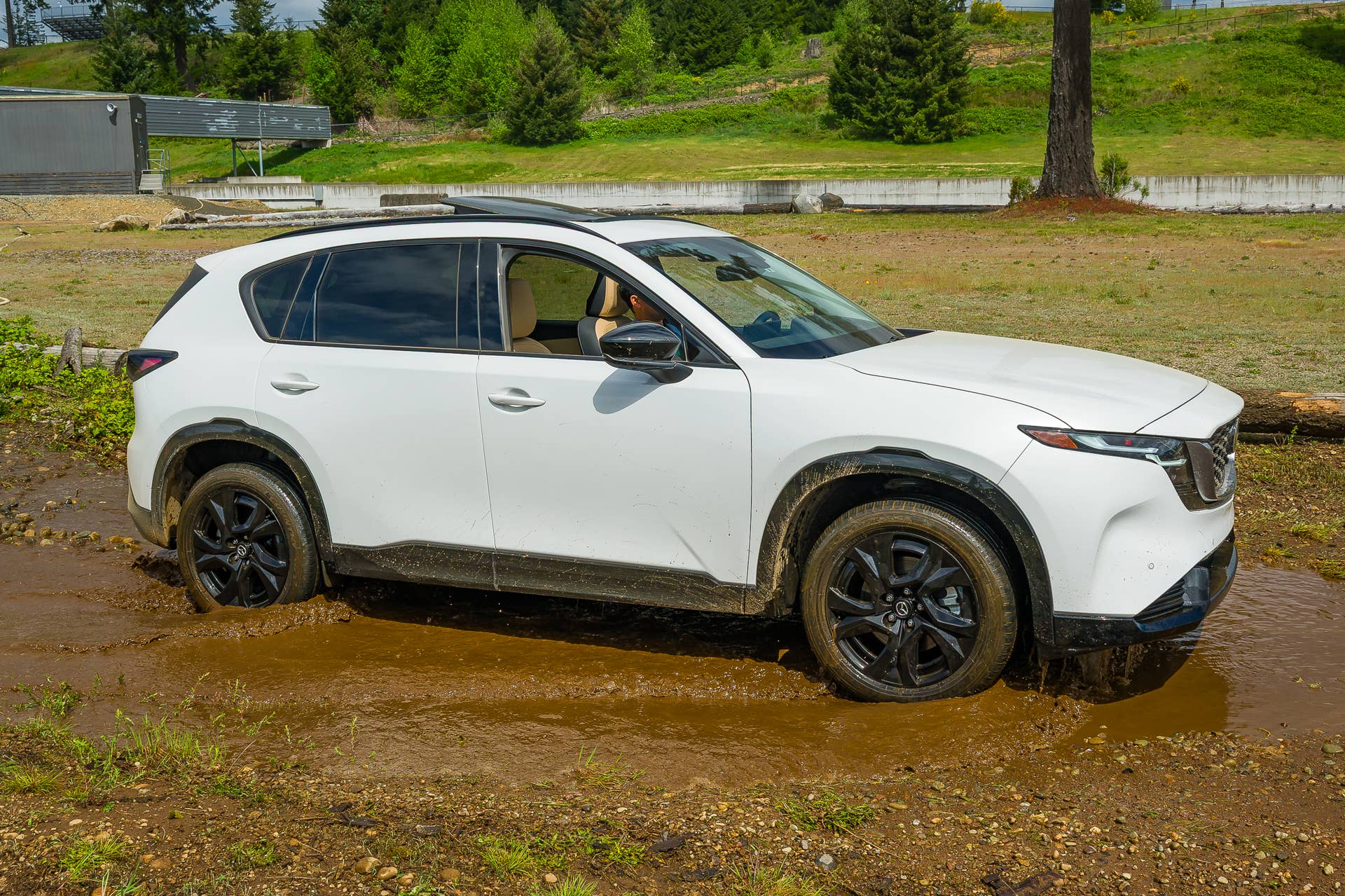
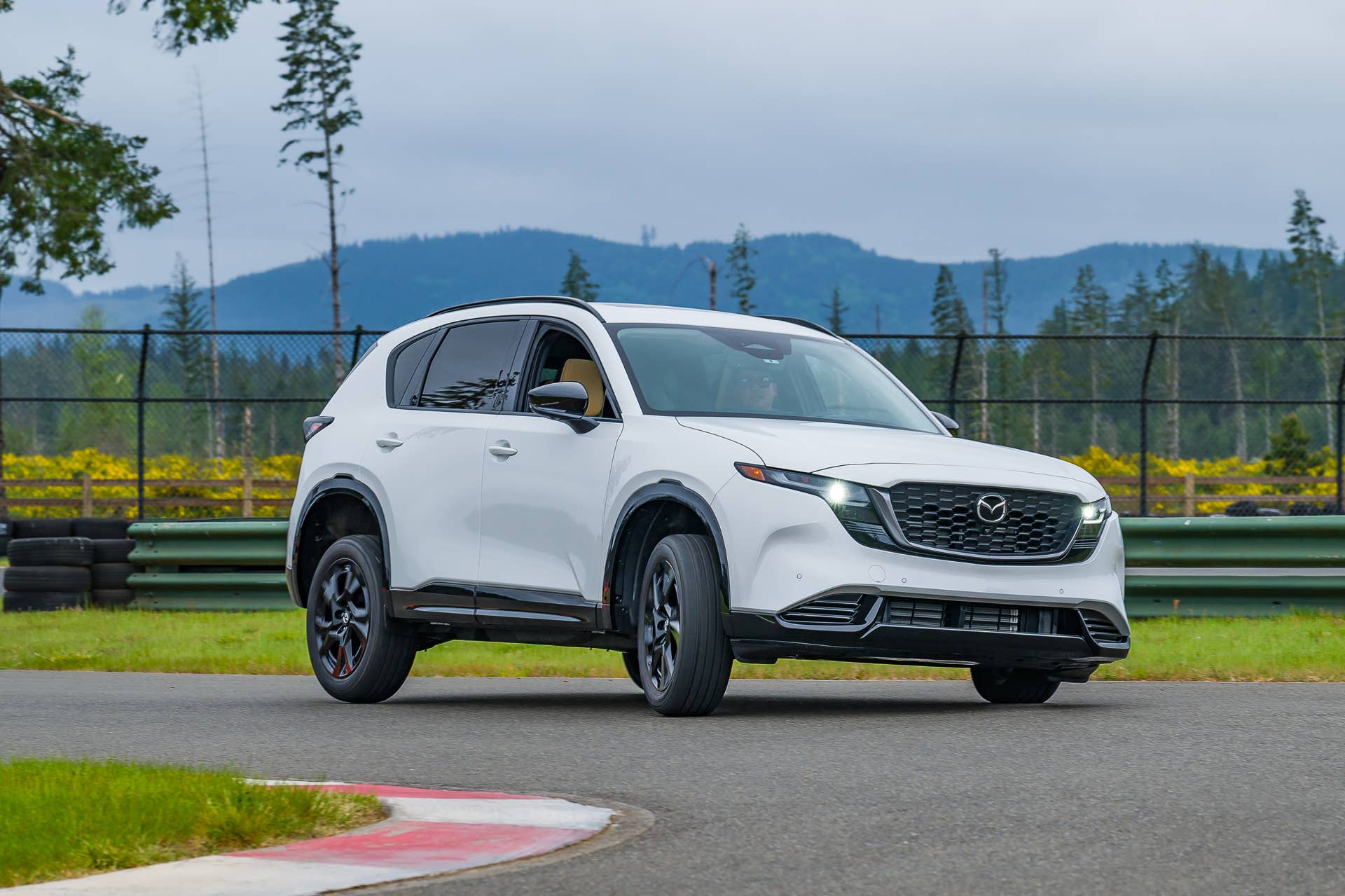
The best way I can describe it is that the CX-5 rewards smoothness. It doesn’t ask for exaggerated inputs or theatrical driving to feel fun. It prefers a driver who understands that slow is smooth, and smooth is fast. Get your hands, throttle, and braking inputs right, and the CX-5 flows down the road in a way most compact SUVs simply do not. I first noticed this at Mudfest, where I drove a white 2026 CX-5 AWD (as pictured) on both the road course and off-road sections. On the small track, I managed to get one of its rear wheels off the ground in a tight corner, like a well-set-up compact hot hatchback. It was the only vehicle there that did anything quite like that, and it was easily one of the most dynamic and engaging vehicles on the pavement course. Off-road, it also kept up surprisingly well with more rugged vehicles like the Toyota RAV4 Woodland and Mitsubishi Outlander Trail Edition.
(C) 2026 Doug Berger | DBPics
The CX-5 by no means brands itself as a rugged adventure vehicle—that’s the job of its Alabama-built sibling, the CX-50. But it still means Mazda has built a crossover with enough poise, balance, and mechanical confidence to make daily driving feel special while also being capable of tackling the odd washed-out forest service road. Wind and tire noise are well controlled, and the cabin feels more isolated than before.
The engine remains louder than some rivals when pushed, but I would rather hear an engine working honestly than drive something that feels numb. And that’s what the CX-5 does best; it does all the basic compact crossover things well: sip fuel, not break down, hold its value, and comfortably fit five people and their many things. But it does so in a package that hasn’t grown out of being fun in favour of pragmatism; it still has an athletic side and a keen eye for fashion.
Cole Attisha
Exterior Design: 9.7/10
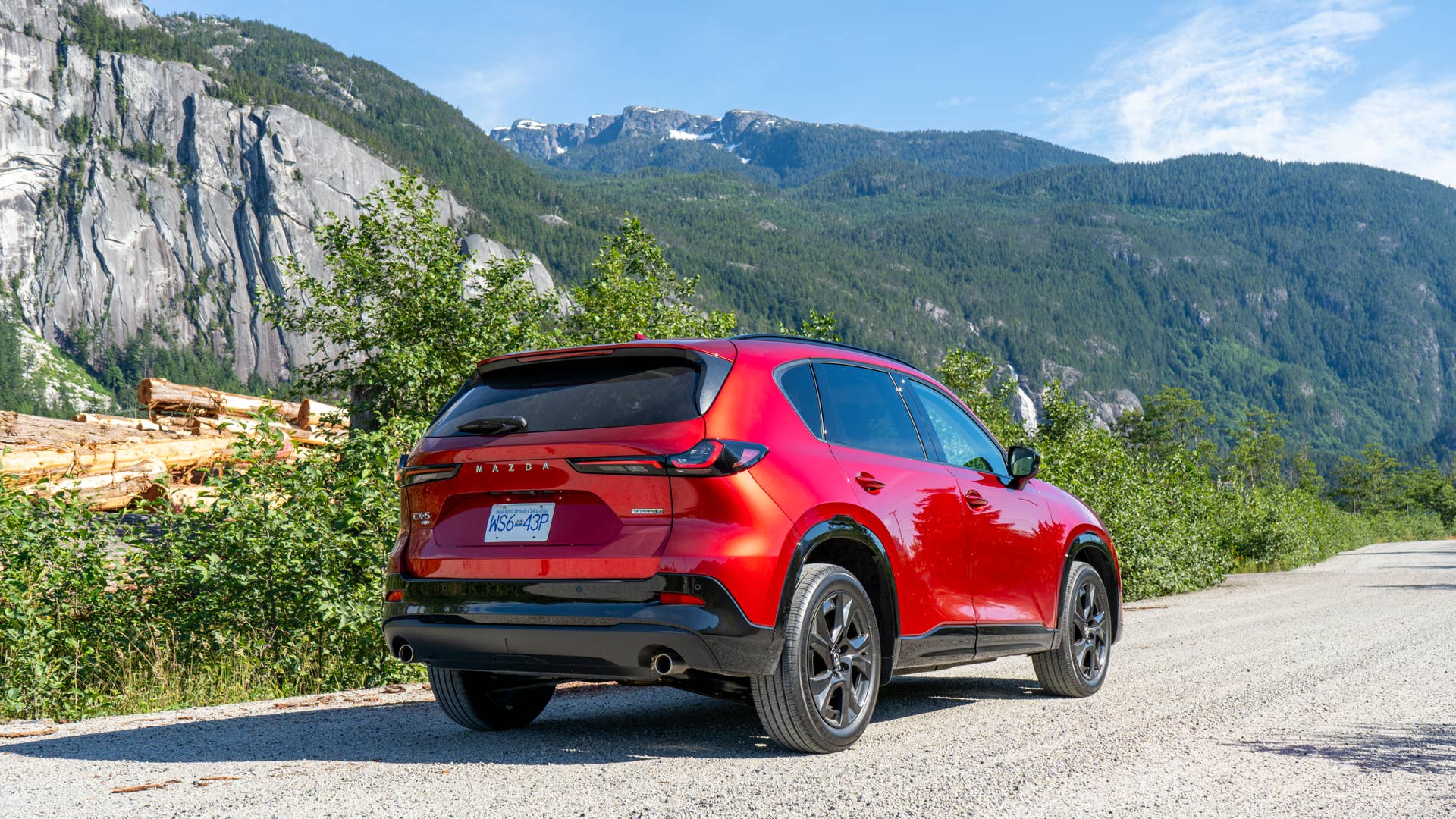
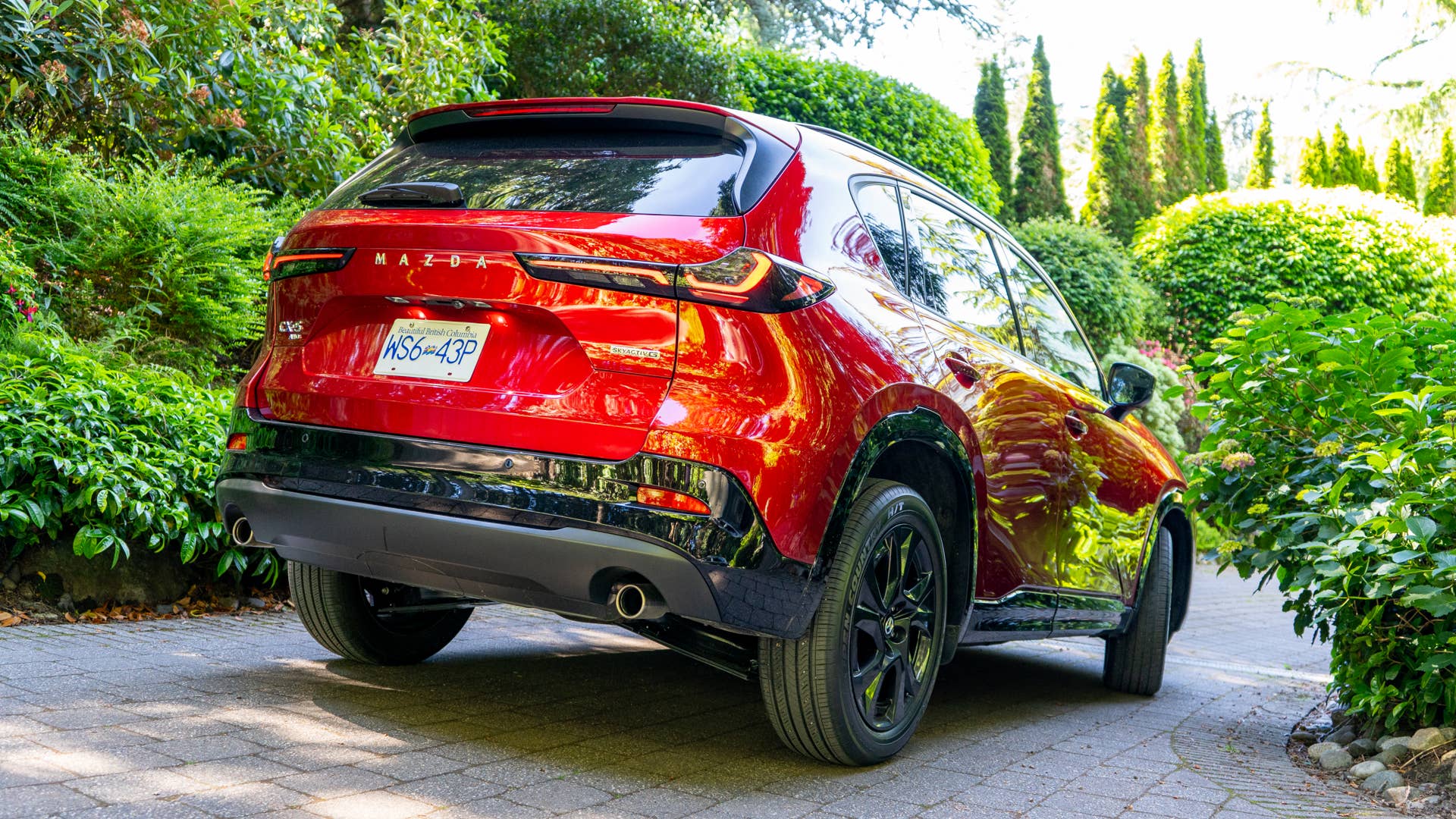
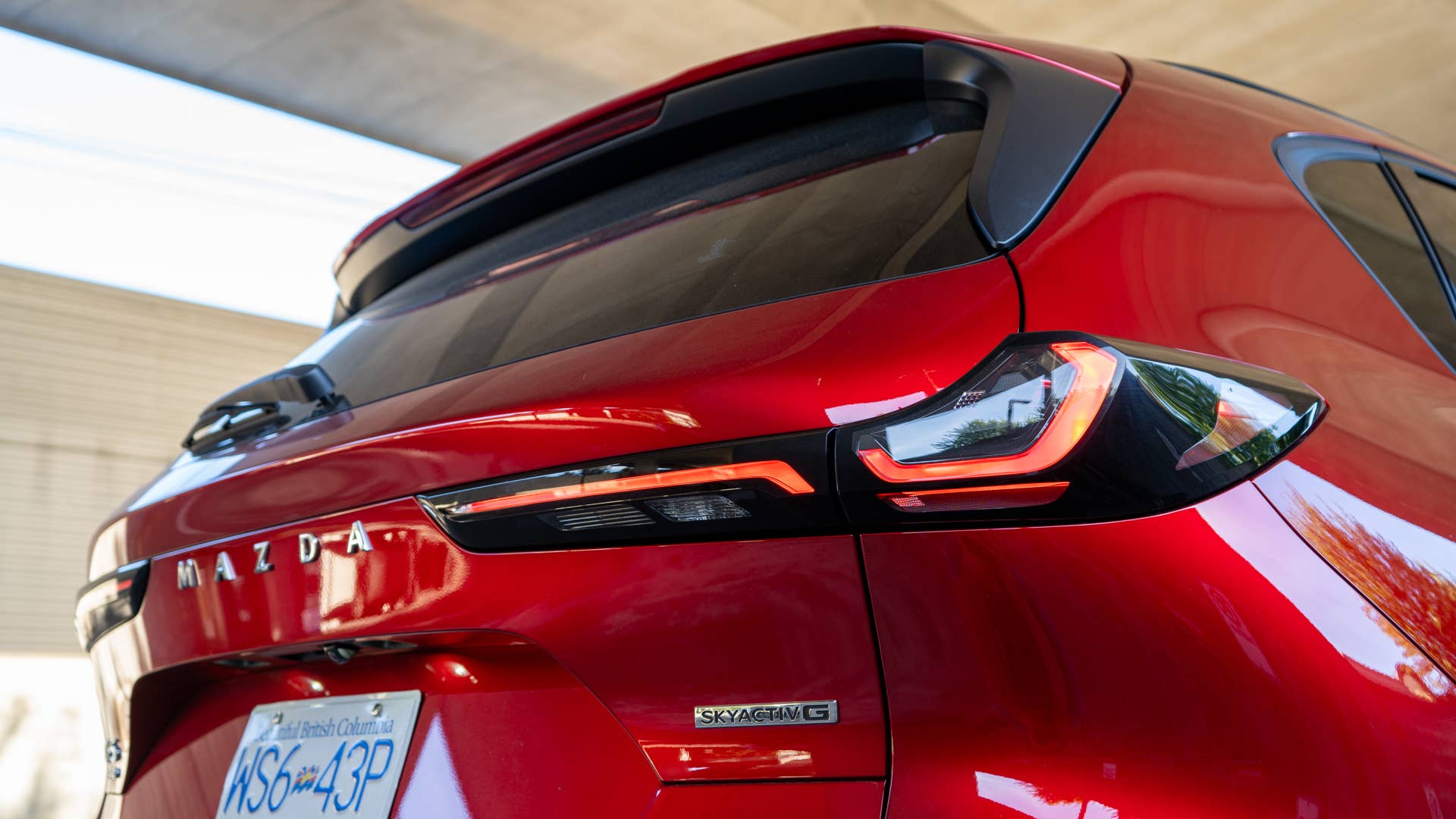
The 2026 CX-5 looks sharper, bolder, and more modern without losing its familiar core identity. That’s no easy task, and Mazda could have easily taken things too far, especially with one of its most important products. Instead, the new CX-5 still immediately reads as a CX-5, only broader, cleaner, and more confident. The stacked LEDs freshen the front end, while the rear is where the redesign makes the biggest difference. The wider taillights work better here than they do on the larger CX-70 and CX-90, where they can look a bit bulbous from certain angles.
Cole Attisha
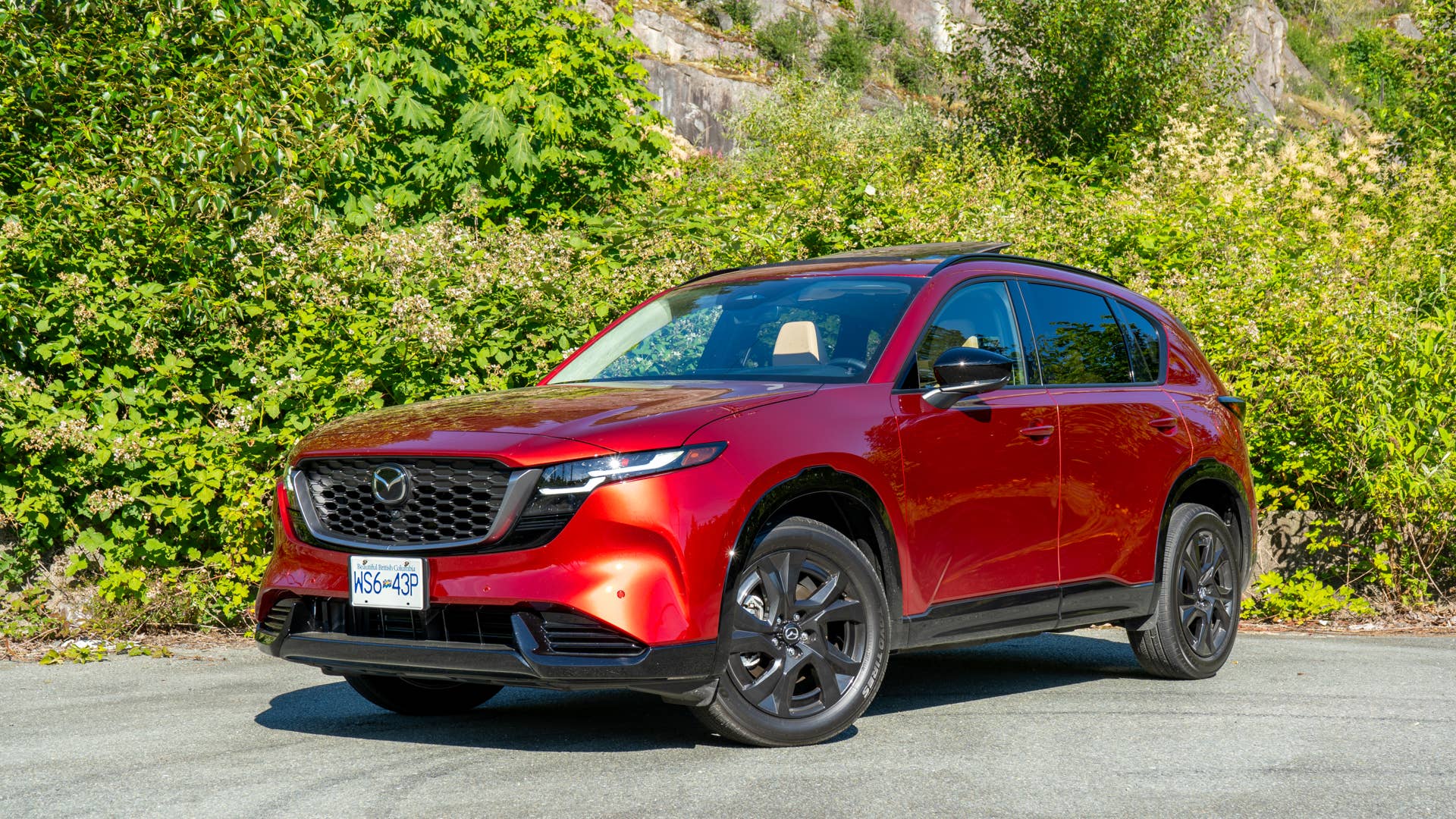
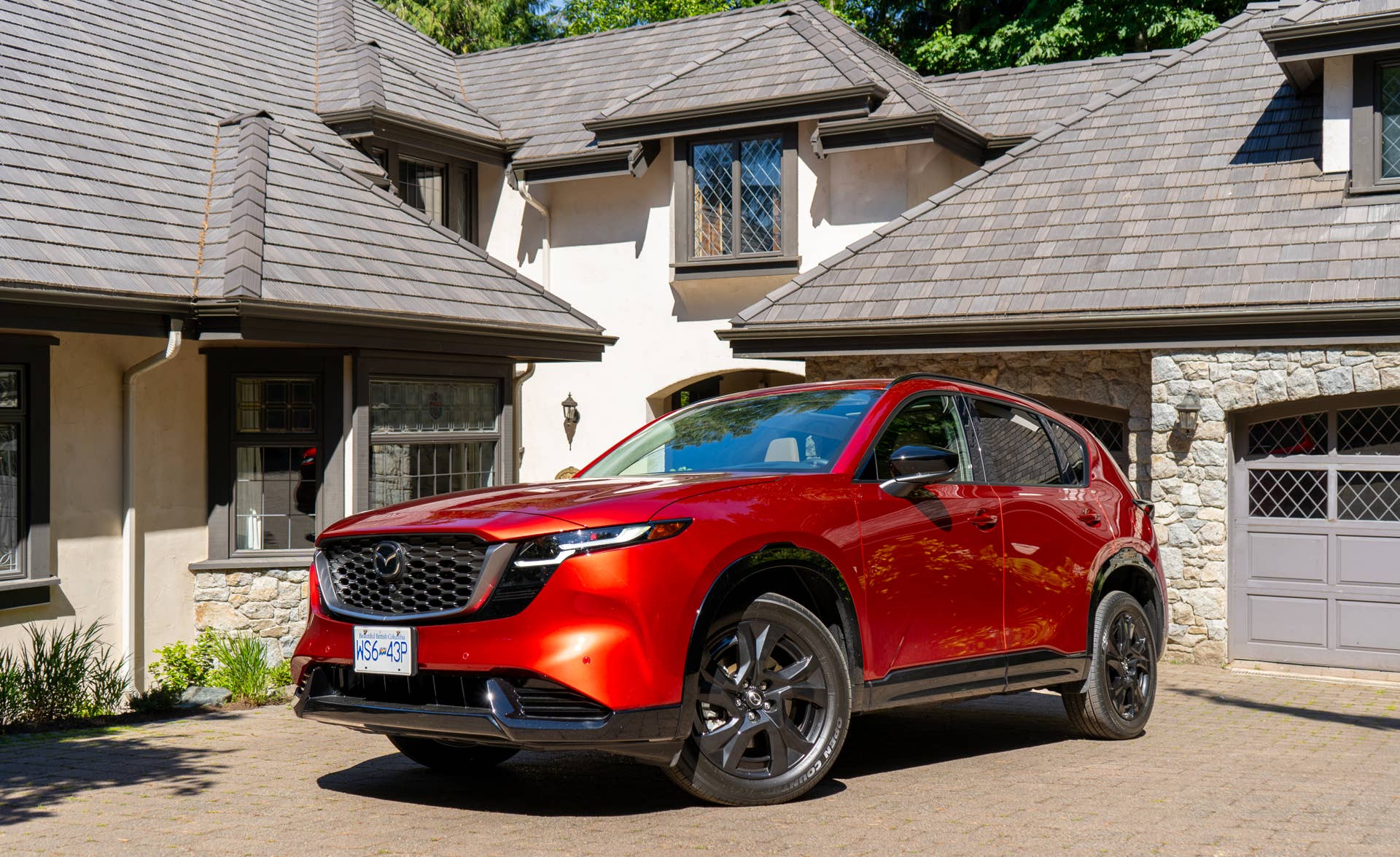
Three luscious coats of Soul Red Crystal Metallic paint help, obviously, and it remains one of the best paint colours in the industry. On this new CX-5, the body surfacing looks richer and more expensive, and the deep, red paint brilliantly highlights how light flows naturally along the SUV’s curves like a liquified sheen. I also appreciated the gloss-black body cladding, which is a major improvement over the old black plastic trim and adds more visual depth than the body-coloured cladding on post-facelift, previous-generation CX-5s. The new “MAZDA” script across the rear might divide people, and some friends of mine weren’t fans, but I didn’t mind. It suits the vehicle’s more mature look and helps distinguish this generation from the previous one without making the design feel gimmicky at all.
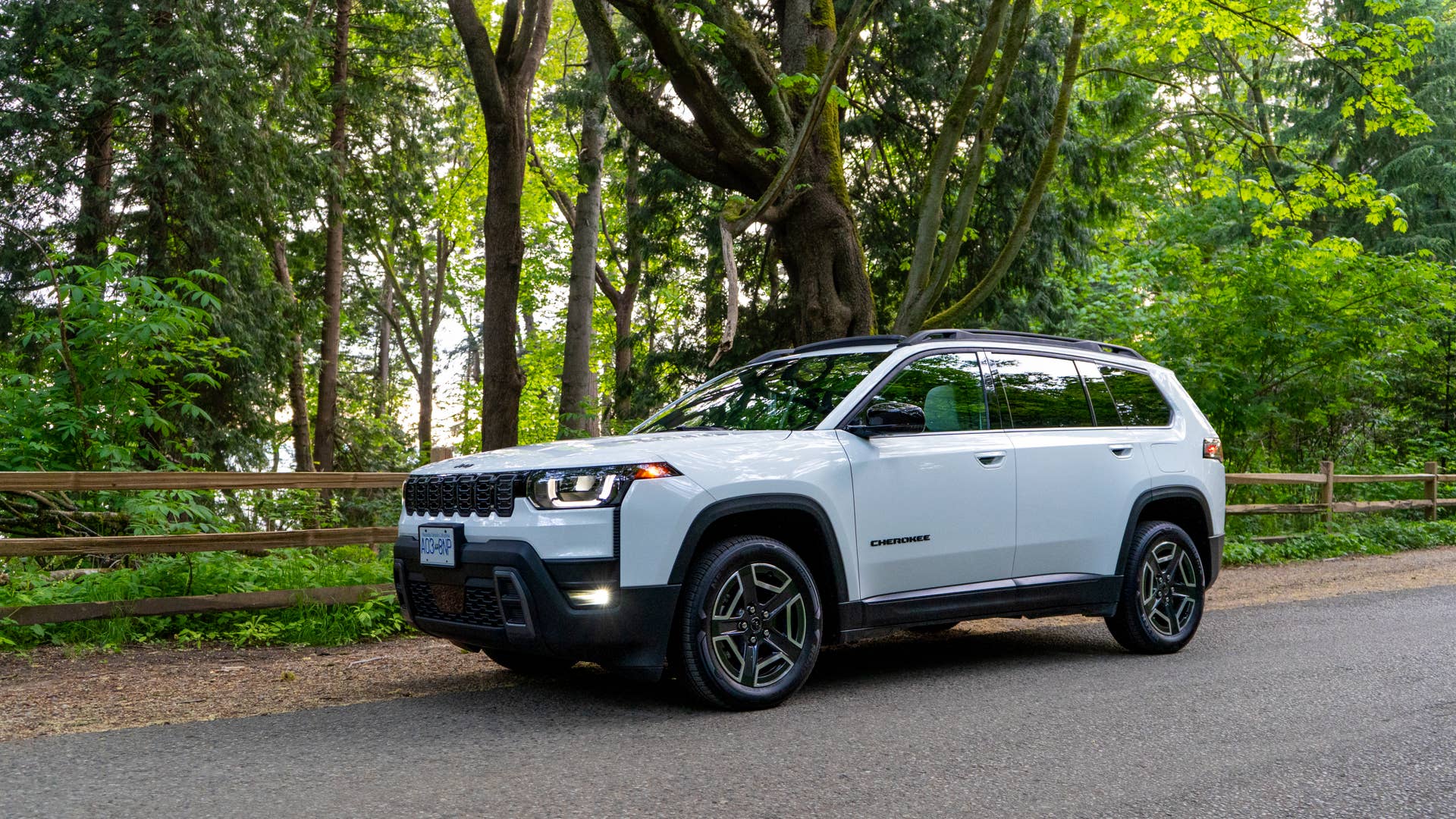
Does it look more expensive than a RAV4, CR-V, Forester, Rogue, or Cherokee? Yes, in my opinion. The Cherokee comes closest in terms of charm, and the RAV4 is certainly fresher than before, but the CX-5 still has the most elegant shape in the segment. It doesn’t scream for attention, though my tester’s red paint certainly drew some. Mostly, it just looks like a compact SUV designed by people who still care about elegant proportions and powerful stance.
(C) 2026 Doug Berger | DBPics
2026 CX-5 Vs. 2025 CX-5 Dimensions
| Dimension | 2025 Mazda CX-5 | 2026 Mazda CX-5 | Difference |
|---|---|---|---|
| Length | 180.1 in | 184.6 in | +4.5 in |
| Wheelbase | 106.2 in | 110.8 in | +4.6 in |
| Width | 72.6 in | 73.2 in | +0.6 in |
| Height | 66.1 in | 66.5 in | +0.4 in |
| Cargo behind the second row | 29.1 cu-ft | 33.7 cu-ft | +4.6 cu-ft |
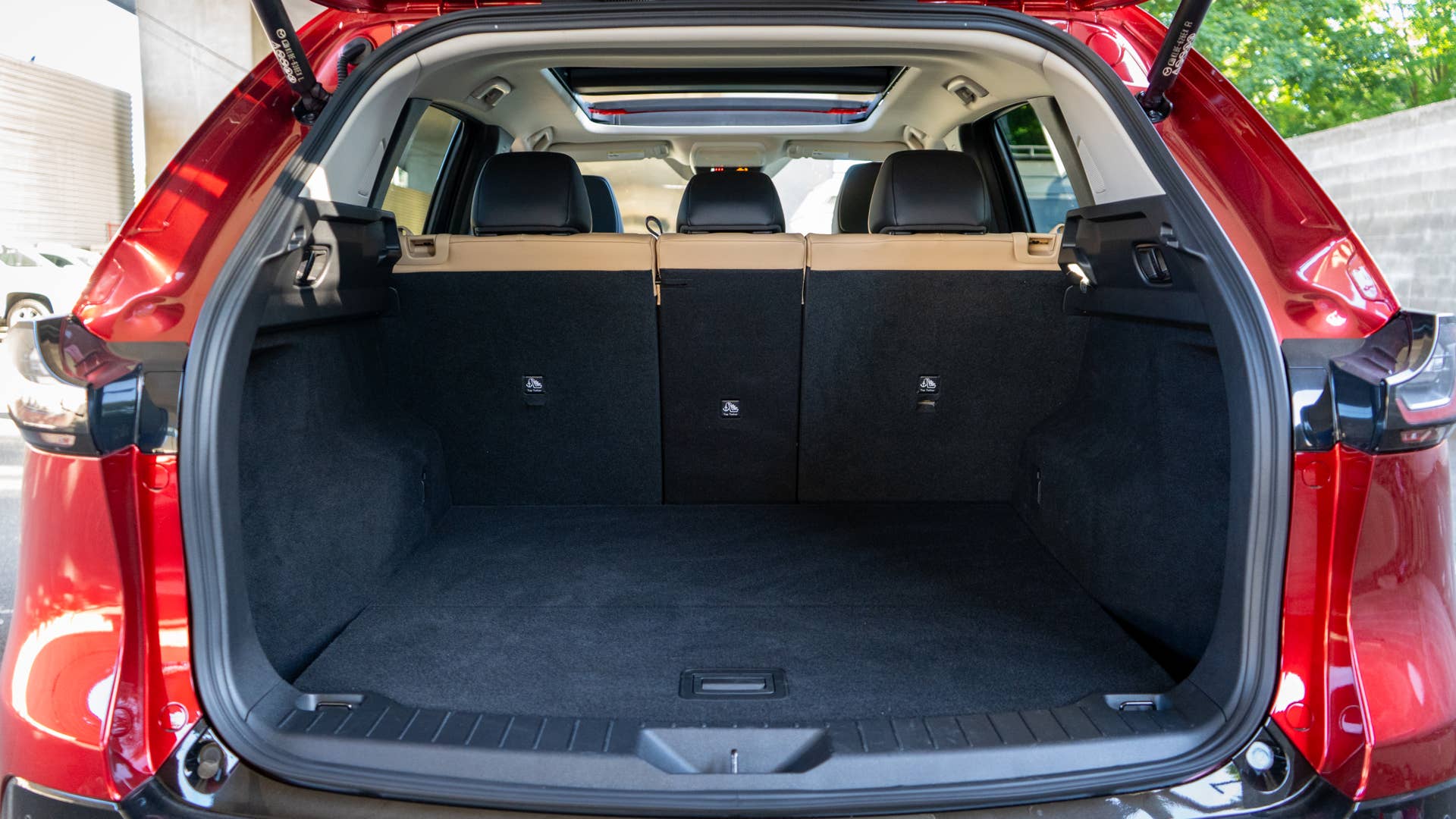
The new CX-5 is meaningfully larger in both occupancy and cargo terms, but, despite weighing 220 lbs more than its predecessor, it doesn’t feel any larger from behind the wheel, which is ideal. Mazda has added useful space without making the CX-5 feel more cumbersome to drive.
Cole Attisha
Interior: 9.0/10
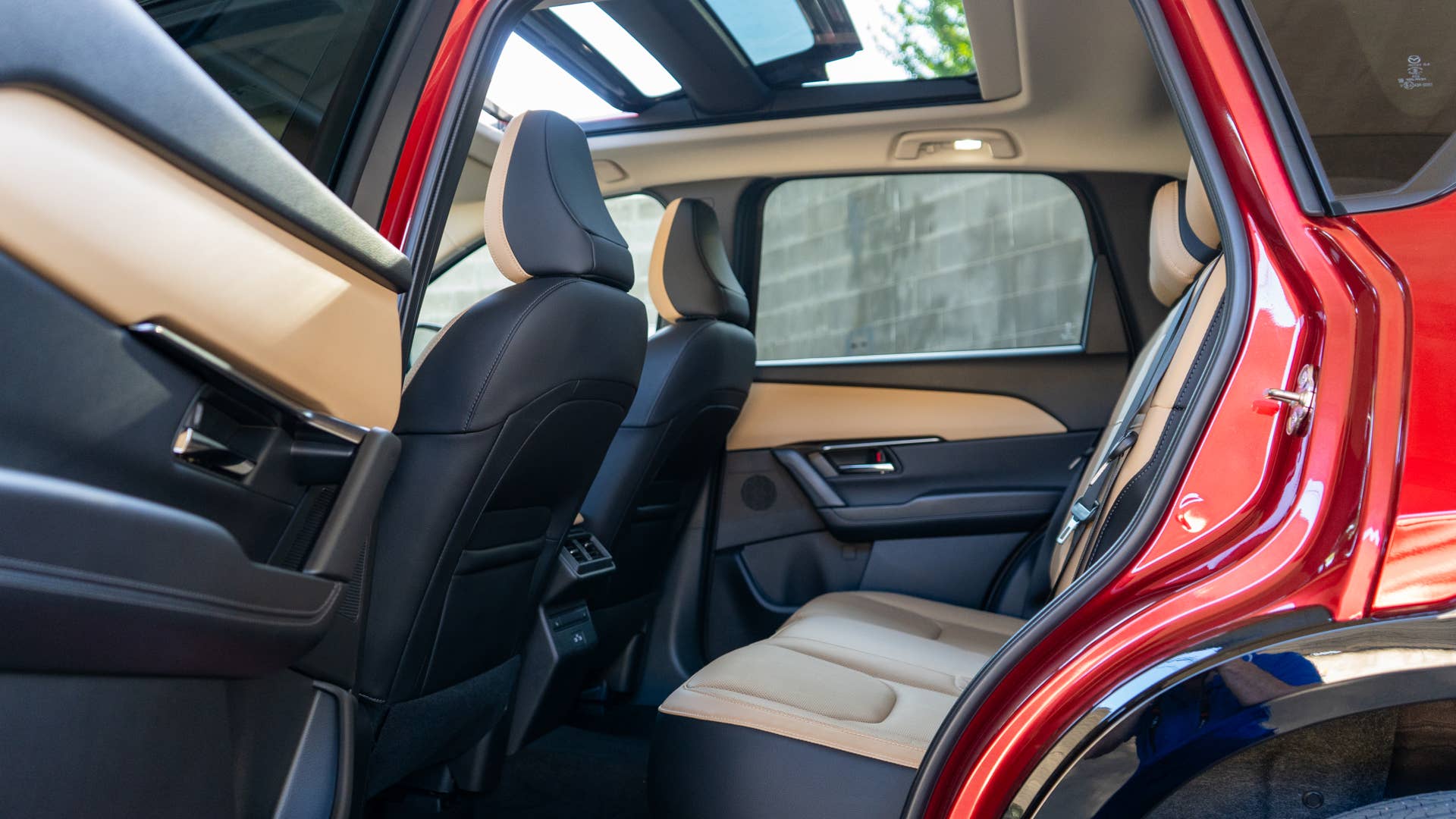
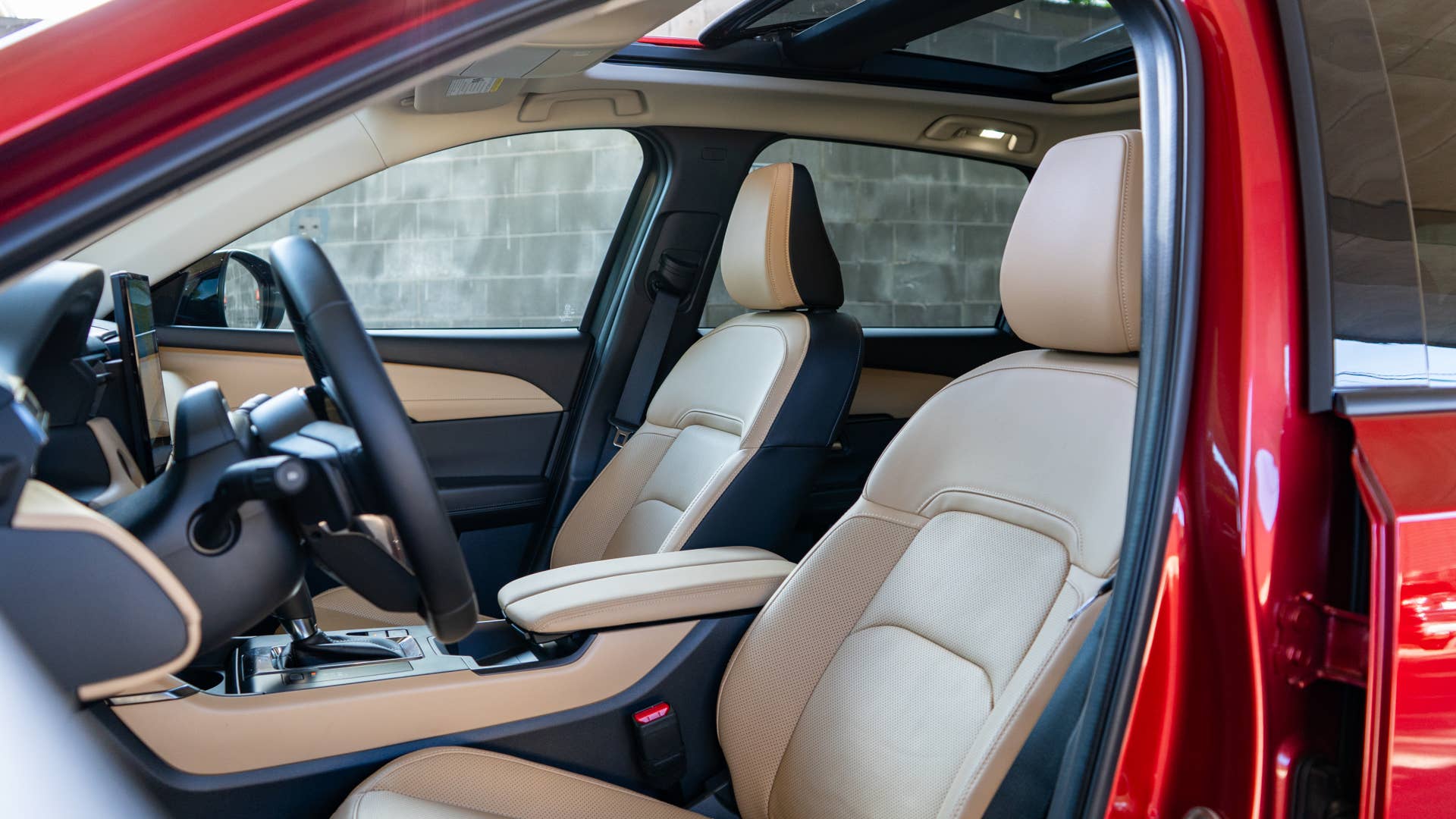
The cabin is where my feelings were a bit more mixed. On one hand, the 2026 CX-5 feels light, airy, and modern. The driving position is excellent, visibility is great, the front seats are comfortable and nicely bolstered, and the rear seat feels roomier than before. The added size helps, especially in the second row, and the cargo area is ample for a compact SUV.
Cole Attisha
The cabin also benefits from the CX-5’s first-ever panoramic sunroof. Better yet, it actually opens and comes with a power-retractable shade, which deserves more praise than it might sound like. Too many modern vehicles now give you only a fixed glass roof with no real shade and expect you to treat greenhouse heat as some sort of luxurious feature. Mazda got this right.
Cole Attisha
Material quality is also a classic Mazda strength, which continues here. The leather upholstery in my GT tester felt supple, the beige theme paired beautifully with the Soul Red paint, and the overall atmosphere leaned into that whole “alternative-to-premium” vibe Mazda has spent years cultivating. It doesn’t feel like Mazda is chasing Lexus or Acura directly, but rather that Mazda understands what buyers actually want from premium brands—better materials, quietness, design, and comfort—without adding unnecessary fluff that drives prices into luxury-brand territory.
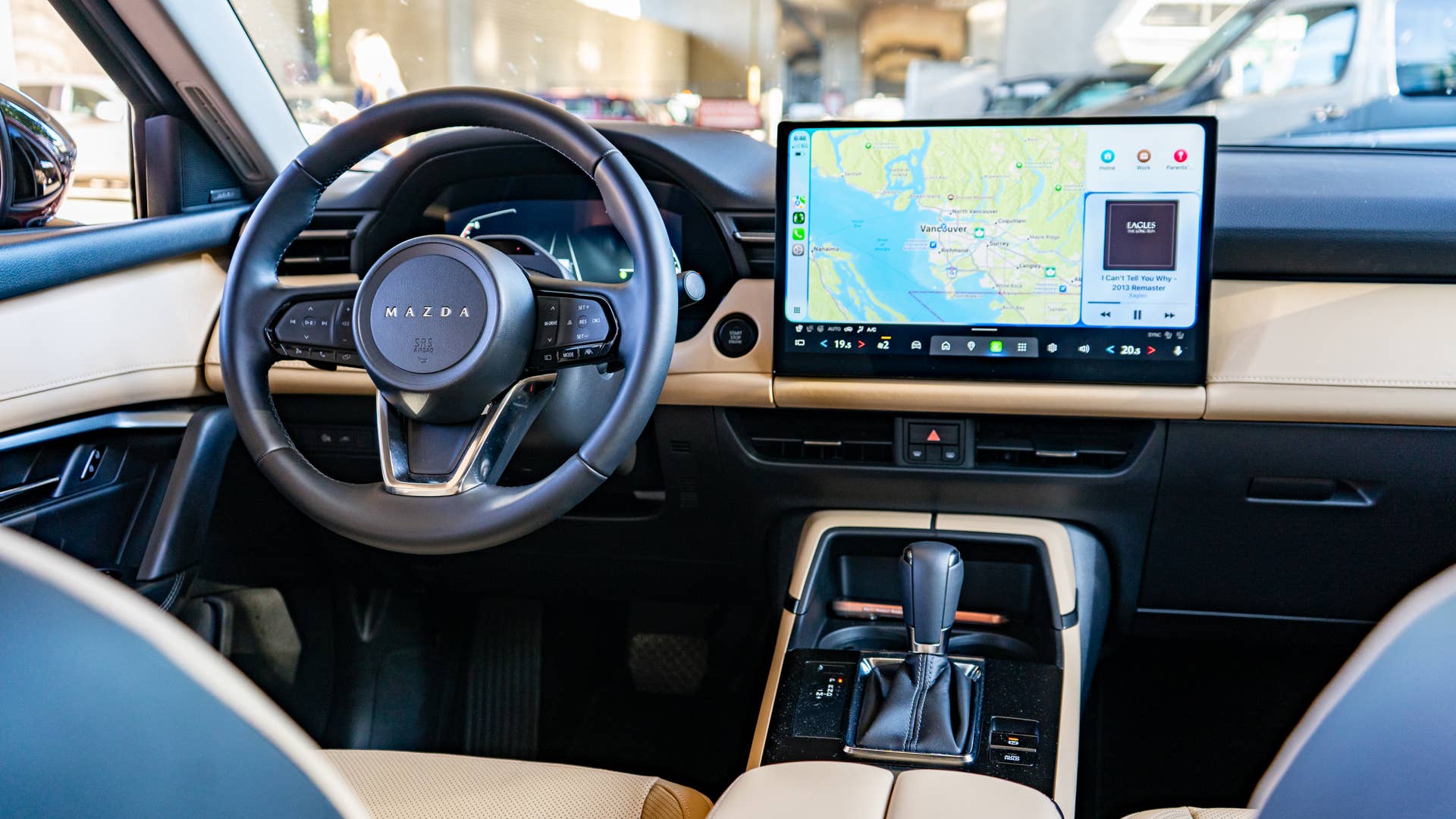
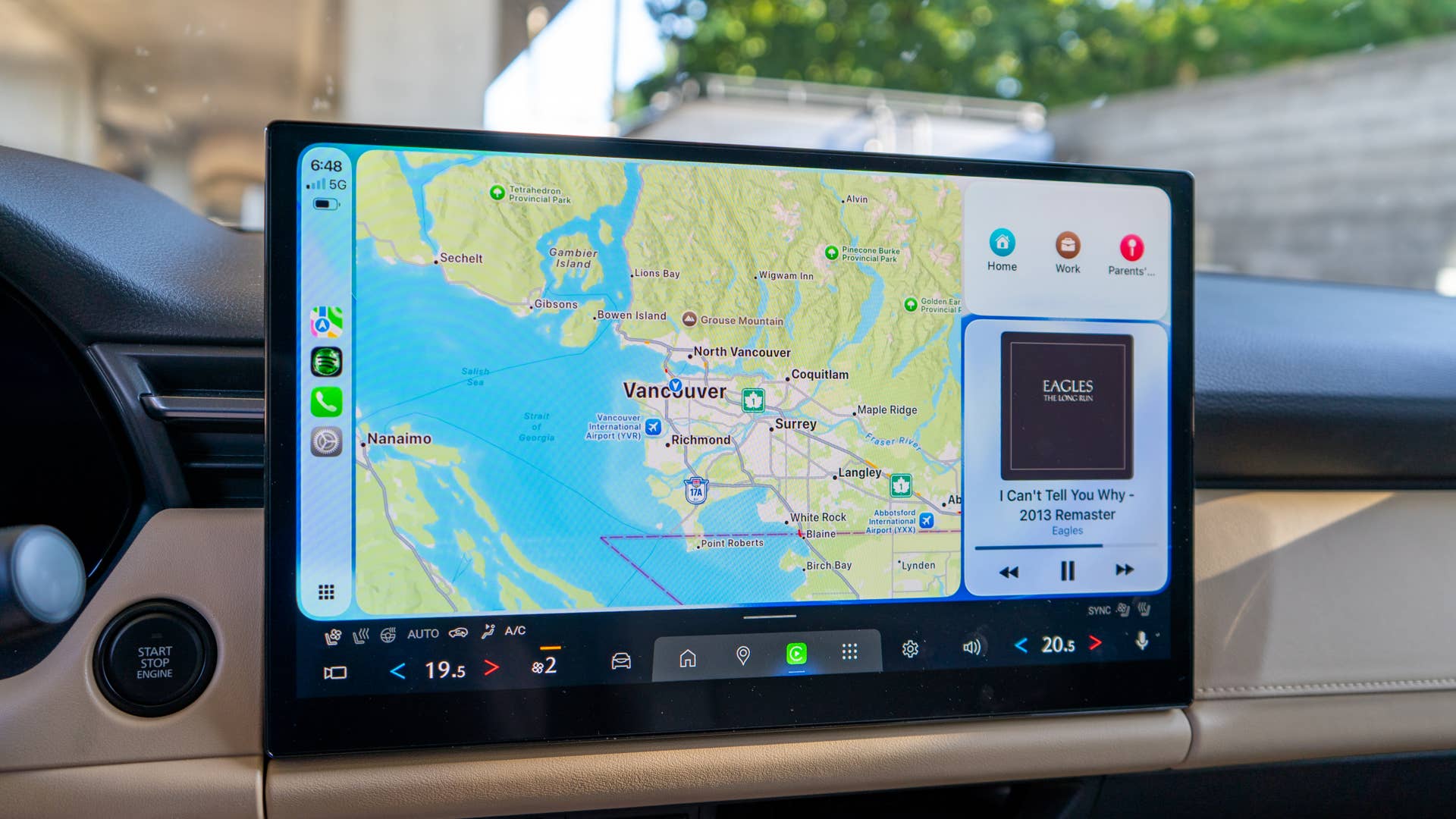
Still, the previous CX-5 had satisfying physical controls, nicely weighted knobs, and aluminum bezel details that made everyday interactions feel premium. The new model removes too much of that, replacing nearly every interior control with the central touchscreen. Even the stereo volume is buried in the screen. The rotary controller is gone, and physical climate controls have disappeared. The cabin might appear cleaner and more modern, but it’s also less charming and more frustrating to live with.
That feels especially strange coming from Mazda because, for years, the brand argued that physical controls were better for distraction and safety, and even trained its own salespeople on their importance to the brand’s core philosophy. Now, the CX-5 feels a bit like Mazda has compromised its own principles to appease buyers who equate big screens with modernity. The result is better than I feared it could be, but it still feels like a concession. A fingerprint-prone touchscreen is never going to feel as premium as a well-damped knob, and Mazda once understood that better than almost anyone.
Cole Attisha
Technology: 8.8/10
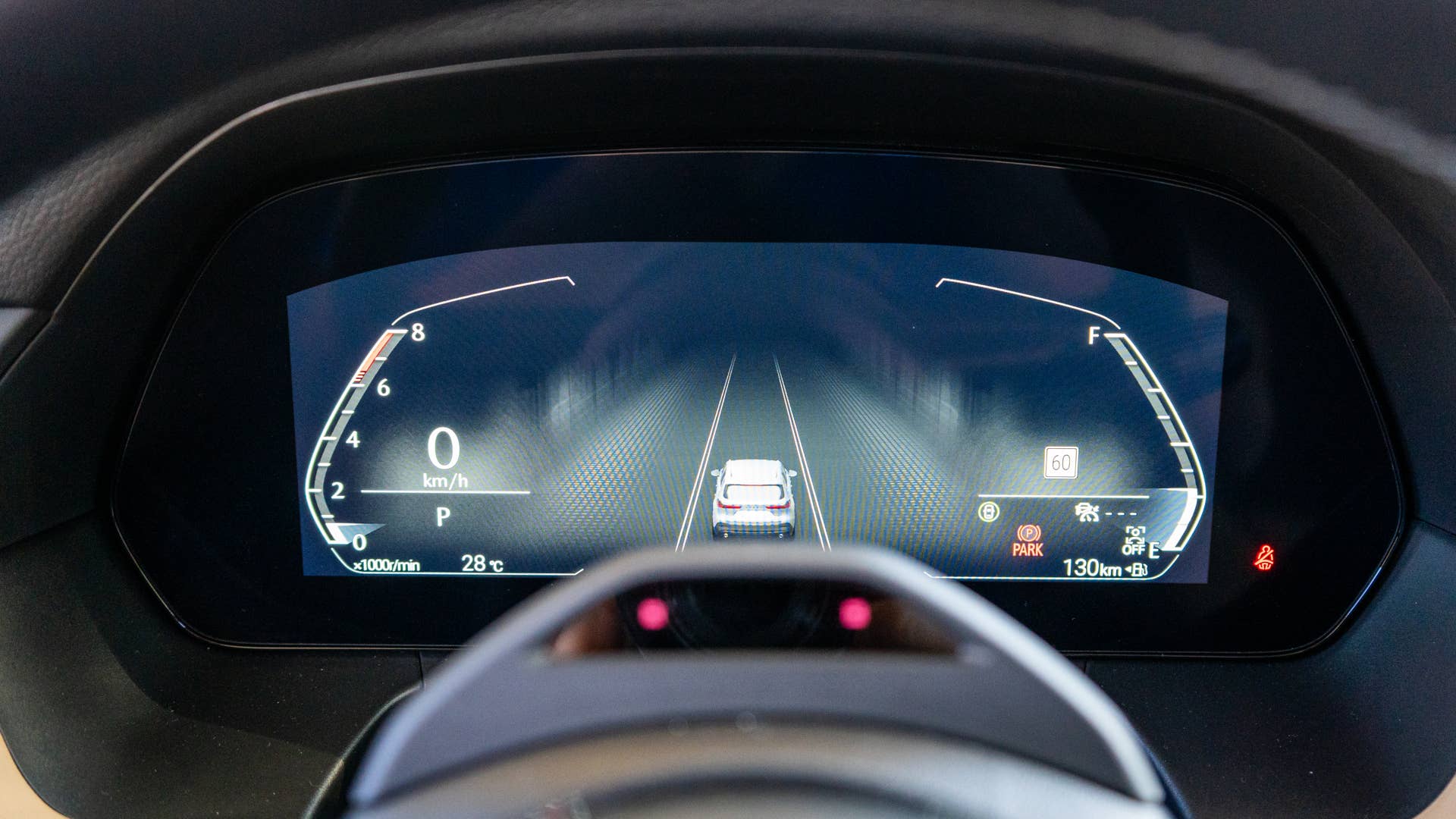
The big touchscreen is both the CX-5’s greatest tech improvement and its most frustrating daily annoyance. The screen itself is excellent—my tester had the larger 15.6-inch touchscreen, and it looked crisp, responded quickly, and worked far more seamlessly than Mazda’s old infotainment system, which could be slow and glitchy. Wireless Apple CarPlay worked properly, the digital cluster looked good, the 360-degree camera system was excellent, and the head-up display was useful without being intrusive. I especially liked that the speed readout sat slightly off to the side rather than dead center in my line of sight.
The Bose sound system was also good, if a bit unmiraculous. It’s exactly what you expect from a Bose system in a well-equipped mainstream SUV: clear, full enough, and pleasant without necessarily being memorable.
Cole Attisha
My issue with the CX-5’s massive central infotainment display isn’t with the screen’s performance or size, but rather how much Mazda is asking it to do. Too many functions are buried in submenus, and the loss of the rotary controller means you now constantly interact with the touchscreen for almost every adjustment. The Auto Hold function also had to be manually reactivated after every ignition cycle, rather than simply remembering its last setting as many other vehicles do. That one might be a minor frustration, but small frustrations matter in a daily driver, especially when they add up as they do in the new CX-5.
In isolation, the tech is modern and effective, but in the context of Mazda’s old interior philosophy, it feels like a bit of a lateral move, if not a straight-up downgrade. The CX-5’s cabin might be easier to sell on a showroom floor because the screen looks impressive, but it won’t necessarily be easier to live with in the long term.
Cole Attisha
Practicality: 8.7/10
The larger proportions pay off where they should. Rear seat room felt perfectly adequate, and the wider-opening rear doors should make family use easier. I didn’t actually stick a car seat in there, but this is clearly a more family-friendly CX-5 than before. The cargo area is useful, the cabin feels airier, and the new panoramic sunroof makes the interior feel less intimate than the previous generation’s. At the same time, the CX-5 remains easy to park and easy to maneuver in the city. It doesn’t feel bloated or cumbersome, which is important because one of the old CX-5’s strengths was that it always felt compact in the best way.
Compact SUV Space Compared
| Vehicle | Rear Legroom | Cargo Behind Second Row | Max Cargo |
|---|---|---|---|
| 2026 Mazda CX-5 | 39.6 in | 33.7 cu-ft | 66.5 cu-ft |
| 2026 Honda CR-V | 41.0 in | 39.3 cu-ft | 76.5 cu-ft |
| 2026 Subaru Forester | 39.4 in | 27.5–29.6 cu-ft | 69.1-74.4 cu-ft |
| 2026 Jeep Cherokee Hybrid | 38.5 in | 33.6 cu-ft | 68.3 cu-ft |
| 2026 Toyota RAV4 Hybrid | 37.8 in | 37.8 cu-ft | 70.4 cu-ft |
The CX-5 is still not the roomiest or most cargo-forward compact SUV, but it is closer to the Forester and RAV4 than before. More importantly, it gained that space without losing the dynamic advantage that makes it feel like a true Mazda.
(C) 2026 Doug Berger | DBPics
Pricing & Value: 9.8/10
Despite its smaller cabin dimensions, slightly lower fuel economy, and lack of a hybrid powertrain, the CX-5 offers undeniably exceptional value. For notably less money than many of its direct rivals, Mazda offers a genuinely engaging compact crossover with an IIHS Top Safety Pick+ rating, a Skyactiv-G powertrain with a proven track record of excellent durability, a properly conventional automatic gearbox, and some of the best resale value in the segment—not to mention its dapper looks. For me, the CX-5 ticks more than enough boxes to be considered a compelling option.
(C) 2026 Doug Berger | DBPics
I’m especially fond of the GT-equivalent version. In Canada, the non-turbocharged GT trim has typically been the sweet spot in the CX-5 lineup because it balances equipment, resale value, and leasing math well. Better-equipped trims often have stronger residuals, so the monthly payment gap can be smaller than you might assume. My tester’s GT AWD Premium Package added the big screen, 360-degree camera, driver personalization features, lane-change assist, paddle shifters, hands-free power liftgate, and additional safety tech. In the U.S., packaging and naming differ slightly, but a fully equipped CX-5 2.5 S Premium Plus is essentially identical to the fully equipped Canadian GT AWD. The important point is that Mazda has kept the CX-5 legitimately attainable while still making it feel tangibly nicer than most of its mainstream rivals.
Cole Attisha
Compact SUV Powertrain And Value Compared
| Model | Horsepower | Combined MPG | Base MSRP |
|---|---|---|---|
| 2026 Mazda CX-5 2.5 S AWD | 187 hp | 26 mpg | $29,990 |
| 2026 Honda CR-V AWD LX | 190 hp | 29 mpg | $32,420 |
| 2026 Honda CR-V AWD Sport Hybrid | 204 hp | 37 mpg | $37,130 |
| 2026 Subaru Forester AWD Base | 180 hp | 29 mpg | $29,995 |
| 2026 Jeep Cherokee Hybrid 4×4 | 210 hp | 37 mpg | $35,000 |
| 2026 Mazda CX-50 2.5 S Select AWD | 187 hp | 26 mpg | $29,900 |
Cole Attisha
Verdict: 9.3/10 Overall—It’s The Best CX-5 Yet, With One Very Un-Mazda Flaw
The 2026 Mazda CX-5 is better than ever, which is saying a lot because the CX-5 has long been a favourite of mine. It’s more mature, more spacious, more refined, better looking, and still the most satisfying compact SUV in its class to drive. The naturally aspirated 2.5-litre engine is better than I expected, the six-speed automatic still feels perfectly matched to the vehicle, and the chassis tuning proves Mazda hasn’t forgotten how to make a regular crossover feel special. On the right road, the CX-5 doesn’t merely tolerate enthusiasm; it invites it.
That, perhaps, is why the dashboard frustrates me so much. Mazda has improved the car in so many ways—especially in ways that feel very driver-forward—then removed many of the satisfying physical controls that helped make the old CX-5 feel more human and less distracting from behind the wheel. The big touchscreen works, but it replaces too much. It makes the cabin look more modern, but not necessarily feel better to use. That flaw doesn’t ruin the vehicle, but it does keep the new CX-5 from feeling like a complete victory in terms of its philosophical overhaul.
(C) 2026 Doug Berger | DBPics
For buyers who see driving as a chore, the CX-5 may feel a little too alert, a little too eager, and a little too interested in wanting them to participate. A RAV4 or CR-V might make more sense for those people, but for buyers who want a compact SUV that feels stylish, plush, practical, reliable, and genuinely enjoyable, the CX-5 remains the obvious enthusiast’s choice in a deeply pragmatic segment. Mazda has grown up, and the CX-5 has grown up with it, but it has never lost its sense of humour.
In a way, I feel that I have grown with the CX-5. I first understood this vehicle as the bread and butter of a showroom floor, so easy to sell that I could finally stop worrying about whether I could afford my bills each month. Then it found its way into my own driveway, then into my parents’ driveway, then into many a friend’s driveway. Now that I am older, and so too is the CX-5, it feels as though it still ticks all the boxes it needs to to convince me of its value, even if those boxes have shifted somewhat with age. The 2026 Mazda CX-5 isn’t perfect, but, aside from that very un-Mazda dashboard decision, it might be the best argument yet that a normal family SUV doesn’t have to feel normal just to be convincing. It’s material proof that sometimes, when an automaker really cares, even the average person can justify driving something that feels truly special.
About the author

Cole Attisha
Staff Writer, Autoblog