
Key Points
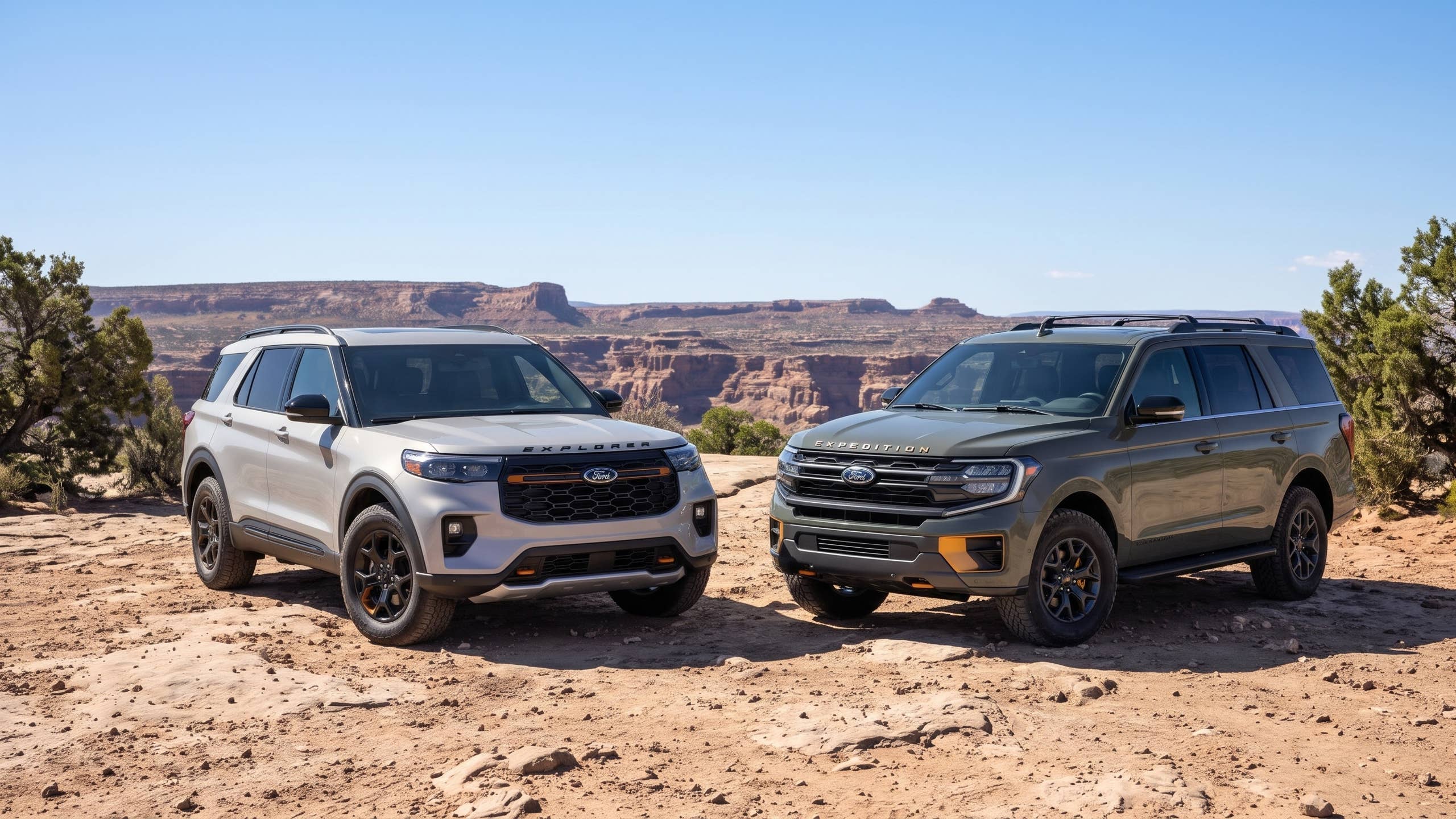
- The 2026 Explorer Tremor and Expedition Tremor share off-road hardware, including lifts, all-terrain tires, skid plates, and Trail Turn Assist.
- The Explorer costs substantially less, drives more easily, uses less fuel, and performs confidently on narrow trails.
- The Expedition offers superior towing, cargo capacity, and adult-friendly third-row seating, helping justify its higher price for larger families.
The Tremor badge wasn’t always a badge of honor for dust, dirt, and rock crawls. Back when Ford first rolled out the Tremor nameplate on the F-150, it was a street-performance sport truck with a short bed, lowered stance, and Lobo-esque looks. Over the last several years, Ford’s reinvented the Tremor name into a dedicated off-road trim, and the 2026 Explorer is the latest recruit to join the ranks.
Kristen Brown
Putting these two SUVs side-by-side highlights Ford’s adventurous 3-row SUV strategy. The Expedition has long been a traditional family hauler, offering a third row since its inception in the late 1990s. The Explorer, meanwhile, started its life as a two-row adventure rig in 1991 before evolving into the dedicated three-row midsize crossover we know today.
Kyle Edward
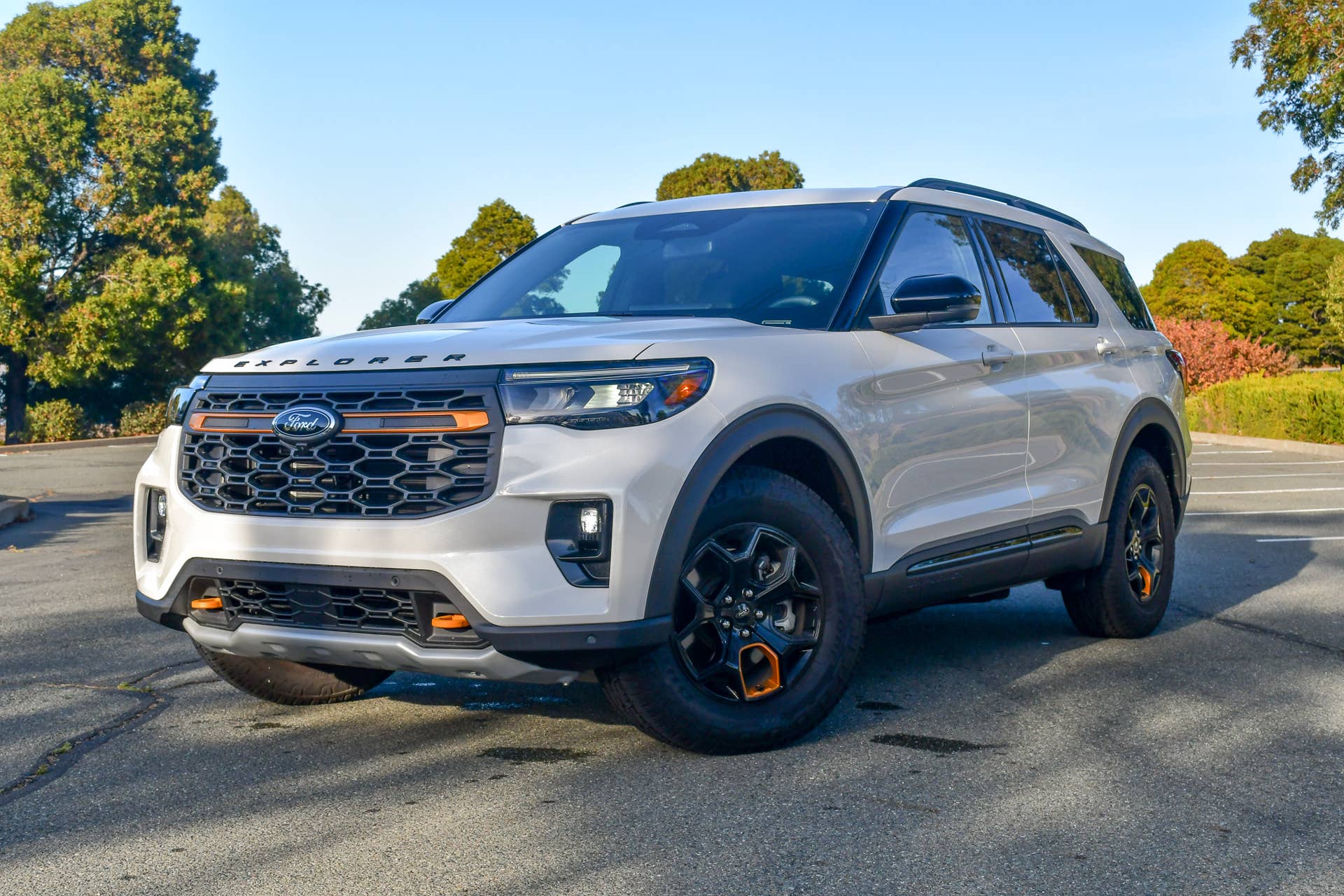
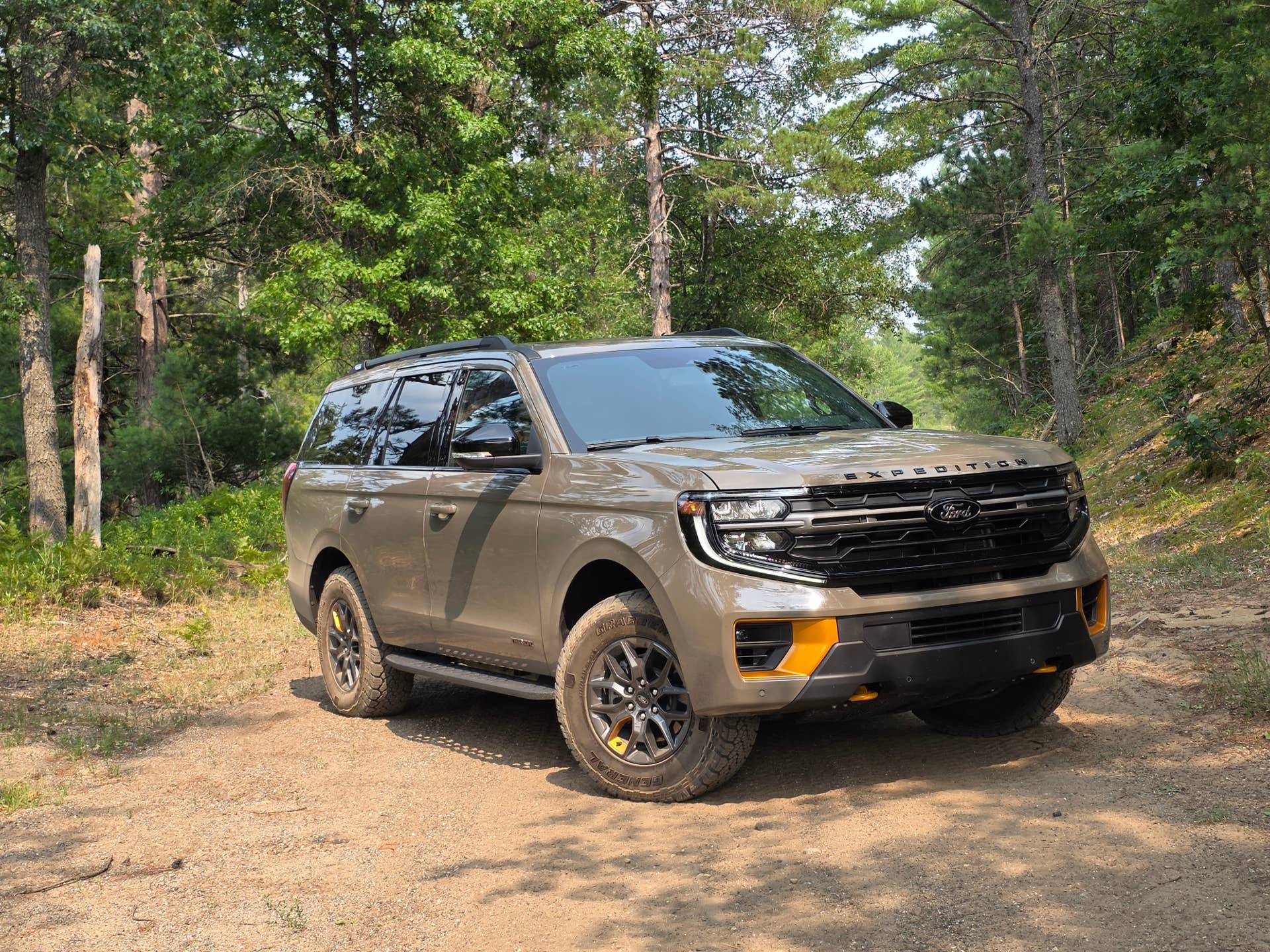
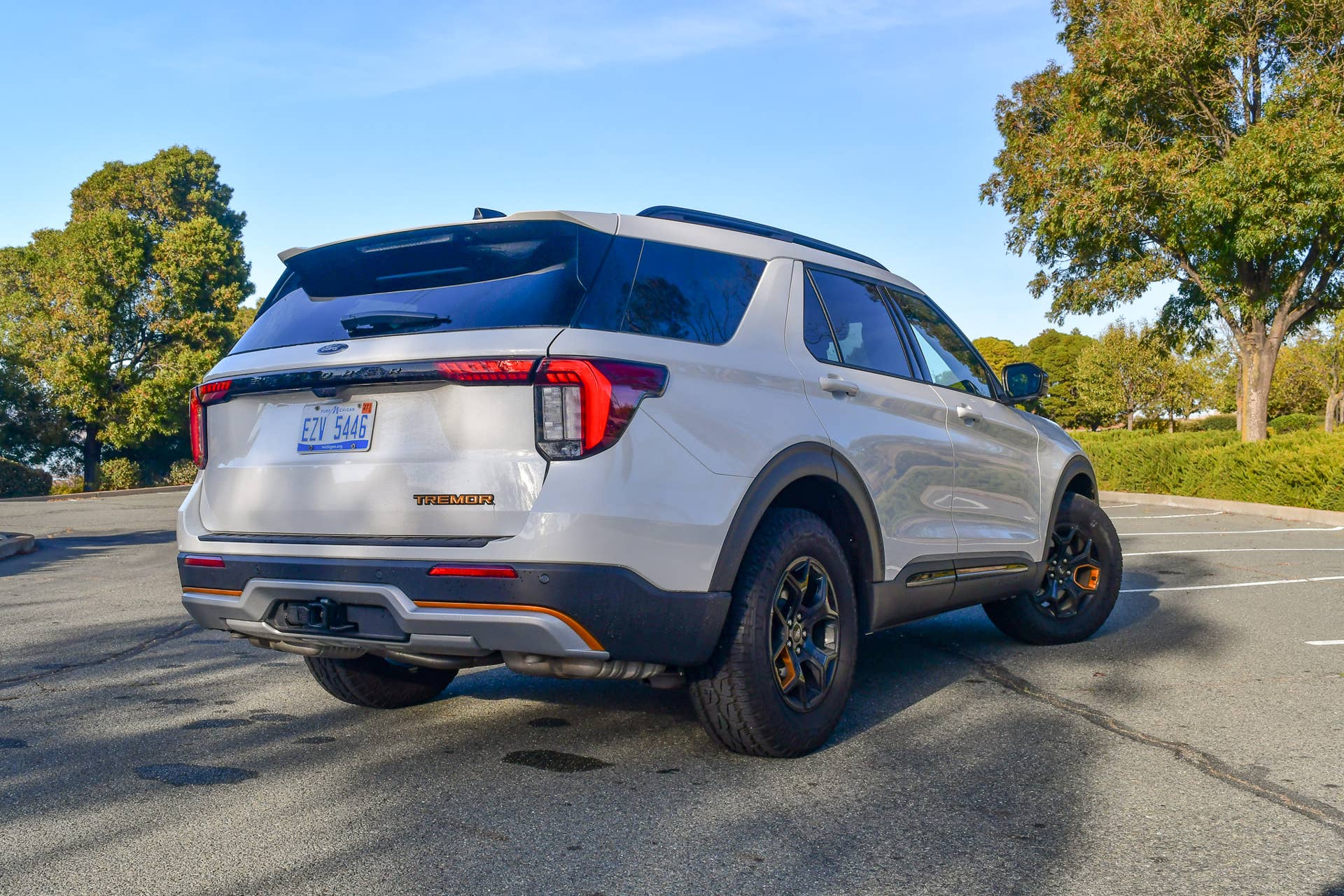
Now, both wear the Tremor badge. In typical Ford fashion, that means purposeful mechanical upgrades: heavy-duty metal underbody skid plates, a factory suspension lift, chunky all-terrain tires, signature amber/orange exterior styling accents, and Trail Turn Assist to tuck in tight off-road maneuvers. So, is one better than the other? Well, that depends entirely on what you expect out of your family SUV. After driving both, here’s how they compare.
What do you get for the price?
The 2026 Explorer Tremor starts at a reasonable base MSRP of $48,330. Even when you load it up with the Star White paint ($795), the keypad ($455), the Connectivity package ($745), a spare tire ($400), and the loaded Ultimate Package ($11,505)—which adds massaging front seats, a panoramic sunroof, and a Bang & Olufsen sound system—the bottom line comes to $64,225 after destination.
Kristen Brown
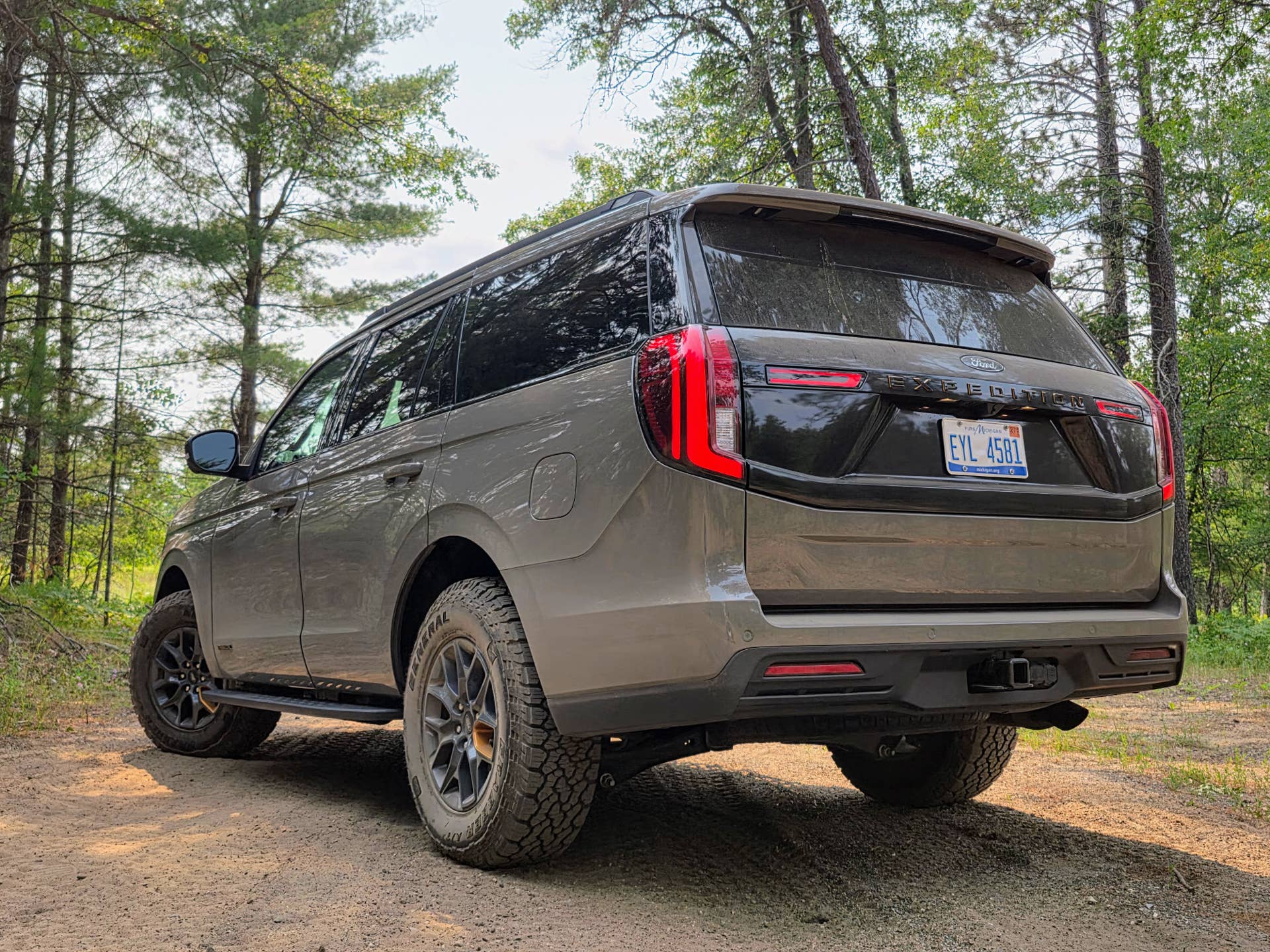
The Expedition, understandably, is more expensive. The Tremor, interestingly enough, is technically a step above the Platinum but one tick below the King Ranch, so it starts at $81,700. Unlike the Platinum or King Ranch, you don’t have as many add-ons or optional packages like the black roof, nearly $800 paint color options, or ultimate packages. You can pay for BlueCruise or the $890 Driver’s Package, which adds the premium sound system and wireless phone chargers, but you’d be hard-pressed to see one over $90,000. Still very expensive for something intended to go off-road, though.
What does all that cash get you in the Expedition? Brute utility: a massive 9,000 to 9,600-pound towing capacity, an aircraft hangar worth of cargo space, and an adult-friendly third row. If your family regularly tows a heavy boat, a camper, or a horse trailer into the backcountry, the Expedition is arguably the best choice of the two. But if you don’t tow heavy loads, that close-to-six-figure price tag turns it into an “elite-only” proposition—especially when modern minivans offer similar passenger volume and cargo practicality for half the cost (minivans only wish they had a 9,000-lb tow rating, though).
Kyle Edward
The Explorer Tremor is a fantastic middle ground for active families who refuse to spend too much on a three-row SUV. My only big qualm with the Tremor is that this trim forces you into a six-seater configuration. The lack of a second-row bench option stinks if you need to carry five passengers and keep luggage in back. In the Expedition, you can have a bench in the Tremor, so you can fit up to 8 passengers. But for adventurous families who don’t need heavy towing capability, it puts up a strong argument for your money.
The Explorer is a lot easier to drive
Kyle Edward
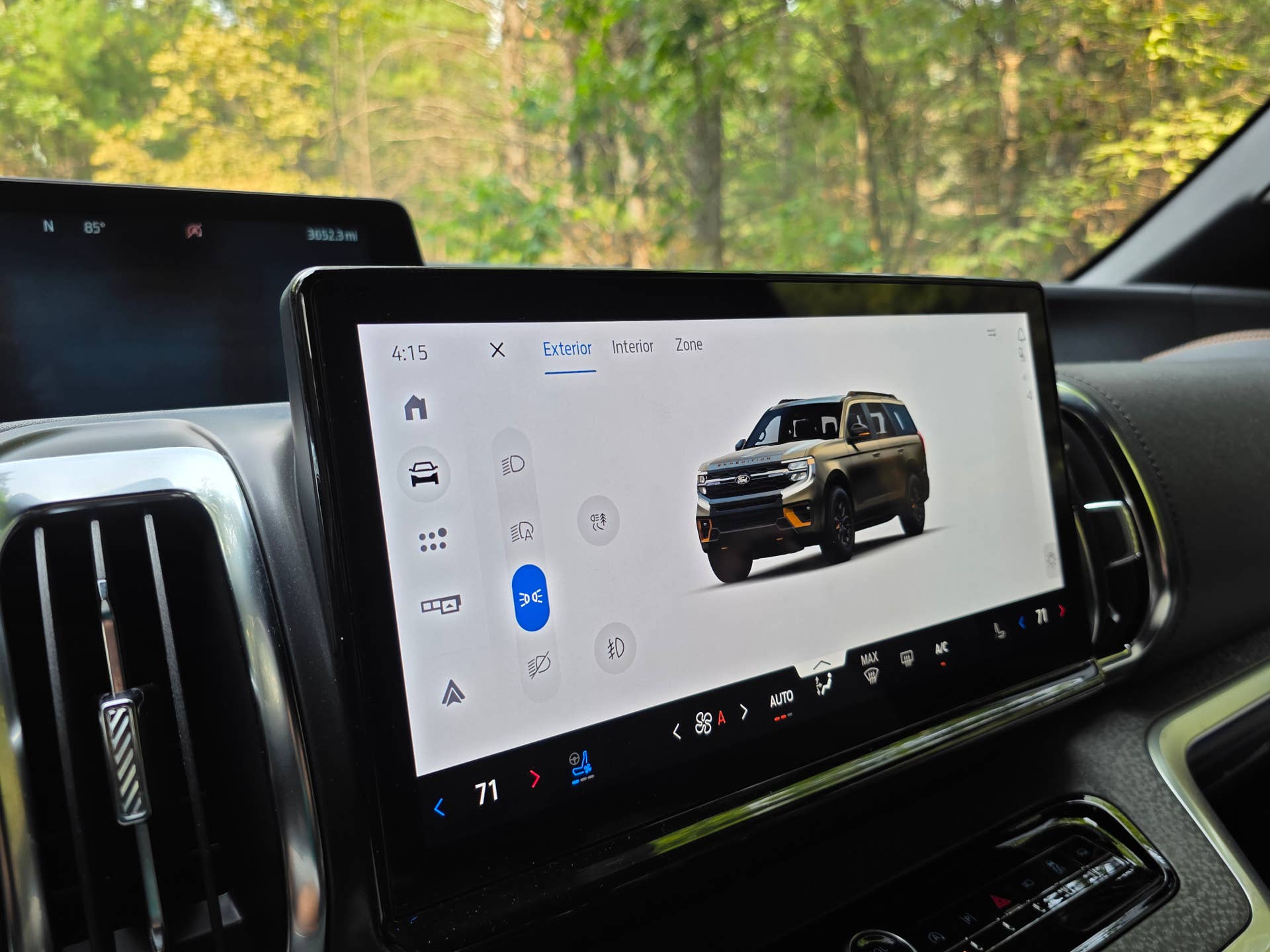
The Expedition is massive. At over 18 feet long with an ultra-long wheelbase, outward visibility is tricky, and its sheer bulk dominates suburban streets. The steering radius is wide, and for an SUV cresting $100K, it is downright shocking that Ford didn’t include rear-wheel steering to help maneuver tight drive-thrus and parking lots. The Expedition’s interior technology also presents two ergonomics headaches:
- The Steering Wheel: The squarish, awkward wheel uses frustrating touch-and-slide click pads. If your thumb isn’t resting in the exact millimeter-wide sweet spot, inputs don’t register—even when you’re just trying to adjust the steering column.
- Screen Overlap: The 13.2-inch center screen sits directly in front of the sweeping 24-inch panoramic driver display, creating an awkward visual overlap. Running Android Auto or Apple CarPlay duplicates navigation maps right on top of each other, making the digital real estate feel chaotic rather than helpful.
Chase Bierenkoven
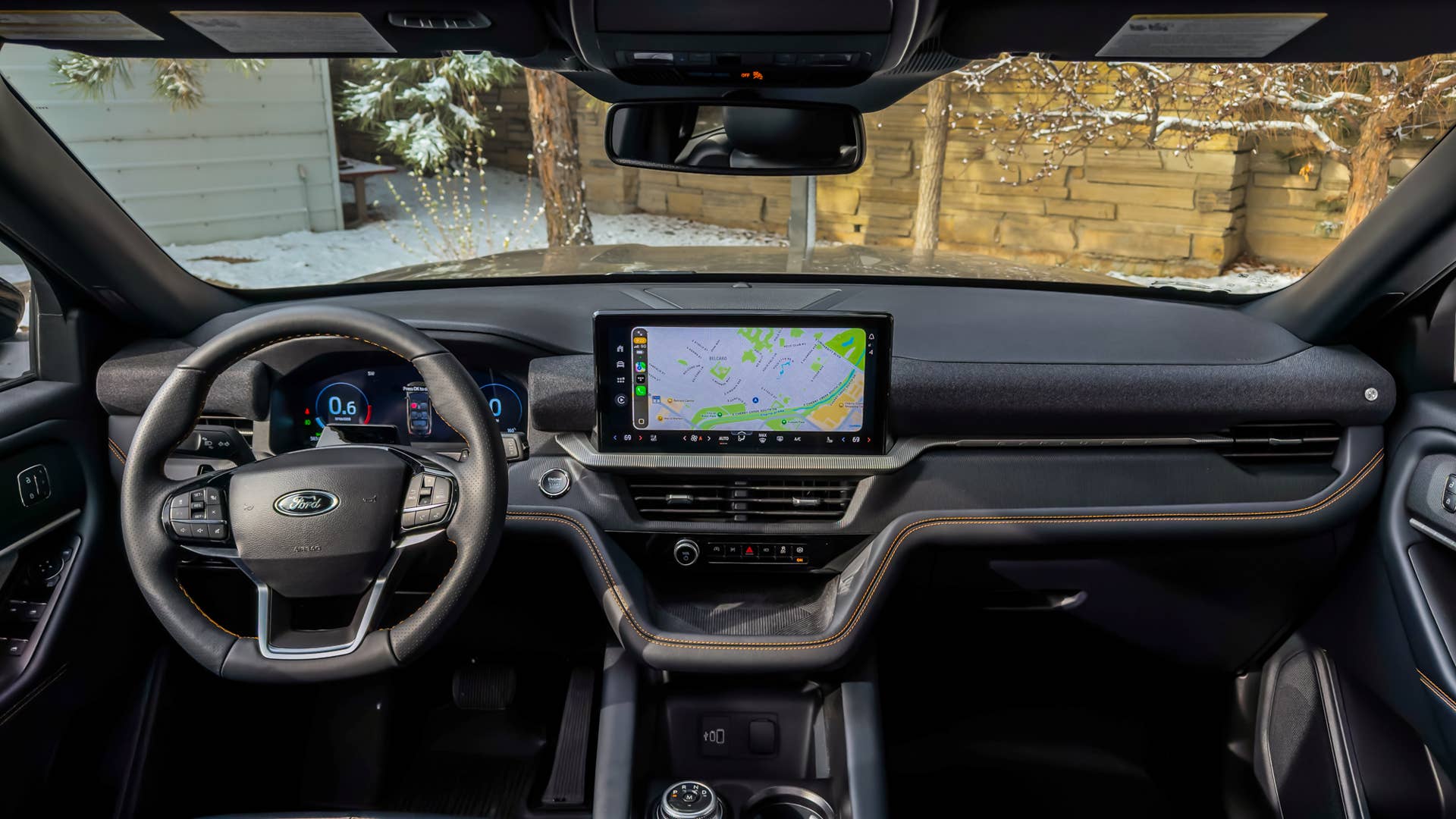
The Explorer’s smaller footprint is infinitely easier to live with daily. Its intuitive 13.2-inch center touchscreen and 12.3-inch gauge cluster work together seamlessly, and native Google integration (complete with Gemini voice assistant) makes on-the-fly navigation stops effortless. It corners with car-like composure, slips into normal parking spots without multi-point turns, and feels right at home in tight traffic. It has a much more natural drive feel compared to the Expedition. You have to get used to driving the Expedition. You don’t have to with the Explorer.
They’re both capable, but I’d trust the Explorer more off-road
Ford
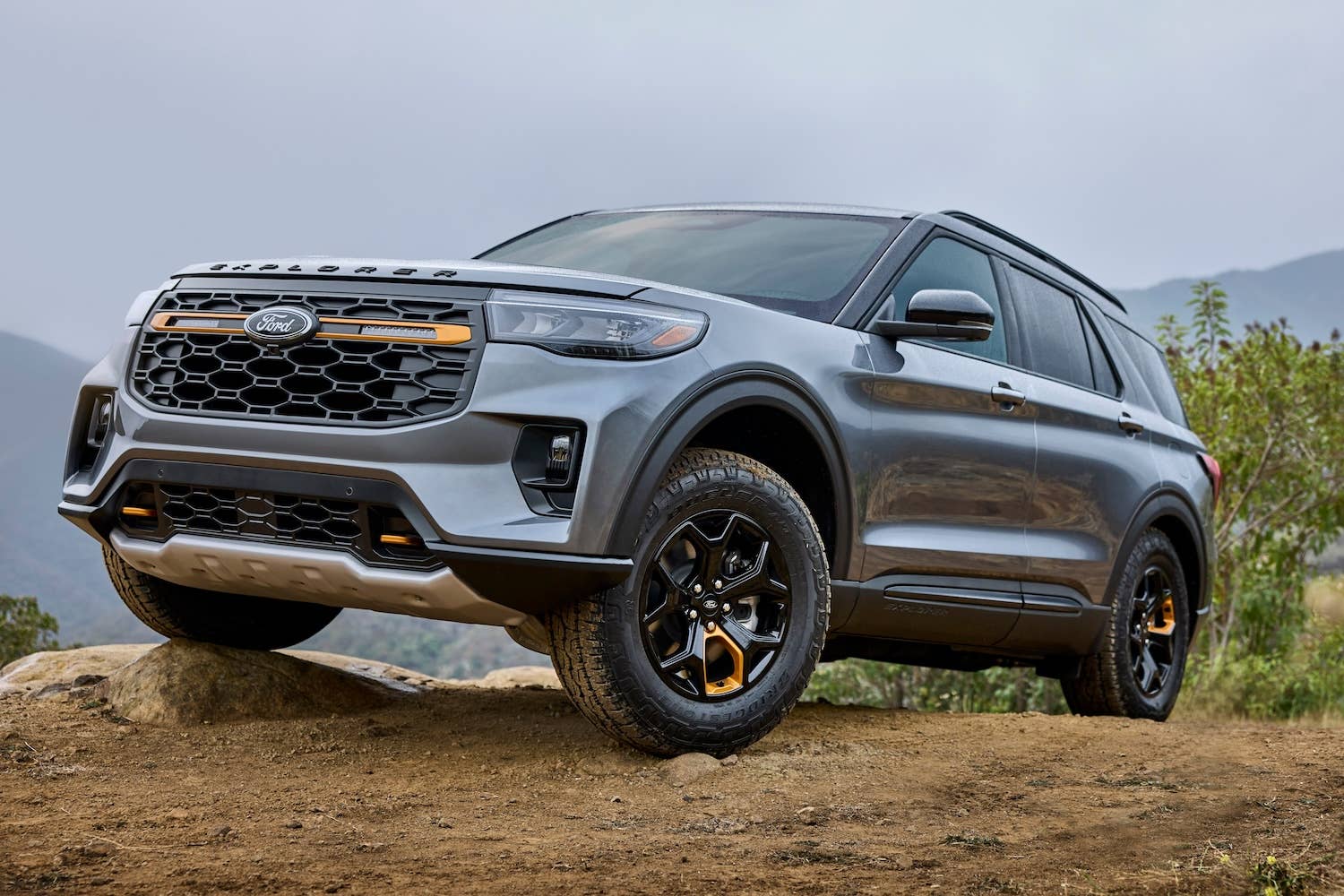
Both SUVs are built to tackle the wilds, with identical Tremor hardware inclusions:
- Factory suspension lift with off-road-tuned damping
- 32- to 33-inch all-terrain tires
- Heavy-duty steel underbody skid plates guarding engine pans and transfer cases
- Terrain management drive modes (Trail, Slippery, Tow/Haul)
- Amber front recovery tow hooks
- Modified front and rear bumpers for better approach and departure angles
- Ford’s Trail Turn Assist
Both SUVs have a long wheelbase, but when asphalt turns to washouts, shelf roads, and rutted trails, I’d trust the Explorer far more. Trail Turn Assist is a neat trick—it brakes the inside rear wheel to help swing the SUV around tight switchbacks. But on a narrow shelf road with real drops, nothing can hide the size of the Expedition. There’s simply no getting around the sheer width, length, and weight of that heifer. The Explorer Tremor’s trimmed bumper fascias, tighter track, and responsive unibody dynamics make it significantly more confidence-inspiring between trees and over narrow trail crests.
The third row in the Expedition is better, but is the extra space worth it? Maybe
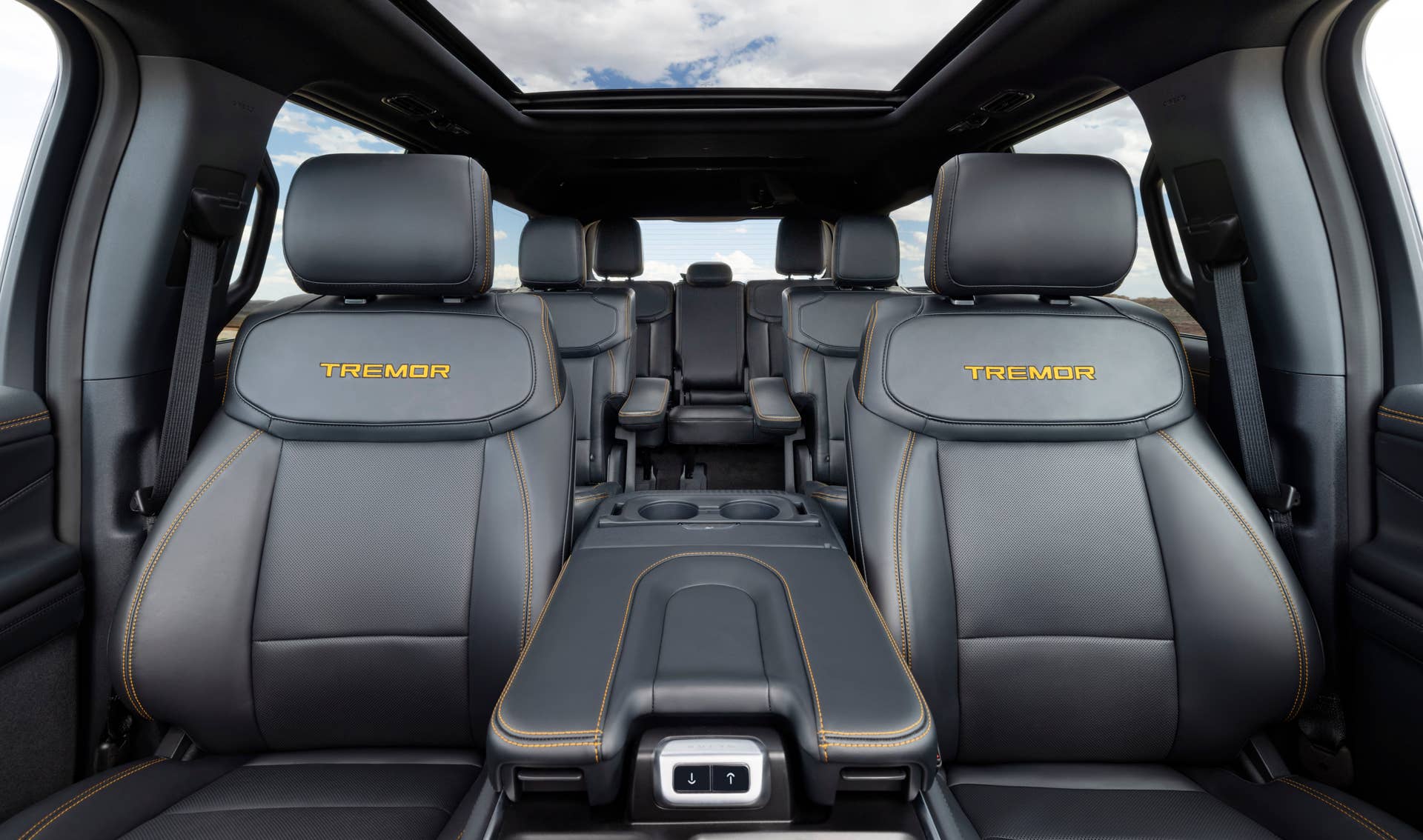
If third-row passenger room is your top metric, the Expedition takes the crown—you just pay handsomely for it. The Expedition third row is very comfortable and adult-friendly, offering between 36.5 and 43.5 inches of legroom depending on how the sliding second row is configured. Paired with Ford’s clever tilt-and-slide mechanism (which functions even with child safety seats installed), climbing into row three is painless.
Ford
The Explorer’s third row, by contrast, should be advertised as strictly part-time. Offering 32.2 inches of legroom, it is best reserved for kids, teens, or small adults on short trips under 30 minutes. But this is where the six-seater configuration feels cringey, because if you have those third-row seats folded, only two extra butts can comfortably fit in the Explorer. I’ve mentioned it before, but it’s something you could end up feeling the sting of once you drive it off the lot.
The decision, then, comes down to real-world usage:
- Rare or occasional third-row use: Save tens of thousands of dollars, fold the Explorer’s rearmost seats flat to enjoy 47.6 cubic feet of cargo room, and enjoy the easier drive. Just don’t forget only two extra people can fit in the fairly large Explorer without those third row seats.
- Frequent or daily third-row hauling: If carrying teens and adults back there is a weekly necessity, look at a lower, non-MAX trim of the Expedition Tremor to dodge the nearly $100K price trap—unless you plan to take a full house off-road.
Mileage is moderate for both, but worse for the Expedition
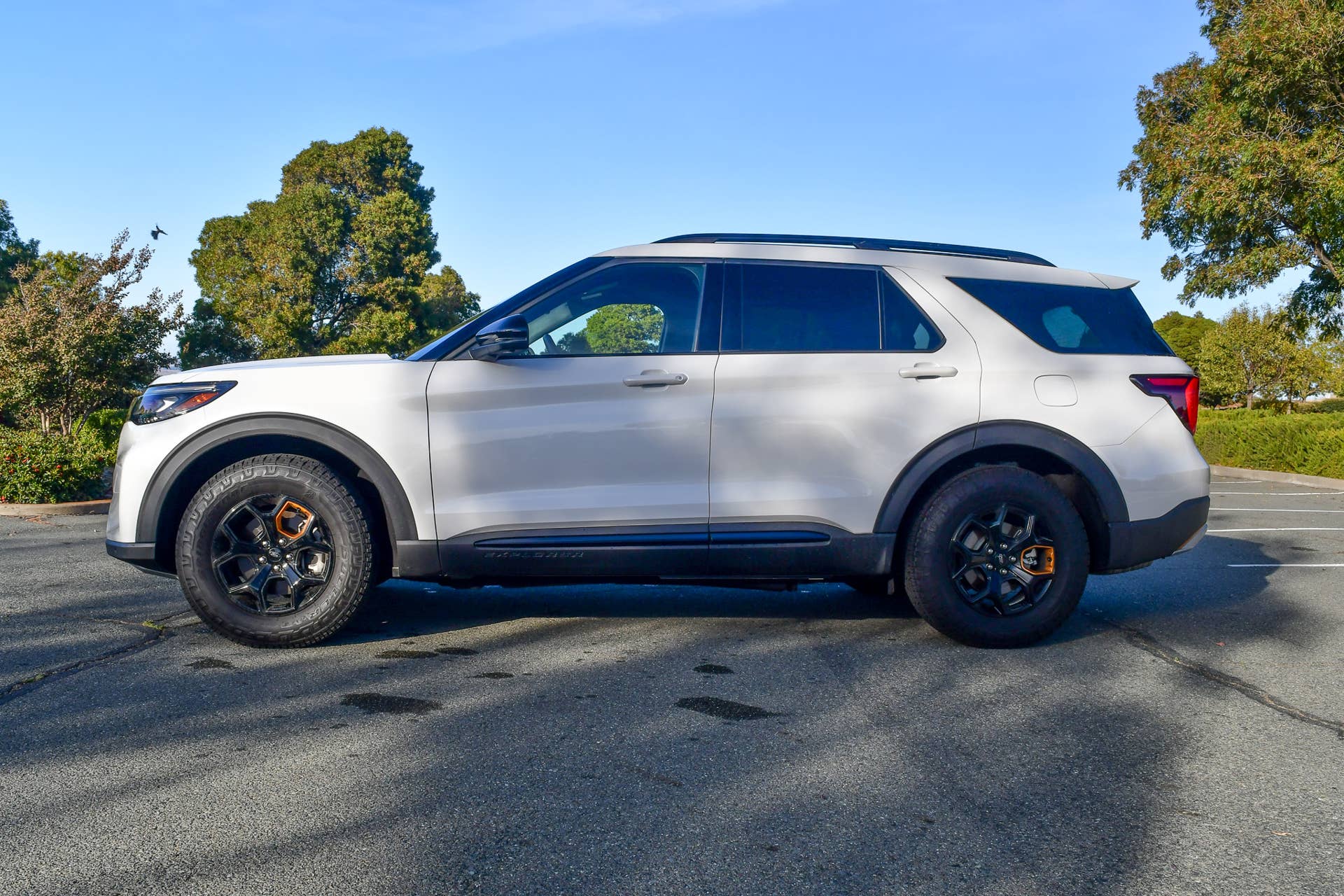
Neither of these SUVs are known for exceptional mileage, as they’re both gas-only and turbocharged, but in the Explorer Tremor, opting for the larger 400-hp 3.0-liter twin-turbo V6 only costs you a single MPG compared to the standard 2.3-liter inline-four in almost every category. You get mid-to-high teens in the city and low 20s on the highway, making family road trips more manageable. During my time with it, I averaged about 22.5 MPG combined. Not great, but not terrible, and I had a maximum range of just over 400 miles.
Kristen Brown
The Expedition, by comparison, is unapologetically thirsty. With its 440-hp high-output 3.5-liter twin-turbo engine hauling roughly three tons of steel, real-world combined driving yielded a meager 14.7 MPG. Even with the massive 27-gallon fuel tank delivering a decent highway range of over 500 miles, filling it up with fuel running near $6 a gallon will have you screaming, crying, and probably throwing up at the pump.
All that power clearly comes with great responsibility, so you really have to evaluate how much muscle you truly need to maintain your family’s lifestyle.
Final thoughts
Both vehicles deliver on their rugged, off-road styling promises, but if I had to park one in my driveway, I’d pick the Explorer Tremor. It is substantially easier to drive, far less stressful to park, the technology isn’t as frustrating as the Expedition’s, and it’s more confidence-inspiring when navigating off-road terrain. While losing out on a second-row bench seat is a real pain point for families needing maximum versatility, the Explorer gives you 85% of the Expedition’s trail hardware and family utility at nearly half the price tag of a loaded Expedition Tremor. For most outdoor-loving families, the Explorer checks every box.
About the author

Kristen Brown
Contributing Writer, Autoblog