
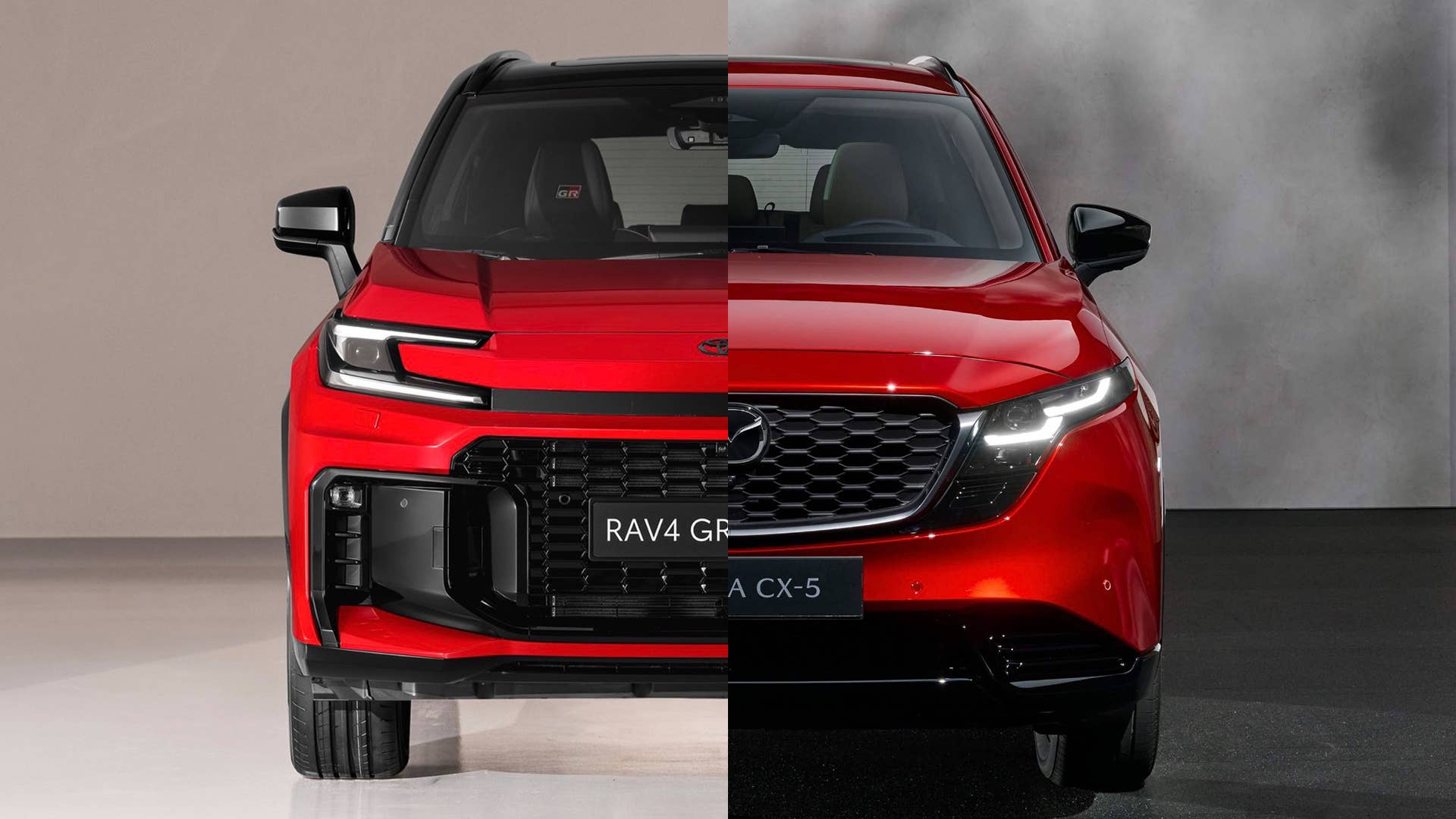
The Toyota RAV4 and Mazda CX-5 are two of the most trusted names in the compact crossover segment. With a few exceptions, they’ve mostly been the top-selling models from each automaker in the U.S., accounting for thousands of sales each year. For 2026, both vehicles have been completely redesigned. What’s notable is how different these two close rivals are in terms of their powertrains. Each vehicle’s engine, drivetrain, and transmission choices reflect the unique positioning of these models, but which one is better for it? Here are five key powertrain differences between the RAV4 and CX-5.
1. Toyota Is Hybrid-Only
Jared Levenson/Autoblog
Cole Attisha
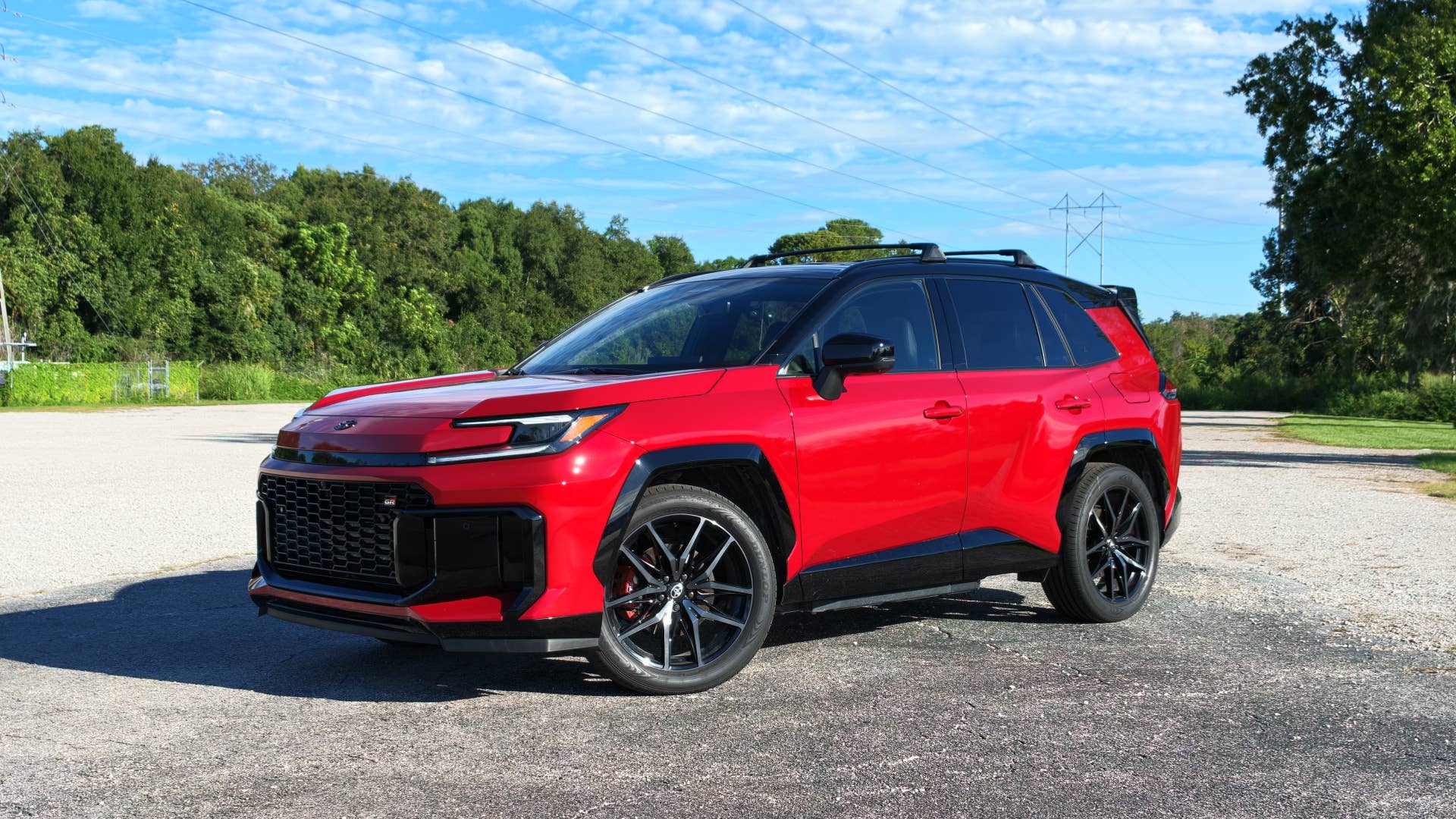
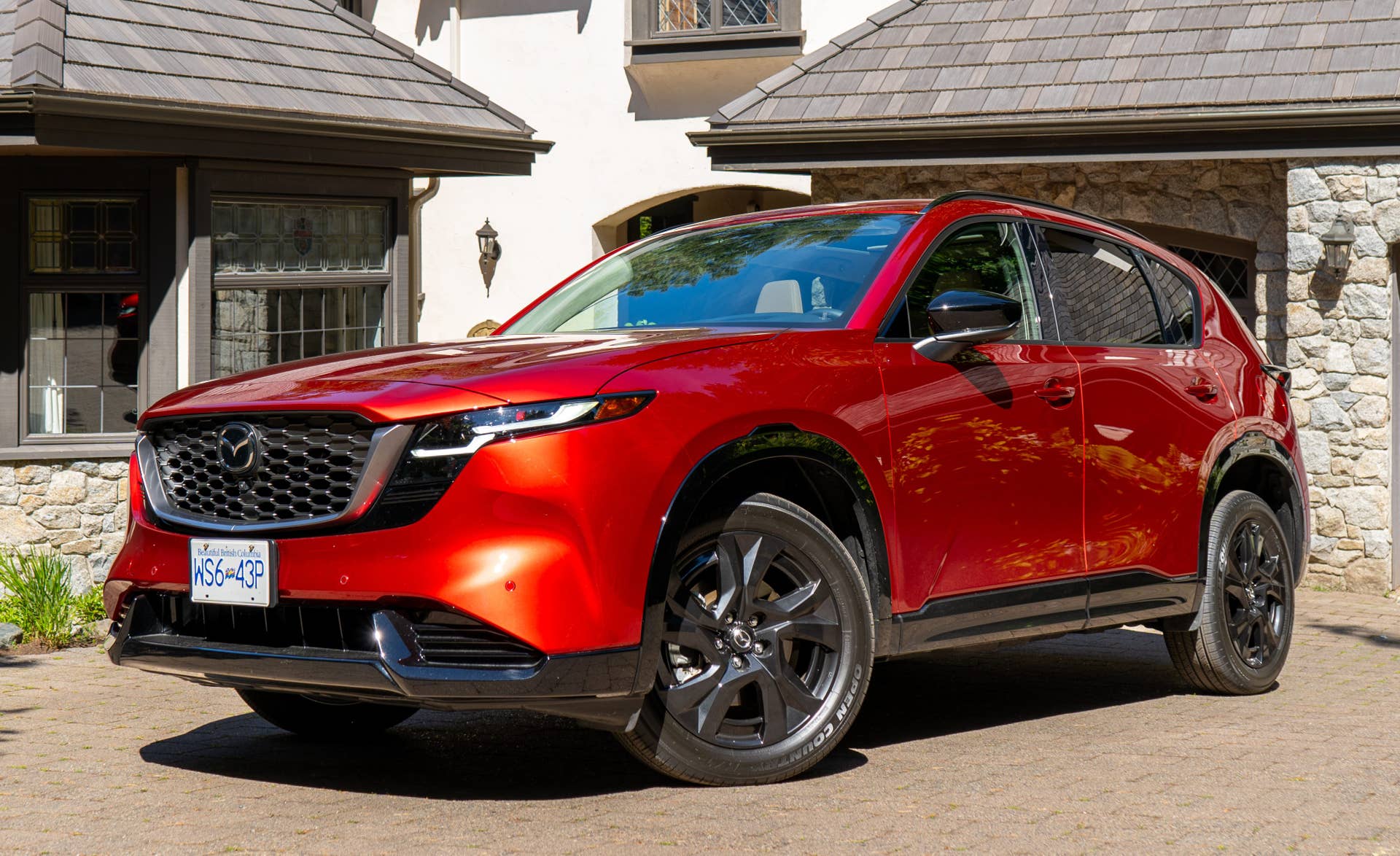
This is one of the key differences for this generation of each SUV. The Toyota RAV4 is now only available with hybrid or plug-in hybrid powertrains, while the Mazda CX-5 is only available with a single naturally-aspirated engine for now. A CX-5 hybrid will launch in 2027, but until that happens, Toyota has a significant performance and efficiency advantage.
| Toyota RAV4 Hybrid | Toyota RAV4 PHEV | Mazda CX-5 | |
| Engine | 2.5L I4 Hybrid | 2.5L I4 PHEV | 2.5L I4 |
| Horsepower | 226 hp (FWD) | 236 hp (AWD) | 324 hp | 187 hp |
| Torque | 163 lb-ft (engine only) | 172 lb-ft (engine only) | 186 lb-ft |
| 0-60 mph | 7.1 seconds | 5.2 seconds | 8 seconds |
Mazda no longer sells a turbocharged CX-5, so it’s well off the pace of the Toyota in terms of straight-line speed. The RAV4 PHEV reached 60 mph in just 5.2 seconds in Car and Driver testing, which is almost three seconds quicker than the CX-5.
For some buyers, there’s a potential upside to the Mazda’s straightforward powertrain, which does without turbocharging or electrification. Maintenance requirements are likely to be simpler for the Mazda as it ages, although Toyota hybrids are very much capable of lasting a long time, too.
2. CX-5 Vs. RAV4: Different Fuel-Saving Strategies
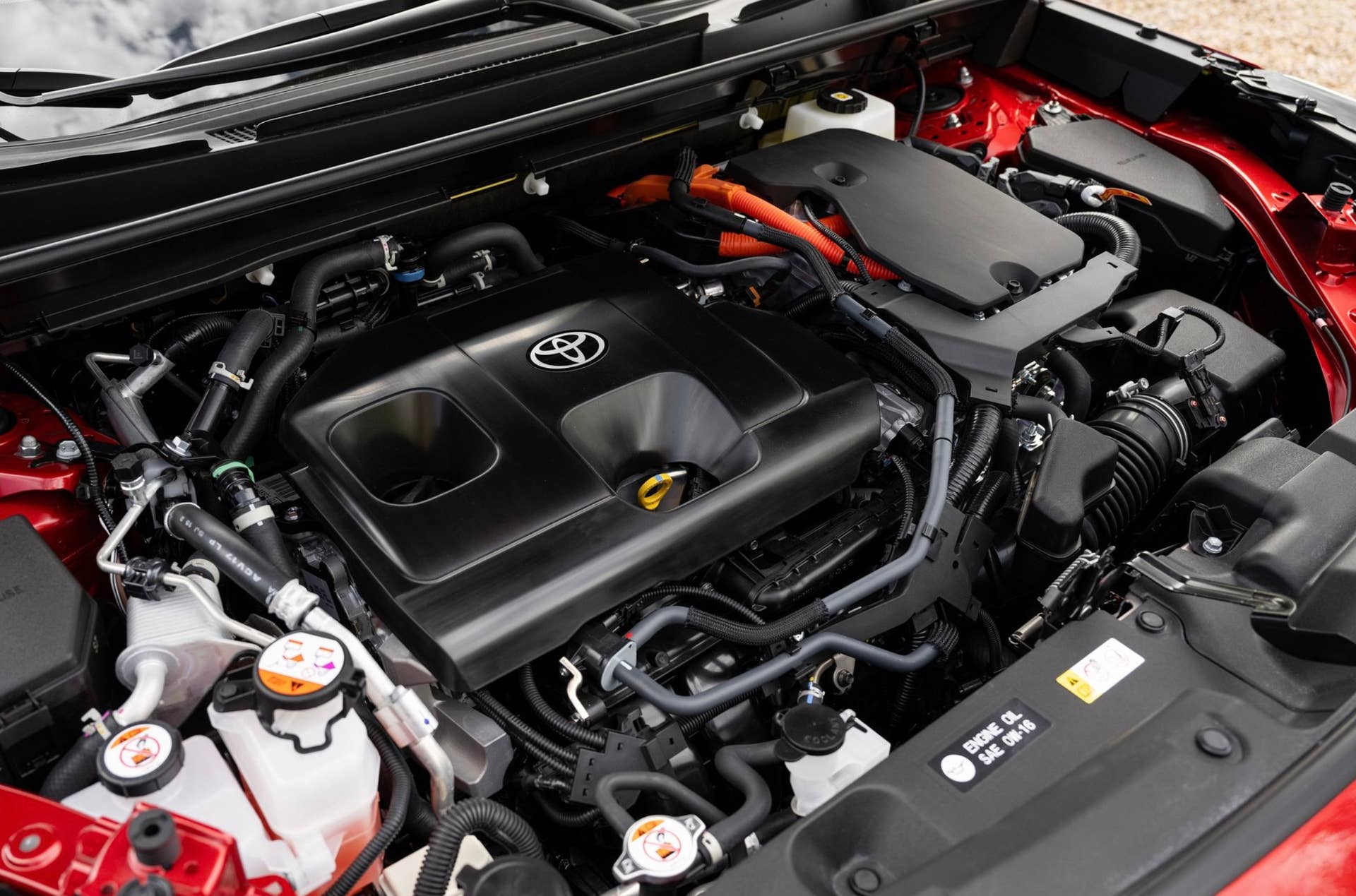
Toyota
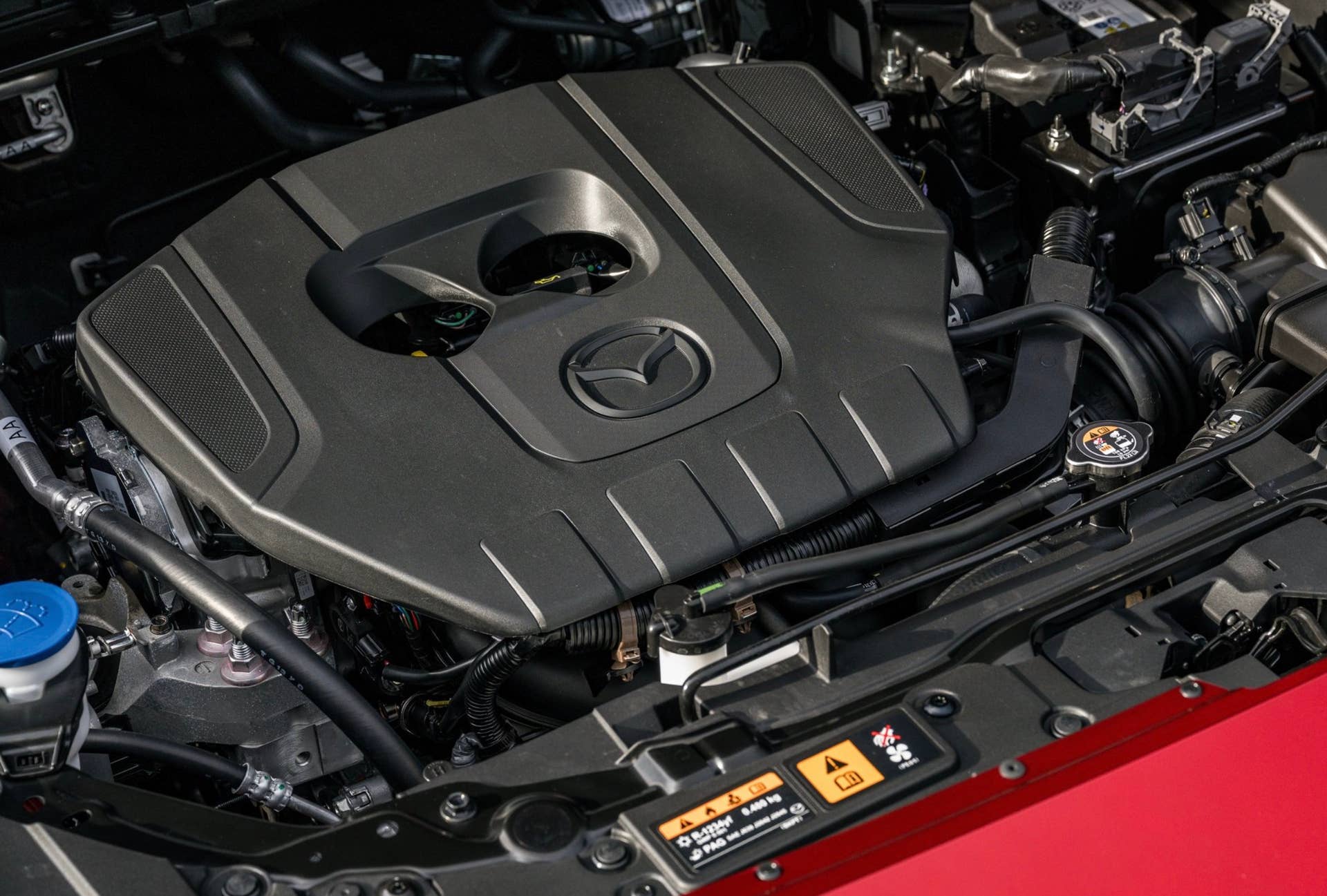
Mazda
Toyota primarily relies on hybridization to achieve the RAV4’s outstanding efficiency. It has two electric motors in front-wheel-drive versions and a third electric motor at the back for all-wheel-drive models. Mazda, meanwhile, achieves improved efficiency with the CX-5’s SkyActiv engine by employing cylinder deactivation technology, which the Toyota doesn’t need.
In the Toyota, the electric motors and four-cylinder engine seamlessly combine to power the vehicle. The electric motors can also recover electric energy through the regenerative braking system, something the Mazda is unable to do. In the RAV4 PHEV, the Toyota can be driven on electric power alone for up to 52 miles. This will give buyers significant fuel savings if their commute is short and charging is easily accessible.
Mazda’s CX-5 features cylinder deactivation, which can shut down select cylinders under light-load driving. When full power is needed, all four cylinders are automatically activated. This happens without the driver noticing, with the engine control unit constantly monitoring load, speed, and throttle position. When cylinder deactivation occurs, hydraulic valve lifters collapse, preventing intake and exhaust valves from opening on select cylinders.
Cylinder activation is no replacement for a full hybrid system, though. As the table below illustrates, both RAV4s are much more efficient than the Mazda.
| Toyota RAV4 Hybrid | Toyota RAV4 PHEV | Mazda CX-5 | |
| EPA rating (city/highway/combined) | 47/40/43 mpg (FWD) | 43/36/40 mpg | 24/30/26 mpg |
| Range | Up to 624 miles | Up to 580 miles | 398 miles |
| Electric Range | N/A | Up to 52 miles | N/A |
Not only are the Toyotas much more efficient, but you’ll be visiting the pumps a lot less often than in the Mazda.
3. Only One Offers FWD
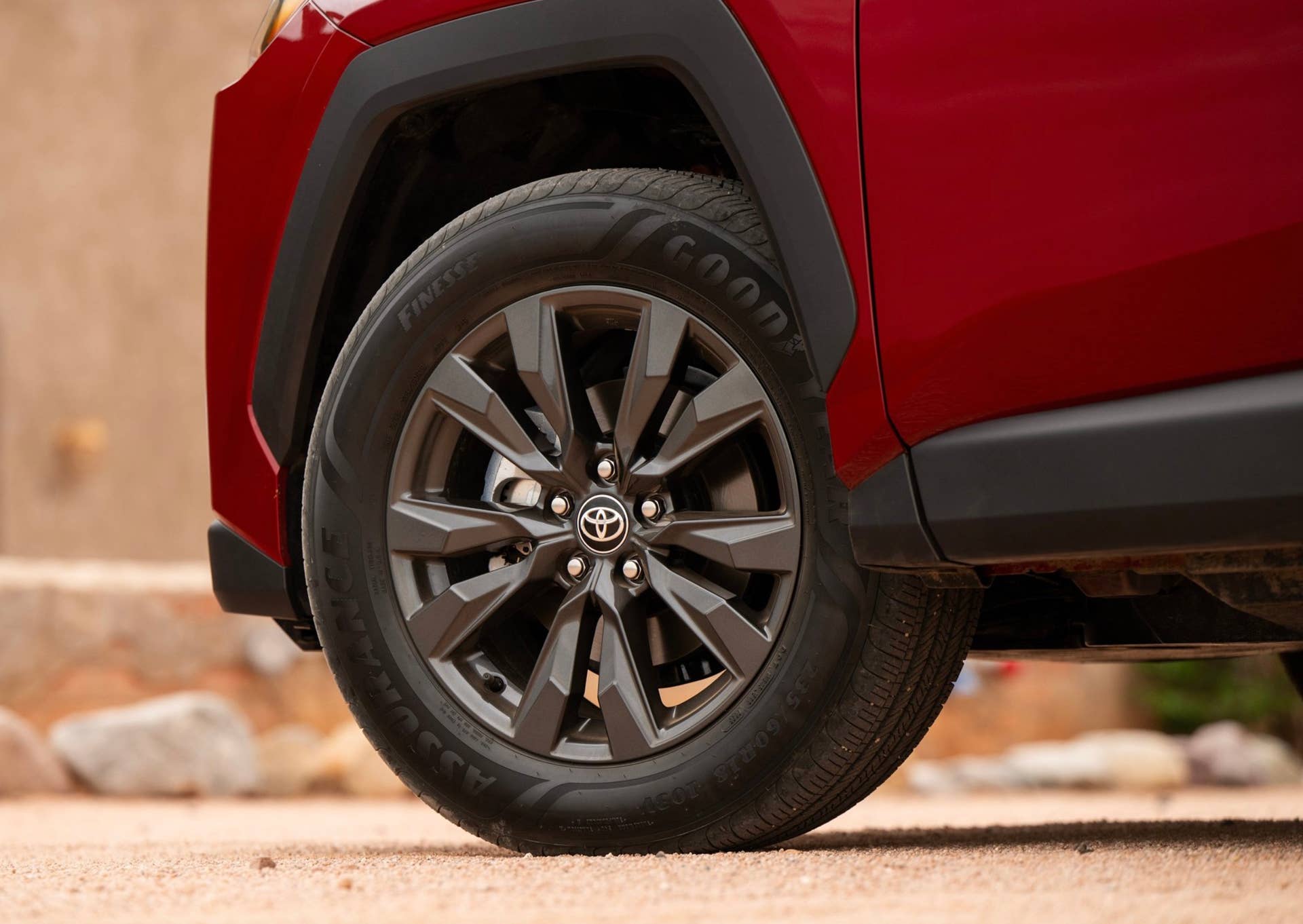
Toyota
Toyota gives buyers the option of a more efficient front-wheel-drive RAV4. For buyers in warmer states, this makes a lot of sense. FWD models cost $1,400 less, so there’s an immediate saving. Over time, the fuel savings also add up, and there’s no real performance deficit in choosing a FWD RAV4.
Mazda has taken a different approach with the CX-5. All versions come with the brand’s standard i-Activ AWD system, which gives drivers the confidence to handle slippery conditions. At $29,990, the base CX-5 is a good deal, especially considering it comes with AWD. The cheapest RAV4 with AWD costs $33,300.
4. Distinct AWD Architectures
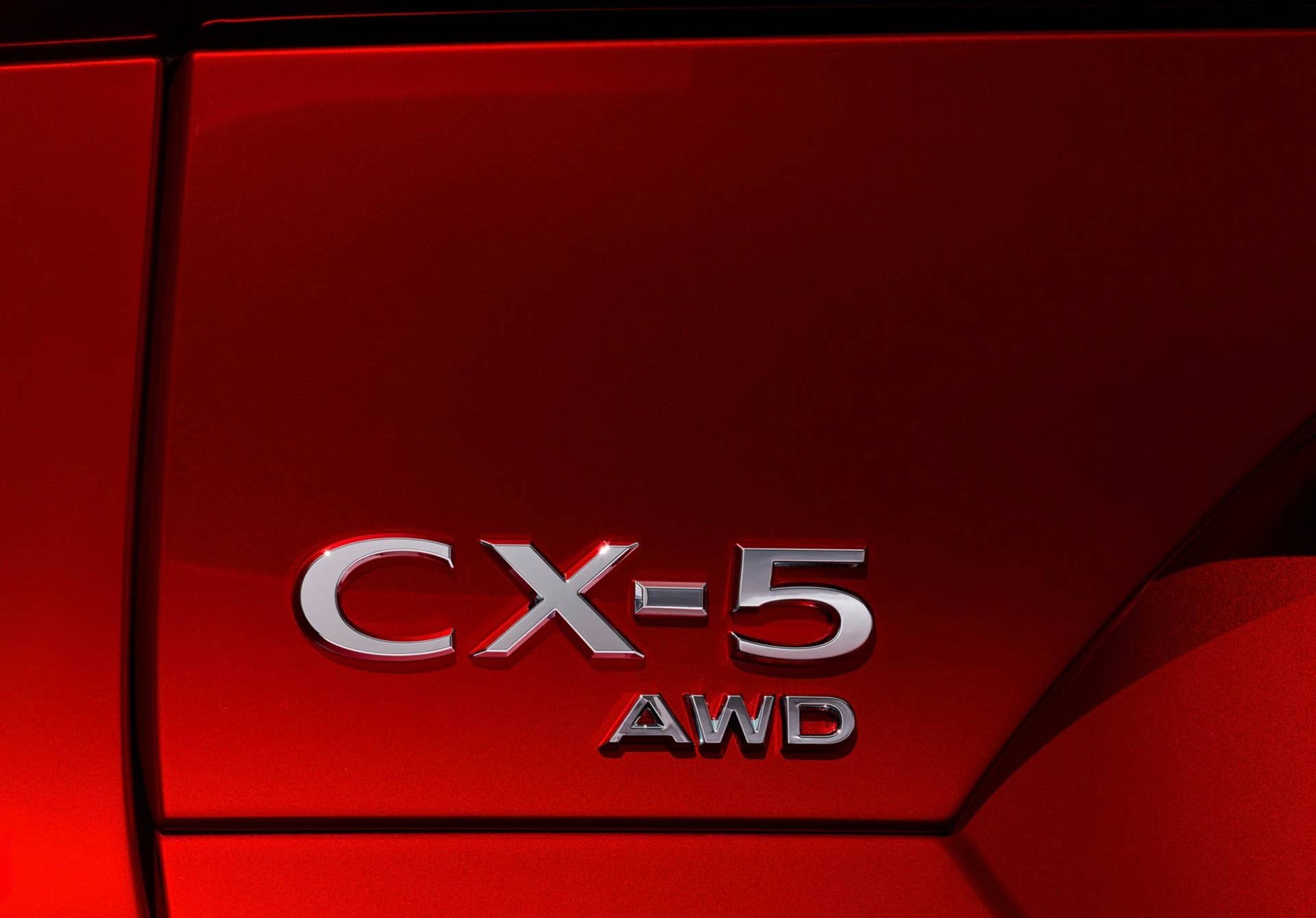
Mazda
These two crossovers also feature unique AWD architectures, mainly because the Toyota is a hybrid and the Mazda is not. The Toyota has an electronic on-demand AWD system, enabled by a dedicated rear electric motor. For this reason, it doesn’t need a conventional driveshaft linking the engine to the rear axle. The system automatically picks up when rear-wheel traction is needed, such as when driving in snow or up a hill. The rest of the time, the RAV4 primarily operates as a FWD vehicle. A further benefit to this setup is that electric motors develop torque instantly, so there’s less of a delay when extra traction is needed.
Mazda’s i-Activ AWD system is more traditional since it has no electric assistance. It relies on a mechanical connection between the engine and rear wheels. The CX-5 also comes with G-Vectoring Contro Plus, which uses an electronic brake limited-slip differential to improve traction, whether encountering slippery conditions or a twisty road at higher speeds.
Both systems are effective, but the CX-5 is the more athletic-feeling crossover on normal roads. The RAV4 is composed but not quite as engaging.
5. They Use Completely Different Transmissions
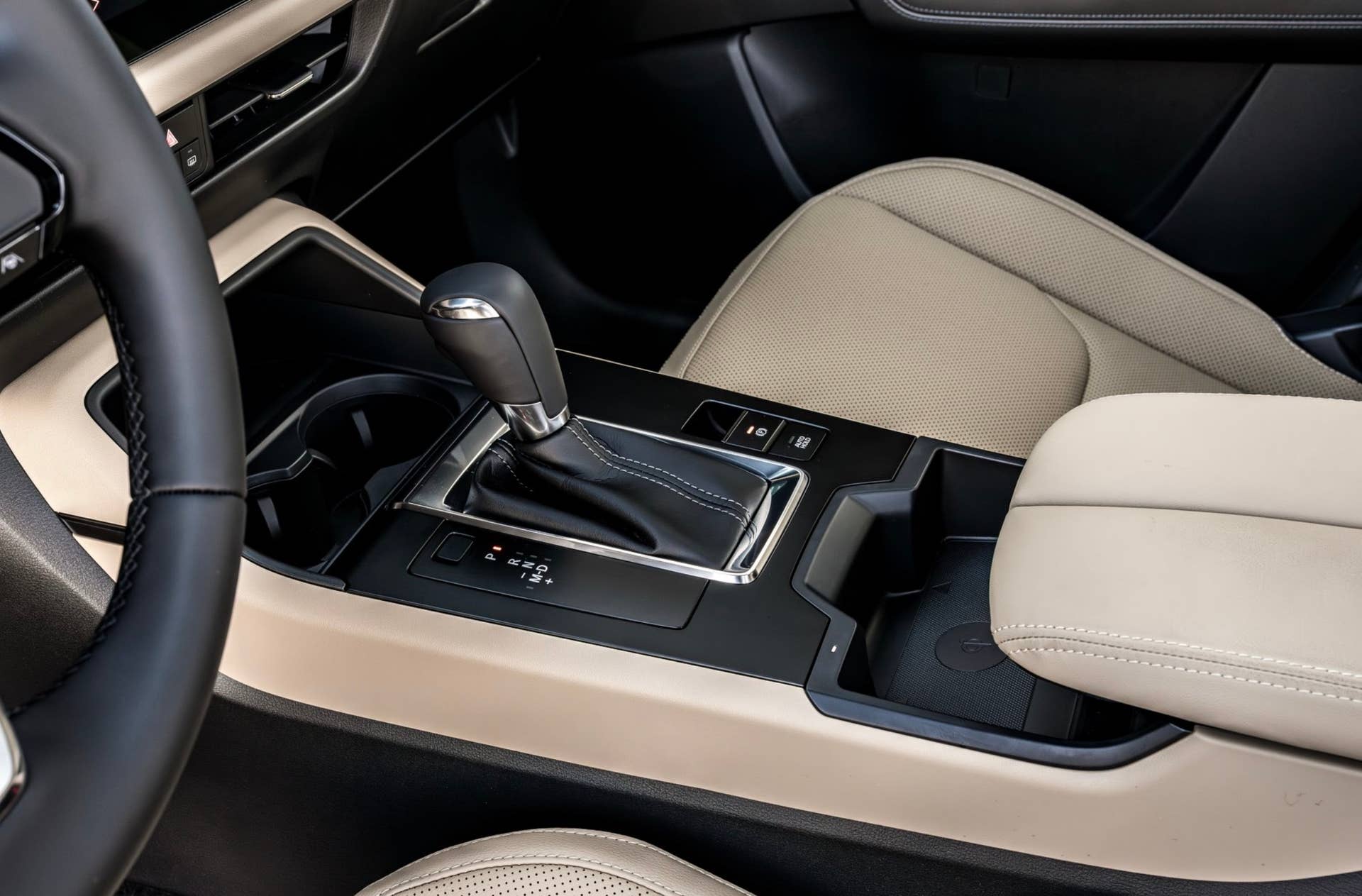
Mazda
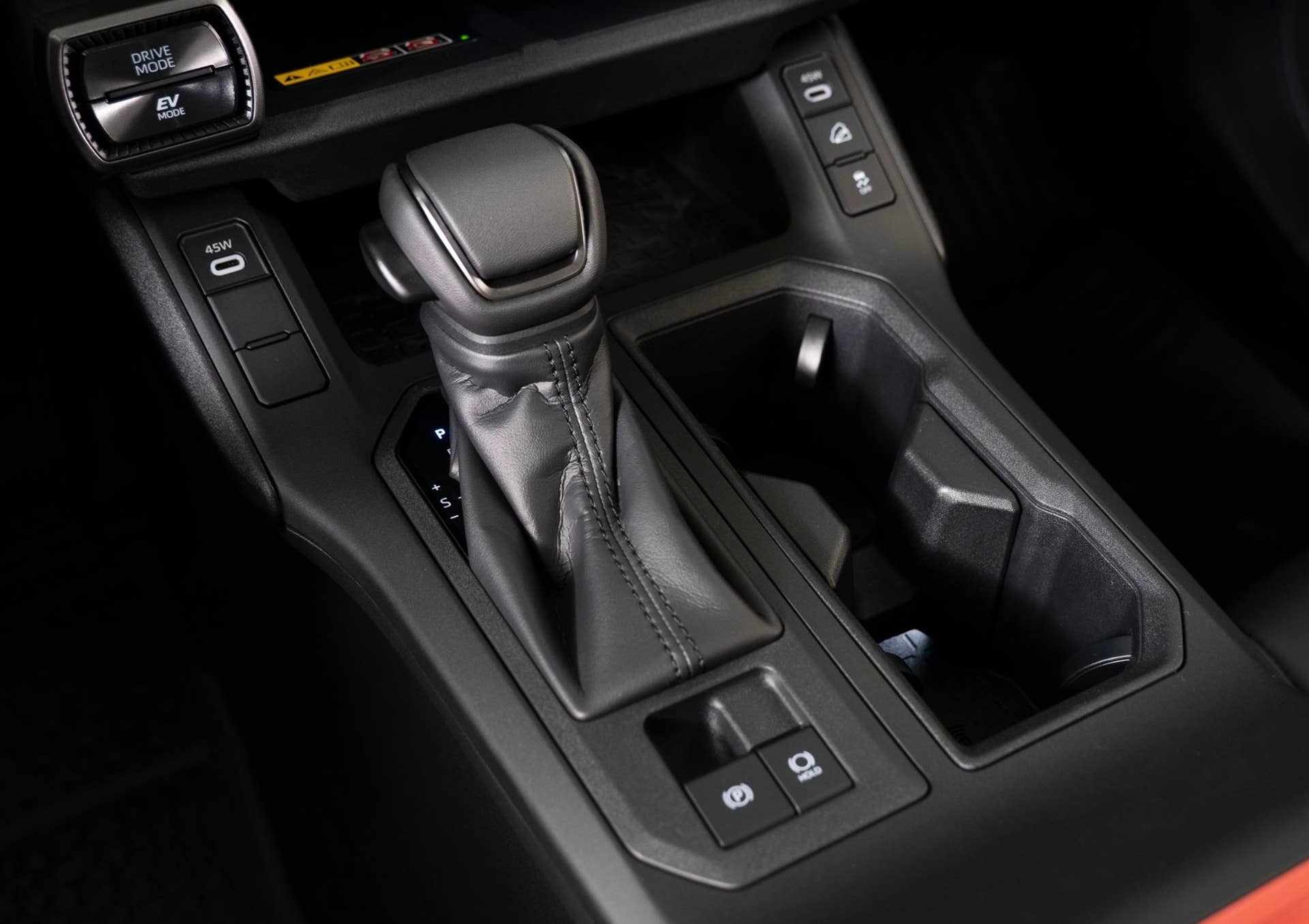
Toyota
This is another area where the Mazda sticks to convention and the Toyota adopts a more modern approach. The 2026 CX-5 may have debuted a tech-heavy interior, but it retains Mazda’s familiar six-speed torque converter automatic transmission. While many competitors have adopted CVTs or automatics with more gears, Mazda has stuck to a tried-and-tested approach. Last year, Stefan Meisterfeld, vice president of strategic planning for Mazda North America, explained the thinking behind this decision.
“The six-speed transmission works really well with our current Skyactiv-G engine, so we didn’t want to change the recipe,” said Meisterfeld in an interview with The Drive. “It’s very linear, very direct. The shift feel and the feedback we get from our customers, and also people like you in the press, is that this is a really good combination.”
In our own experience of driving the 2026 Mazda CX-5, we have to agree with Meisterfeld. What looks like an old-school transmission on paper translates to a beautifully responsive, refined, and natural-feeling driving experience. CVTs also have a patchy reliability history, another reason in defense of Mazda’s reluctance to use them.
The RAV4, meanwhile, makes use of an electronically-controlled continuously variable transmission (e-CVT). It uses a planetary gearset and electric motors instead of a belt system, which generally makes them more reliable than conventional CVTs. These Toyota e-CVTs are also smooth, but the four-cylinder does become a bit noisy when pushed.
Final Thoughts
Toyota
Mazda
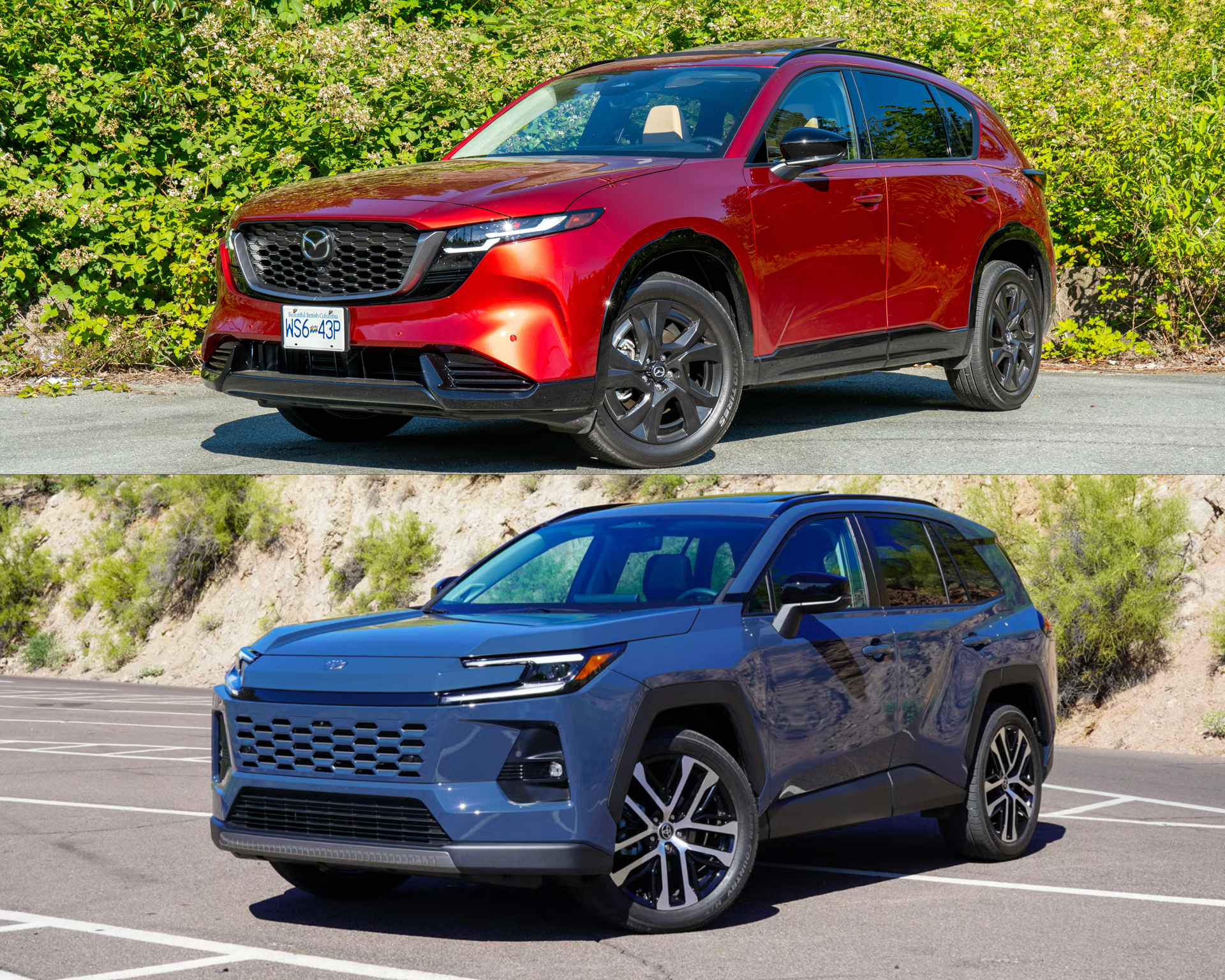
On the showroom floor, the differences between these two SUVs are obvious. That’s also the case when digging into the mechanical makeup in this Mazda CX-5 vs Toyota RAV4 comparison.
The Mazda takes a more cautious approach with its traditional automatic and non-hybrid powertrain; it’s not quick, but it delivers a smooth, familiar driving experience and is very likely to be reliable. The Toyota crushes the Mazda on paper, being both quicker and much more efficient. Its powertrain also reflects Toyota’s vast experience in producing hybrids, as it all comes across as seamless and cohesive. Whether the more complex engineering beneath the RAV4 proves as reliable beyond 100,000 miles is a question we’ll only be able to answer decisively in a few years.
About the author

Karl Furlong
Senior Editor, Autoblog