
The Gas Guzzler schedule, with mpg ratings and charges that haven’t changed since 1991, lays out which fuel-swillers owe what to Uncle Sam.
I started thinking about the “Gas Guzzler Tax” – considerably less well known as The Energy Tax Act of 1978 – when I was driving Dodge’s new Challenger SRT Hellcat last week. Unsurprisingly for a car that can burn 1.5 gallons of gas per minute at max tilt, theoretically able to empty a full tank of premium in about 13 minutes, the Hellcat will be subject to the Gas Guzzler Tax schedule when it goes on sale.
Beyond knowing that it existed, and occasionally seeing a surcharge for it listed on the specification sheet for a press car I’d been loaned, I didn’t really understand how the GGT worked or was calculated.
Thankfully, the Environmental Protection Agency makes learning about the GGT (and a lot of other stuff) pretty simple. EPA.gov has a clearly written explanation of the tax and the tax schedule. That schedule, operating with miles-per-gallon ratings and charges that haven’t changed since 1991, clearly lays out which fuel-swillers owe what to Uncle Sam. Basically, if a car’s combined fuel economy rating is 22.5 mpg or higher it’s off the hook – trucks, minivans and SUVs are all exempt from the GGT – if the rating is lower, per vehicle taxes range from $1,000 to $7,700 for the very thirstiest.
Simple, right?
There are a couple of important caveats to all this. First, the GGT is charged to the vehicle manufacturer or importer directly, not to consumers, though the cost is very often added on to the bottom-line price for you and me. That said, just because your car or truck is subject to the tax doesn’t mean you’ll see a line item on its window sticker.
The bigger caveat is this: Even though the mpg numbers for Highway, City and Combined fuel economy ratings that you see on a new car’s window sticker come from the EPA, they are not the same figures used to calculate the GGT. Basically, the EPA uses pure laboratory testing to glean its fundamental mpg ratings, but for the purposes of window stickers, it also factors in three other testing protocols to better replicate real-world driving. However, for reasons that are not made immediately clear in the documentation (but probably with roots in some serious lobbying dollars), the GGT is factored on the lab numbers alone, which are more lenient.
As a result of this odd double-standard system, there are a whole host of cars on sale in 2014 that show ratings well below the tax standard, but aren’t charged.
As a result of this odd double-standard system, there are a whole host of cars on sale for the 2014 model year that show combined ratings well below the 22.5-mpg-combined standard, yet they still aren’t charged for the GGT. But which models guzzle hardest without dinging potential owners for a few extra grand of MSRP?
Combing through the EPA data, I set a standard of 18 mpg combined or worse for my list, as the total number of cars not hit by the tax and rated at 19-21 hits triple digits – they aren’t that rare.
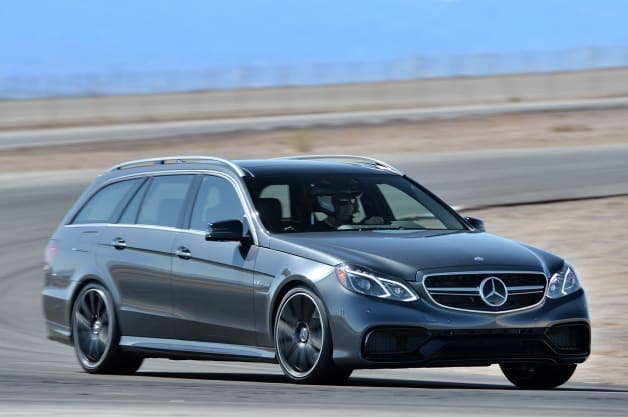
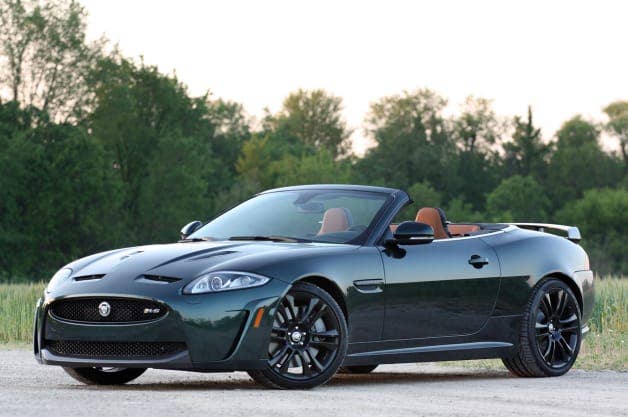
Of the 40-plus models (when variants are added in) I came up with, two in particular stand out as the very best at playing the EPA’s lab game. You’ll see quite a few 5.0-liter-V8-equipped Jaguar models on this list, but the 2014 XKR and XKR-S Convertibles, rated at 15/22/17, city/highway/combined, burn the most gas without paying the piper. With an equal 17-mpg-combined rating, the completely awesome Mercedes-Benz E63 AMG S 4Matic Wagon (15/21, City/Highway) is even a hair thirstier than the aged Jag.
Though there’s a lot of variance in city and highway ratings, every other model that slips in under the GGT reach nets out at 18 mpg combined – a rating which, if eligible for the tax schedule, would add cost to the tune of $2,600 per model.
In addition to having the thirstiest models on this list, Mercedes and Jaguar also have the most entries. Big Benz models with the twin-turbo, 5.5-liter V8 and the seven-speed transmission are popular GGT-dodgers, though the CL550 4Matic makes the list as well (all according to plan, it seems). Jaguars fitted with the 5.0-liter supercharged V8, in several different power flavors, combine to give the brand 13 entries after figuring for variants, all making 18 mpg combined or worse.
In addition to having the thirstiest models on this list, Mercedes and Jaguar also have the most entries.
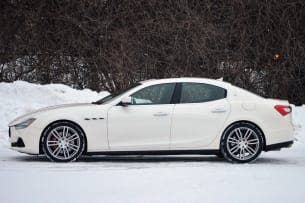
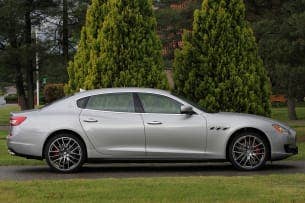
While almost every car on the list is rocking a V8 and an automated transmission of some kind (note that the “AT” references for transmission in the spreadsheet do account for some dual-clutch and automated-manual boxes), there are a few outliers. The Maserati Quattroporte S Q4 and Ghibli S Q4 both feature a turbo’d 3.0-liter V6, the smallest displacement engine of the group. Still, 404 horsepower from three liters has to come with with a fuel-economy penalty, and both Masers are a bit thirsty – 15/24/18 ratings for the QP and 15/25/18 for the Ghibli.
Meanwhile, it’s fitting that the biggest-displacement engine on the list is found under the hood of some good-old-fashioned American iron. The 2014 Chevy Camaro SS displaces 6.2-liters of Red, White and Blue glory, while returning 15/24/18, city/highway/combined mpg with the six-speed automatic gearbox. It’s worth noting that the supercharged ZL1 and the 7.0-liter Z/28 both get dinged for GGT.
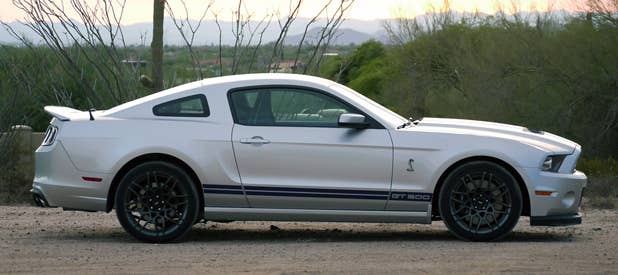
I also find it pretty excellent that the supercharged, 5.8-liter, 662-hp Shelby GT500 is not, technically, a gas guzzler. Considering that the super Ford also has one of the best power-to-weight ratios in the country, I’d call it a very successful pony car.
If you’re interested in seeing the full list of Gas Guzzler Tax escapees, you’ll find it in press-release form below. Take a look, then tell us, in Comments, which of the under-the-wire cars you find most compelling.
Show full PR text
MAKE | MODEL | ENGINE | TRANS | CITY | HWY | COM |
RS 5 | 4.2L V8 | 7AT | 16 | 23 | 18 | |
Audi | RS 5 Cabrioilet | 4.2L V8 | 7AT | 16 | 22 | 18 |
Continental GT | 4.0L V8 | 8AT | 15 | 24 | 18 | |
CTS | 3.6L V6 | 8AT | 16 | 24 | 18 | |
Chevy | Camaro SS | 6.2L V8 | 6AT | 15 | 24 | 18 |
300 AWD | 5.7L V8 | 5AT | 15 | 25 | 18 | |
Dodge | Challenger | 5.7L V8 | 6MT | 15 | 23 | 18 |
Dodge | Challenger | 5.7L V8 | 5AT | 15 | 25 | 18 |
Dodge | Charger AWD | 5.7L V8 | 5AT | 15 | 23 | 18 |
Dodge | Charger | 5.7L V8 | 5AT | 15 | 25 | 18 |
Ford | Shelby GT500 | 5.8L V8 | 6MT | 15 | 24 | 18 |
Equus | 5.0L V8 | 8AT | 15 | 23 | 18 | |
Hyundai | Genesis R Spec | 5.0L V8 | 8AT | 15 | 23 | 18 |
Jaguar | F-Type V8 S | 5.0L V8 | 8AT | 16 | 23 | 18 |
Jaguar | XF 5.0 SC / XFR / XFR-S | 5.0L V8 | 6AT | 15 | 23 | 18 |
Jaguar | XJ SC / XJR / XJL SC / XJR LWB | 5.0L V8 | 8AT | 15 | 23 | 18 |
Jaguar | XKR / XKR-S | 5.0L V8 | 6AT | 15 | 22 | 18 |
Jaguar | XK Convertible | 5.0L V8 | 6AT | 16 | 22 | 18 |
Jaguar | XKR / XKR-S Convertible | 5.0L V8 | 6AT | 15 | 22 | 17 |
MP4-12C Coupe / Spider | 3.8L V8 | 7AT | 15 | 22 | 18 | |
IS F | 5.0L V8 | 8AT | 16 | 23 | 18 | |
Lexus | LS 460 AWD / LS 460 L AWD | 4.6L V8 | 8AT | 16 | 23 | 18 |
Ghibli S Q4 | 3.0L V6 | 8AT | 15 | 25 | 18 | |
Maserati | Quattroporte S Q4 | 3.0L V6 | 8AT | 15 | 24 | 18 |
CL550 4Matic | 4.7L V8 | 7AT | 15 | 24 | 18 | |
Mercedes-Benz | CL63 AMG | 5.5L V8 | 7AT | 15 | 22 | 18 |
Mercedes-Benz | CLS63 AMG 4Matic | 5.5L V8 | 7AT | 16 | 22 | 18 |
Mercedes-Benz | CLS63 AMG S 4Matic | 5.5L V8 | 7AT | 16 | 22 | 18 |
Mercedes-Benz | S63 AMG 4Matic | 5.5L V8 | 7AT | 15 | 23 | 18 |
Mercedes-Benz | E63 AMG S 4Matic | 5.5L V8 | 7AT | 15 | 22 | 18 |
Mercedes-Benz | E63 AMG S 4Matic Wagon | 5.5L V8 | 7AT | 15 | 21 | 17 |
Panamera Turbo / Turbo S | 4.8L V8 | 7AT | 15 | 24 | 18 | |
Roush | Stage 3 Mustang | 5.0L V8 | 6MT | 15 | 22 | 18 |