
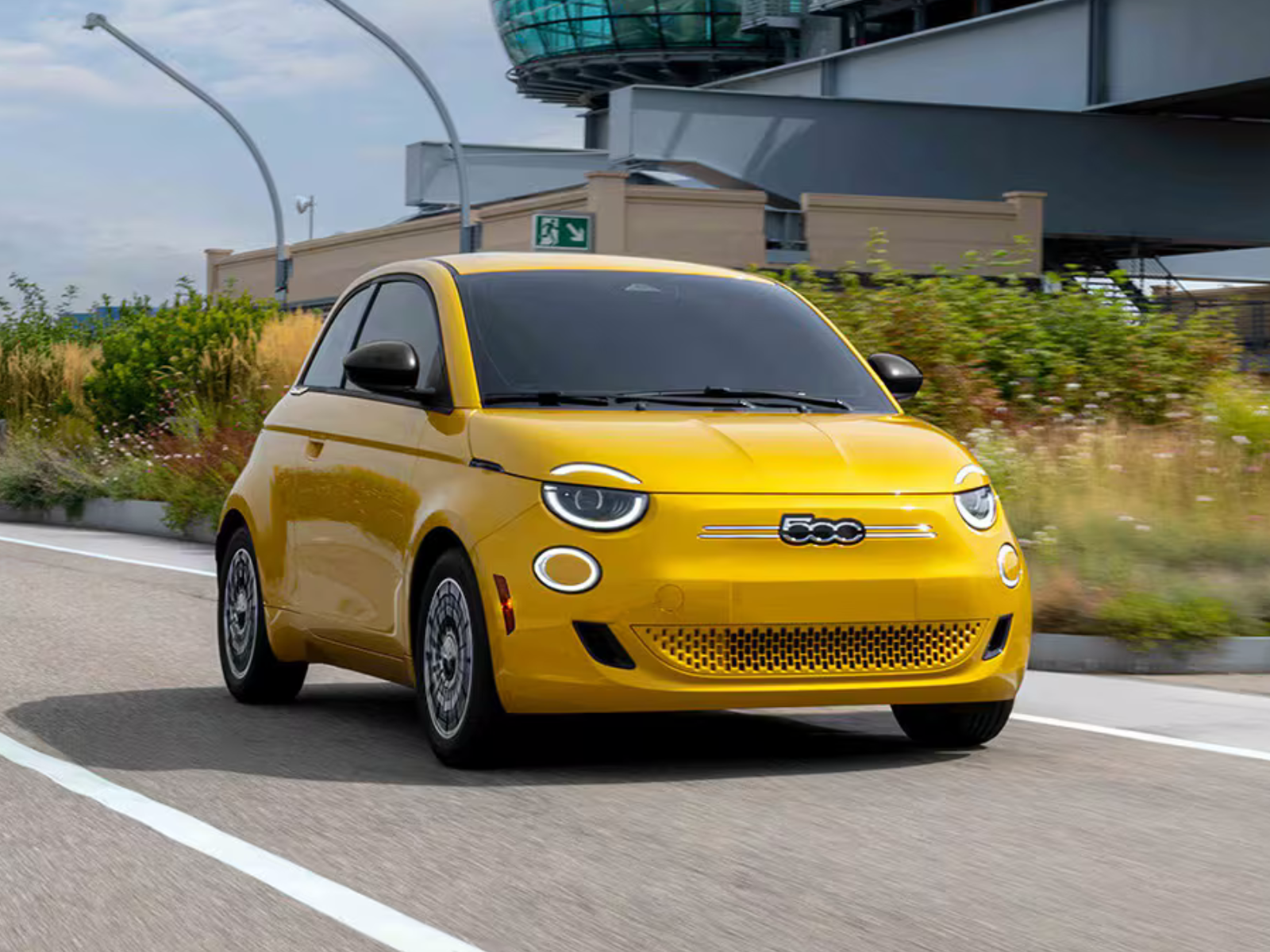
There are a lot of electric vehicles on the market right now, and most of them take themselves very seriously. They have aggressive faces, complicated lighting signatures, giant screens and names that sound like they were created by a committee of engineers after three days without sleep.
Then there is the 2026 Fiat 500e.
The little Italian EV looks like it is having fun. That alone makes it unusual.
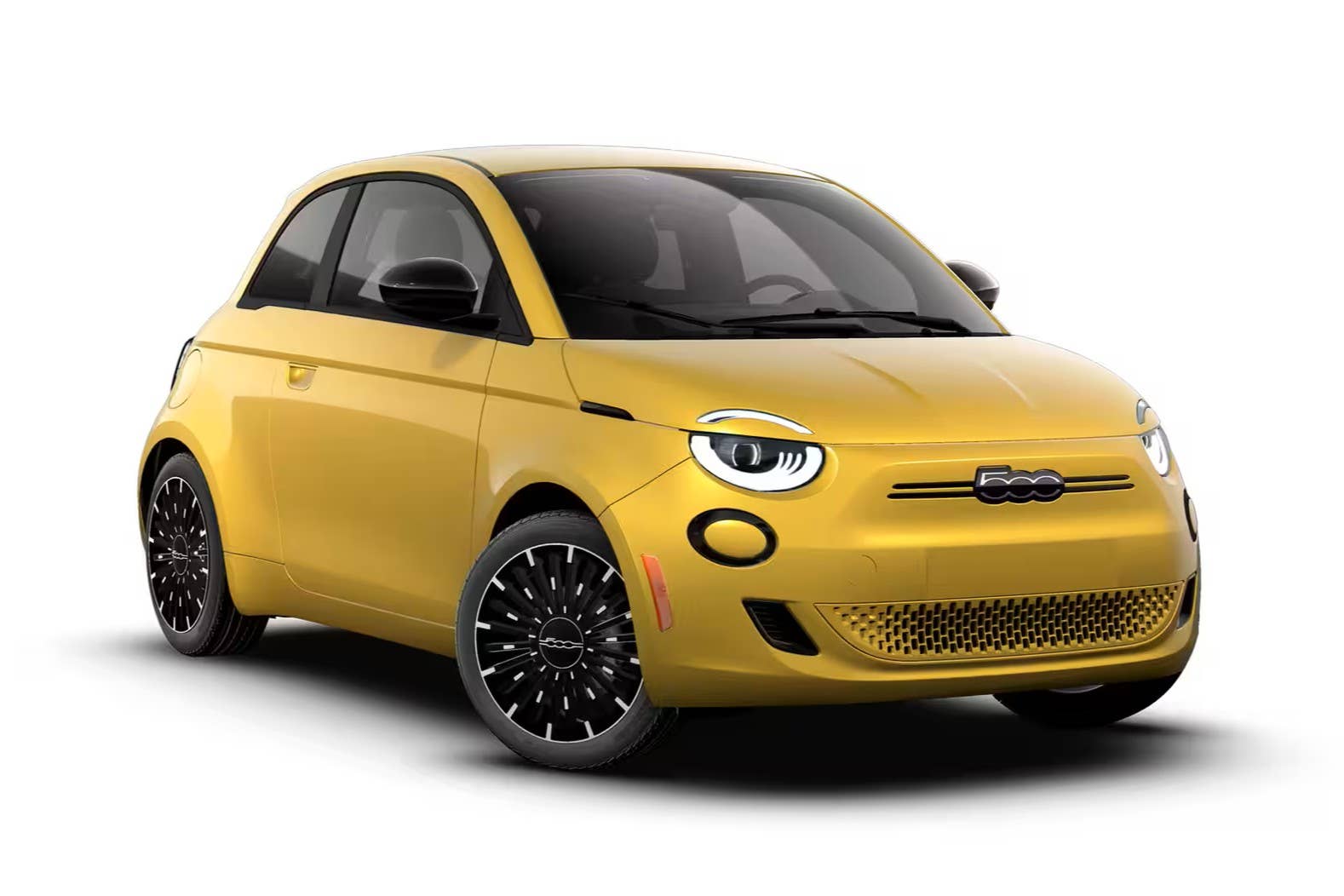
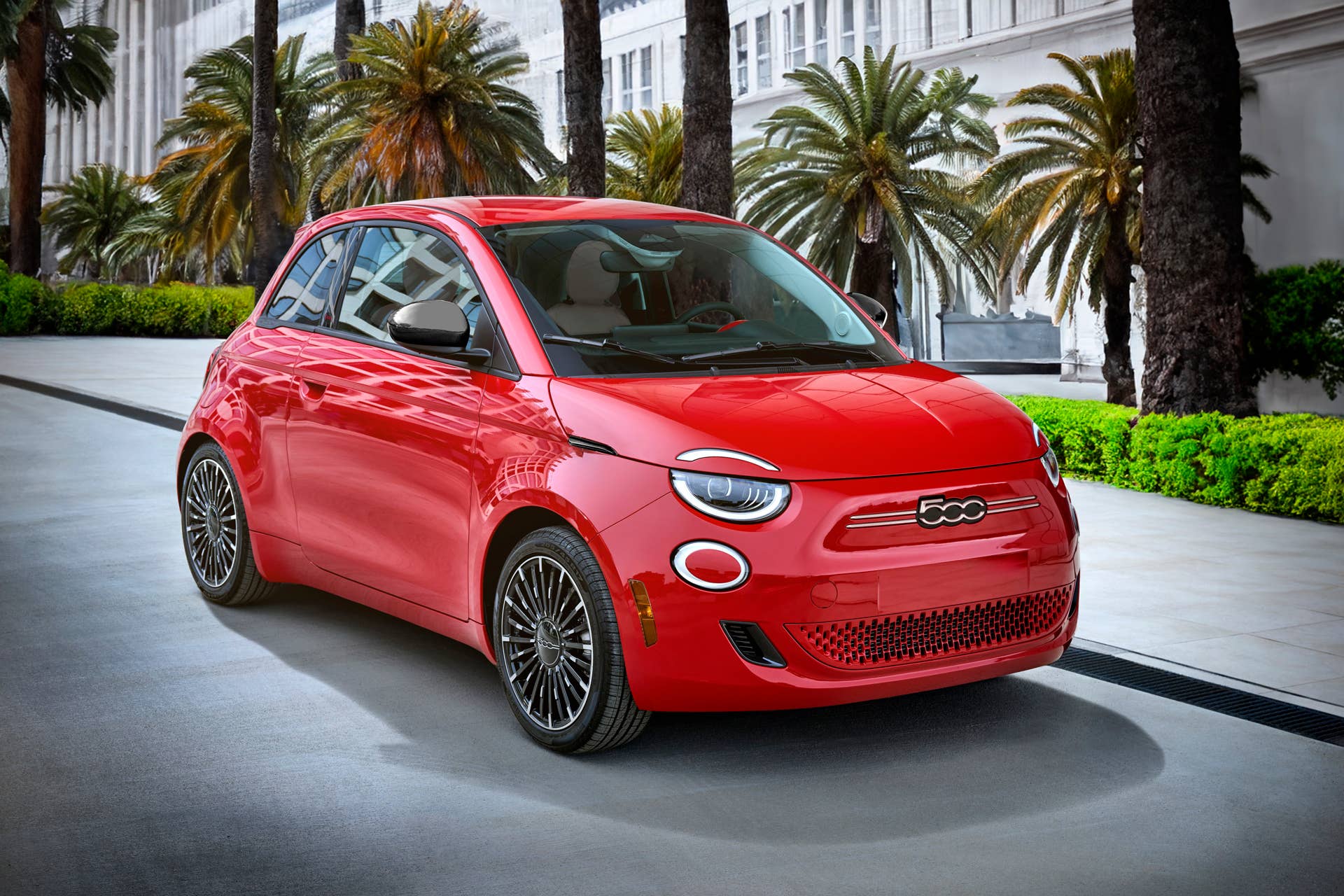
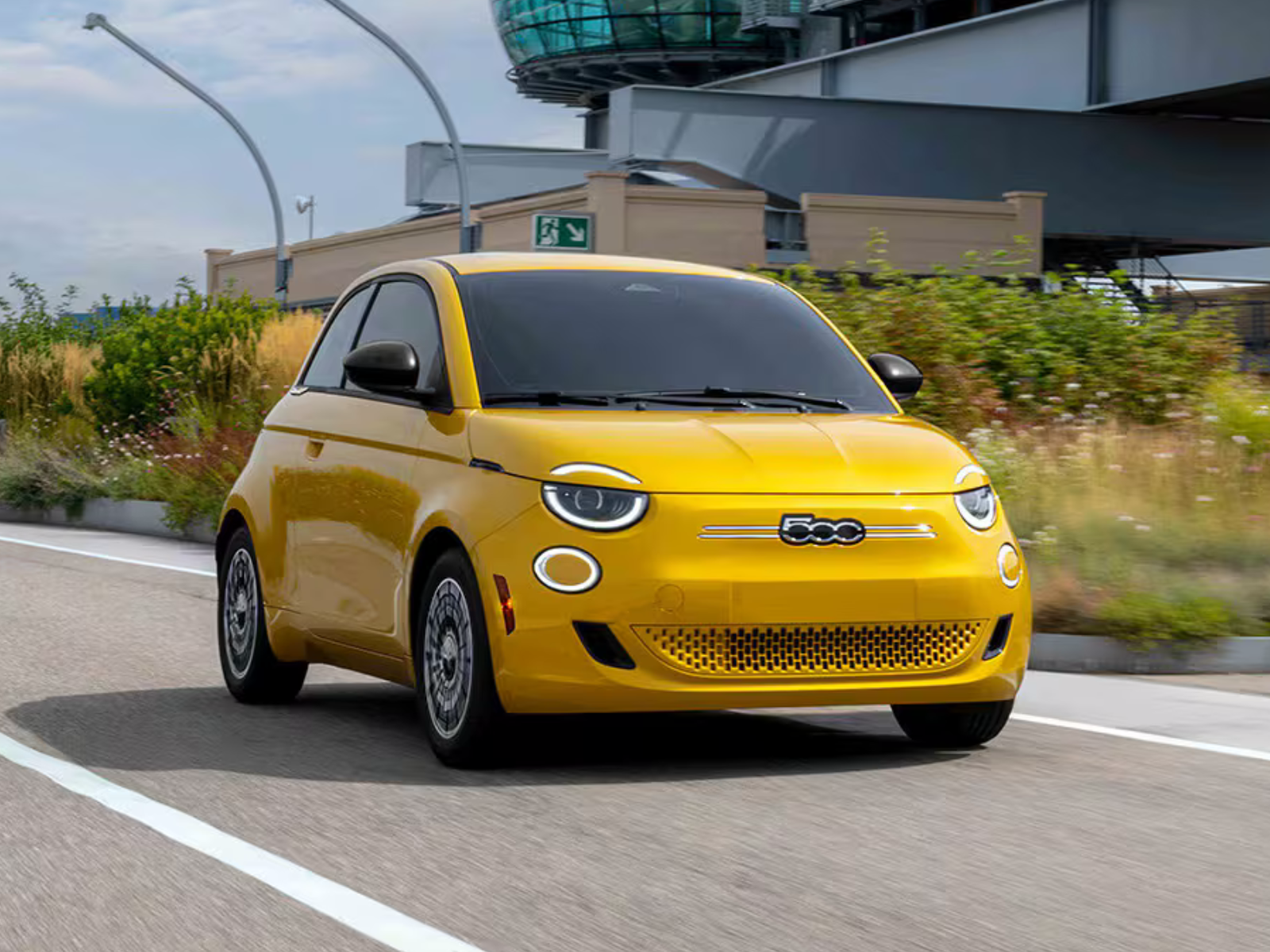
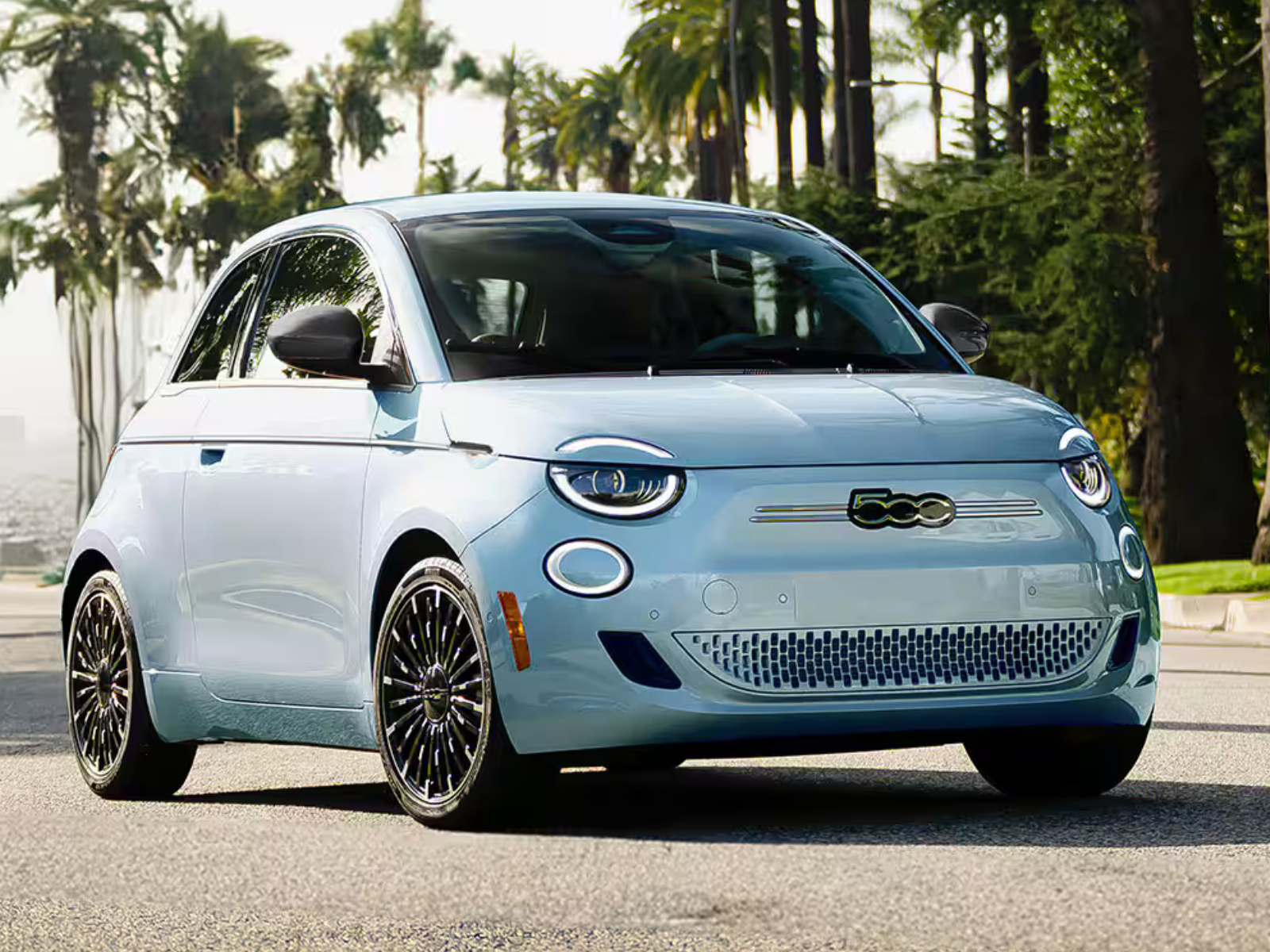
The 2026 Fiat 500e is a tiny, two-door electric hatchback that seems almost deliberately uninterested in following the current EV playbook. It isn’t trying to be a crossover. It doesn’t pretend to be a family vehicle. It isn’t chasing 300 miles of range or trying to embarrass a sports car at a stoplight. It is basically a modern Italian city car with a battery, a cute face and enough personality to make you smile before you’ve even turned it on. Fiat itself describes the 500e as an expression of Italian design, efficiency and “joy,” which is about as Fiat as it gets.
And honestly, I like that.
Fiat
Fiat
Fiat
Small is the whole point
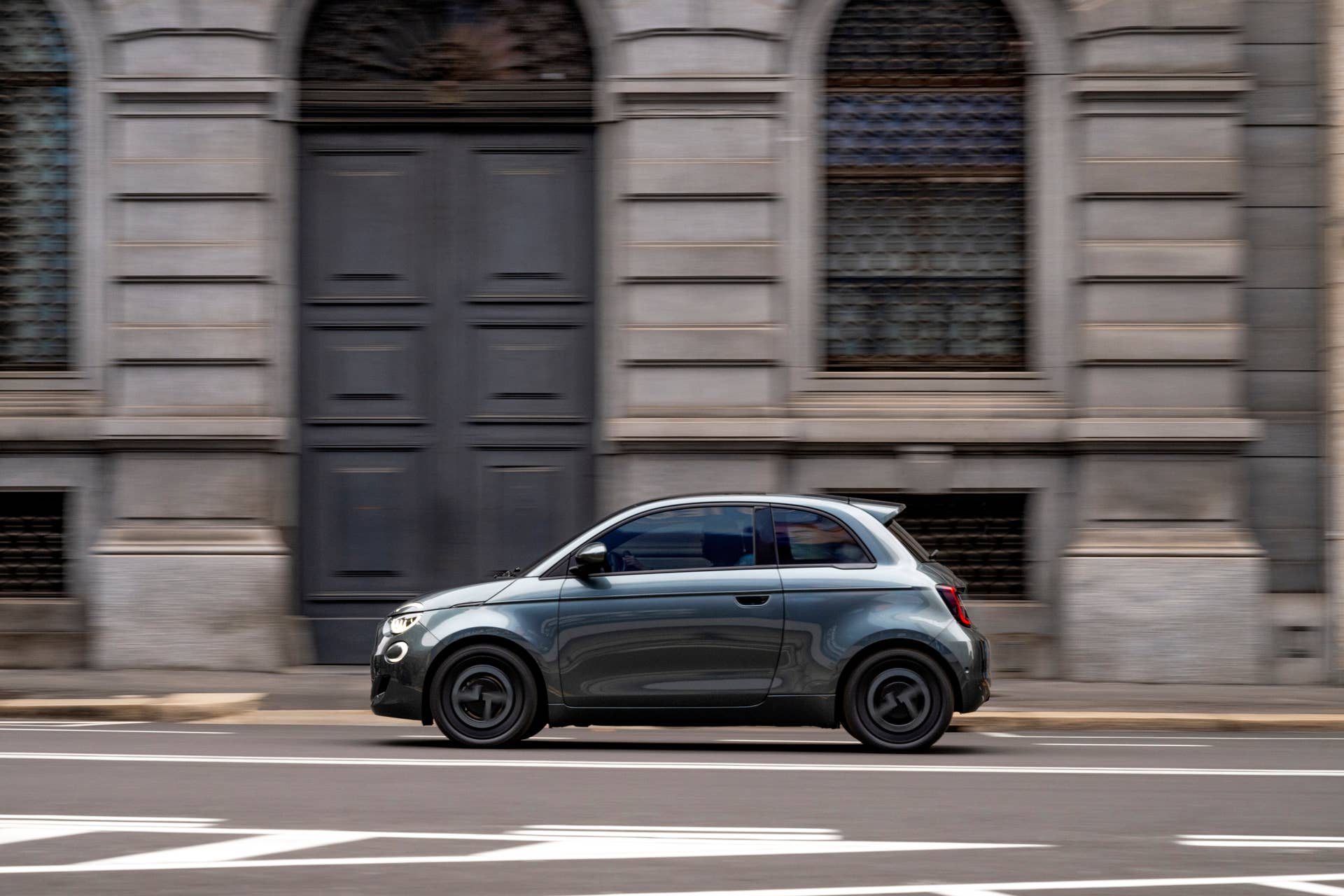
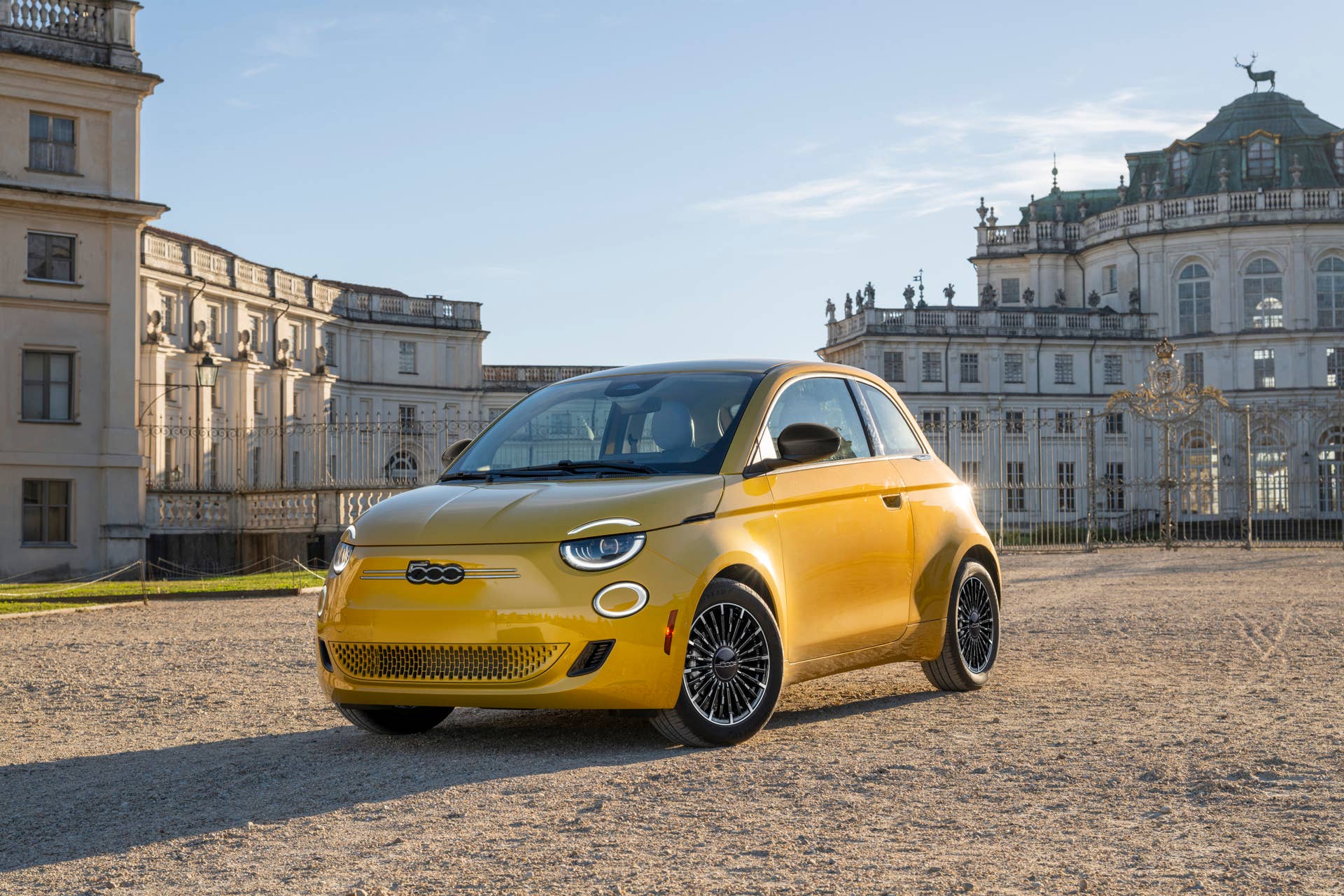
The 500e is tiny by American standards. It measures roughly 143 inches long, 66.3 inches wide without mirrors and rides on a 91.4-inch wheelbase. That makes it remarkably easy to maneuver through tight streets and parking lots, which is exactly what it was designed to do.
This is not one of those vehicles where the manufacturer tells you it is “city friendly” because it has a parking camera. The 500e actually is city friendly.
You can put it into spaces that would make a midsize crossover driver start looking for a different neighborhood. Its small footprint, light controls and tight dimensions make it particularly well suited to urban driving. The rounded body, short overhangs and friendly face also give it something that many EVs have somehow lost along the way: personality.
The 500e looks happy.
That shouldn’t be a technical specification, but I think it matters.
Fiat
The power is modest, but that’s okay
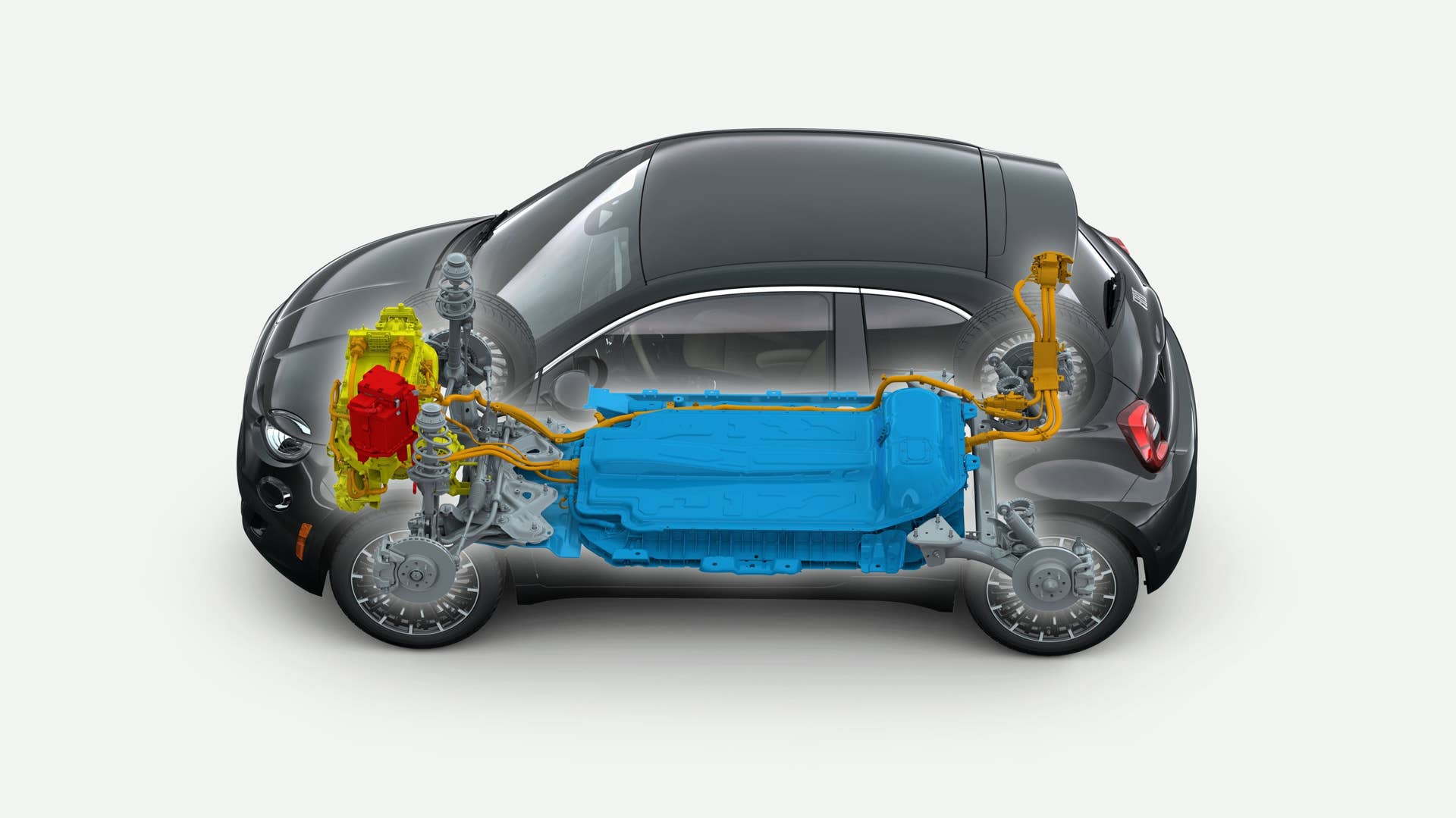
Underneath that adorable exterior is a 42-kWh battery and a single electric motor driving the front wheels. Output is 117 horsepower and 162 lb-ft of torque.
No, those numbers aren’t going to scare a Tesla Model 3.
The 500e is light enough and compact enough that 162 lb-ft of instant electric torque makes it feel lively around town. It isn’t a performance car, but it doesn’t need to be. This is an EV that is happiest darting through traffic, squeezing into parking spaces, and making quick trips across town.
And because it is an EV, there is no waiting for the engine to build power. Push the accelerator, and it simply goes. Steering is quick, and the steering wheel has a nice weight and feel to it. You feel a bit of its personality as you drive. Simply put: it’s fun to drive, and that is a huge part of its appeal.
The Fiat also offers regenerative braking and one-pedal driving, which make stop-and-go traffic considerably easier.
The steering and overall driving experience focus more on maneuverability than outright performance. That’s an important distinction. If you climb into the 500e expecting a tiny electric hot hatch, you’re probably going to be disappointed. If you understand that it is essentially an electric city runabout with Italian shoes on, it makes considerably more sense. Once again, it’s a fun car, not a performance car.
Range is the elephant in the tiny room
There’s no sugar-coating it: the range sucks. The 500e’s range is short by modern EV standards. Fiat lists up to 153 miles of city range with standard all-season tires and up to 162 miles with the available summer tires.
That’s not impressive if you’re comparing it with a Tesla, Hyundai, Chevrolet, or any number of modern EV crossovers. This is where style wins out over substance. But I don’t think the range tells the entire story.
If your daily driving consists of commuting around Los Angeles, running errands, going to lunch, picking up groceries and doing the usual urban stuff, 150-ish miles can actually be plenty. Plug it in at home and you’re unlikely to care much about public charging.
The problem comes when you want the 500e to become your only vehicle.
That’s where the little Fiat starts looking like a second car rather than an all-purpose automobile. And that isn’t necessarily a criticism. In Europe, tiny city cars are normal. In America, we have somehow convinced ourselves that every vehicle needs to be capable of hauling six people, three bicycles and a kayak 400 miles into the wilderness.
The 500e simply isn’t interested in that nonsense.
Charging might be better than you might expect
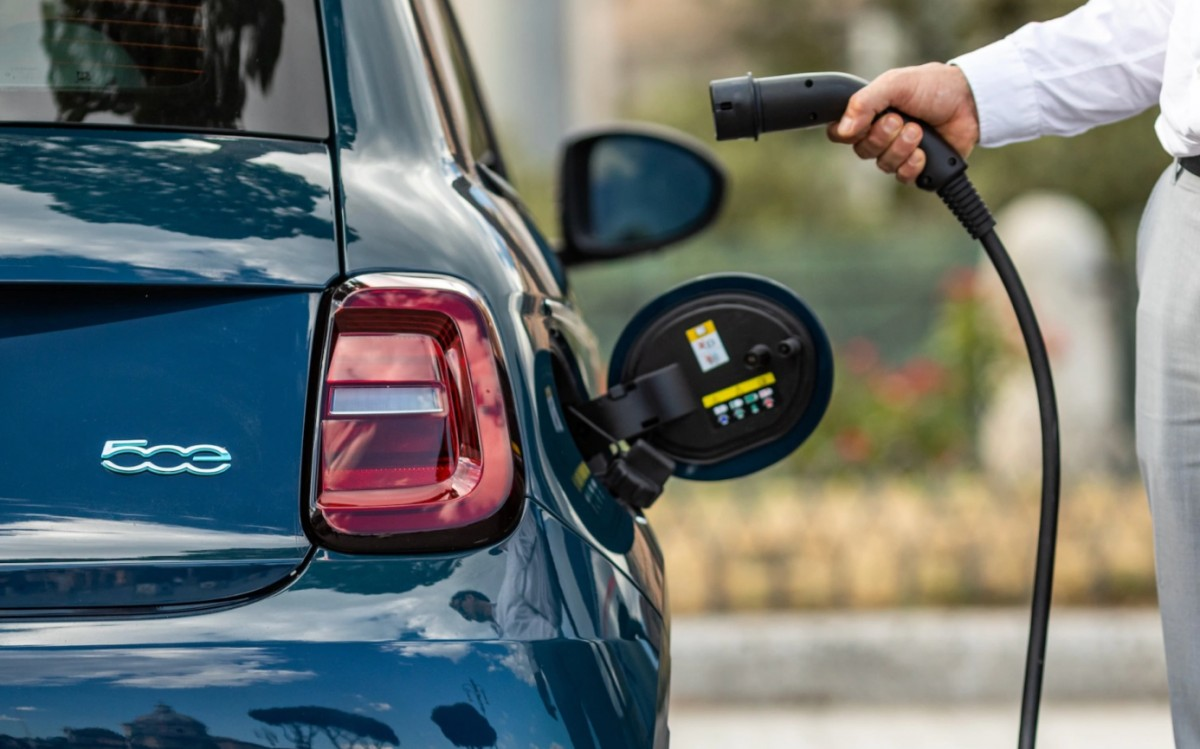
When you do need to charge away from home, the 500e supports DC fast charging at up to 85 kW. Fiat says an 80-percent charge can take about 35 minutes, and five minutes on a fast charger can add roughly 31 miles of range. Yes, many cars charge at 150 kW, but this small battery takes less time given its small capacity.
For 2026, the 500e also gains NACS compatibility through an available adapter, giving owners access to Tesla Supercharger locations. Fiat says the adapter also applies to 2024 and 2025 500e models. That’s a big deal, especially for those who need to stretch out the range a bit.
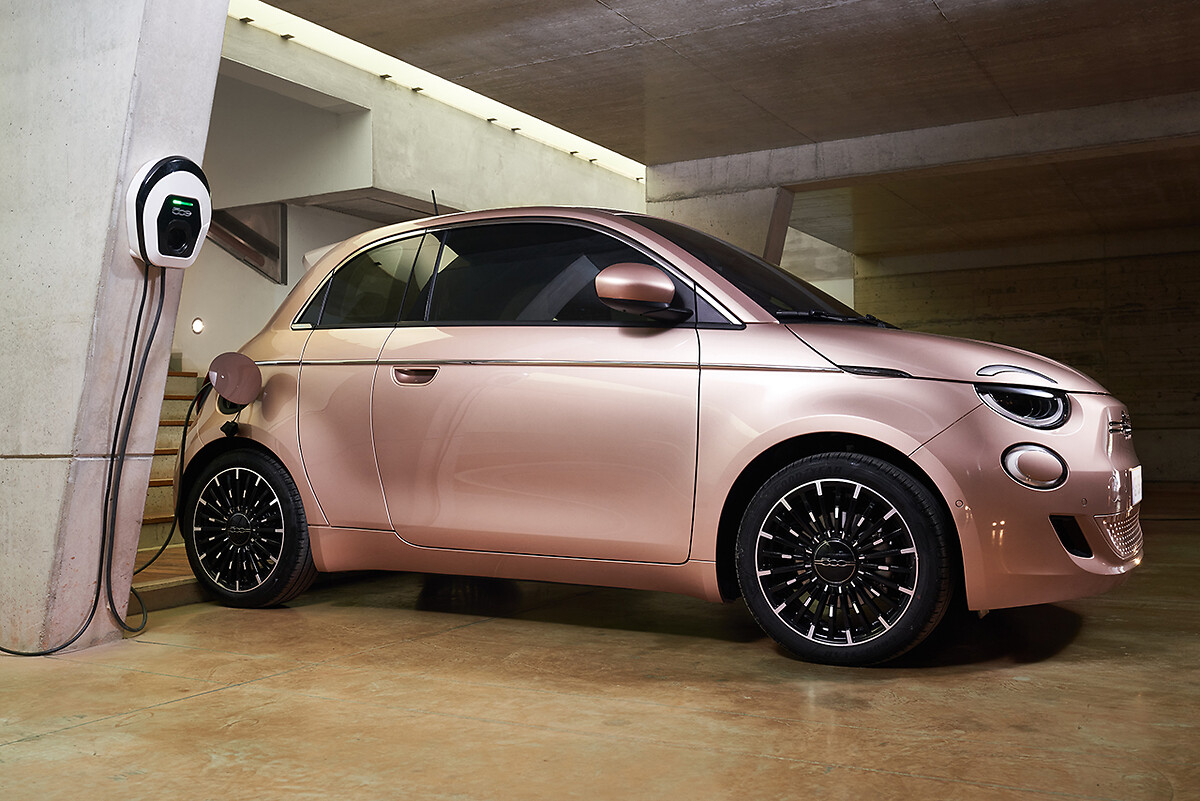
At home, an 11.5-kW Level 2 connection can fully charge the car in about six hours, according to Fiat. That’s really where this car makes the most sense. Come home, plug it in, wake up with a full battery and go about your day.
Simple.
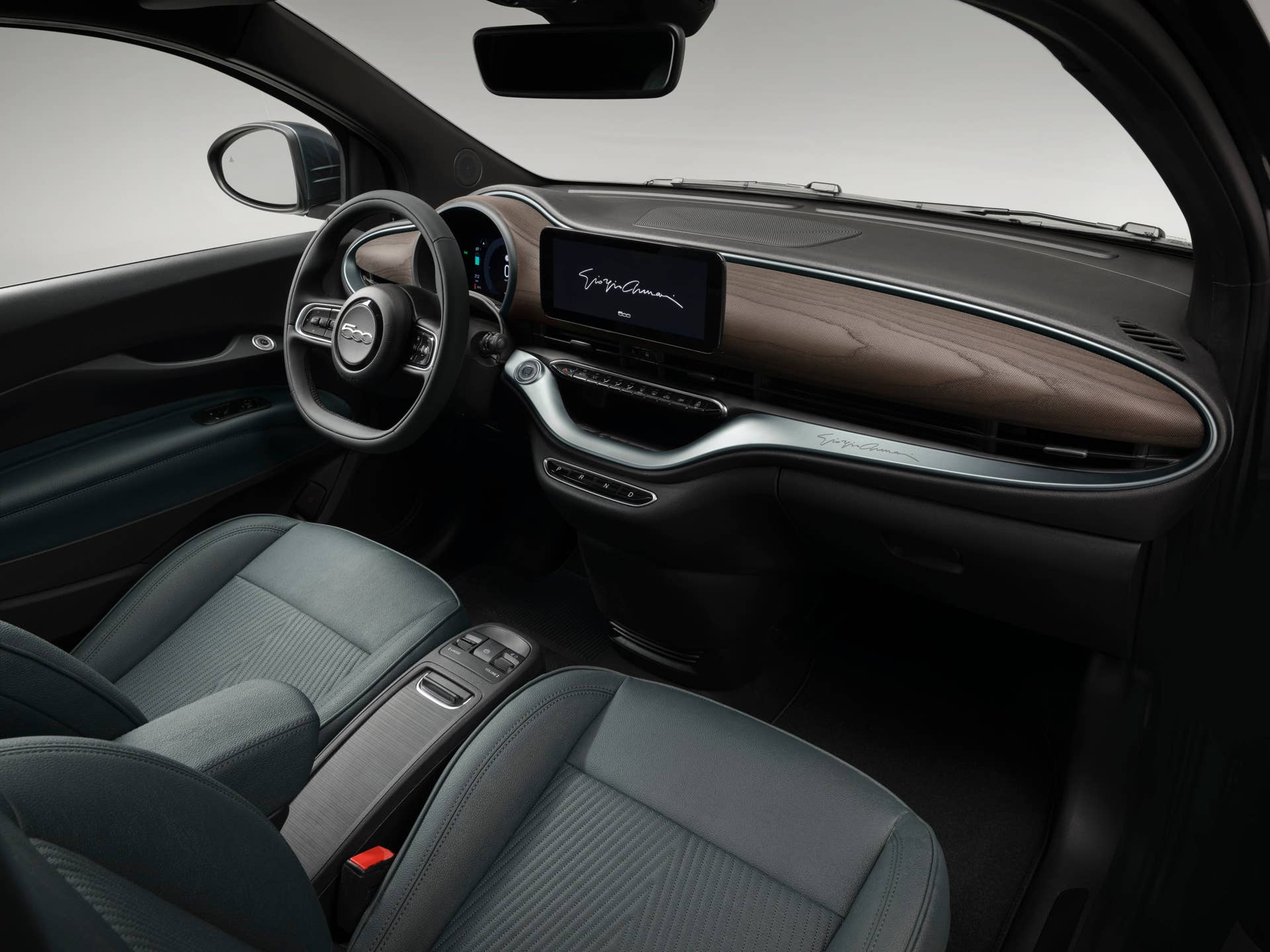
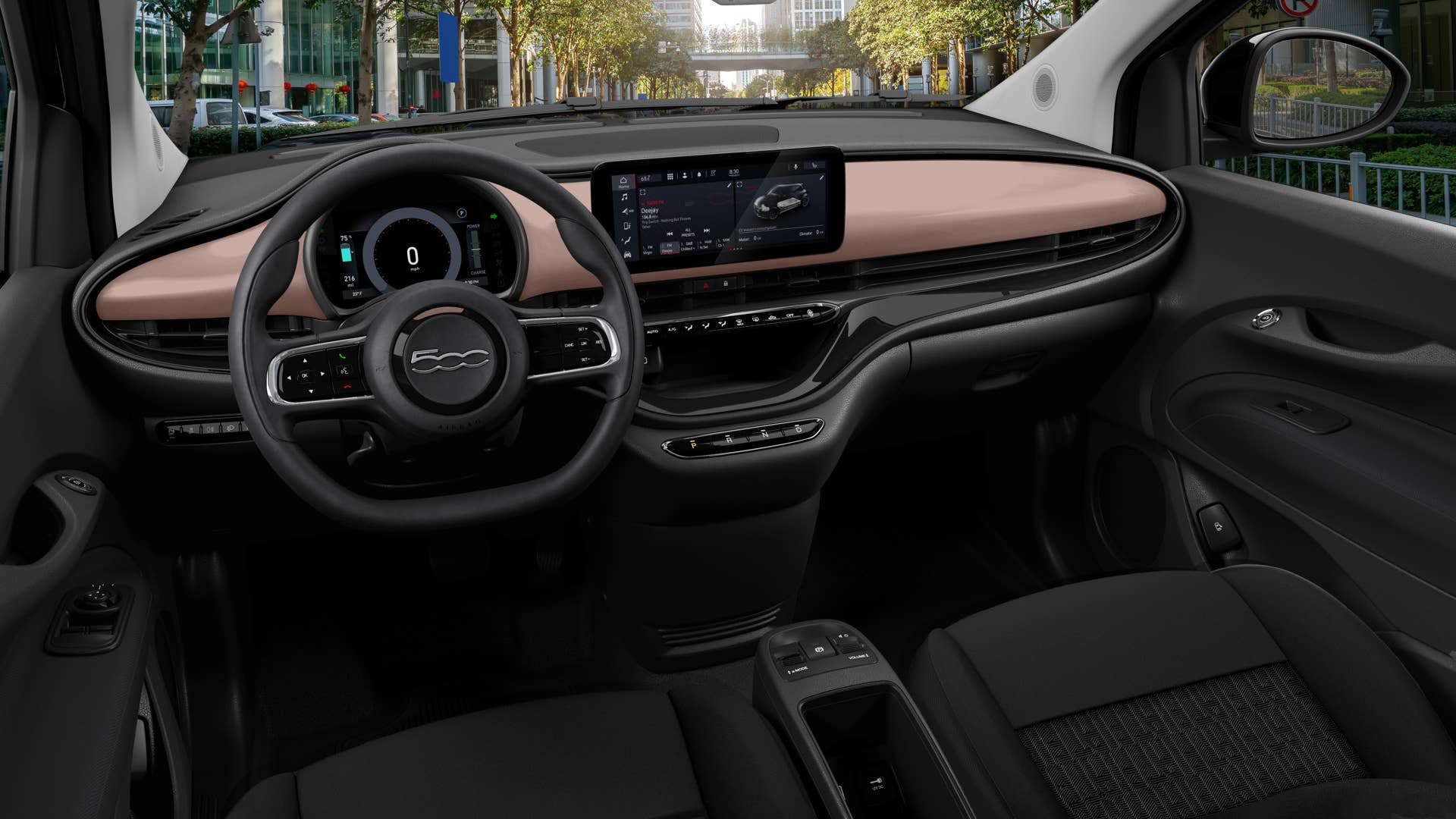
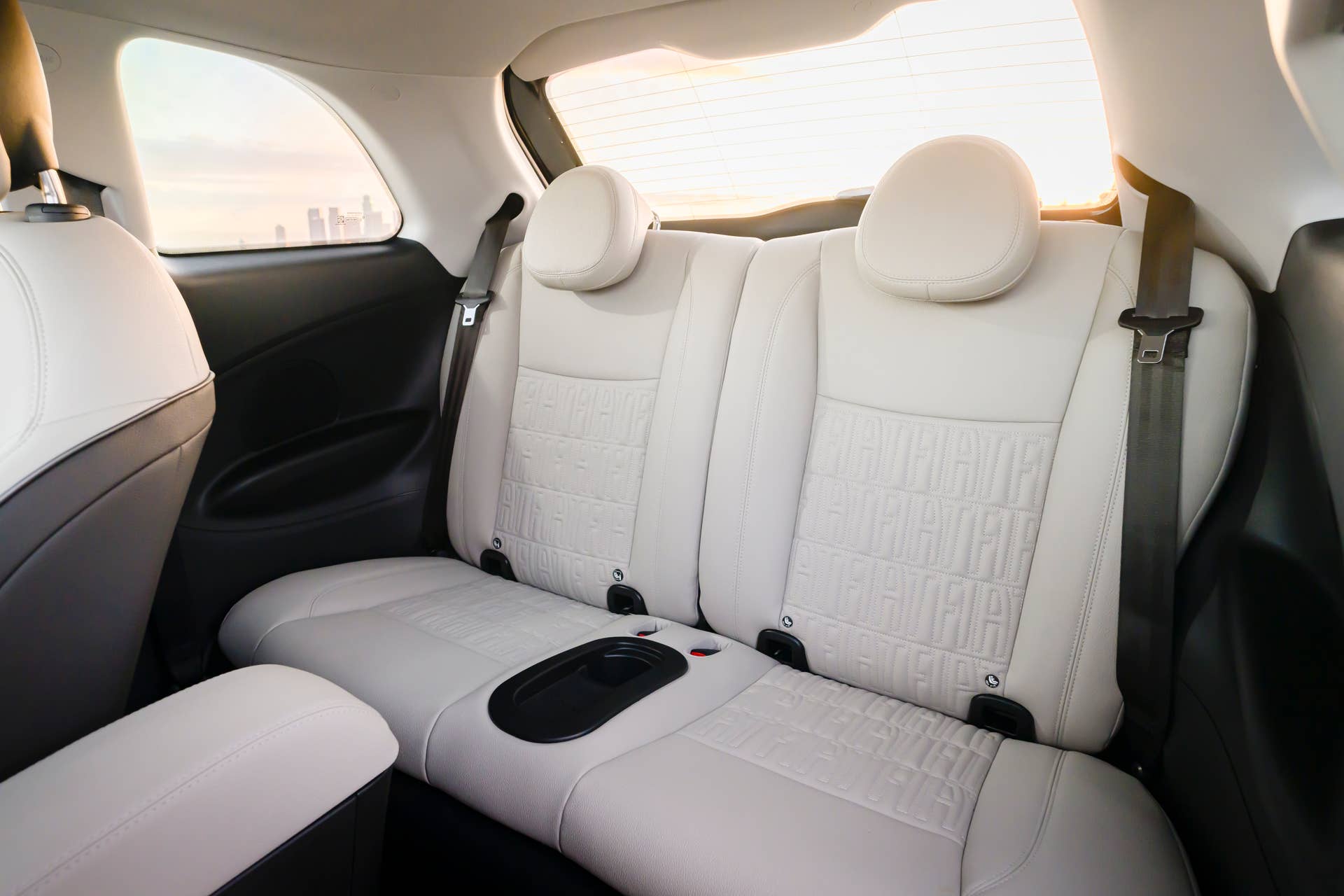
Inside, it’s surprisingly sophisticated
The cabin is kind of small, but Fiat did a good job making it feel special. A 10.25-inch touchscreen, 7-inch digital gauge display, and wireless Apple CarPlay and Android Auto give the 500e plenty of modern technology.
The 2026 Pop also gets a body-color dashboard, while the higher Icona adds premium eco-leather seats and additional exterior trim. The seats are very comfortable up front, but the rear seating is best for non-tall folk.
With only two doors, the rear seats are best considered occasional seating. Cargo capacity is similarly limited. The 500e has about 7.5 cubic feet behind the rear seats, according to current published specifications.
But again, that’s not really the point. The 500e isn’t supposed to replace a Honda CR-V. It’s supposed to be a little Italian capsule for getting around town. And it is remarkably good at that job.
Fiat
The price is a harder argument
The 2026 Fiat 500e starts at $35,700 before destination, while the Icona starts at $37,700. Ouch. That is a lot of money for a vehicle with roughly 150 miles of range and very limited utility.
Fiat is at least offering incentives. The company’s current site advertises $2,000 in bonus cash on the 2026 500e Pop and $3,000 on the Icona, although availability and eligibility can vary. Some juicy lease programs pop up from time to time, but few are available in California, becasue… California.
Still, the 500e is not a value proposition in the traditional sense. It’s a lifestyle purchase. And that’s actually where I think Fiat has done something interesting.
Final thoughts
The 2026 Fiat 500e isn’t the EV you buy because a spreadsheet told you it was the logical choice. You buy it because you want something different. Something that makes you smile, and something electric that has a sense of whimsy.
It is small. It is colorful. It is easy to drive. It is easy to park. It has enough electric punch for urban driving and enough range for many people’s daily routines. Most importantly, it has personality.
That last part is becoming increasingly rare. It’s nearly nonexistant in EVs.
The automotive industry has become obsessed with making EVs faster, larger, more aerodynamic and more technologically complicated. Fiat went in another direction. It made a little electric car that looks like it wants to have a good time.
And sometimes, that’s exactly what you want from a car.
The 500e isn’t practical in the traditional American sense, and its price and limited range make it difficult to recommend as someone’s only vehicle. But as a second car, city commuter or simply an automotive palate cleanser from the endless parade of gray electric crossovers, the Fiat makes a surprisingly strong case for itself.
It’s a cheeky little EV.
One that might make you smile.
About the author

Nathan Adlen
Contributing Writer, Autoblog