
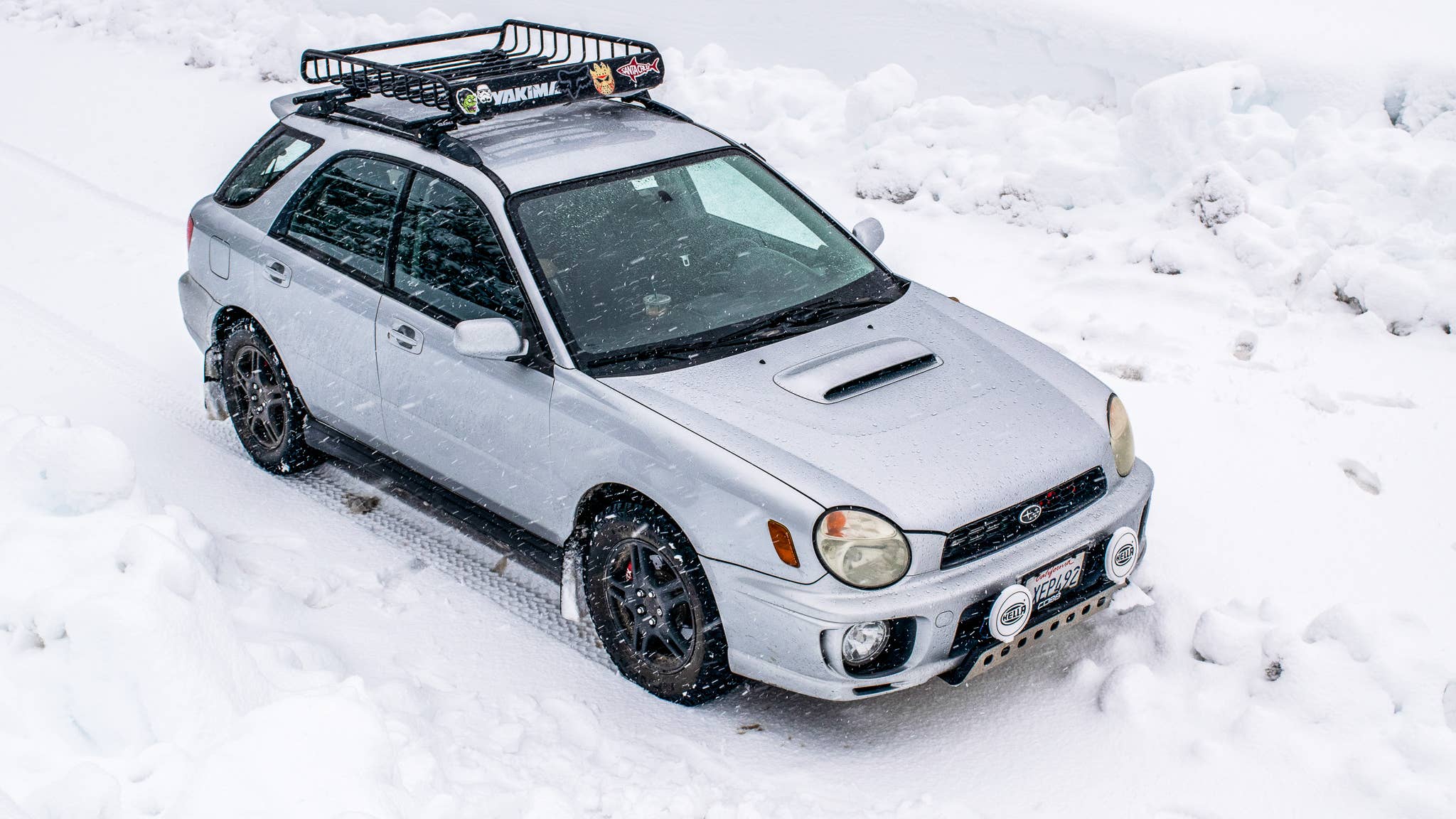
The WRX was introduced to America in 2002. How has it changed since then?
Twenty-three years ago, the 2002 Subaru Impreza WRX was the first factory-modified, turbocharged, tuned, and “rally-ready” variant of the Impreza. It was conceived by the automakers’ ruthless dominance in the World Rally Cross series (WRX stands for World Rally Experiemental, by the way), and it was an absolute kick in the pants to drive. It was a great way to introduce Americans to a new, fun, and fairly affordable class of Japanese hot hatches.
Having owned the first WRX to hit American shores for 11 years and then driving the company’s newest top-shelf 2025 WRX tS for a week showed me the company maintained, improved, and even destroyed a lot of what made the WRX so special. Let’s get into why I think that.
Kristen Brown
Kristen Brown
Before talking about the State’s first WRX, let’s check out the latest installment
The world let out a great, big sigh when Subaru decided to put the STi on the chopping block in 2022. There is a long list of reasons why it was worth ponying up for the STi over the WRX, but the main reason was the power. From the factory, they had over 300 horsepower as opposed to around 227, had improved brakes, tighter steering, stiffer suspension, and a beefier transmission. It drove as beautifully as it looked. Even today, there’s a reason you’ll see them listed for sale at just a few Gs under the price of a new WRX: they’re worth their weight in gold.
Kristen Brown
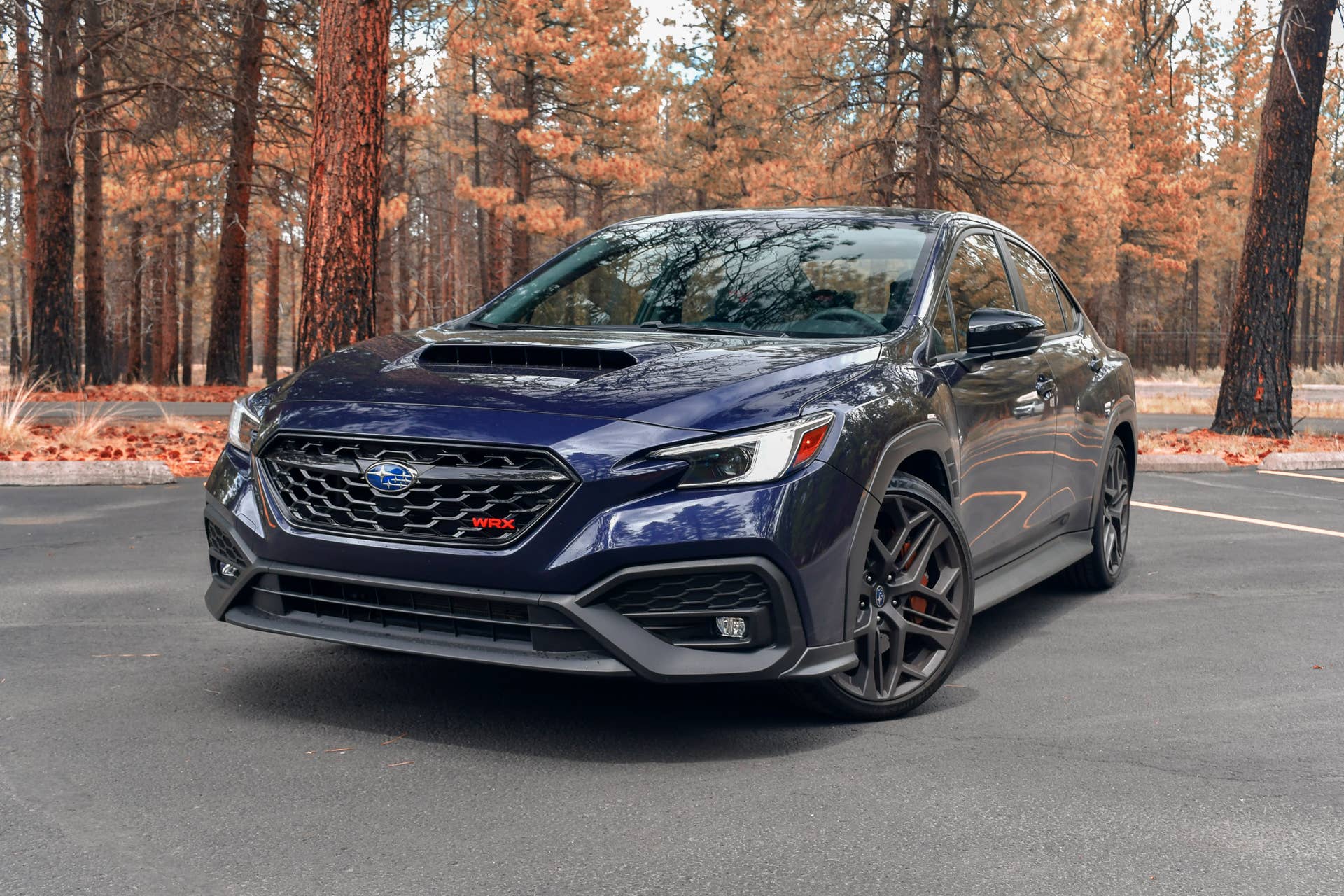
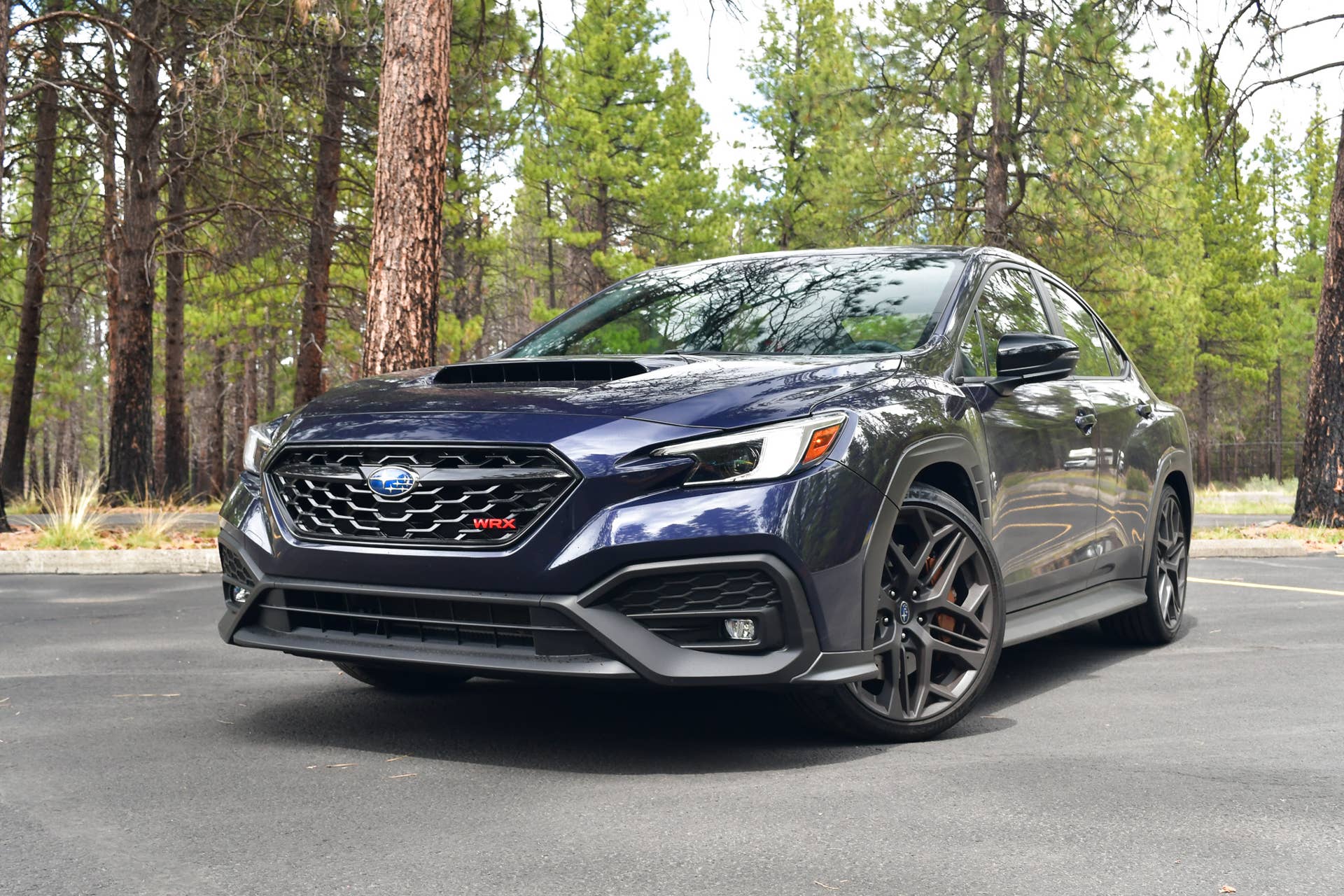
Anyway, to appease the masses, Subaru released the WRX tS in 2024, lending it the tS moniker that was given to the Legacy in 2005, standing for “tuned by STi.” Kind of like when you Google a copycat recipe of your favorite restaurant dish and it says, “Inspired by Olive Garden’s Zuppa Toscana.” It has all the ingredients and the correct proportions, but it just doesn’t taste right. Instead of a 2.5-liter Boxer four that inspires over 300 horsepower, it has Subaru’s new 2.4-liter turbocharged four-cylinder boxer engine that makes 271 horsepower and 258 lb-ft of torque. Staying true to the STi’s roots, it has a very responsive six-speed manual and the company’s legendary Symmetrical AWD with Active Torque Vectoring. Despite being track-focused, it averaged 25 mpg around town the week I had it. My 2002 gets 19 mpg if I’m lucky.
It was an absolute blast driving it through the Mt. Hood National Forest on my way home to Bend, Oregon, from Ridge Motorsports Park in Washington. The steep and curvy mountain passes were nothing for the tS, and the updated Harmon Kardon sound system helped keep me alert. The Recaro seats were a very welcome addition over the 2002 model, with just the right amount of bolstering and comfort. I wasn’t sore at all, even after driving for nearly six hours. That’s something I still very much like about my 2002 WRX: it’s the most comfortable car for long drives, even on the original seat and after almost 200,000 miles.

Modern tech means nice, comfortable accommodations
Part of the STi tune came with electronically adjustable suspension that can be adjusted through the main infotainment screen. The steering feel, throttle response, damper behavior (suspension feel), and AWD torque distribution are all manually adjustable. The drive modes are Normal, Sport, Sport+, and Comfort. It will always default to Sport, and even in that drive mode, it’s pleasant to drive daily. My toddlers had no problem falling asleep while driving it in Sport, and obviously, Sport+ came in handy when driving home through the mountain pass. For fun, I put it into Comfort mode after my girls fell asleep, and the driving feel was dramatically different. The suspension instantly became squishier, the steering wasn’t as dramatic, and it was easier to feather the throttle from a stop.
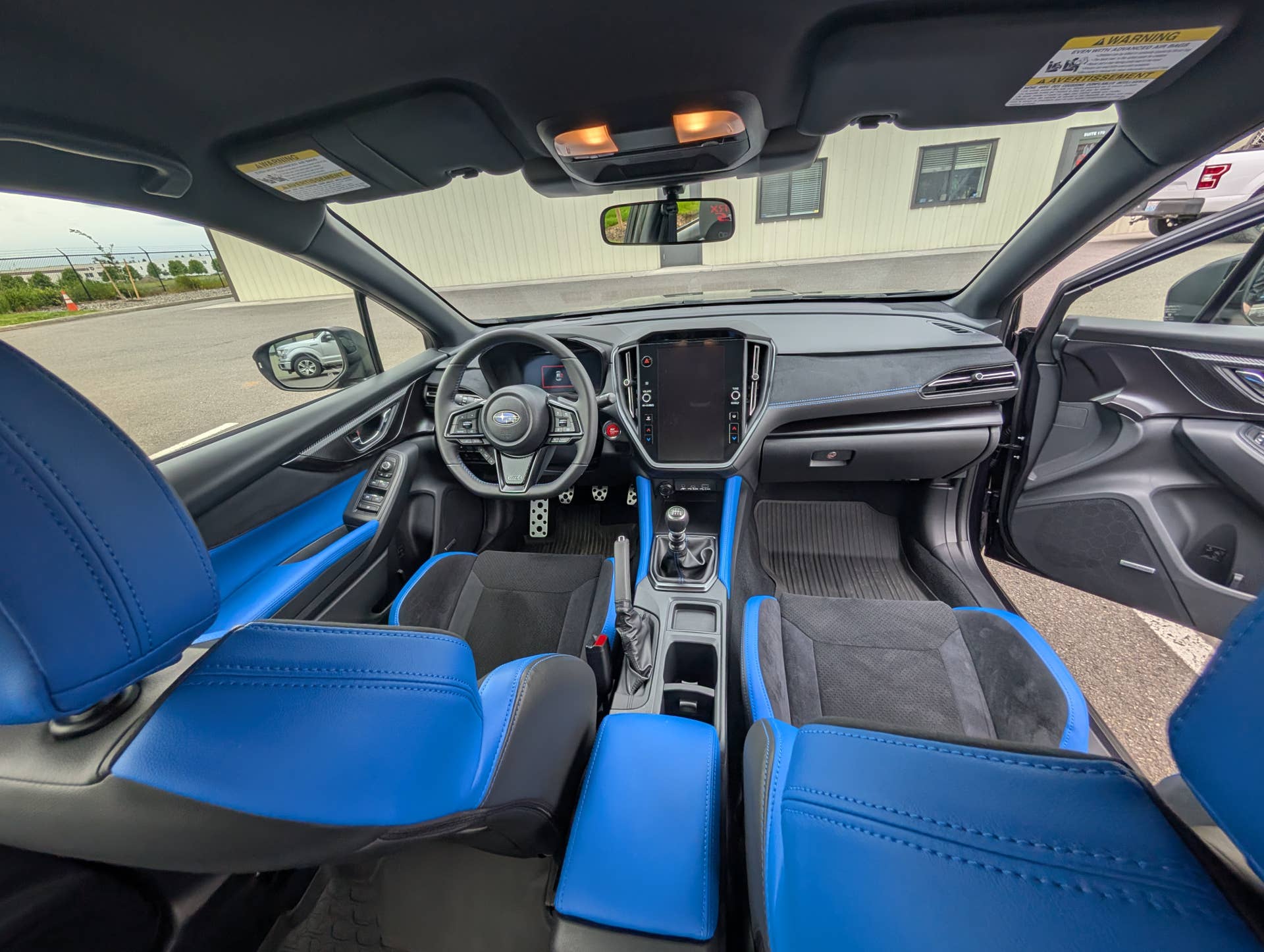
Kristen Brown
Like the WRXs before it, the tS, even though it’s the step below the GT version, follows along with Subaru’s mission of being fairly priced for what’s included on the Monroney label. The tS has an MSRP of $45,705, but it’s more like $46,100 because you’ll want the optional Galaxy Purple color for $395. Trust me on that one—it adds so much character and looks absolutely stunning in the sun. I really like the styling of the tS, too, but not better than the Bugeye aesthetic of the early 2000s. It would look absolutely mean with STi-esque wings and diffusers, though.
A modern influence is where the tS suffers, though. The newer, larger, heavier car means a lot of those extra horses are used just to get it moving. The new WRX is heavier than my 23-year-old lady by 340 pounds. That doesn’t sound like a lot, but it doesn’t feel as dainty as my 2002 does. Handling in Sport or Sport+ is fantastic, but it definitely feels a little more bloated in comparison. Granted, the 2002 WRX is missing a lot of valuable safety technology like automatic emergency braking, any kind of cross-traffic alerts, and it doesn’t have any cameras whatsoever. It also doesn’t have larger 6-pot front calipers from Brembo like the tS does, or a nice Harmon Kardon sound system and 12.3-inch touchscreen from the factory. There’s something rustic about a bare-bones rally-inspired WRX, but either one would make a mighty fine daily driver.
The 2002 Subaru Impreza WRX is an oldie but a damn goodie
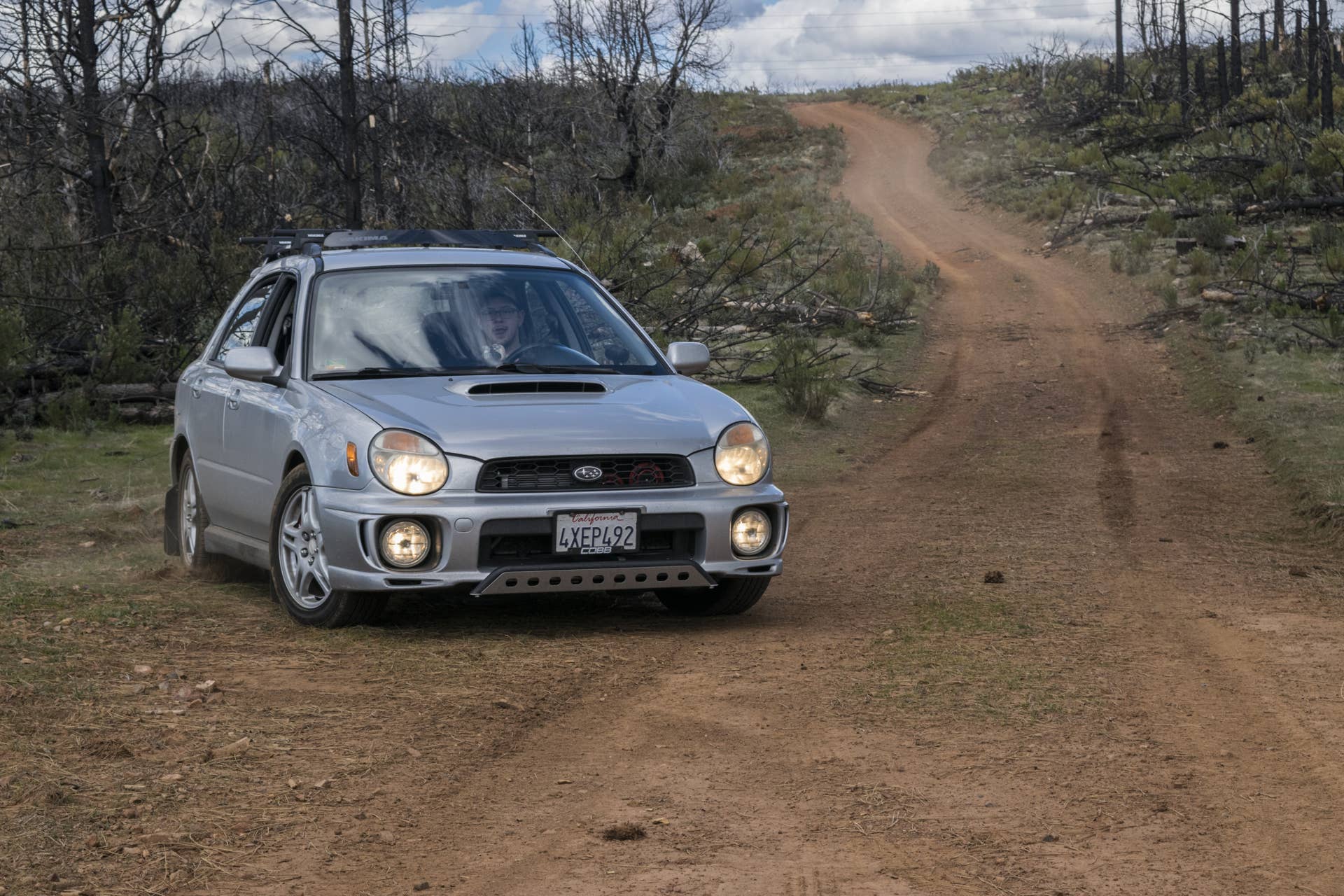
Kristen Brown
Obviously, the 2002 doesn’t have those features, because, well, it’s 23 years old. No fancy drive modes need apply. The stock five-speed manual and “glass” transmission work just fine for daily driving, with an occasional spur-of-the-moment spirited drive down a dirt road or a twisty, curvy canyon road. I did notice that the shift throw and pedal travel is much shorter in the 2002 compared to the 2025, but that’s neither a pro nor a con—simply something you’d have to get used to. After 23 years, the WRX was (and still is) a pleasure to drive with a manual.
Both the 2002 and the 2025 WRX have a fair amount of cargo space, which is one of the many things I love about them. I’ve tracked the Bugeye when I worked at Laguna Seca, and was able to drive the kids to the grocery store on the same day, very comfortably. Similar to the Honda Civic Type R or the Acura Integra Type S, it’s a performance car that could easily fit in every aspect of a driver’s life. You won’t have to sell it after you have kids. I didn’t. The 2002 has a 2.0-liter turbocharged four-cylinder boxer engine that made 227 horsepower. That might not sound impressive for 2025, but 23 years ago, not many other cars came from the factory with that much horsepower.
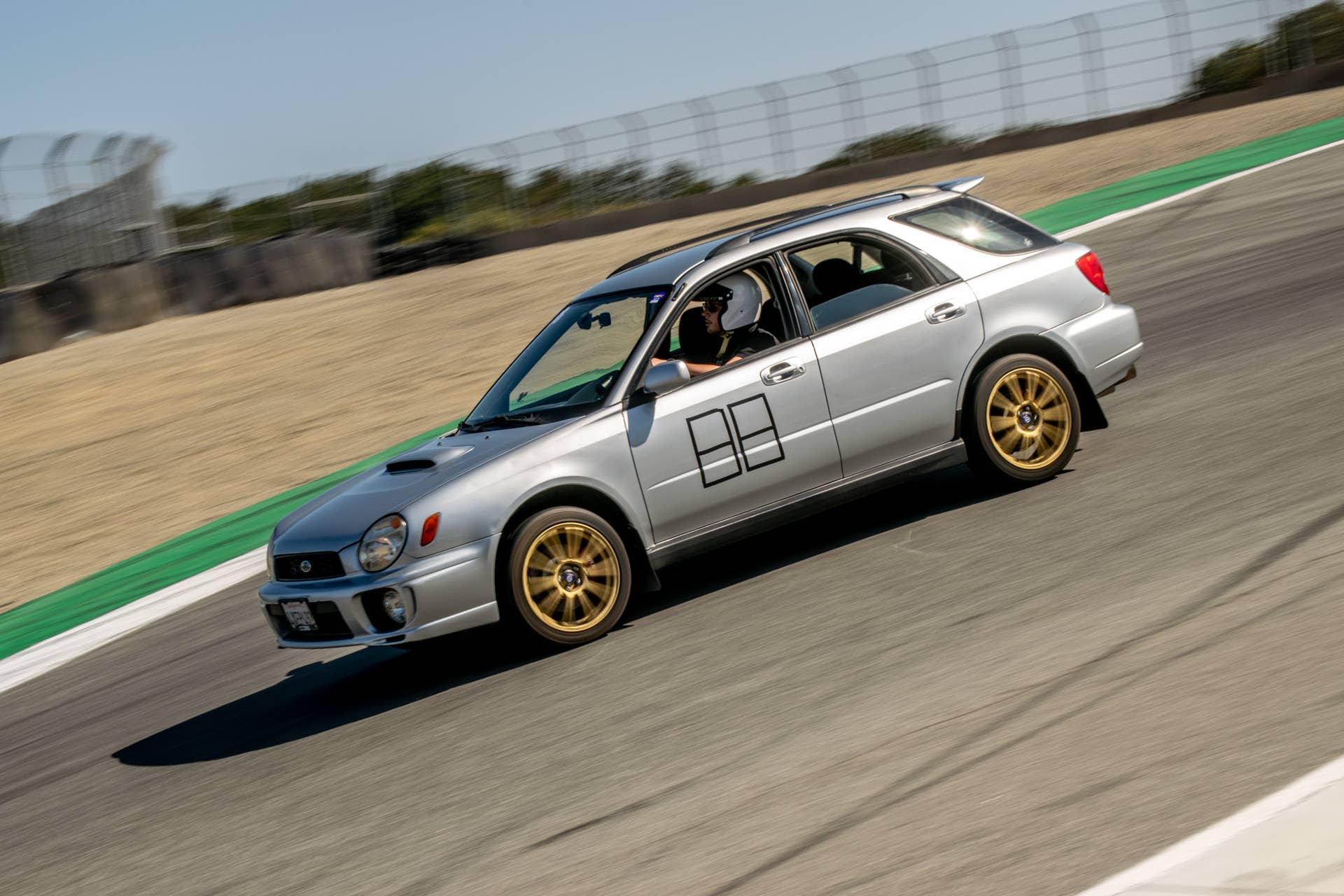
Kristen Brown
Unbelievably, even though the 2025 WRX tS comes with 44 extra ponies, Subaru says the top speed for it is 145 mph—only 5 mph more than its 23-year-old predecessor. Pretty darn impressive if you ask me, especially when you consider the zero to sixty times are similar, too. The 2025 WRX tS takes 5.5 seconds to get to 60 mph, while the geezer takes 5.8 seconds. So, the old lady still has it going for her. Back in 2002, the WRX had an average price of around $24,000, which in today’s money is about $42,000. That isn’t too far from the tS’s price of $45,075, and considering how much more you get from the tS, it’s a very competitive price, and I will die on that hill.
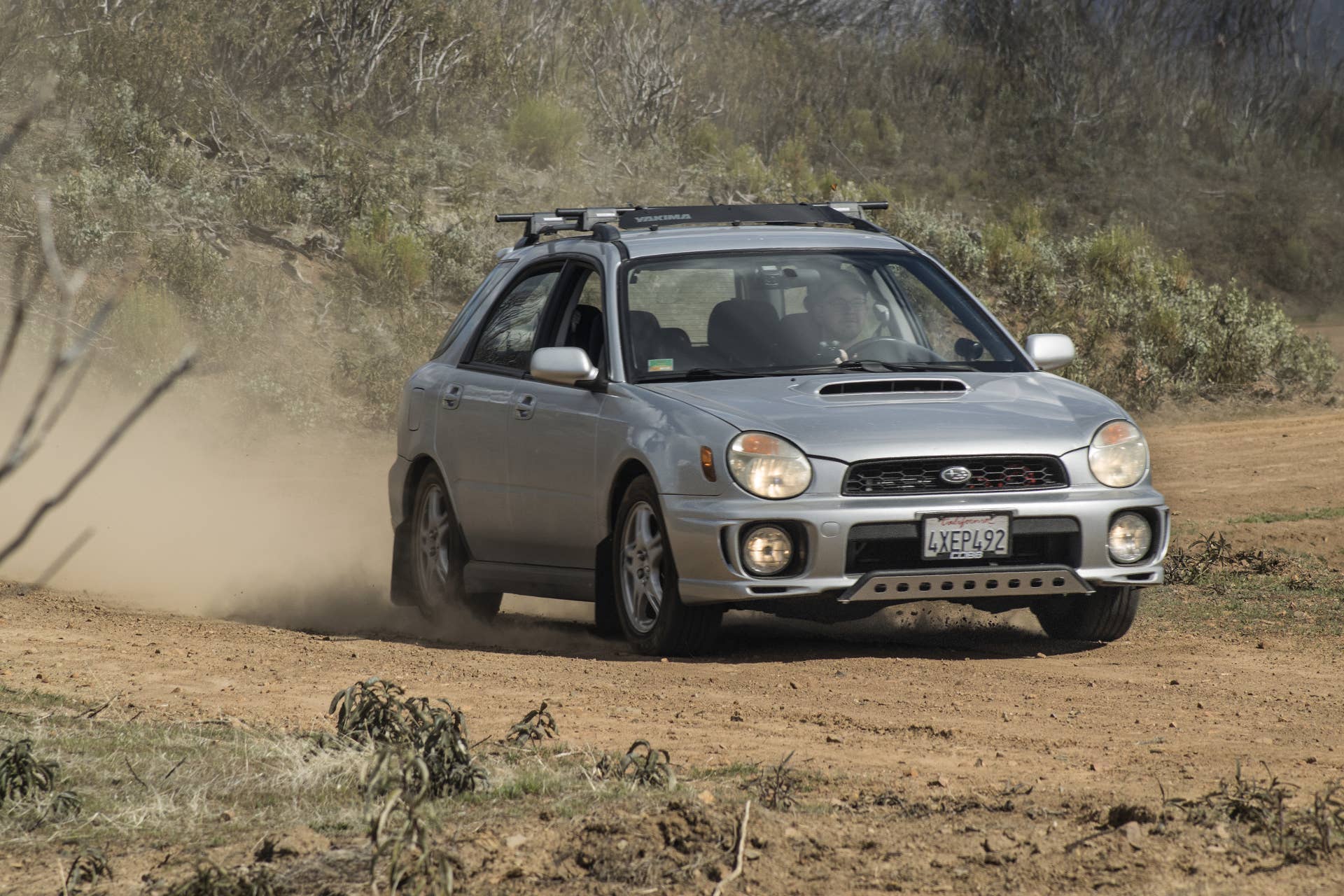
Kristen Brown
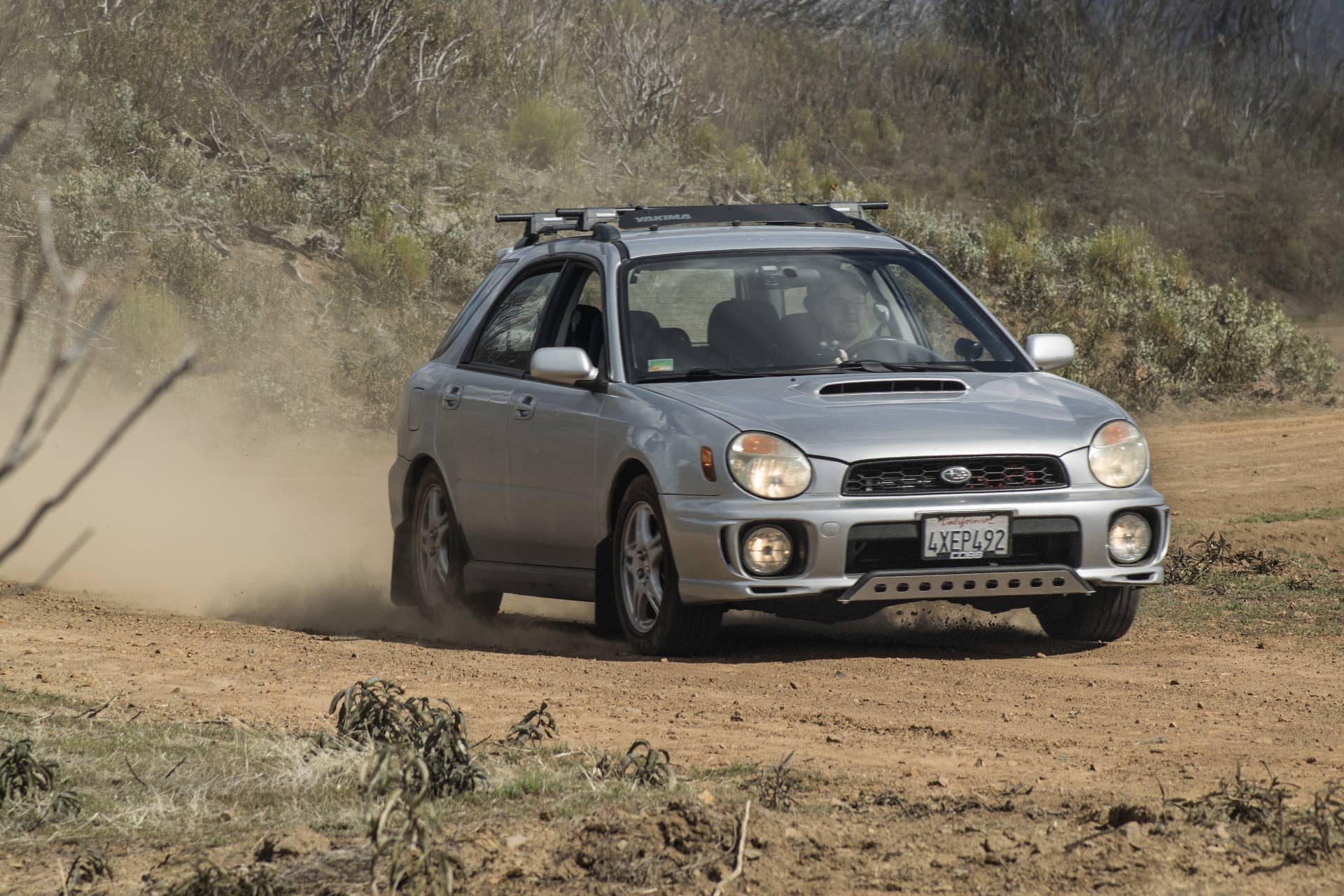
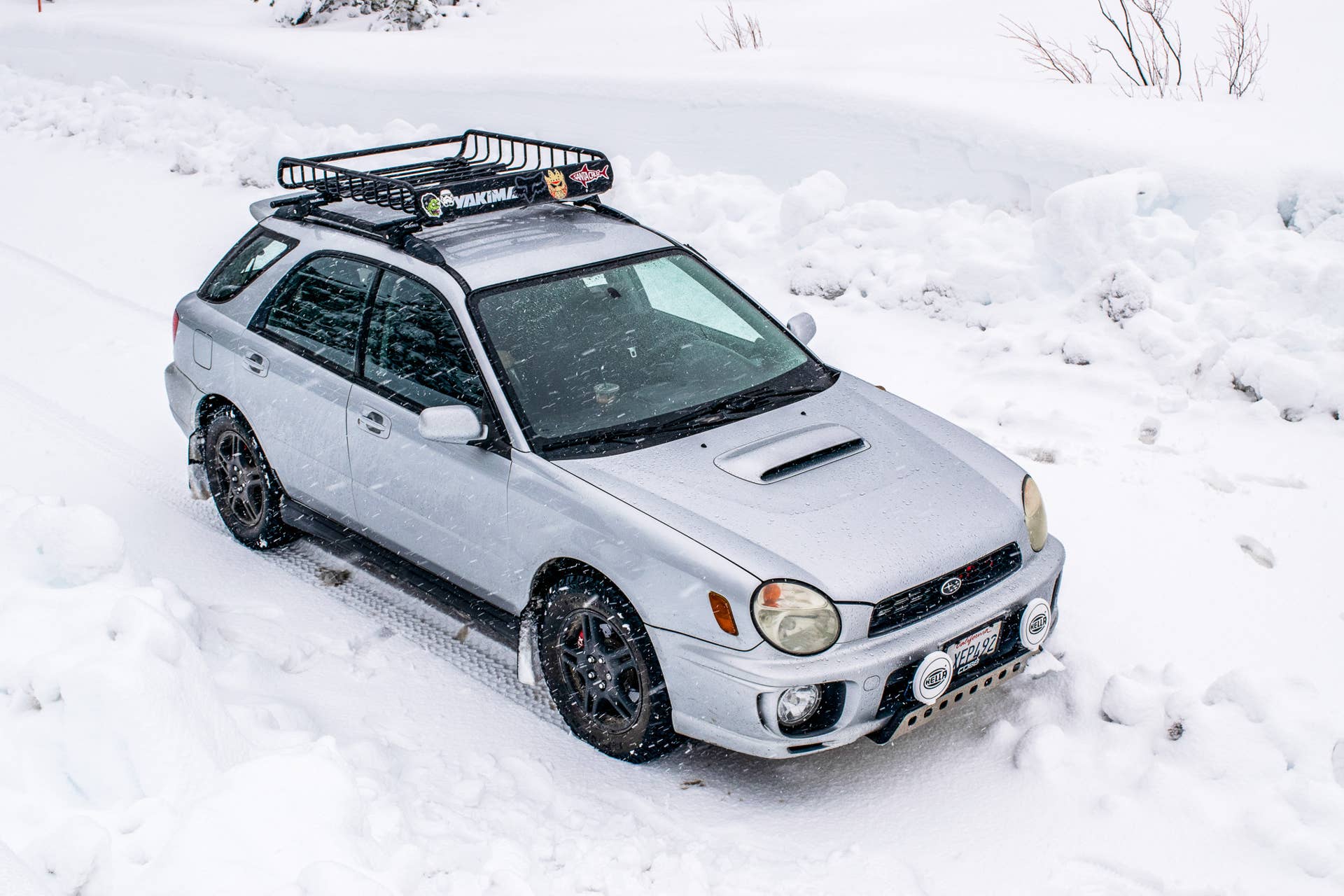
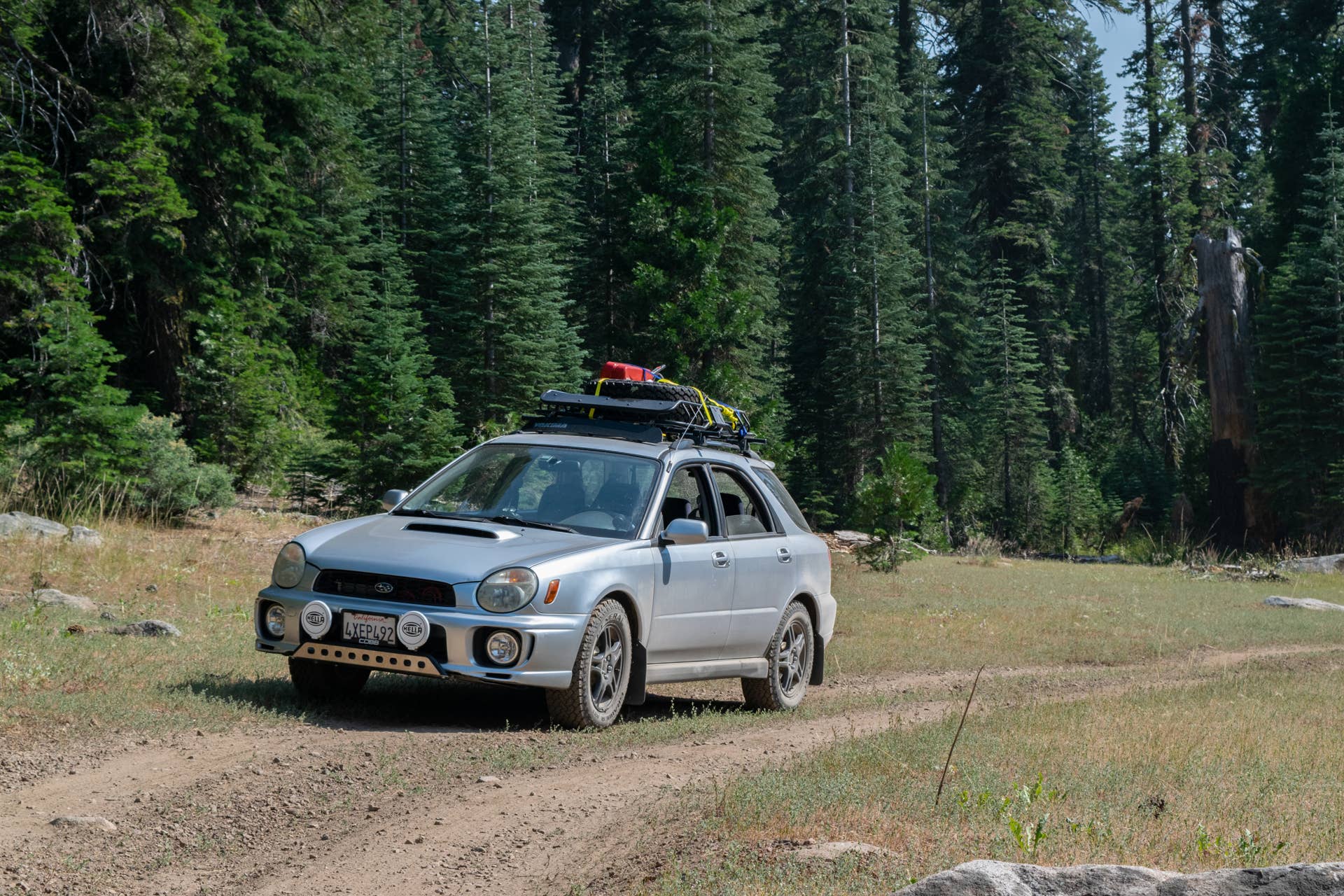
The 2002 WRX doesn’t have torque vectoring like the tS does, but it does have an open center differential and a limited-slip differential in the front and rear with viscous coupling, which—let me tell you from experience—makes it incredibly capable off-road and on the track. My old lady spent about two years as a lifted off-roader, and it did beautifully. However, I converted back to stock height after it was being damaged, and I saw how much they were still going for (around $8,000—which is how much I bought it for 11 years ago). It handles wonderfully in the snow and rain, too. Both cars are tough enough to handle pretty much anything you throw at them, which I respect. I admire a company that doesn’t fix what isn’t broken.
So, what was improved over two decades?

Kristen Brown
You won’t be surprised to read this, but: a lot. The numerous added safety features, creature comforts, styling changes (like Alcantara and bright blue accenting), and more horsepower, transmission improvements, and electronically adaptable suspension made it feel like a fancy version of the WRX I know and love so much. It’s a cowboy wearing a tuxedo, if you will. I liked the factory “sport” exhaust, though I’d certainly buy a louder one aftermarket.
The WRX’s brochure from 2002 reads, “Race proven, not inspired,” and the tS definitely resembles that remark a lot more than my WRX, mainly because all of the improvements are from the factory. I had to modify mine to have adjustable suspension, a more efficient exhaust system, a Stage 2 tune, and an aftermarket up and downpipe for the turbo. They’re slight modifications, but modifications you don’t have to make to the tS. You’d just have to put it into Sport+ and you’re ready to hit the Corkscrew.
Kristen Brown
All those amenities without much of a price fluctuation from 23 years ago are a huge flex, too. Subaru should be incredibly proud that they fit so much more into the WRX without making it insanely more expensive than America’s first-ever WRX. To me, that’s an improvement, because the 2002 was only a few grand cheaper in today’s money, but came with a lot less from the factory.
A lot of what makes a Subaru a Subaru is still there
The list of reasons why I’ll be buried in my 2002 WRX is long, but I have a few bullet points. Excellent visibility (to this day, rear passengers tell me all the time it’s the only car they’ve not felt carsick in), reasonable power and gas mileage, amazing exhaust rumble, reliable, versatile, and it puts a smile on my face every single time I’m in a bad mood. It’s a car that knows exactly what it is. It’s uncomplicated and can handle literally any driving scenario or be easily modified to handle it. After having driven the tS for a week and then hopping into my 2002 WRX, I realized everything I like about it was still in the 2025. Subaru knew exactly who they were targeting with the tS, there’s no doubt about that.
Kristen Brown
The transmission was peppy and had plenty of feedback. It felt a little squishy compared to the 2002, but it did only have 2,000 or so miles on it, so I imagine the more it’s driven, the more notch-y it’ll feel. I appreciate the feedback from my 2002, as I feel more connected to the car. I also didn’t need to get acquainted with shifting or using the clutch, as it felt very similar to the 2002. If it wasn’t for the giant touch screen, Alcantara, and bright blue accenting, I’d forget I was in a Subaru that’s 23 years younger.
It has excellent cargo space, so my toddlers and their car seats fit perfectly fine, and they loved the big rear windows. Installing their car seats was easy, just like in my 2002. It was tech-forward, but not intimidating. As it turns out, there’s more than just love that makes a Subaru a Subaru. It’s also consistency, and the tS was nothing if not consistent. I also appreciated that the new WRX had a visible hood scoop, not a hidden one like the Outback XT has.
Now, some things have changed for the worse
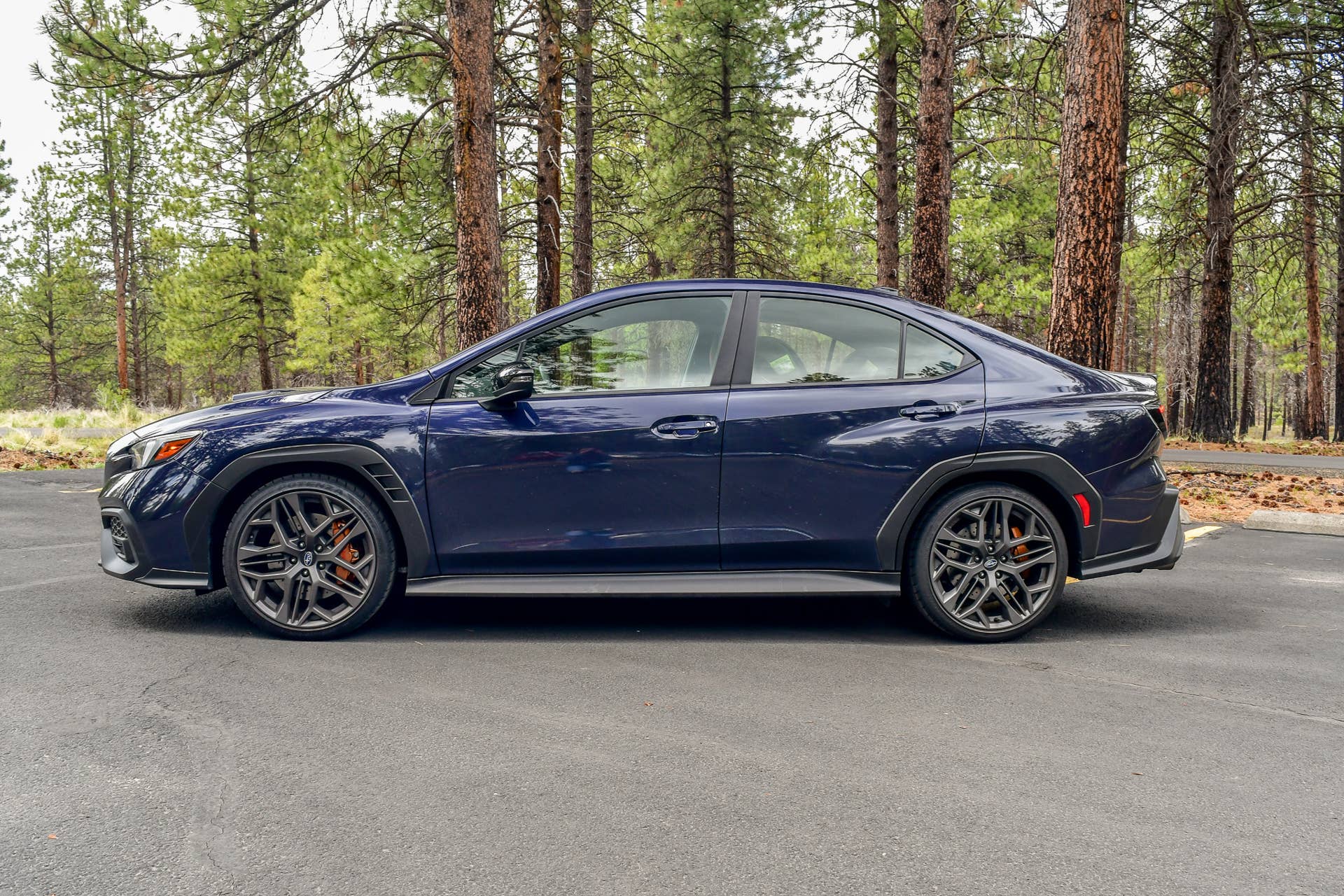
The main thing I didn’t like about the new WRX—and it’s nitpicky, I acknowledge that—was how much bigger it is. I felt more like a Ford Taurus than a rally-bred sedan like the good ol’ days. There are advantages to a wider stance, like improved handling, stability, and passenger space, but the size just felt wrong. It’s longer by a whole 10 inches, wider by 4 inches, and taller by a little over an inch. It’s not a massive difference, but the added inches and the extra 340 pounds made it feel bloated and heavy. It’s still an amazing car, I just felt picky about the change in size.
Subaru of America
If the tS didn’t have adjustable suspension to tighten it up, it would probably be a lot squishier than the 2002 because of the weight and size difference. But because it can be tuned and customized to ride stiffer, it’s not a dealbreaker at all to me. I also have a huge bone to pick with whoever decided it was smart to remove the center console/elbow rest from the WRX. Driving 5.5 hours from Washington back to Oregon without one was incredibly frustrating, as it made me sore and took away valuable cargo space. That’s not something I have to worry about with my 2002. An armrest extension for the six-speed manual can be added with aftermarket parts, but the average price for that add-on is $210.89.
Final thoughts
The WRX, unlike 23 years ago, has a lot more competition that can make it a difficult choice. You have to be a diehard Subaru to walk past everything that’s on the market and buy one. The Honda Civic Type R was a competitor to the WRX in 2002, but this time around, the Type R costs around $46,690 and has more horsepower than the tS. The Toyota Corolla GR Premium Plus with a six-speed starts at $45,515 and has 300 horsepower from a three-cylinder engine. The track mode in that car is mind-boggling, and like the Honda, it brought a smile to my face. The Hyundai Elantra N is a new and potent competitor, too, with more horsepower and an optional six-speed manual for a jaw-dropping $35,545. Therefore, the WRX being extremely similar to its 23-year-old counterpart might work against it for some. Loyalists will opt for it, but it might struggle to attract new buyers.
About the author
Kristen Brown
Contributing Writer, Autoblog