
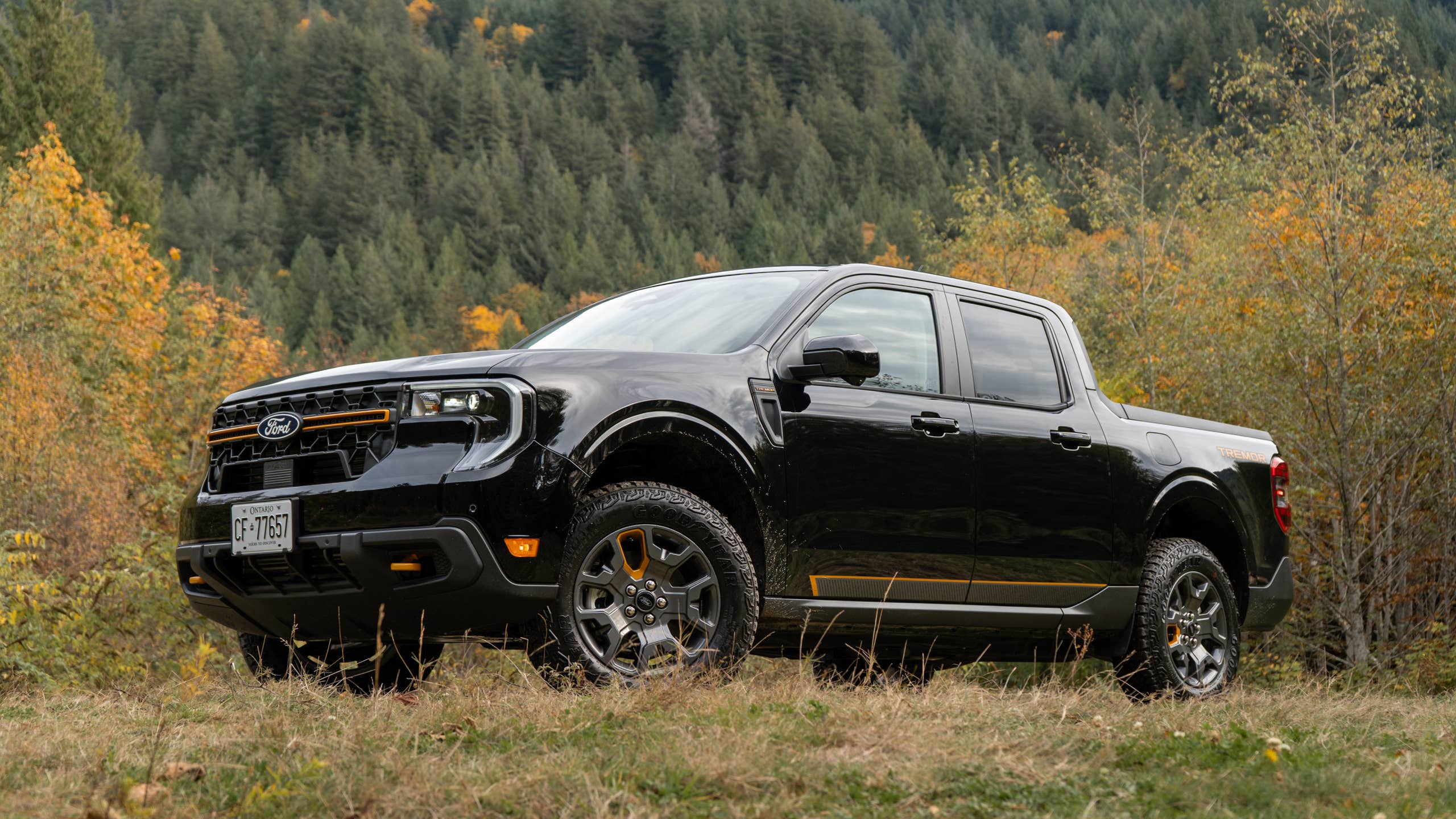
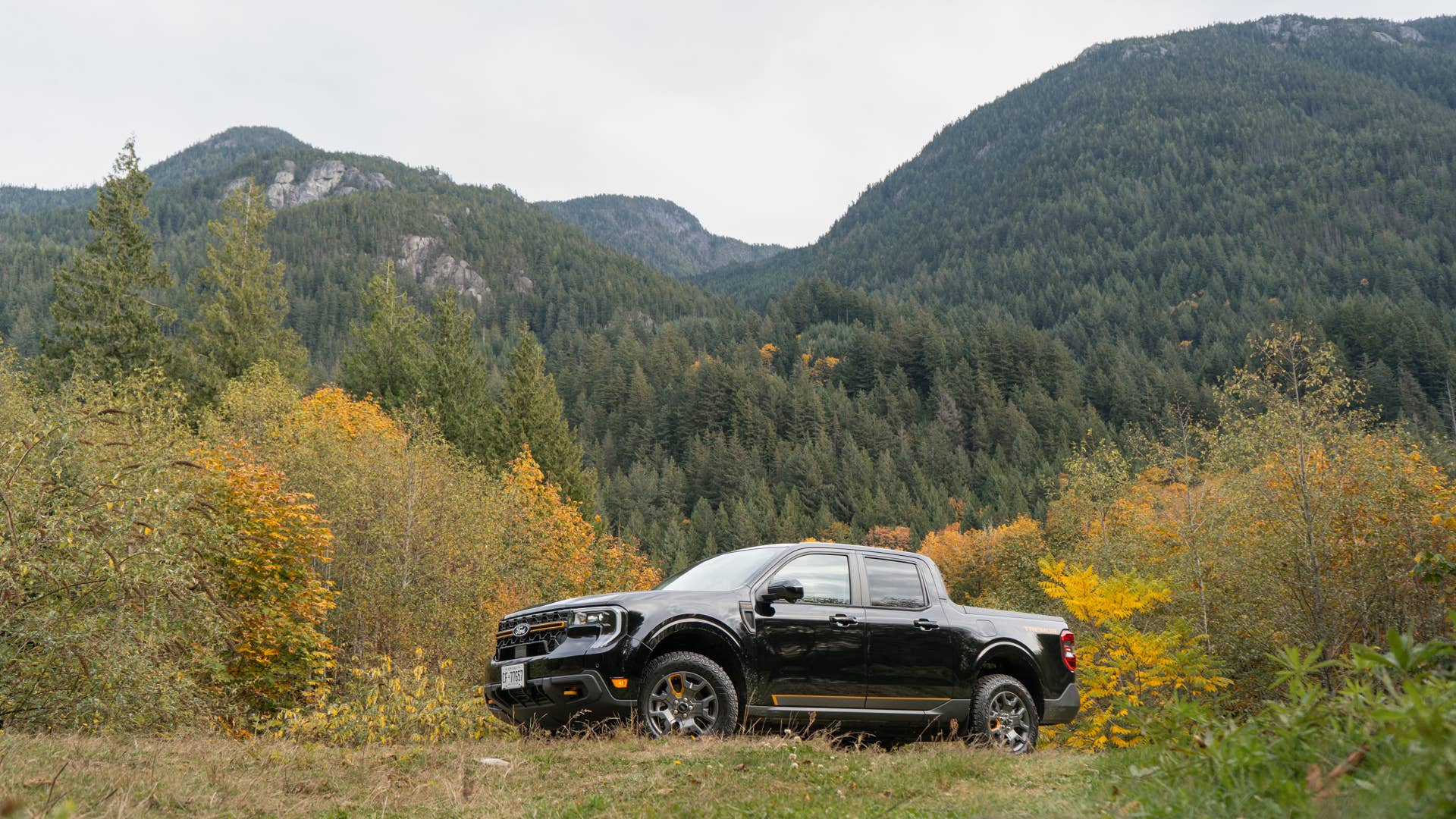
Having driven both the extremely well-rounded Maverick Hybrid, now finally available with all-wheel drive, and the peppy little Maverick Lobo sport truck, and frankly falling head over heels for both, it was time to get my boots a bit dirtier with the adventure-ready, mud-seeking Ford Maverick Tremor. Somewhat akin to Subaru’s “Wilderness” branding in spirit, the Tremor package adds all-terrain tires, extra ground clearance, and a twin-clutch rear drive unit, giving the Maverick more to work with on rough roads and trails, as well as a graphics package that adds a bit more spark to the truck’s otherwise quite sensible looks. I spent a week driving Ford’s latest little off-roader around British Columbia’s Pacific coast to see whether the Tremor’s additions make or break the compact ute, and whether its relatively hefty price tag could be better spent elsewhere.
Choosing the Tremor means choosing the turbocharged 2.0-liter engine, since Ford doesn’t offer a hybrid version here. In return, you get specialized suspension and traction hardware for rougher terrain, but you also trade off towing capability, road noise, handling, and fuel economy. I wanted to see whether those additions are worth it compared with a less expensive, more economical Maverick, and whether the Tremor’s steep price tag justifies itself over a larger, more capable Ranger. Ultimately, by the end of my week with this rugged little truck, my overall opinion of the Maverick remained favorable, but I’m not totally convinced the Tremor is the best way to have one.
Cole Attisha
2026 Ford Maverick Tremor Specifications
| Specification | 2026 Ford Maverick Tremor |
|---|---|
| Engine | 2.0-liter turbocharged EcoBoost four-cylinder |
| Horsepower | 250 hp at 5,500 rpm |
| Torque | 280 lb-ft at 3,000 rpm |
| Transmission | Eight-speed automatic |
| Drivetrain | Advanced 4WD with a twin-clutch rear drive unit |
| EPA fuel economy | 21 city / 27 highway / 23 combined mpg |
| Observed fuel economy | ~19 mpg mixed city/highway |
| Ground clearance | 9.1 inches |
| Bed length / volume | 54.4 inches at the floor / 33.3 cubic feet |
| Maximum towing capacity | 2,000 pounds |
| Maximum payload | Up to 1,140 pounds |
| Base curb weight | 3,890 pounds |
| Starting MSRP, U.S. | $40,645 before destination and options |
| As-tested price | $52,444 CAD including destination and options |
U.S. specifications. Power and torque are rated on premium fuel. Payload varies with configuration.
Thinking about selling your car? Get an instant cash offer online now. Click here to get started.
Cole Attisha
Powertrain & Driving Dynamics: 7.5/10 — How Much Truck Do You Really Need?
Like the adrenaline-injected Maverick Lobo, the Tremor’s standard 2.0-liter EcoBoost four-cylinder delivers plenty of exciting turbocharged whooshes and responsive low-end torque; both variants also share that trick twin-clutch rear-drive unit and torque-vectoring capabilities. Whereas the Lobo gets a quick-shifting seven-speed gearbox, the Tremor keeps the eight-speed automatic transmission found throughout the rest of the non-electrified Maverick lineup, offering smoother, more robust shifts. In the higher end of the rev range, that little four-cylinder can produce a coarser note, but since it favors low-end power delivery and heavy boost, you’ll rarely find yourself using the latter half of the available RPMs anyway.
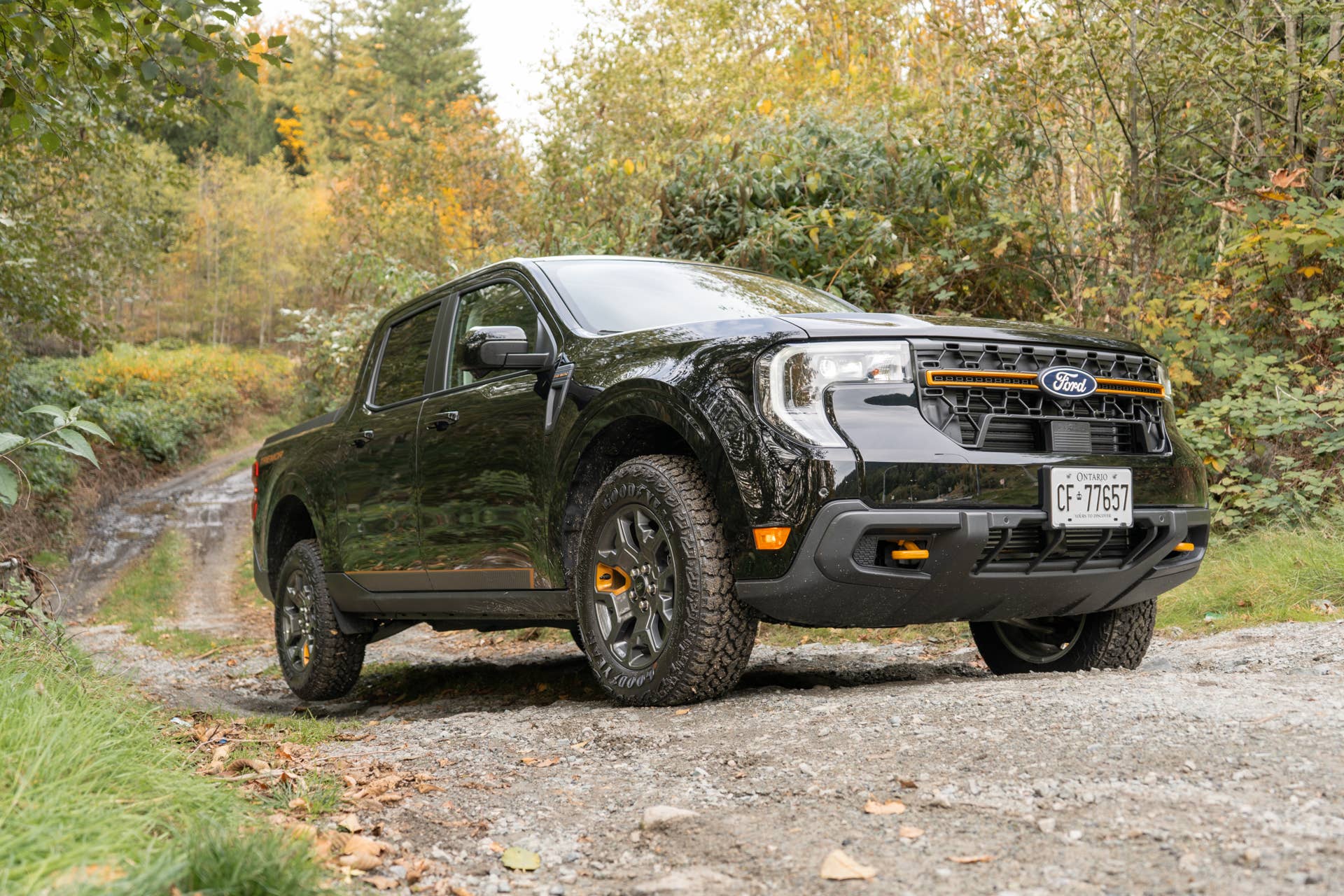
Unlike the Lobo, which handles surprisingly well for something with a pickup bed, the Tremor sacrifices much of its lateral control for greater off-road capability, thanks to its chunky Goodyear all-terrain rubber, raised ride height, and uniquely calibrated suspension. Handling on curvy roads and highways is noticeably worse than on other Maverick trims, and those hefty tires also produce much more road noise. These trade-offs are to be expected in a vehicle that prioritizes off-road use, but keep them in mind if you prefer the Tremor’s rugged looks more than you’ll actually make use of its enhanced all-terrain capability. It’s also thirstier than the typical Maverick, and I averaged just 19 mpg across city, highway, and off-road use.
Cole Attisha
During my brief encounter with a muddy forest access road, the Tremor showed why someone might gladly sacrifice road handling for added trail readiness. Dedicated off-road modes help manage throttle calibration and ease steering sensitivity, while its chunky tires and clever all-wheel-drive system let you trudge through mud, sand, snow, or whatever else nature throws at you, without hesitation. There’s no denying that the Tremor package adds real capability to Ford’s bite-sized pickup truck, but this all still raised one big question in my mind: for even less money, one could just as easily purchase a larger, more capable, body-on-frame Ford Ranger, and if off-road use is the overriding priority, why would anyone opt for the Maverick over one of those? More on that later.
Shopping for a new car? Click here to get a great deal on your next vehicle. Powered by Carvana: no-haggle pricing, 100% online.
Cole Attisha
Technology: 8.0/10 — A New Data Plan, But Bring Your Own Charging Cable
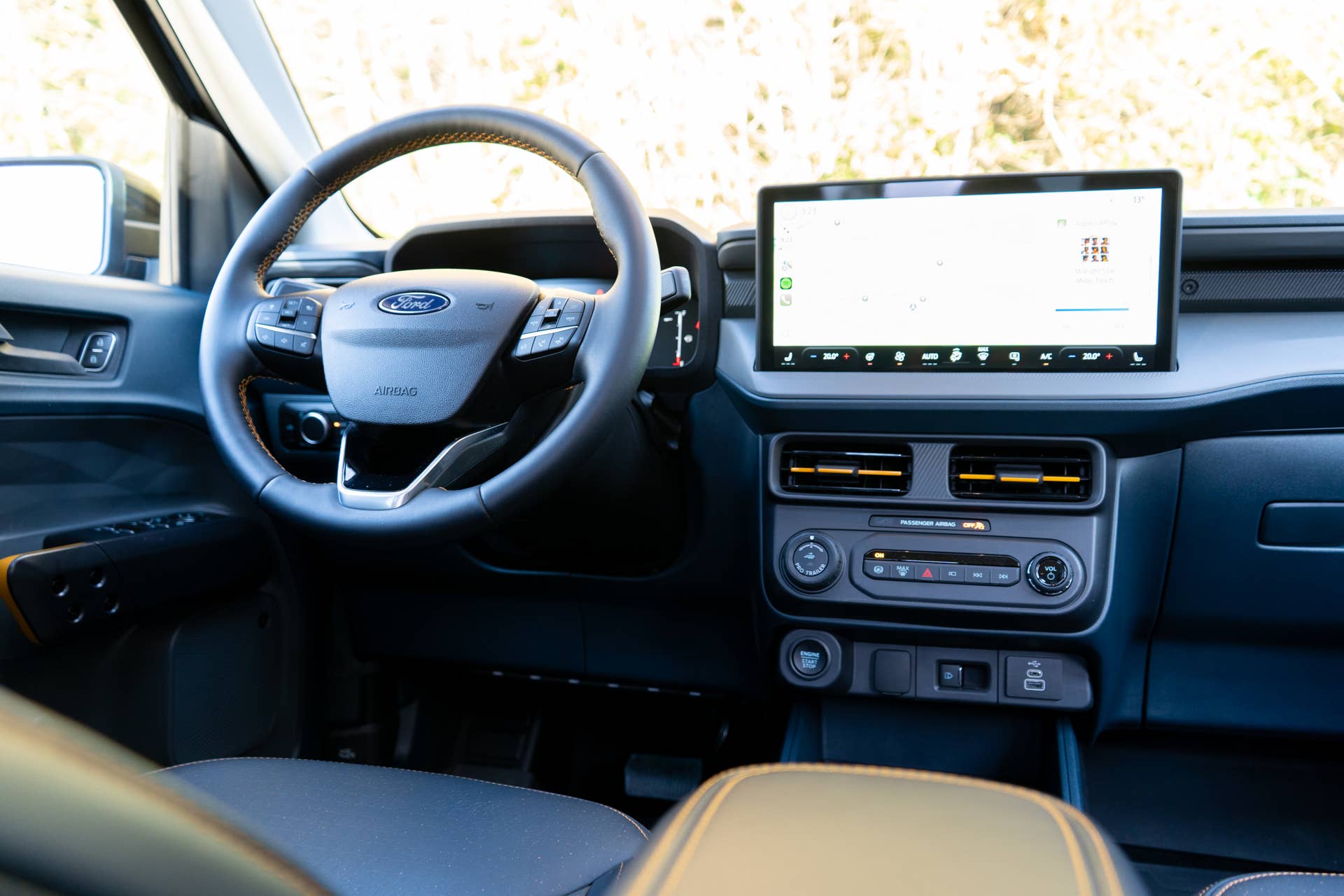
Ford’s biggest tech addition for 2026 is a data plan. The Ford Connectivity Package includes a year of Wi-Fi hotspot data and connected navigation, with a seven-year option available. The 13.2-inch SYNC 4 touchscreen, eight-inch instrument display, and wireless Apple CarPlay and Android Auto arrived with the 2025 refresh. I found the system generally straightforward, and wireless CarPlay worked effectively throughout the week. The B&O sound system was decent, too, making for a reasonably agreeable technology package overall. The drive modes also made palpable differences to the truck’s behavior, giving me useful ways to adjust its responses as conditions changed. Oddly, though, Ford has taken something away: wireless phone charging disappears for 2026. You can connect your phone to the system wirelessly, but you still need a cable to charge it. The Tremor keeps its 360-degree camera and Trail Control with Trail 1-Pedal Drive, though neither is new this year.
Cole Attisha
Exterior Design: 9.0/10 — The Maverick Has Been Raiding Its Big Brother’s Closet
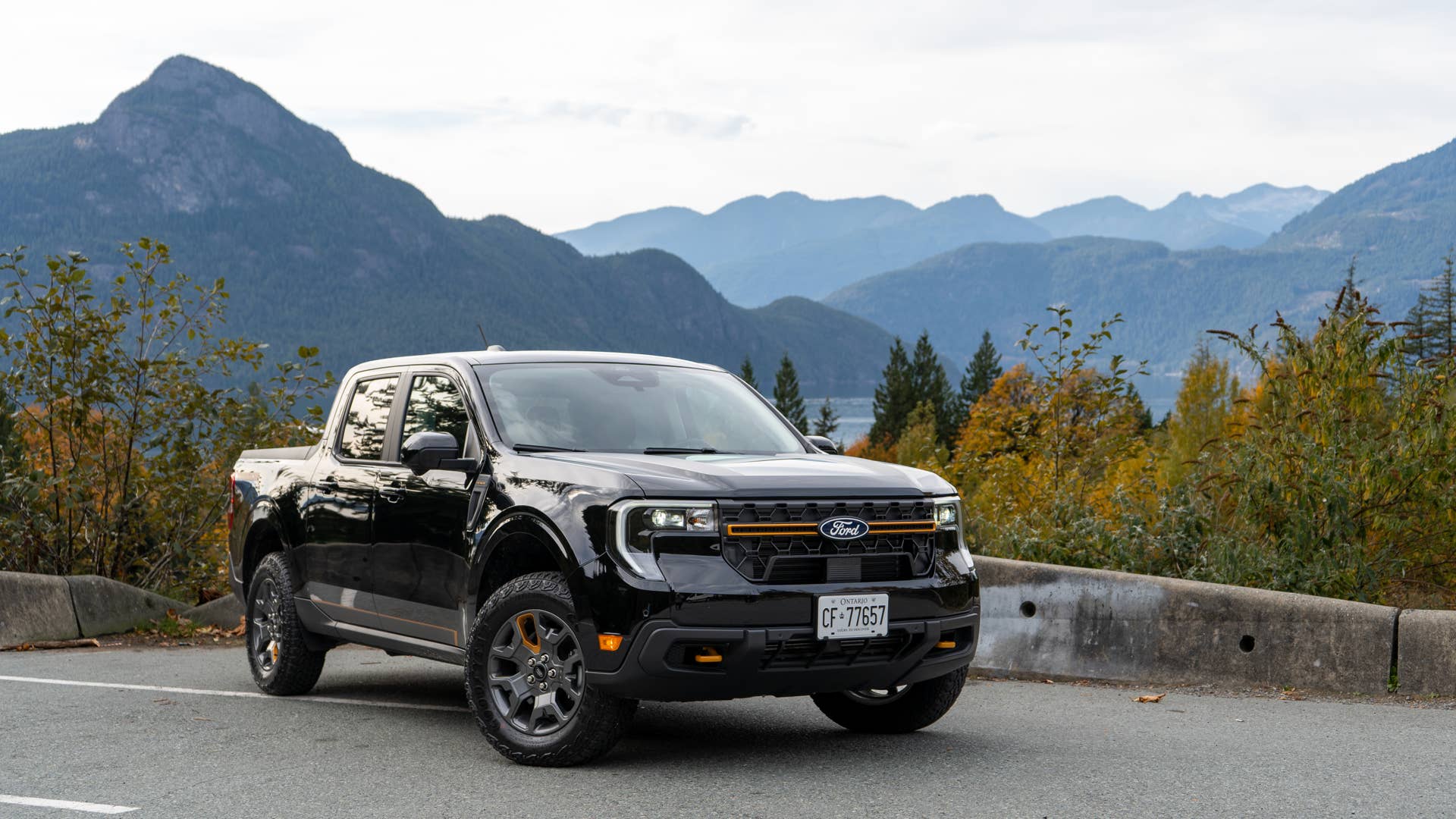
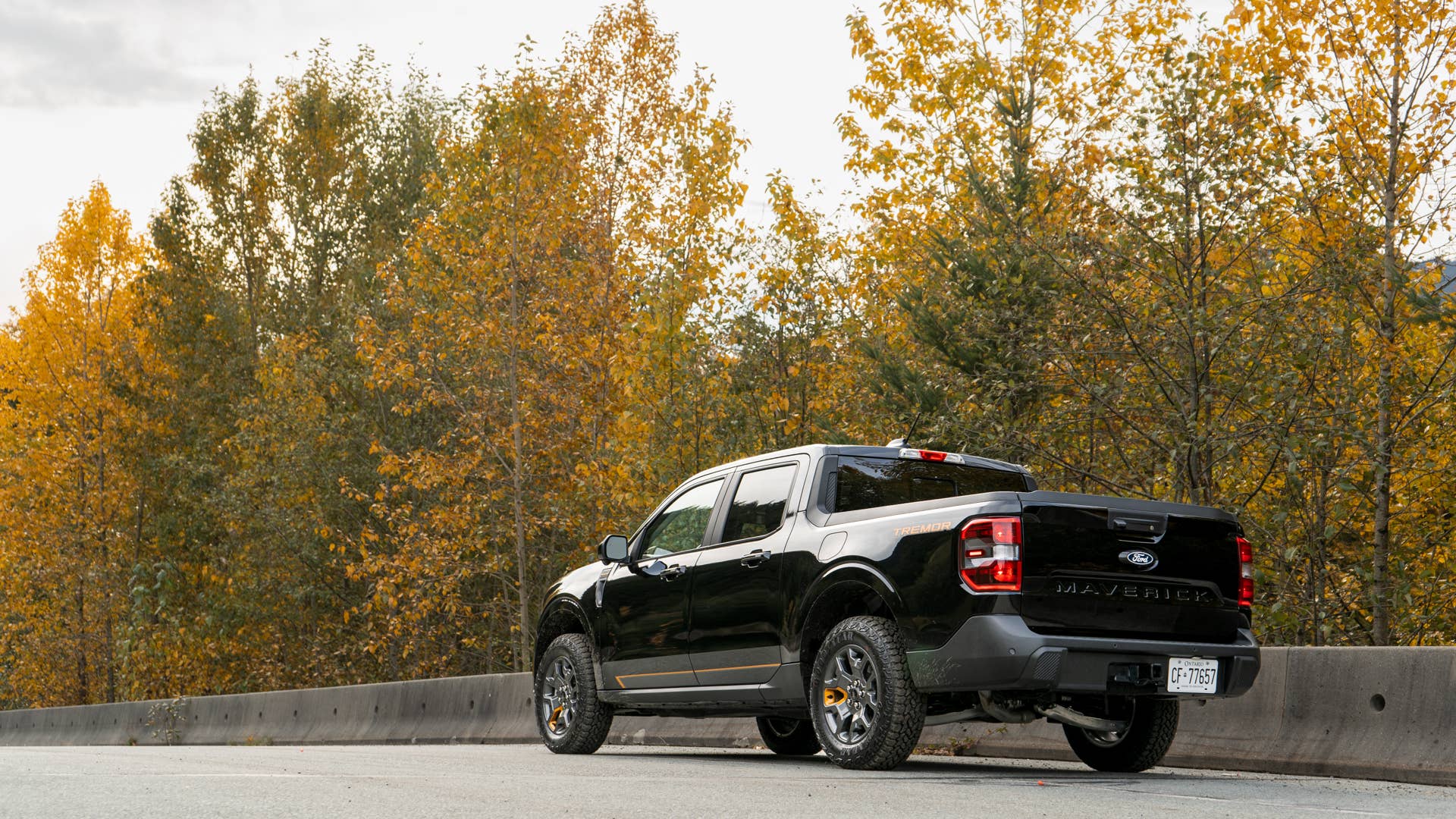
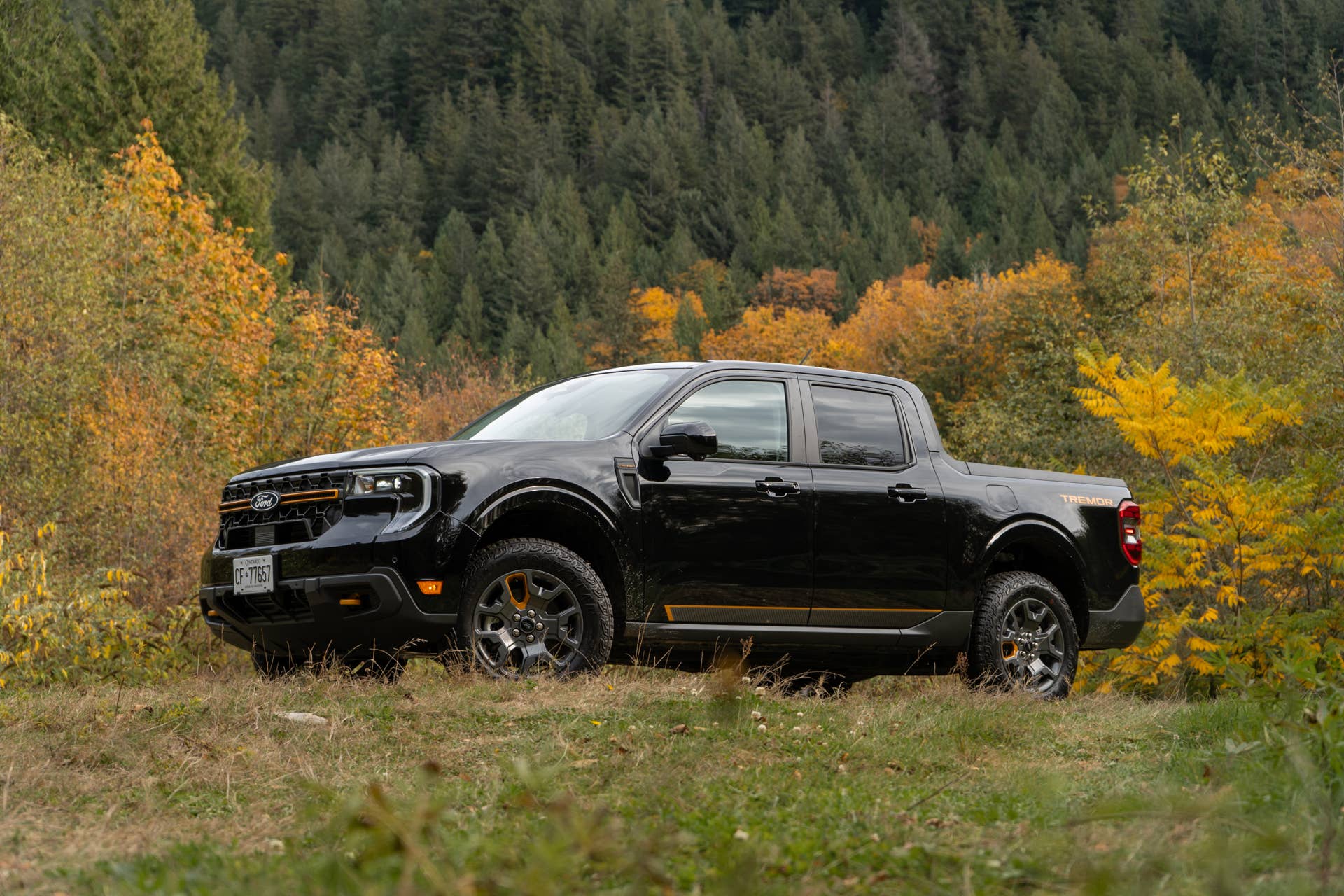
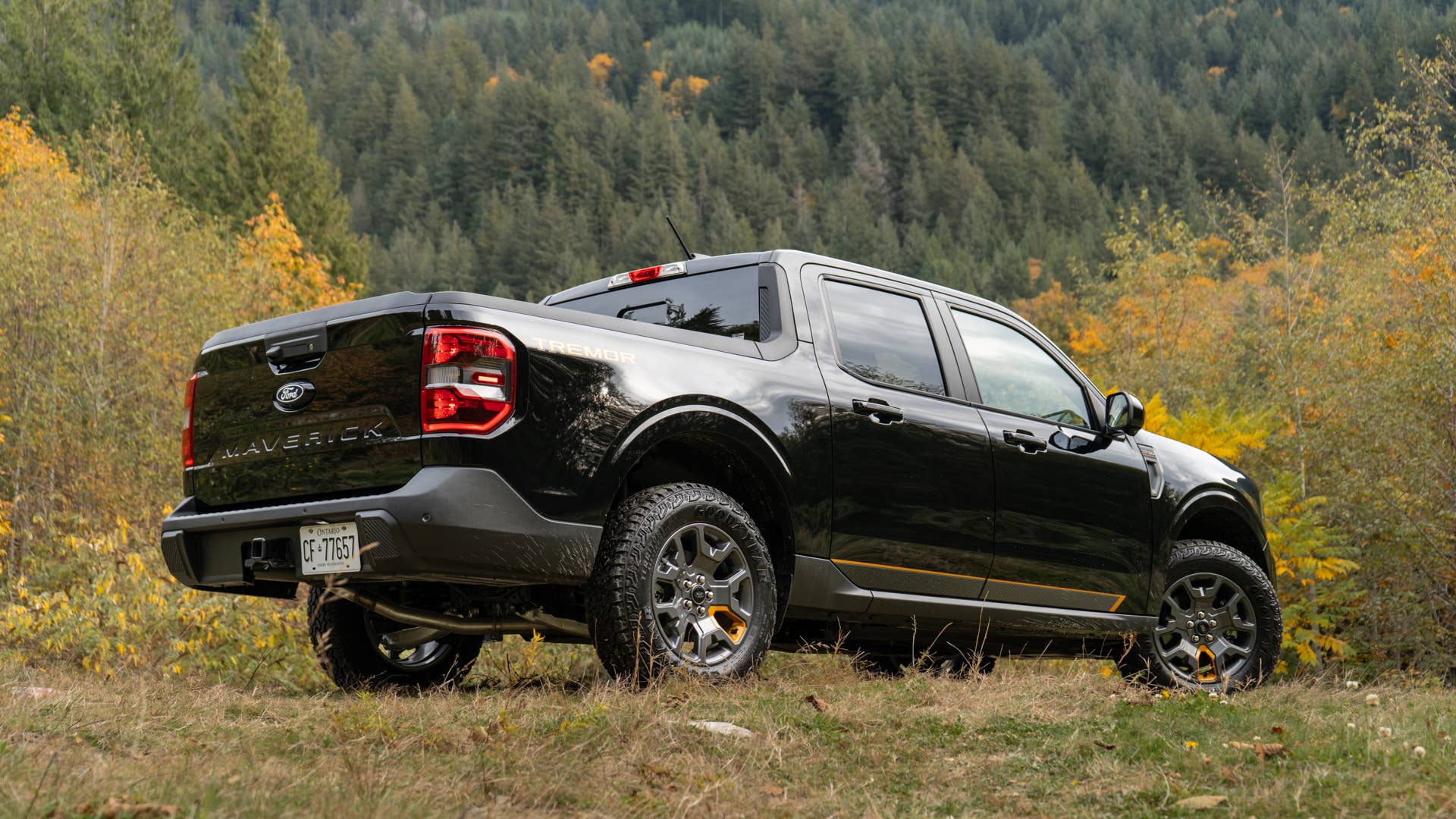
Although I personally prefer the shiny gloss-black, dinner-plate wheels and lowered stance of the Maverick Lobo, the Tremor might be the meanest-looking pick of the litter. The truck’s recent facelift adds newly shaped headlights that freshen the overall look, and the Tremor-specific orange graphics pair well with those meaty all-terrain tires for a convincingly rugged aesthetic. Parked next to a Ranger or an F-150, the Maverick looks no less aggressive, only more compact. This Maverick is certainly no city slicker, even if its proportions might suggest otherwise.
Cole Attisha
Compared with the Hyundai Santa Cruz, the Maverick’s only real rival, the Ford looks unmistakably truckish. While the Santa Cruz looks more like a Hyundai Tucson with part of the rear lobbed off, the Maverick has the boxy, upright shape American buyers tend to associate more fondly with pickup-truck authenticity; myself included. Its design makes no compromises because it shares a CUV platform, whereas the Santa Cruz seems to. Even beyond looks, the Maverick seems to be one of the few domestic models that outweigh its Korean competition, most evident in sales: Ford moves roughly 8.35 Mavericks for every Hyundai Santa Cruz sold in the U.S. Clearly, buyers prefer the boxier shape here.
Cole Attisha
Interior Design & Quality: 7.0 — Does the Cabin Know What This Truck Costs?
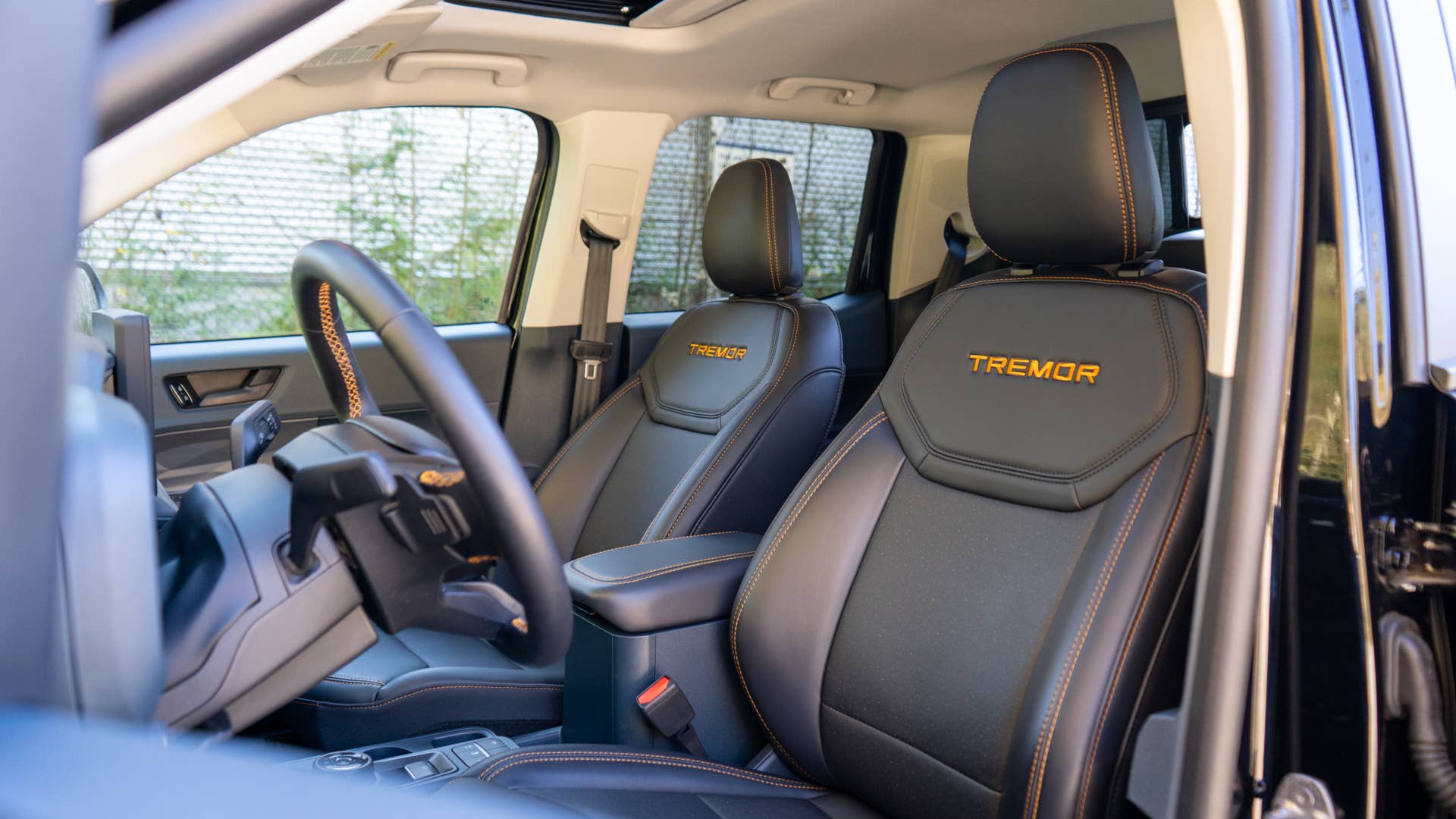
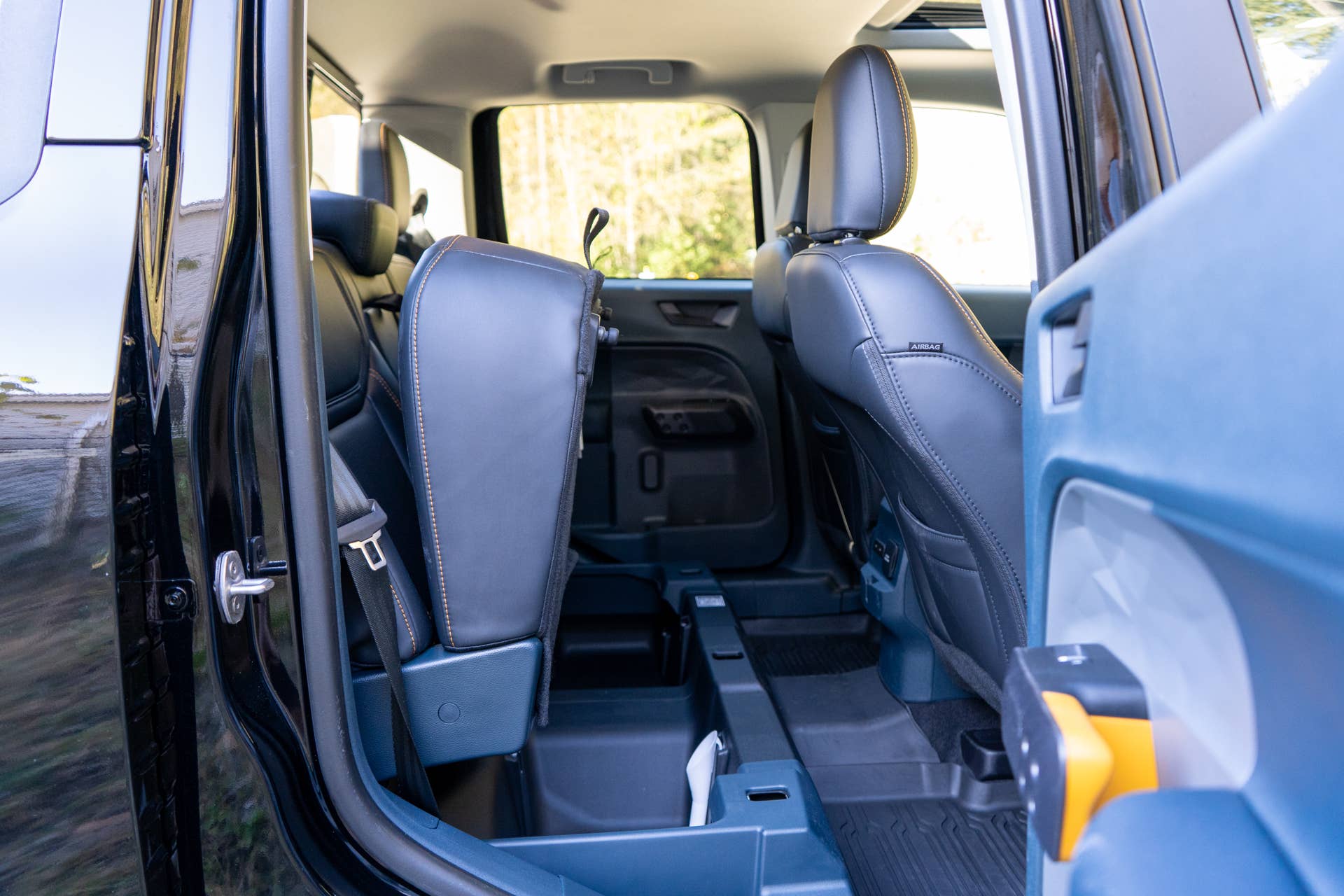
I will gladly accept a simple interior in an affordable pickup, but the Tremor’s price makes the inexpensive materials harder to overlook. The truck’s tall stature delivers impressive headroom, but the cabin still feels cramped, and the upright seating position can become uncomfortable on longer drives. Rear legroom is particularly tight, but the bench is still more accommodating than the sideways jump seats found in some older compact pickups, and proper rear doors make access much easier than backward-opening half-doors.
Cole Attisha
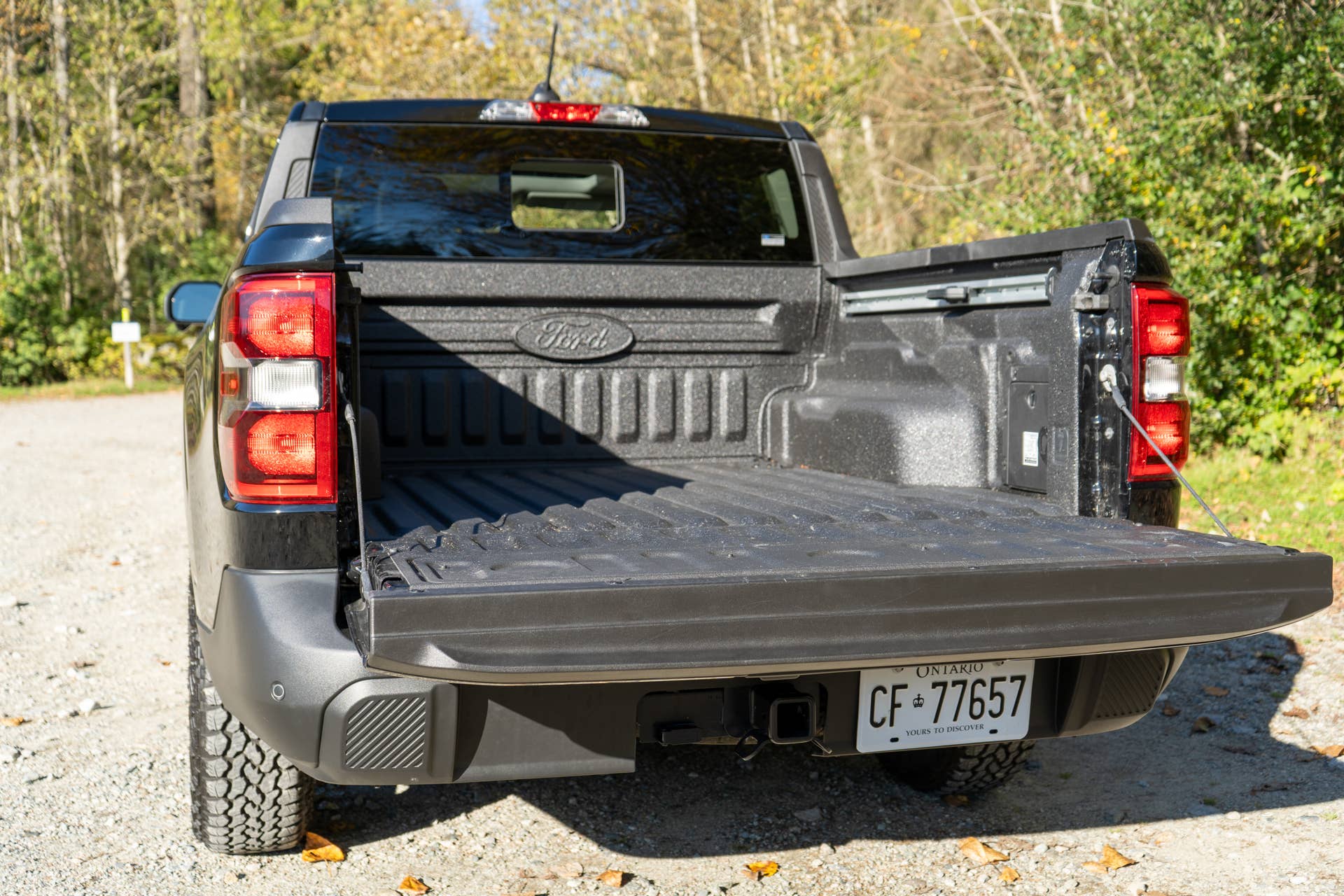
Ford has, at least, been clever with storage. The rear-seat cushion flips up to reveal useful bins and create extra room for belongings inside the cabin. That flexibility is welcome when transporting items that must be sheltered from the weather. The passenger-space compromise also leaves room for a surprisingly useful bed. Its floor measures 54.4 inches against the Hyundai Santa Cruz’s 52.1—a 2.3-inch advantage. Bed volume is 33.3 cubic feet versus 27.0 in the Hyundai, giving the Ford another 6.3 cubic feet edge. So there’s obviously a worthwhile utility advantage here, even if rear passengers might wish Ford had allocated the space differently.
Cole Attisha
Pricing & Value: 6.5/10 — This Little Truck Has Expensive Hobbies
Although the Maverick lineup generally offers solid value, that’s not necessarily true of the trim-topping Tremor. The Santa Cruz XRT costs just $610 more than the Tremor and can tow up to 5,000 pounds when properly equipped, whereas the Tremor is limited to 2,000 pounds and up to 1,140 pounds of payload. Even a Maverick Hybrid AWD can tow 4,000 pounds with the optional 4K Tow Package, so buying the rugged Maverick involves some decidedly practical sacrifices.
| Configuration | MSRP with listed packages | Destination | Total |
|---|---|---|---|
| Maverick XLT Hybrid AWD | $32,865 | $1,695 | $34,560 |
| Maverick Tremor | $40,645 | $1,695 | $42,340 |
| Hyundai Santa Cruz XRT AWD | $41,350 | $1,600 | $42,950 |
| Ranger XLT 4×4 | $39,575 | $1,895 | $41,470 |
| Ranger XLT 4×4 with FX4 and Trailer Tow packages | $41,305 | $1,895 | $43,200 |
All figures are in U.S. dollars, excluding taxes and additional options.
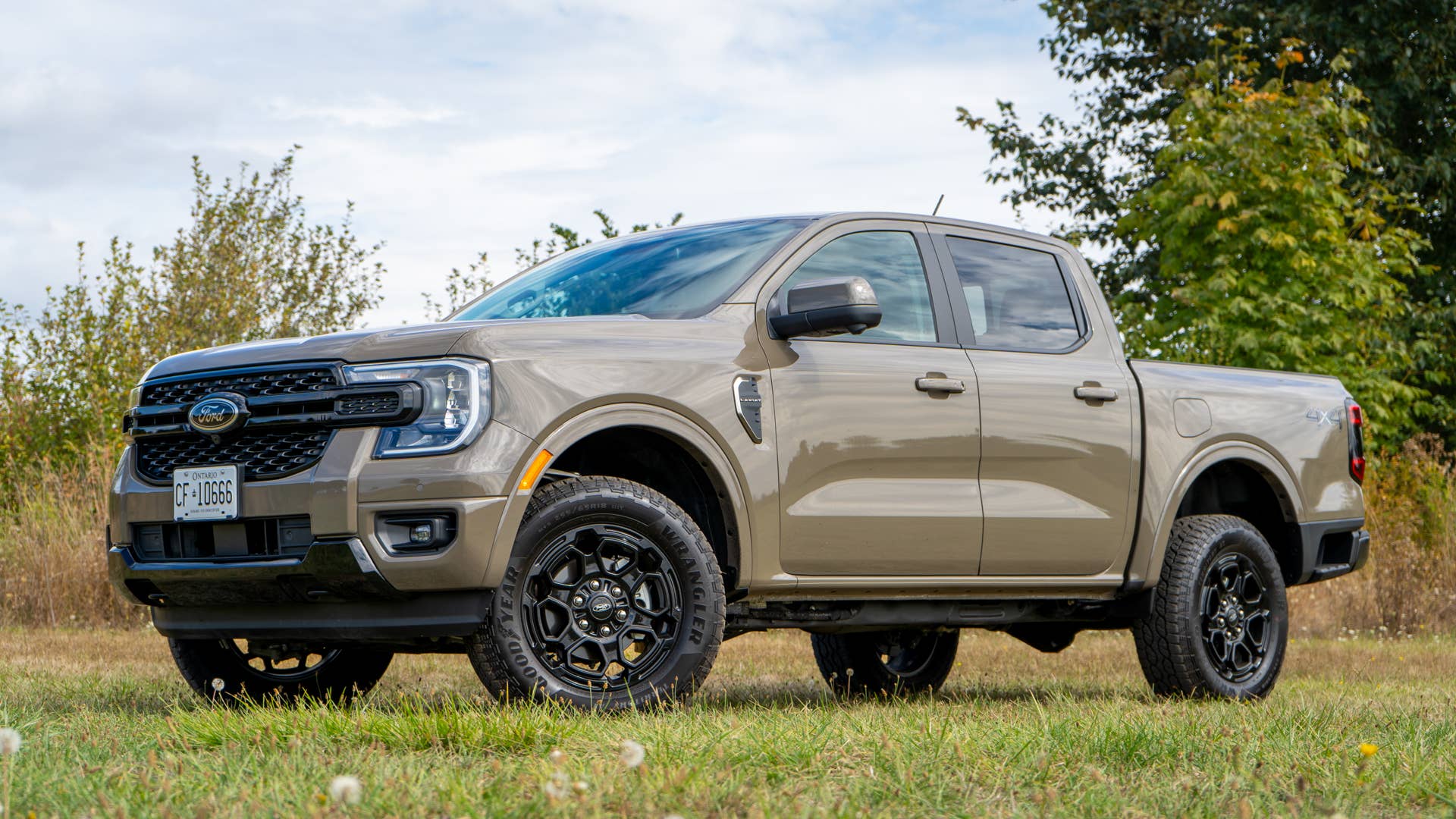
That brings me back to the Ranger. The mid-range XLT 4×4 starts $1,070 below the Tremor before destination, or $870 below it with delivery included. Add the $1,195 FX4 package and $535 Trailer Tow Package, and it reaches $43,200—only $860 above the Tremor. That buys a body-on-frame truck with low-range gearing, an electronic rear locker, additional underbody protection, a longer 59.6-inch bed, and up to 7,500 pounds of towing capability.
The Tremor does include heated seats, B&O audio, and a 360-degree camera, while that Ranger has cloth seats and fewer comfort features. The Maverick’s compact size also has value in tight parking spaces and on narrow access roads. For regular trail use, though, I would probably start shopping Rangers instead. For mostly road driving, the XLT Hybrid AWD saves $7,780 before further options and makes a more economical daily driver with friendlier road manners. That leaves the Tremor serving a narrow demographic: someone who needs the extra traction hardware, specifically wants the compact footprint, and accepts its reduced work capacity. I get the appeal, but it isn’t where I’d put my own money.
Cole Attisha
The Real Verdict: 7.3/10 — I Still Want a Maverick, but I’d Spend My Money Differently
After a week with the Tremor, I remembered why I fell for the Maverick in the first place. This little pickup has plenty of character, and its useful bed, clever storage, and manageable dimensions make a convincing case for keeping your truck purchase small. The Tremor adds worthwhile traction hardware, an entertaining turbocharged engine, and enough cosmetic toughness to make me glance back after parking it. But choosing this particular Maverick requires accepting several substantial compromises. Noisier tires, less composed handling, and disappointing fuel consumption affect everyday driving, while the cabin’s inexpensive materials are harder to excuse at this price. Its reduced towing capacity also makes the toughest-looking Maverick a less useful truck for some buyers.
For my money, an all-wheel-drive Maverick Hybrid still seems like the most appealing daily companion. If regular trail use were a priority, I’d give a Ranger XLT 4×4 with the FX4 package a serious look before signing up for the Tremor. So there’s really only one reason to choose this truck: you insist upon the Maverick’s compact dimensions and will actually use its added off-road capability often. For that buyer, the Tremor has a real purpose, but otherwise, it feels a bit superficial. I’d happily recommend the Maverick to almost anyone; I’d just need to know more about their weekends before I’d recommend the Tremor.
Autoblog aims to feature only the best products and services. If you buy something via one of our links, we may earn a commission.
About the author

Cole Attisha
Staff Writer, Autoblog