
Not strictly for rugged driving
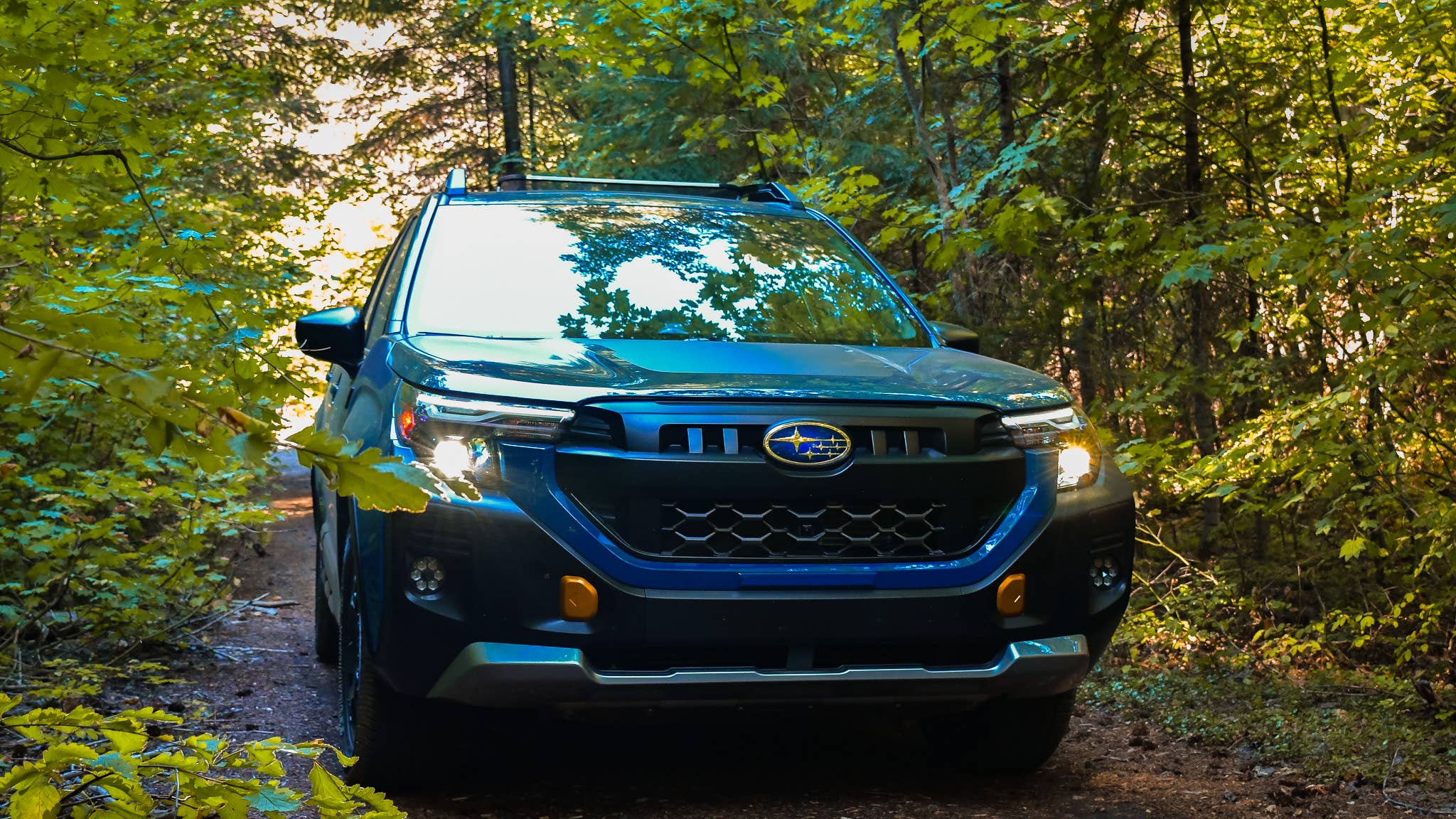
When I bought my 2011 Subaru Forester in 2018, I did so because I understood the brand has off-road capabilities. I can attest from firsthand experience that the company’s AWD system is far more capable than people realize. However, I had to make numerous modifications to it to prevent any damage. The Wilderness brand was introduced in 2021 with the Outback, and it was made with people like me in mind. The Outback Wilderness came with a factory lift, more robust all-terrain tires, underbody protection, model-exclusive colors, a fancy matte-black decal on the hood to reduce glare into the cabin, more aggressive exterior body cladding, water-resistant seating to save the upholstery on rainy days or from muddy boots, a reinforced roof and rails for rooftop additions, an updated towing capacity, and fancy bronze accenting throughout.
Kristen Brown
It was a Subaru that fans didn’t have to modify to make it ready for the roads less traveled—it came ready out of the box. You could, quite literally, buy one, drive it off the dealership lot, and hit a trail that would be extremely challenging for a standard Subaru. The same year, Subaru revealed the Forester and the Crosstrek, which came with the same perks, adding to the Wilderness collection. Since the off-road essentials were included with the price, the three models found their audience almost immediately. With all those add-ons, though, particularly the lift and tires, does it make it harder to drive it daily? Let’s talk about it.
Naturally, a lift and tires change the ride quality, but not as much as you’d think
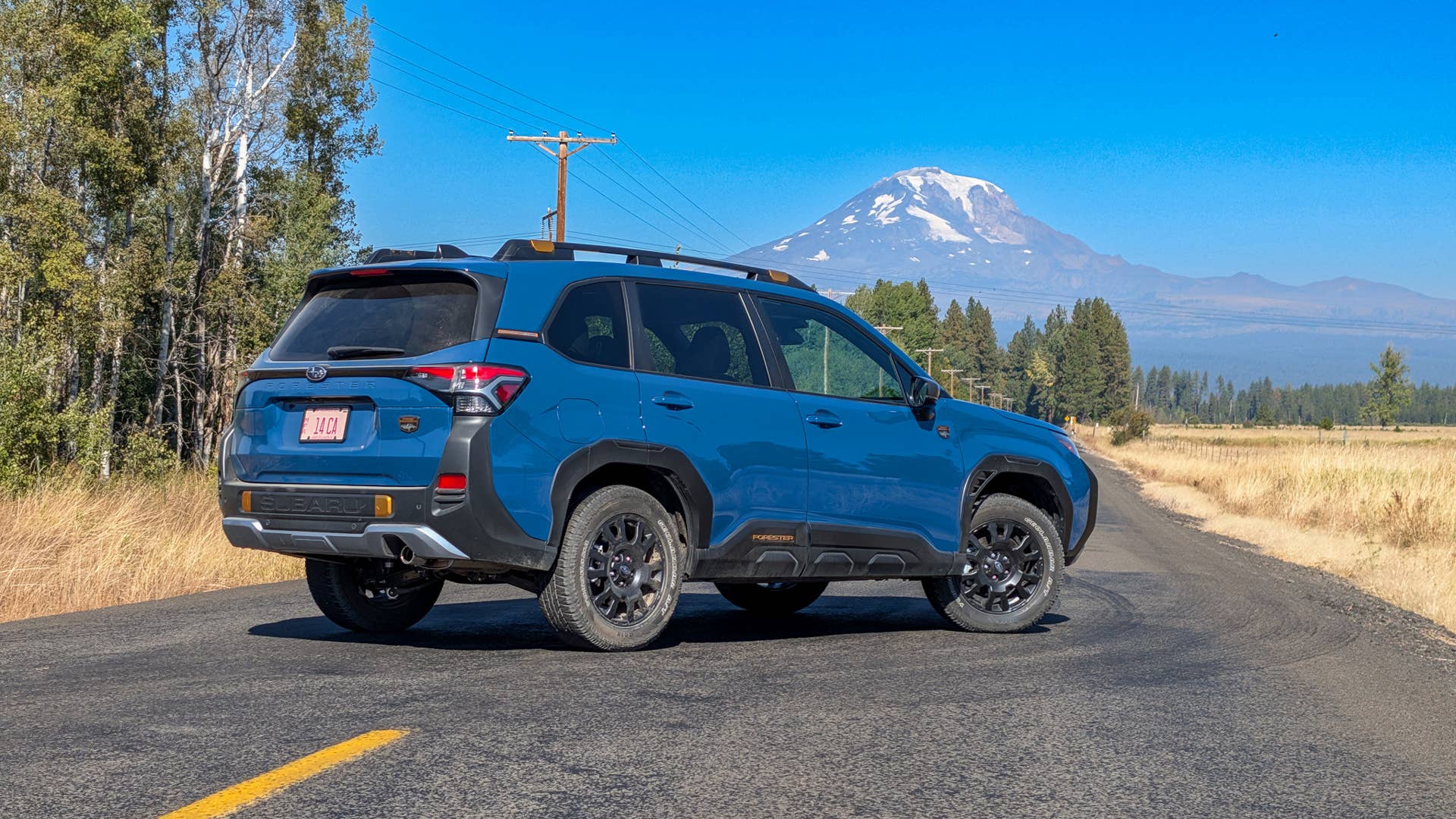
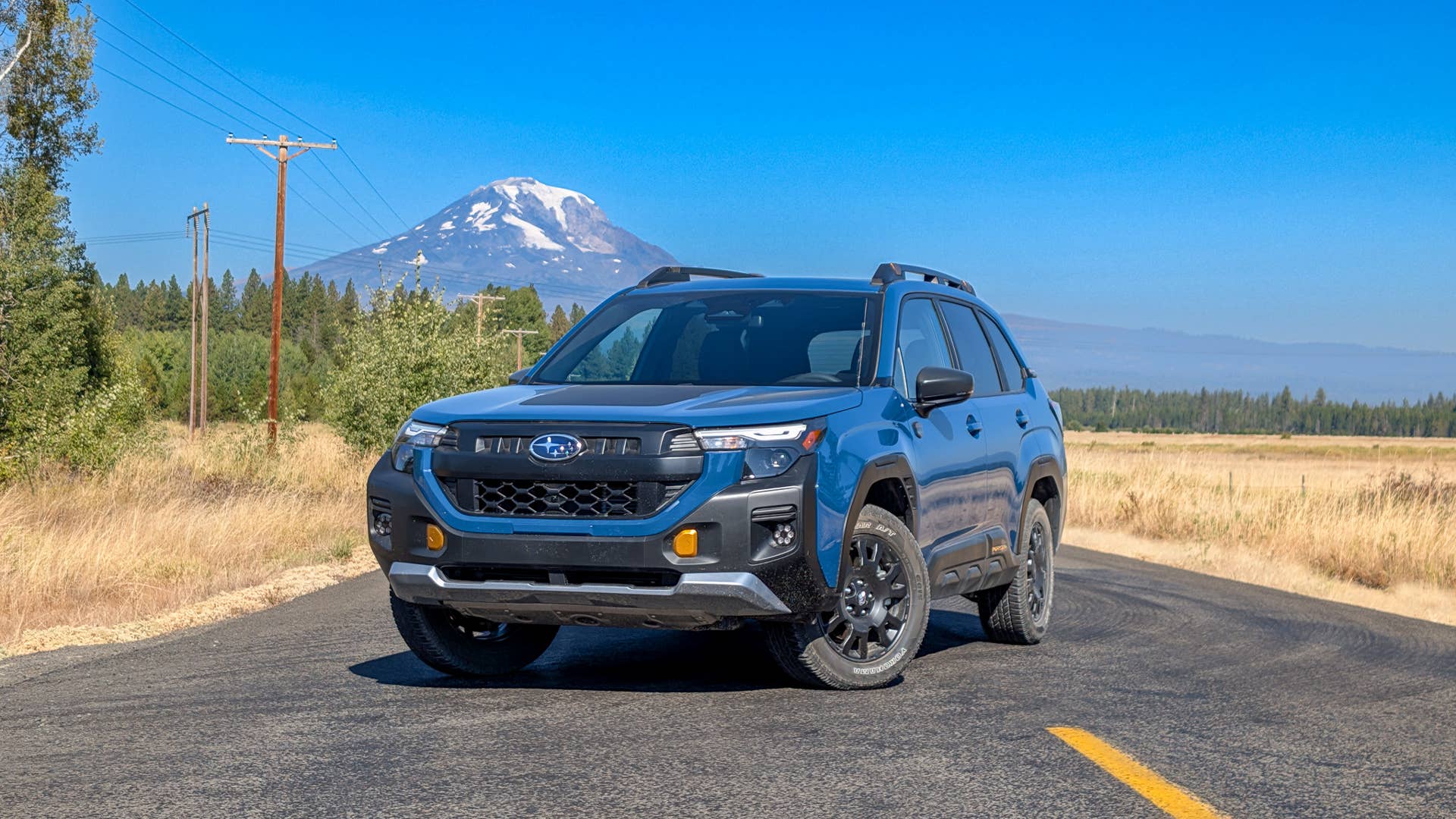
All three Wilderness models have increased ground clearance, but the Forester Wilderness is in the middle. Instead of the usual 8.6 inches of clearance, the lift and tires bring it up to 9.2 inches of ground clearance. The suspension that comes with it is tuned for going off-road, meaning it’s a bit stiffer than what you’d find on the standard Forester, so it can handle rougher terrain without bottoming out. These things, naturally, change the ride quality. The tires are louder (by quite a bit, and since I’m picky about tires, I’d probably swap them out for something like the BFGoodrich KO2s), and the ride is definitely firmer. But it’s not as bad as you’d expect. In fact, I had to keep reminding myself that I was in the Wilderness model, because it felt so similar to the standard Forester.
Kristen Brown
In fact, I’d argue it was better in a way, because Subaru was careful about improving the sound dampening in the 2026 Forester Wilderness. I was told more sound-dampening was put on the firewall and by the driver and passenger footwell, so less road noise is translated into the cabin while someone’s driving. It definitely made a difference, I can promise you that. I drove it from my home in Bay Point to Stockton, and in case you’re not familiar with the area, you have to take 4 East, which can be incredibly windy. Even though it was windy and I was going over 60 mph, I barely heard anything inside the car—even with the radio off. The road is bumpy and curvy, but it wasn’t noticeable at all. The ride was so smooth that my toddlers fell asleep in both directions after about 20 minutes. Not too shabby.
Mileage wasn’t the greatest, but for what it is, it’s pretty good
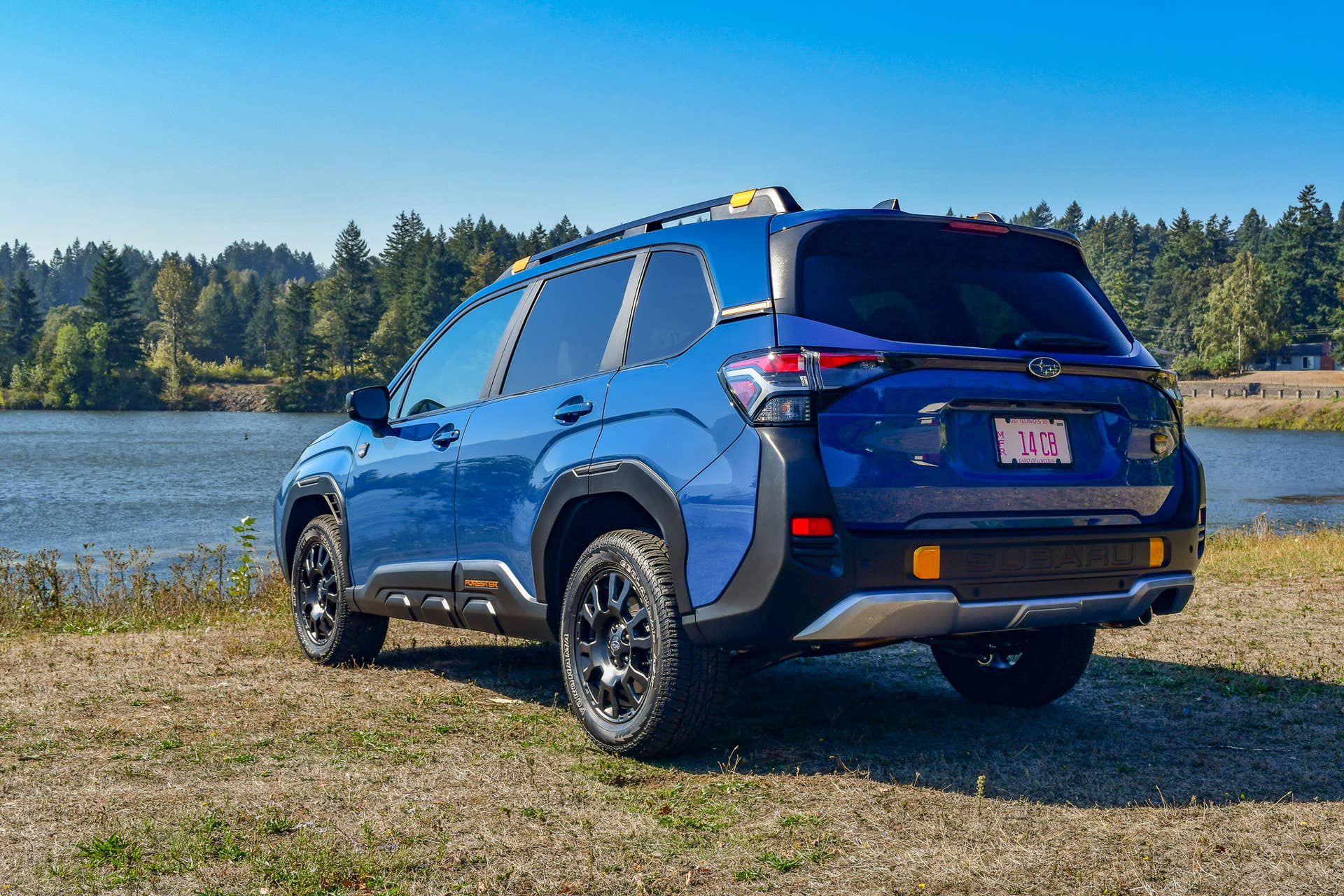
One of the most important upgrades that comes with the 2026 Forester Wilderness is the mechanical fixes on the TR680 CVT. It’s shorter than before, to give it more torque sooner when you’re driving it off-road. So, when you’re using X-MODE, you get the advantage of the engine torque being multiplied, allowing slower, more controlled movement over obstacles. While the shorter final drive helps while driving off-road, it comes at the cost of overall mileage. It helps increase torque, but it can make the engine work harder at higher speeds, which uses more fuel per mile.
Kristen Brown
When you compare the mileage of the Wilderness to the standard model, Subaru says it gets about 24 mpg in the city, 28 on the highway, and a combined rating of around 26 mpg. That’s only about a four-mile-per-gallon difference compared to the standard Forester. That may not seem like a huge disparity, but when you live somewhere like California, where gas prices are over $5 per gallon, that can add up quickly. However, if you’re a regular camper who likes to off-road and pitch a tent, the mileage can easily be justifiable. Especially since the mileage it does get is better than something bigger, like a Toyota 4Runner.
There’s plenty of space for (almost) everything you’ll ever need
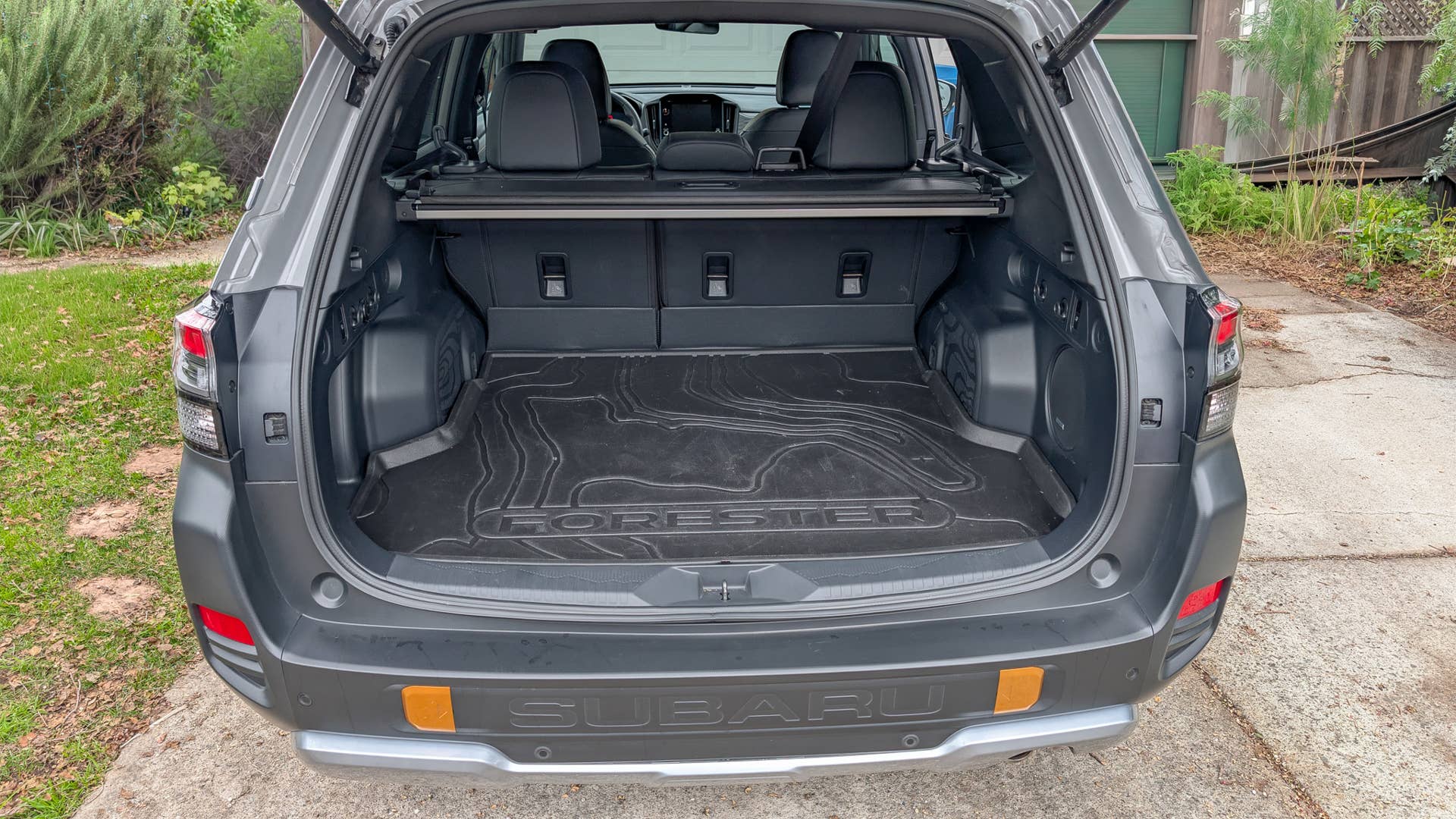
What made the standard Subaru Forester so lovable is that, for its size, it has a very respectable amount of cargo space (hence why I still have one, even though I now have two crazy toddlers). Numerically, Subaru states the Forester Wilderness has 27.5 cubic feet of trunk space with the rear seats up, which expands to a generous 69.1 cubic feet with the rear seats folded. Compared to the competition, it has plenty of space for camping gear, a stroller, luggage, and more. The Forester Wilderness also has a reinforced roof, so you can always fit a cargo basket or box on top with upgraded rails if you need to. A hitch can be installed, too, so you can further increase storage with a hitch cargo carrier, too.
Kristen Brown
Given the ample space in the mid-sized SUV, it’s more than enough space for your daily needs, making it an easy choice for hauling groceries. Or pretty much anything else you’d need to move from one place to another. Like I’ve said before, the cargo space I have in my own Forester is more than enough with two kids on board, so obviously, the new one is going to be a tad better.
The onboard technology and safety features make it an easy SUV to live with
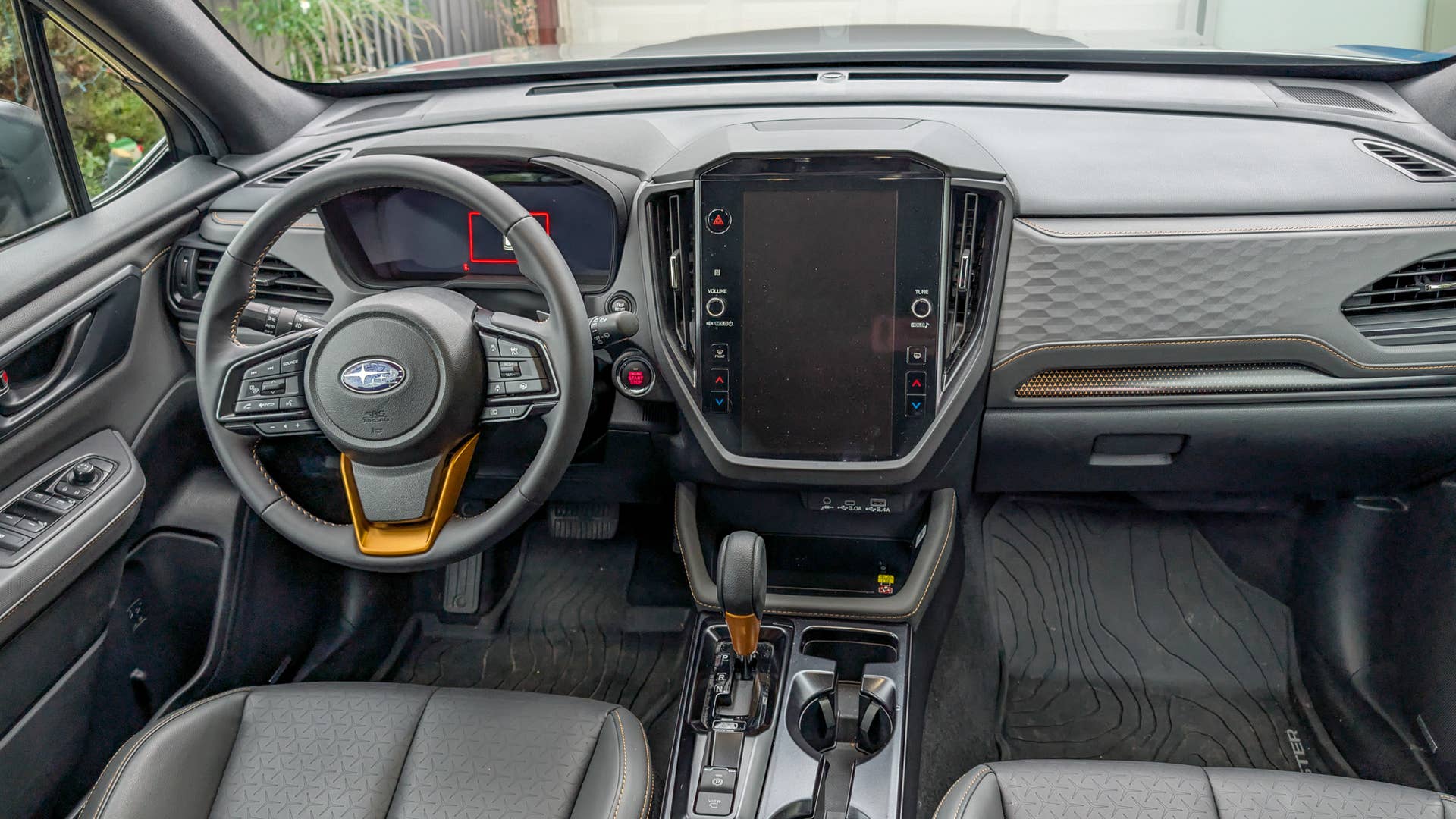
One thing about the newer Subarus that I’ve always liked is the fact that they have a decent amount of modern technology, but not to the point that it’s overwhelming. The 2026 model has a new, fully digital, high-resolution gauge cluster that’s fairly customizable and very easy to use and interpret. The Wilderness model in particular is the first model to have an Apple Maps display on the gauge cluster (not optimized for Android Auto yet—boo), so if you’re using Apple Maps to get to your campsite, you can use the cluster to navigate while the center screen can display your cameras in X-MODE if you’re going off-road. Pretty cool. The 11.6-inch central entertainment screen is high-resolution and responsive, and I appreciated that all the settings and menus were easy to find. The A/C controls weren’t buttons and knobs, but the settings on the touchscreen are permanently displayed at the bottom of the screen, which makes up for its screen-only integration.
Kristen Brown
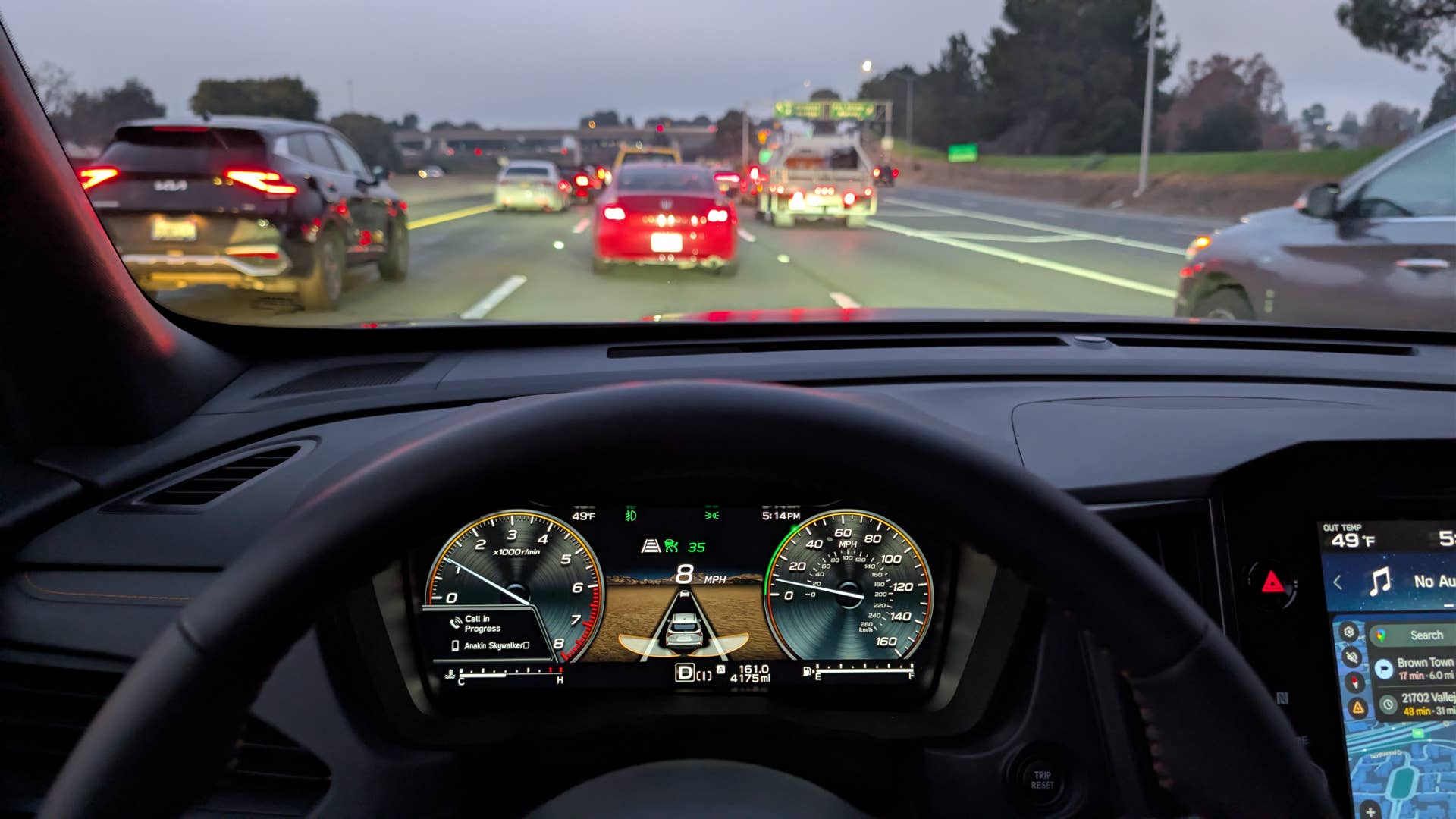
My ultimate favorite feature, though, was the adaptive cruise control when used in tandem with the lane centering feature. When I was driving back from Stockton, my oldest daughter sneezed and needed a tissue. I tried to dig through my purse to find my pack of tissues, but couldn’t. So, I tapped the cruise control button on my steering wheel, set the speed, turned on the lane centering that uses the tri-camera EyeSight system (standard on all Forester models), and took a few seconds to dig through my purse and find them. By the time I found them, I got the alert to put my hands back on the wheel, and I was able to resume control. But those few seconds were all I needed to get what my daughter needed before using her sleeve. Moments like these make me appreciate that kind of technology, since it can be used to get your FastPass out of the glovebox safely, swap your glasses for your sunglasses, or grab a snack without compromising the safety of others.
Kristen Brown
But that’s not all. It also comes with driver attention systems that will warn you if the car in front of you moves, so you don’t hold up traffic, and Subaru’s new Emergency Stop Assist. So if you are using adaptive cruise control and you don’t respond to the audio queues to put your hands back on the wheel, it will assume you’re unconscious and pull itself over and unlock the doors once it’s completely stopped. Once stopped, the car will alert emergency services through the StarLink system (which has a 5-year free trial, and then it’s only $45 per year as a subscription for connected services). Features like these, as well as standard blind spot detection, lane departure warnings, and automatic emergency braking in the front and rear, make it a great daily driver.
Final thoughts
Like the standard Forester, the Forester Wilderness was designed to be driven every day, and it shows. Everything about it makes it an easy drive, and despite a few miles less per gallon because of the factory modifications, it fits right into my family’s life. My husband and I are avid outdoorspeople (hence why we both own Subarus), and if I didn’t have a dedicated off-roader in my life, I would absolutely swap the Forester I have now for the Wilderness model. It has everything I love about the Forester, just a little extra. However, if you don’t plan on using it to camp or off-road on even a semi-regular basis, the added thirst at the pump can be a pain in today’s economy.
About the author

Kristen Brown
Contributing Writer, Autoblog