
There’s room for a sporty European compact sedan
A MINI sedan might look like the answer to a question no one asked, especially in an era when crossovers dominate and traditional sedans are struggling for attention. Sedans are still vital to the automotive industry, and many buyers still flock to them for their driving dynamics and style. Maybe that’s exactly why MINI should consider building one. The British marque, known for its iconic hatchbacks and playful design has long flirted with unconventional body styles: from the Coupe and Roadster to the Countryman and Clubman. But sedans remain a frontier MINI has never seriously explored.
Amos Kwon using ChatGPT Image Generator 4o
Don’t count sedans out just yet. The Toyota Camry, Corolla, and the Honda Civic still rank in the top 20 best-selling cars this year, and that’s a very big deal with big numbers behind it. Although a MINI sedan would be more of a niche vehicle due to its size and near-premium pricing, there’s a solid opportunity for the brand to diversify its lineup and capitalize on its unique looks for a three-box design.
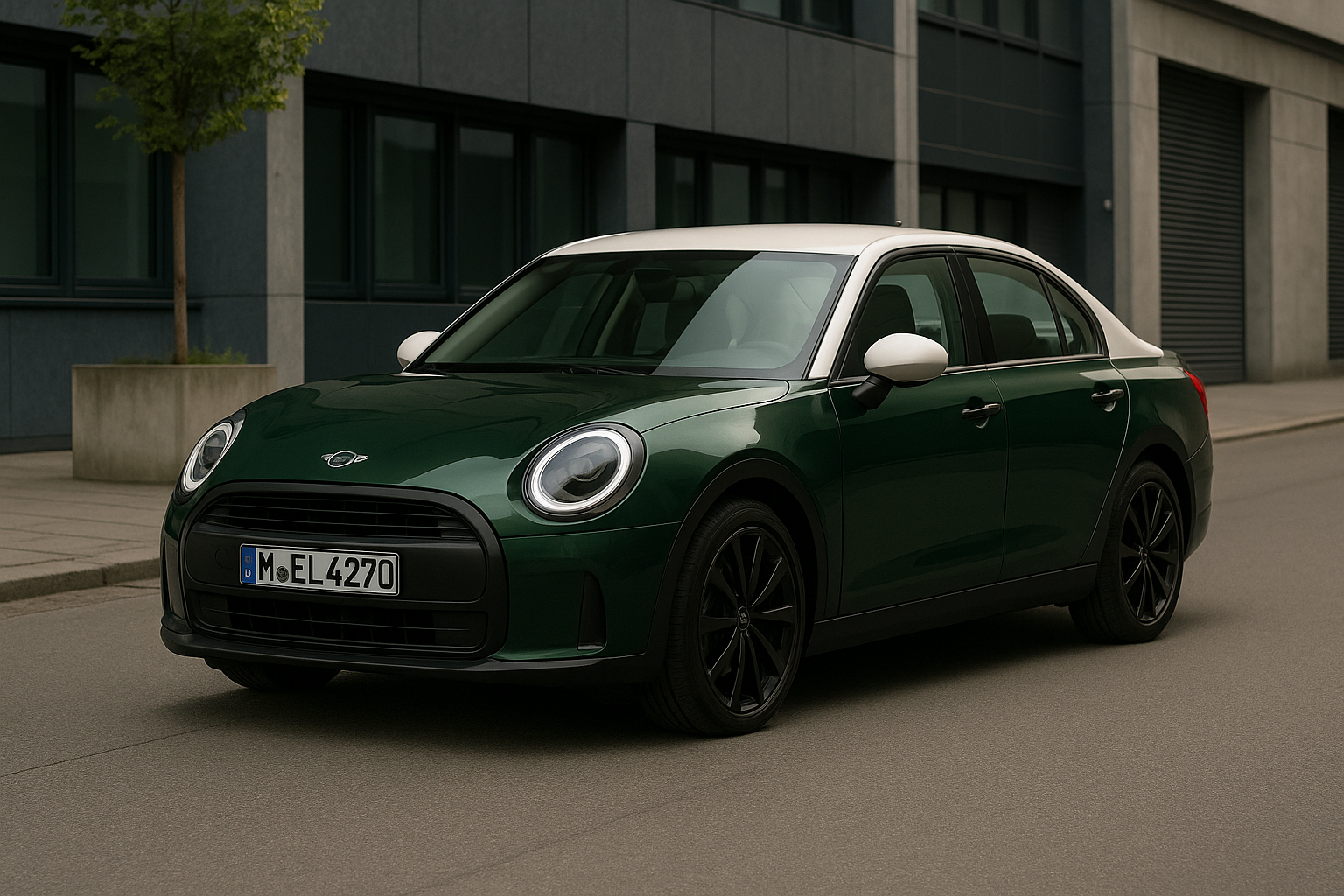
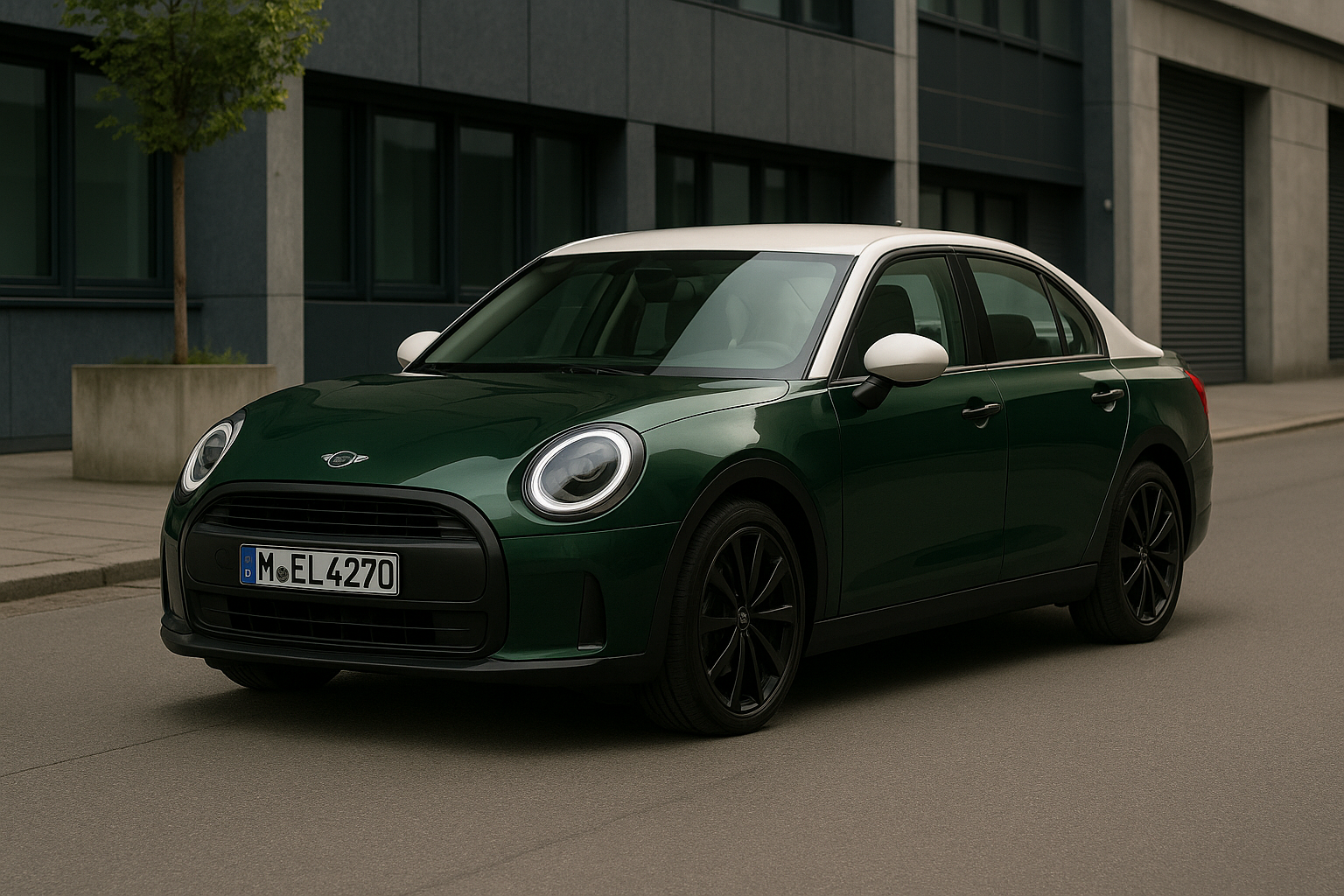
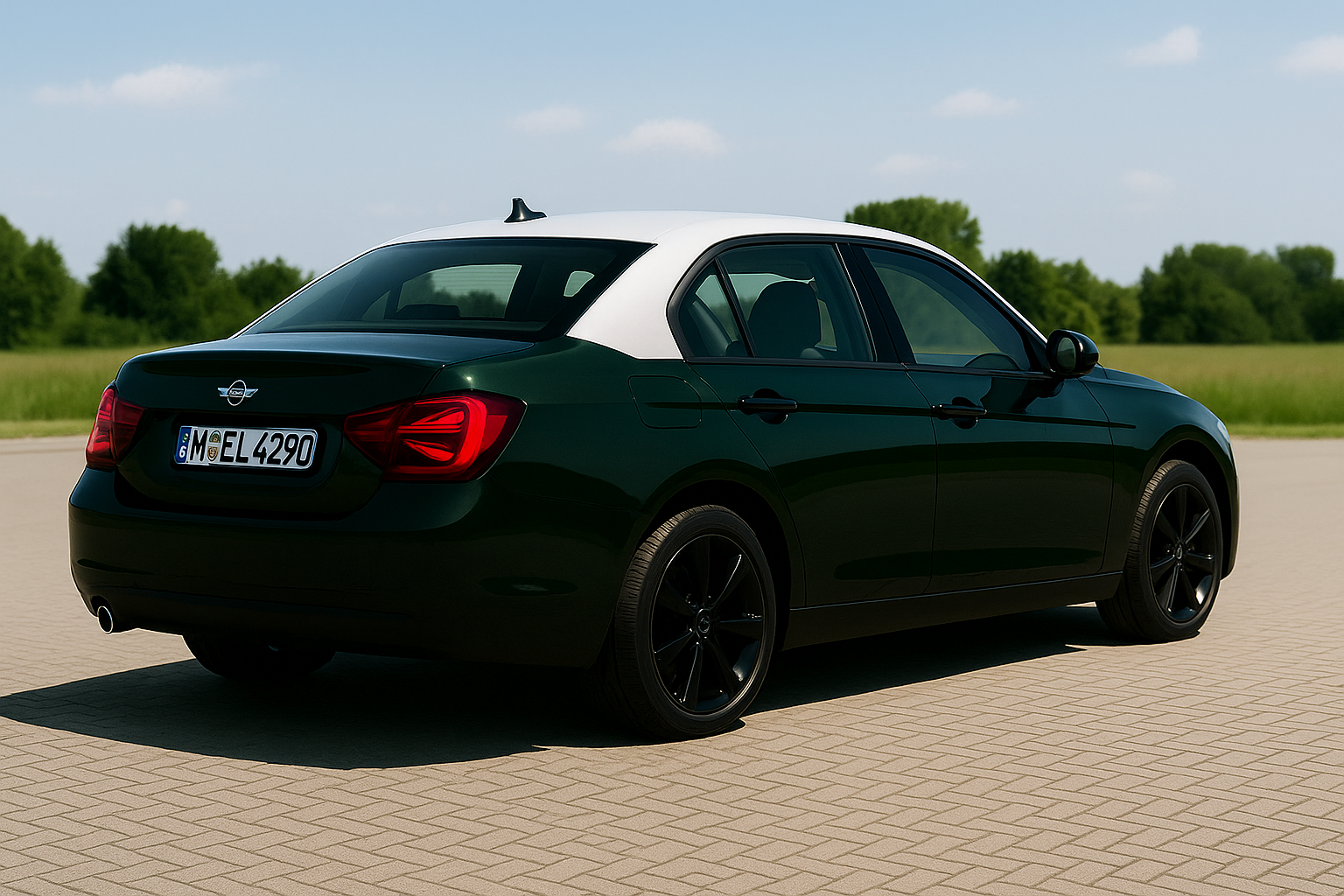
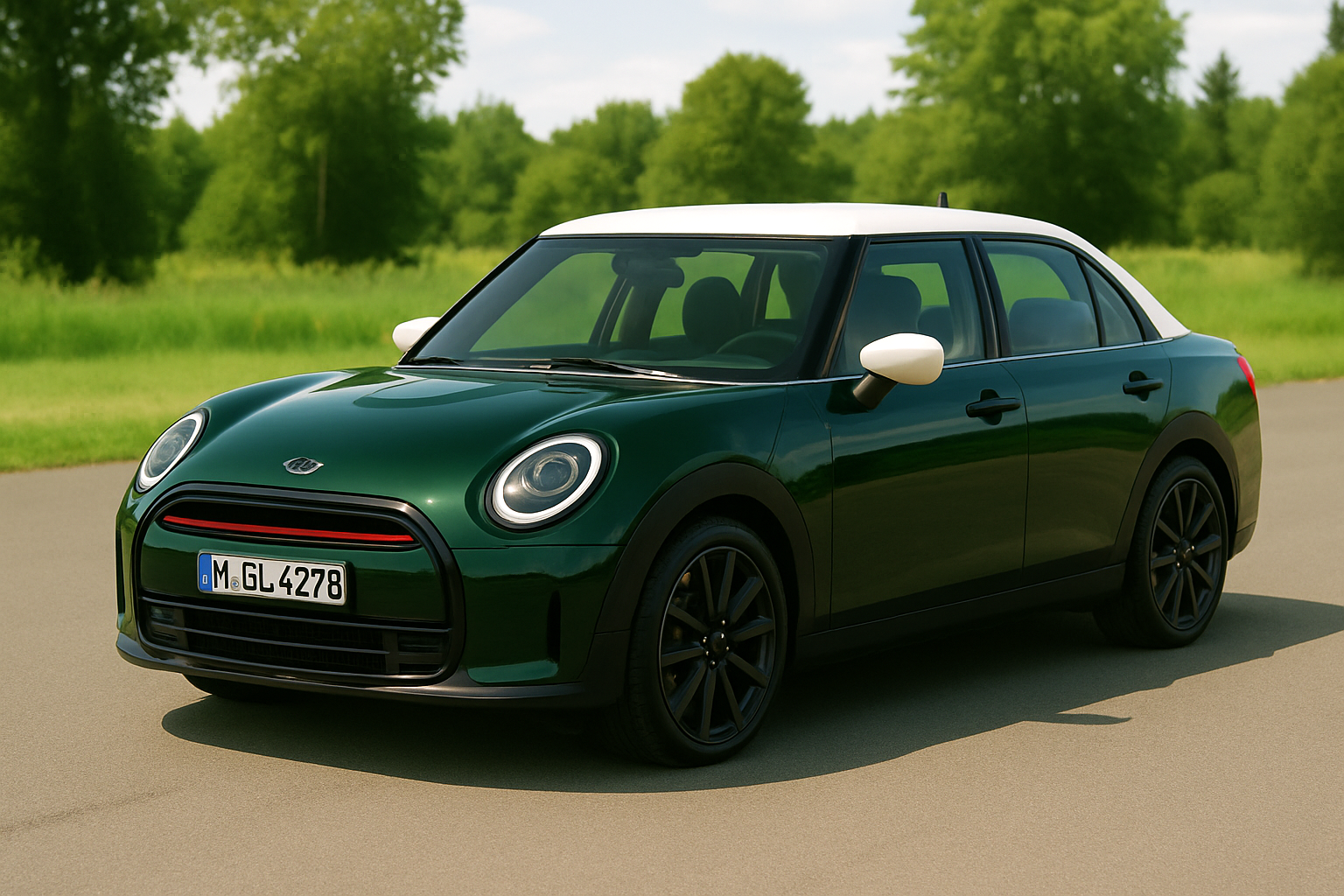
This AI rendering envisions what a MINI-flavored sedan might look like, blending the brand’s easily identifiable and quirky styling with a slightly more mature and sophisticated silhouette. The result is a car that feels both familiar and fresh, an evolution of MINI’s current design language, yet something distinctly new in terms of body style. It’s uncharted territory, yes, but it’s also super-fresh.
A familiar face with a grown-up attitude
Amos Kwon using ChatGPT Image Generator 4o
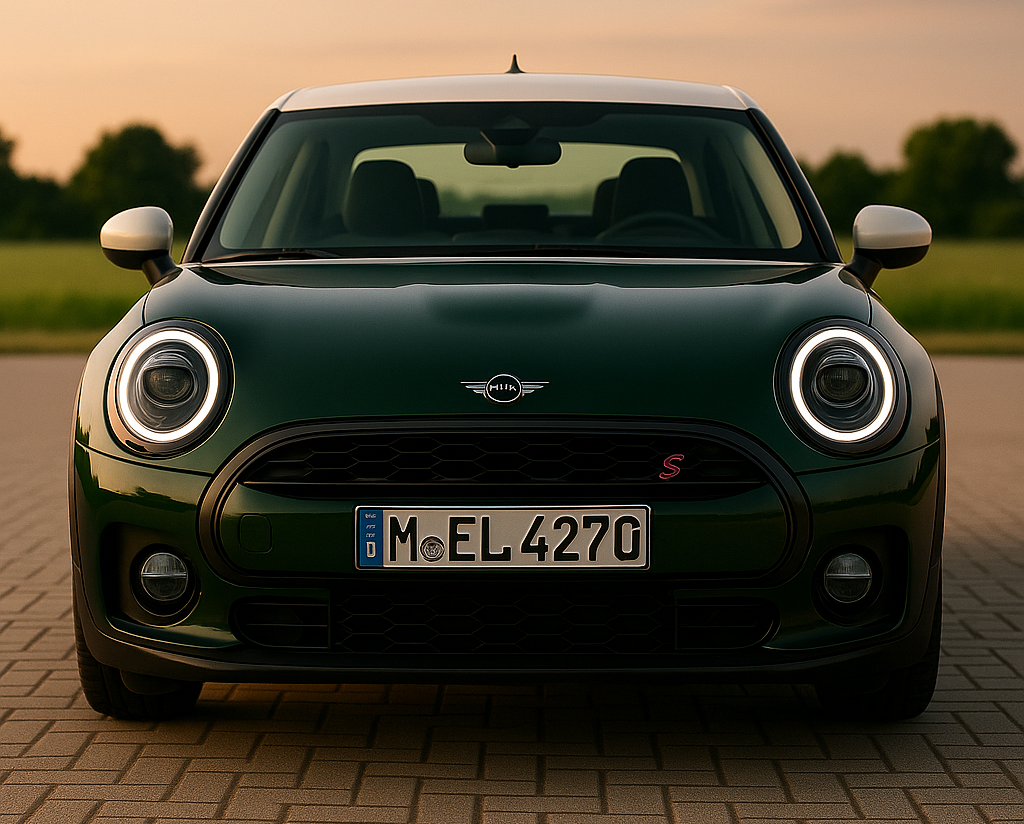
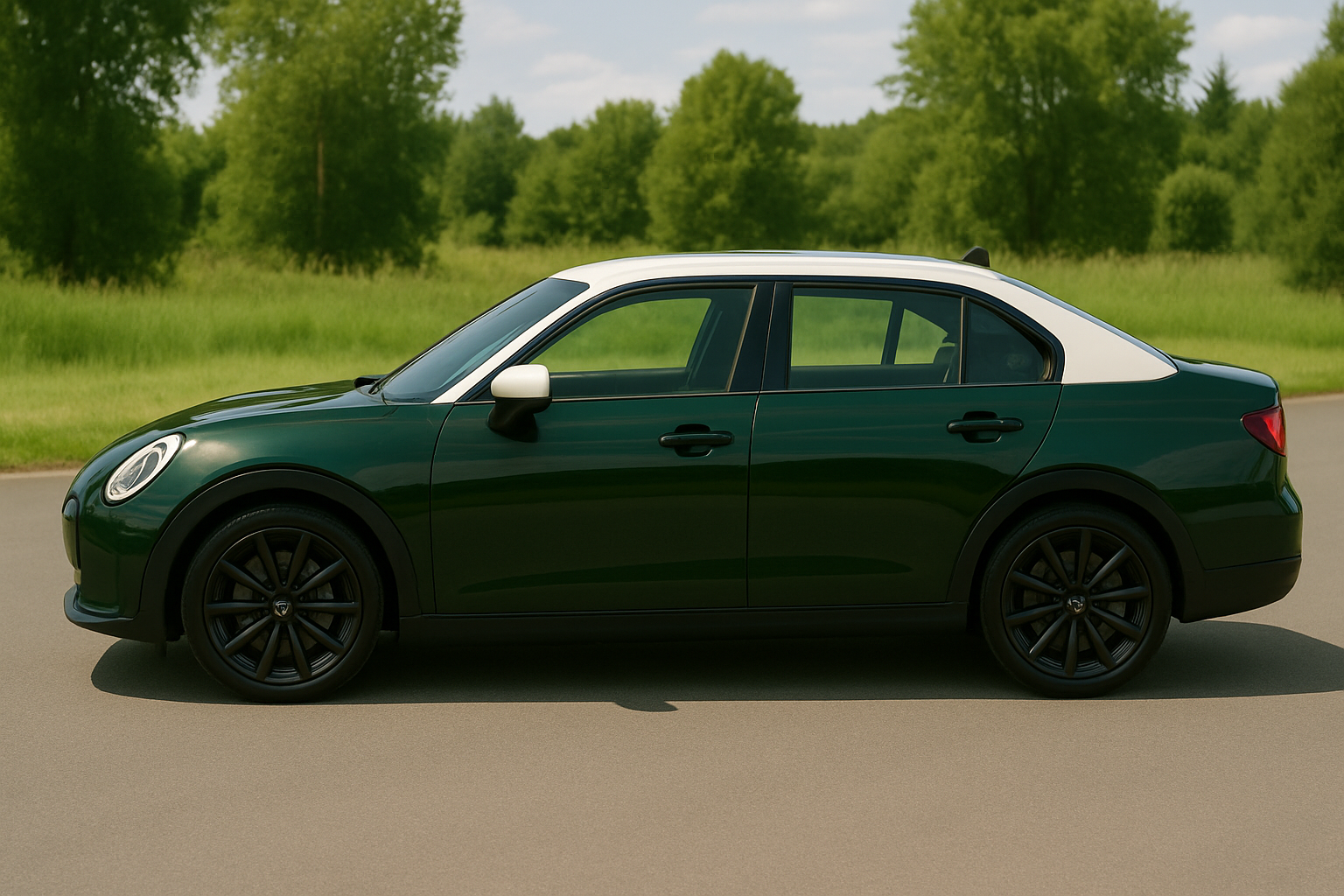
The face is unmistakably MINI and almost undistinguishable from its other offerings, namely the Cooper 2- and 4-door models. The large round headlights, a simple grille framed in gloss black, and a short, clamshell hood with a slight power bulge. The British Racing Green paint and white roof add a classic touch, signaling proper continuity with MINI’s heritage. But take a look at the profile view, and you’ll notice how the proportions shift the identity. The longer wheelbase, the stretched greenhouse, and the proper trunk give it an almost European executive-compact vibe, a more playful version that nips at the heels of the BMW 2 Series or Audi A3 Sedan.
Amos Kwon using ChatGPT Image Generator 4o
The stance is balanced, the nose characteristically rounded, and the roofline tapered gently toward a short rear deck. There’s maturity here, a sense that this MINI wants to grow up just a little. If the brand were to pursue this seriously, the styling formula is already there.
From a business perspective, it also diversifies the brand’s reach. BMW, MINI’s parent company, already shares modular platforms across its smaller models. A MINI sedan could ride on the same underpinnings as the upcoming 2 Series Gran Coupe, dramatically reducing development costs. With MINI’s move toward electrification, an electric sedan variant could also appeal to buyers seeking efficiency in a compact luxury package, especially in markets like Europe and China, where small sedans remain a popular choice.
How it might fit in the lineup
Amos Kwon using ChatGPT Image Generator 4o
Right now, MINI’s U.S. lineup consists of the Cooper hatch and convertible, the slightly stretched 4-door Hardtop, Countryman, Countryman SE ALL4, and the upcoming 2026 Aceman EV. All of these are hatchback/crossover-style vehicles, so a sedan would fill an untapped niche for this very unique brand. The maturity and playfulness would combine perfectly in a car like this, and we could see it catering to 30+ young adults who live and commute in the city, those who are growing up but not quite ready for a traditional sedan.
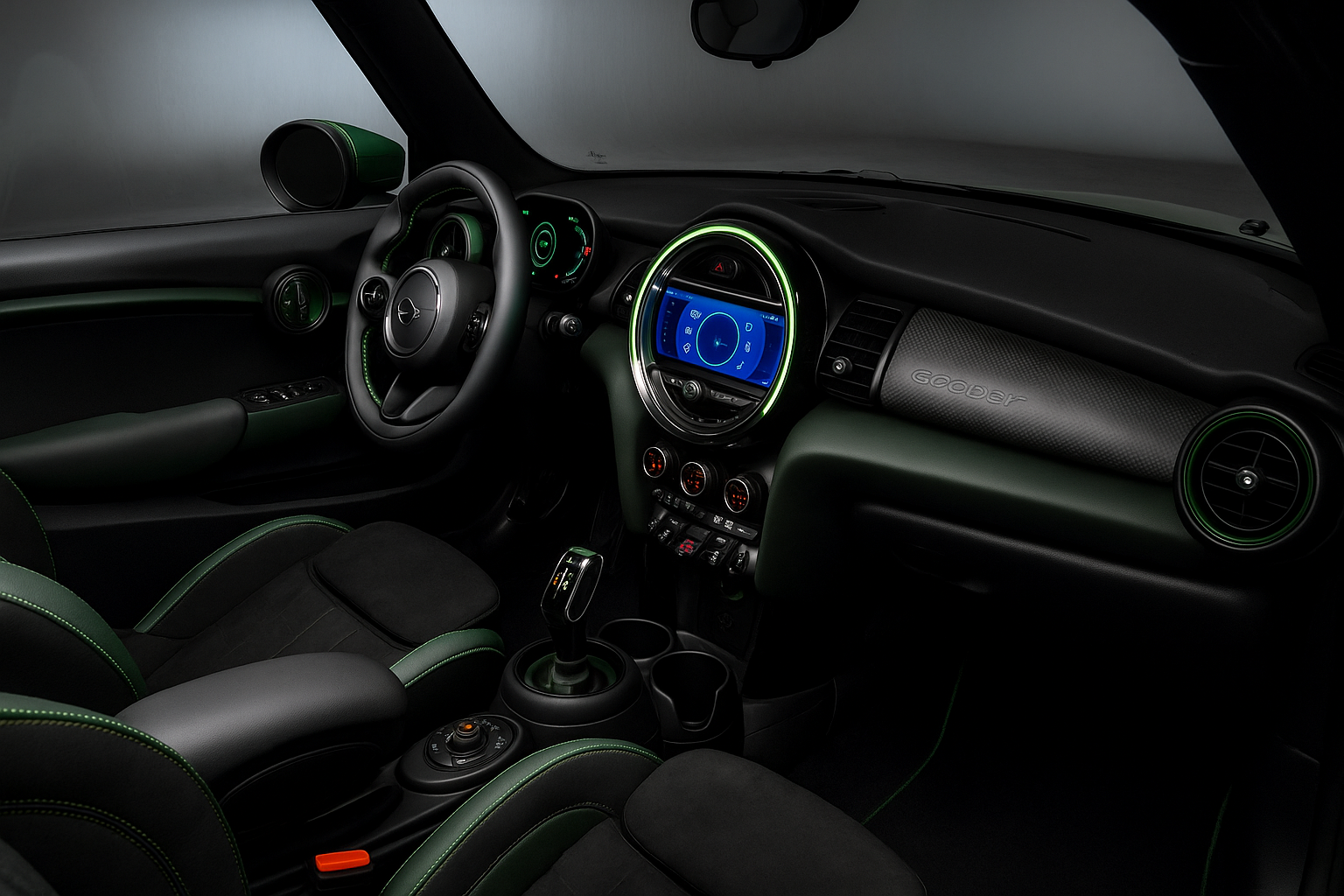
In ICE or even EV form, it could use the existing 2.0-liter turbocharged engine from the Cooper S, producing around 200 horsepower and paired with a dual-clutch automatic. MINI’s engineers are experts at tuning small cars to feel lively, so the sedan could inherit that go-kart handling DNA with added comfort and refinement thanks to its stretched chassis. The interior wouldn’t change much in terms of styling and space. It’s likely that the short trunk would offer around 10-11 cubic feet of cargo space, similar to a BMW 2-Series Coupe.
An evolutionary design language
Amos Kwon using ChatGPT Image Generator 4o
What stands out most in this imagined MINI sedan is restraint. It avoids the over-styled excess that plagues many modern cars. There’s no angry grille, no fake vents, no unnecessary creases. Instead, it celebrates simplicity with the classic MINI oval headlights, minimal surfacing, and black trim bits for that sporty look. The white roof and mirror caps provide contrast without clashing. If MINI’s upcoming redesigns lean in this direction, the brand could carve a distinct visual niche between mainstream compact sedans and luxury subcompacts.
Amos Kwon using ChatGPT Image Generator 4o
Despite the risks, there’s a strong case for this concept. It embodies the brand’s core values of agility, charm, and design-forward individuality, while expanding MINI’s reach. It could capture buyers moving up from the Honda Civic or Mazda3, or down from the BMW 3 Series and Mercedes A-Class. In the EV era, aerodynamics and packaging matter more than ever. A low, sleek sedan makes engineering sense. More importantly, it shows MINI thinking outside the box (2-box, that is).
Final thoughts
The MINI sedan concept might just be a thought experiment, but it’s one that showcases what the brand could become. No, sedans aren’t hot, but they continue to be desirable. Just take a look at how much R&D has gone into the current Camry, the next Corolla, and the very successful Honda Accord and Civic. In a market saturated with high-riding vehicles, a small, beautiful, dynamic sedan could be refreshingly contrarian, exactly the kind of move that once defined MINI.
About the author
Amos Kwon
Contributing Writer, Autoblog