
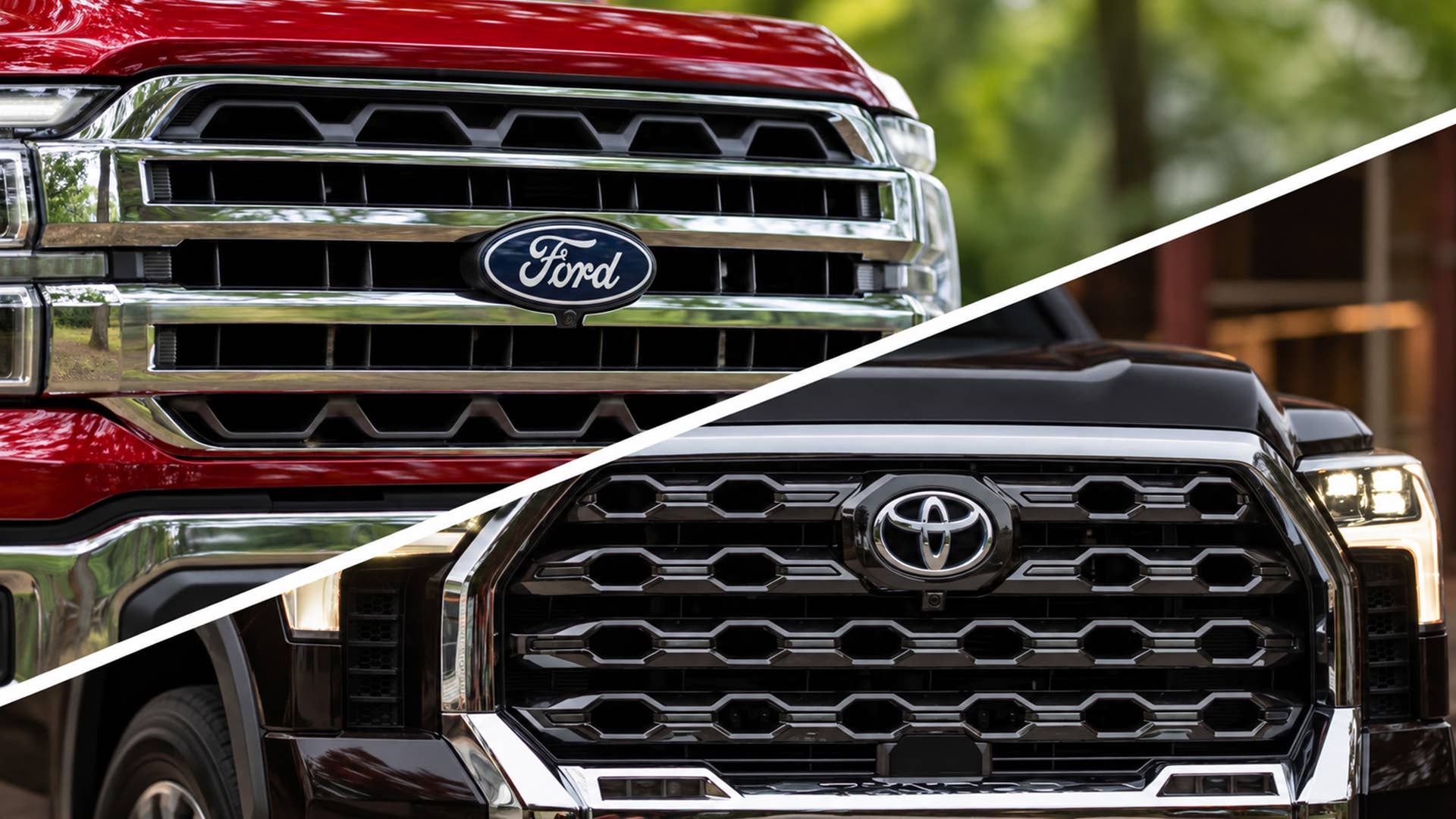
Not every pickup truck is used purely for off-roading, hauling heavy equipment, or as a work vehicle. Many American truck buyers prefer a trim that offers all the luxuries and tech you can find in an equivalent sedan or SUV. For this group of buyers, the Ford F-150 King Ranch and Toyota Tundra 1794 Edition represent two compelling options. They’re not quite range-topping models, but they come with far more equipment and nicer finishes than lesser trucks. Each one is also designed around a similar Western ranch theme. This, together with their near-identical prices, makes them direct competitors, but which one promises a better luxury pickup experience?
Pricing and Positioning
Ford
Toyota
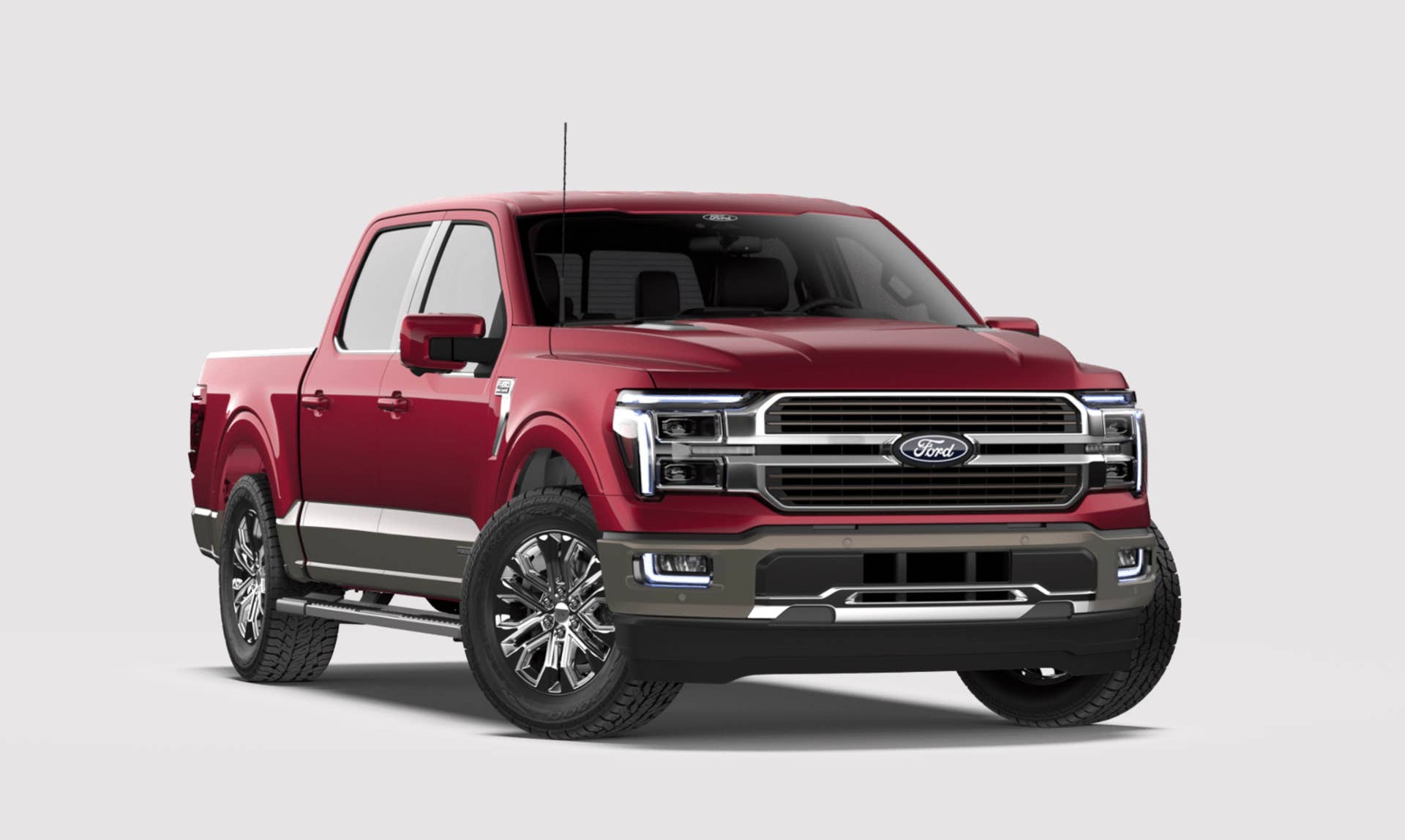
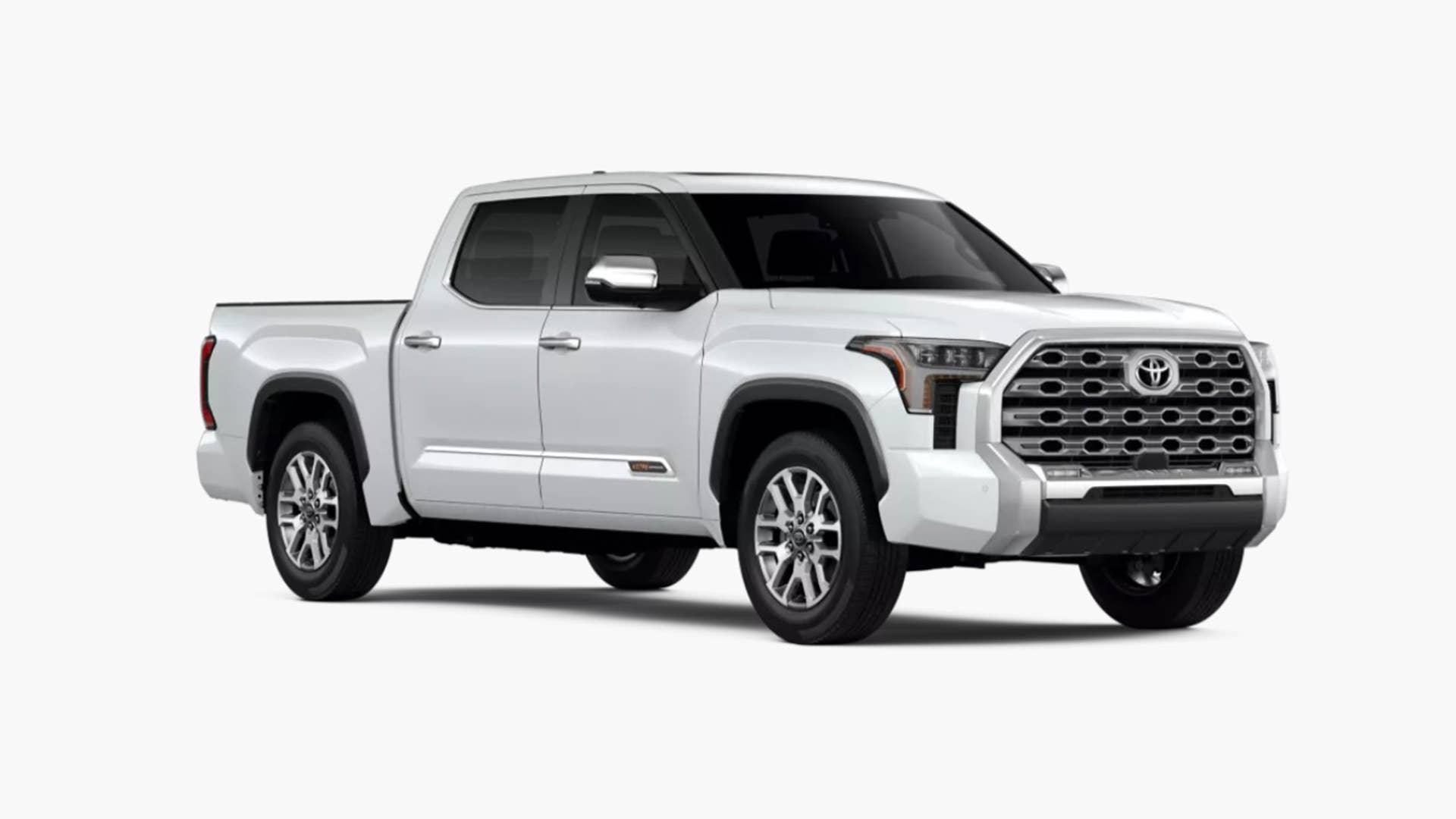
The King Ranch and 1794 trims sit near the top of the F-150 and Tundra lineups, respectively. In the Ford F-150 range, only the Platinum and Raptor cost more than the King Ranch. The Toyota Tundra 1794 is positioned below the TRD Pro and Capstone, but above more basic trims like the SR5 and Limited. Here’s how much each model costs.
| Model | 2026 Base Price |
| Ford F-150 King Ranch | $65,825 |
| Toyota Tundra 1794 | $64,380 |
The Tundra is $1,445 cheaper and it also has a lower destination charge ($2,195 to $2,795). Taking the destination charge into account too, the Toyota costs $2,045 less than the equivalent Ford. Further bolstering the Tundra’s value proposition is its better resale values; the Ford loses a lot more of its value after five years.
Ford F-150 Vs. Toyota Tundra: Design and Dimensions
Ford
Toyota
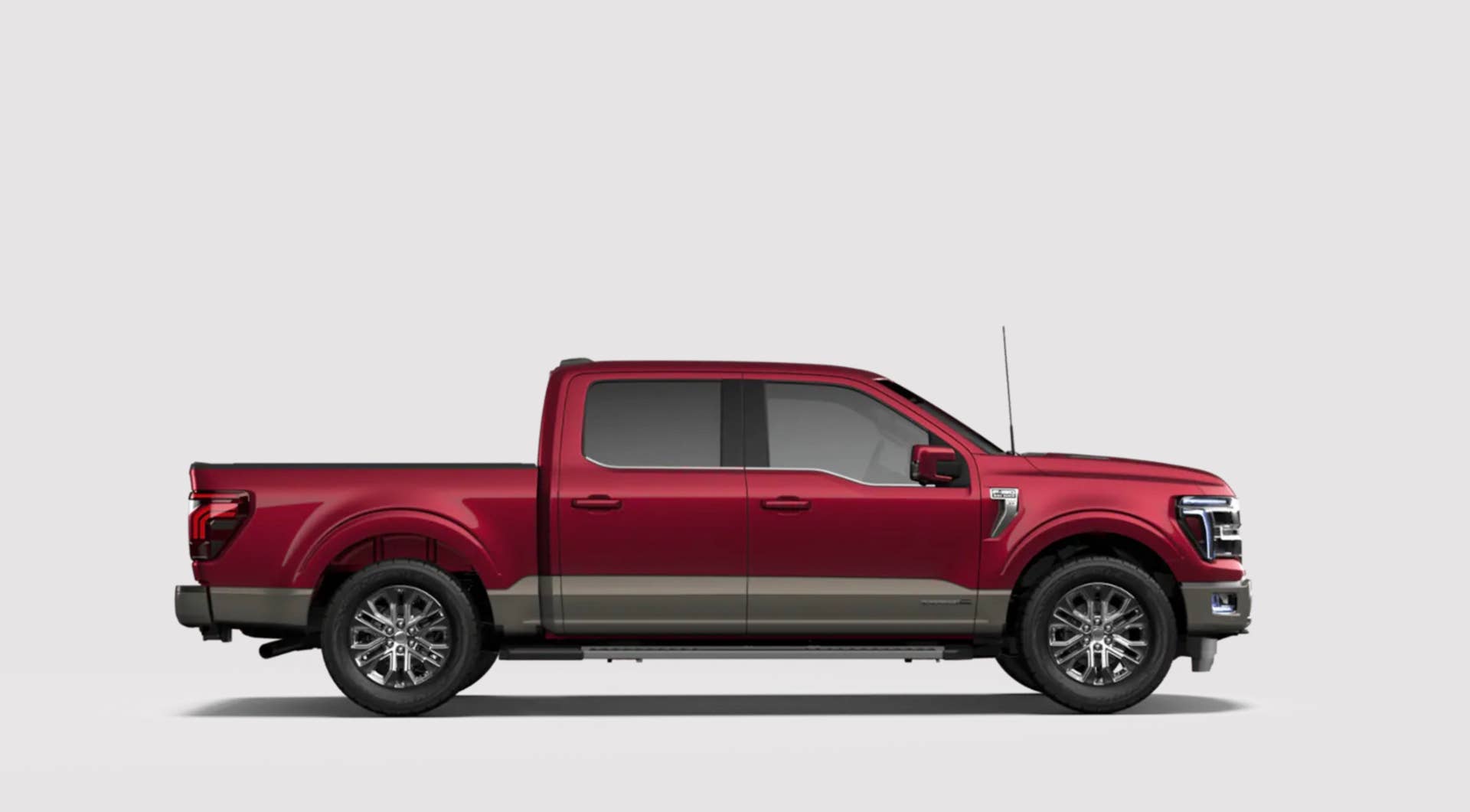
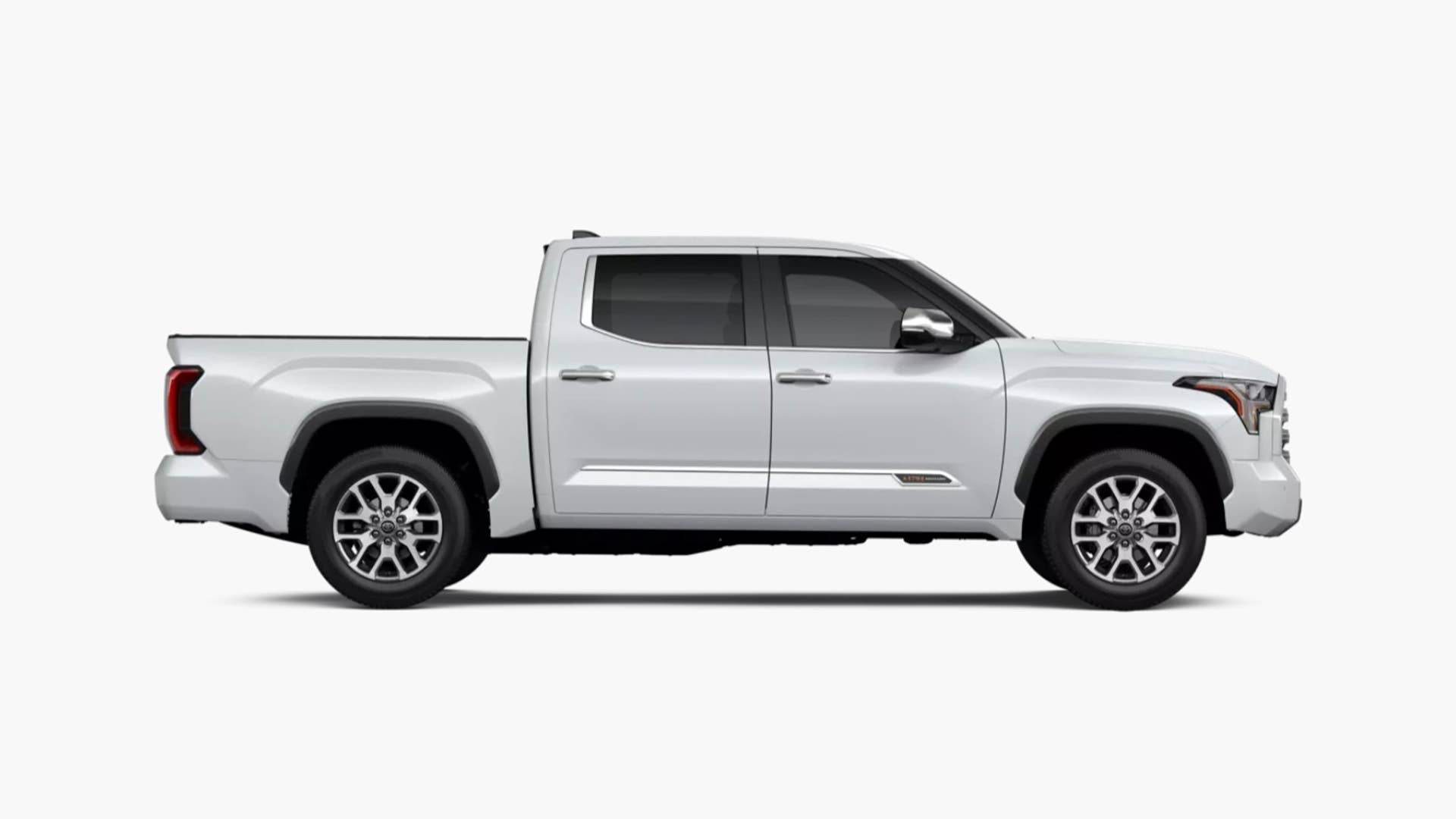
At this point in their lifecycles, there are no surprises when looking at each pickup. Both have familiar yet imposing designs, and these upper trim levels feature plenty of brightwork, lending them a more premium air. Both pickups are available with two bed sizes and only in Crew Cab guise (known as the SuperCrew for the Ford and CrewMax for the Toyota).
| Ford F-150 SuperCrew | Toyota Tundra CrewMax | |
| Length | 232–243.8 inches | 233.6–245.6 inches |
| Wheelbase | 145.4–157.2 inches | 145.7–157.7 inches |
| Width | 79.9 inches | 80.2 inches |
| Height | 75.4–77.5 inches | 78 inches |
| Base curb weight | 4,844 lbs | 5,160 lbs |
The Toyota is a slightly larger and heavier vehicle, but both have a substantial footprint. The F-150 King Ranch’s appearance is elevated by two-tone paintwork, 20-inch chrome-like PVD wheels, and a chrome finish for the side mirrors and grille surround. The Tundra 1794 rides on stylish 20-inch machined-finish alloy wheels.
Interiors and Equipment
Toyota
Ford
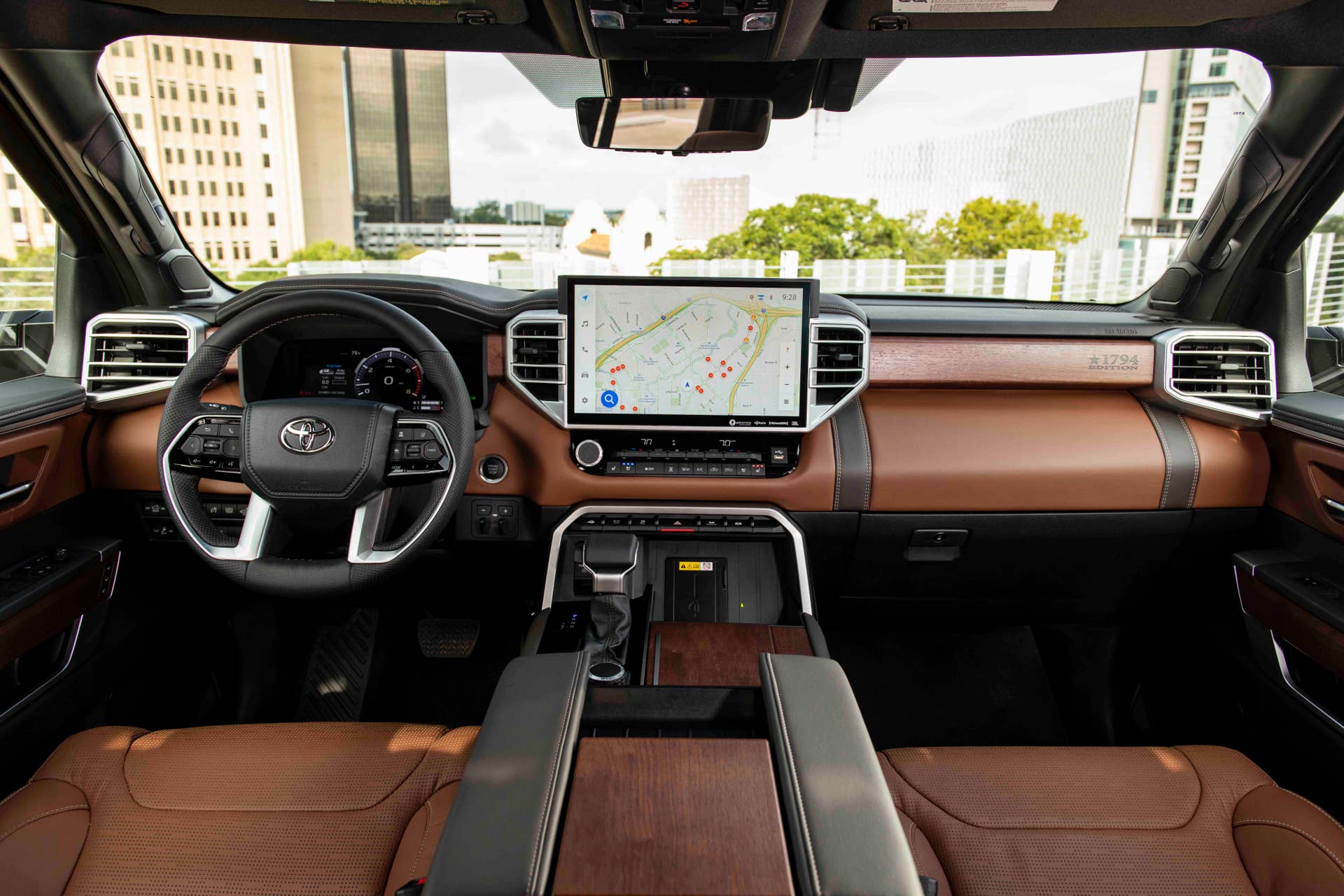
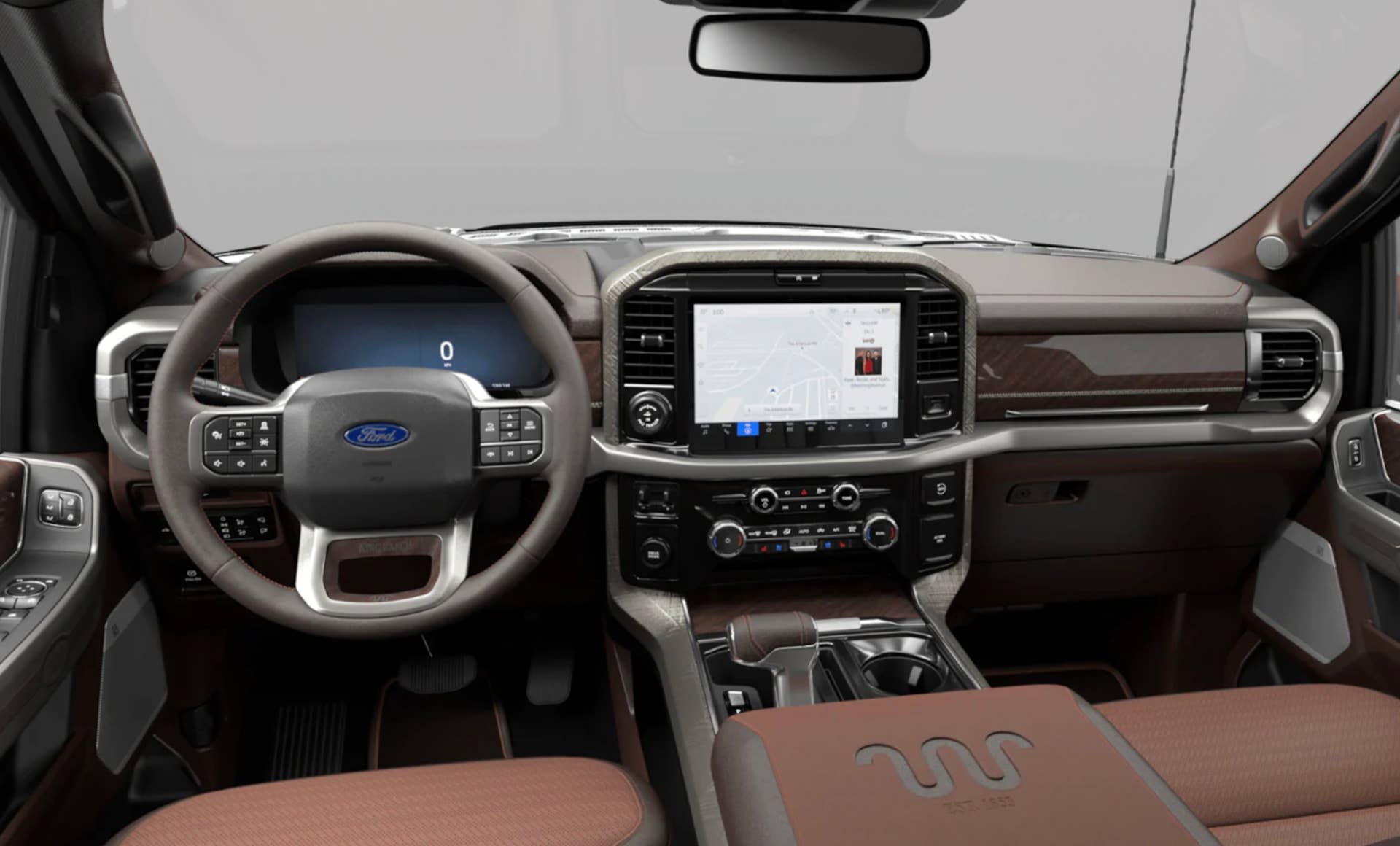
Inside, it’s obvious that these are not stripped-down pickups. Both vehicles feature large cabins with exclusive, plush materials that are unique to these trim levels.
The F-150 King Ranch comes with leather-trimmed seats that are power-adjustable for both front occupants. These are stylish King Ranch leather bucket seats with a Java color scheme and exclusive detailing. Together with the Mesa leather-wrapped steering wheel and genuine wood interior inserts, it all feels appreciably upmarket.
The Tundra 1794 Edition is also inviting. It has Saddle Tan leather, with the warm color extending to the door panels and dashboard. Like the Ford, the Toyota has powered front seats, and the American walnut wood-grain inserts are attractive. Here’s a look at the standard and optional features for these trucks.
| Ford F-150 King Ranch | Toyota Tundra 1794 Edition | |
| Heated/ventilated front/rear seats | S | S |
| Power-adjustable front seats | S | S |
| Heated steering wheel with power adjustment | S | S |
| Dual-zone automatic climate control | S | S |
| Touchscreen | 12 inches | 14 inches |
| Digital driver’s display | 12 inches | 12.3 inches |
| Sound system | 8-speaker B&O | 12-speaker JBL |
| Moonroof | S (twin-panel moonroof) | S (panoramic power roof) |
| Wireless phone charging | S | S |
| Heads-up display | O | O |
| Camera system | Rearview | Surround-view camera |
Equipment levels are largely comparable, with the Toyota having a slight lead in display sizes, but that shouldn’t be a deciding factor. We expect the majority of owners to be pleased with the amount of space and features offered by these trucks.
Performance, Powertrains, and Reliability
Ford
Toyota
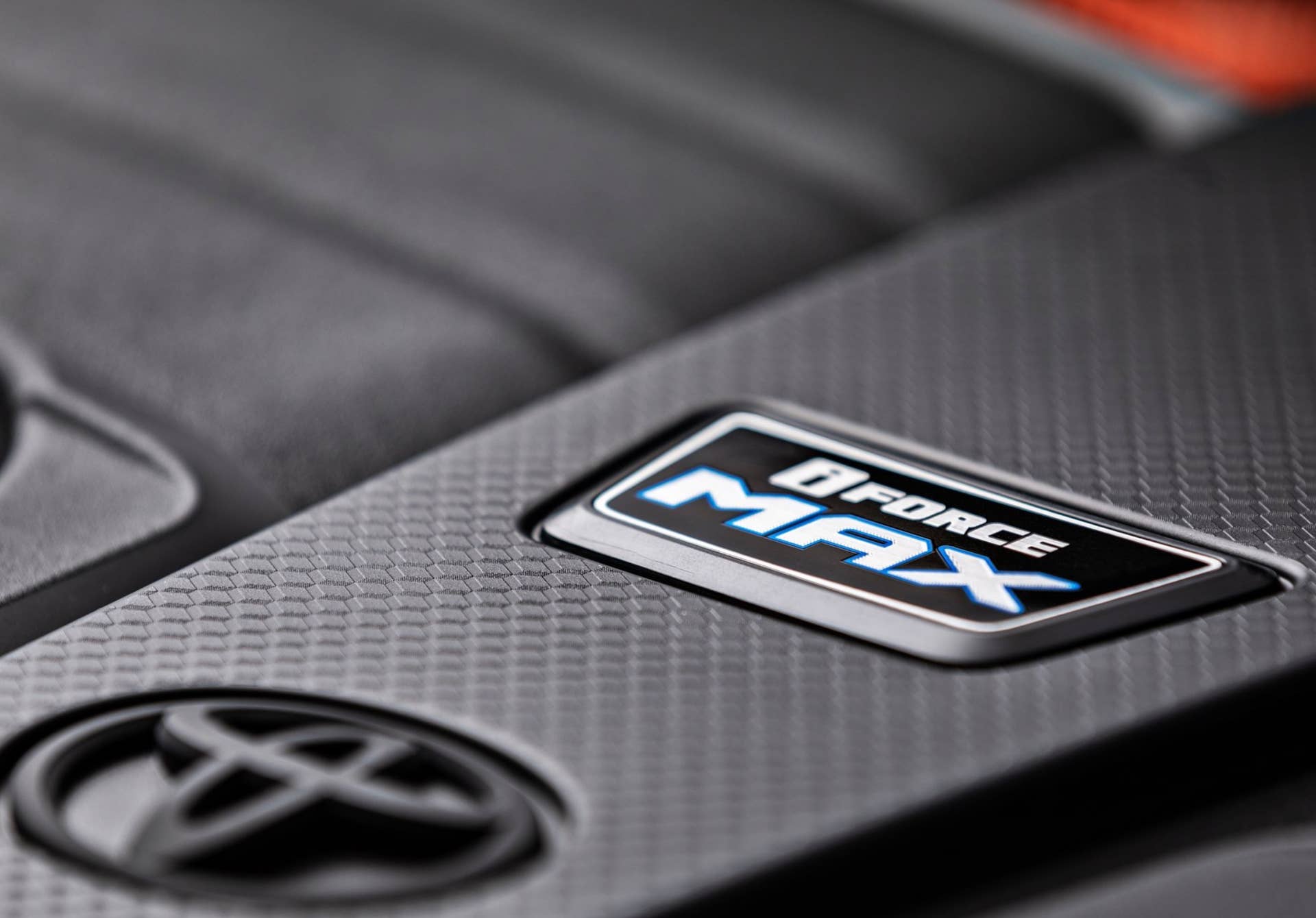
The similarities continue in this department. Both trucks are available with a turbocharged V6 engine as standard, with an optional hybrid version, too.
| F-150 V6 | Tundra V6 | F-150 Hybrid V6 | Tundra Hybrid V6 | |
| Engine | 3.5L Turbo V6 | 3.4L Turbo V6 | 3.5L Turbo V6 Hybrid | 3.4L Turbo V6 Hybrid |
| Horsepower | 400 hp | 389 hp | 420 hp | 437 hp |
| Torque | 500 lb-ft | 479 lb-ft | 570 lb-ft | 583 lb-ft |
| Drivetrain | RWD or 4WD | RWD or 4WD | RWD or 4WD | 4WD |
| Maximum towing capacity | 13,500 lbs | 11,310 lbs | 11,200 lbs | 11,020 lbs |
| Transmission | 10-speed automatic | 10-speed automatic | 10-speed automatic | 10-speed automatic |
| EPA rating (city/highway/combined) | 17/25/20 mpg (RWD) | 18/23/20 mpg (RWD) | 23/25/24 mpg (RWD) | 19/22/20 mpg |
Power and performance are a close match between these two pickups; Ford has the slight edge among non-hybrid models, while the Tundra Hybrid has more power and torque than Ford’s equivalent. The main difference relates to towing, as the F-150 can tow over 2,000 lbs more than the Tundra. Ford’s hybrid is also more efficient.
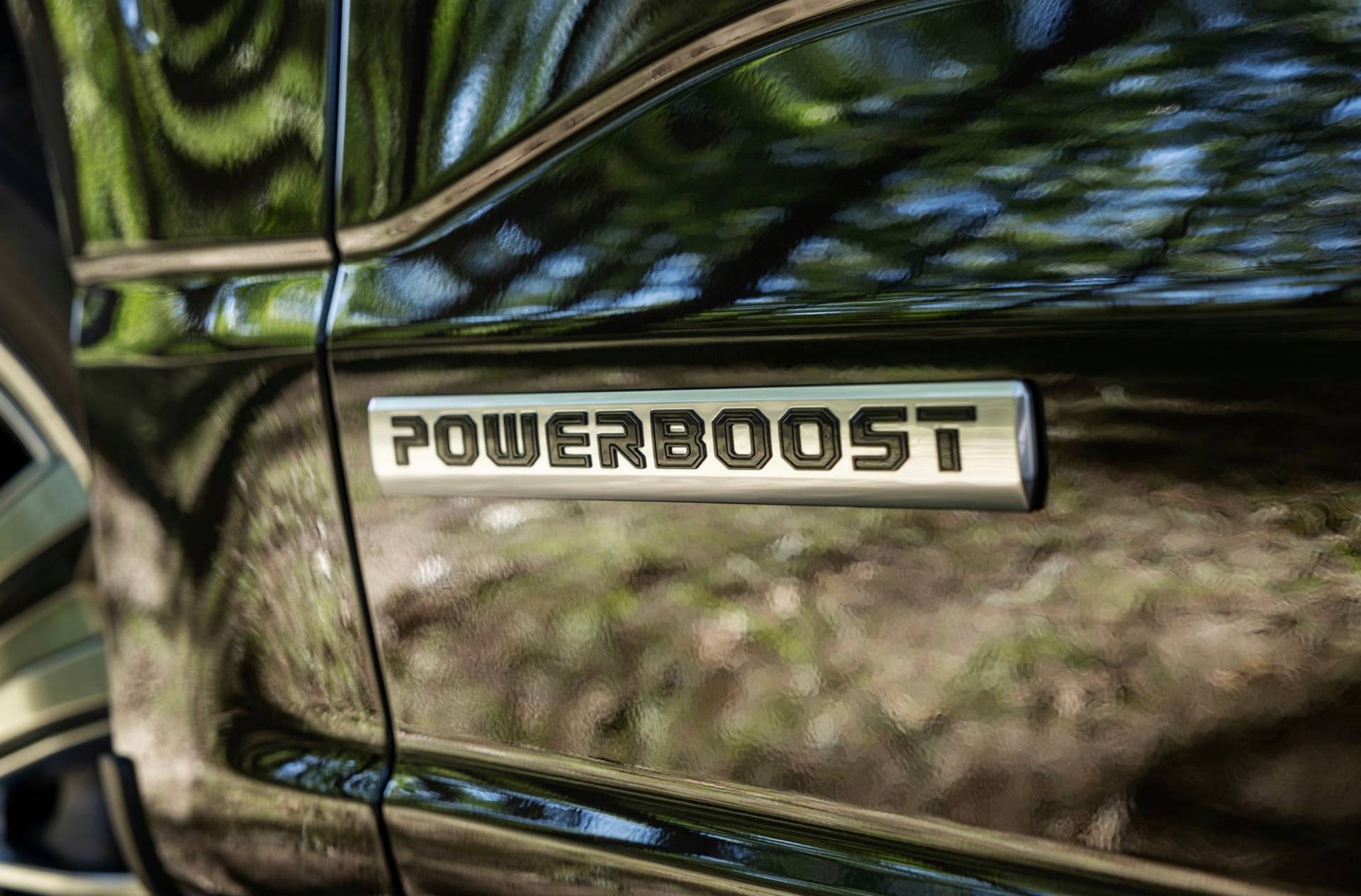
In hybrid form, these trucks are properly quick. According to Car and Driver testing, the Ford F-150 PowerBoost hybrid needs just five seconds to reach 60 mph. The Toyota reaches the same mark in 5.6 seconds.
Both trucks have a settled ride without quite surpassing the Ram 1500 in that regard. While hybrid options provide genuinely rapid performance for any vehicle, let alone full-size pickups, we did notice the Toyota’s 10-speeder was occasionally slow to downshift. That’s a small criticism, though. These are both trucks you can easily live with on a day-to-day basis, with the major limitation being their sheer size in tighter spots.
Toyota Tundra Vs. Ford F-150 Reliability
Ford
Toyota
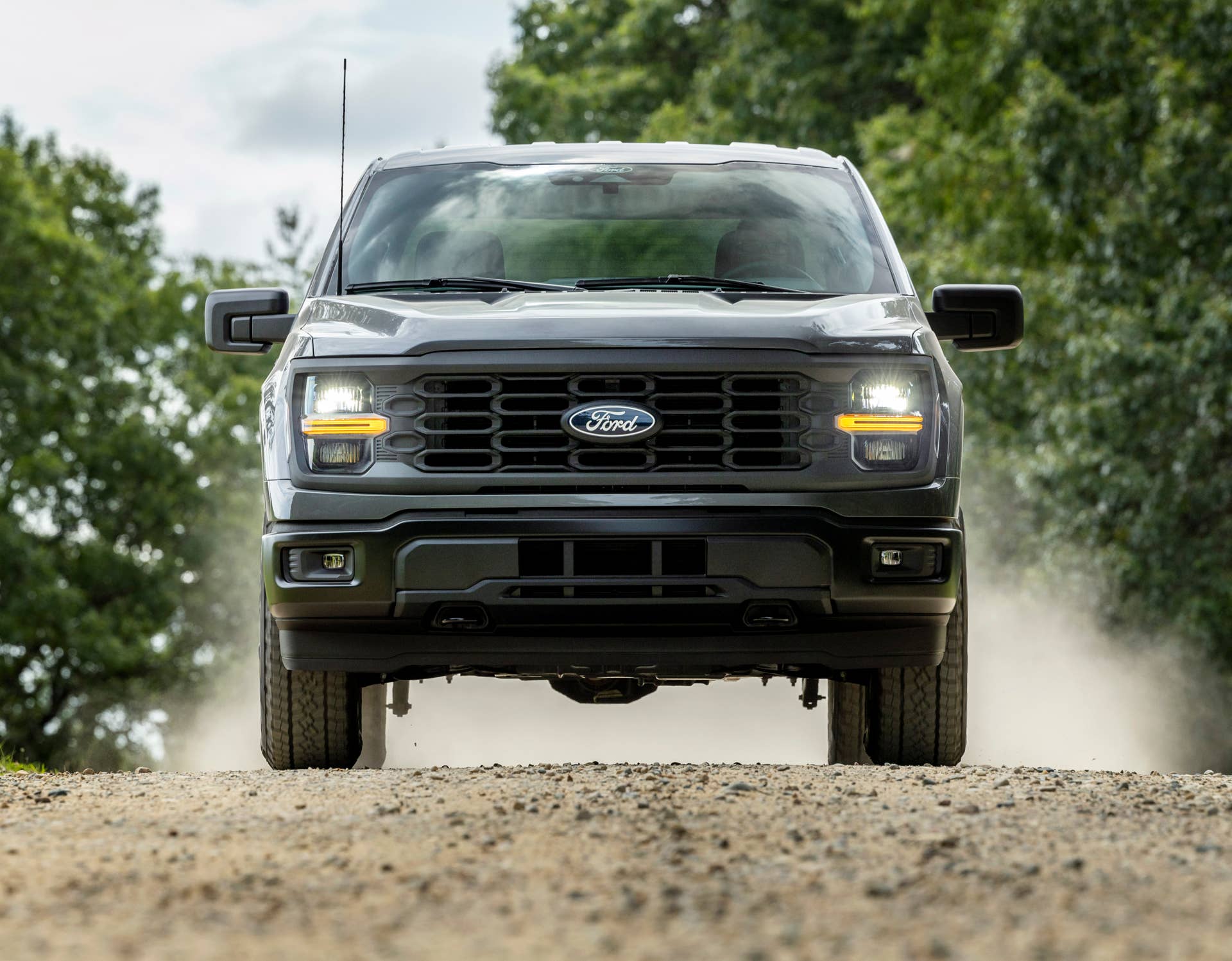
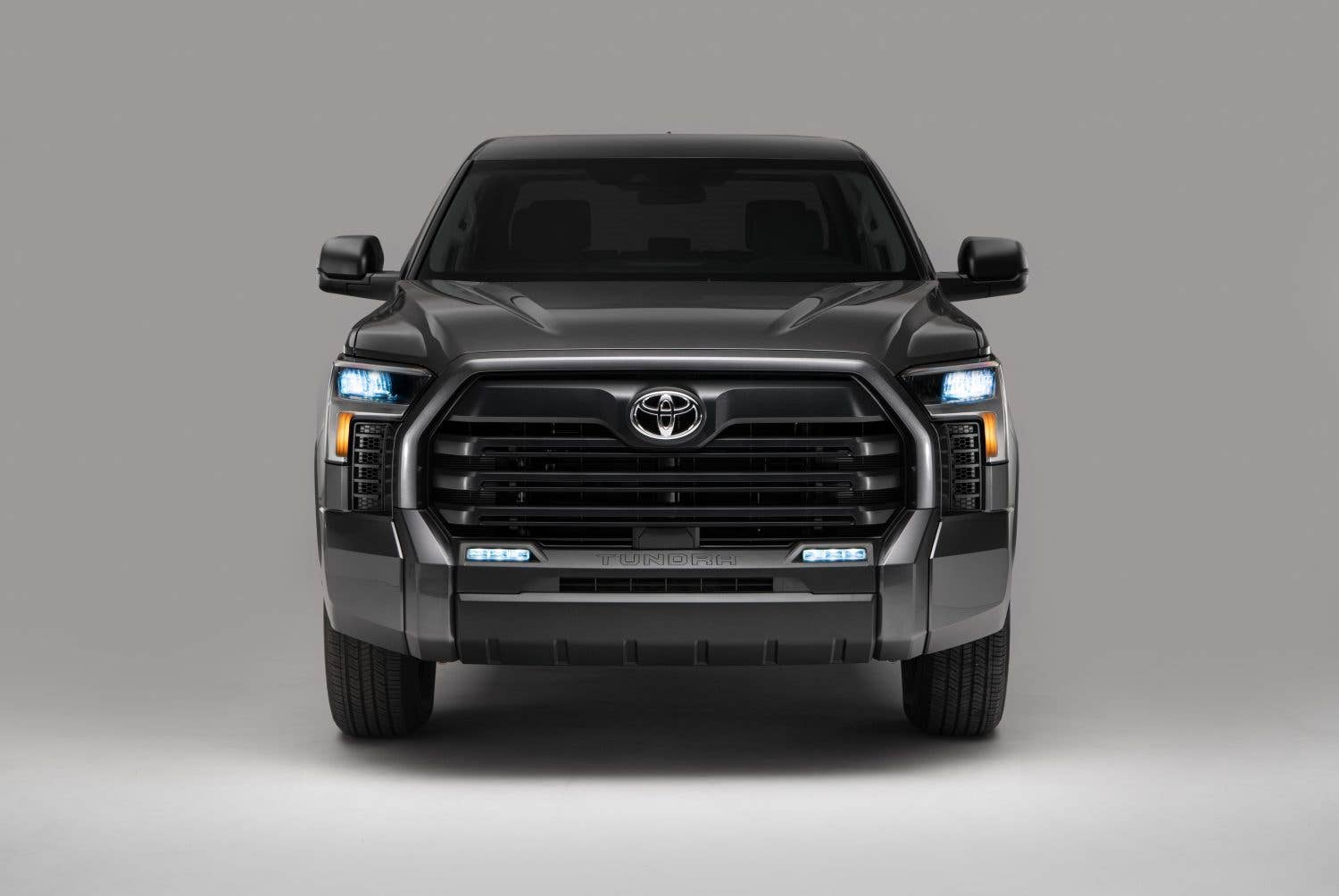
Both trucks have strong quality and reliability ratings from JD Power. The 2026 F-150’s score is 87/100, while the Tundra’s is 82/100. However, there are some key points worth noting. The 2026 F-150 has eight recalls to its name for various issues, including one for a fuel tank that could leak or detach.
While the 2026 Tundra has not been recalled once, the non-hybrid V6 has been implicated in previous recalls due to potential engine failure. Machining debris left in the engine during production could lead to rough running, knocking noises, and a lack of power. It’s one of the most serious reliability issues facing either pickup.
The Toyota’s Value Advantage

Toyota
The $2,045 lower price for the Tundra 1794 Edition means you can match the Ford’s price while still gaining a few extras. One possibility is the load-leveling rear height control air suspension, which costs $1,045 and provides another layer of refinement. There’s also the Tow Tech Package with wireless trailer cameras ($850), power running boards ($1,350), and Toyota’s hard tri-fold tonneau cover ($1,350). The $2,045 can also be used to fit an array of styling and storage accessories.
Final Verdict
Toyota
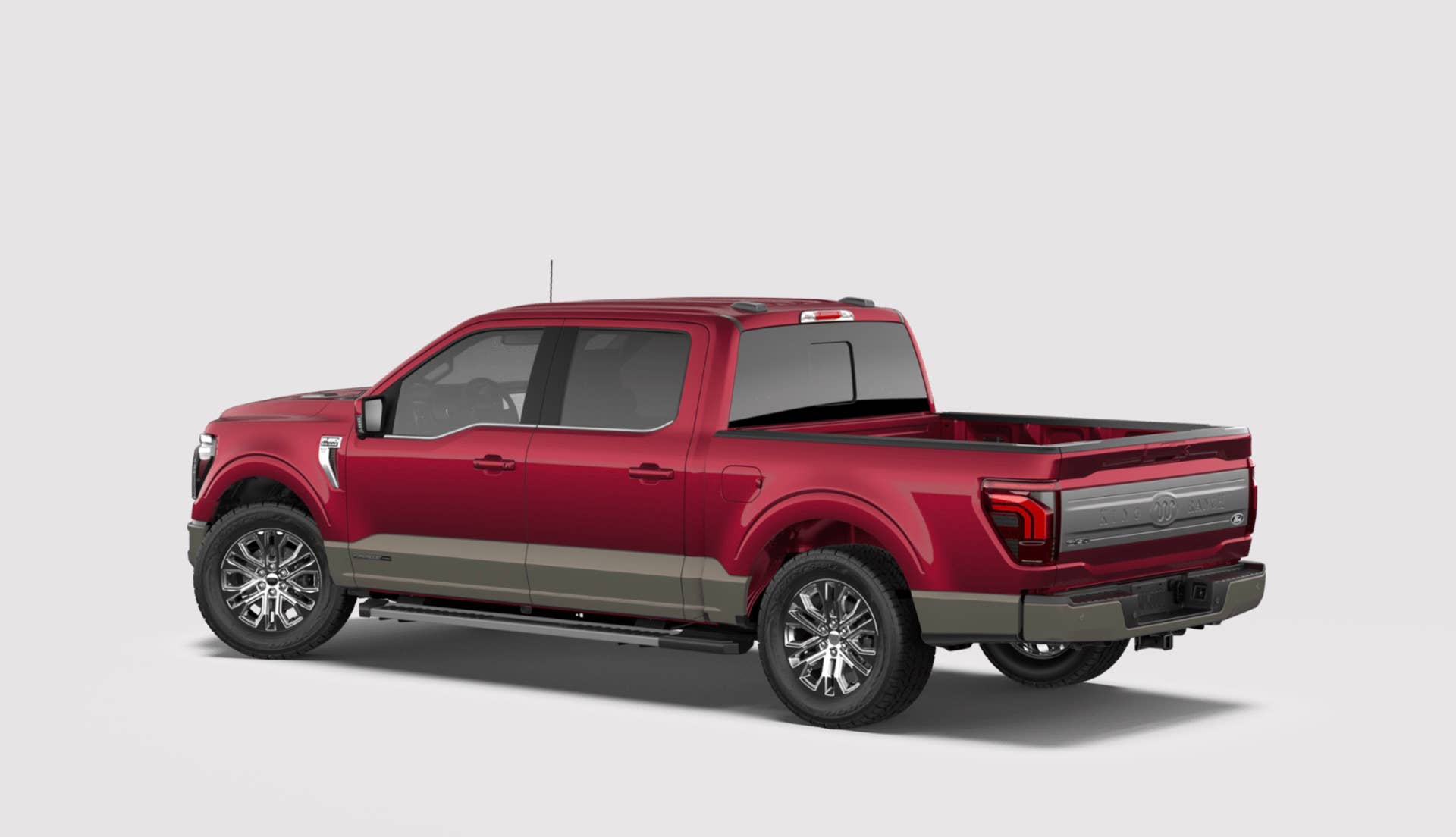
Ford
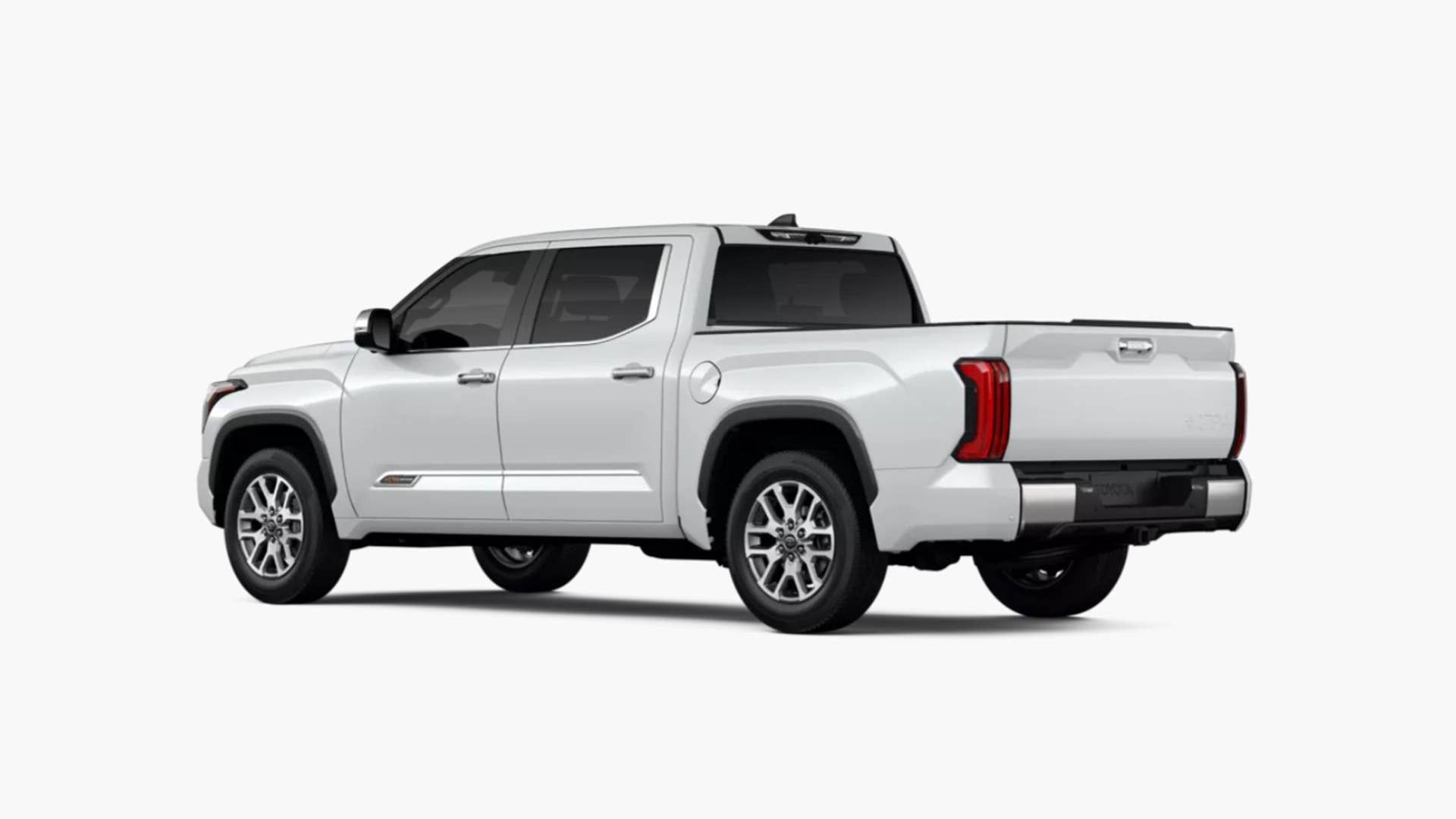
The Ford F-150 King Ranch and Toyota Tundra 1794 Edition are a far cry from the basic, noisy, and underpowered pickups many of us grew up with. Without sacrificing the towing and hauling capabilities expected of full-size models, they also pamper occupants with smartly trimmed cabins loaded with features. The hybrid variants are a highlight, being particularly quick.
The Ford leads for towing, performance, and hybrid efficiency. The Toyota is cheaper to buy and will retain much more of its value after five years, but the non-hybrid’s engine troubles are concerning. It’s also not as efficient as its rival.
It’s a close call, but our recommendation is the Ford, which is an especially well-rounded pickup in hybrid guise.
About the author

Karl Furlong
Senior Editor, Autoblog