
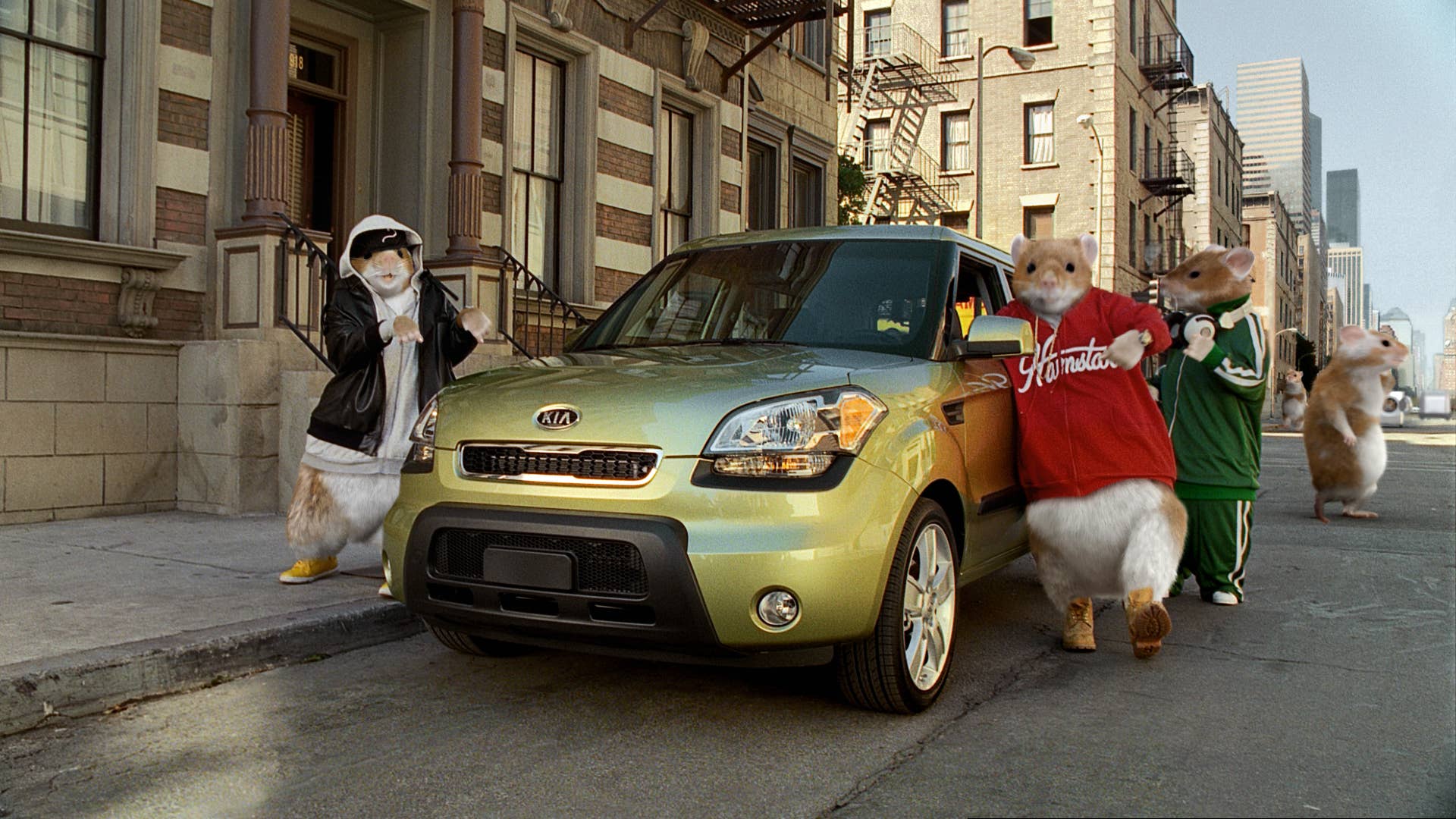
This car’s advertising is part of its legacy.
This week, the automotive world bid farewell to the Kia Soul after 16 years in production. In a statement released on October 6, the automaker confirmed that it will not return for the 2026 model year, marking the end of an era for a car that dared to be different when it was launched. In 2009, the Soul launched amid a wave of quirky and fuel-efficient small cars that emerged to compete for the dollars and attention of young city dwellers and eco-conscious buyers. In turn, the humble Kia earned fans for its unique design and helped push the South Korean brand’s presence in the United States.
“The Soul was one of the cornerstones in Kia gaining a foothold in the United States, and this one-of-a-kind vehicle – and the marketing supporting it – helped Kia move to where it resides today,” said Eric Watson, Vice President, Sales, Kia America.
As someone who spent countless hours and cumulative days in front of a television set during their formative pre-adolescent years, I remember the Kia Soul for being a bold car that was backed by an equally bold advertising campaign. I have never owned a Kia Soul or known anyone who has within my immediate circle of family and friends. Still, the memory of these quirky, boxy little cars is forever etched in my mind because of a clever advertising campaign that didn’t feature any spokesperson, apart from a few cute, human-sized hamsters.
Commercials like these show how advertising can forge lasting emotional connections between consumers and products. In the automotive industry, iconic commercials have transcended from being mere marketing vehicles to becoming actual cultural touchstones, where storytelling, music, and visual spectacle combine to not only entertain viewers but also cement the idea of a specific brand deep within their consciousness.
When they’re done right, a car ad becomes more than just a car ad that showcases features or a competitive price tag; they define a particular vehicle or brand as symbols of an aspirational lifestyle and a specific set of values. Ultimately, through advertising, certain models or brands can become synonymous with identity, whether you like going on adventures, value time with your family, or simply want the next best thing in automotive technology. With just 30 to 60 seconds of airtime on millions of TV screens across the country, a car or car brand can be defined forever.
Thousands of television commercials have aired throughout our lifetimes, but as car enthusiasts, a truly good ad sticks out. These commercials may or may not have driven us to dealerships, but they left an impression because they personified something particularly unique about the cars they advertised.
“How It Starts” – Ford Mustang (2012)
If there is one advertisement that has changed my perception of a particular car, it would be this 2012 ad for the 2013 Ford Mustang. In this one-minute spot that seemed to air everywhere at the time, a silver Mustang is shown cruising down a city street, while three distinctly different people: a stylish and attractive woman, a muscular dude in chef’s whites and a hipster atop a fixed gear bicycle pause to notice the car as it passes, where the car changes to reflect aspects of their distinct styles.
However, when it approaches the corner, a little girl in pink ballerina clothes lays eyes on the mustang, where it briefly turns pink before it turns into a black, roaring Shelby GT500. The Shelby slows down long enough for the girl to look at her reflection, where it shows her “true self” in a dark Black Swan-esqe getup before the Mustang speeds off.
The visuals and the tagline “everyone has an inner Mustang” helps convey the idea that anyone and everyone, deep down can be a Mustang person, whether they be a hardened, tattooed “badass” or a chic fashionista. Additionally, the framing of this ad effectively shows off the Mustang’s diverse model range, whether it be the red California Special reflected in the chic fashionista, the white GT with tribal tattoo graphics, the neon green Boss 302 admired by the fixed gear-mounted hipster, or the black Shelby GT500 with black stripes reflected in the ballerina; there is something for everyone, whether they are or arent a car enthusiast or not.
“Ball Bearing” – Lexus ES300 (1992)
Thanks to the internet, I have grown a lot of appreciation for ads that aired way before I was old enough to know what was on television. But apart from the infamous “champagne glasses” commercial for the LS400, one of my favorite Lexus ads from the same is the “ball bearing ad” for the ES300. Aired in 1992, Lexus placed and let a metal ball roll along the edges of various body panels of the car, including the doors, hood, grille, and tail lamps without falling from the car; an unusual demonstration of its persistent build quality at a time when some cars came with panel gaps that could vary very widely.
The proverb “imitation is the sincerest form of flattery” suggests that one who replicates someone or something’s best qualities or actions shows a genuine form of admiration for that person or thing. In the early 90s, Lexus commercials were the subject of copycat ads by more mainstream consumer-facing brands, but this particular one resonated within pop culture. In 1993, Nissan copied the ad to show off the fit and finish of their less expensive Altima, which debuted that year. The same year, the folks over at Saturday Night Live spoofed the ad in their Chameleon XLE sketch, where a metal ball is placed on the car’s rusted-out fender and falls through a rust hole in the hood to drive home that the car was intentionally made to look like a hooptie. The ad was even referenced in a Dirt Devil ad for a vacuum.
“George Washington” – Dodge Challenger (2010)
First aired in conjunction with the United States’ group stage matchup against England at the 2010 FIFA World Cup (which ended in a 1-1 tie), Chrysler (now Stellantis) cooked up a hotly patriotic presentation that suggested that George Washington would have driven a 2010 Challenger if modern cars existed during the Revolutionary War.
The ad, which portrays a skirmish between the Continental Army and a group of British Redcoat soldiers, shows the soon-to-be first president driving onto the battlefield leading a trio of black SRT8 Challengers after a British spotter warns them of the incoming army’s presence. Though the idea of such a situation would sound ridiculous for historical accuracy’s sake, FCA’s placement of the nation’s first leader in the Hemi V8-powered muscle car is a bold statement of the brand’s American identity; a trait that Stellantis brands continues to exclaim in advertisements to this day.
Final Thoughts
As the Kia Soul rides off into the sunset, it serves as a reminder of how excellent advertising can have on our impression of certain cars and brands. Ads like the ones mentioned not only showed off particular cars, but they helped forge emotional connections between consumers and brands. In turn, cars like the Soul and the Mustang have transcended their role as mere modes of transportation; they’ve become symbols of a kind of lifestyle we aspire to.
Ultimately, our favorite car ads become our favorites because of their ability to be remembered long after they first air. In a world where we are bombarded with advertisements that overtly and covertly compete for our valuable seconds of attention, those that succeed in driving home a compelling narrative tied to a car’s spirit will inevitably leave a lasting impression.
About the author

James Ochoa
Senior Editor, Autoblog