

We know that we should change our oil, but why does your instruction manual stipulate both a mileage limit and a time limit, and why is that time limit usually a year? If you only have to change your oil every, say, 10,000 miles according to the vehicle manufacturer, but you only drove 6,000 miles that year, is it okay to let it sit until the proper mileage, or should you stick to that one-year hard limit?
A situation many of us can relate ot is finding that lovely ’80s or ’90s used car that we’ve been looking for, and finding that it has a surprisingly low mileage recorded. You go to the trouble to check the service booklet and stamps, you check that the mileage and service stamps correspond, you look the car up on Carfax or AutoCheck, you do an NICB VINCheck to determine its history, and you even run an NHTSA SaferCar or Odometer Fraud Division check to make sure that recorded mileage isn’t too good to be true. The only problem is that the car appears to have gone two or three years between oil changes, because the owner changed the oil according to the stipulated mileage interval, not annually. Is this a problem?
One of the Top Car Maintenance Mistakes: No Annual Oil Changes
The short answer is yes, it is a problem. One of the most common car maintenance mistakes is not changing the oil annually. You may think it’s no big deal if the car only travelled 4,000 miles that year, and that the oil is just fine sitting there until the appropriate mileage comes up, but that’s not the case. Oil doesn’t just age from mileage and usage, but also from time, and a 3-year gap between oil changes on an otherwise perfect used classic may spell lots of under-the-skin trouble, so you may have to reconsider that purchase.

Getty Images
What Does Time Do to Your Engine Oil?
When oil sits for years without being changed, the following happens to it:
- Condensation and moisture buildup. If a car isn’t driven much and/or many of its trips are short, the engine never warms up properly, which not only increases wear, but condensation that forms in the engine and crankcase never gets a chance to properly heat up and boil off, so it tends to build up in your engine oil, compromising the oil’s lubricating properties and degrading it.
- Additive depletion. Modern oils contain additive packages comprising antioxidants, anti-wear agents, dispersants, and detergents that help the oil do its job and protect the metal surfaces in the engine. These additives decompose, neutralize, and break down over time, losing their effectiveness.
- Oil thickening and oxidation. Given enough time, the base oil slowly reacts with oxygen in the air, which changes its composition and causes it to thicken and become darker, encouraging varnish formation and gumming up your engine.
- Varnish and sludge formation. Following on from the previous point and additive depletion, the oil loses its dispersive properties, which are meant to keep impurities suspended in the oil. As a result, microscopic particles of dust, soot, and oxidized particles fall out of suspension and settle in the oil pan as a thick sludge, coating surfaces with a varnish that can block oil passages, clog the oil-pickup tube, and lead to low oil pressure and engine damage.
- Acid formation. When the above-mentioned moisture caused by condensation mixes with sulfur residue and combustion byproducts, the oil’s pH drops and it becomes more acidic. The acidic oil eats away slowly at some of the softer metal surfaces and degrades gaskets, seals, and plastic or rubber components in the engine and lubrication system. The main engine crank seal and valve-cover gaskets start to shrink, deteriorate, and leak oil.
Michael Springer/Bloomberg via Getty Images
Nick Oxford/Bloomberg via Getty Images
Will an Engine Flush Help?
An engine flush usually contains harsh chemicals that strip gunk out of the engine, but if it’s done on an engine that’s had the same oil for a long time and has already suffered significant sludge formation and varnish, a flush can break loose fairly large chunks of carbon deposits and hardened sludge. These start to circulate in the oil and can quickly block oil passages, the oil-pump pickup screen, and the oil filter, leading to a loss of oil pressure and resultant terminal engine damage in worst-case scenarios. The impurities can get into every little crevice and block up oil lines, hydraulic lifters, and variable valve-timing systems.
How to Get Varnish and Sludge Out of an Engine
Rather than a chemical flush with aggressive cleaning agents, warm the engine up and drain all the old oil. Replace the filter with a new cheap one and fill the engine up with fresh engine oil. It can be a fairly cheap conventional oil, but a high-detergent oil is better, so long as you make sure it’s of the right viscosity and grade. Now drive the car for a couple of hundred miles or a few weeks and drain the oil again. This process would have gently lifted contaminants and gotten rid of all the suspended gunk.
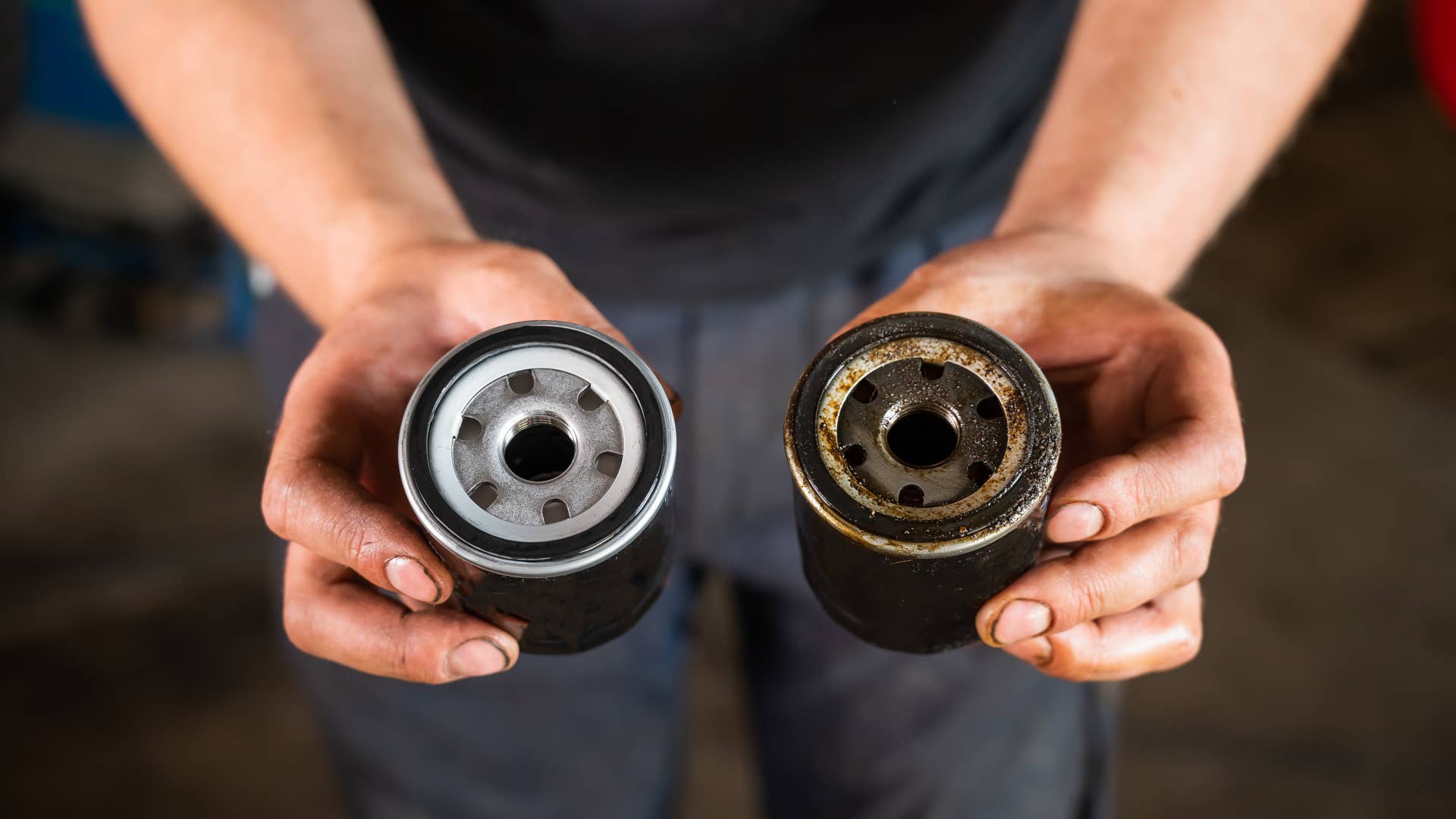
Depending on the state of the oil and oil filter after this short-interval oil change, you may have to do this a few times to properly clean out the engine. After this process is complete, it may be a good idea to check all the seals and gaskets for leaks and replace ones like the valve-cover and sump gaskets. Replacing the latter will also give you a chance to see if there’s any sludge left in the sump. If there is, clean it out and run the cleaning cycle with new cheap oil and an oil filter again before you finally fill up the engine with the proper expensive oil and OEM-quality oil filter.
Final Thoughts
It’s a tragedy that so many great old cars with low mileage suffer engine damage because people don’t keep to one of the most basic maintenance rules – replacing the engine oil every year, regardless of the mileage being covered. It is one of the cheapest ways to make sure that your engine stays in good condition. Don’t fall for the myth that the engine oil is just fine as long as you stick to the mileage intervals. It’s not. It’s one of the most common car maintenance mistakes to avoid, but often not given the importance it deserves.
It deteriorates and causes a lot of problems down the line, trying to get all the gunk out of your engine and fixing all the issues that follow extended oil-change intervals. And if you look at an old banger in great condition and there are 3-year gaps between oil changes, go home, sleep on it, weigh up your risks, and temper your enthusiasm. You may me in for more than you bargained for.
Sergio Flores/Bloomberg via Getty Images
About the author

Cobus F. Potgieter
Reviews and Features Editor