
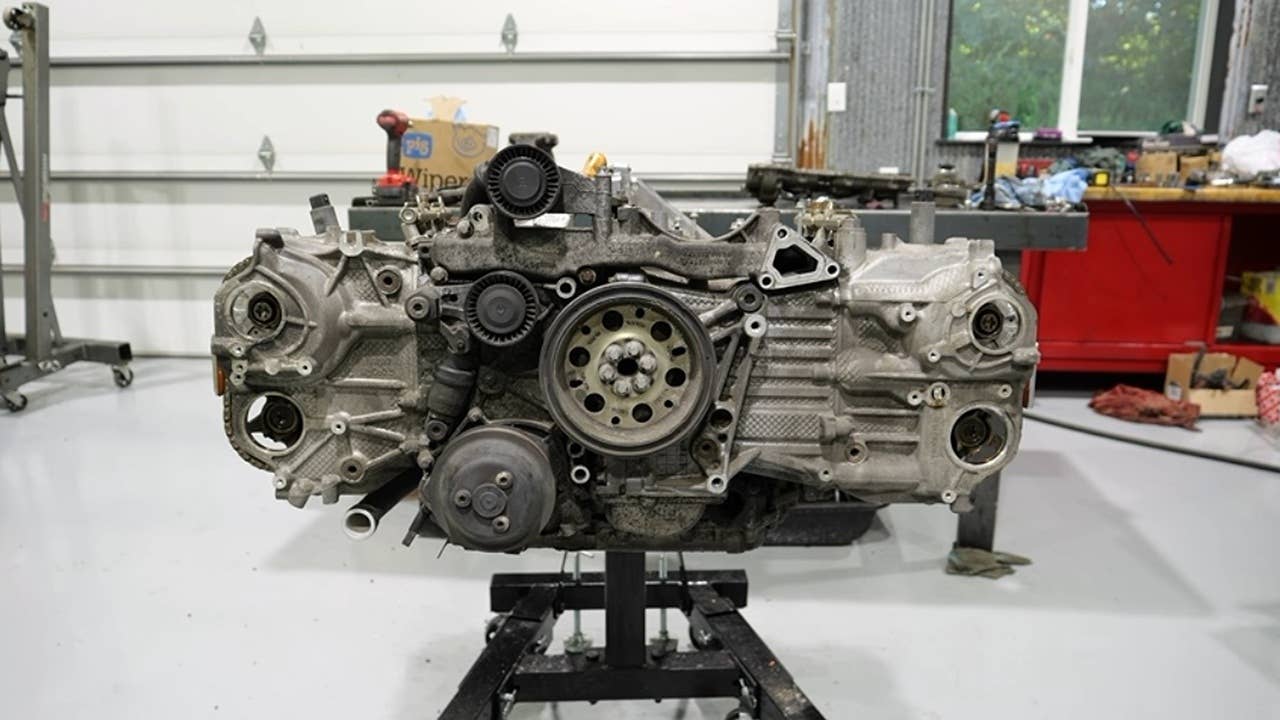
The Porsche MA1.04
In the bible of engine reliability, you need a couple of things: A proven design and architecture, proper usage cycles and care, and religious maintenance and service intervals. The Porsche MA1.04 is part of a series of internal combustion engine families from Stuttgart that is regarded as some of the brand’s most reliable powertrains it has ever produced, so for one to come into the shop for a teardown is somewhat of an event.
Even some more modern Porsches aren’t exempt from the occasional engine problem here and there. Porsche’s very quick to revise their design once a flaw is identified, but somehow, the MA1 series just got it mostly right. While not perfect, the flat-six still has a few failure points and maintenance-intensive areas that owners should know about, but none of those failure points appeared to be the culprit when this motor decided to blow.
So that’s why it blew up.
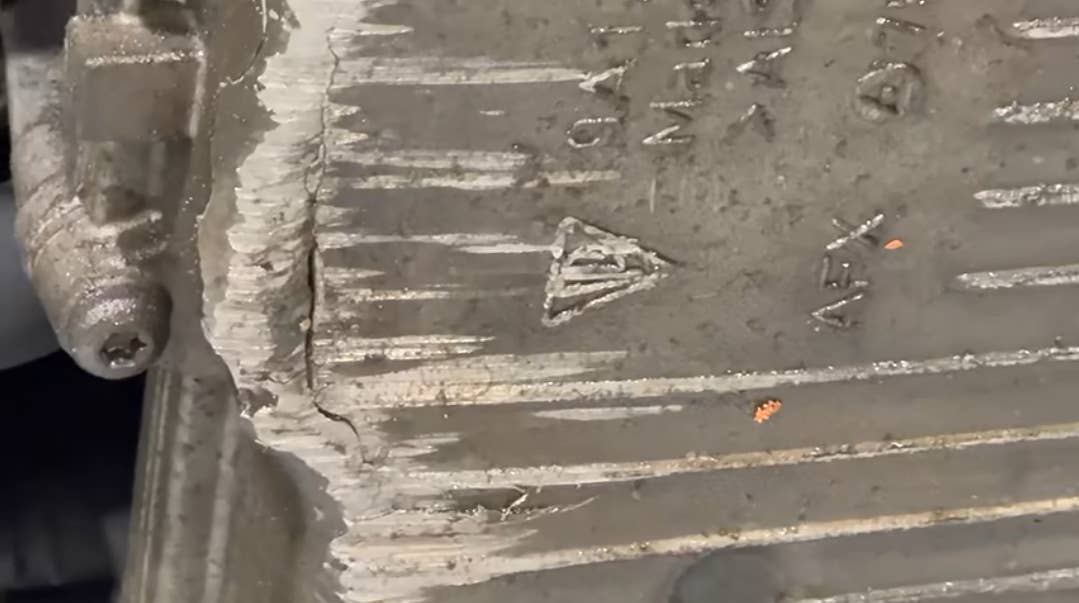
Right off the bat, I Do Cars found the root cause. There’s a crack in the oil pan. So the engine ran without oil once the level dipped to dangerous levels, and it soon became a coffee table.
The damage done was reportedly $10,000 at the time for a new motor without labor. The engine was graciously donated by a fan of I Do Cars after being sat for a while. While the damage to the owner’s wallet is documented, the full extent of the damage to the motor and why it was replaced was only revealed towards the end of the video.
In the middle of the teardown, I Do Cars did notice a few things that were not ideal for a motor, like some shavings and fragments in the combustion chamber. That was just a teaser of things to come, however.
What Blew Up?
So after getting all the nuts and bolts out of the assembly, the engine comes apart. It’s interesting to note that the MA1 splits apart right down the middle. Once the flat six turned into two inline-threes, we get to see what went wrong. Up until this point, everything was peak German precision. However, the deeper I Do Cars dug, the more heartbreaking it ended up being.
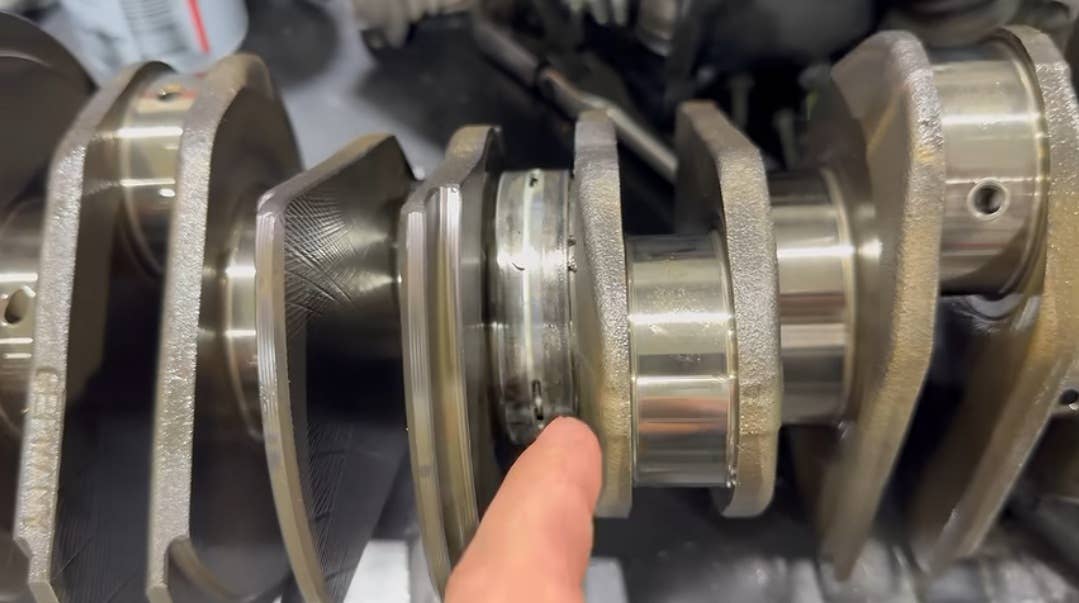
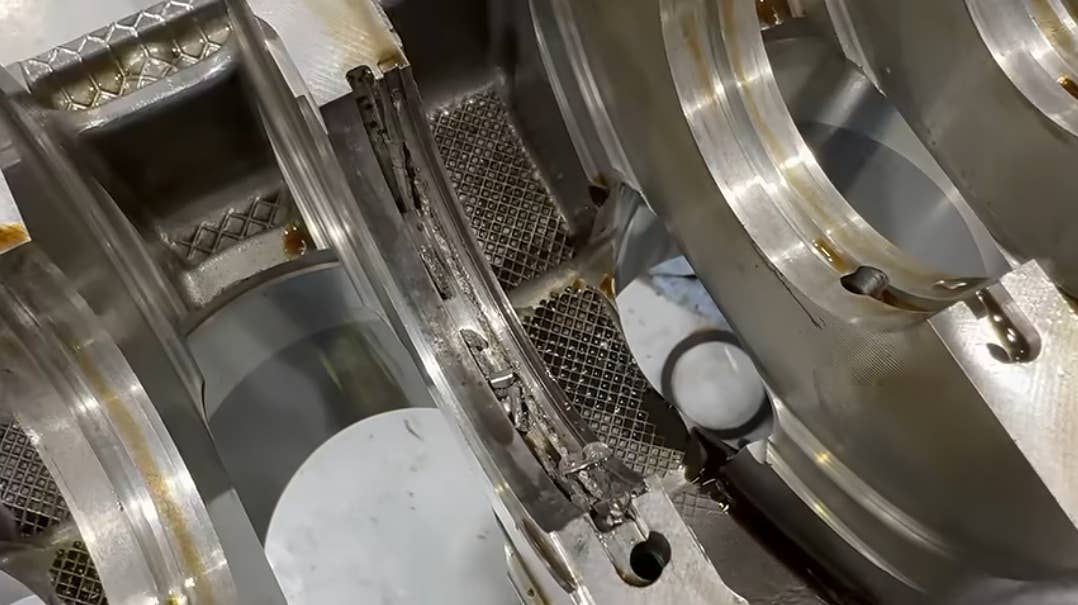
All the rods and pistons were intact with acceptable wear, and even the rod bearings were good, but they have seen better days. That all changes, however, when the camera pointed to the main bearings. One bearing welded itself to the crankshaft, while the rest looked like it had been mangled.
That’s not the worst part, though. On one half of the block, we can see a nasty score at the crankcase. Basically, chunks of aluminum are just sitting there in a crevice. This is a bad case of a spun bearing, and it was enough to basically stop the engine dead in its tracks.
The fact that this was all caused by a hit to the oil pan makes this even more heartbreaking. Now, yes, some parts from this motor can still be reused by resourceful builders, but the block itself might be out of commission. An extremely skilled machinist might be able to repair it, but it could cost more to repair than to replace as a whole unit. Maybe the block is destined to be turned into a coffee table after all.
About the author

Earl Lee
News Editor