
Why Dodge should revive the Neon as an affordable EV
Why are new cars so expensive these days? There are all too many answers to that question. Supply chain shortages? Import tariffs? Hyperinflation? Who really knows? The unfortunate truth, though, is that cheap, new cars don’t really exist anymore in North America. Hell, even used-car prices have skyrocketed in recent years, with more and more people turning to the second-hand market in search of better value. What’s so odd, though, is that, in contrast, international markets seem to have a total abundance of genuinely affordable new cars; cars that never seem to make their way to North America and are instead sold exclusively in almost every other continent, but not ours.
That’s because they actually buy small cars—and small EVs that aren’t marketed as luxury cars to mask the added development costs. Or, at least, automakers will actually sell small cars in those continents. In Europe, the cheapest new electric car for sale in 2025 costs just €16,800 (just under USD $19,500), and in China, the BYD Seagull EV costs just $8,000. Next year, in the USA, the least expensive EV you’ll be able to buy is the 2026 Nissan LEAF S+, which starts at $29,990, although an even less-expensive “S” trim is said to be on its way. Still, even that will cost thousands of dollars more than the cheapest international EVs—a sum that, in this day and age, would be dearly missed.
Stellantis Media
So, then, it seems the rest of the world is happily gobbling up sub-$25,000 EVs like they’re Costco hot dogs while we’re forced to shell out baseball stadium prices for what are essentially the same glizzies; at least as far as our tastebuds can tell. And it’s not like we’ll be seeing those cheap Chinese EVs come to the U.S. anytime soon. Of course, then my question is: why don’t American automakers build a sub-$25k vehicle to fill that market gap? It’s not as if (at least some) of these manufacturers don’t know how to do it, either. Stellantis, for example, is a major automotive conglomerate that operates globally. So you’d think that, by now, with all their European, Asian, and South American marketing and production insights, they would have been able to come up with something worthwhile for our market? Right?
Are American automakers capable of offering cheaper EVs in the United States?
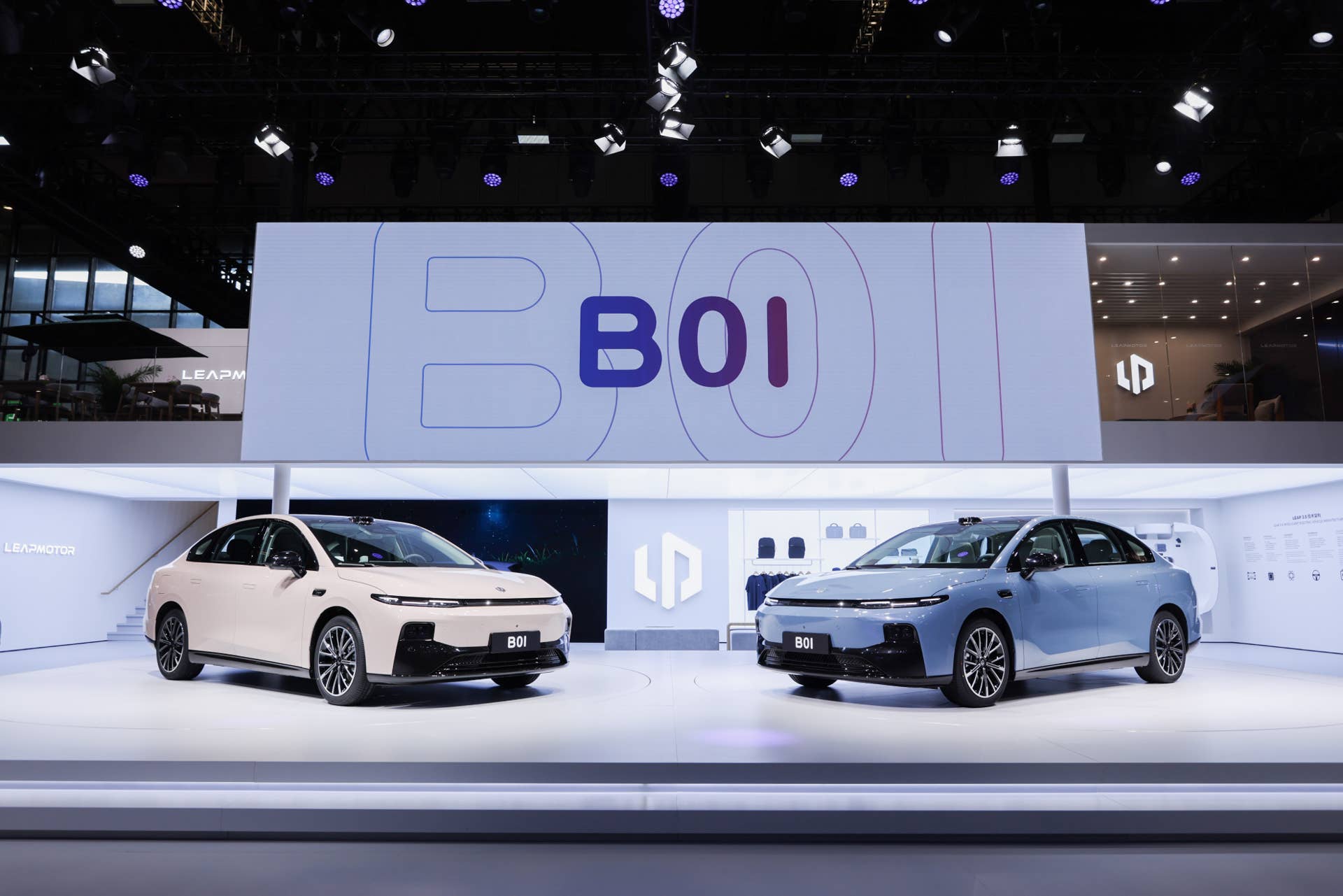
In fact, since 2023, Stellantis has even partnered with Chinese EV startup Leapmotor, whose B01 model starts at just USD $12,550 in China and offers as little as 279 miles of range or up to 403 miles in models with larger-capacity batteries. Even if Stellantis imported these rear-wheel-drive, 177-horsepower (or up to 215-horsepower with the larger batteries) sedans to the United States as they are and paid the necessary tariffs, they’d still only be $25,000 cars. Of course, realistically, that’s a terrible idea, which doesn’t account for added shipping costs and any other potential duties that could be incurred, but what I’m trying to say here is not just that Stellantis brands should sell Chinese EVs in the United States, but that they have access to the kind of technological innovation and knowledge that Chinese automakers like Leapmotor are capable of.
At least for Stellantis, this means there’s a (roughly) $12,000 window of opportunity to craft an affordable EV for the North American market, between what Leapmotor is capable of building with the B01 and what an American Stellantis brand could feasibly market to the American population. Of course, marketing a subcompact sedan to Americans these days is no easy task. Still, I don’t believe it’s entirely impossible, especially at a time when more Americans are seeking out smaller cars to keep within tighter budgets. I think that, perhaps, the best way to go about doing so would be to appeal to Americans’ nostalgia for another time, maybe even a better time, when one American subcompact ruled the streets above all else, both in real life, in video games like Midnight Club 3: Dub Edition and Need For Speed: Underground, and even almost ruled the big screen: none other than the Dodge freakin’ Neon.
Cole Attisha Using Gemini 3.0 Flash Image, Midjourney 7.0, and Adobe Photoshop
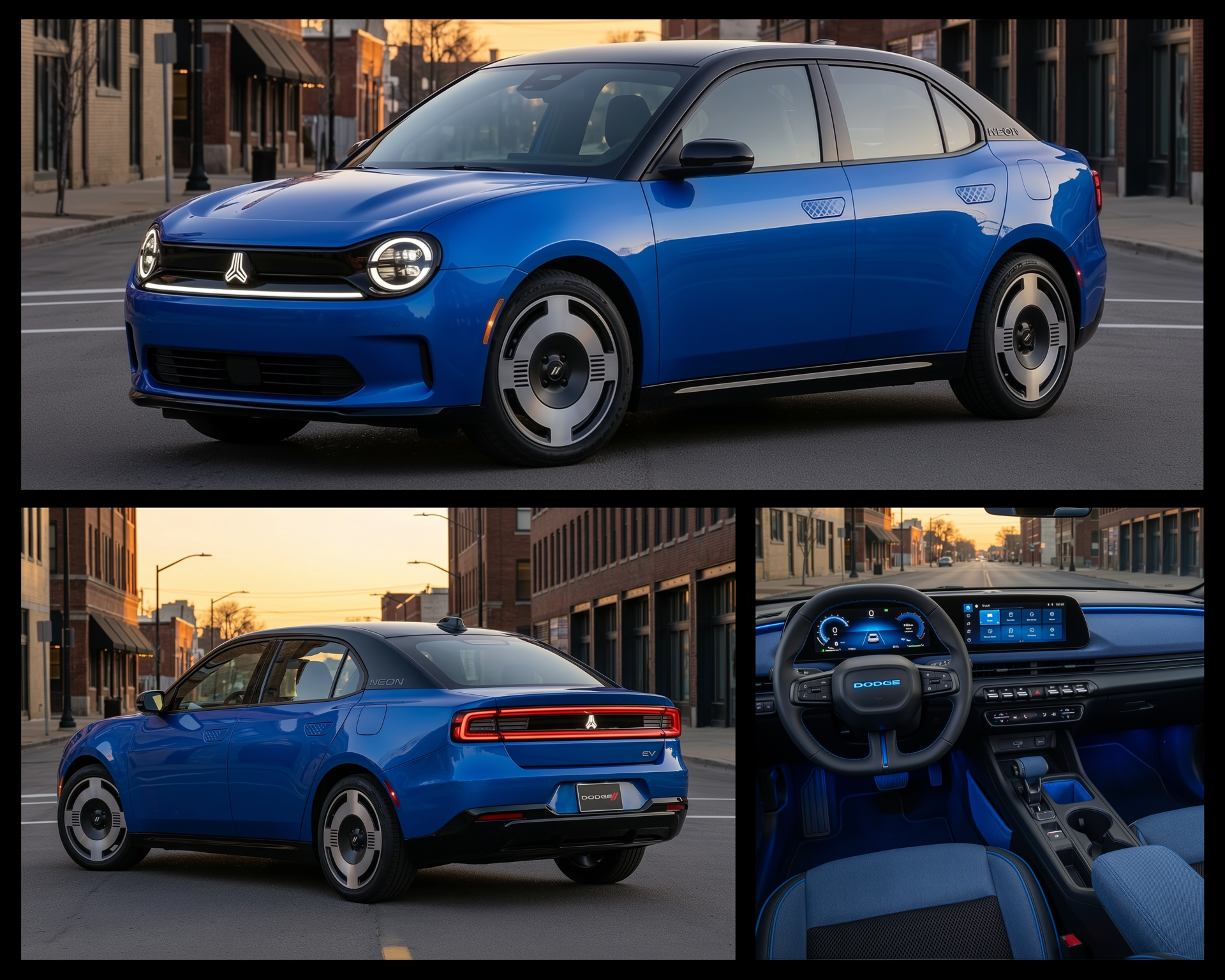
What a modern Dodge Neon EV could look like
Most people probably remember the Dodge Neon as that cute, cheap, dinky little American car from the ’90s that seemed to be everywhere, then suddenly disappeared. Some car enthusiasts, like myself, perhaps have fonder memories of the Neon being one of the most underrated underdogs of motorsport; known fondly for its impressive autocross capabilities and the turbocharged SRT4’s unexpected dominance in quarter-mile drag racing.
The Neon was so many things to so many people. For some, it was a comically inexpensive Plymouth; a great first car for a son or daughter who had just passed their driver’s test. For others, it was a surprisingly spacious and luxurious Chrysler, an affordable compact that you could proudly commute with to a corporate job. To guys like me, it was an unassuming, agile, and, with a bit of fiddling, unexpectedly powerful sports car for pennies on the horsepower dollar.
Cole Attisha Using Gemini 3.0 Flash Image, Midjourney 7.0, and Adobe Photoshop
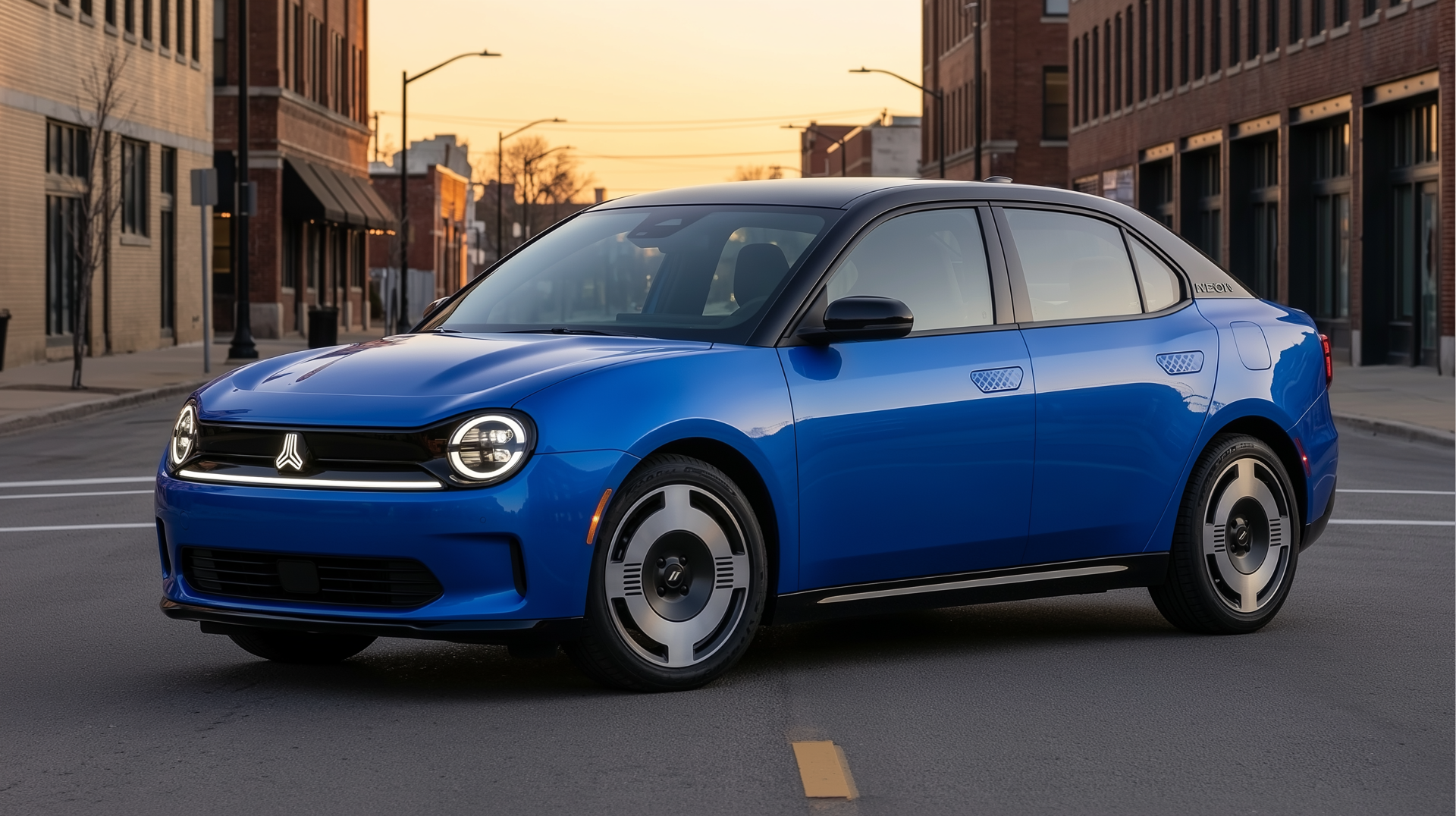
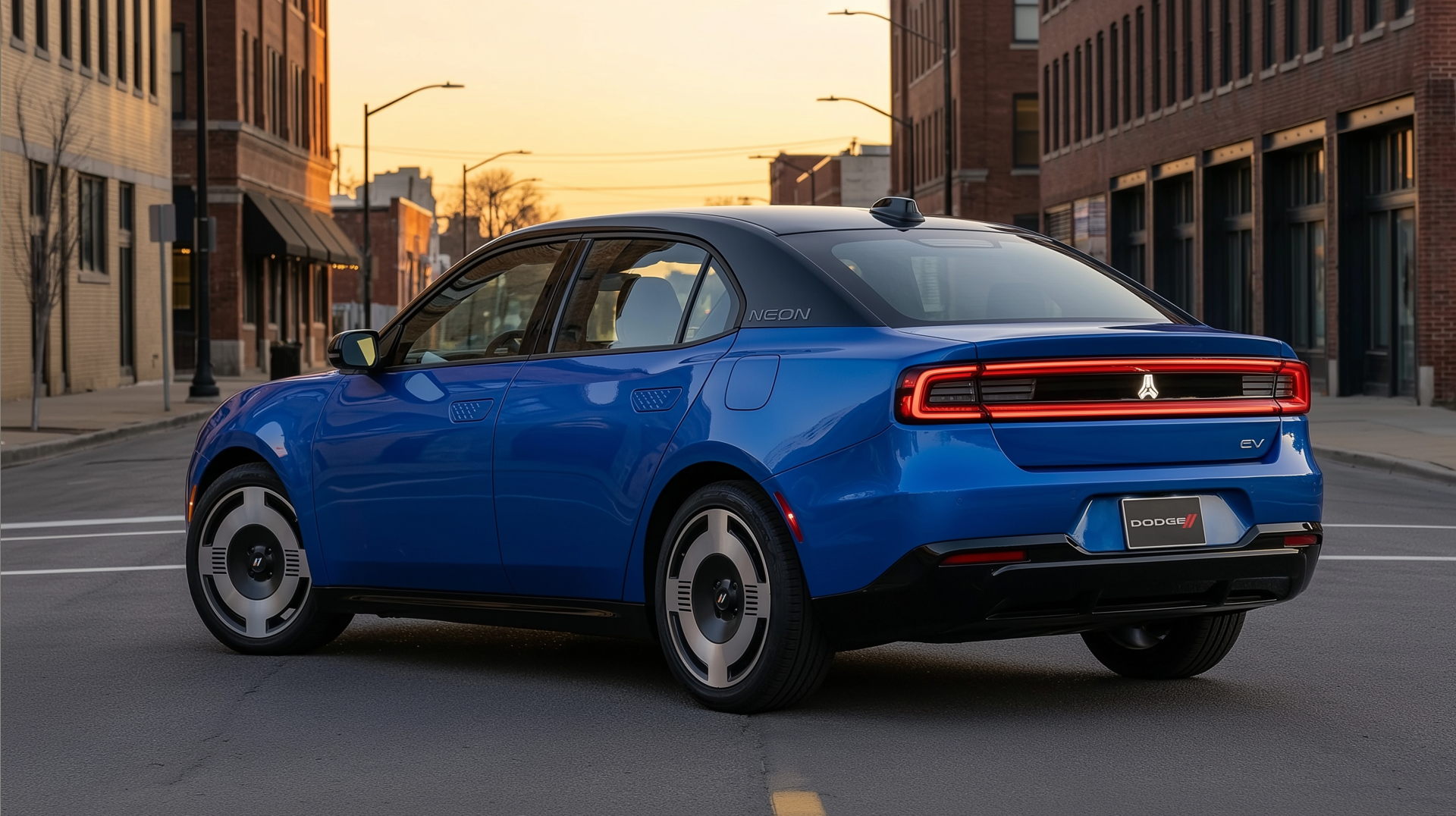
Positioned as a sub-$25k affordable subcompact EV sedan, I genuinely believe that a revived Dodge Neon could strike all the right chords with the same sort of crowd that it won over so many years ago. Drawing on the Leapmotor B01, the Neon could still be cheap, compact, relatively spacious inside, and a surprisingly solid performer, just as it was at the height of its popularity. It’ll still need to look like a Neon, too—as if it naturally carries on the model’s legacy, rather than appearing as rebadged and generic.
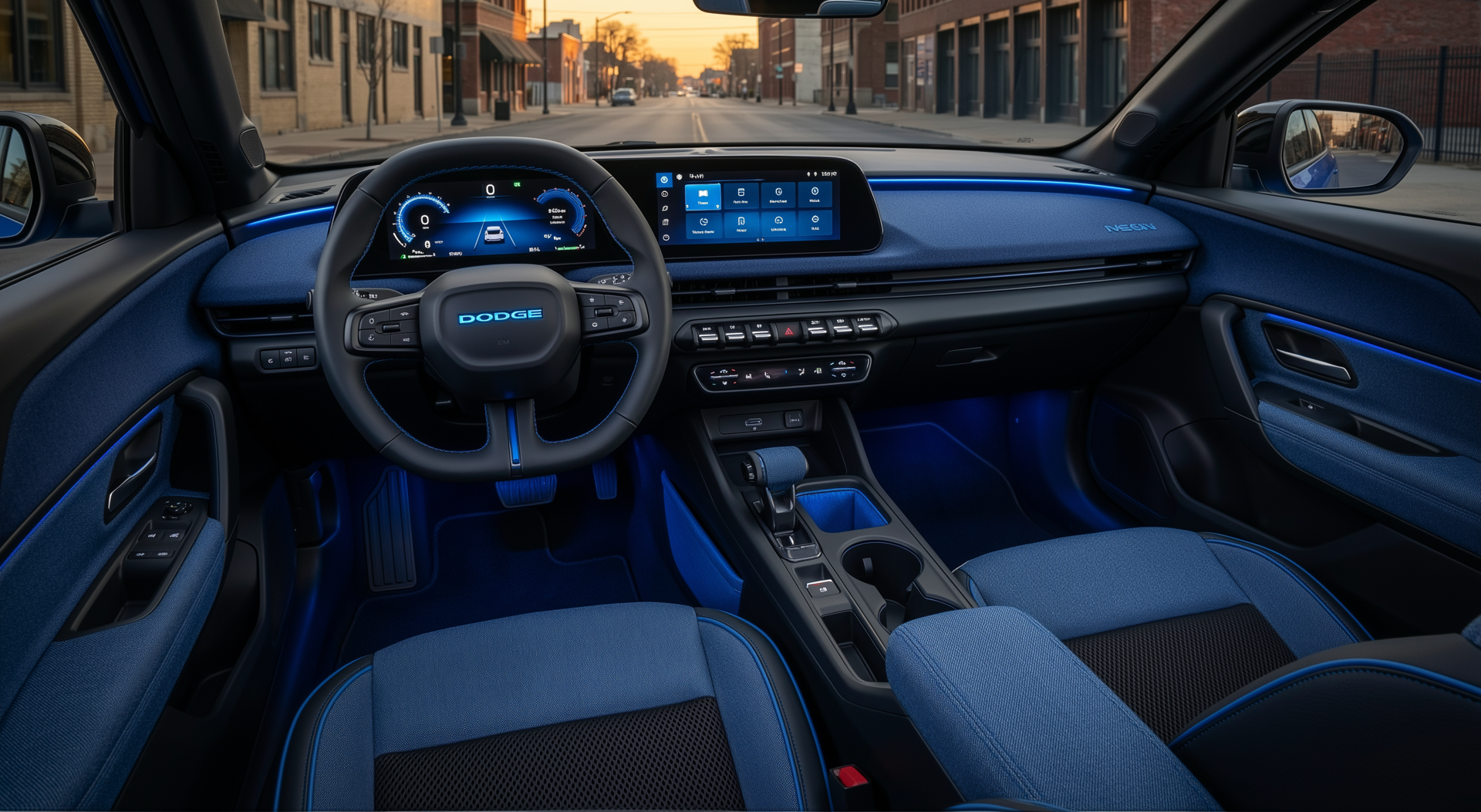
Cole Attisha Using Gemini 3.0 Flash Image, Midjourney 7.0, and Adobe Photoshop
Using Gemini 3 Pro, Midjourney 7.0, and Adobe Photoshop, I’ve created the renders above and below to depict what I believe the revived Neon should look like. Incorporating signature elements of the original Neon, such as its rounded headlights and compact, three-box sedan proportions, it certainly looks the part, but taking other elements from contemporary Dodges, such as a scaled-down rear taillight bar, hood, and bumpers from the Charger Daytona EV, make it look aptly modern and would allow it to blend in with Dodge’s current model lineup seamlessly. Keep in mind these depictions are purely fictional and do not display any actual Dodge or Stellantis vehicles.
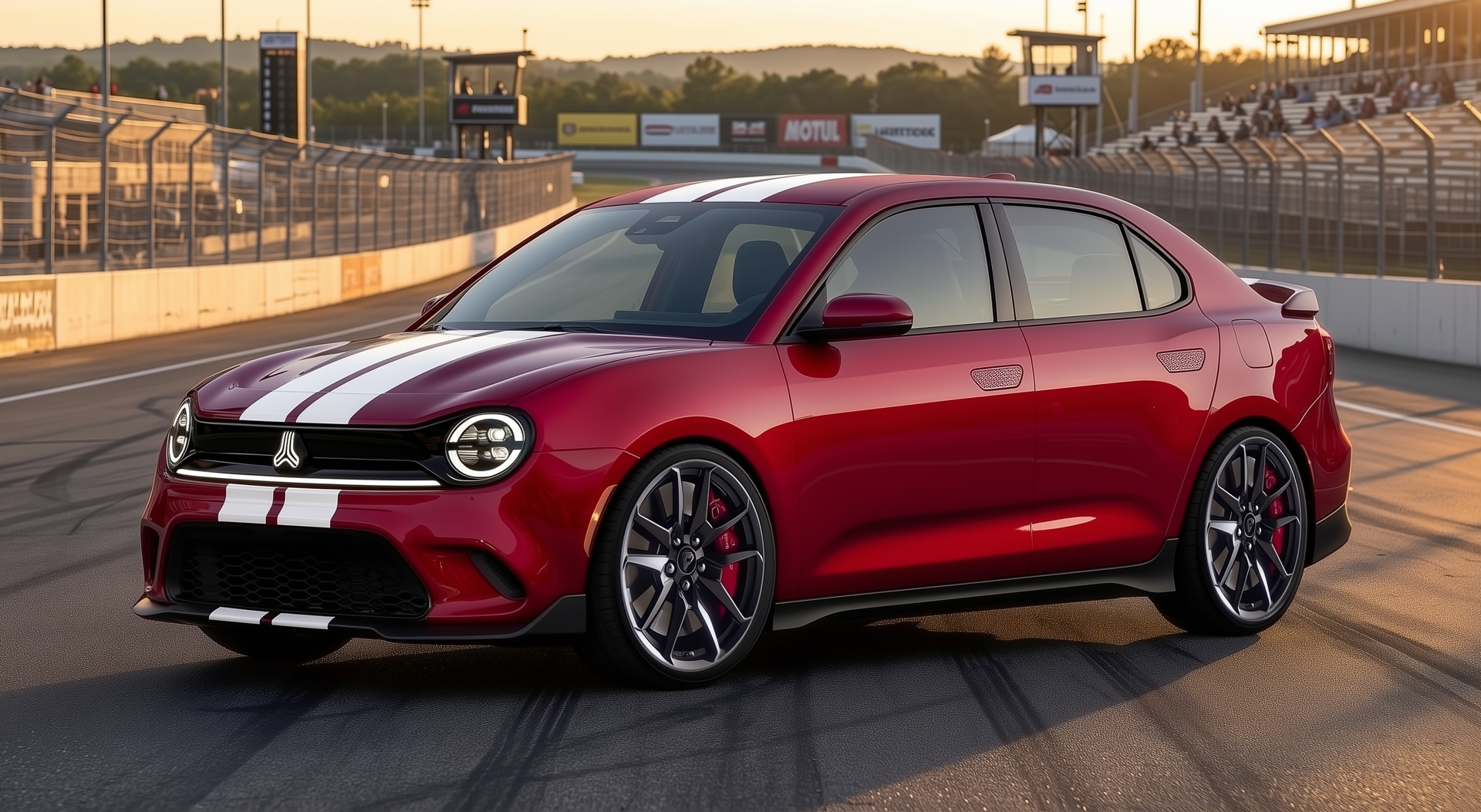
Cole Attisha Using Gemini 3 Pro, Midjourney 7.0, and Adobe Photoshop
Of course, still going the Leapmotor-inspired route, this Neon could even boast rear-wheel drive—a feature that, combined with the Neon’s short wheelbase, would make for a whole lot of fun behind the wheel. With 177 horsepower as standard, this revived Neon would have more than enough power to fulfill drivers in cities, on highways, and even on racetracks. Additionally, what would a Dodge Neon be to the enthusiast crowd without an SRT variant? Using the Leapmotor B01’s longest-range powertrain, an SRT-branded Neon EV could offer up to 215 horsepower—the same power output as the O.G. Neon SRT4, albeit sent to the rear wheels. Yeah, a 215-horsepower, rear-wheel drive Dodge Neon sounds pretty fun to me. With a virtual gearshift feature (like what you’d find in the Hyundai Ioniq 5 N or the Genesis GV60 Magma) and manufactured sounds that mimic the original SRT4’s snarly four-cylinder and whooshy turbo noises, it wouldn’t necessarily be devoid of its driver-oriented viscerality, either.

Stellantis Media

Cole Attisha Using Gemini 3.0 Flash Image, Midjourney 7.0, and Adobe Photoshop
Final thoughts: Should Dodge build the Neon EV?
A sporty, rear-wheel-drive, 177-to-215-horsepower subcompact sedan is the kind of car that even I can get excited about, even if it were an EV. The fact is, though, that performance would and should not be this car’s top priority. Of course, affordability should be first, with durability and build quality tied for a close second. The reality for buyers these days is that the vast majority are focused on payments rather than total cost. The beauty of a sub-$25k brand-new car is that, whether leasing or financing, buyers can take advantage of bought-down new-car interest rates that are often much lower than standard bank rates or, even worse, third-party loan shark rates that prey on poor-credit buyers. Pair a new-car interest rate with a used-car price tag, and Dodge would have itself a winner on their hands with a revived Dodge Neon, but only if it’s built well enough that it won’t fall apart as soon as the warranty expires.

Stellantis Media
About the author

Cole Attisha
Staff Writer, Autoblog