
Key Points
- The Land Rover Defender 130 X transported extensive camping equipment without sacrificing passenger space.
- Its spacious, well-organized interior provided comfortable seating, ample storage, and flexible third-row capacity.
- The vehicle’s side-hinged tailgate and boxy design proved particularly useful during outdoor trips.
Over the River and Through the Woods
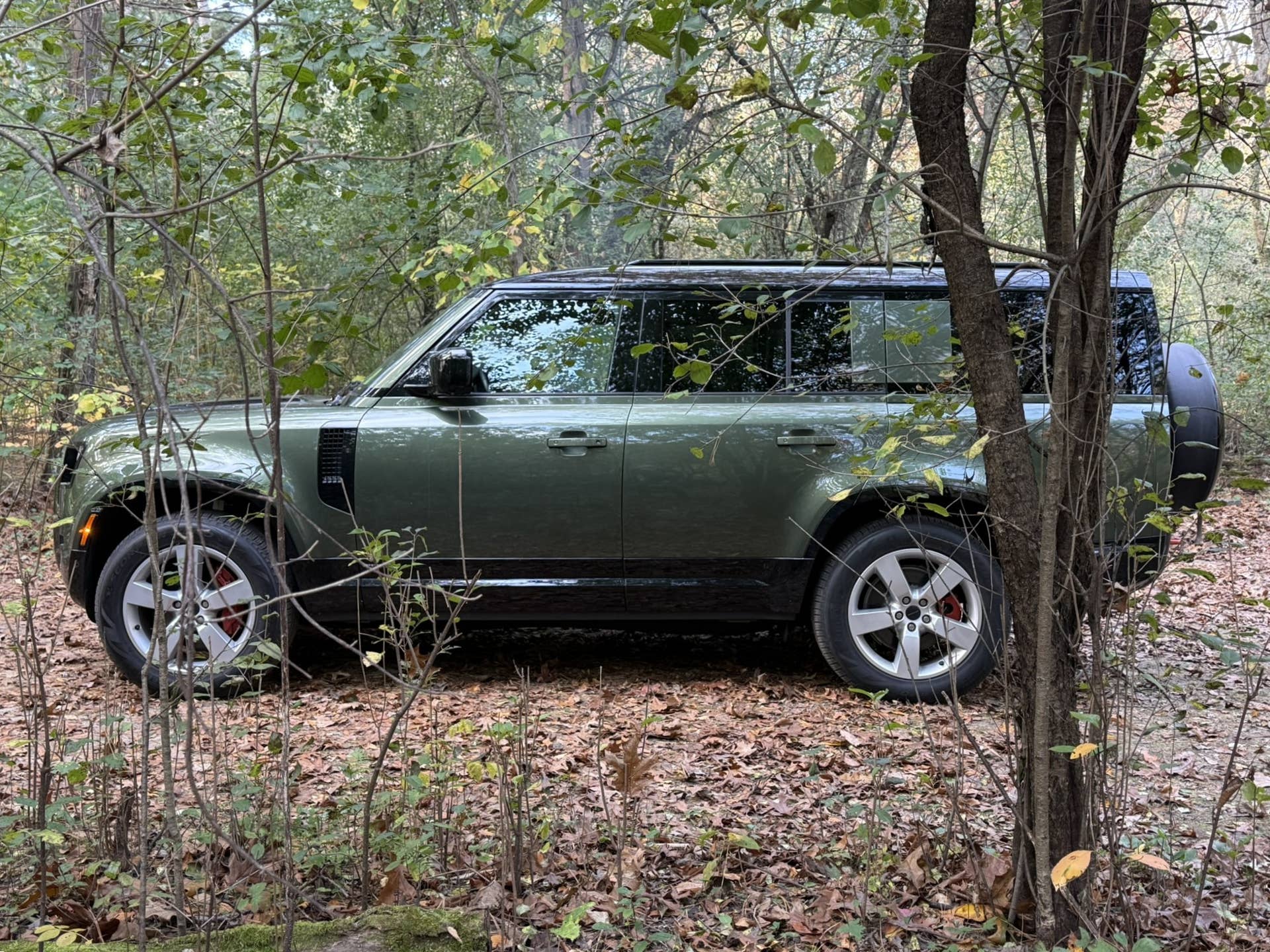
It’s been five years since our family went camping, so I decided to make a quick weekend away with my two boys. The two-hour drive to Wisconsin didn’t seem like too much of a commitment, and I was fortunate enough to get a Land Rover Defender 130 X from the Midwest press fleet to manage the arduous task of hauling tons of camping gear and firewood for our somewhat outdoorsy adventure. Here’s how the three-row Defender 130 X fared.
It Swallows a Ton of Gear
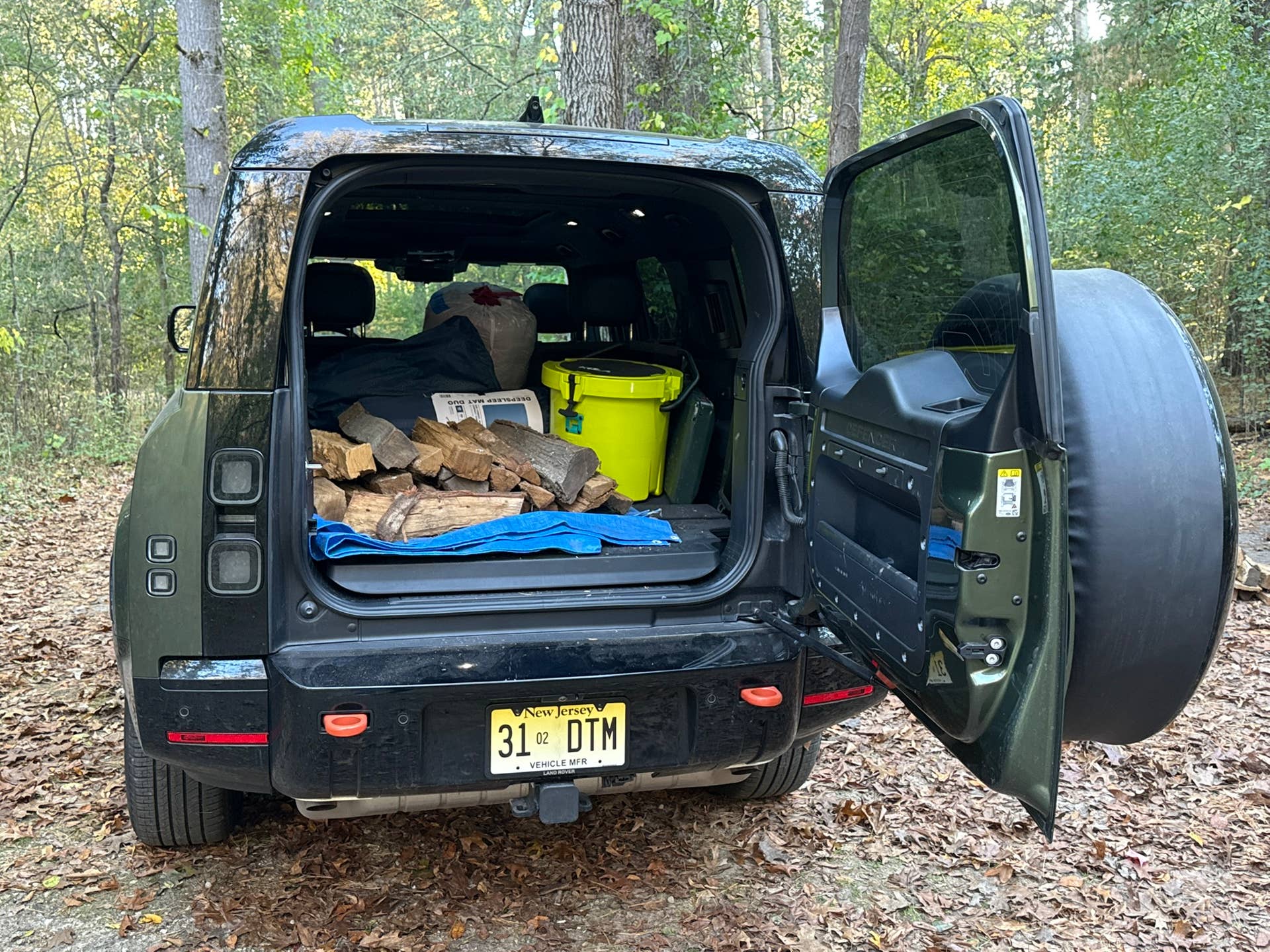
The photo above shows the Defender 130 X loaded with about 25 percent of the total camping gear I shoved inside. The problem with camping is that, aside from food, spending two nights camping takes about the same amount of gear as five days. I couldn’t get over how much I needed to bring. Here’s an abbreviated list: tent, tarps, folding chairs, stove/propane, pots/dishes/utensils, air mattresses, backpacks, sleeping bags, lanterns, flashlights, cooler, knives/axe, water jugs, firewood, coffee pot, food, and clothing. That’s for me and my two boys.
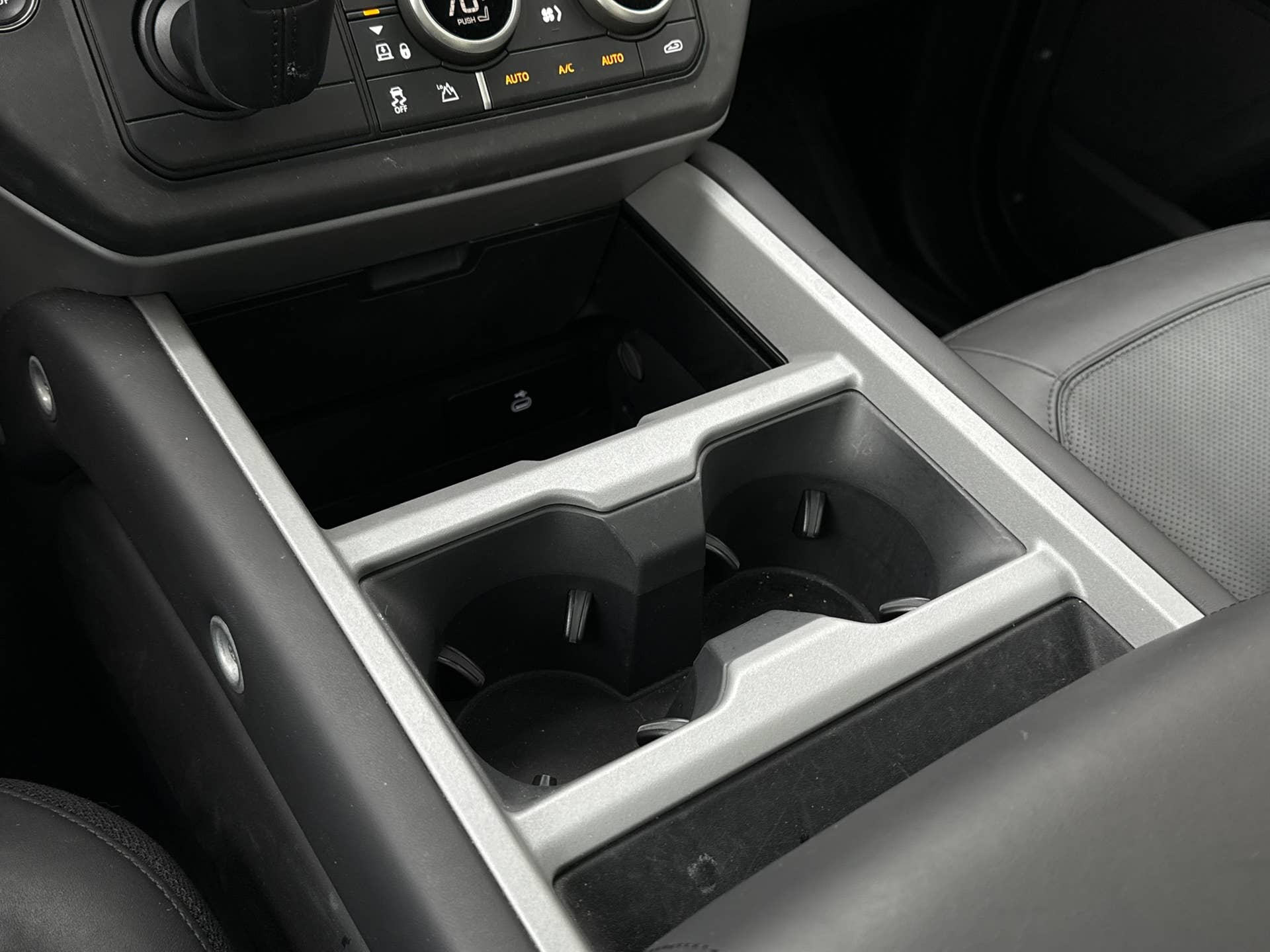
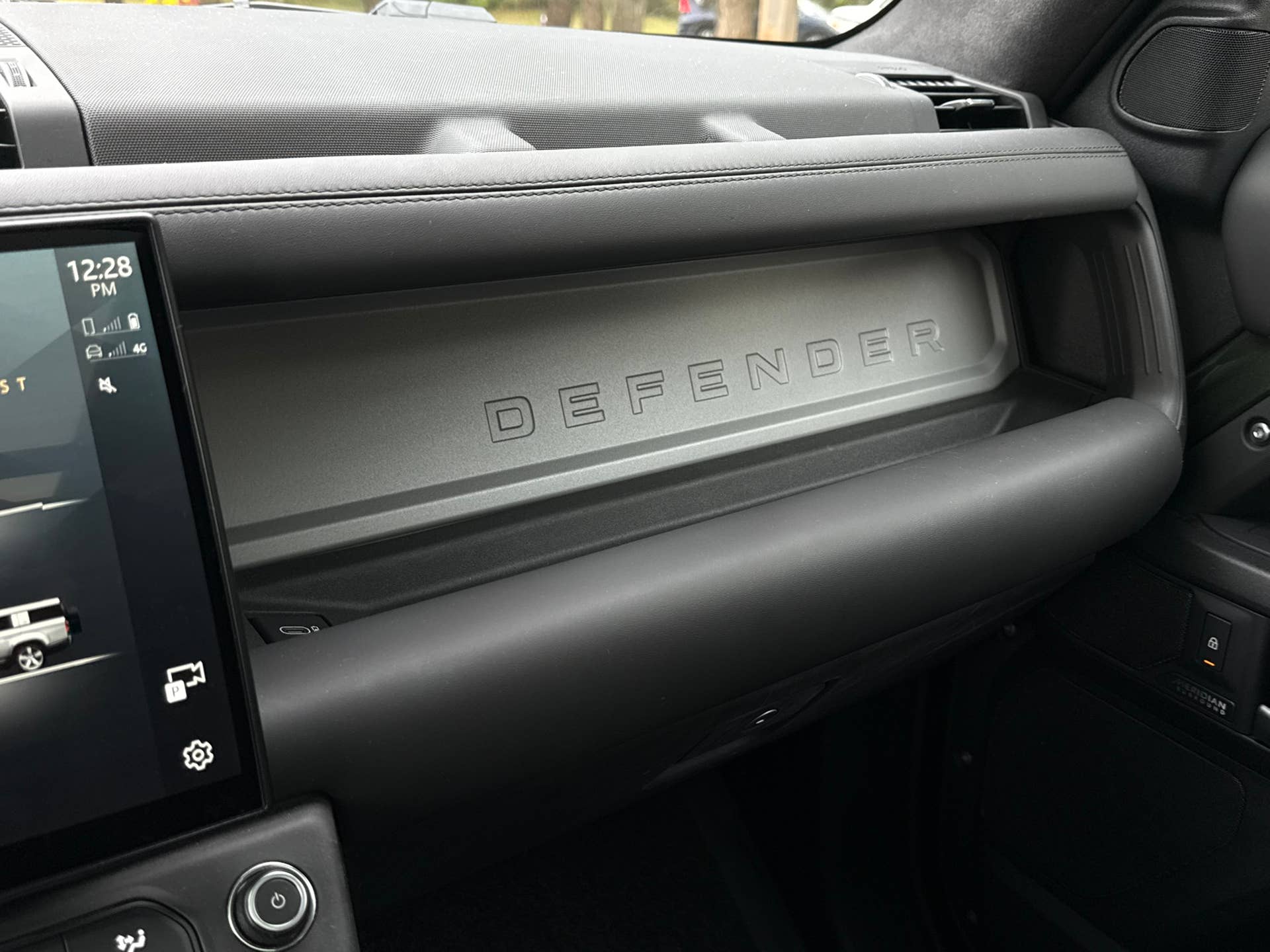
The front cupholders can take big coffee tumblers, and the door pockets held plenty of snacks and two sets of binoculars. The deep center console binnacle and armrest compartment can manage tablets, small books, and small items you prefer to keep out of sight. It does not scrimp on convenient storage spaces. Even the dashboard has a deep shelf with a lip, ideal for pens, campsite documents, trail maps, etc.
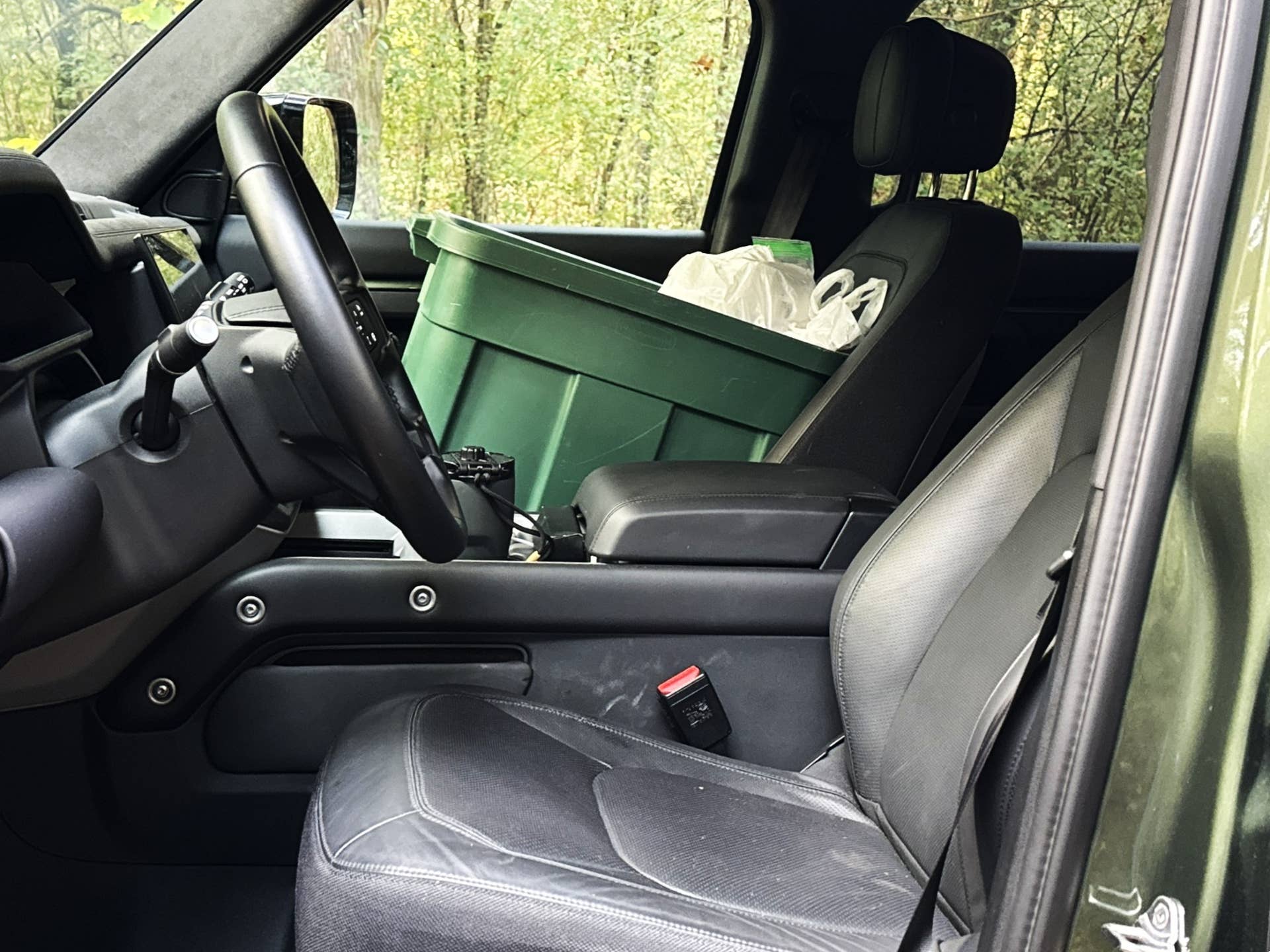
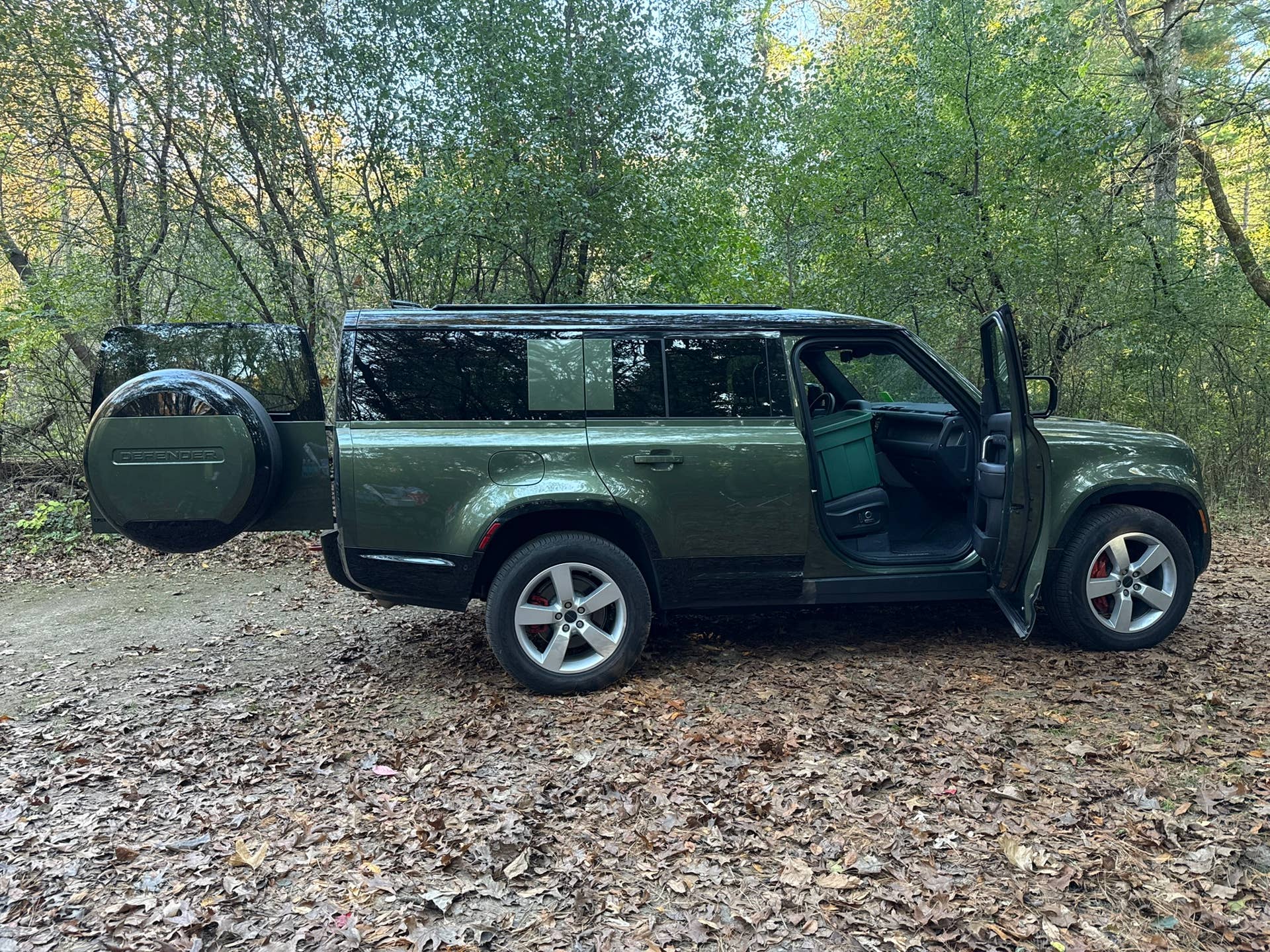
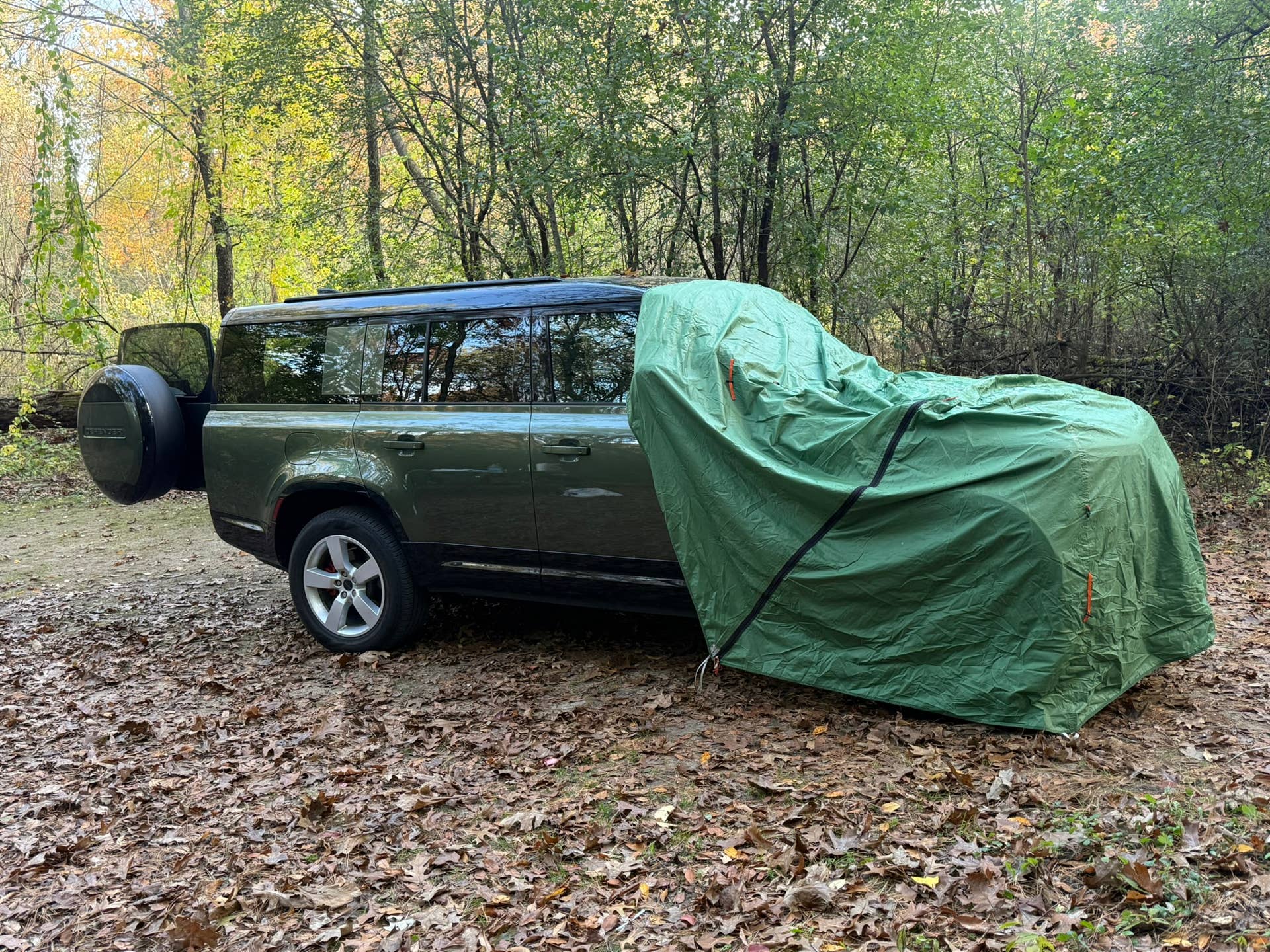
I only needed to use the 28.4 cubic feet of cargo space behind the second row seats and the front passenger seat for camping gear. My boys sat in row two and kept their backpacks between the second row seats, which proved to be ample. I could have loaded more into the back, but the Defender 130 was capacious enough to get all the gear in without compromising passenger space. I didn’t want to put either of them in the front passenger seat, so it worked out well.
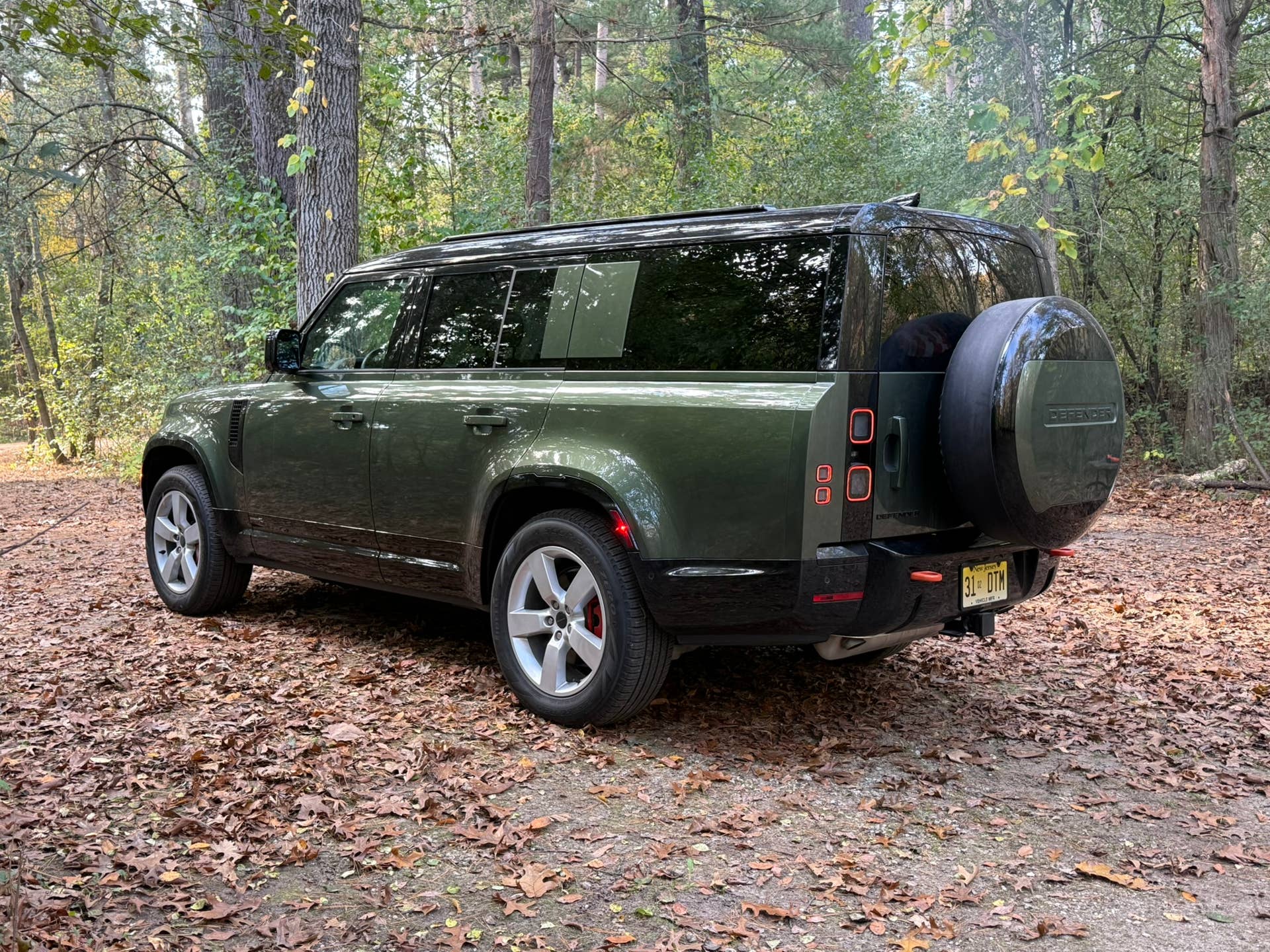
The side-hinged tailgate might not be great for tight city spaces, but it’s ideal for the outdoors. Easy access to the cargo section, a storage shelf inside the tailgate, and no chance of hitting your head on a liftgate at night. Finally, I loved the broad, boxy hood that allowed me to dry off the tent tarp when breaking camp down on our final day.
Mighty Comfy Digs for an Off-Road Monster
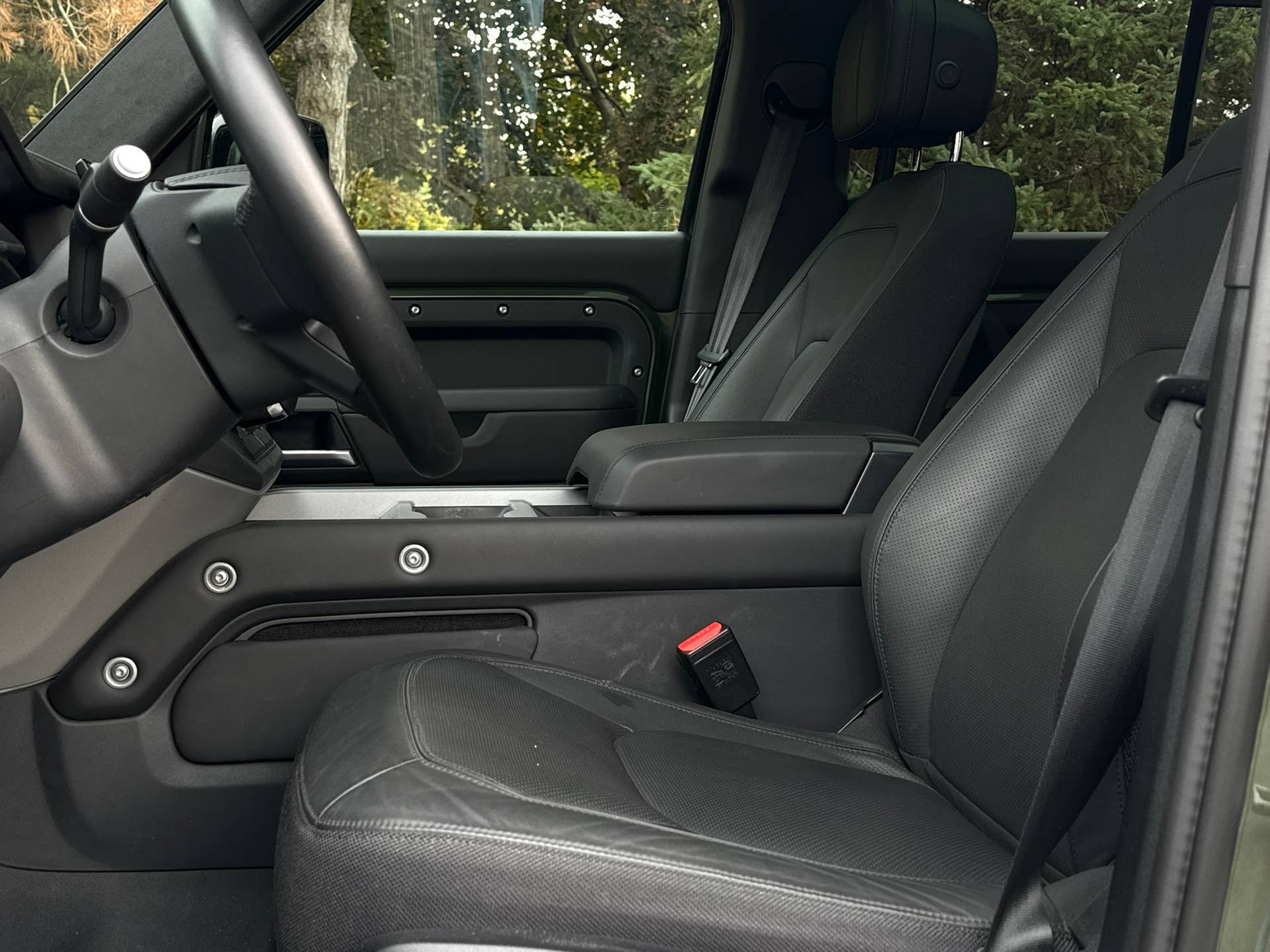
I can’t name another bona fide off-roader that’s as comfortable as the Defender 130. If I was blindfolded and sat in the front seats, I would guess it’s a luxury vehicle. The seats are plush but not overly so, and they’re properly wide and very supportive. Long drives don’t present an issue, and the driving position is excellent. The rear Captain’s Chair’s are similarly good, and passengers have gobs of legroom.
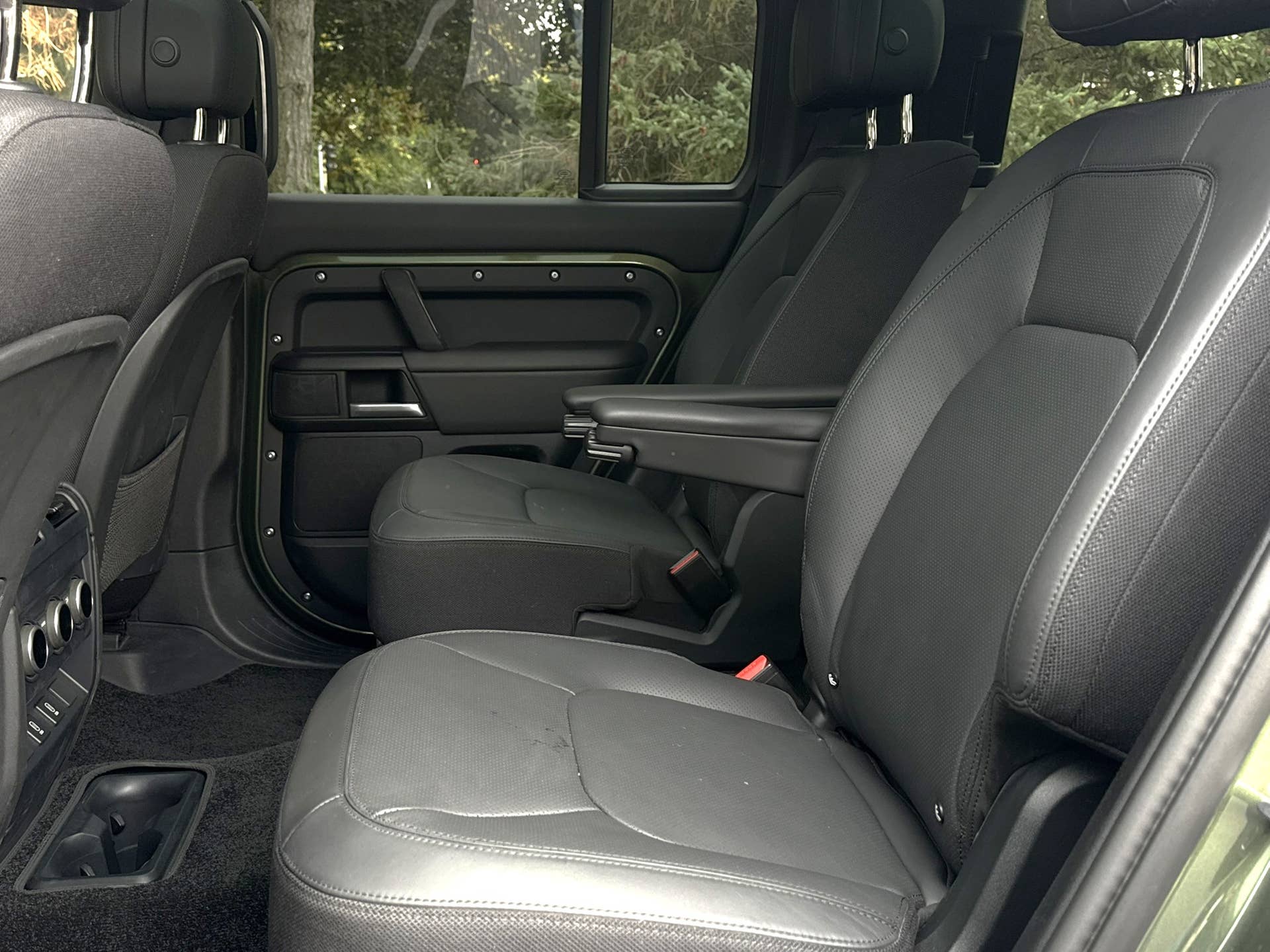
The walkthrough to the back row is generously wide. Land Rover placed the 2nd row cupholders in the slightly raised portion of the transmission tunnel, as opposed to putting a console between the seats. This saves space and also makes the Defender 130 X feel bigger inside than it already is. The interior configuration and comfort also proves the Defender 130 X can manage more occupants when less gear is needed. You can fold down fractions of the third row for longer items and still seat one or two people way in back.
Highway Speeds and Trail Management are Superb
Amos Kwon
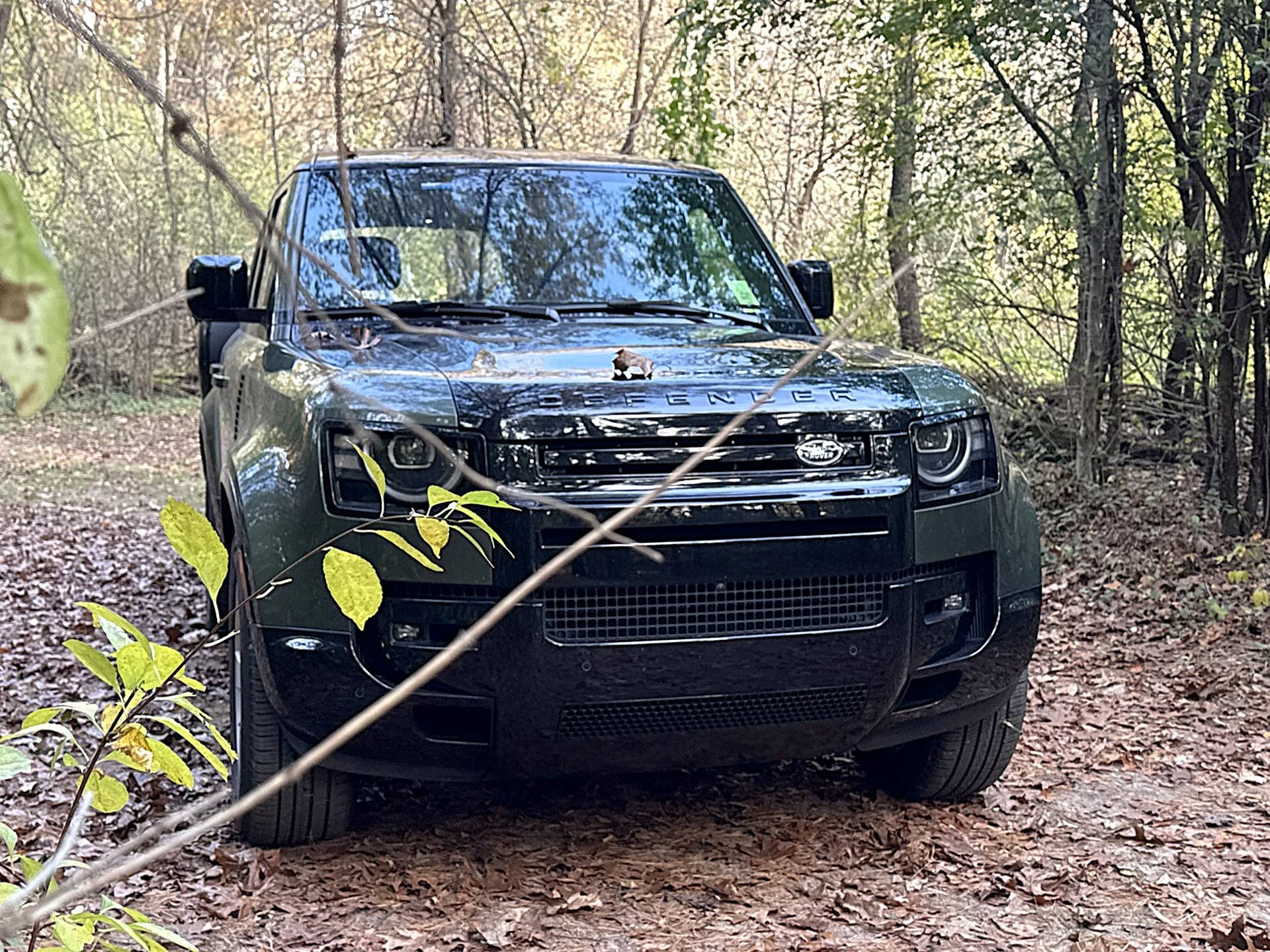
Two hours of highway driving proved that the Defender 130 X is more than just an off-roader. Getting up to 75+ mph in fast-moving traffic was no problem with the 395-horsepower P400 inline six engine with mild hybrid assist. Adaptive cruise control and lane keeping assist made the miles less tiresome after a busy morning getting all our gear together. The system works very well, and the Defender responds quickly when the car in front is speeding up or slowing down. It’s a remarkably good highway cruiser, which is more than I can say for the Ford Bronco or the Jeep Wrangler Unlimited.
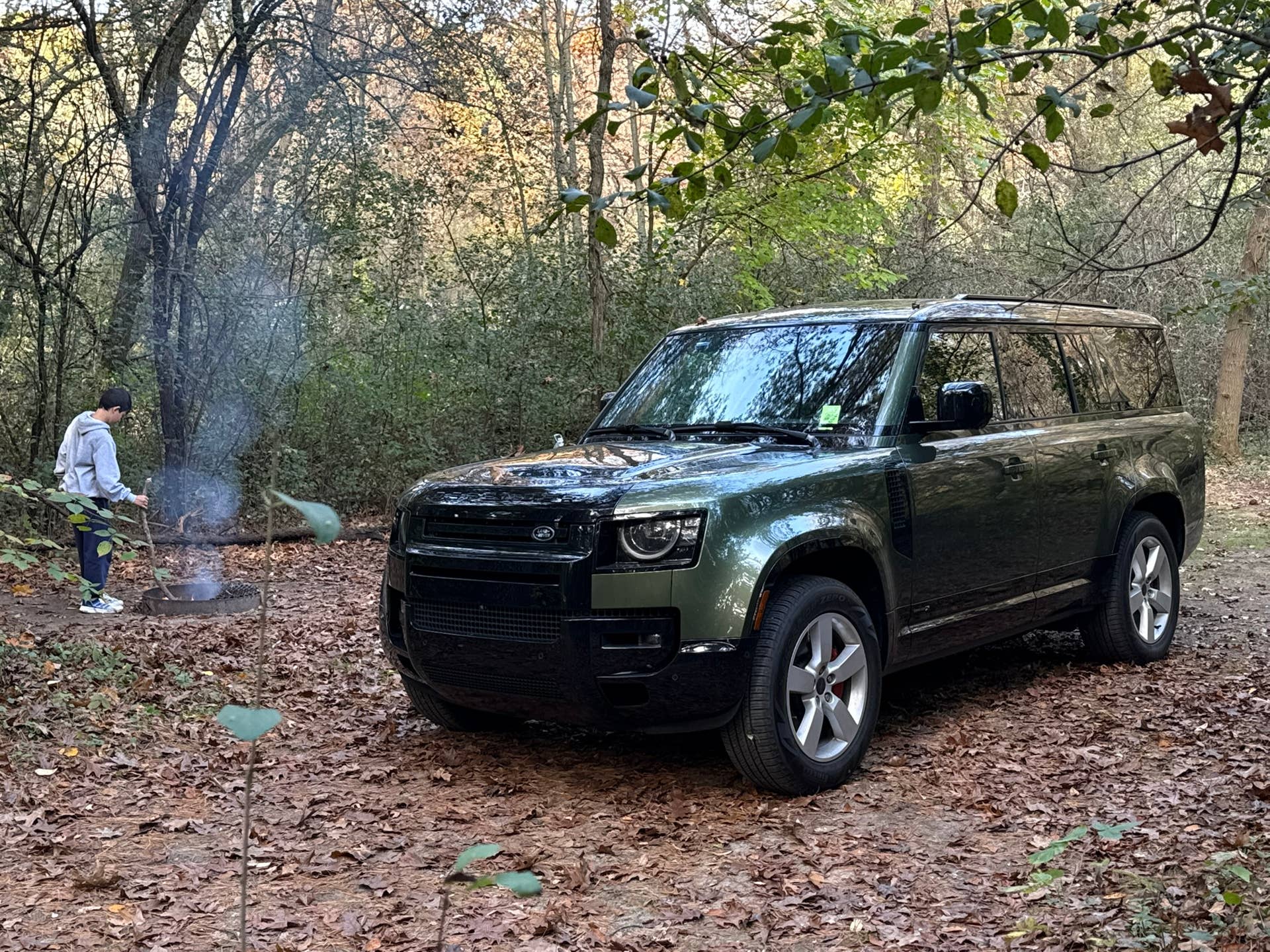
Once we hit some dirt roads and trails, the Defender 130 X remained in Auto mode and didn’t require a configurable setting for Terrain Response 2. Even without selecting one of the various modes (including mud & ruts, grass/gravel/snow, sand, rock crawl, and wade mode), the Defender can handle a lot. I’d love to say we did some serious off-roading on our trip, but that was not the case. It’s good to know, however, that the Defender 130 X is more than capable of doing some serious off-roading, minus the compromised departure angle due to the elongated tail.
Final Thoughts
Most Defender owners will never do more than we did when we went camping. It’s one of the most adept off-roaders that also happens to be comfortable, spacious, and great on-road. We loved using the Defender on our trip, and my boys remarked how easy and comfortable it was. It’s the vehicle they want me to buy next (a discussion which will certainly involve their mother). Finally, they said the Woolstone Green paint was a perfect match for the woods of Wisconsin. All the more reason for me to get one.

About the author

Amos Kwon
Contributing Writer, Autoblog