
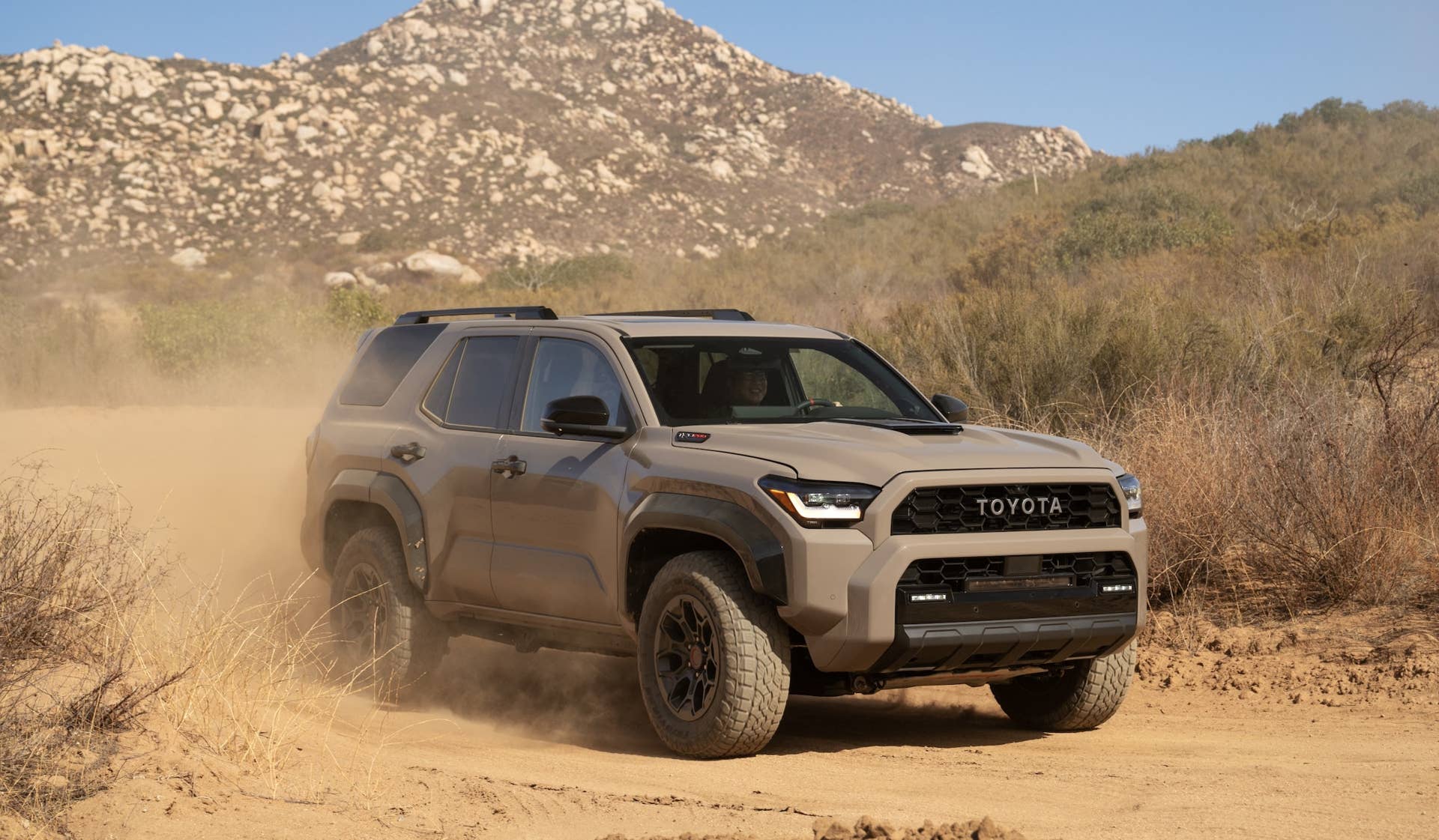
New generation, upgraded off-road capability
The 2025 Toyota 4Runner marked the arrival of a new generation, and a welcome one at that. The all-new model boasts rugged styling, available third-row seating, and new engine options. At the top of the range sit the TRD Pro and Trailhunter variants, both priced from $67,400. At a glance, the models are similar enough, with 18-inch wheels wrapped in 33-inch all-terrain tires and near-identical performance. Looking deeper, though, reveals some key differences that set the 4Runner’s most expensive models apart.
Toyota
Toyota
1. Shocks that prioritize high speeds versus stability
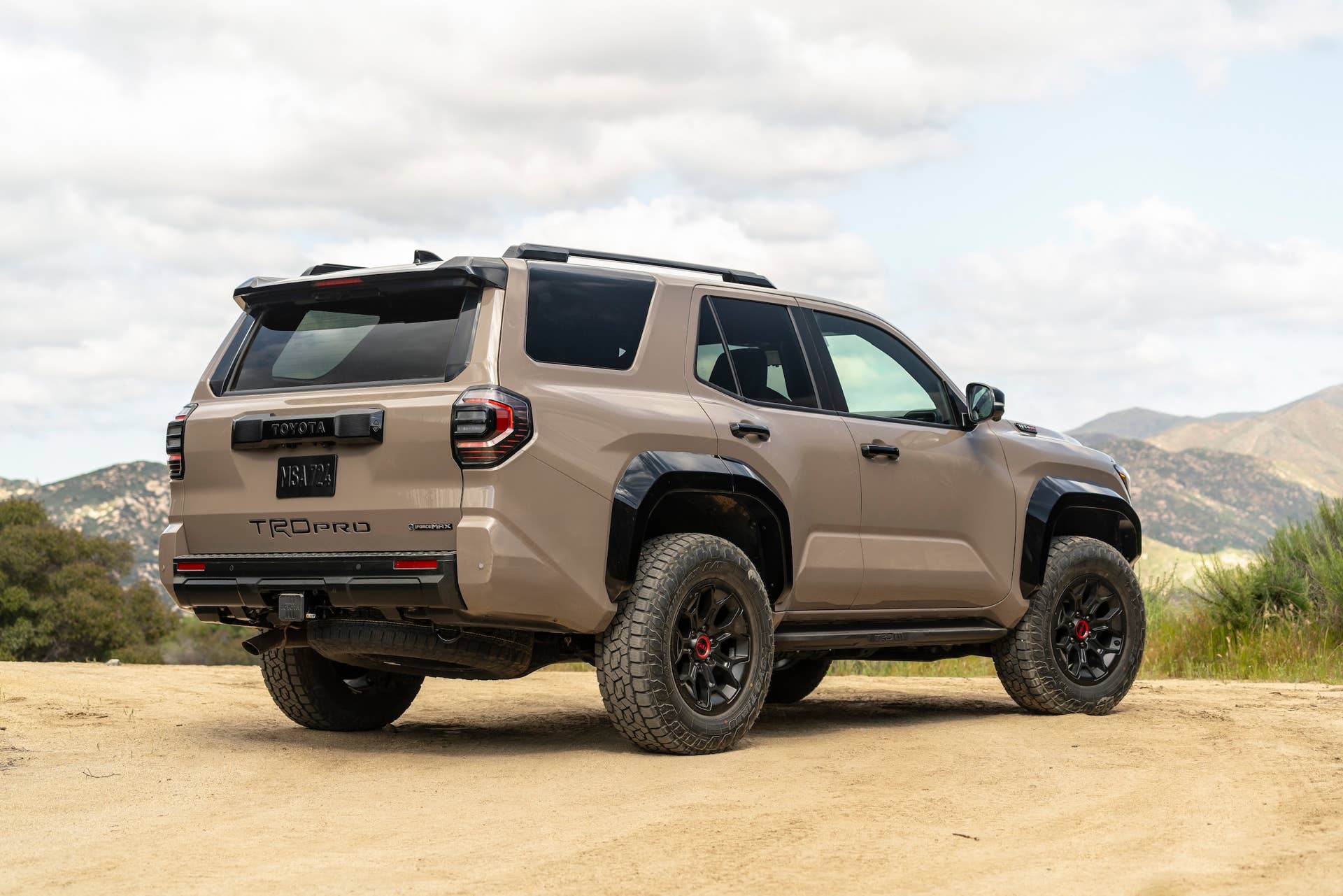
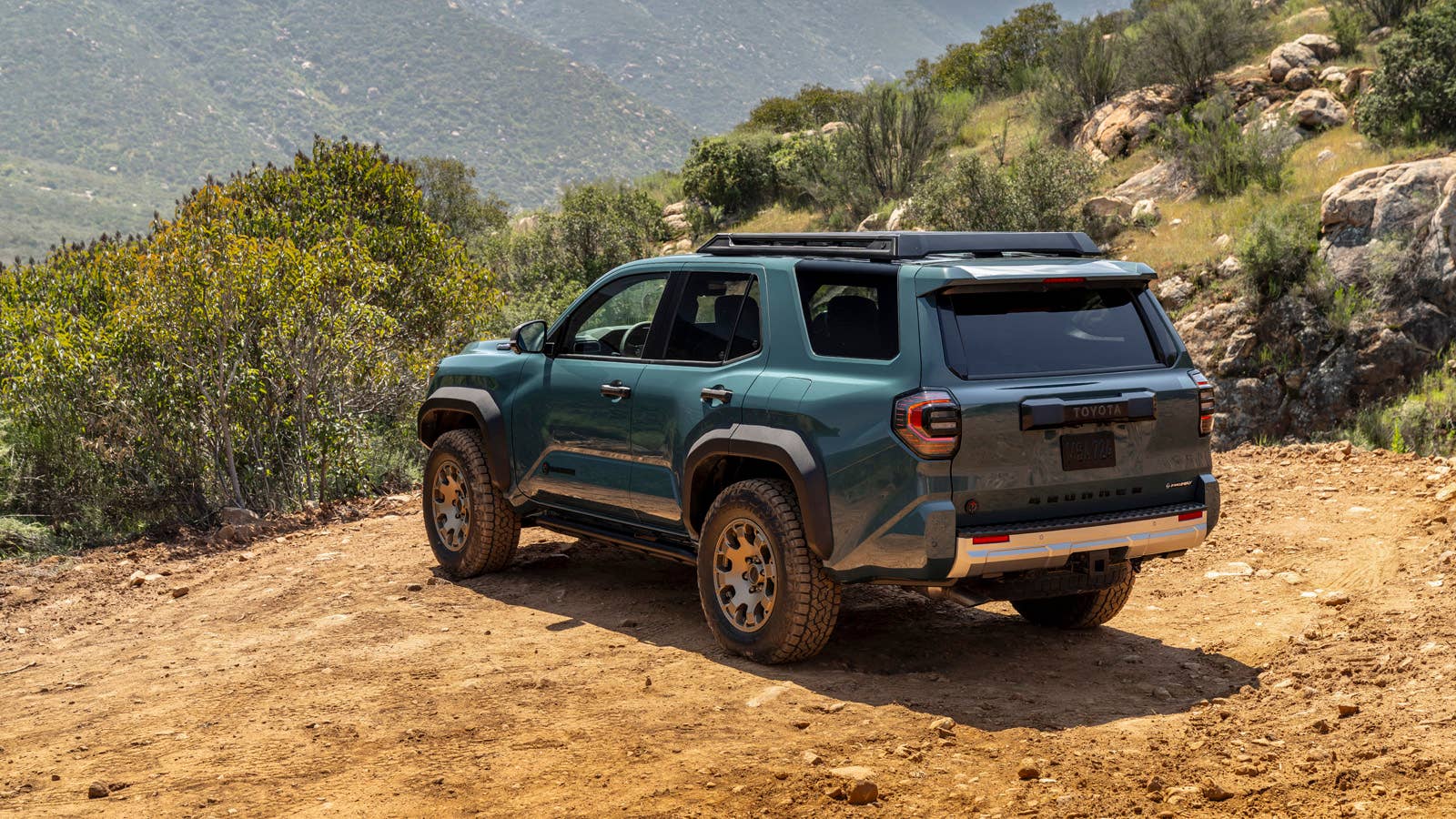
The Toyota 4Runner TRD Pro and Trailhunter are designed for different ventures on off-road terrain. The TRD Pro comes stock with Fox 2.5-inch internal bypass QS3 shocks with remote reservoirs that make it the ideal model for tackling off-road adventures at high speeds, like desert running. The Trailhunter features Old Man Emu 2.5-inch forged monotube shocks with remote reservoirs that prioritize off-road stability and control, making it the top 4Runner for overland excursions and low-speed crawling.

Kristen Brown
Both the TRD Pro and Trailhunter come equipped to excel at traversing off-road terrain, with shared standard equipment that includes an LED light bar, high-clearance front bumper, and a stabilizer disconnect mechanism. The two trims also include several premium interior amenities, including wireless smartphone charging and heated and ventilated front seats.
2. Trailhunter offers more robust underbody protection
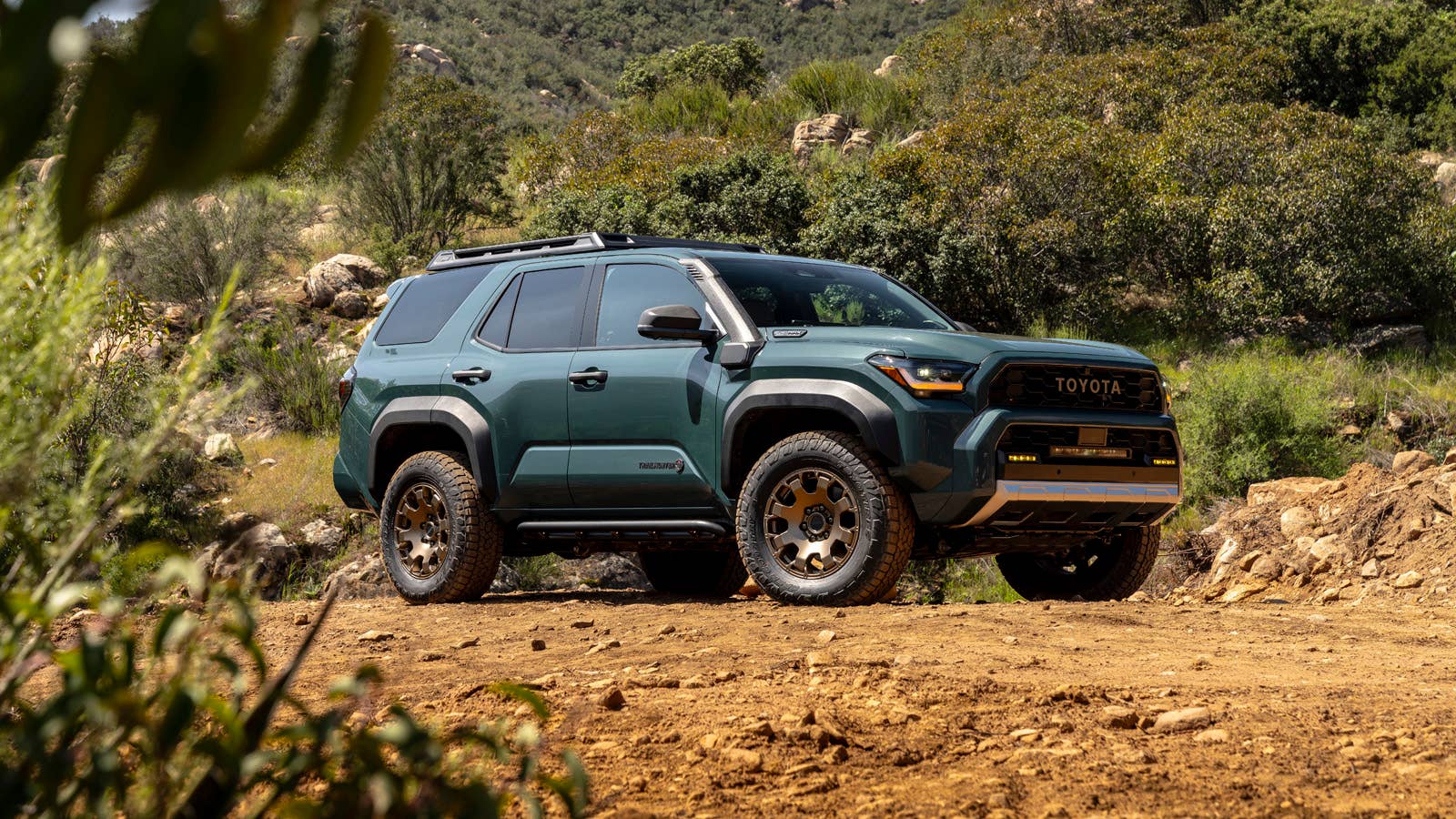
Proper underbody protection is a must-have for any off-road SUV, and Toyota doesn’t disappoint with the 4Runner TRD Pro and Trailhunter. Both models offer some sort of underbody protection, but the Trailhunter is the superior pick in this arena.
Toyota
As a model designed for low speeds and rougher terrain, the Trailhunter comes equipped with a steel skid plate, as well as protection for the transfer case, rear differential, and fuel tank. The TRD Pro is better suited for high speeds, which means a lighter aluminum front skid plate combined with transfer case and fuel tank protectors is sufficient. There’s a 45 lbs. difference in curb weight between the two models, with the TRD Pro weighing in at 5,455 lbs., while the Trailhunter is a bit heavier at 5,500 lbs.
3. The TRD Pro leans into performance
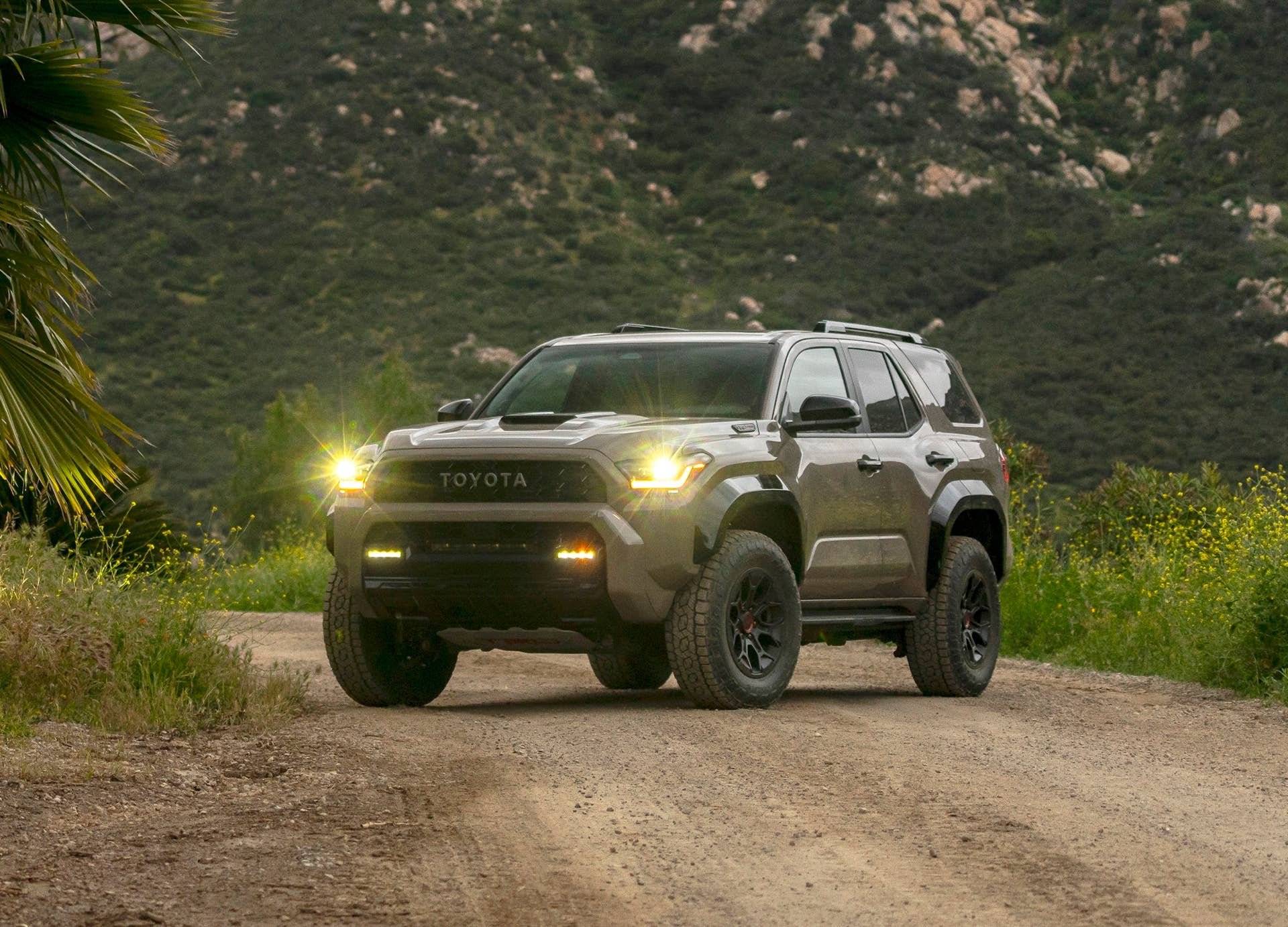
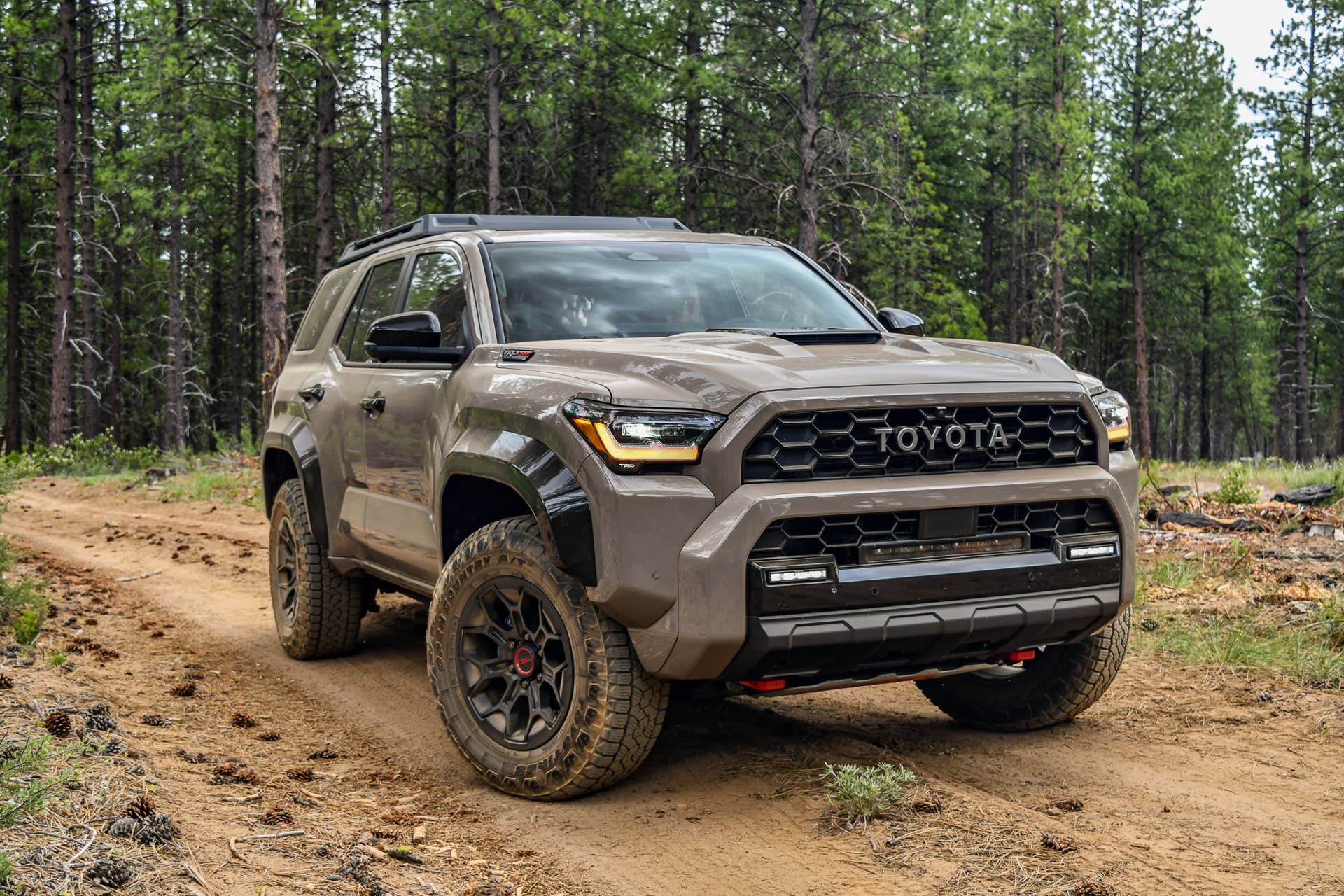
Since the Toyota 4Runner TRD Pro and Trailhunter are specifically designed to challenge the great outdoors in different ways, they offer different air intakes based on their specialties. Whereas the TRD Pro features a performance air intake, the Trailhunter boasts a high-mount air intake, often referred to as a snorkel. The TRD Pro’s intake puts an emphasis on performance by improving engine airflow, while the Trailhunter’s snorkel is positioned at a higher point to prevent water and debris from entering the engine, making it the ideal 4Runner model for overlanding.
Toyota
There are several other differences to consider in the 4Runner’s design as well. The TRD Pro features a hood scoop and roof rails, while the Trailhunter boasts an ARB roof rack and frame-mounted steel rock rails. Both models share a 2.4-liter turbocharged hybrid powertrain that generates 465 lb-ft of torque, but horsepower figures differ. While the Trailhunter’s powertrain puts out 323 horsepower, the TRD Pro gets a slightly higher 326 horsepower. The 4Runner TRD Pro and Trailhunter are both rated for an EPA-estimated 23 mpg in combined city/highway driving.
Final thoughts
Kristen Brown
The 2025 Toyota 4Runner TRD Pro and Trailhunter are in an interesting position. Both models are within striking range of the automaker’s Land Cruiser and Sequoia, and even the Lexus GX could come into play. If you have your heart set on a 4Runner, the short summary is that the TRD Pro is the better option for exhilarating speeds on off-road terrain, while the Trailhunter assumes a slower, more technical approach to off-road expeditions.
About the author

Joseph Pudlewski
Contributing Writer, Autoblog