
Key Points
- The 2027 Kia Telluride Hybrid pairs 329 horsepower with approximately 31 mpg and three-row family utility.
- A fully equipped X-Line SX-Prestige AWD costs $61,180, including accessories and destination charges.
- Despite its premium price, the Telluride offers upscale features, strong capability, and comprehensive warranty coverage.
Ever since it landed in 2020, the Kia Telluride has rendered itself as the American suburban sweet spot. It neatly bridged the chasm between minivan surrender and full-size truck-based monoliths like the Cadillac Escalade or GMC Yukon. It gave growing families reasonable passenger utility wrapped in sharp proportions without demanding commercial-grade parking skills. For 2027, Kia introduced the hybrid powertrain first seen in the redesigned Hyundai Palisade: a 2.5-liter turbocharged four-cylinder paired with dual electric motors producing a stout 329 horsepower and 339 lb-ft of torque.
Cole Attisha
It resolves the thirst of the retired naturally aspirated V6 while delivering close to 31 mpg combined and plenty of options for buyers, ranging from luxury-adjacent to off-road-focused, to something in between. But when you step up to the flagship trim and tack on factory accessories, the window sticker quickly swells to $61,180. It sounds compelling on paper, but is it really worth breaking the $60k barrier after $2,045 in add-ons and destination charges? Yes, but with a pretty big asterisk at the end.
Let’s break down the costs
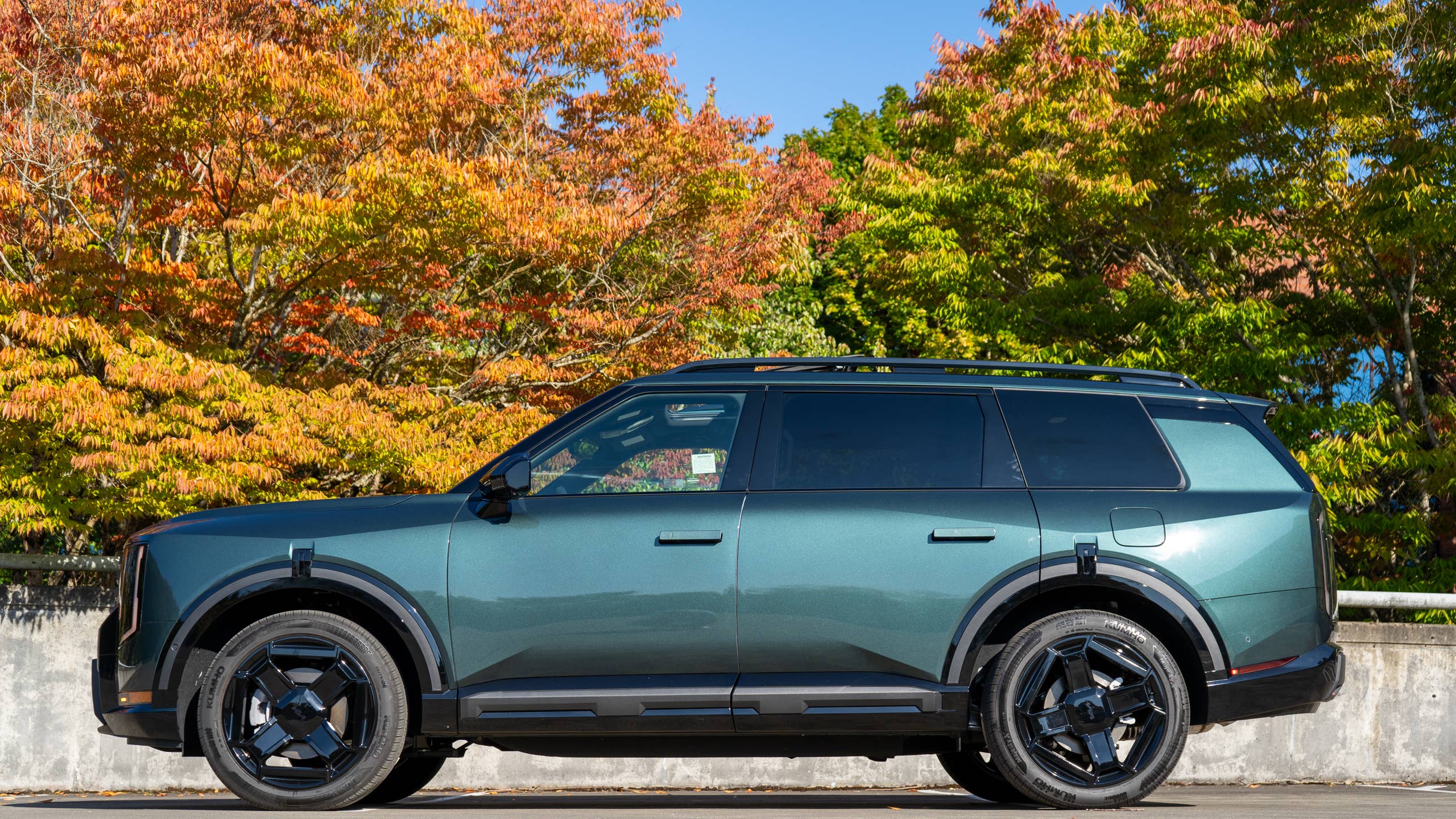
The model my family and I tested was the range-topping X-Line SX-Prestige AWD, which carries a base MSRP of $57,590 before options. Standard equipment at this flagship level leaves virtually nothing on the table. A handful of terrain modes, a 6-speed automatic transmission, and an automatic self-leveling rear suspension that keeps the ride composed even when carrying a heavy cargo load make this trim feel like an all-inclusive vacation instead of like you’re staying in a Motel 6, where you had to pay extra for a non-smoking room.
Cole Attisha
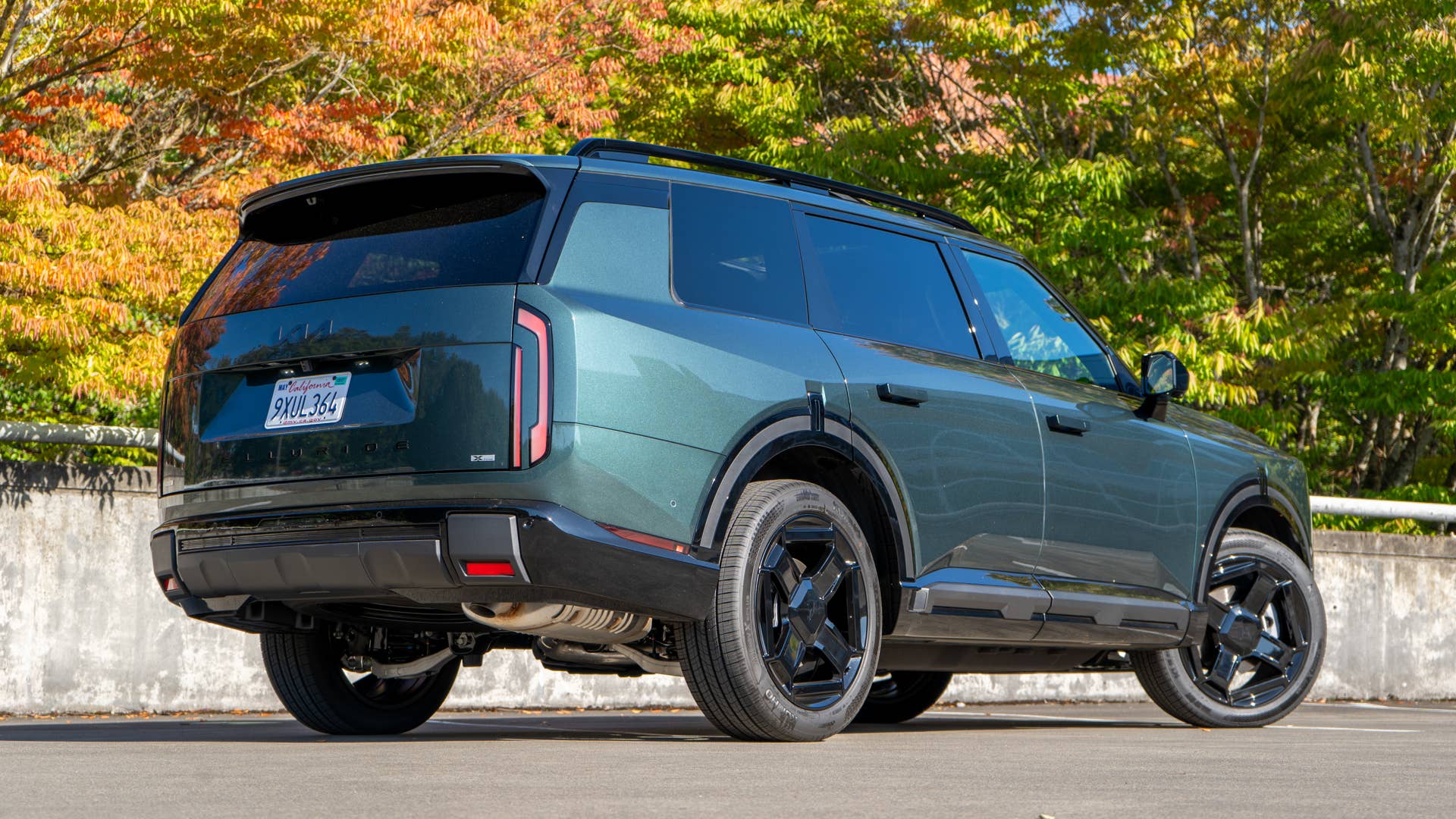
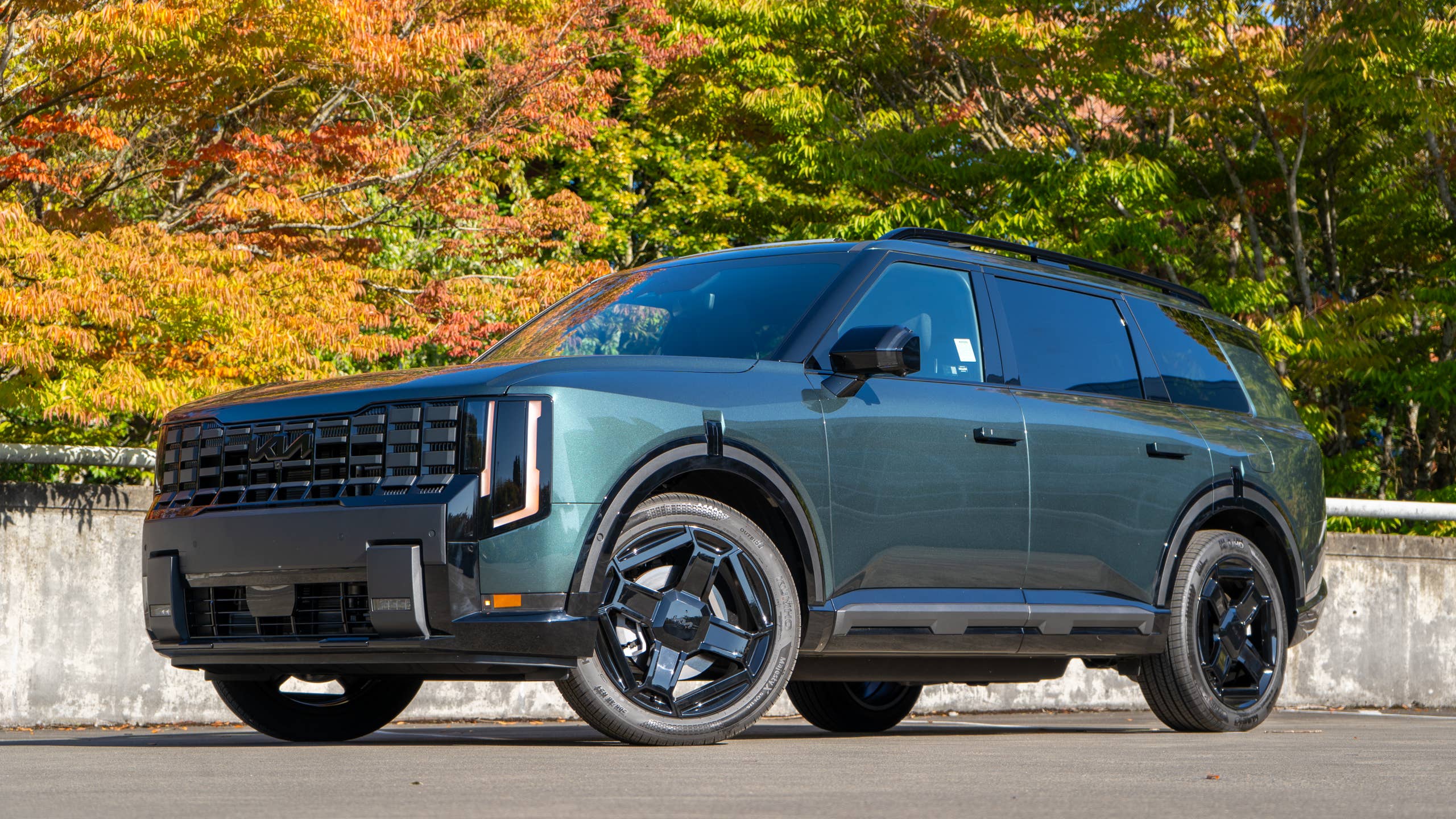
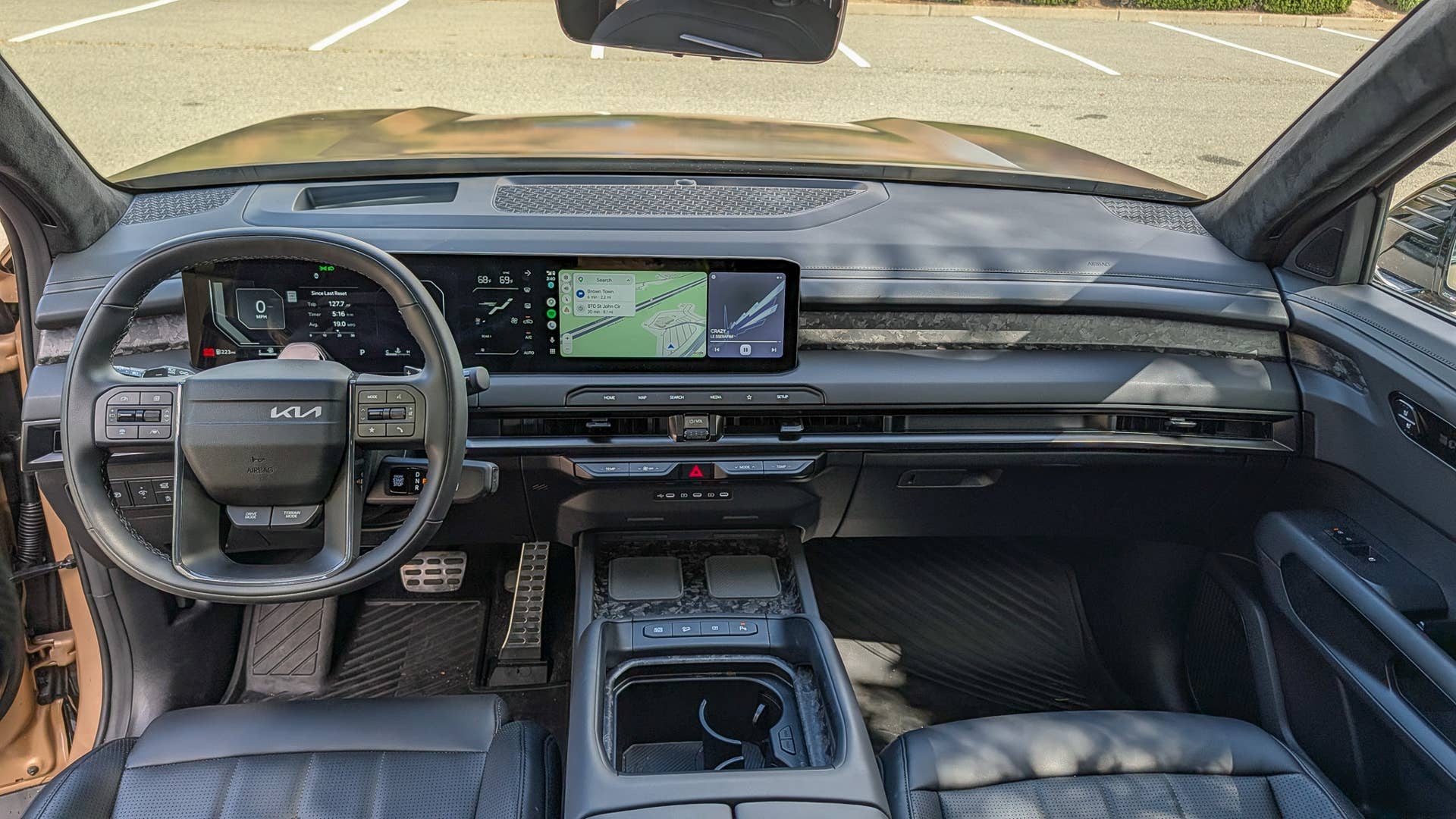
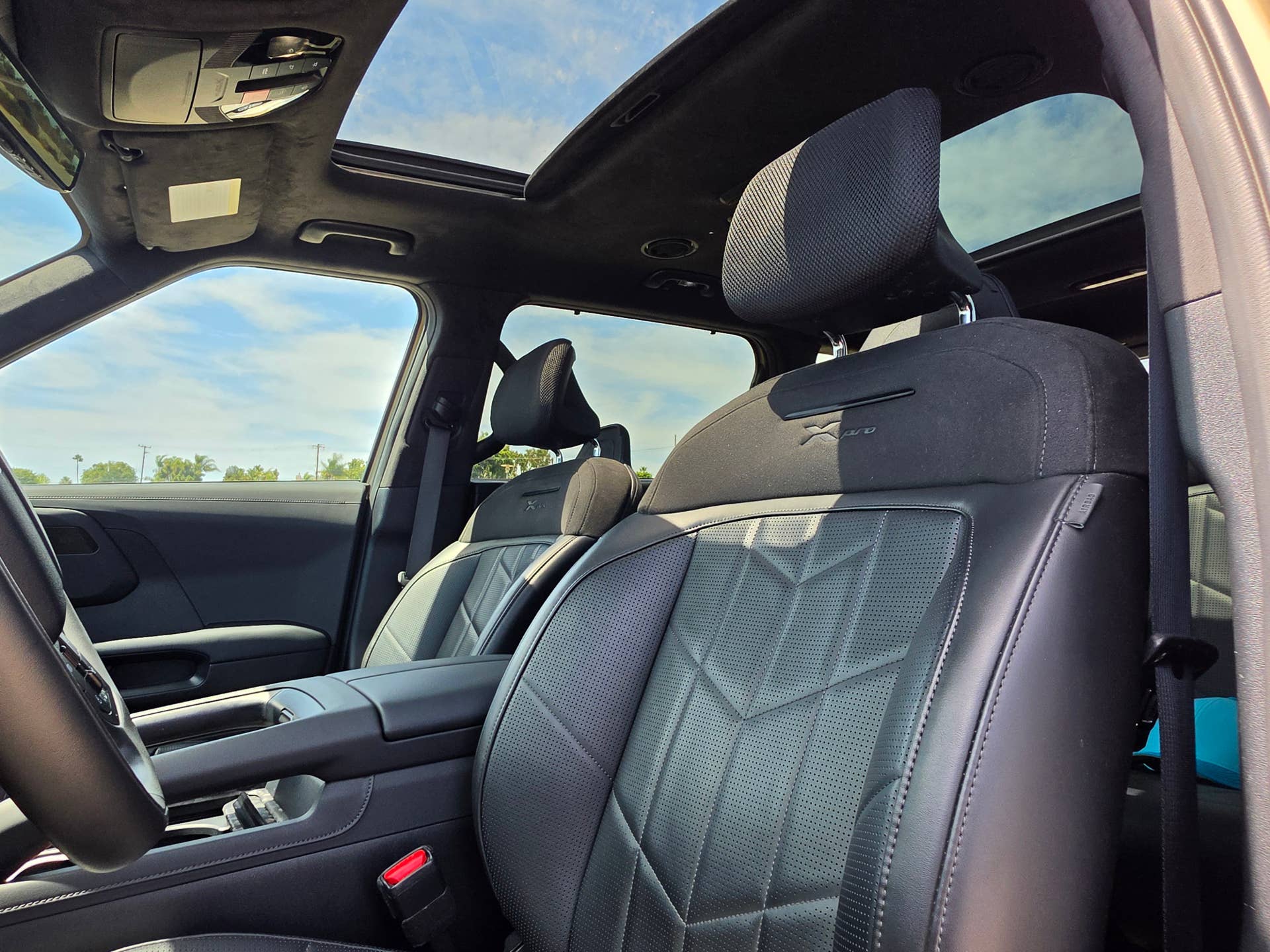
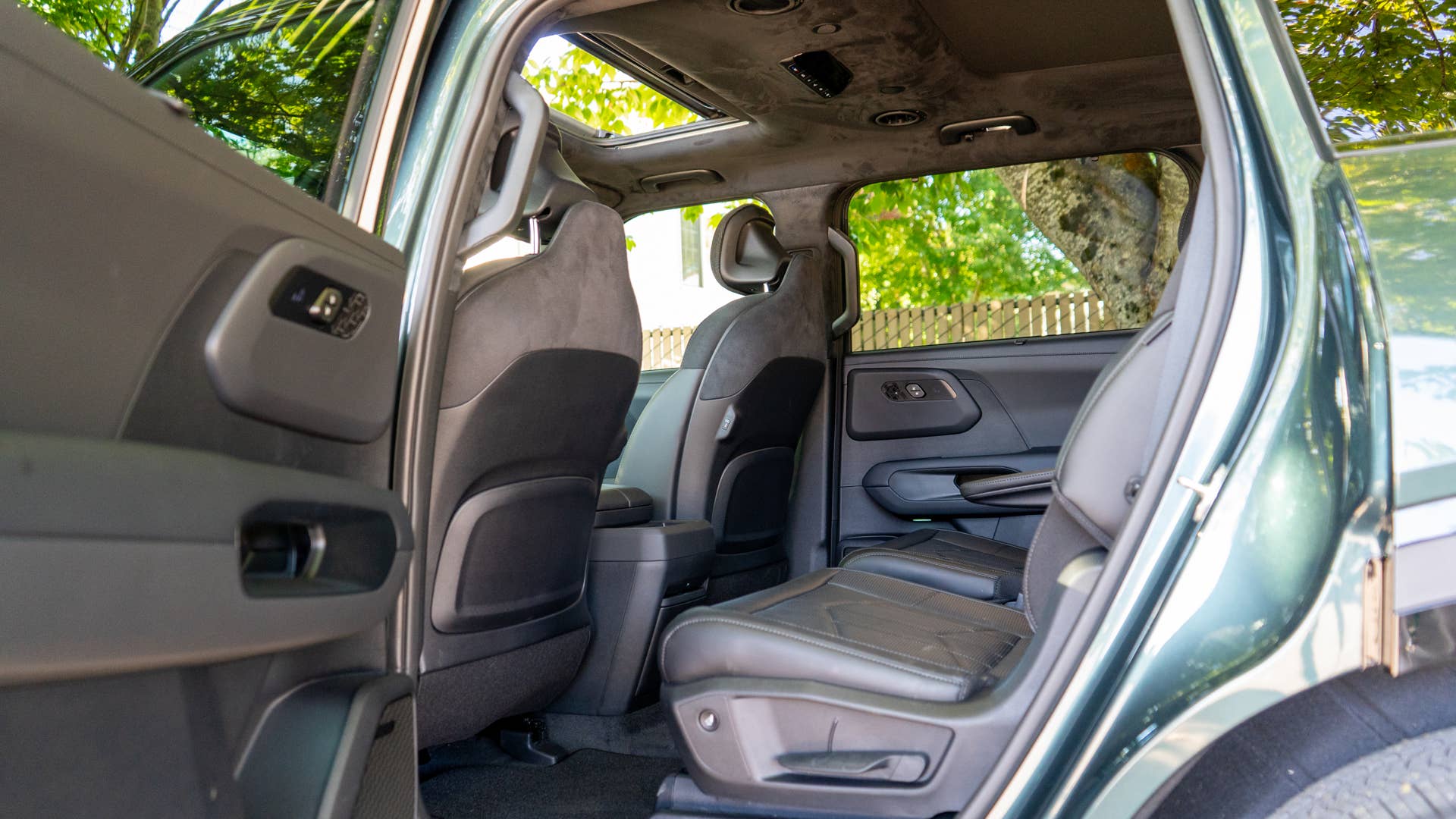
Inside, the cabin mimics luxury-class appointments with a curved panoramic display featuring dual 12.3-inch screens, a head-up display, dual wireless smartphone chargers, a Meridian premium audio setup, and a fancy-feeling synthetic leather upholstery. Both the front seats and second-row captain’s chairs are heated and ventilated, the driver gets an Ergo Motion seat with power bolsters, and the steering wheel is both heated and power-adjustable. The exterior is equipped with rugged X-Line styling cues, 21-inch gloss black alloy wheels, dual sunroofs, and LED projector fog lights, while safety is handled by Kia’s comprehensive active suite, including Highway Driving Assist 2, Safe Exit Assist, a digital rearview mirror, and Remote Smart Parking Assist. After factoring in $2,045 worth of factory-installed paint and lifestyle accessories, the MSRP rises to $59,635. Adding the mandatory $1,545 inland freight and handling destination charge brings the total Monroney sticker price to $61,180.
Kristen Brown
Here’s what else was included in the price:
- Black Jade Green Exterior Paint ($495): Replaces the standard exterior palette with an upscale, deep metallic green finish that contrasts cleanly against the dark X-Line trim.
- Towing Package ($625): Installs a factory-engineered tow hitch receiver that leverages the hybrid powertrain’s 339 lb-ft of torque for hauling small trailers, campers, or hitch-mounted bike racks.
- All-Season Floor Liners ($255): Deeply channeled, high-walled rubber floor mats engineered to catch dirt, mud, snow, and drink spills from kids. They worked extremely well with my toddlers, that’s for sure.
- Carpeted Floor Mats ($250): A full set of traditional woven carpet floor mats for drivers who prefer a plush cabin look over all-weather rubber.
- Cargo Cover ($200): A retractable privacy screen designed to keep luggage, grocery bags, and valuables hidden from view in the rear hatch.
- Carpet Cargo Mat w/ Seatback Protection ($155): Extends heavy-duty protection over the cargo load floor and up the third-row seatbacks to guard the upholstery when loading flat cargo.
- Cargo Net ($65): A flexible mesh envelope net anchored at the rear liftgate to keep loose groceries and sports gear from rolling around the trunk
What does it compare to? Not much (at least not yet)
As far as AWD hybrid 3-row SUVs go, the market hasn’t made much room. Therefore, aside from the Hyundai Palisade hybrid—its industry twin—the only other competitor is the Toyota Grand Highlander. When cross-shopping the Palisade, buyers are looking at two sides of the same mechanical coin. Both vehicles share the same electrified foundation—a 2.5-liter turbocharged four-cylinder paired with dual electric motors producing 329 horsepower and 339 lb-ft of torque through a traditional six-speed automatic transmission. Where they diverge is in packaging, pricing strategy, and design philosophy. Hyundai positions the Palisade Hybrid with an entry trim starting in the mid-$40k bracket, catering to a posh, urban, lounge-like aesthetic with rounded, polished proportions and available executive touches. Kia, by contrast, restricts the Telluride Hybrid exclusively to higher-tier trims starting at the mid-level EX ($46,490) and culminates in the ruggedized X-Line SX-Prestige ($57,590 base), demanding a higher price point while serving families drawn to outdoorsy, trail-ready utility.
Kyle Edward - Autoblog
Turning to the Toyota Grand Highlander, the comparison hinges on powertrain performance and budget. Toyota’s base hybrid setup starts in the mid-$40,000 range and delivers stellar fuel economy, but it sacrifices brisk acceleration and muscle under heavy passenger loads. Matching the Telluride Hybrid’s athletic 329-horsepower output requires stepping up to Toyota’s flagship Hybrid MAX powertrain, where a 2.4-liter turbocharged setup delivers 362 horsepower and 400 lb-ft of torque. However, that performance jump quickly pushes the Grand Highlander MAX Limited and Platinum trims into the $56,000 to $63,000 range. While the Grand Highlander MAX delivers effortless passing power and offers an available adult-friendly eight-passenger bench configuration, its interior design leans noticeably utilitarian and conservative compared to its Korean rivals.
Cole Attisha
Ultimately, this landscape leaves the Kia Telluride Hybrid in a pretty sweet position. If you want a family hauler that eschews the typical anonymous crossover silhouette in favor of quirky, boxy styling, an adventurous attitude, and a playful personality—without sacrificing the long-haul efficiency of a modern hybrid—the Telluride makes an exceptionally compelling case.
So, is it a good value? For the most part
In a market where the average new vehicle transaction price regularly hovers around $50,000, paying $61,180 for a fully loaded, 329-horsepower, 31-mpg 3-row crossover is a pretty strong value. You aren’t just paying for badges or styling gimmicks here. You get tangible, high-end content. Standard heated and ventilated second-row captain’s chairs—along with the ability to equip heated seats all the way back into the third row via option packages—are luxury packaging rarely seen south of $75,000. Add in the self-leveling rear suspension that keeps the chassis planted when hauling a full cabin of kids and gear, and it outclasses competitors that wallow under load.
Throw in Kia’s industry-leading 10-year/100,000-mile limited powertrain and battery warranty (along with 5-year/60,000-mile bumper-to-bumper coverage), and the initial investment delivers long-term financial peace of mind. If you are looking for a spacious, fuel-efficient 3-row crossover that doesn’t compromise on comfort, styling, or passing power, the 2027 Telluride Hybrid earns every penny of its sticker price.
About the author

Kristen Brown
Contributing Writer, Autoblog