
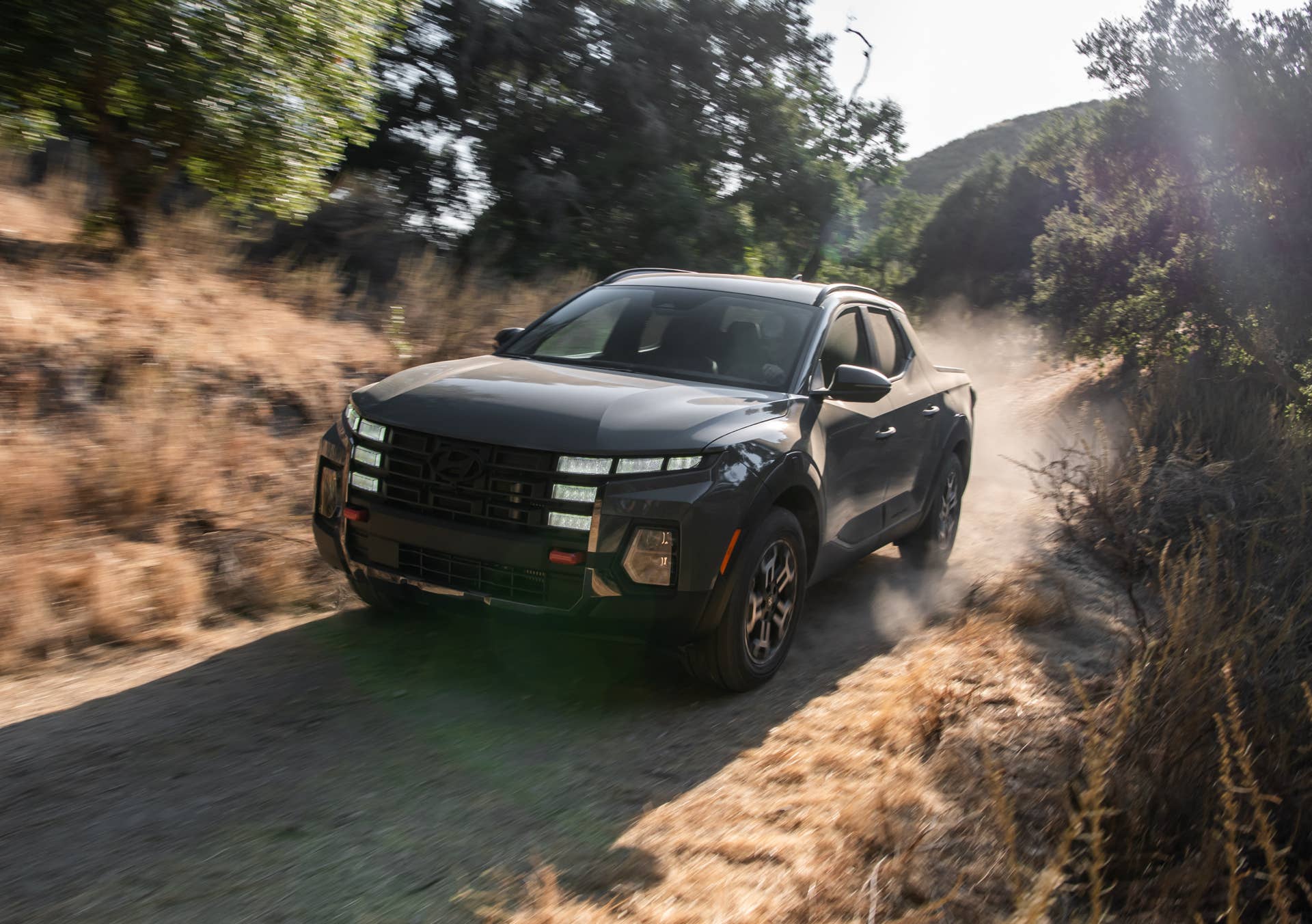
The compact unibody lifestyle pickup truck segment is pretty small. It has two members: the Ford Maverick and the Hyundai Santa Cruz. The Maverick is selling like gangbusters (more than 123k sold so far this year), but the Santa Cruz has lagged far behind (shy of 15k units this year). The Santa Cruz will disappear from showroomse early next year, to be replaced by a real body-on-frame truck in 2029.
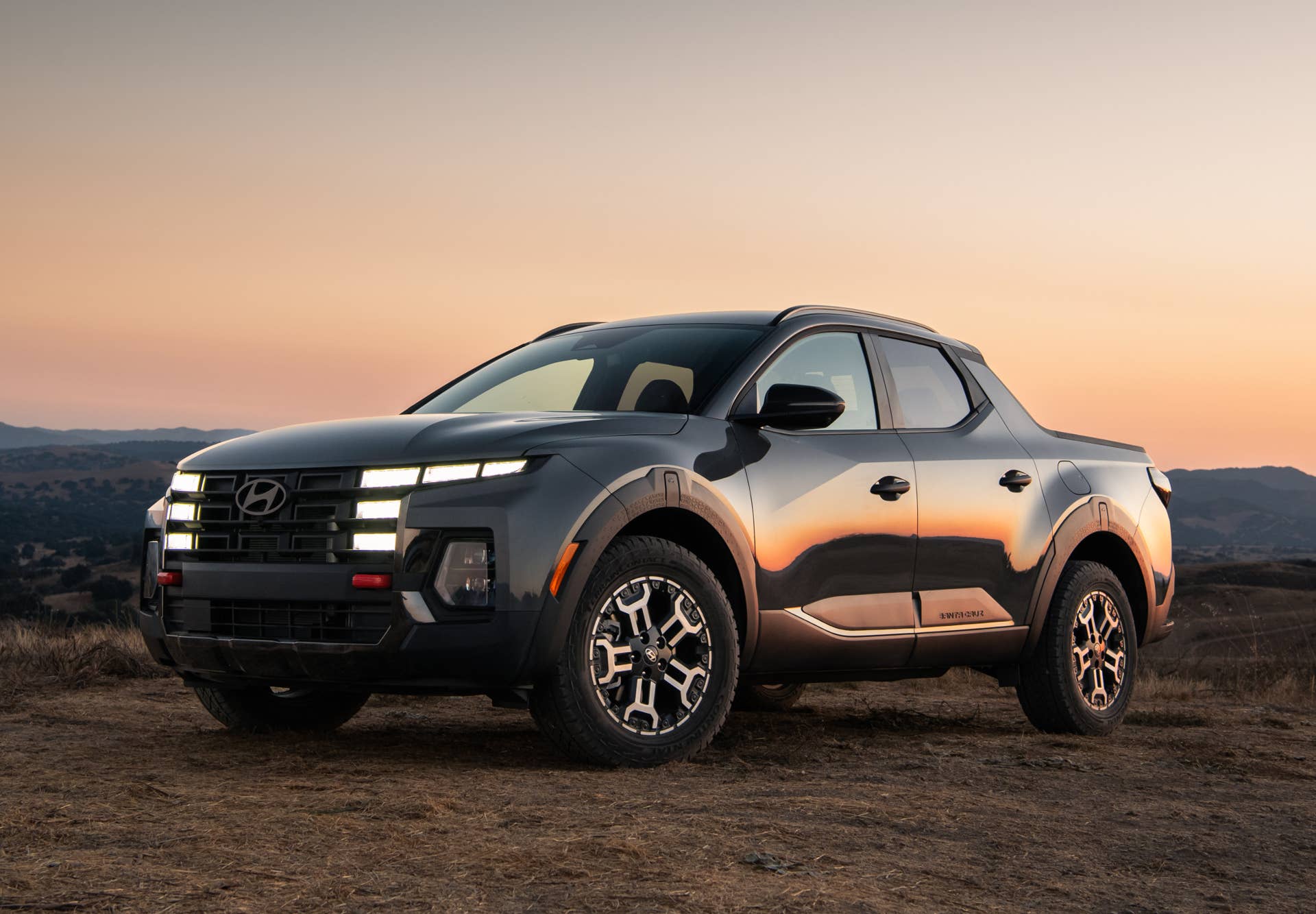
But the current Santa Cruz is worth looking at, despite the fact that it’s slow to move off dealer lots. It’s a truck that can do the everyday without guzzling gas or taking up gobs of space. With compact dimensions, a useful open bed, and crossover-style construction, it offers versatility and a driving experience that’s more like a car.
The top trim XRT is priced at $42,775. Standard equipment highlights include the upgraded 2.5-liter turbocharged four-cylinder engine, all-wheel drive, unique 18″ XRT dark alloy wheels, an XRT grille, automatic LED headlights, LED taillights, heated side mirrors, lockable under bed storage, composite bedliner, dual C-channel adjustable utility track rail and cleat system, remote release tailgate, power tilt/slide moonroof, 12.3″ touchscreen, 12.3″ digital gauge cluster, Bose premium audio, surround view monitor, dual zone automatic climate control, heated leatherette seats, and wireless Apple CarPlay/Android Auto. Including options and the $1,650 freight charge, the total price came to $45,085.
Rugged Enough For Most
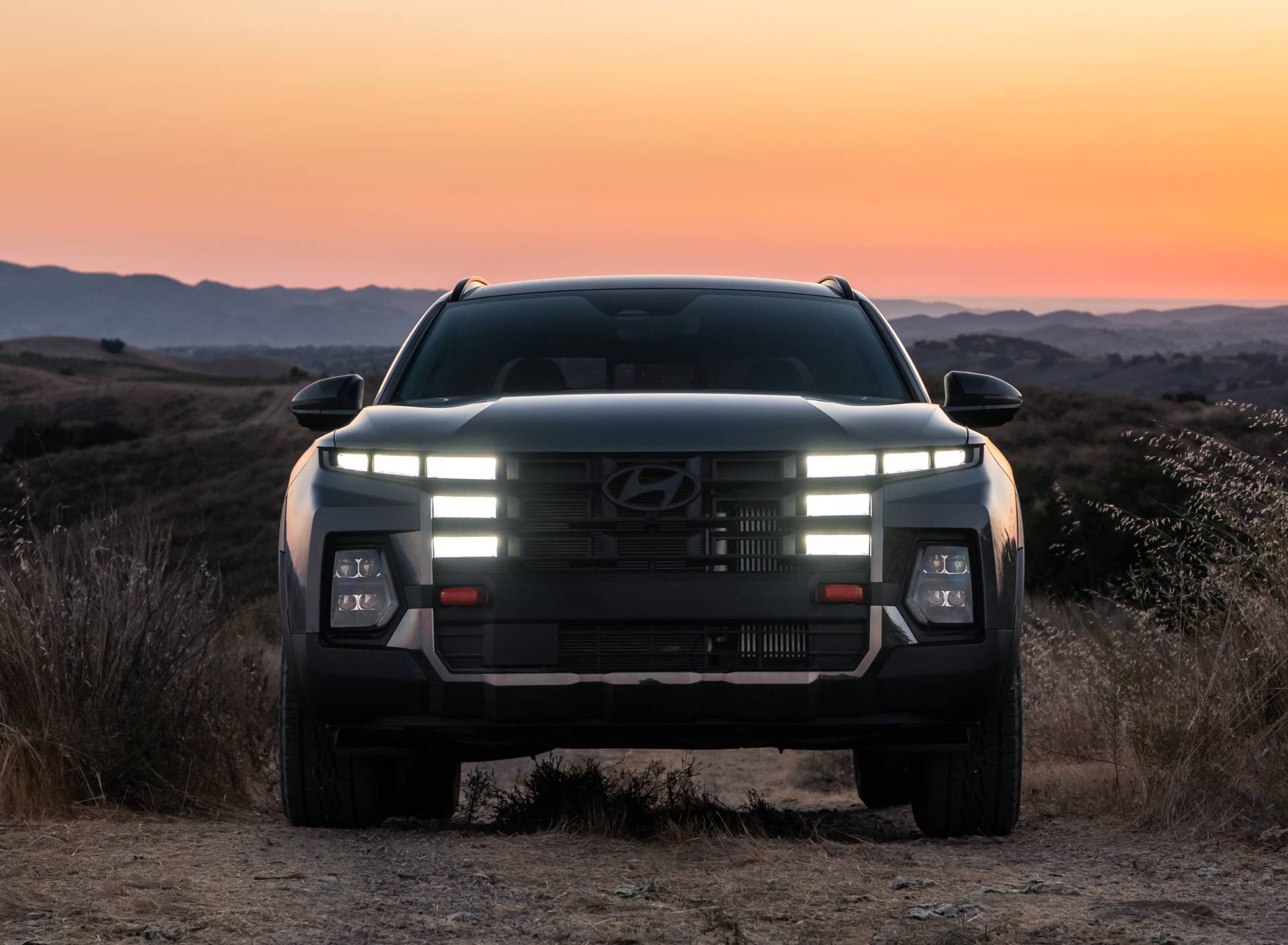
The XRT trim is meant to look like a part-time weekend warrior than its more urbane trim brethren. Its blackned grille, unique 8-inch wheels, all-terrain tires, and front recovery points give it a purposeful appearance that I’ll call “rugged lite”. The textured matte black fender trim with a triangle relief pattern is pretty cool. The little details on the XRT are what make it look more rough and ready than its counterparts, and the added black bits add the right amount of aggression.
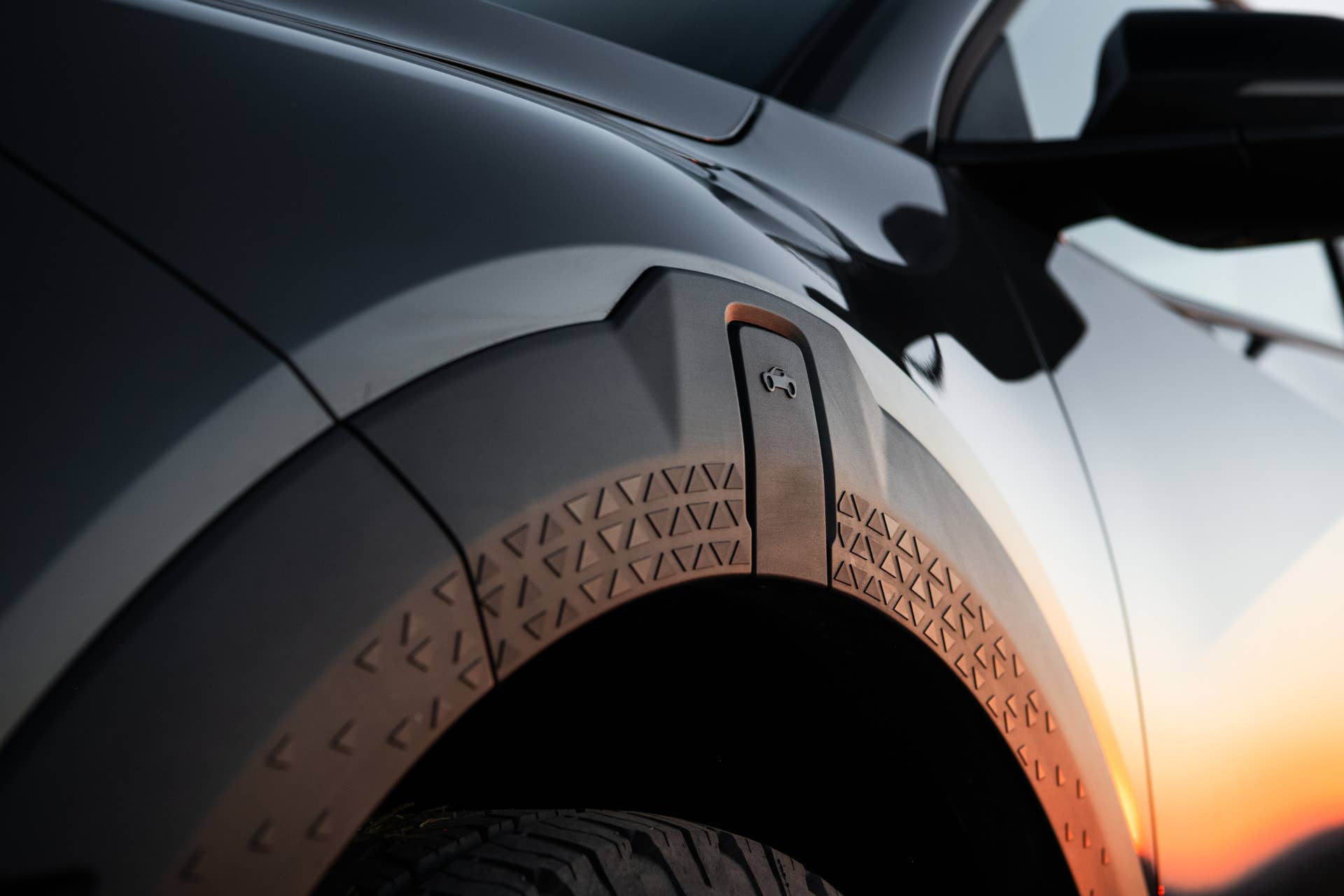
Even with the bigger all-terrain tires, the XRT’s ground clearance remains at 8.6 inches, just like the SE and the SEL Activity trim levels. At least the XRT’s 19.9-degree approach angle improves on the standard Santa Cruz’s 16.9 degrees. Not that anyone will do anything resembling serious off-roading with the XRT, but it’s nice to know that it can handle bigger divots and some trail humps without worry. This is a compact crossover-based pickup with added rough-road capability, not a rock-crawling beast.
Thinking about selling your car? Get an instant cash offer online now. Click here to get started.
The Upgraded Engine Delivers
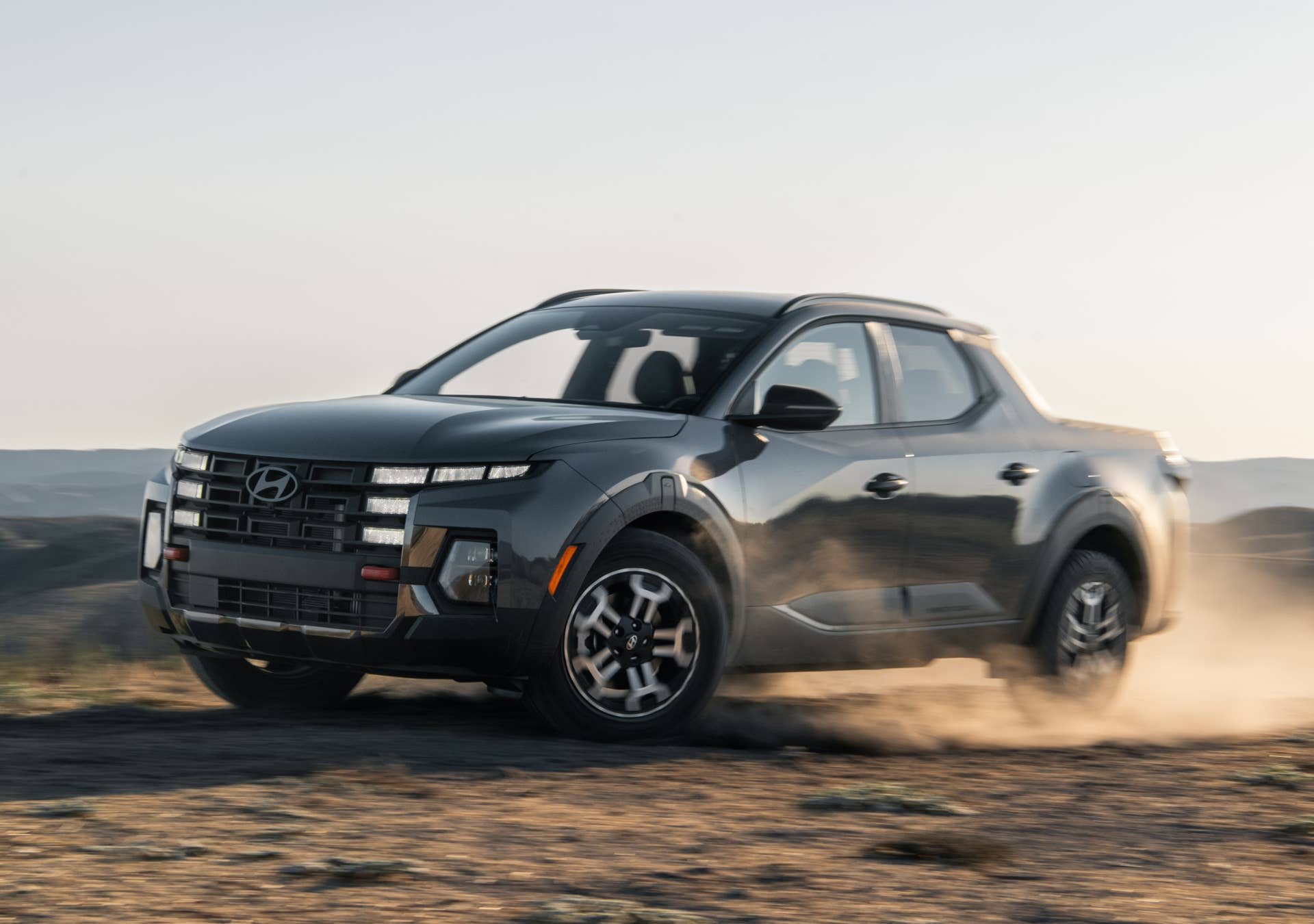
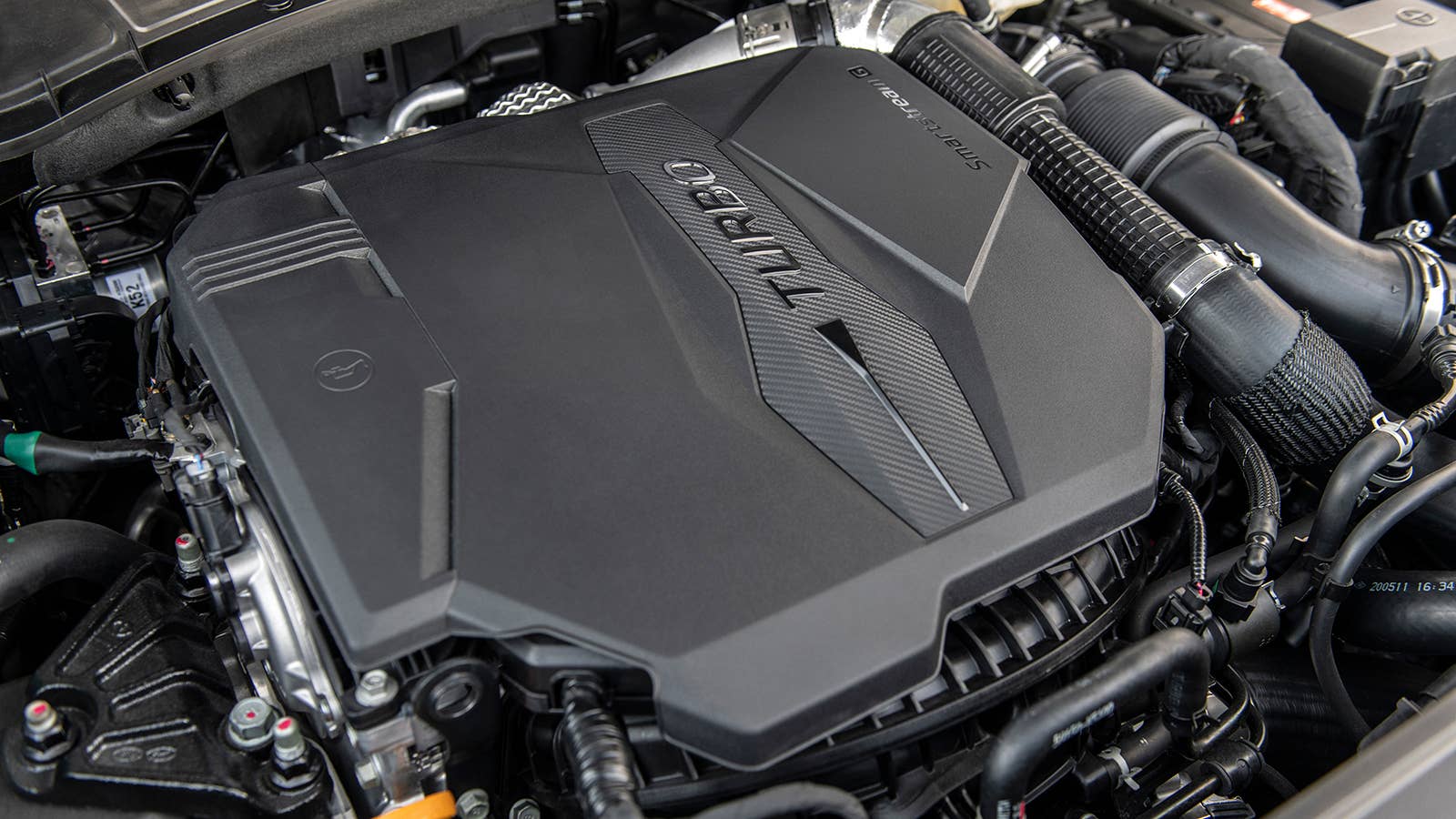
I’ve driven the Santa Cruz with both engines. The 2.5-liter naturally-aspirated four is not the one to go with. Good thing the XRT only comes with the more potent choice. The turbocharged 2.5-liter four-cylinder produces 281 horsepower and 311 lb-ft of torque, compared with 191 horsepower and 181 lb-ft from the naturally aspirated engine in the other two trim levels. It provides for quick launches and capable passing power. It actually makes the Santa Cruz responsive, smooth, and fun to drive. It’ll launch to 60 in six seconds flat.
The reason for the reponsiveness and extra grunt isn’t just the horsepower bump but the peak torque delivery from 1,700 to 4,000 rpm. The base engine hits its lower torque peak at 4,000 rpm. The upgraded engine runs on regular, not premium, gas. Another plus for the Santa Cruz XRT. I enjoyed helming it. The steering is light but accurate, and the XRT feels composed and balanced in the turns. The engine also bumps the 2.5-liter’s 3,500 towing capacity to 5,000 pounds with trailer brakes. That makes the XRT capable of pulling small campers, boats, or trailers.
The transmission is also a plus. The 2027 XRT uses an eight-speed automatic that shifts quickly and doesn’t gear hunt when pushed. Hyundai pairs it with standard HTRAC all-wheel drive and terrain-mode selection with snow, mud, and sand modes. Rather than relying on a mechanical center differential lock, the Santa Cruz XRT’s HTRAC AWD system uses an electronically controlled multi-plate clutch to automatically adjust torque distribution between the front and rear axles. It responds in real time to wheel speed, accelerator position, steering angle, and vehicle rotation measured by yaw sensors.
Fuel economy isn’t great. The Santa Cruz XRT with all-wheel drive is EPA rated at 18 mpg city, 25 highway, and 20 combined. During my drive, some of it spent in Sport mode, averaged 17.6 mpg.
The Interior Shines
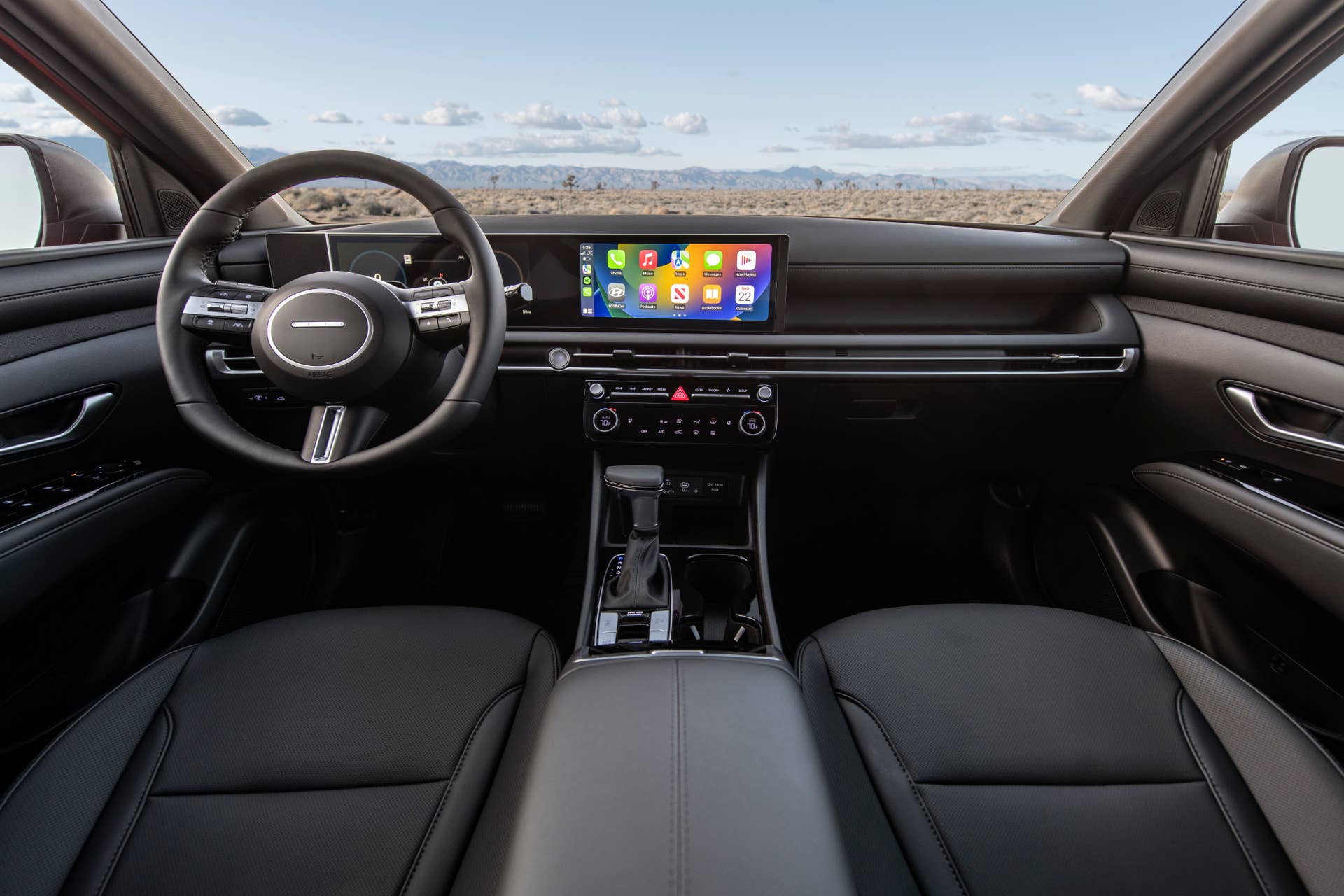
When Hyundai refreshed the Santa Cruz in 2025, it not only made it look more truck-like in the front, but it also revamped the cabin to make it more user-friendly. The biggest changes took the form of a large integrated frame for infotainment and instrumentation, along with improved physical controls. Its linear dash and expansive tech give it more sedan than truck vibes.
The seating position is excellent, giving great visibility over the hood. The seats are on the firmer side but still quite comfortable. Rear legroom is 36.5 inches. It’s not cavernous inside, but adults can sit in back comfortably as long as front occupants aren’t over six feet tall.
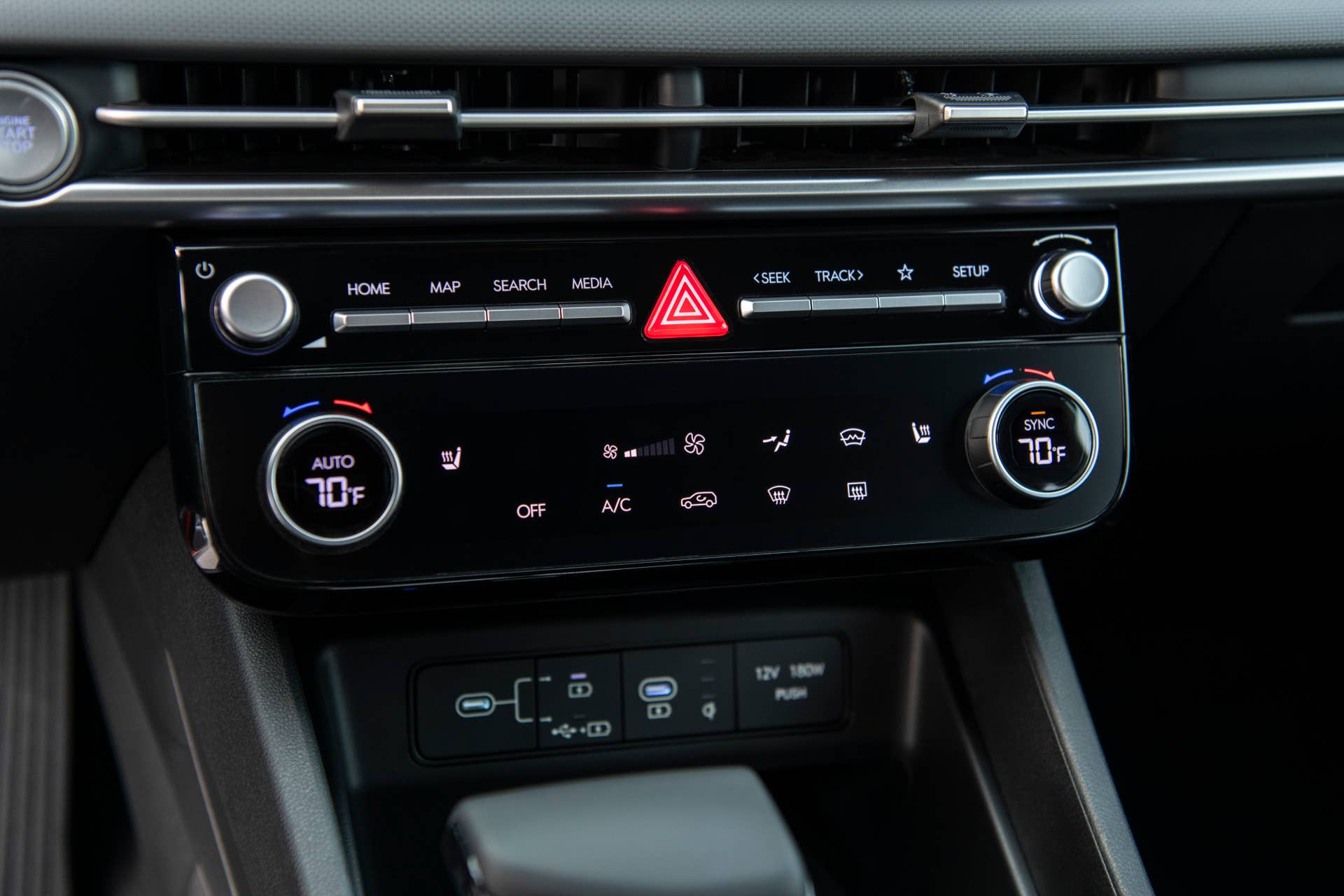
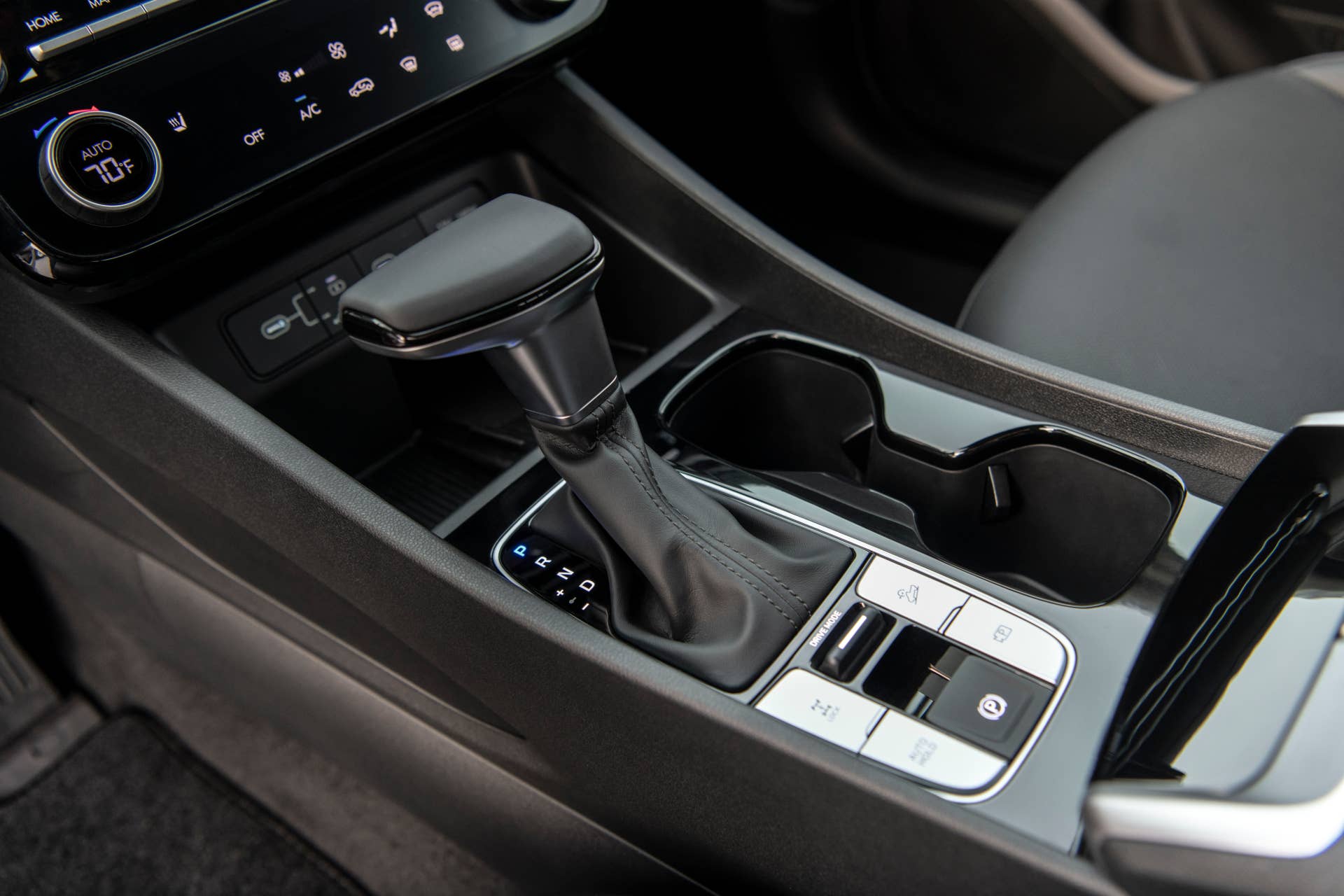
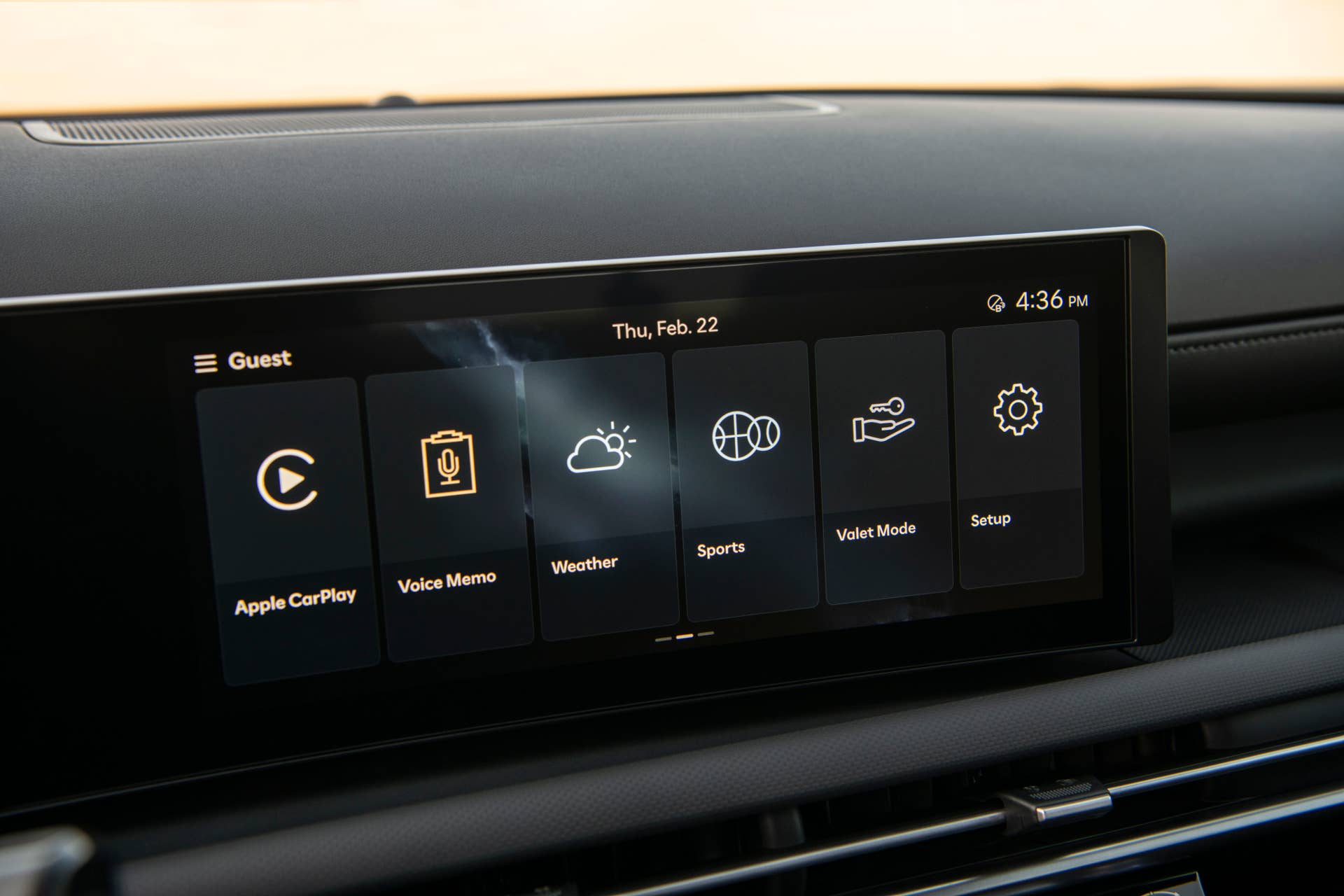
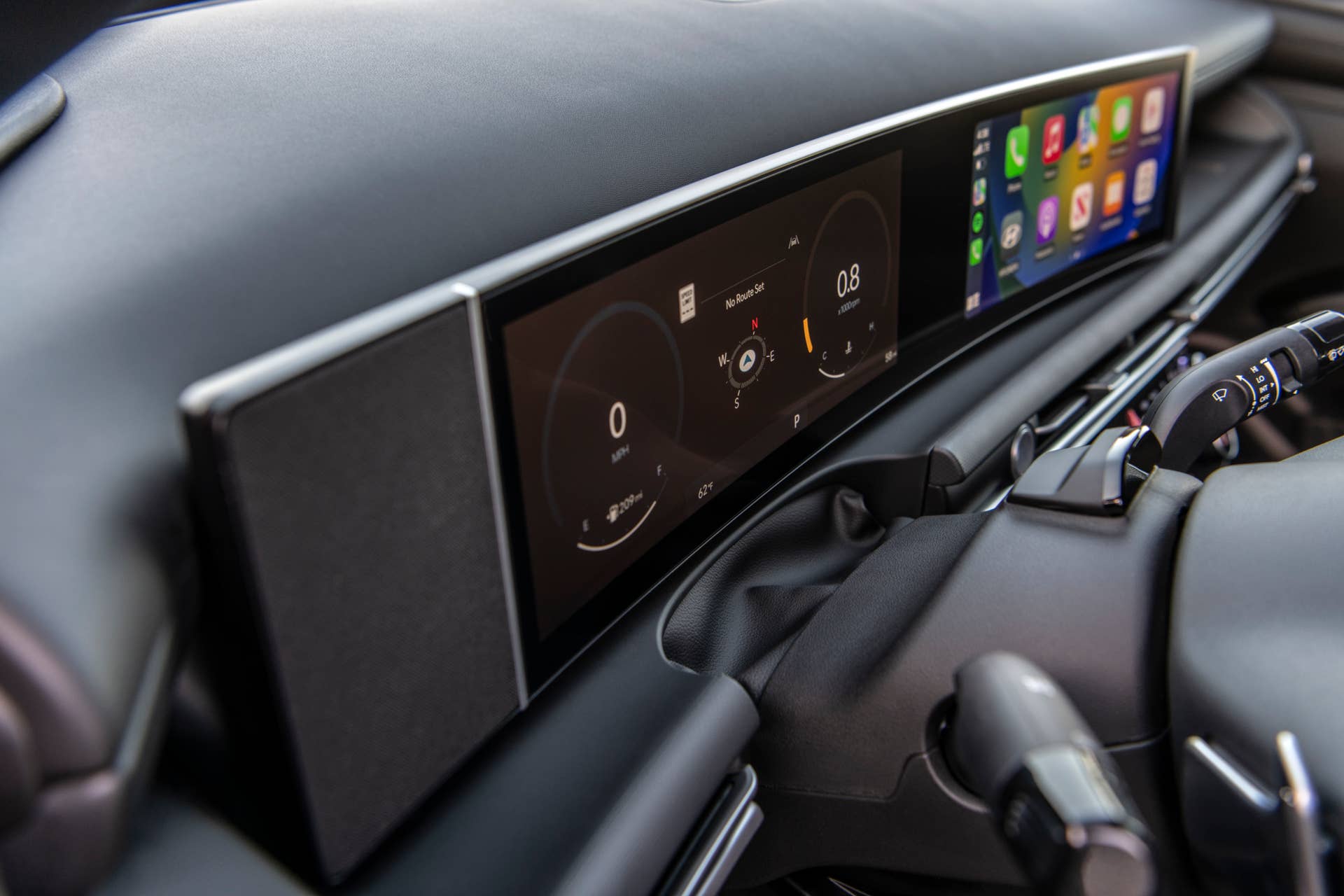
The dashboard pairs a 12.3-inch digital instrument cluster with a 12.3-inch navigation touchscreen. Wireless Apple CarPlay and Android Auto, Bose premium audio, wireless device charging, and front and rear USB-C ports round out a strong technology package that keep the Santa Cruz modern inside.
The XRT includes a surround-view camera system, a blind-spot camera display, adaptive cruise control with stop-and-go capability, and Highway Driving Assist. Its forward collision-avoidance system adds cyclist and junction-turning detection, supplementing the blind-spot warning and rear cross-traffic collision-avoidance assistance.
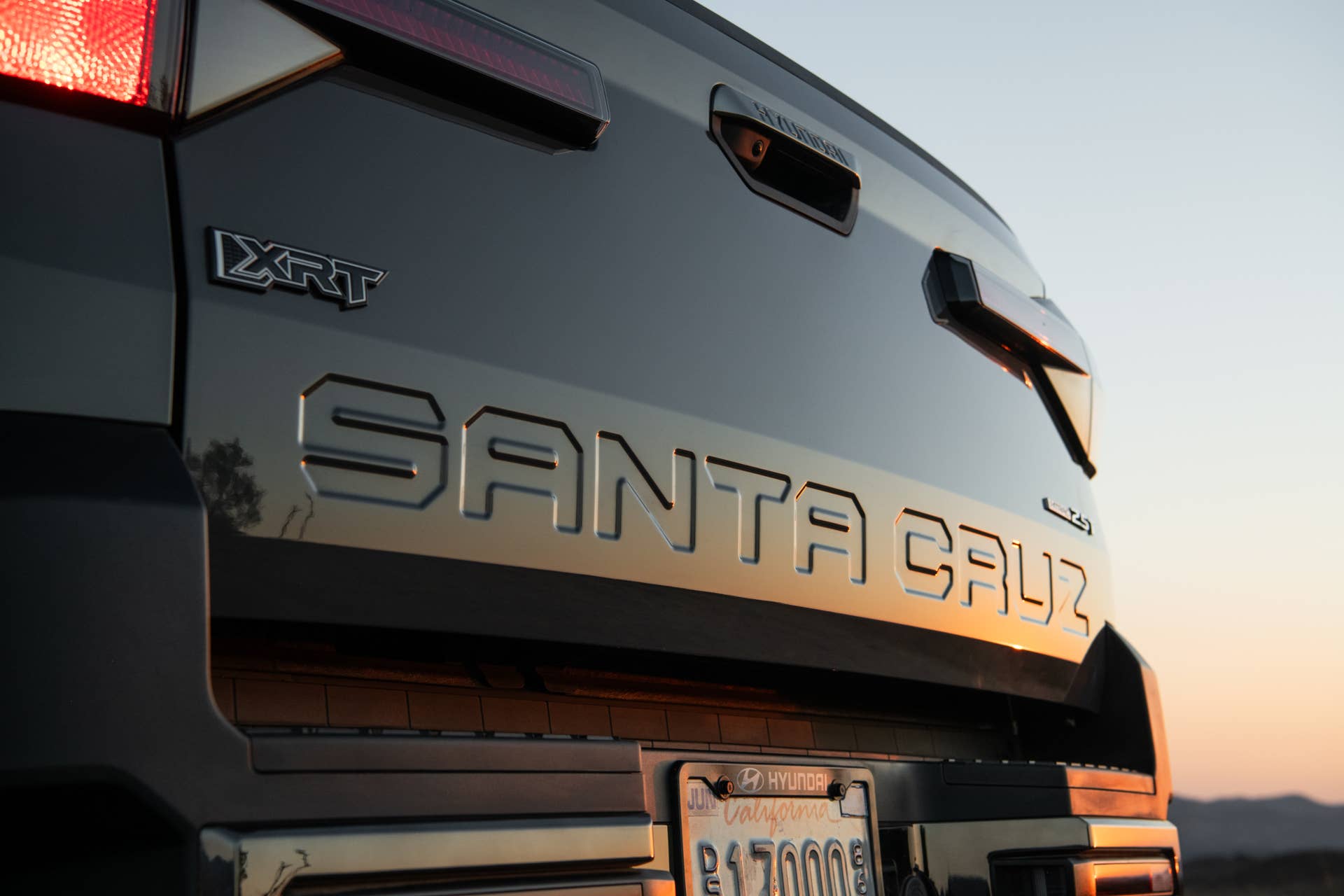
The Santa Cruz’s bed is short, but it’s still quite useful for everyday items and weekend gear. It measures 52.1 inches long at the floor and 48.4 inches at the upper edge, with 27 cubic feet of total volume. The rail and cleat system is a brilliant add-on for the XRT, providing tie down versatility to keep items secure. The XRT also gets an integrated tonneau cover and a lockable under-bed compartment. This trim level also includes sidewall storage compartments, LED bed lighting, and a 115-volt power outlet. Integrated rear bumper steps help with access.
Final Thoughts
I’m going to miss the Santa Cruz when it goes away next year. The XRT is super-appealing and should work for most folks who don’t haul or tow a lot on a regular basis. The AWD system is more than capable, and the bed works for everyday applications. The XRT is the Santa Cruz to get if you want the model at its most capable and comprehensively equipped. The turbo engine and quick steering make the XRT fun to helm. Gas mileage is medicore, and the price point is admittedly high, but the XRT is version that best delivers on the idea of a compact pickup for someone who does not want a conventional truck.

About the author
Amos Kwon
Contributing Writer, Autoblog