
The [Other] People’s Car
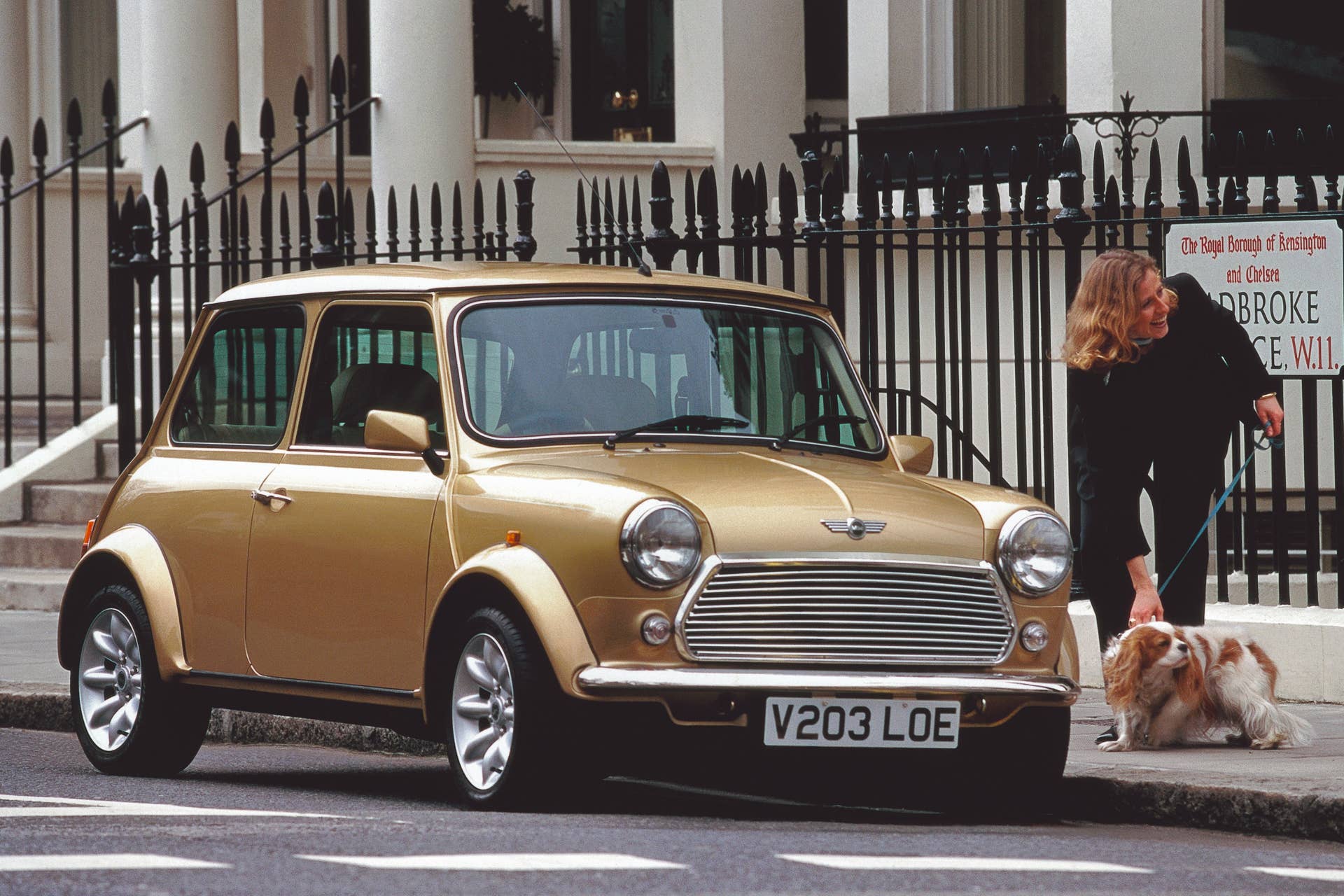
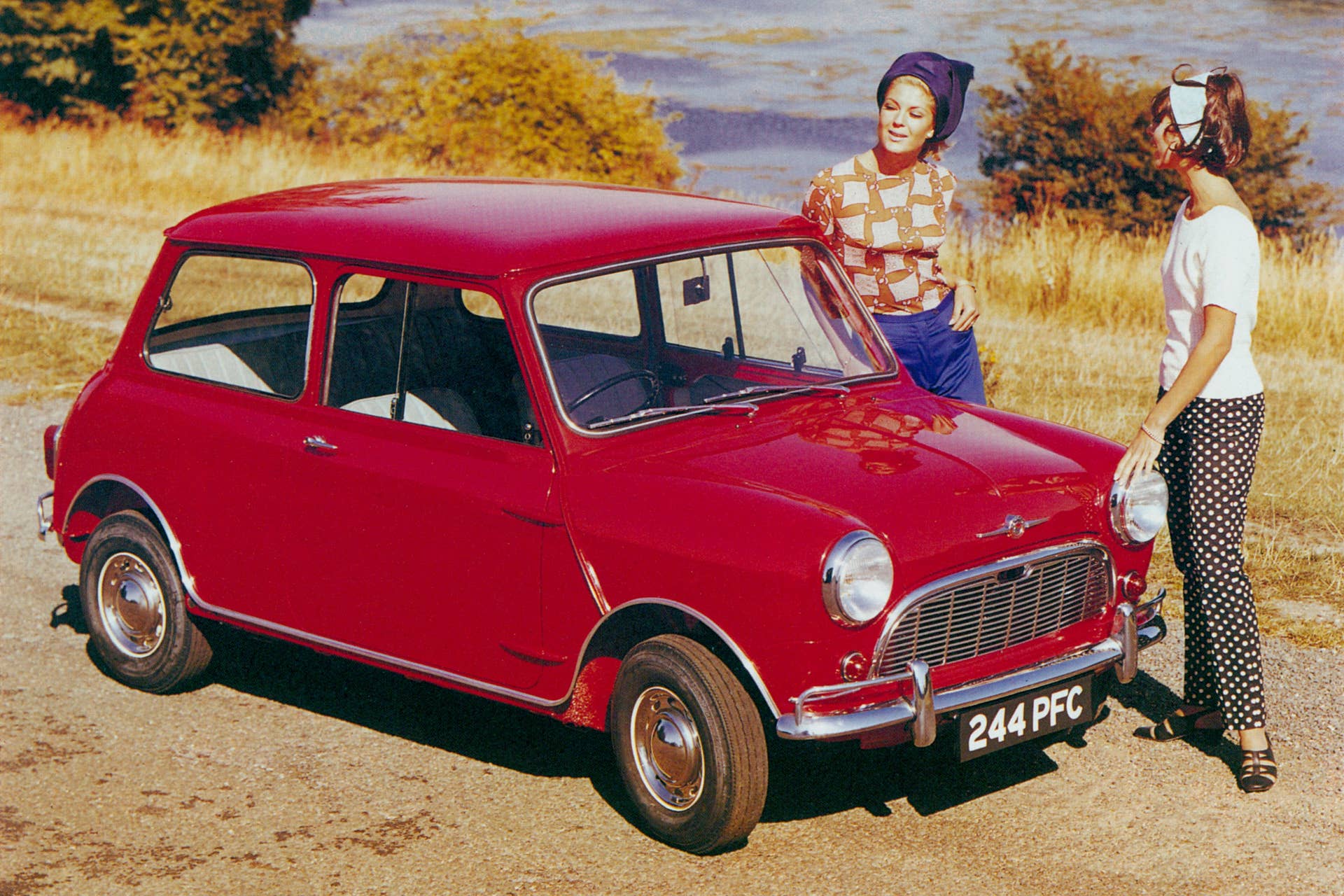
If there is any mass market car apart from the Volkswagen Beetle and the Ford Model T that truly served as dedicated “people’s cars,” one would point to none other than the original Mini Cooper. Decades before BMW turned it into its rule-Britannia fashion-luxe machines, the original Mini launched as a new, homegrown and innovative solution to get the British public moving. From 1959 to 2000, over 5.38 million of the tiny machines were made, and like James Bond or Doc Martens boots, they served as little representatives of Britain all over the world.
It wasn’t just a machine for the proletariat; apart from pop-cultural examples such as Mr. Bean, the original mini was a favorite vehicle of both the common man and the rich and famous. Steve McQueen had one, and so did James Garner. Enzo Ferrari, David Bowie, the original supermodel Twiggy and all four members of The Beatles are among a shortlist of owners that fell for the compact machines back in the 60s.
However, when it comes to cars, cute styling can only go so far if clever engineering isn’t used underneath its skin. If there is one thing about the original Mini that made an Uber important besides its status is a cultural icon, it should be known as an engineering Marvel whose DNA is inserted into a majority of the cars on sale and on the road today, and possibly in the car on your driveway right now.
Pictorial Parade/Hulton Archive/Getty Images
Citroën
Not all front-wheel-drive cars are made equal.
Prior to the introduction of the original Mini and the proliferation of today’s front wheel drive cars, most new cars on the market were laid out in a very familiar, but conventional format. We call it front-engine, rear-wheel-drive (or an “FR layout”); it’s where you have the engine under the hood at the front connected via a driveshaft to the rear wheels, which make the car go forwards and backwards. On both sides of the pond, this was the most popular configuration at the time, though some inventive minds had new innovations in mind.
But while many contemporary British family cars of the day such as the Morris Minor and the Ford Anglia followed this convention, cars like the Mini were a part of a new generation of front-wheel-drive cars. Instead of transferring engine power to the rear wheels via a driveshaft, the front wheels; the same ones used for steering, would also propel the car forwards and backwards.
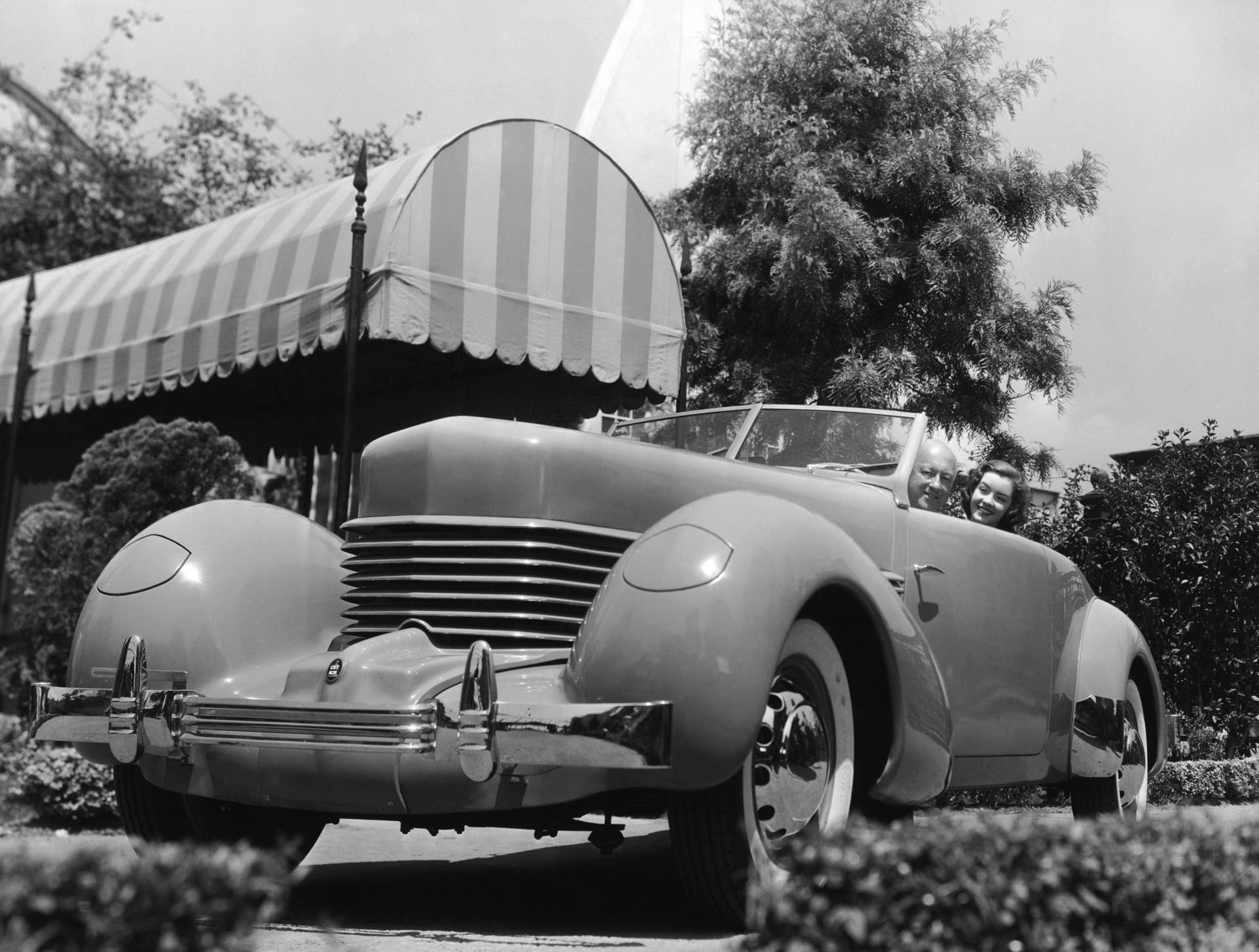
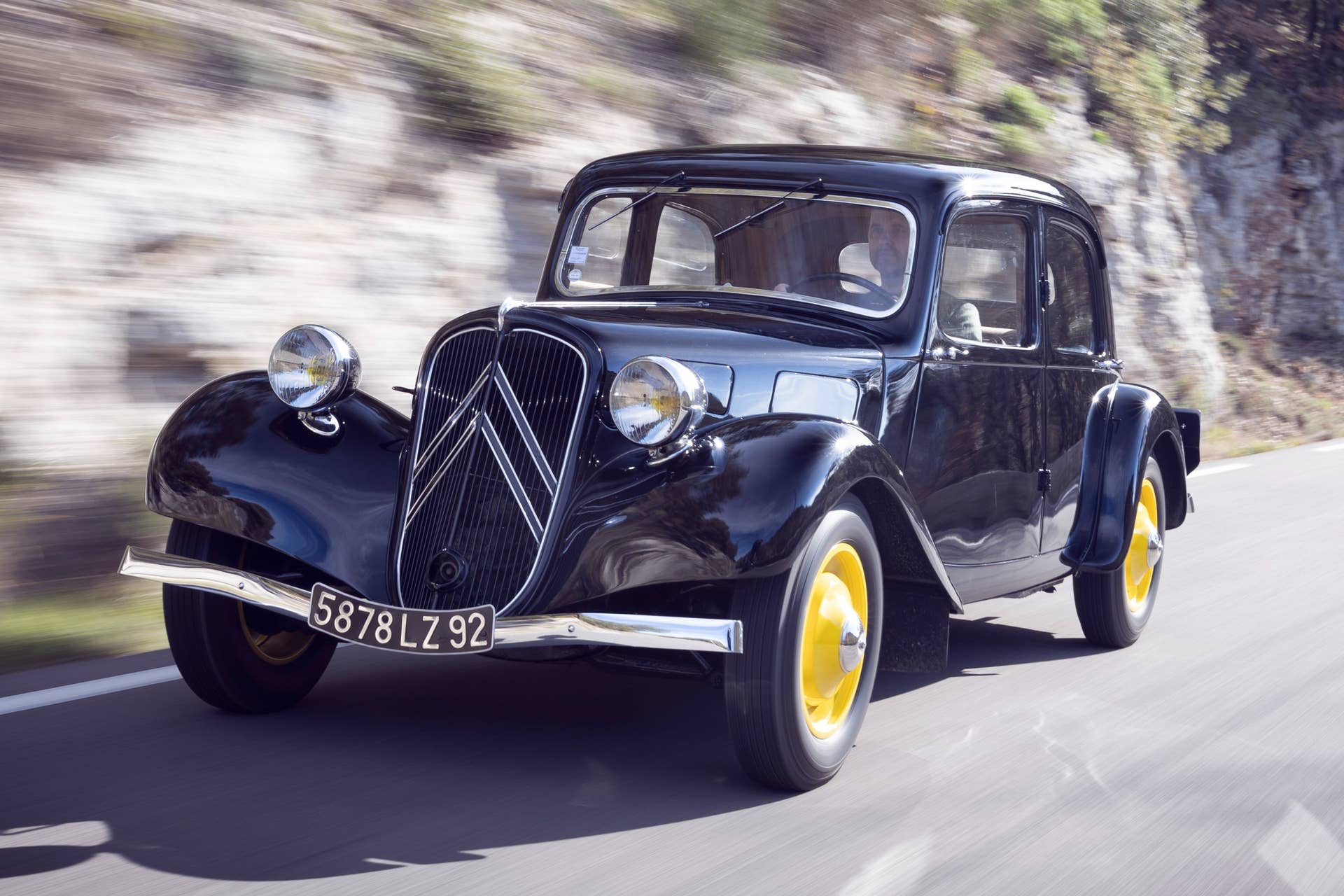
While it wasn’t the first vehicle to feature front-wheel drive, the original Mini significantly improved on the concept. Some of the first front-wheel drive cars, including the Cord L-29 and 810, and the French Citroën Traction Avant, had already utilized this novel technology. However, a huge drawback of these initial concepts dating back from the 1930s were the substantial space required, as they had huge, long hoods to accommodate both their sizable engines and gearboxes.
What made the Mini so different?
By 1956, the Suez Crisis triggered widespread fuel rationing in the UK, which sent sales of large cars onto a steep decline. As a result, the British Motor Corporation (BMC) tapped designer Alec Issigonis to create a rival to the tiny, imported German “bubble cars,” which were becoming increasingly popular as fuel-sipping became ever more important. Disgusted by the sight of these vehicles, Leonard Lord, the then-head of BMC, tasked Issigonis to create a ‘proper miniature car’ that was no bigger than ten feet long, four feet high and four feet wide.
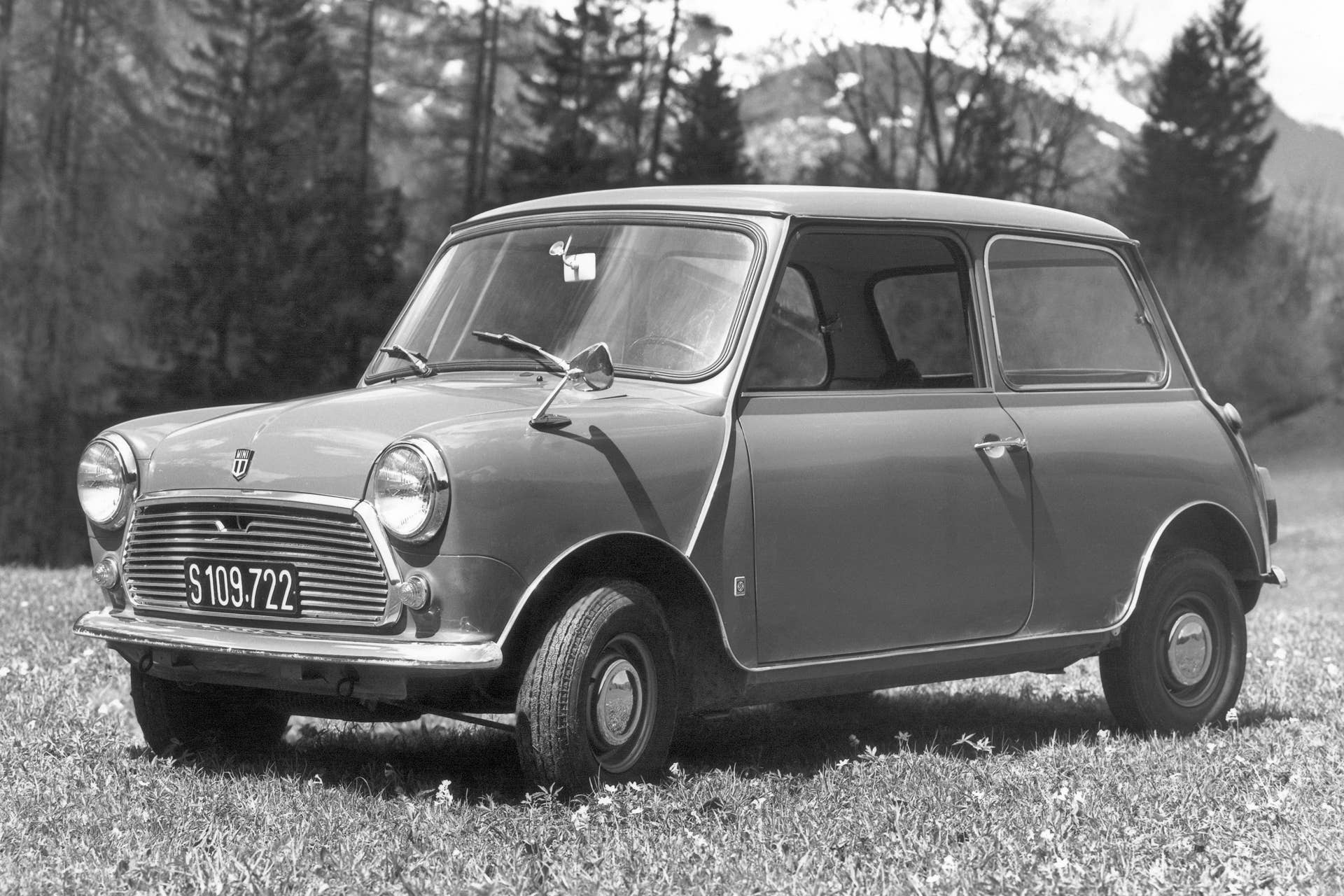
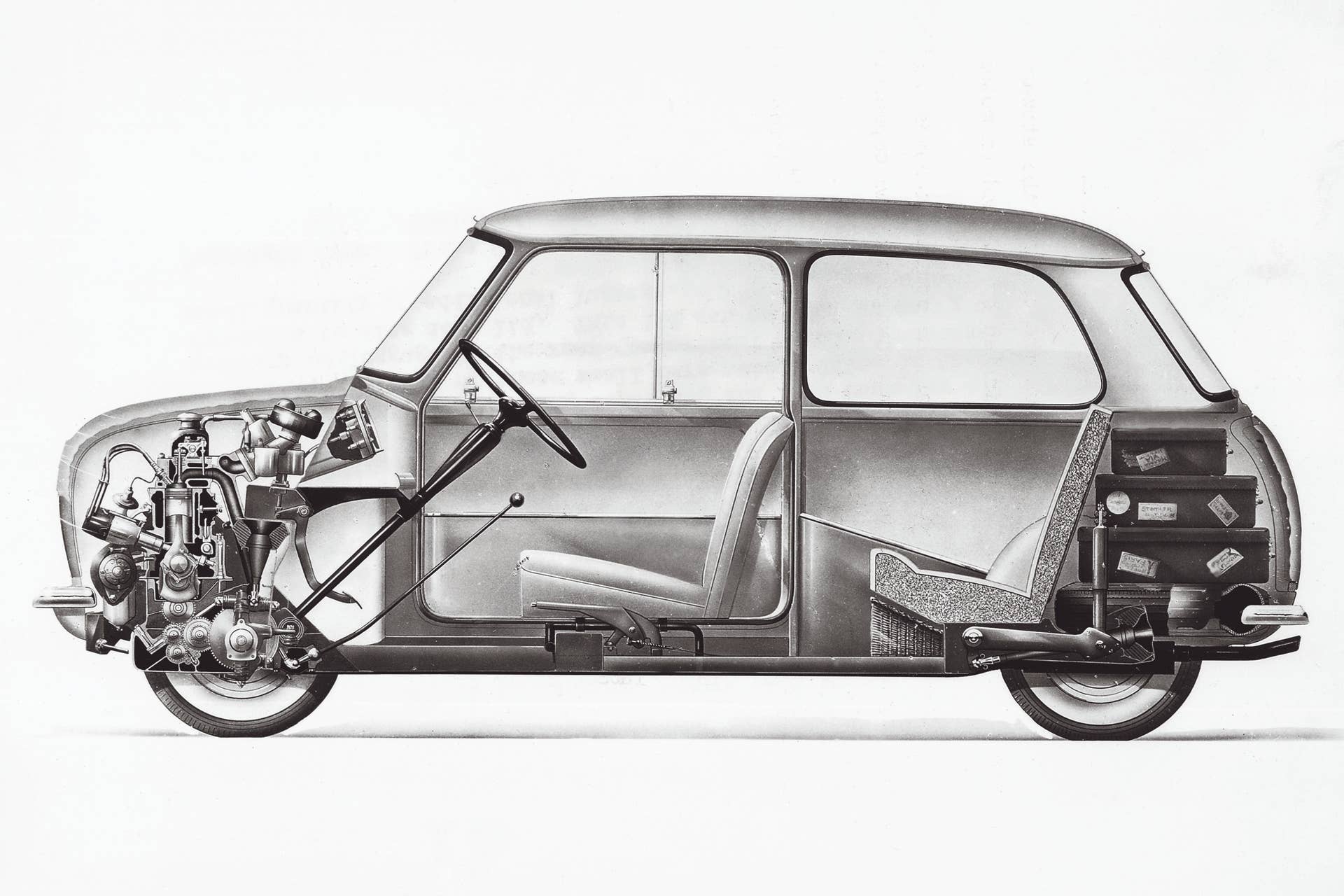
What made the Mini Cooper so different as a result, was that it popularized something called the front-mounted transverse front-wheel drive layout; a more compact solution that eliminated the need for the long hoods in the earlier cars.
Mini
Mini
In contrast to the Cords and the Citroën, the Mini mounted its 848cc inline-four and four-speed gearbox sideways (or transversely), which created not only a shorter front end, but also freed up more room for passengers and luggage.
With this configuration, the original Mini was not only able to maximize interior space while keeping the car’s overall size to a minimum. Its compact size, wide stance, four-wheel independent suspension and low center of gravity meant that it was also a formidable force out on the race track. Original Minis have won multiple Monte Carlo Rallys, as well as countless titles in various international touring car championships.
Fiat
Refined by the Italians
Although the Mini made a sizable impression on the automotive industry, the version of the front-mounted transverse front-wheel drive layout it pioneered wasn’t exactly perfect, per se. To accommodate the off-the-shelf BMC A-Series inline-four, the Mini famously had its gearbox mounted in the sump to reduce its footprint. However, it meant that the gearbox shared the same oil as the engine and also made some common repairs very complicated.
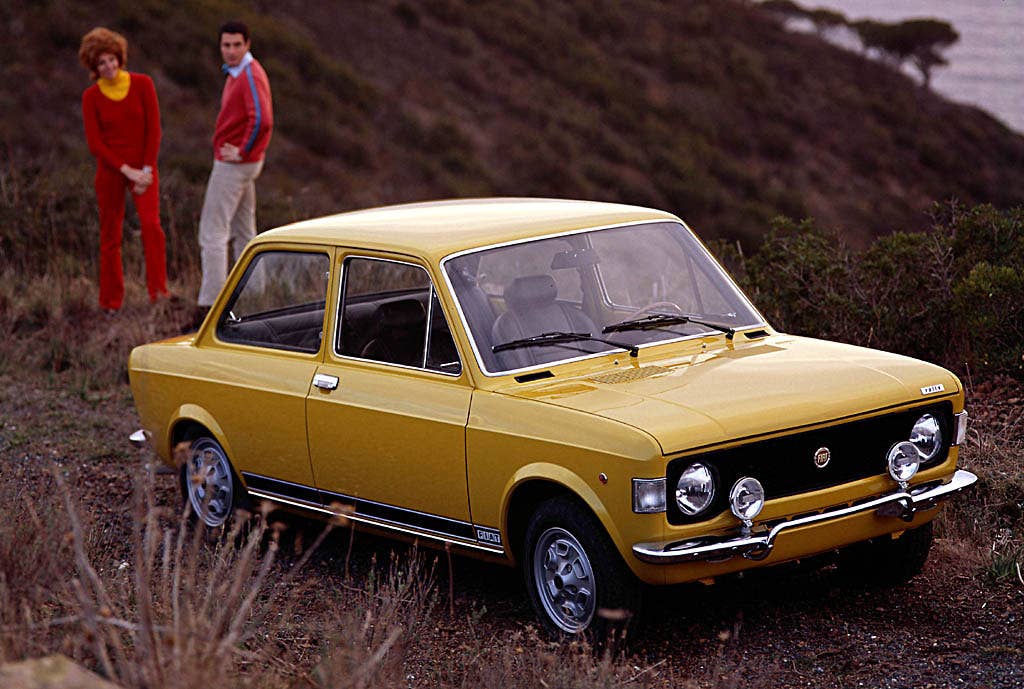
Seeing how front-wheel-drive has made an impact on the market, Fiat began developing new vehicles in the mid-1960s to compete with the Mini and other BMC vehicles like the 1100 and 1300, which used similar drivetrain packaging. Fiat engineer Dante Giacosa made a few revisions to BMC’s design for the Fiat 128, namely, incorporating a transverse-mounted engine with unequal-length drive shafts to allow the engine and gearbox to be located side by side as separate units and without sharing lubricating fluids.
While various automakers pursued distinct mechanical layouts for their front-wheel-drive vehicles, Giacosa’s ingenious design ultimately rose to establish itself as the industry standard by the 1980s. As fuel-efficient, front-wheel-drive economy cars became more popular among consumers, the format was eventually embraced and adopted by virtually the entire global automotive industry, moving from a niche solution to the dominant architecture for most new cars on sale.
Mini
The Impact
Today, you’d be hard pressed to find a sedan, hatchback or crossover SUV that does not incorporate Giacosa’s transverse front-wheel-drive drivetrain design in some way or form under its hood. Even best-selling crossover models that offer optional all-wheel-drive drivetrains, such as the Honda CR-V and Toyota RAV4 have front-drive-based all-wheel-drive systems that use the Fiat design as a jump-off point.
But while this layout technically has Italian flair, it’s undeniable that the essence has DNA that traces back to that plucky little machine from Britain. The Mini’s space-saving design was the blueprint in proving that tiny cars could be practical, stylish, and fun to drive. Its smashing success and status as a worldwide motoring icon proved helped create the bones that underpin many cars that almost every automaker sells today.
The next time you open the hood of your Civic, Corolla, RAV4, CR-V, Camry, Accord, or any other front-drive car, and see the engine mounted sideways, remember the original Mini Cooper. It was a product developed from crisis, a car that became a pop culture icon, but most of all, it was an engineering milestone that forever changed how cars are designed. In a way, the Mini’s legacy isn’t just proven in sales numbers or in race wins, but how it made everyone else copy its most noteworthy features.
About the author

James Ochoa
Senior Editor, Autoblog