

No matter what you have to say about Lamborghini’s designs, you know one when you see one. It’s something most designers are chasing: instant recognition, no matter how far you are from their design. It’s pretty easy to spot a Urus, or a Huracan, or the new Temerario from pretty far away. That comes down to Mitja Borkert, Lamborghini’s head of design. But before the man helped create some of the most iconic, instantly recognizable Lamborghini designs of all time, he worked somewhere much, much more restrained.
Life before Lamborghini

Porsche
Porsche
Ahead of his time at Lamborghini, Borkert was hired on at Porsche, but before that, he was a student. Born in 1974 in Herzberg, East Germany, before the fall of the Berlin Wall, Borkert went on to attend the Pforzheim University of Applied Sciences. He graduated with a degree in transportation design.
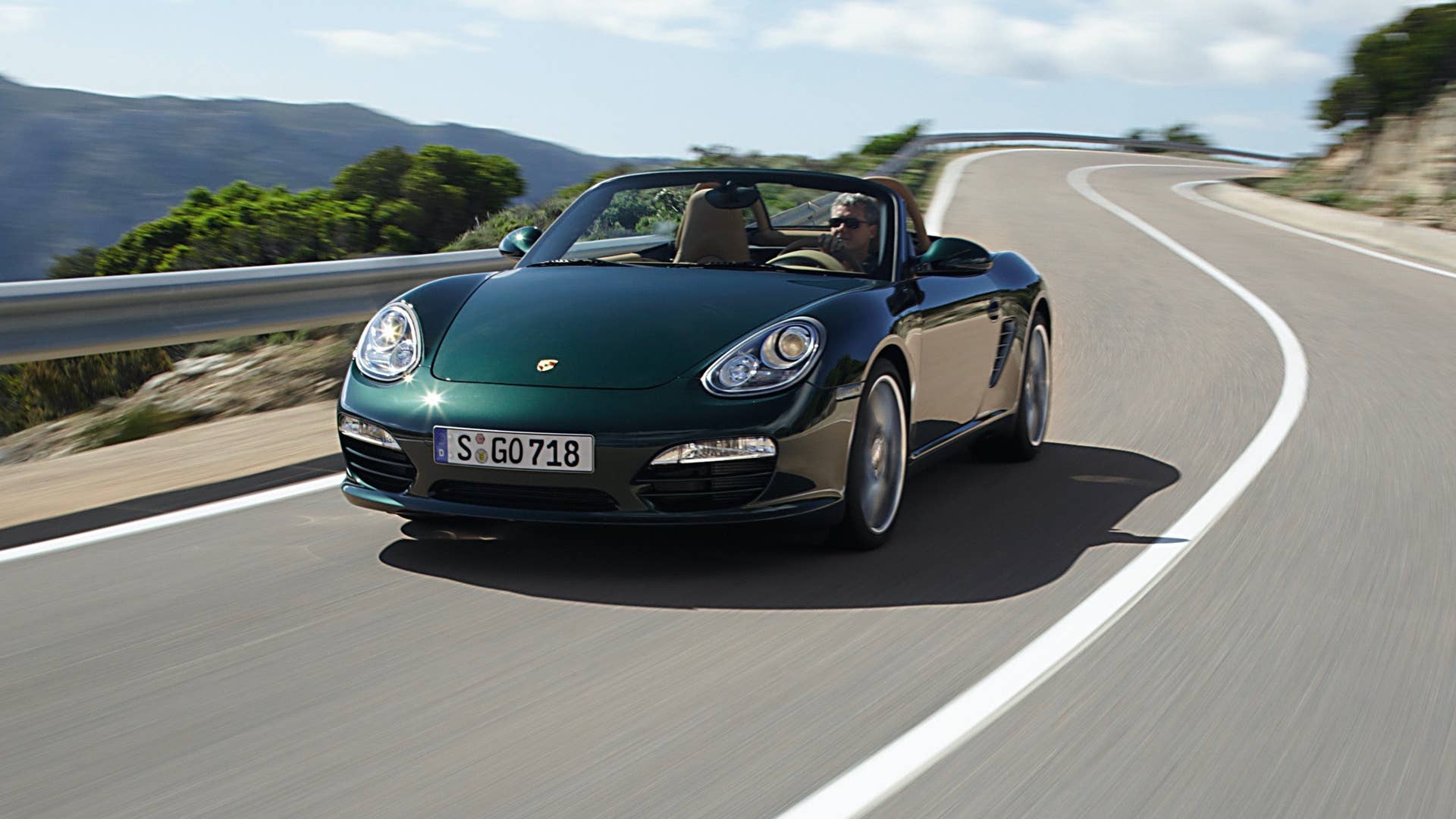
By 1999, work at Porsche had started. He held a few positions along the way, eventually working up to Director of Exterior Design. On its own, it’s a pretty storied career. Borkert penned the 987-generation Boxster, which was largely held as a design success. It was a classic roadster shape, heavily inspired by early Porsche racers and outlined by its distinct 911-esque shape. Moreover, it was a pretty darn good car, with a mid-mounted flat-six and excellent driving dynamics.

Porsche

Porsche
Borkert also had a hand in Porsche’s first steps towards what would become the Taycan. The Mission E concept was hugely important to the brand and would become its first EV. It also marked a massive departure from previous Porsche designs, ditching round lights and other iconic design elements to better fit the shape of a sedan (and eventual wagon).
Borkert’s early Lamborghini projects


Lamborghini
After 17 years at Porsche, Borkert moved on. In April, 2016, Borkert took the role of Center Director Style at Lamborghini, replacing Filippo Perini (now of Italdesign). His first project was a facelift of the Aventador, the S model. This brought big changes to one of the brand’s iconic cars.

Lamborghini
Lamborghini had scores of influences for the Aventador and its subsequent updates, ranging from fighter jets to snakes to spaceships. The Aventador S got an updated lower fascia, clearly inspired by one of those things above all else, as well as other updates. The hexagonal grille framing, though, is something the brand began to take to other places. It became a sort of signifier later: if you saw a Lambo with the fangs, you knew it was a newer one (circa 2017, that is).
Borkert on Lamborghini’s design language

Lamborghini
Borkert summed up his take on the brand’s designs in a Car and Driver interview during the reveal of the Temerario: “When you present a new car, you always want to have the wow effect. Over the last eight years as a design director at Lamborghini, I’ve come to understand perfectly what is the design DNA. You were highlighting that we have our shape.”
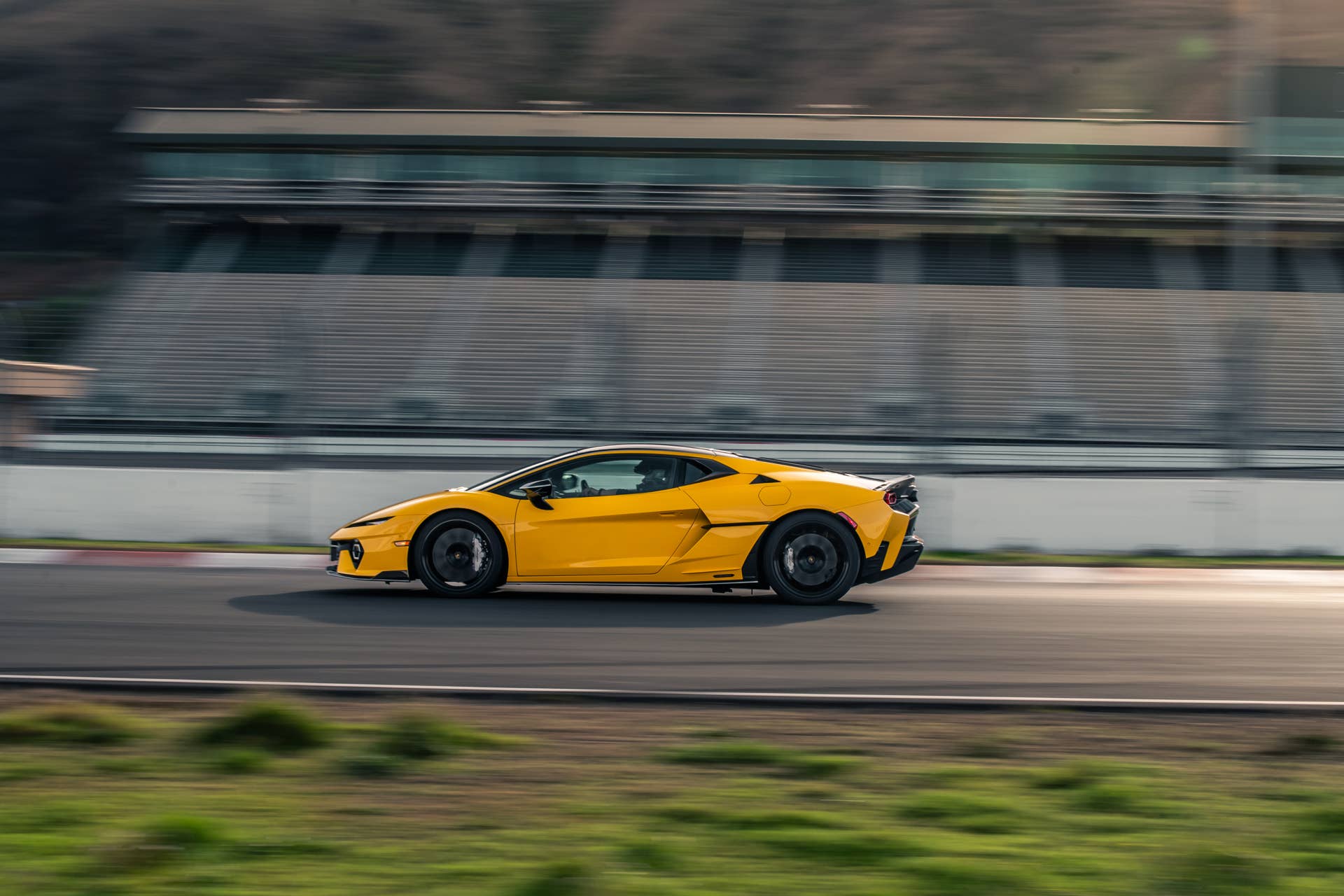
Borkert says he likes that shape, largely brought about with the debut of the Aventador in 2011, and doesn’t want to change it: “As long as I’m responsible for it, I will never change the silhouette of Lamborghini. Whenever you see such a car from far away, you see Countach. If you see the Temerario, you will recognize from far away that the Lamborghini is arriving. This is my number-one value.”

Lamborghini
Lamborghini
Of course, many of these values are based on some of the shapes now intrinsic to the brand. The hexagon is chief among them, and Borkert’s fascination with them is evident in the brand’s later designs, like the Temerario. “I was completely fascinated and wanted to have this hexagon as the main feature. I don’t know how many million years old it is as a design feature. But the hexagon is a striking design element of the Sixties. So at the time of the Concorde airplane, you know, the mission to fly to the moon, when you look at architecture, it was very hexagonal,” he said. It’s an old concept. “Bertone designed cars using the hexagon. There was a concept car, the Lamborghini Marzal, that was using the hexagon in the side door,” he continued.
Recognition above all else

There’s no better way to conclude this overview on Borkert’s influence at Lamborghini than with a story he told in the same interview. While traveling, Borkert bought himself a model Countach. At security, he’s stopped: “They are checking through the luggage and the scanner shows a piece of metal inside. The first guy was telling me, what is in your backpack? Take it out. And the second guy was saying, ah, but you don’t need to, it’s a Lamborghini. He recognized it. I’m sure it wouldn’t happen on another car.”
If nothing else sums up the design ethos and ambitions behind Lamborghini at the moment, it’s this story. There’s a very literal line to be drawn between cars like the Countach and what’s coming out of S’ant Agata Bolognese today.
About the author

Chase Bierenkoven
Senior Editor, Autoblog