
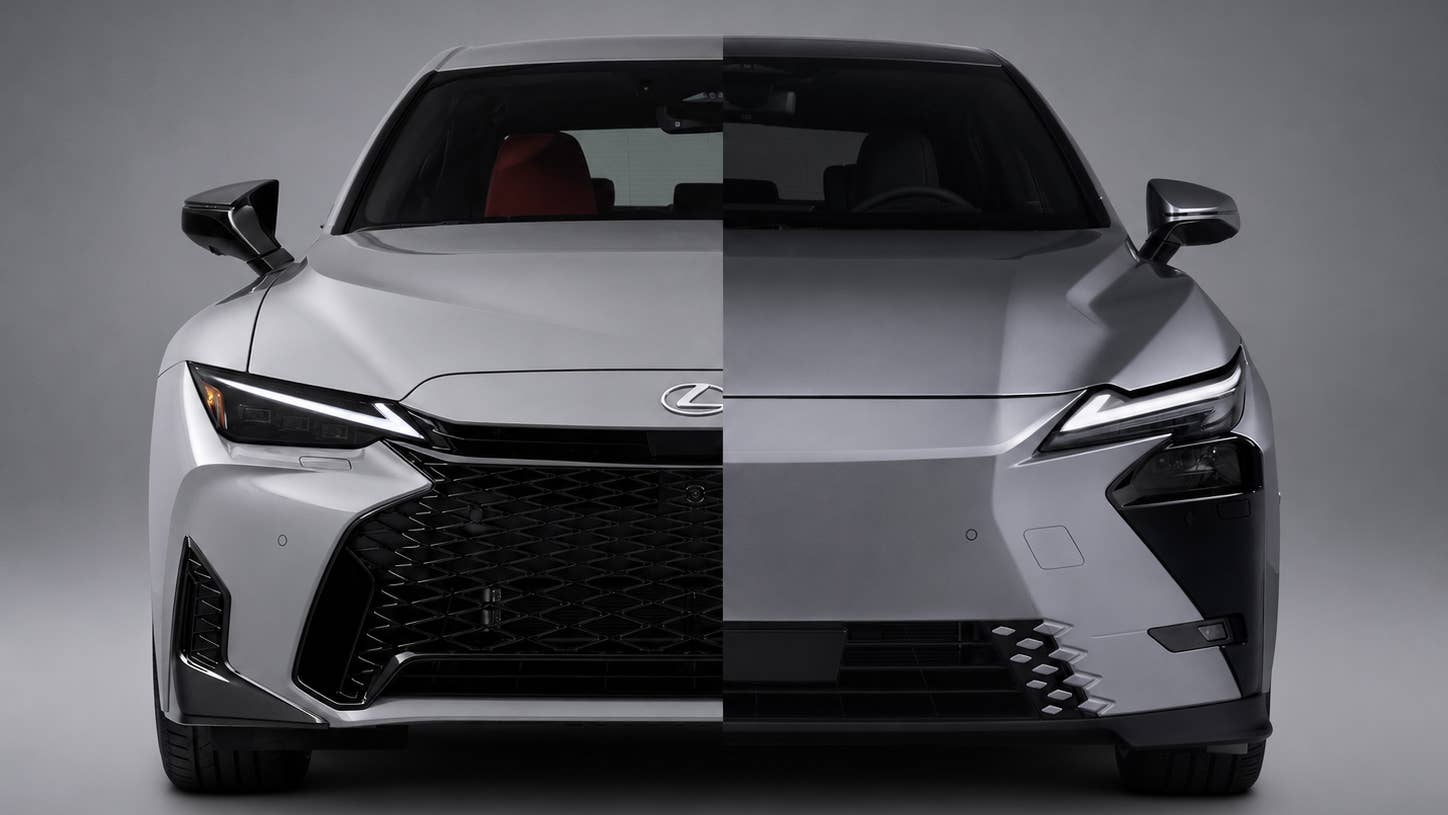
While many manufacturers have completely abandoned the sedan segment altogether, others, like Lexus, are still developing new models, and hanging on to old designs as well. The ES sedan represents the latest from the brand and is available in both hybrid and fully electric versions. The IS, meanwhile, has been in production since 2014. It has undergone several major updates over the years, and the 2026 restyle gives it a completely new exterior look as well as a revised interior.
With the base prices of both the IS and ES within a few thousand dollars of each other, we thought it would be interesting to match these two Lexus sedans up to see what each one has to offer, and whether the old-school IS has what it takes to remain relevant in a very competitive marketplace. So, let’s compare these two models to see how they differ in performance, pricing, tech, and overall philosophy.
Lexus IS
Jared Rosenholtz/Autoblog
Jared Rosenholtz/Autoblog
Jared Rosenholtz/Autoblog
| 2026 Lexus IS Trims | IS 350 F SPORT Design | IS 350 F SPORT |
| Base MSRP | $46,895 (RWD) $48,895 (AWD) | $49,345 (RWD) $51,345 (AWD) |
| Engine | 3.5L V6 | 3.5L V6 |
| Power | 311 hp | 311 hp |
| Torque | 280 lb-ft | 280 lb-ft |
| 0-60-mph | 5.9 seconds | 5.9 seconds |
| Combined Fuel Economy | 22 mpg | 22 mpg |
| Drivetrain | RWD/AWD | RWD/AWD |
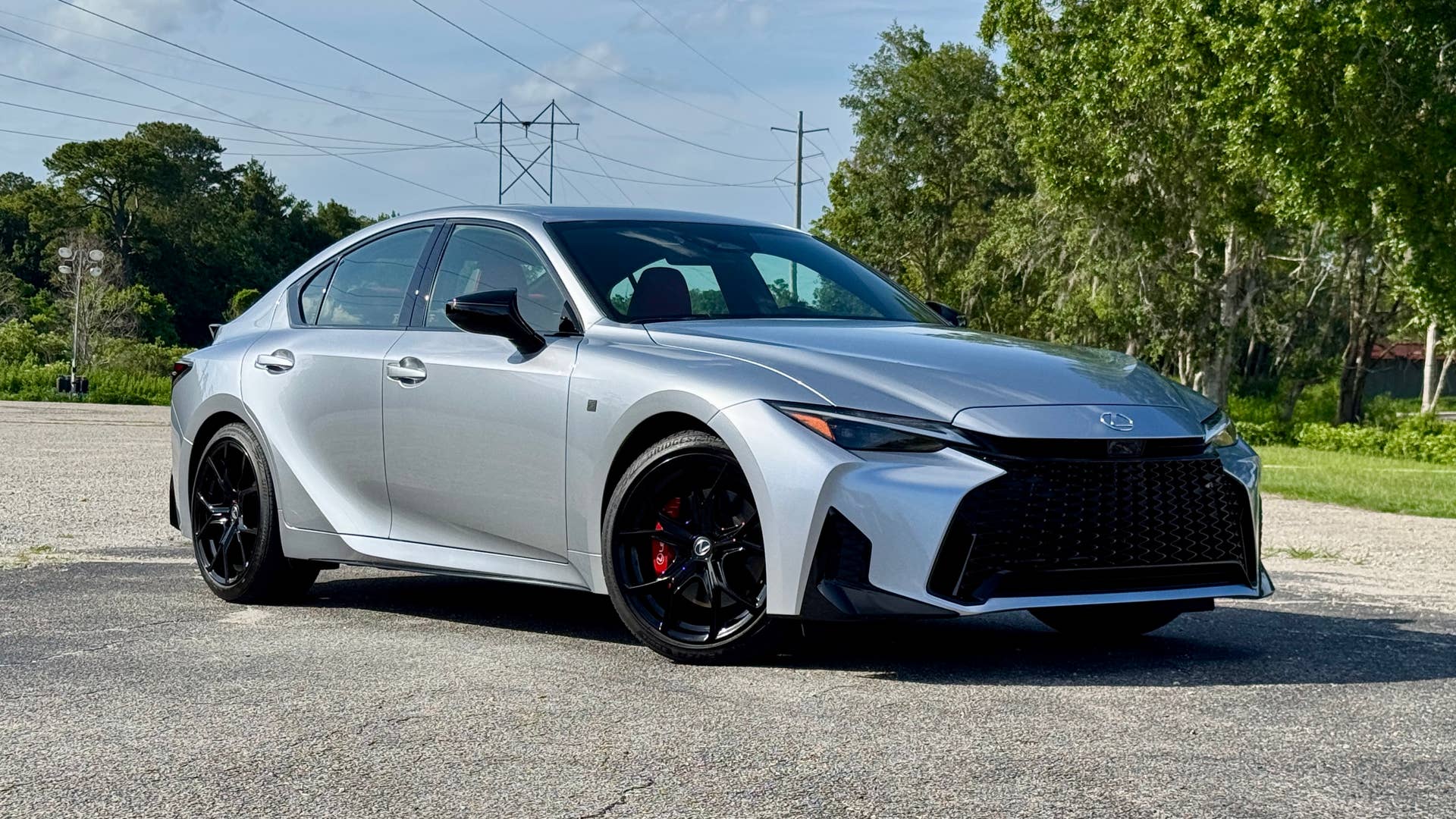
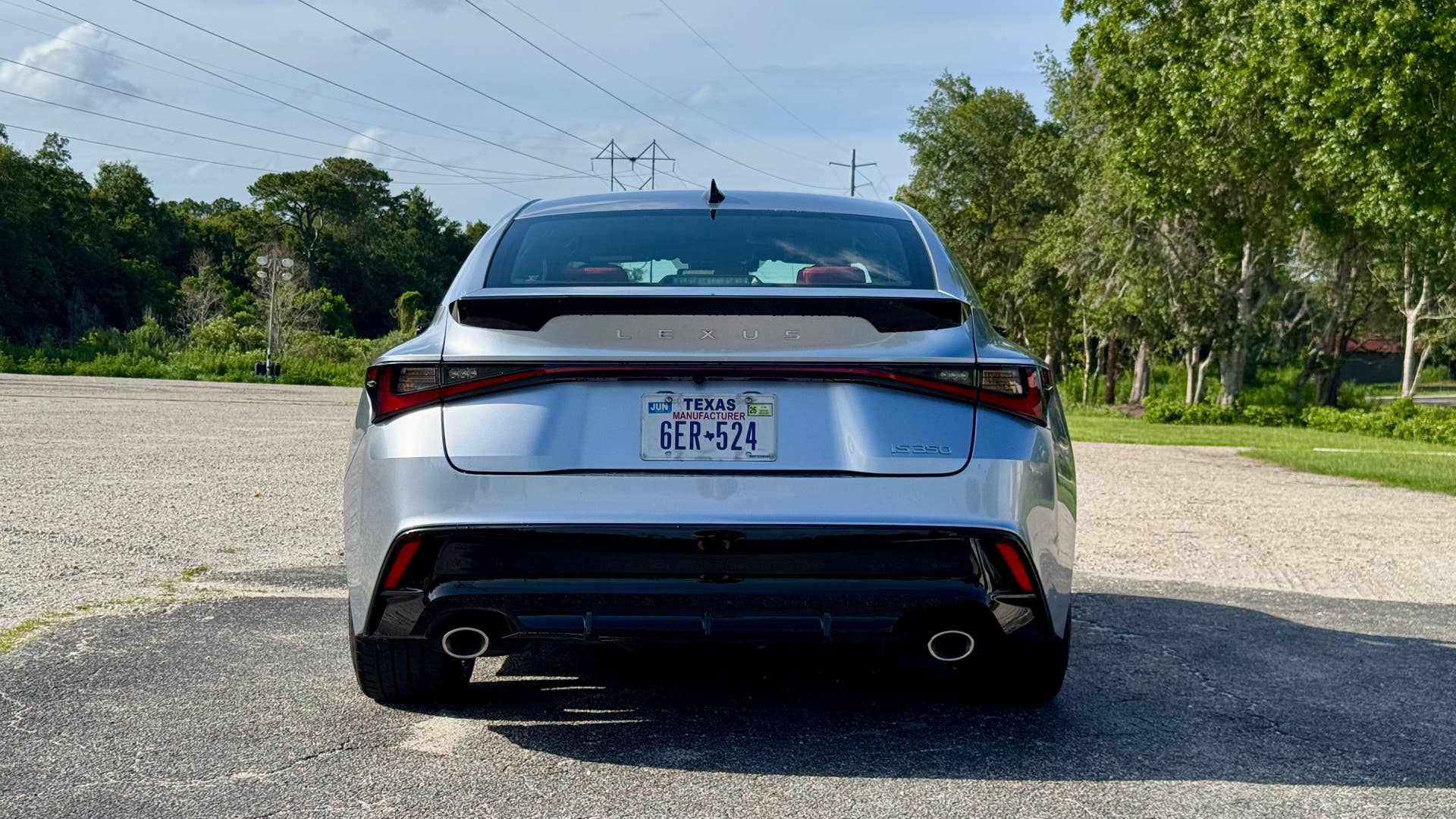
The IS sedan may have been around for 13 years now, but the updates and changes carried out to it over the years have virtually transformed it into a different vehicle. The basic chassis may still be the same, but it has had comprehensive tech, and styling changes that make the 2026 Lexus IS a far cry from the 2014 original.
While the base 2.0-liter turbo and range-topping 5.0-liter V8 are no more, the 311-hp 3.5-liter V6 that does duty in all IS trims is both responsive and smooth and delivers acceptable fuel economy. Rear-wheel drive models get an eight-speed automatic transmission, while AWD variants have a six-speed automatic. Despite the sporty look and big ‘SPORT’ naming Lexus uses for this model, the IS sedan is tuned more for sporty cruising, than outright point-to-point driving involvement. Its 0-60 mph times are also behind some of its key rivals, but it feels quick and responsive in isolation, and few owners will be lining up at the dragstrip to compare sprint times anyway.
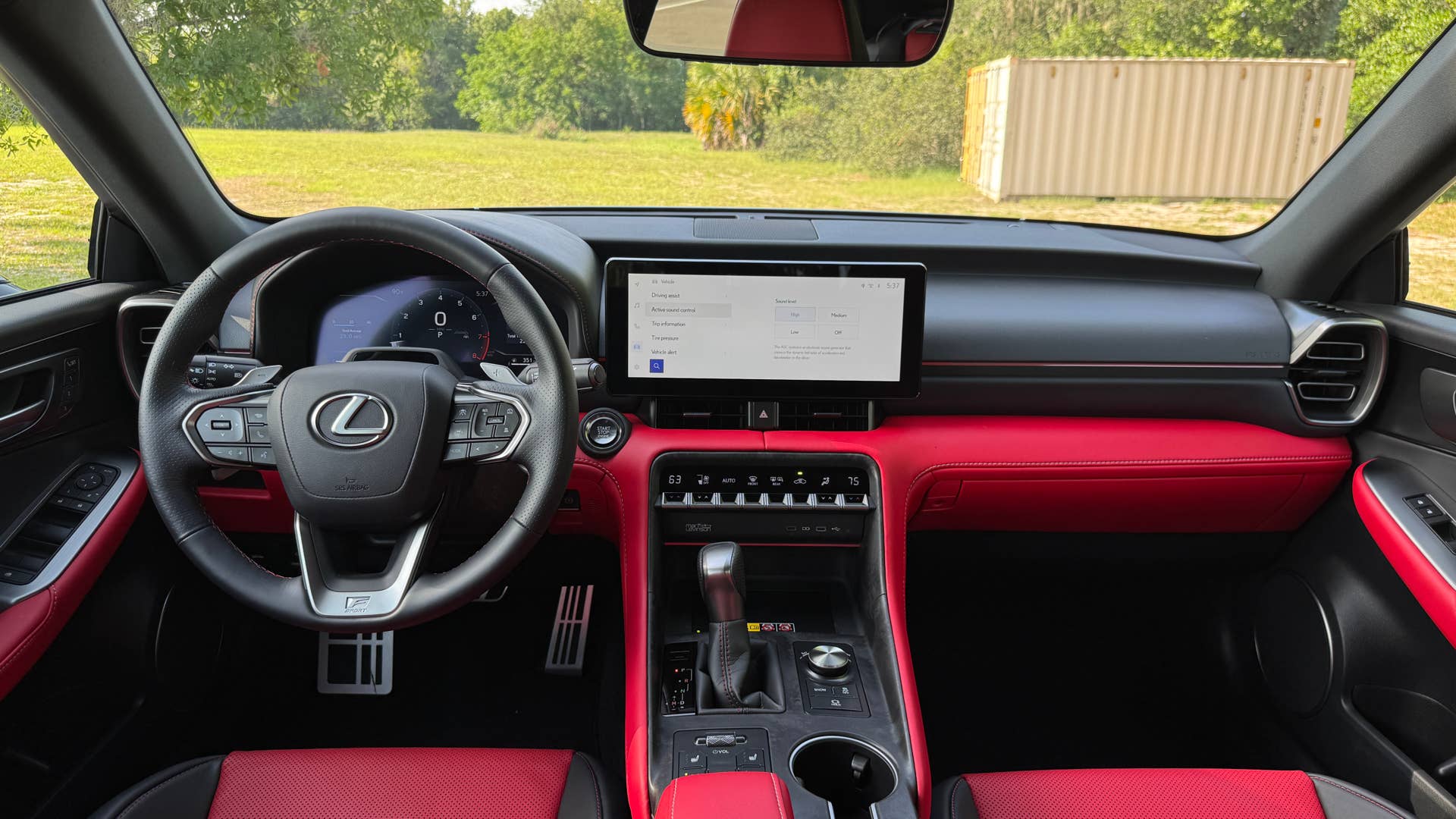
2026 ushers in another update and now twin 12.3-inch digital displays keep the driver informed and entertained, while both the exterior and interior have received styling tweaks to bring the IS in line with the latest Lexus design language. The climate control functions can still be accessed through a row of physical buttons along the dashboard, and while the overall interior ambience doesn’t feel cutting-edge, it certainly doesn’t look like a dated or old design. While the base RWD IS 350 F Sport Design looks to be decent value at its $46,895 starting price, you can overdo it by choosing the limited availability 350 F Sport Special Appearance Package versions, which can go up to as high as $63,095. That puts the IS up against some much newer and more accomplished rivals, including top-spec versions of the new ES sedan.
Lexus ES
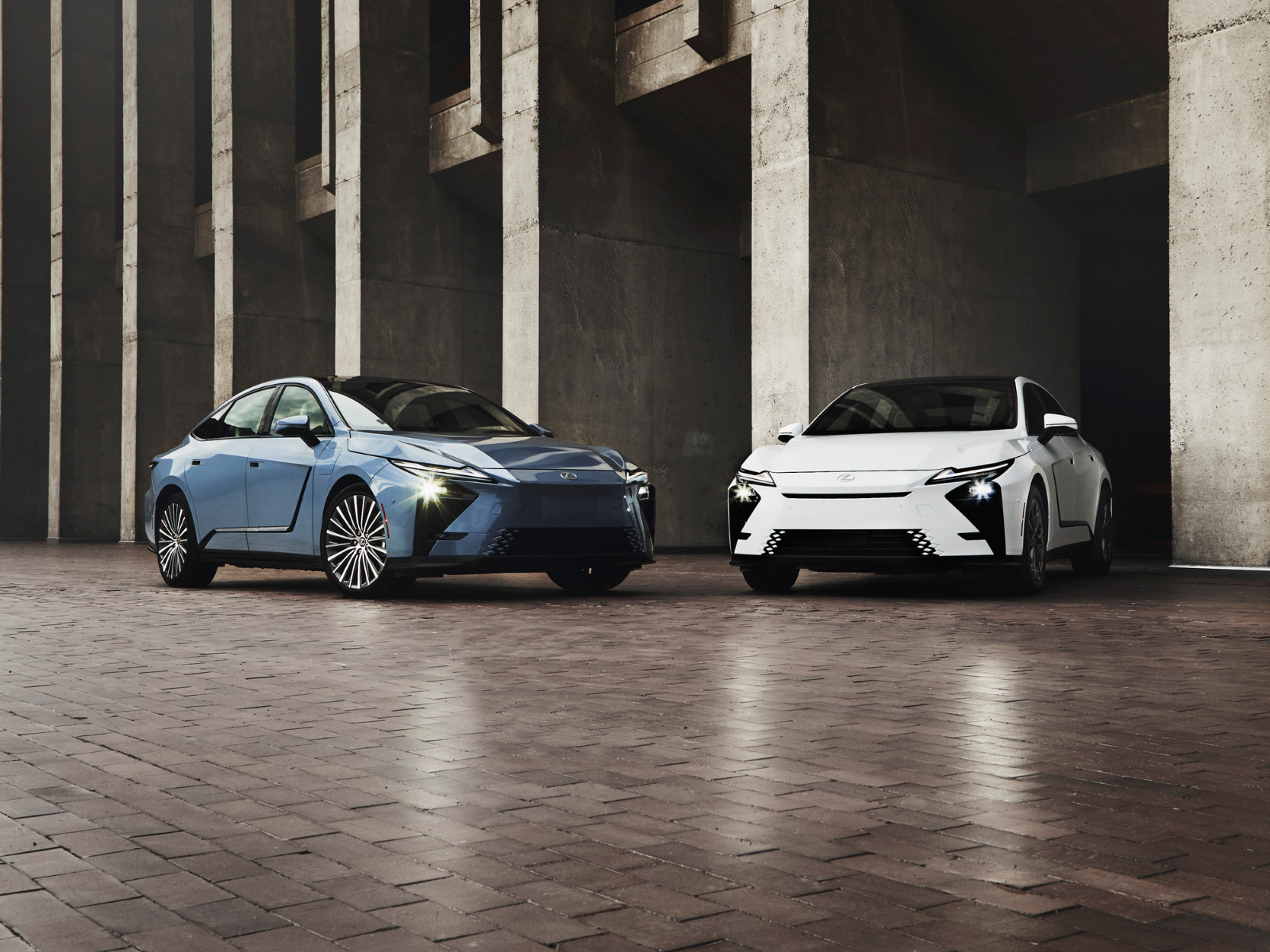
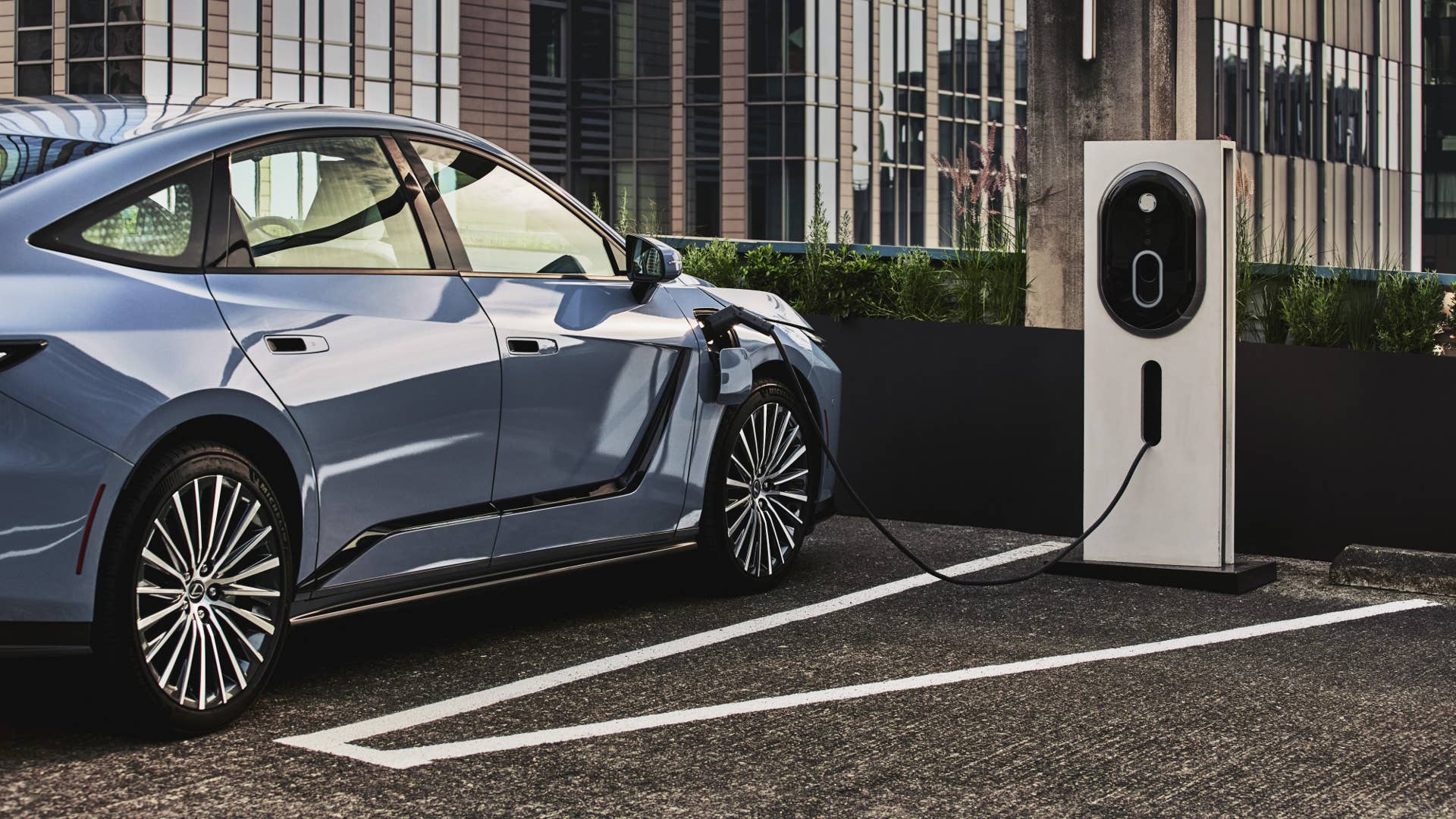
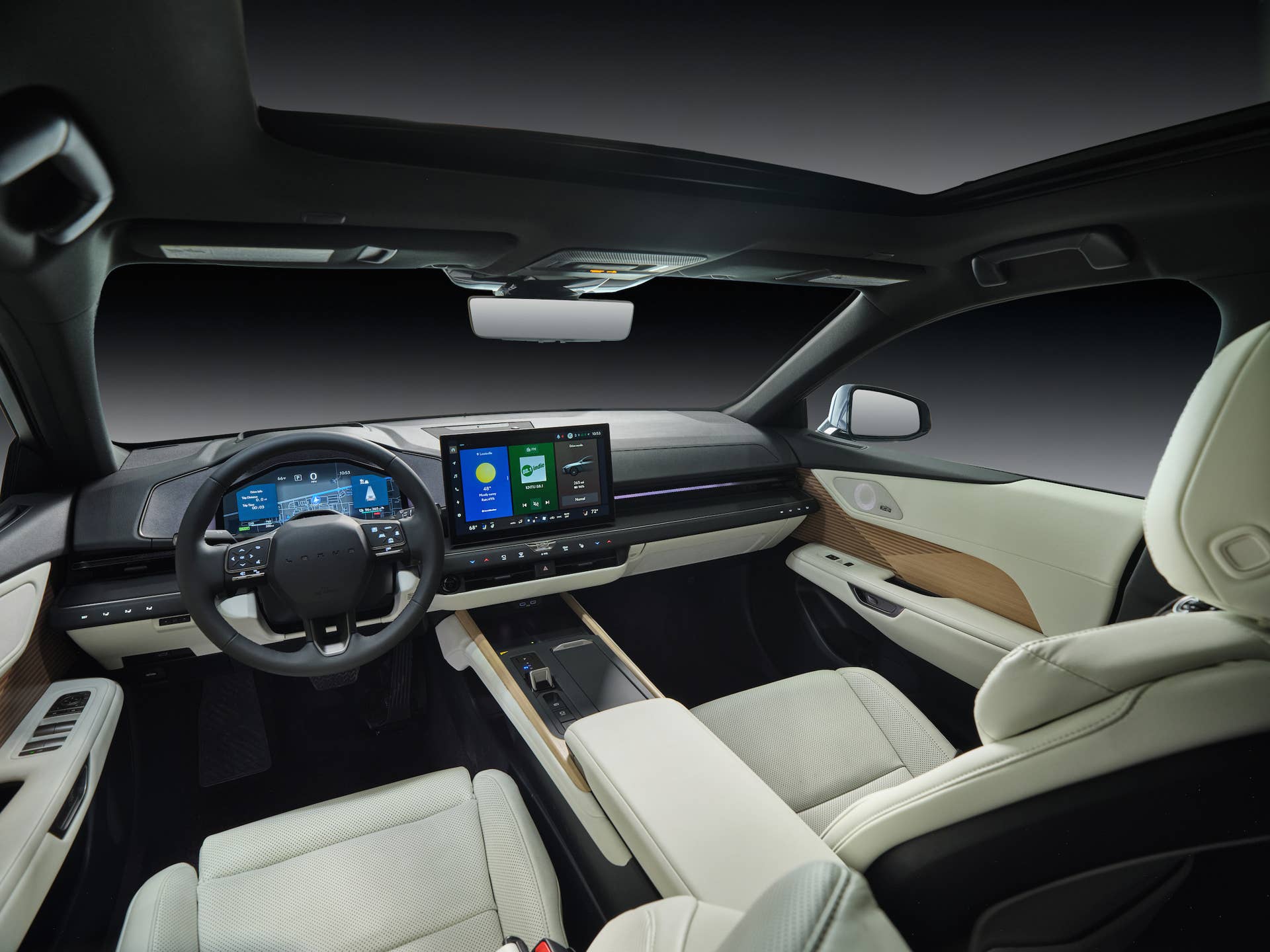
- Model years: 2026 – Present (All-new 8th Generation)
- Main Competitors: BMW 5 Series, Mercedes-Benz E-Class, Audi A6
| 2026 Lexus ES Trims | ES 350h (Hybrid) | ES 350e (EV) | ES 500e (EV) |
| Base MSRP | $51,095-$57,295 | $48,795 – $57,195 | $51,795 – $60,195 |
| Engine | 2.5L 4-Cyl Hybrid | Single Electric Motor | Dual Electric Motors |
| Power | 244 hp | 221 hp | 338 hp |
| 0-60-mph | 7.3 seconds est | 6.6 seconds est | 5.0 seconds est |
| Combined Fuel Economy | 46 mpg (Est) | 127 MPGe (Est) 307 miles range | 100 MPGe (Est) 276 miles range |
| Drivetrain | FWD/AWD | FWD | AWD |
The latest generation Lexus ES has taken a massive leap forward, kicking off its all-new eighth generation in both hybrid and EV guises. This model has always been a large, luxury cruiser, and for 2026 it is longer and more spacious than ever. A 244-hp 2.5-liter four-cylinder gas engine with hybrid assistance is the base offering in the regular ES 350h. Front-wheel drive versions get two electric motors, while all-wheel drive ones get three, but power outputs are unchanged.
There are also two EV variants, the 221-hp ES 350e has one front-mounted electric motor, while the 338-hp ES 500e has one motor at each axle making it AWD. While the near-silent electric motors are well-suited to the ES’s laid-back nature, performance and overall range are mediocre compared to other EV offerings.
In terms of tech, the new generation ES comes with Lexus’ latest 14-inch infotainment screen, and both the hybrid and EV versions have the same minimalistic design that has become the norm in new vehicles. Aside from a few buttons on the steering wheel and along the center console, there are permanent touch-sensitive buttons on above the central air vents and in the touchscreen for commonly accessed settings.
IS vs ES
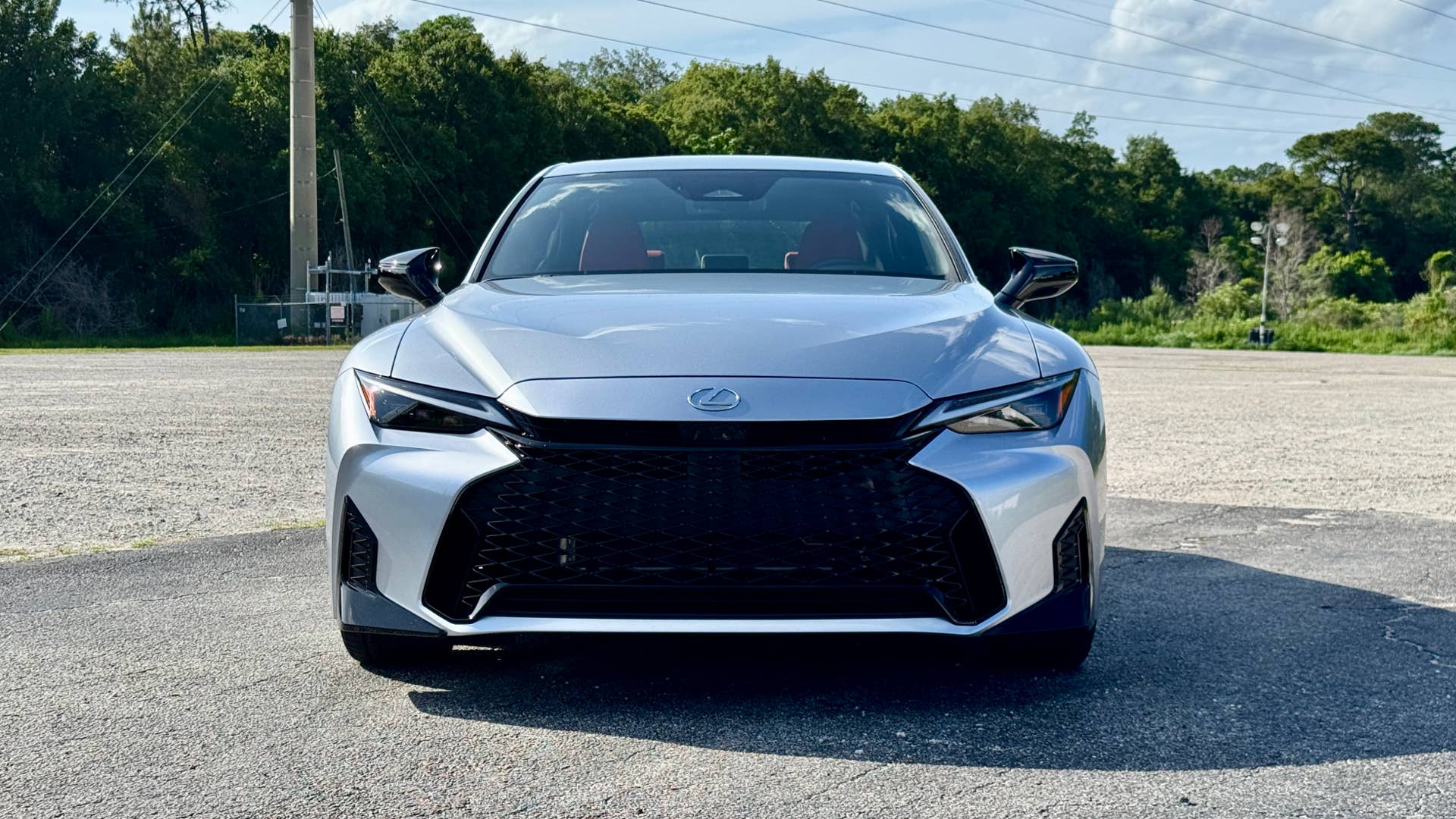
Jared Rosenholtz/Autoblog
While both the IS and ES are four-door sedans, the similarity between them ends there. The IS remains the compact sporty sedan with a driver-centric cockpit that it has always been. The ES is one body size up (and especially spacious in its latest form), and focusses on passenger comfort, and a smooth driving experience above all else. The IS starts at a slightly lower base price, and its 3.5-liter V6 is a far more engaging and characterful engine than the four-cylinder hybrid in the ES. It can’t compete when it comes to fuel economy, but the sporty exhaust note and revvy nature of the V6 perfectly suits the IS’s sporting aspirations. The ES hybrid produces a smooth and unflustered 244-hp, but its CVT transmission doesn’t encourage sporty driving. Both models can be had with RWD (FWD for the ES) and AWD, but the IS has been tuned for more dynamic responses, while the ES is all about maintaining a smooth ride over broken road surfaces.

Lexus
In terms of tech on offer, the ES boasts the latest Lexus Safety System+ 4.0 alongside a 14.0-inch touchscreen interface. The 2026 facelift has given the IS a much-needed interior tech boost, but it still uses a slightly older Lexus Safety System+ 3.0 architecture and a smaller 12.3-inch display. Of course, the EV variant of the ES is not even an indirect alternative to the IS, but it is certainly worth considering over the regular ES hybrid, especially if your daily commute suits the charging requirements of an electric vehicle. The base ES350e is priced very close to the IS 350 AWD and actually undercuts the hybrid E350h, and its single electric motor provides strong acceleration around town and on the highway. The ES500e delivers the kind of straight-line performance that used to be reserved for the V8-powered IS 500, while still retaining the smooth and comfortable driving characteristics of the other ES models.
At first glance, it may seem strange of Lexus to offer two sedans at very similar price points, but the IS and ES couldn’t be more different. The IS compact sedan offers a chance for consumers to sample a bit of old-school driving fun without having to settle for outdated electronics or a lack of new car warranty. With the latest refresh, it remains a solid if not exactly class-leading alternative in its segment.
The ES, meanwhile, is an affordable yet very luxurious mid-size sedan, packed with the latest tech and features. The ES350h hybrid is frugal and quiet, but not especially engaging to drive, while the EV variants add some straight-line speed into the mix, while being even more refined and hushed on the road. Both the IS and ES should offer solid reliability, with the IS in particular having proven itself over years of continuous development. Both are great choices, the one you pick depends on whether you prefer analog-style driving pleasure or the latest in high-tech luxury and comfort.
About the author

John Tallodi
Senior Editor