
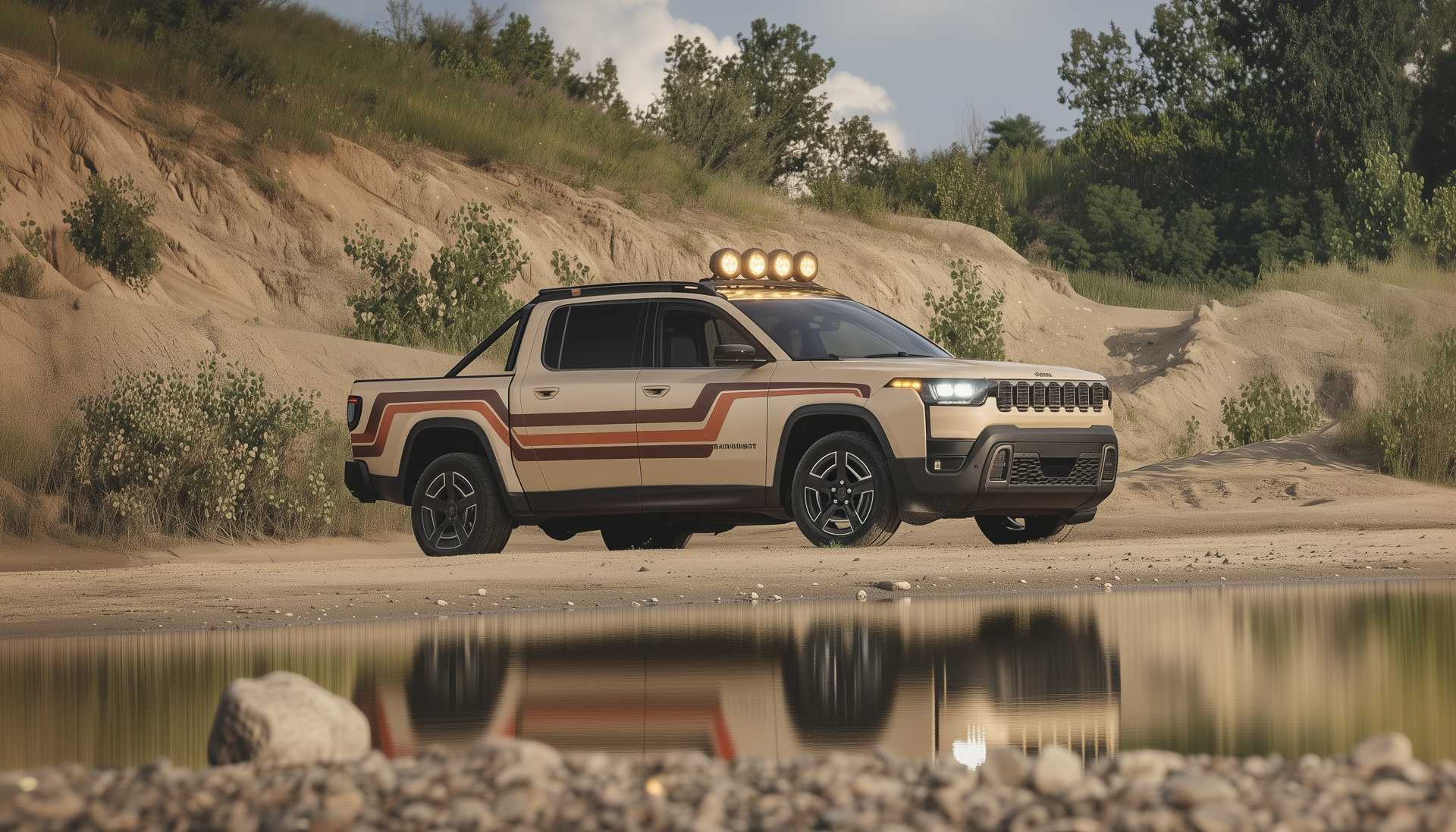
Jeep is ripe for competition in one of the fastest-growing segments: hybrid pickup trucks
With Stellantis undergoing a heavy push to add much-needed models to the brand’s various lineups after so many products were discontinued under ex-CEO Carlos Tavares, now is the time for brands like Jeep to make sure all their bases are covered. Having launched its new STLA-Large vehicle architecture, which now underpins a handful of models from the Dodge Charger to the all-new 2026 Jeep Cherokee and is planned to make its way under the skin of many more Stellantis products in the coming years, I believe that Jeep would be sleeping on a significant opportunity to earn itself some new market share if it didn’t offer a compact pickup truck using this platform.
Considering the Ford Maverick’s popularity with American buyers, having sold over 130,000 units stateside last year and being projected to beat those figures this year, I think Jeep could have a serious money-maker on its hands if it offered a pickup truck variant of its all-new 2026 Cherokee.
Stellantis Media
Jeep’s pickup truck heritage is strong
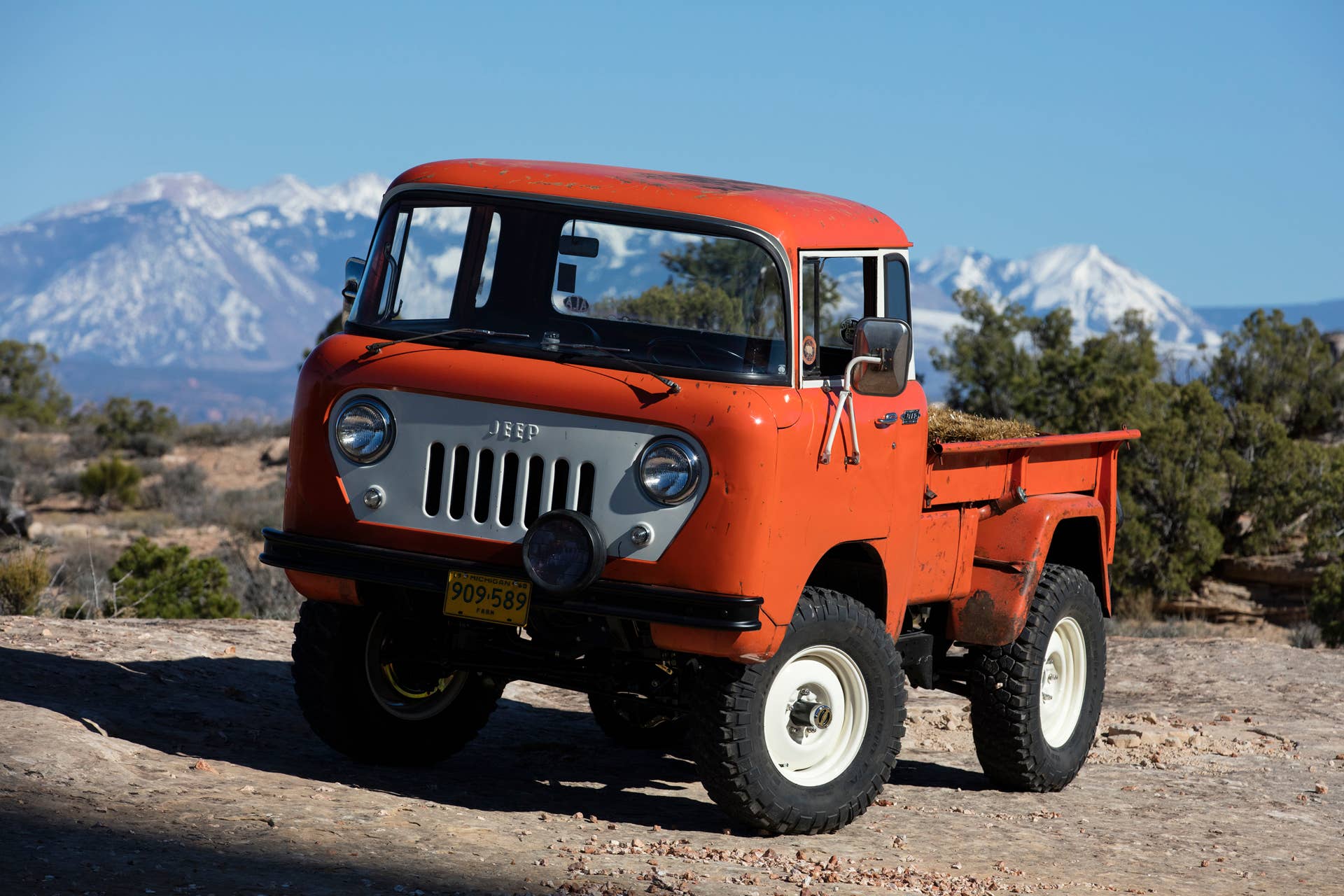
It’s not as if Jeep doesn’t have retro heritage to help it peddle such a truck. The automaker, in fact, has a long history of making unique pickup trucks that are distinctly Jeep-like, with its very own unapologetic character, vivid and eye-catching graphics, and serious off-road chops. That reputation isn’t all just visually striking poster images and nostalgia for the last few decades of the 20th century, either. Jeep pickup trucks have long offered Americans the ability to purchase tough little go-anywhere brutes that push through decades of abuse with relative ease, all for just a few hard-earned bucks. That truck-building attitude has stuck with the brand to this very day, as the Jeep Gladiator continues to offer buyers a capable, off-road-ready truck at a reasonable price. Hell, you’ll even be able to option the Gladiator with a 6.4-liter V8 soon enough (depending on which state you reside in, of course), and that’s something to be excited about.
Stellantis Media
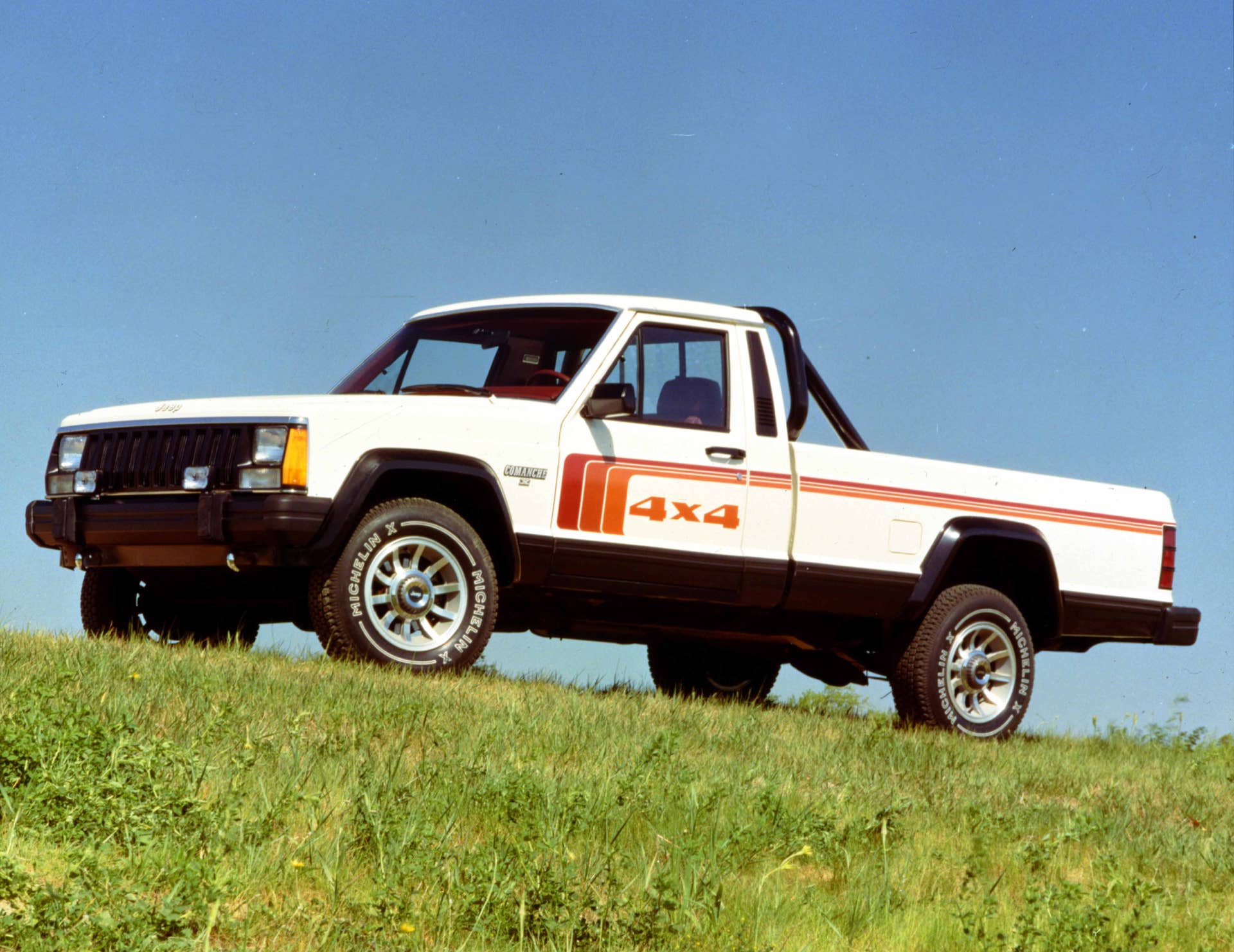
I think that if Jeep revived the Comanche nameplate as a compact pickup truck, people would go nuts for it, and rightly so. Pictured above, the Jeep Comanche was a tough and well-respected small pickup truck sold by Jeep from the mid-1980s to the early 1990s. Although the Comanche might be considered midsize by today’s standards, since it employed a ladder frame architecture rather than the unibody compact pickup trucks of today, it was very much a small truck. It was officially classed as a “compact truck,” and Jeep even used the name for a more recent concept, pictured below, which was essentially a pickup truck variant of the bite-sized Jeep Renegade.

Stellantis Media
Although the Renegade-based Comanche Concept never saw the fateful light of day as a production vehicle, it serves as a precedent that a capable, affordable, unibody compact pickup truck from Jeep is more than capable of getting the truck-buying public excited. I believe that with its STLA-Large platform and the recent arrival of a new hybrid powertrain to Jeep’s lineup, à la 2026 Cherokee, Jeep could have a serious competitor on its hands in the compact pickup truck segment. Not only could it offer a more competent drivetrain than what we’ve seen from Stellantis before, but it would also do so with the same retro nostalgia that draws buyers to the showroom.
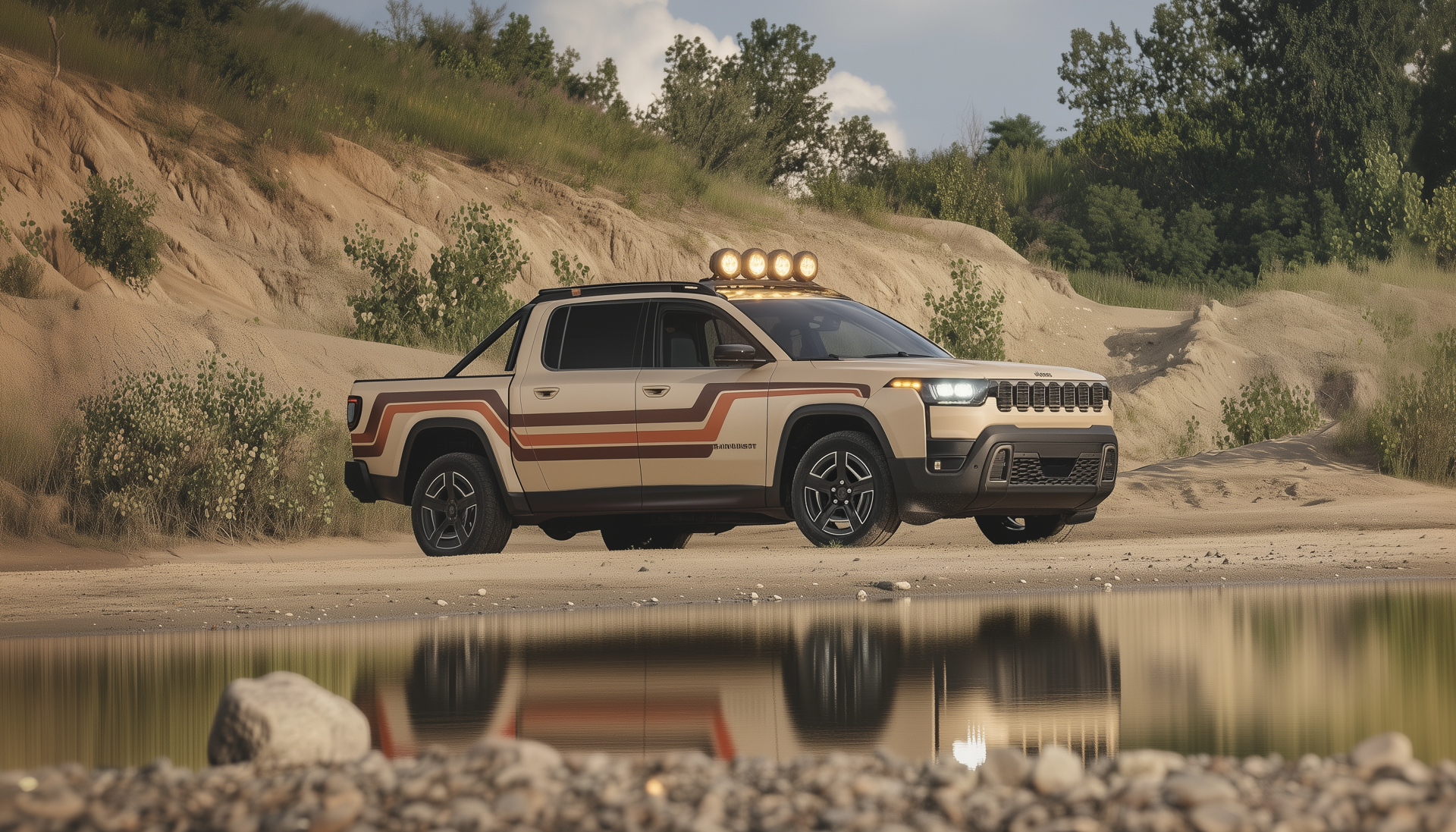
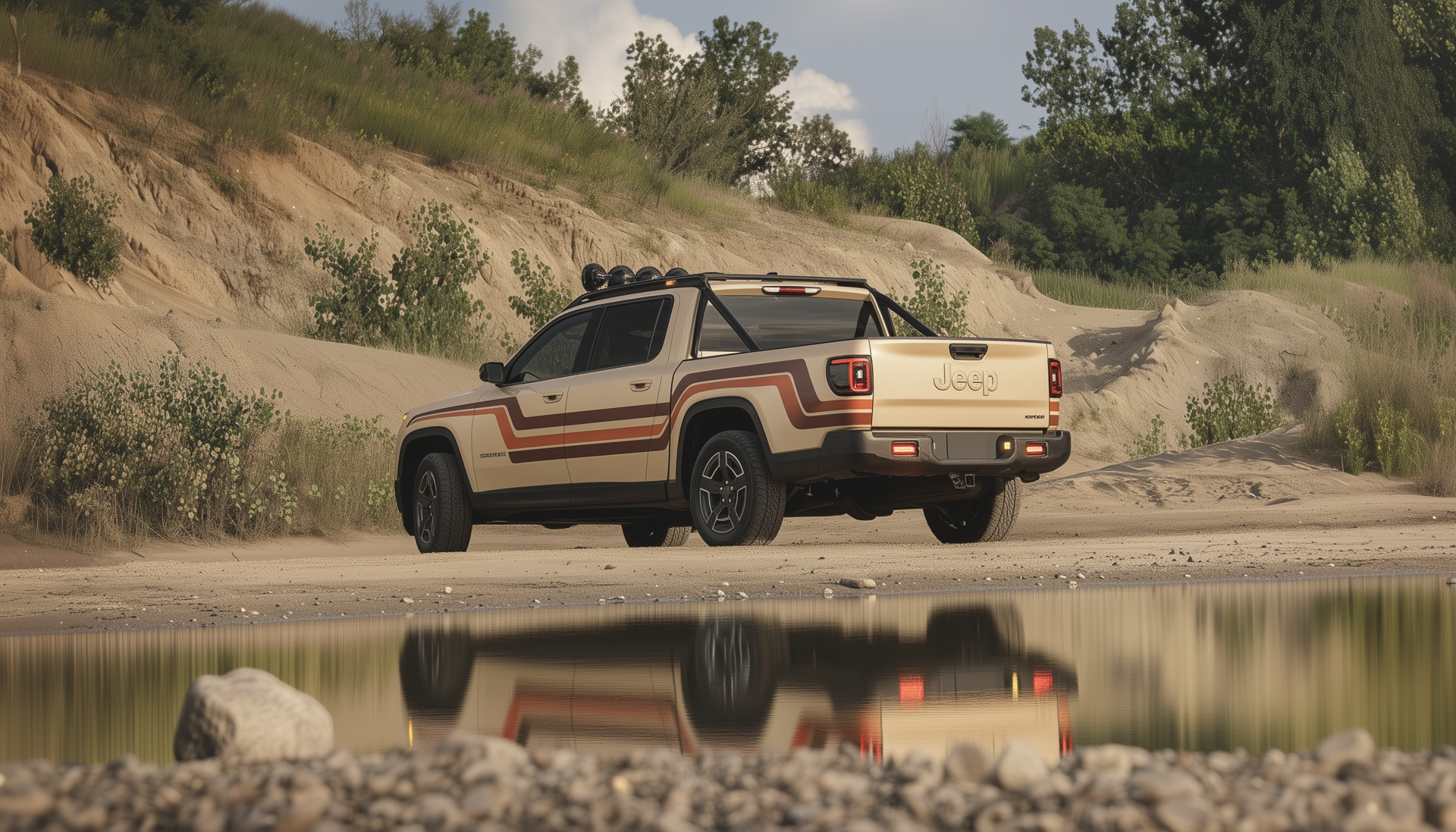
Using Midjourney 7.0 and Gemini 2.5 Flash Image, I take an imagined look at what a compact hybrid pickup truck from Jeep might look like based on the STLA-Large platform and sharing most of its styling with the Cherokee, just as the original Comanche did. These renders are purely fictional and in no way represent any actual Jeep or Stellantis products.
Cole Attisha Using Midjourney 7.0 & Gemini 2.5 Flash Image
Cole Attisha Using Midjourney 7.0 & Gemini 2.5 Flash Image
What could Jeep’s compact pickup look like?
Sure, Toyota might be able to offer superior hybrid technology in its supposedly upcoming compact pickup truck and Ford might already have a loyal following in the compact truck segment, but I don’t think anyone could tell me with a straight face that they wouldn’t at least consider a satin beige Jeep offering in the same class, clad with retro graphics and off-road accessories. Your gut might tell you to go with the Toyota, but you know in your heart you’d always be jealous of those who had the heart to opt for the Jeep, because it just looks so damn cool. With its iconic slotted grille, radiant retro graphics, tough off-road accessories that shout “I’m adventurous,” and the fresh styling cues of the all-new 2026 Jeep Cherokee, I think that a compact Jeep pickup truck could be quite the looker.
Cole Attisha Using Midjourney 7.0 & Gemini 2.5 Flash Image
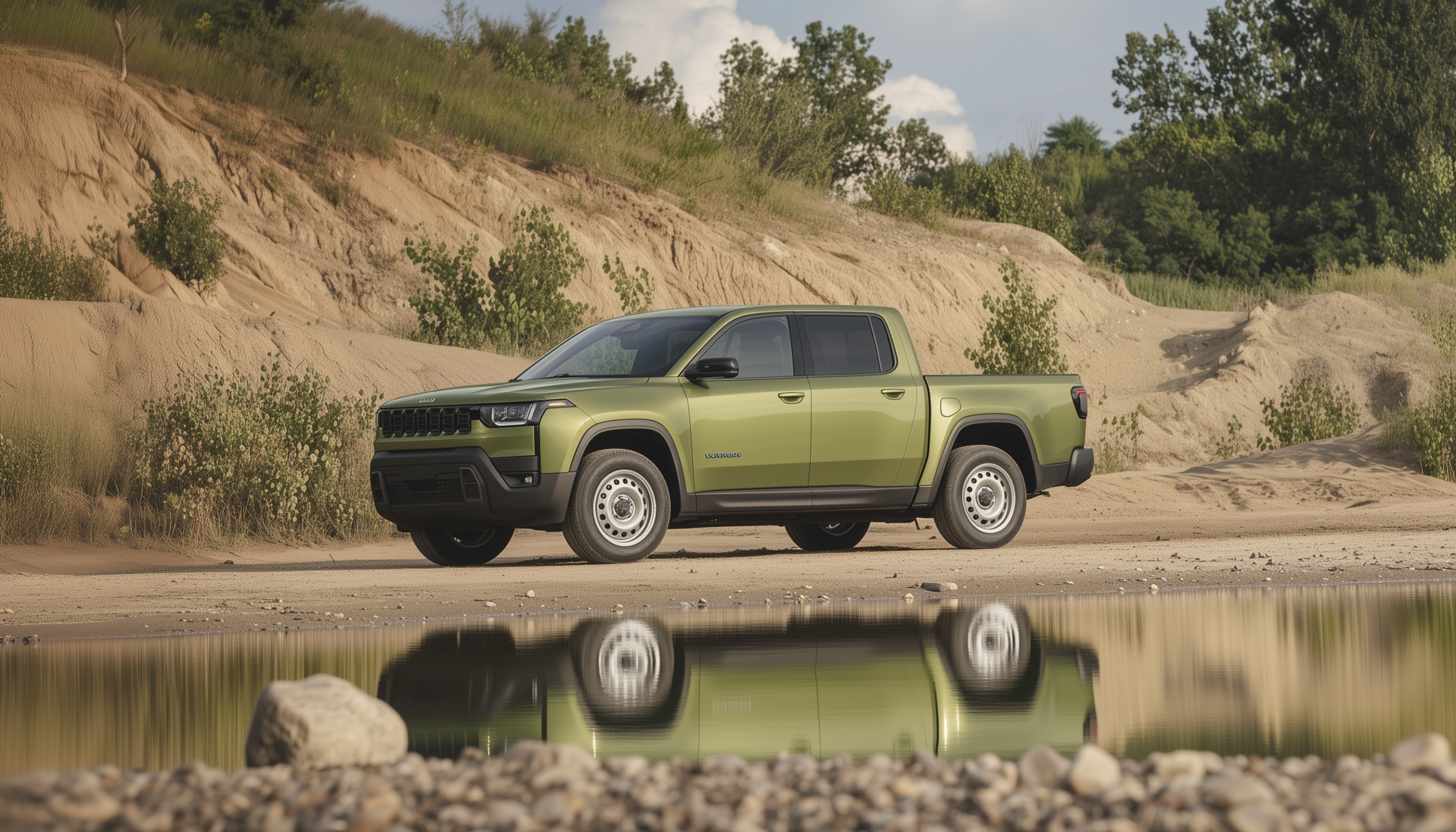
Even in base model form, rocking small-diameter steelies and a workhorse-Jeep-like Olive Drab paint job, an affordable work truck version of a revived Jeep Comanche could turn some heads. More importantly, however, it could offer some proper kit beneath the surface. Of course, I’m referring to the new Jeep Cherokee’s turbocharged and hybridized dual-motor 1.6-liter four-cylinder engine, which provides a combined 210 horsepower and 230 lb-ft of torque. Those two electric motors control the standard-equipped continuously variable transmission, and all Cherokees now come standard with all-wheel drive. Jeep claims the Cherokee should be able to achieve 37 combined miles per gallon, a figure that’s right on par with the Ford Maverick Hybrid when equipped with all-wheel drive (a new feature for its 2025 model year).
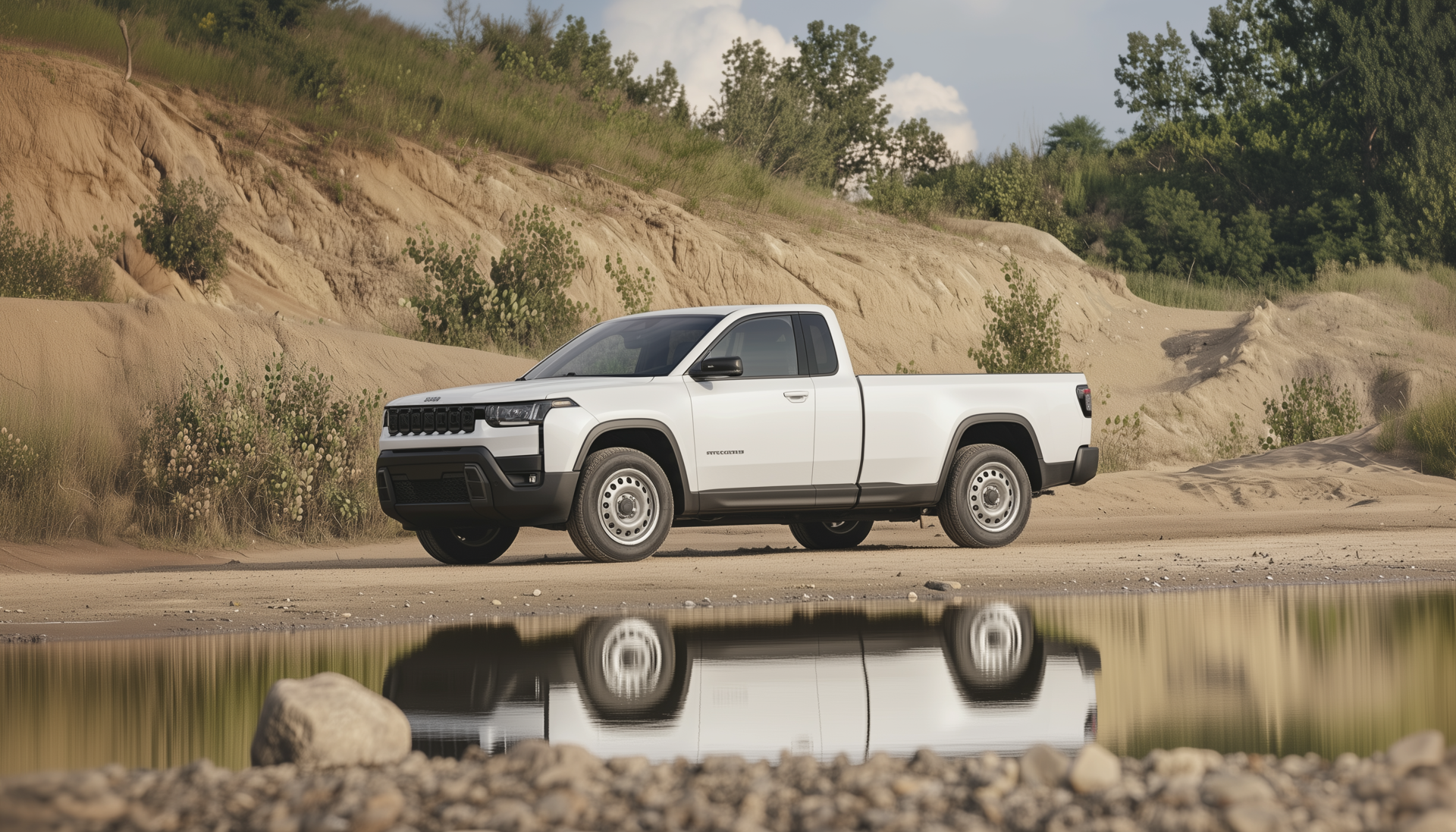
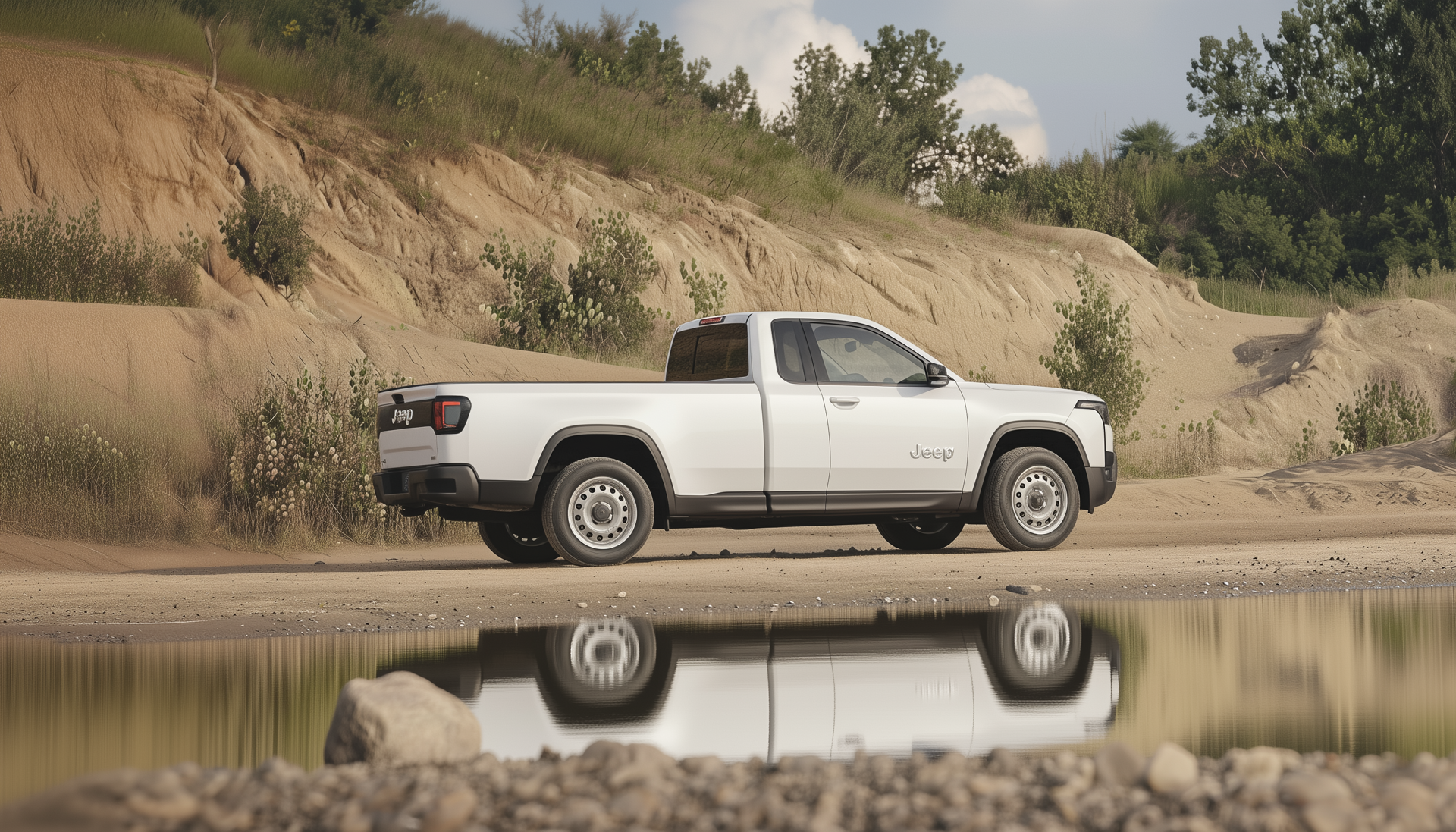
Just for fun, let’s imagine it as a single cab
Cole Attisha Using Midjourney 7.0 & Gemini 2.5 Flash Image
Cole Attisha Using Midjourney 7.0 & Gemini 2.5 Flash Image
This may be a bit of a long shot, but imagine this hypothetical Jeep Comanche revival in single-cab guise. Like the original Comanche, its proportions are strong and work-ready. Plus, it would be the only single-cab offering in its segment. Allowing affordable small truck buyers the option to trade out a second row of seating for a larger bed could make a revived Comanche uniquely desirable for tradespeople who require a work truck more than they need space for extra people. Stripped down of all its unnecessarily plush amenities, an affordable Jeep compact work truck mated to an efficient hybrid powertrain could make for a highly appealing niche offering within the segment.
Final thoughts
Tug on our heartstrings, Jeep. That’s what I miss about Stellantis’s many brands, at least. Dodge, Jeep, Chrysler, and Ram, even if they weren’t always the most dependable or well put-together, always knew how to evoke a unique sense of American charm. Their iconic marketing campaigns, like grainy posters of Jeeps on a beach while people smiled and parasailed, and danced around a fire half-nude, or Bob Lutz driving a Grand Cherokee right through a plate glass window into the 1992 North American International Auto Show, symbolized the brand’s free-spirited nature, and its recognition of the American love of play. Now that Jeep has access to platforms, battery tech, and generally higher-quality hardware than it has in a long time, as well as the ability to blend competent engineering with the heady appeal of a brand as iconic as itself, I believe that a Cherokee-based compact pickup truck could find great success in the marketplace, and it’d look good doing it.
About the author

Cole Attisha
Staff Writer, Autoblog