
This post is appearing on Autoblog Military, Autoblog’s sub-site dedicated to the vehicles, aircraft and ships of the world’s armed forces.
The United States Navy is the single greatest force that’s ever put to sea. While that’s an indisputable fact here in 2016, it’s a title that could belong to China’s People’s Liberation Army Navy in the decades to come, as the country continues its efforts to bolster its naval forces.
According to a new congressional report assembled by the 2014 U.S.-China Economic and Security Review Commission, the Chinese Navy could number 351 ships by the end of this decade. The US Navy, for comparison, has just 272 “deployable battle force ships” in its fleet. But numbers only tell a part of this story.
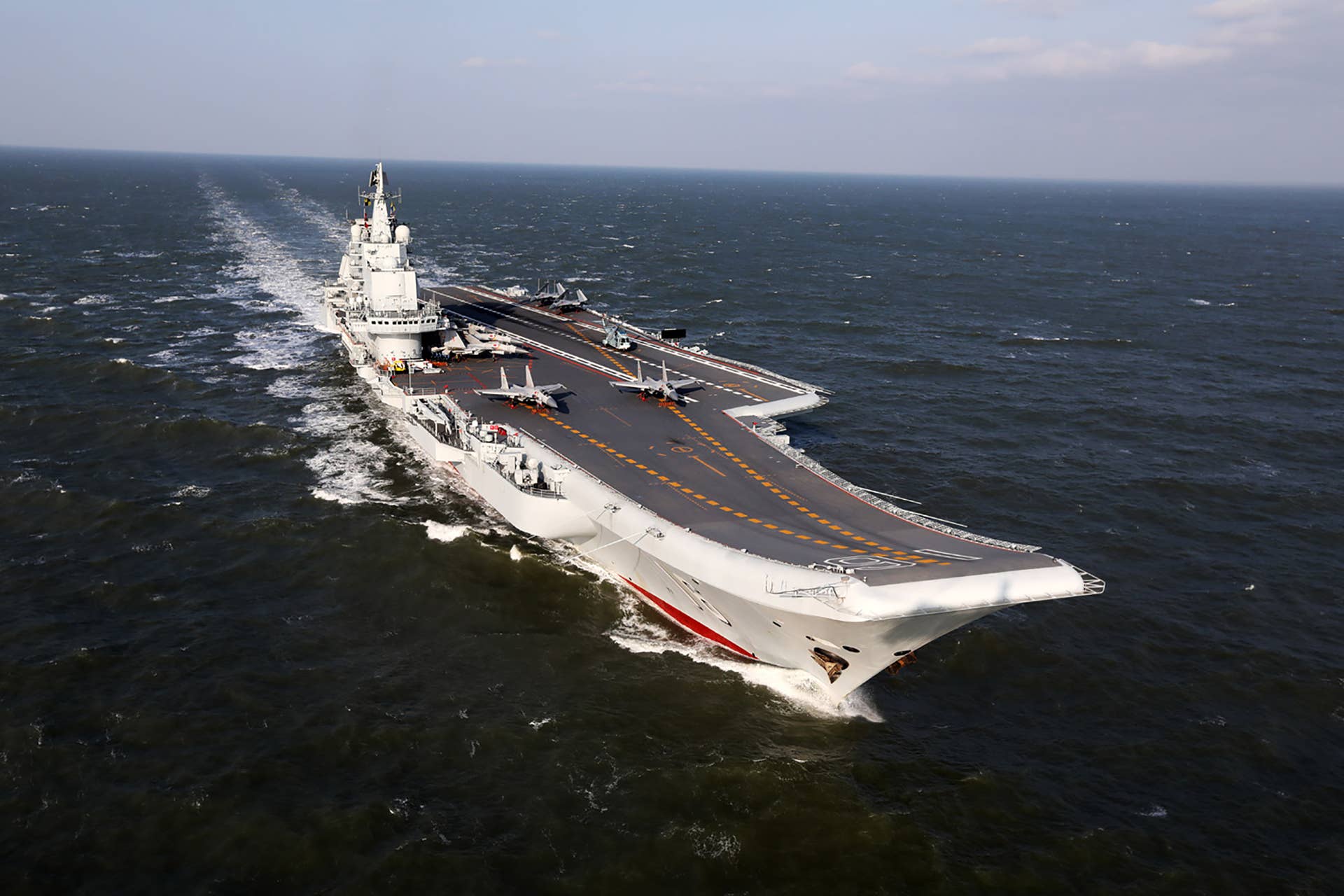
The US has ten aircraft carriers, with two more – the new Ford-class Gerald R. Ford and John F. Kennedy – on their way. Each of these carriers is home to dozens of aircraft, and if that’s not enough Uncle Sam has nine amphibious ships. In any other navy, these would be considered helicopter carriers, although they can still haul VTOL fighters like the retired AV-8B Harrier and the new F-35B Lightning II. The Chinese have one carrier, the Ukrainian-built Liaoning (above), and its carrier-based J-15 fighter is still in development. The report does claim that China is trying to add four more carriers to its fleet, but even then, the US would still have a dramatic edge in power projection.
But it seems like China’s entire naval strategy is predicated on countering that fact. According to Scout.com‘s Warrior blog, the congressional report calls out the new Luyang III-class destroyers as a potential thorn in the side. Three of these new surface combatants are already at sea, with nine more currently planned or in development. Each ship carries long-range, vertically launched anti-ship missiles along with a range-extended version of the PLAN’s current surface-to-air missile. Meanwhile, the PLAN is already prepping the Luyang III‘s successor, with the new Type 055.
And if the big surface combatants aren’t enough of a concern, Warrior points out that the Chinese Navy has built dozens of Hobei-class guided missile patrol boats since 2004, while the Jiangdao-class corvette’s production has ramped up since its 2013 debut. Meanwhile, the same report points to a big push for Chinese submarines, including nuclear-armed ballistic missile boats.
Not surprisingly based on its findings, the commission behind the report say the US Navy will need to ramp up not only its ship production, but its presence in the Pacific.