
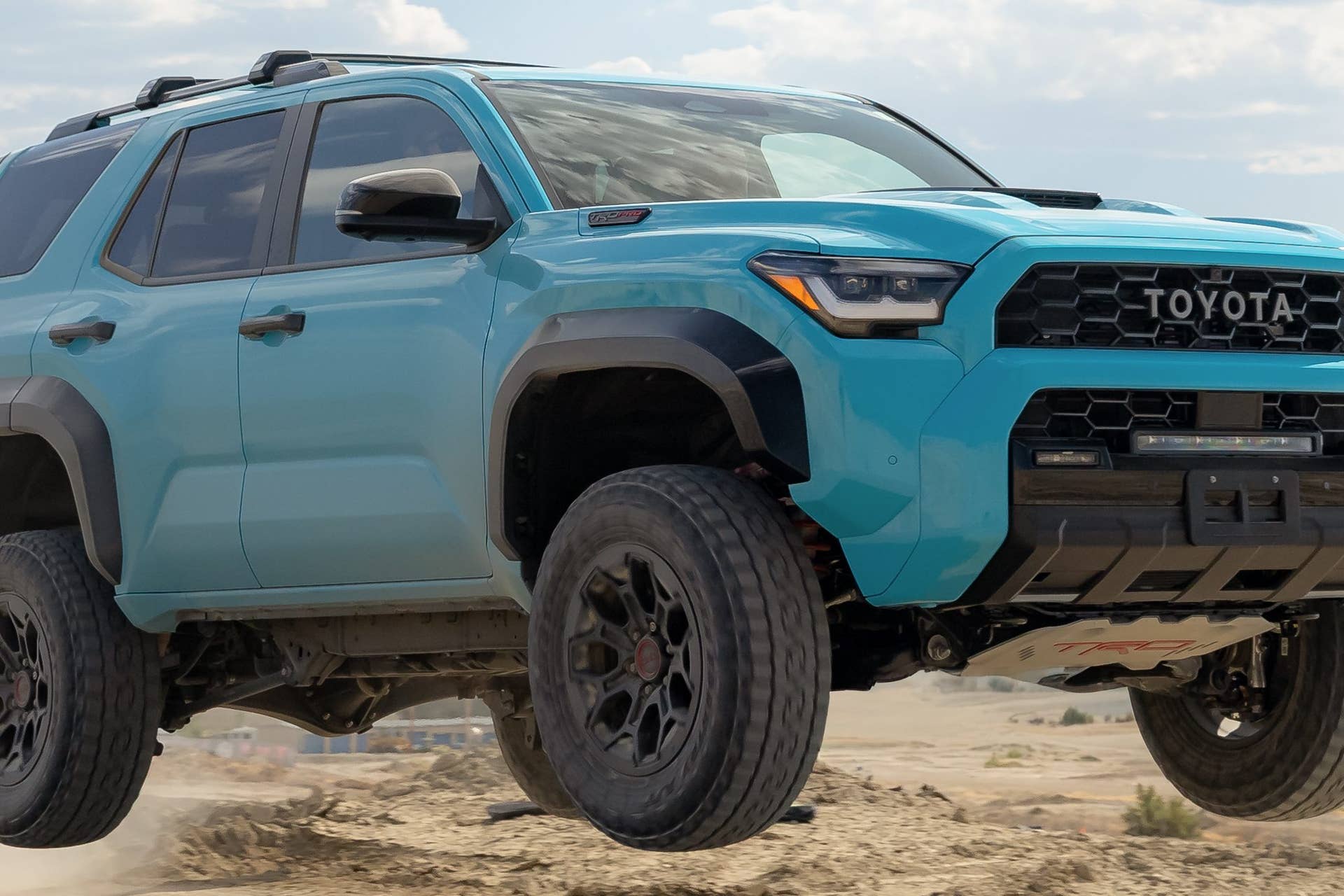
If you occasionally go off-road, even some all-wheel drive crossovers will handle ruts, gravel, and some mud, but if your off-road excursions are more serious and more regular, you want something that won’t break a sweat dealing with challenging terrain – you need something that isn’t a poser – and in this article, we’re going to explore some of the best options on the market in 2027, specifically SUVs whose AWD or 4×4 systems make them more capable than average. Some are more rugged than others, and that brings compromises, but sometimes, those compromises are worth making. In other cases, better on-road manners bring their own drawbacks that you may consider worthwhile. Fortunately, our winner toes both lines with aplomb.
Winner: Toyota 4Runner
Cole Attisha/Autoblog
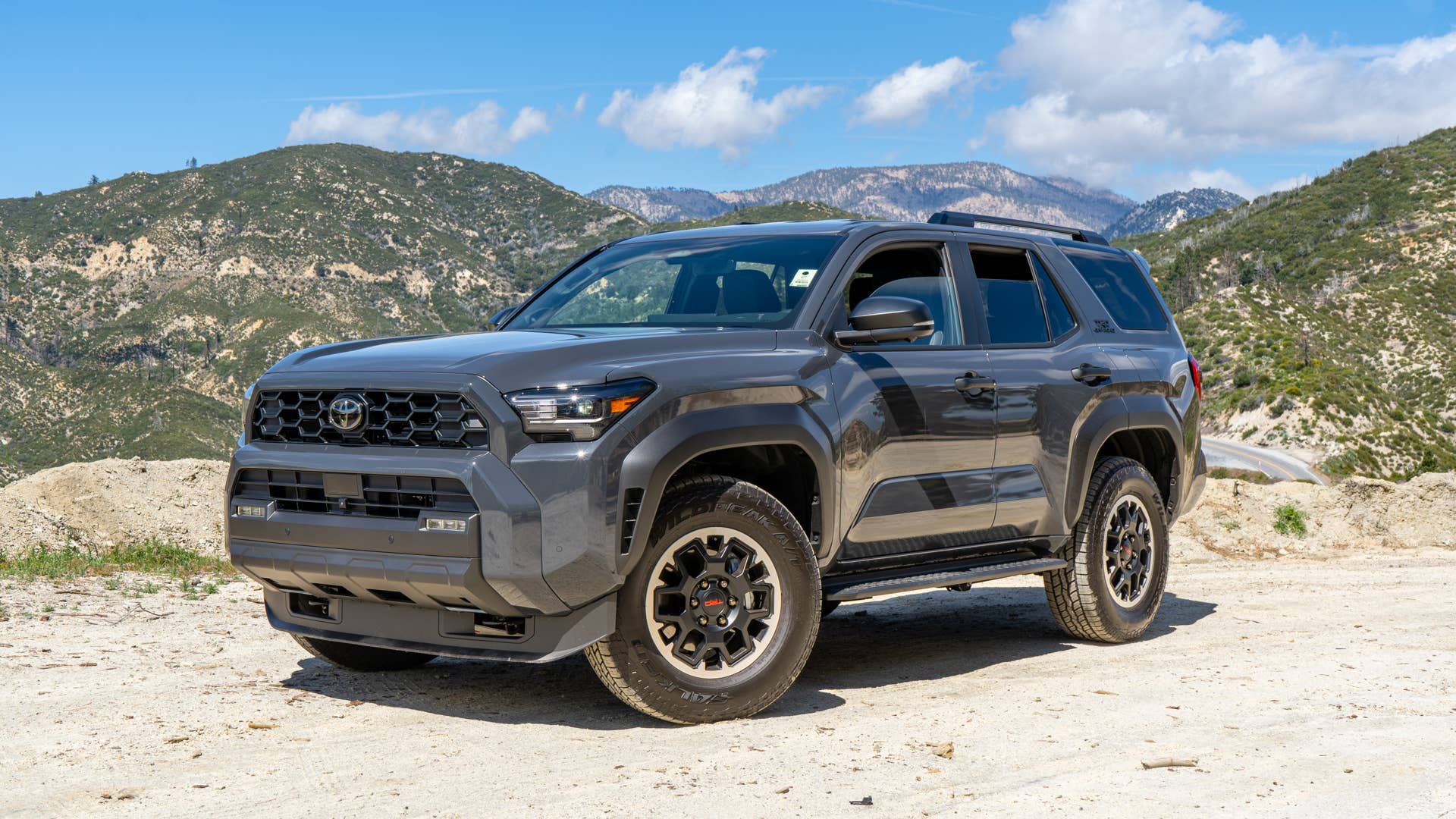
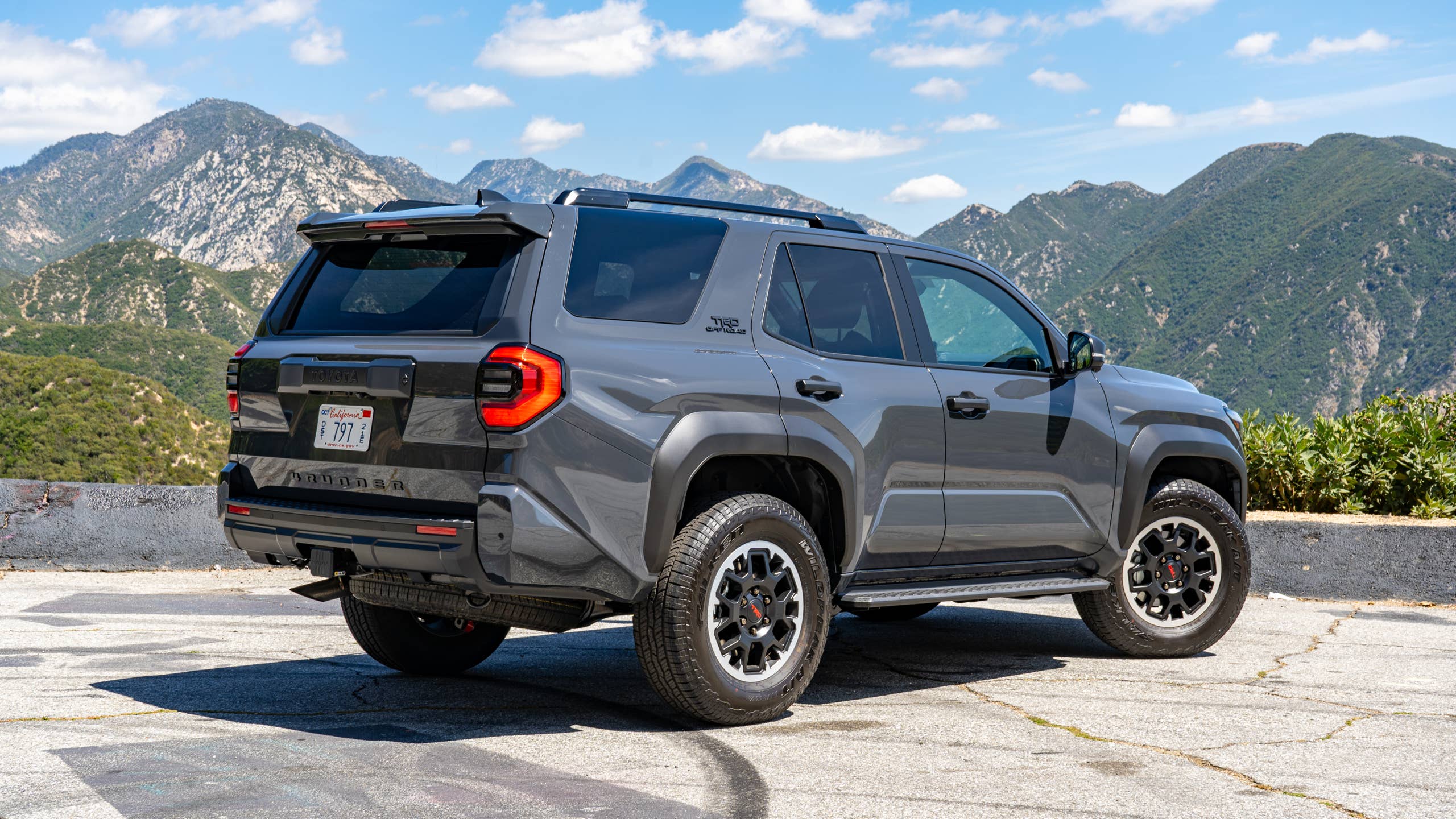
With legendary body-on-frame durability, a standard two-speed transfer case on 4WD models, a massive aftermarket community, outstanding resale values, and documented reliability, the Toyota 4Runner is the perfect halfway point between hardcore off-roader and dignified daily driver. Genuine 4×4 is complemented by up to 10.1 inches of ground clearance, and there’s a choice between a 2.4-cylinder turbocharged four-cylinder producing 278 horsepower and a hybrid version developing 328 hp. The 2025 redesign made the SUV even more handsome without going soft, and inside, the cabin feels utilitarian but not sparse; it’s fancier than a Wrangler and less luxurious than a Defender. As a midsize vehicle that can seat up to seven (on non-hybrid trims), it’s unusual, but predictably, the third row is only really suitable for children.
Cole Attisha/Autoblog
Leather upholstery, heated and ventilated front seats, a wireless charging pad, and dual-zone climate control are available, as are a 12.3-inch gauge cluster and a 14.0-inch touchscreen infotainment setup instead of the standard 7.0-inch driver display and 8.0-inch infotainment screen. Wireless smartphone integration comes standard with an 8-speaker sound system, but a 14-speaker JBL system is also offered. All of these features are supplementary to the 4Runner’s true calling card: even with a 2WD system, the 4Runner is tougher than most SUVs, and with 4WD it becomes the ideal zombie apocalypse survival vehicle. Even the cheapest trims (starting around $42,000) can be optioned with 4WD for an extra $2,000, and while they don’t feel opulent by any means, they still feel somewhat refined (unless you hate turbo noises).
Toyota 4Runner Pros
- Genuinely good off-road capability
- Torquey hybrid powertrain
- Good ride quality
- Diverse trim lineup for several use cases
- Complimentary maintenance included
Toyota 4Runner Cons
- Hybrids lose some cargo space
- Third row is tight for adults
- Cabin materials are not premium, though they are hardy
Scores:
Capability: 4.5/5
Daily Usability: 4.5/5
Value: 4/5
Who’s It For?
The 4Runner will appeal to the buyer seeking a no-nonsense approach to reliable off-road tenacity without losing all road manners. It’s a vehicle that will be solid after hundreds of thousands of miles and still attract good resale prices, making it a good value proposition.
Recommended Trim
We recommend the TRD Off-Road version of the Toyota 4Runner. It capitalizes on the 4Runner’s best bits – off-road confidence and reasonable pricing – without feeling spartan. You get the most important off-road hardware and decent added features without the near-$70,000 pricing of the Trailhunter and TRD Pro models.
Runner-Up 1: Subaru Outback Wilderness
Kristen Brown/Autoblog
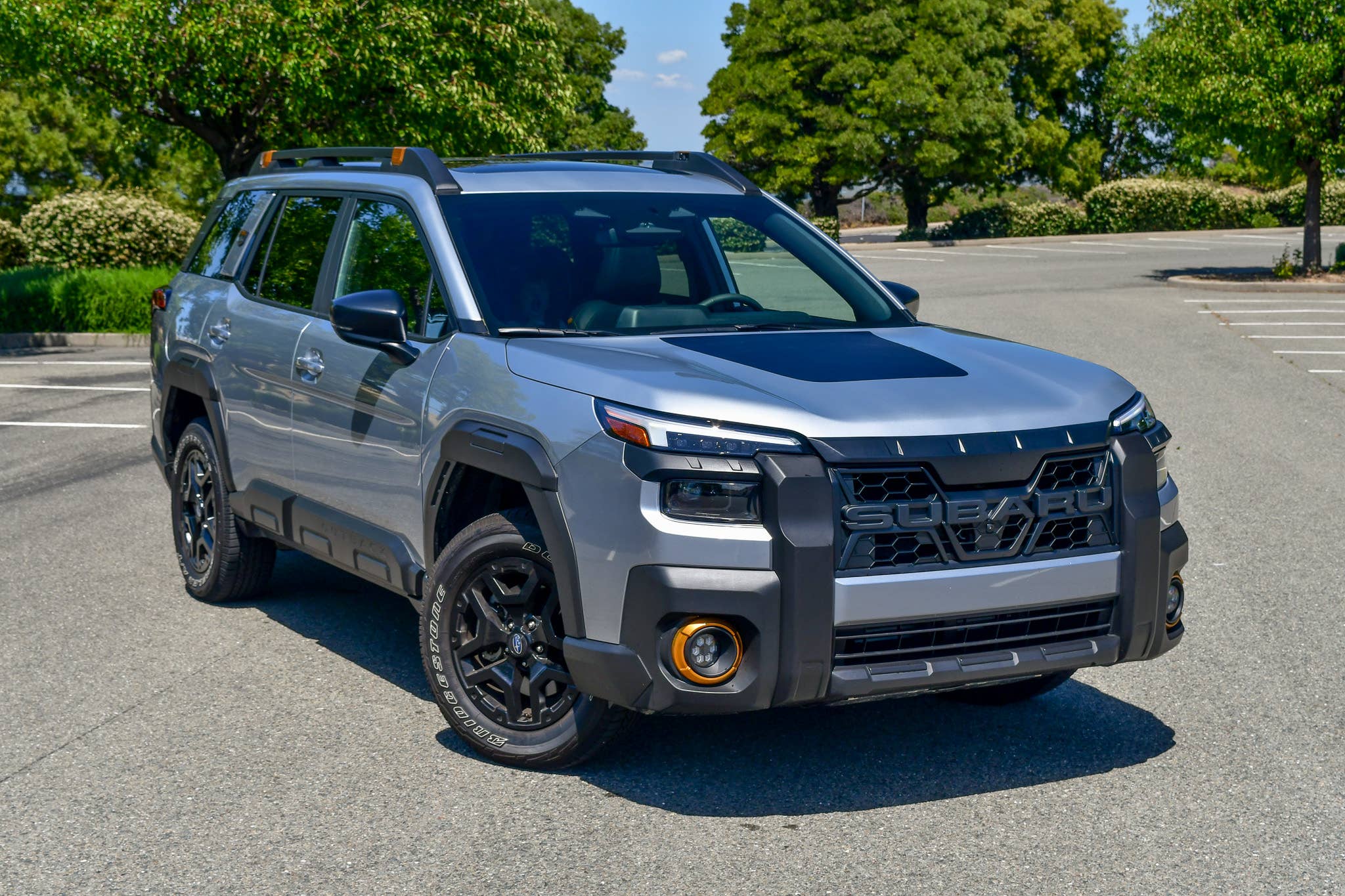
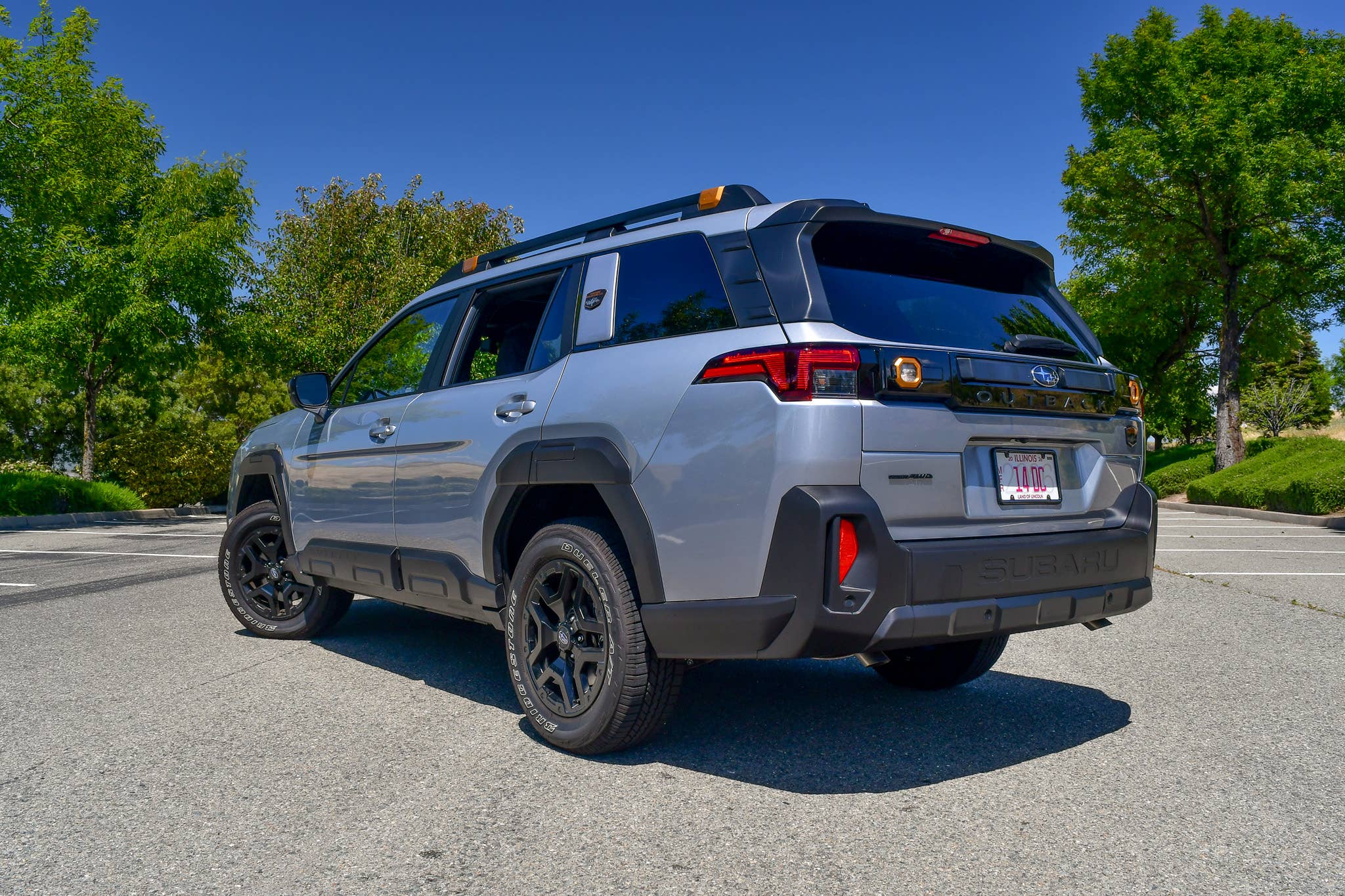
The Subaru Outback’s redesign raised eyebrows, but with the addition of the Wilderness trim, previously found on the Forester, the wagon-turned crossover makes more sense. But don’t let its segment-straddling nature imply that it’s a poor alternative to a serious 4×4; the Outback Wilderness has better off-road ability than is immediately obvious, with 9.5 inches of ground clearance and a dual-function X-MODE that optimizes the engine, transmission, and brakes for low-traction scenarios. The Subaru Symmetrical All-Wheel Drive system includes Snow/Dirt and Deep Snow/Mud modes specifically tuned to those environments, and although all four wheels are permanently driven through a CVT (with an 8-speed paddle-shit mode), the Outback Wilderness is decent to drive, with the base 2.5-liter naturally aspirated boxer-four (180 hp) making way for a 2.4-liter turbocharged flat-four with 260 hp and 277 lb-ft of torque.
Kristen Brown/Autoblog
Inside, a 12.3-inch cluster with a touchscreen of matching size comes standard with wireless smartphone integration. The Wilderness also boasts 12-speaker Harman Kardon audio, doubling the standard speaker count, dual-zone climate control (standard on all models), heated front and rear outboard seats, and a heated steering wheel. More importantly, the cabin is trimmed in durable, water-repellent StarTex upholstery, and standard rubber liners for the floors and removable cargo tray mean you don’t need to hose off a muddy mountain bike before heading home. Keyless access, eight cup and bottle holders, and loads of safety features (like whiplash-reducing front seats and the EyeSight suite of driver aids) mean it’s not just capable off the beaten path but also secure on the sometimes wilder paved roads.
Subaru Outback Pros
- Standard AWD, ample ground clearance on all trims
- Roomy cabin and cargo area
- Physical climate control buttons
- Legitimate off-road hardware and adaptive dampers with Wilderness
Subaru Outback Cons
- Base powertrain is slow
- CVT lacks engagement
- No complimentary maintenance
Scores:
Capability: 3.5/5
Daily Usability: 4/5
Value: 4/5
Who’s It For?
Someone who likes adventuring but doesn’t want something as imposing and tall as a true SUV will appreciate the Outback’s polished all-round, all-terrain competence. The wagon-like shape makes loading cargo simpler and is arguably easier to adapt to if you’ve never driven SUVs before, which can be useful on tight trails.
Recommended Trim
Our runner-up spot is specifically for the Outback Wilderness, but if you’re less serious about proper off-roading and simply want permanent security on loose terrain, the Outback Limited dresses the cabin in leather, adds navigation, and features a power moonroof, Harman Kardon audio, and heating for the rear seats and steering wheel.
Runner-Up 2: Ford Bronco
Ford
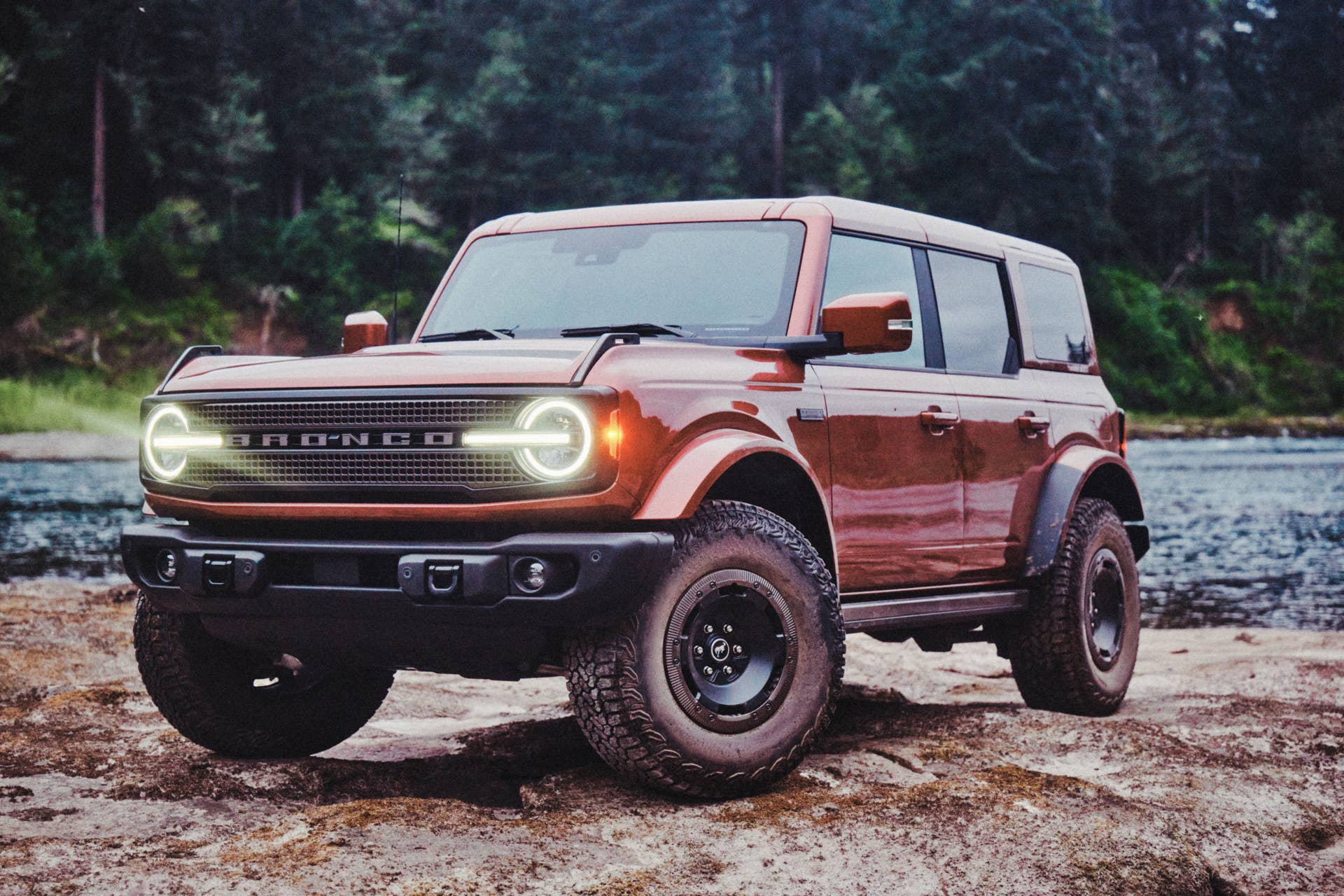
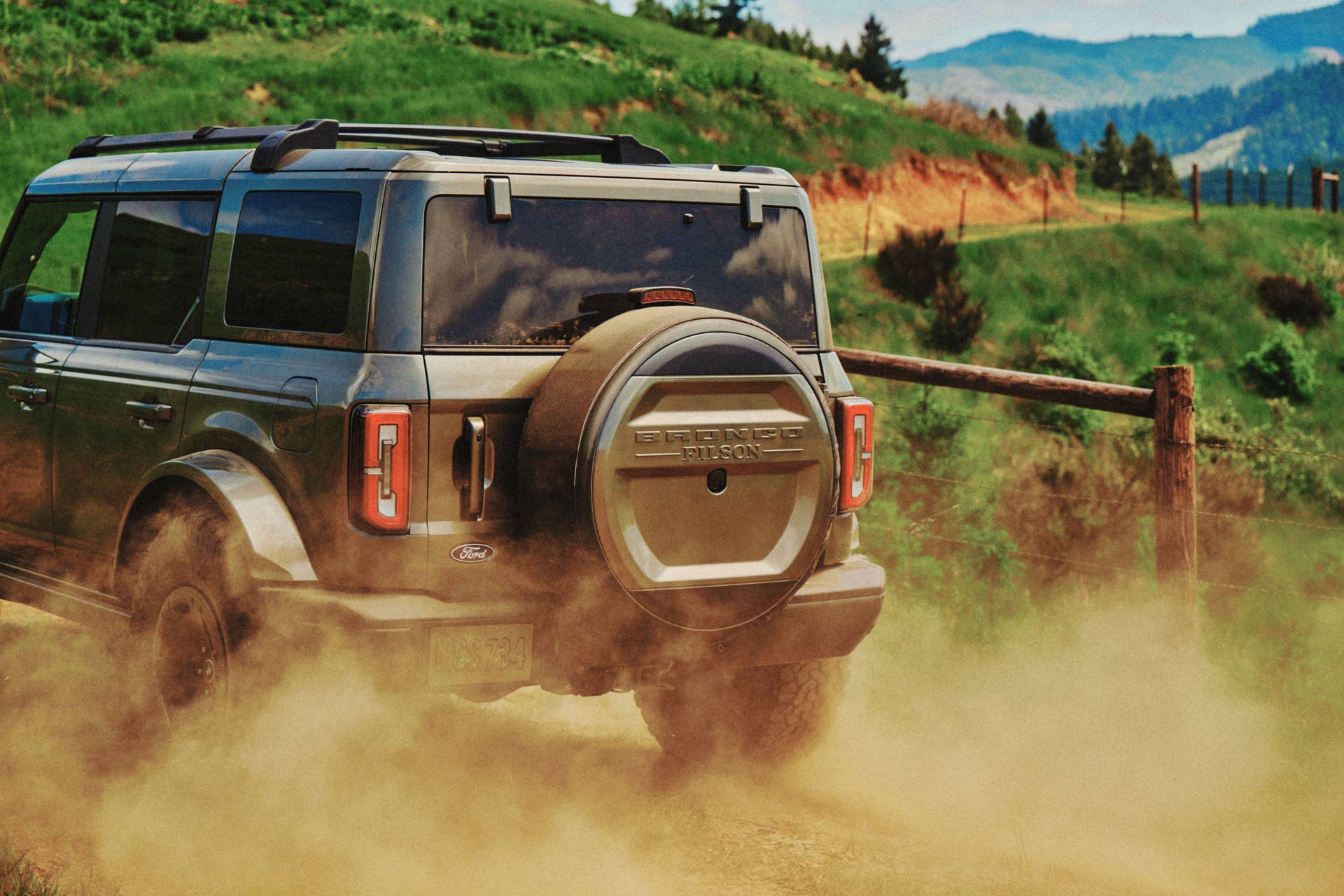
With between 8.3 and 13.1 inches of ground clearance depending on trim, the Ford Bronco looks ready to take on anything. All trims get four-wheel drive with Ford’s Terrain Management System, but unfortunately, the Badlands trim no longer features a front stabilizer bar disconnect as standard, though it is still available as an option or in the Sasquatch Package. This features 35-inch tires and more ground clearance than base trims, while the Bronco Raptor, or Braptor, gets wider fenders, 37-inch rubber, unique bumpers, a reinforced frame, and Fox Live Valve dampers. Other off-road goodies available in the range include an electronic locking rear diff, a front locker, a 4.7:1 final drive (Sasquatch Package), and the Bronco’s famous Go Over Any Thing (G.O.A.T.) mode, which adjusts throttle, shift, and traction settings on snow, sand, rocks, and mud. Whatever Bronco you choose, you get removable doors like a Wrangler, but here, the wing mirrors stay in place.
Ford
Ford elected not to update the Bronco with a redesign because, like the Wrangler, people love it just the way it is, and the way it is is simple. Inside, the cabin reflects the usable, durable, and adventure-ready look of the exterior, with off-road trims getting marine-grade vinyl seats to resist moisture and mud, while drain plugs in the rubberized floors make hosing down the interior quick and easy. Ford also concentrated on the switchgear, with large, easy-to-use controls designed to be operated with gloves, and you can spec a MOLLE strap system to store more gear against the front seatbacks. As for tech, a 12-inch digital cluster is paired with a 12-inch SYNC 4 touchscreen display as standard, including navigation and wireless smartphone integration. Meanwhile, powertrains range from a 2.3-liter turbo-four to a 330-hp 2.7-liter twin-turbo V6 and a 418-hp 3.0-liter twin-turbo V6, with the base Bronco powering all four wheels through a rare seven-speed manual and all the others using a 10-speed auto.
Ford Bronco Pros
- Serious off-road capability on all rims
- Available seven-speed manual
- Removable doors and roof provide open-air novelty
- Better on-road behavior than a Jeep Wrangler
- Modern tech, 12-inch displays are standard
- Multiple powertrains
Ford Bronco Cons
- All engines can be thirsty
- Two-door Broncos have tight rear seating
- More expensive than comparable Wrangler trims
- Manual gearbox only available with base engine
- Noticeable wind and road noise
Scores:
Capability: 4/5
Daily Usability: 4/5
Value: 4/5
Who’s It For?
The person who wants to do serious off-roading without the cheap feel and questionable on-road manners of a Jeep Wrangler while still enjoying a retro design and a rugged cabin that wants to get dirty.
Recommended Trim
For most people, we recommend the Ford Bronco in Big Bend 4-Door guise, which starts at a little over $40,000. Sitting just above the base model, you get nice upgrades like a leather-trimmed steering wheel, better interior materials, and access to the Mid Package, which offers heated front seats, dual-zone climate control, remote start, the 2.3-liter EcoBoost engine with 300 hp, and Ford Co-Pilot 360 driver aids. For those who want to go more extreme, the Badlands costs roughly 10 grand more, but $50,000 is still “cheap” compared to the $81k Raptor.
Honorable Mentions
Kia Telluride X-Pro

(C) 2026 Doug Berger | DBPics
The Kia Telluride builds on the rugged appearance of the X-Line package with remarkably solid off-road upgrades. Ground clearance increases to 9.1 inches, 18-inch wheels are wrapped in all-terrain tires, and there are recovery hooks on both ends. In addition, the AWD system boasts a center-locking diff and an electronic limited-slip differential. If you just want to take your family somewhere remote rather than conquer the trails of Moab, this is an excellent SUV with decent trail-crawling ability.
Honda Passport TrailSport
Honda
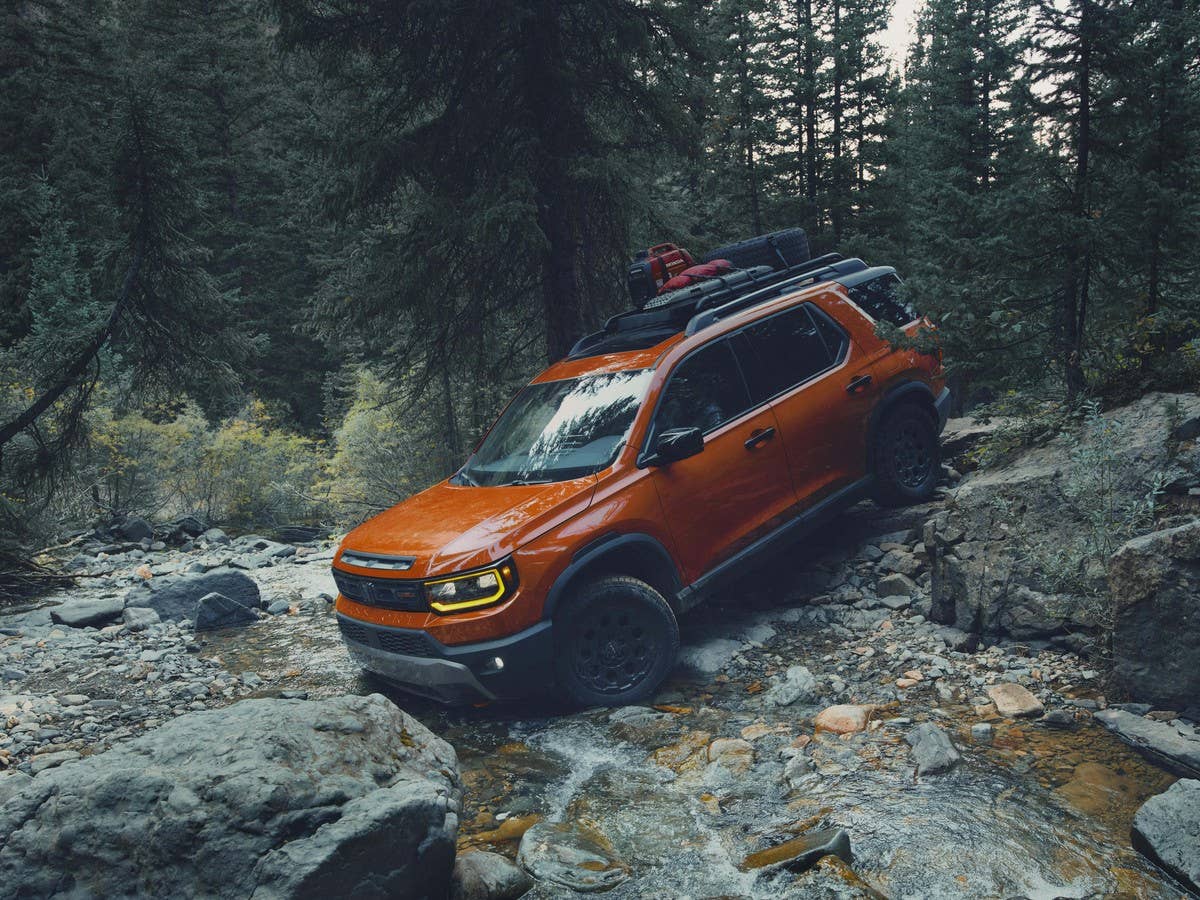
With 8.3 inches of ground clearance, a 285-hp V6 engine mated to a 10-speed automatic, all-terrain tires, steel skid plates, and i-VTM4 all-wheel drive, the Honda Passport TrailSport is a vehicle that may not immediately spring to mind when considering AWD SUVs, but its mechanical all-wheel system is sturdy and capable. The Pilot TrailSport is worthy of consideration if you need three rows, but the smaller Passport is more agile on rocky trails where breakover angles from a shorter wheelbase are better, and its more aggressive bumper improves approach angles, too.
Conclusion
From hardcore off-roaders like the Bronco to softer crossovers like the Outback Wilderness, and the sweet-spot Toyota 4Runner TRD Off-Road in between, there are plenty of AWD and 4×4 options on offer, several of which offer varying degrees of extremism through their trim ranges. Not mentioned above but also worthy of consideration are the Toyota Land Cruiser, Land Rover Defender, and Ineos Grenadier, but our winner, runners-up, and honorable mentions are the easiest to live with, on or off the trails.
About the author

Sebastian Cenizo
Senior Editor, Autoblog