
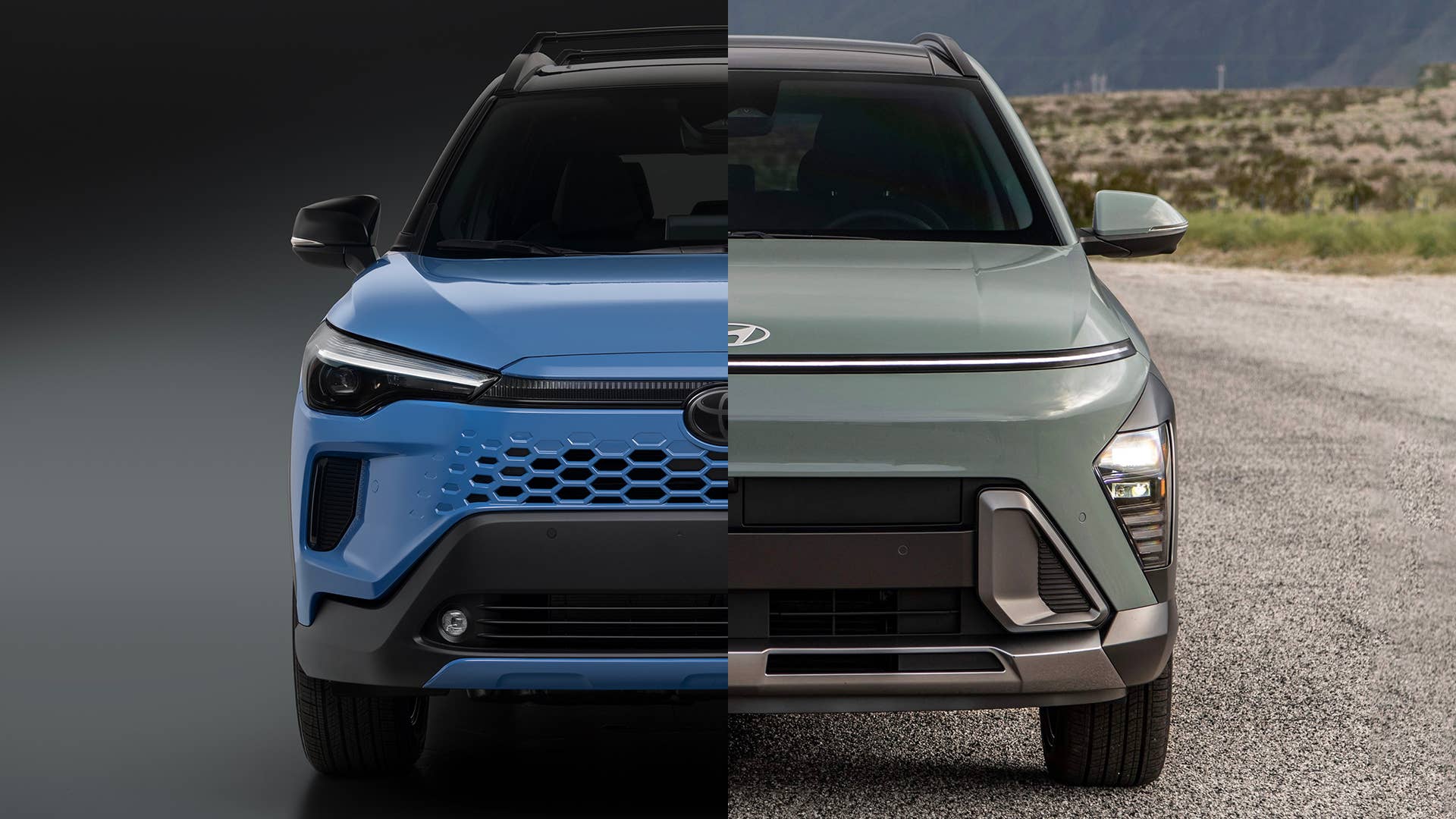
Japanese dependability takes on Korean flair
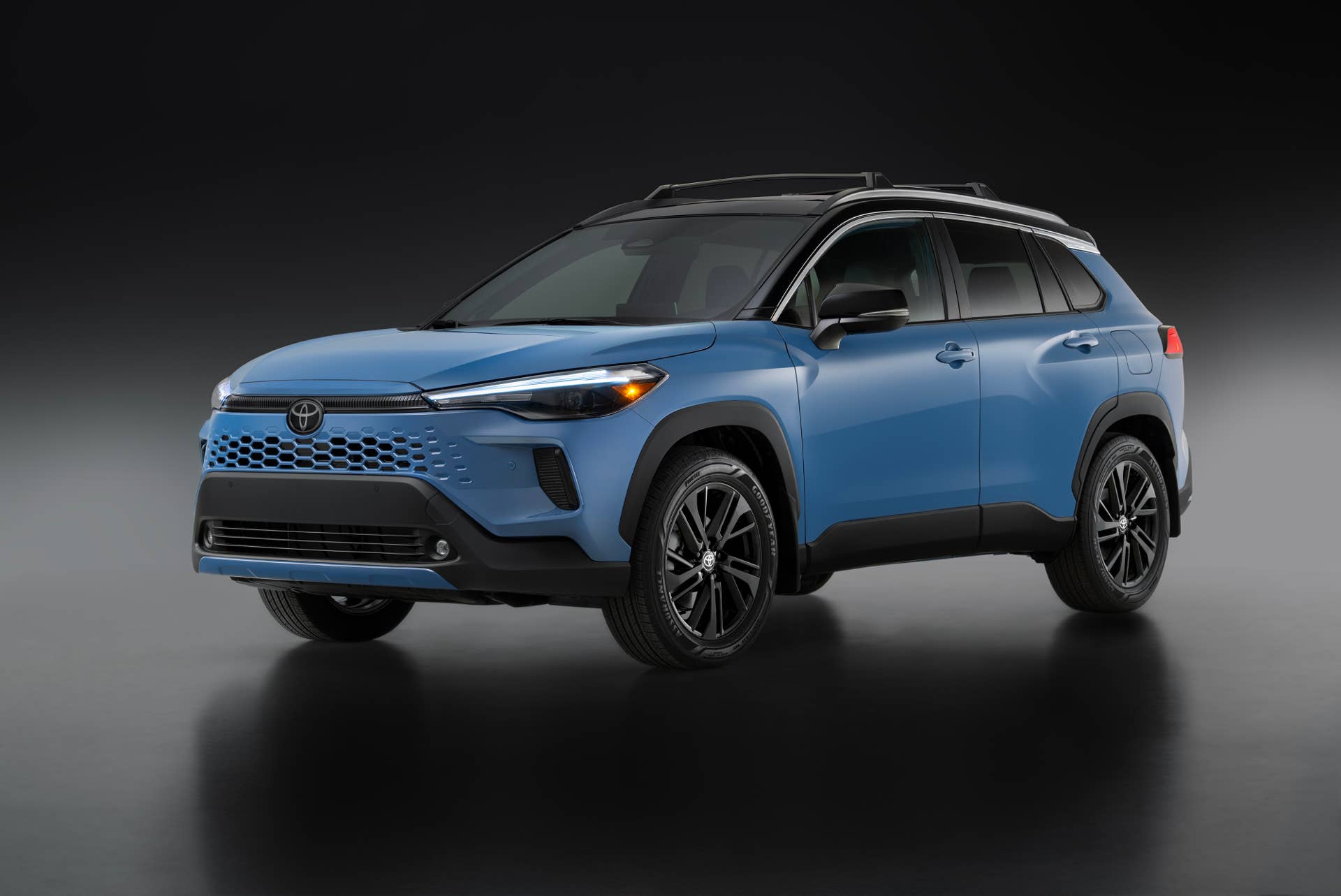
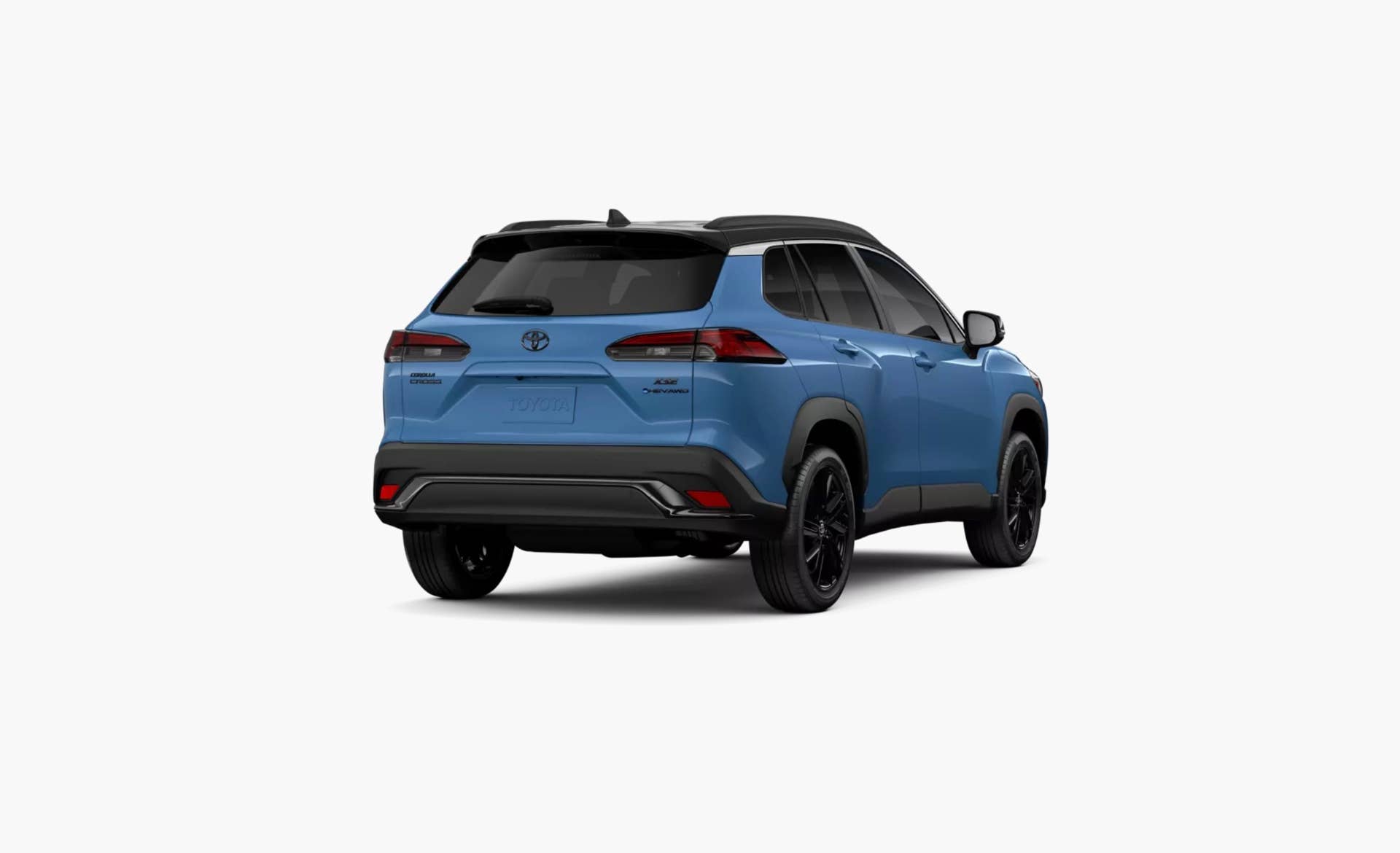
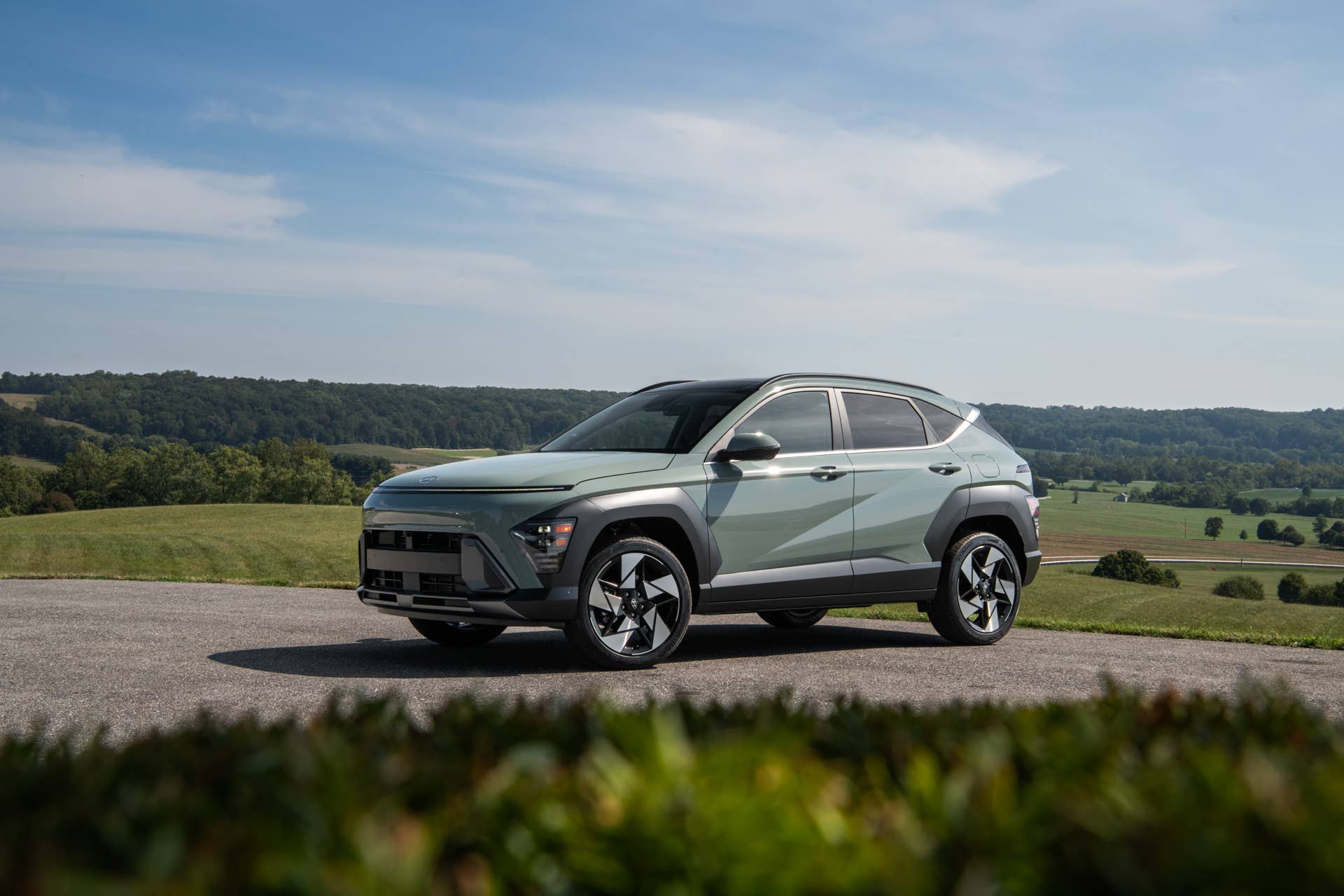
In the subcompact crossover segment, the focus is on value and efficiency above all else. These are not the quickest, largest, or most exciting crossovers, but they are ideal for students, young families, or anyone looking to cut their motoring costs by downsizing. The Toyota Corolla Cross and Hyundai Kona are two strong contenders in this category and start at around the same price point, but what are their unique selling points? Here’s how these rivals distinguish themselves from one another.
1. Only Toyota Offers A Hybrid, And Only Hyundai Has An Electric Option
Toyota
Toyota
Hyundai
Hyundai
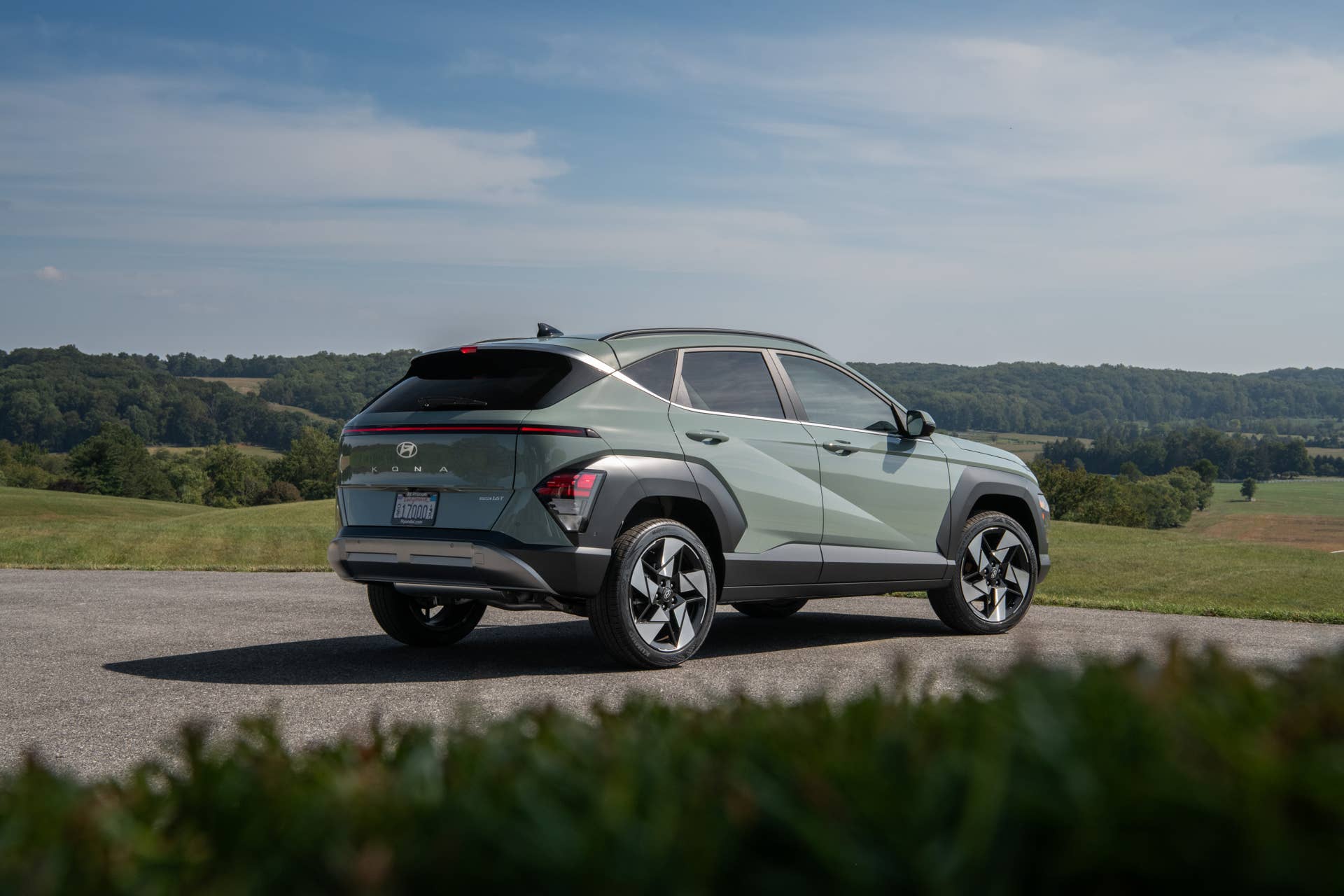
Under the skin, there are immediately a few important differences. Both cars have a standard 2.0-liter four-cylinder engine. In the Toyota, it makes 169 horsepower and 151 lb-ft of torque, while the Hyundai’s outputs are 147 hp and 132 lb-ft. Although the Corolla Cross is more powerful on paper, expect both to need over nine seconds to reach 60 mph.
For anything approaching an interesting drive to the office, you’ll have to upgrade the engine, but each manufacturer offers something completely different. The Corolla Cross is available with a 196-hp hybrid, while the Kona can be had with a 190-hp 1.6-liter turbo-four. Both are a lot quicker than the base models, but the Corolla Cross Hybrid also adds outstanding efficiency to the mix (42 mpg combined).
What the 2026 Toyota Corolla Cross doesn’t get is a fully electric option, which the Kona has. At under $33k, the Kona Electric is one of the cheapest new EVs, but the base model has just 133 hp and a short 200-mile range. The better SEL with 201 hp and a 261-mile range costs $36,975, far beyond the MSRP of the top Corolla Cross Hybrid.
2. Toyota Sticks With All-CVT Lineup, While Kona Turbo Gets Conventional Auto
Hyundai
Whether you go for the gas or hybrid models, the Corolla Cross comes with Toyota’s CVT. It’s smooth when the going is slow, but the engine becomes noisy when pushed, which you’ll have to do often, especially in non-hybrid versions.
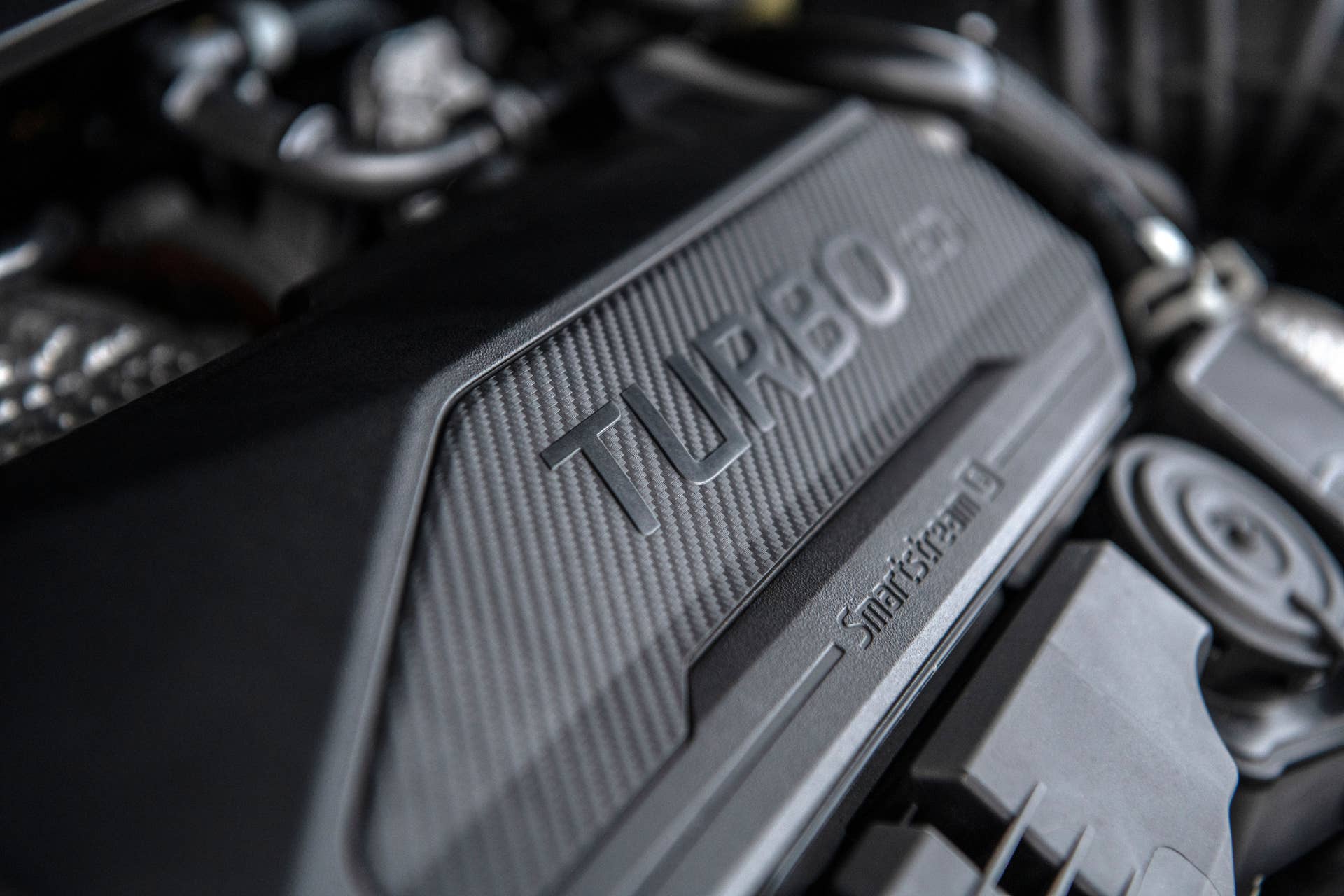
Standard Konas also get a CVT, referred to as the Intelligent Variable Transmission by Hyundai. If you go for the turbocharged model, you get a more satisfying eight-speed automatic. This model’s power, combined with the traditional automatic, makes for a more enjoyable driving experience than in any Corolla Cross.
3. The Hyundai Has A Bigger Trunk And Back Seat
Hyundai
Toyota
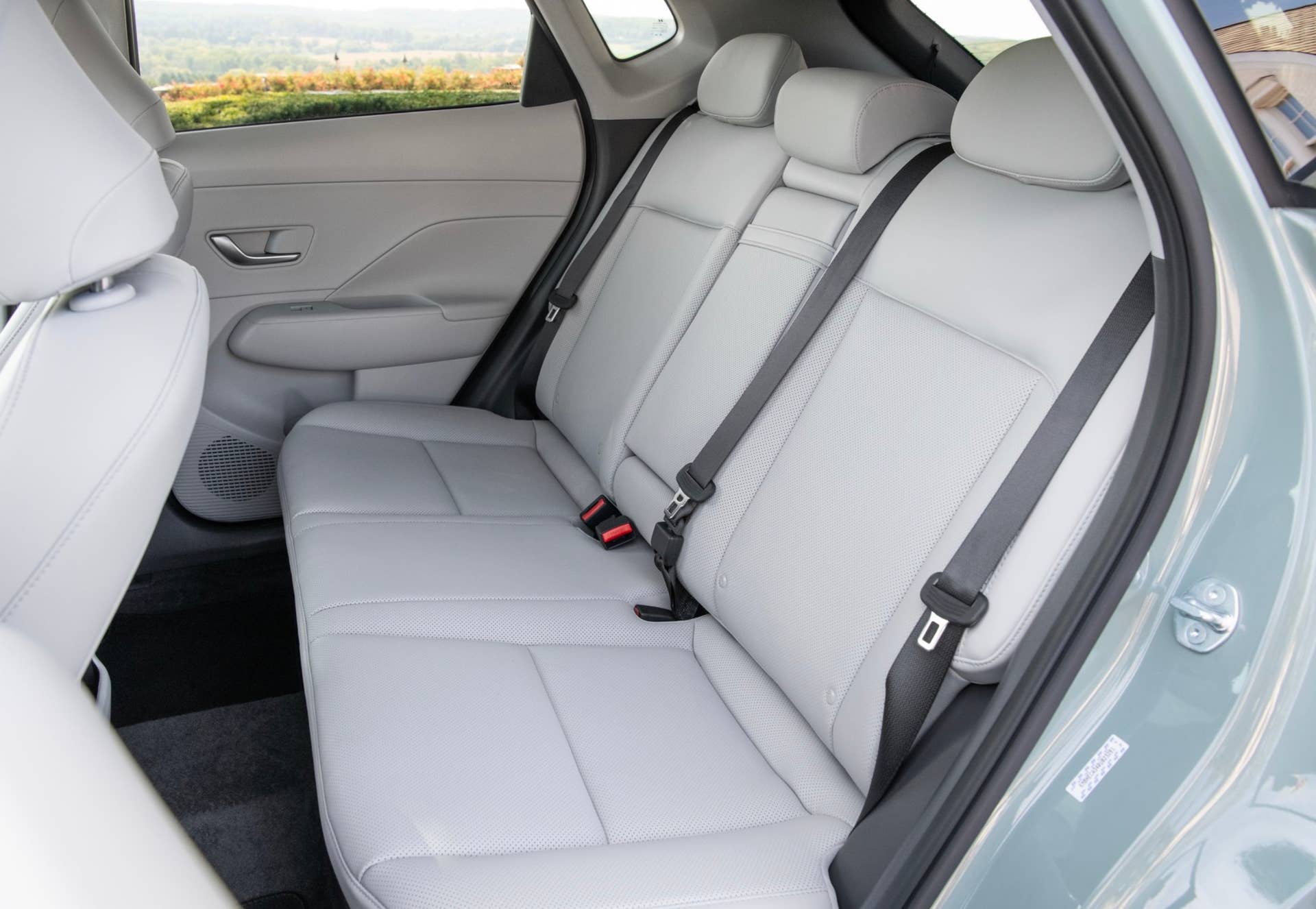
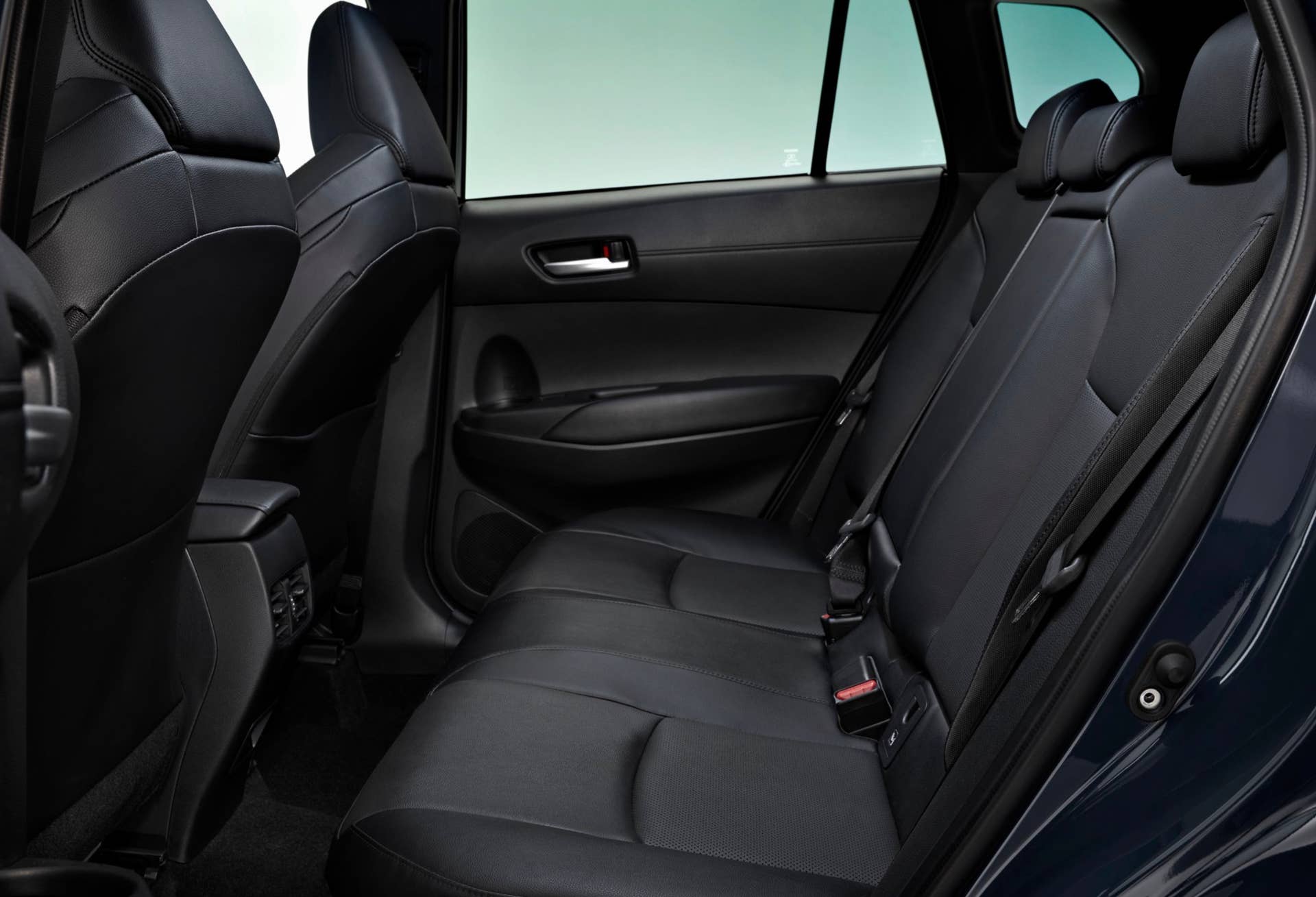
Even though the Corolla Cross is longer by a few inches, it’s the Kona that has more cargo and rear-seat space.
Behind the second row, the Toyota gets 24 cubic feet of space, dropping to 21.5 cubes in the hybrid version. With the back seats folded, the Toyota has 46.9 cubes of space in FWD non-hybrid versions. The Kona, meanwhile, has 25.5 cubes behind the second row and 63.7 when the back seats are folded, so it has quite a bit more space when you need to transport larger items.
Rear-seat legroom in the Corolla Cross is a little tight at 32 inches, whereas the Kona has a much more generous 38.2 inches. There’s also greater width in the Hyundai’s interior, so the back seat is better for three, not that either of these crossovers are ideal for three people at the back.
4. Top-Spec Kona Has More Features
Hyundai
Hyundai
Toyota
Toyota
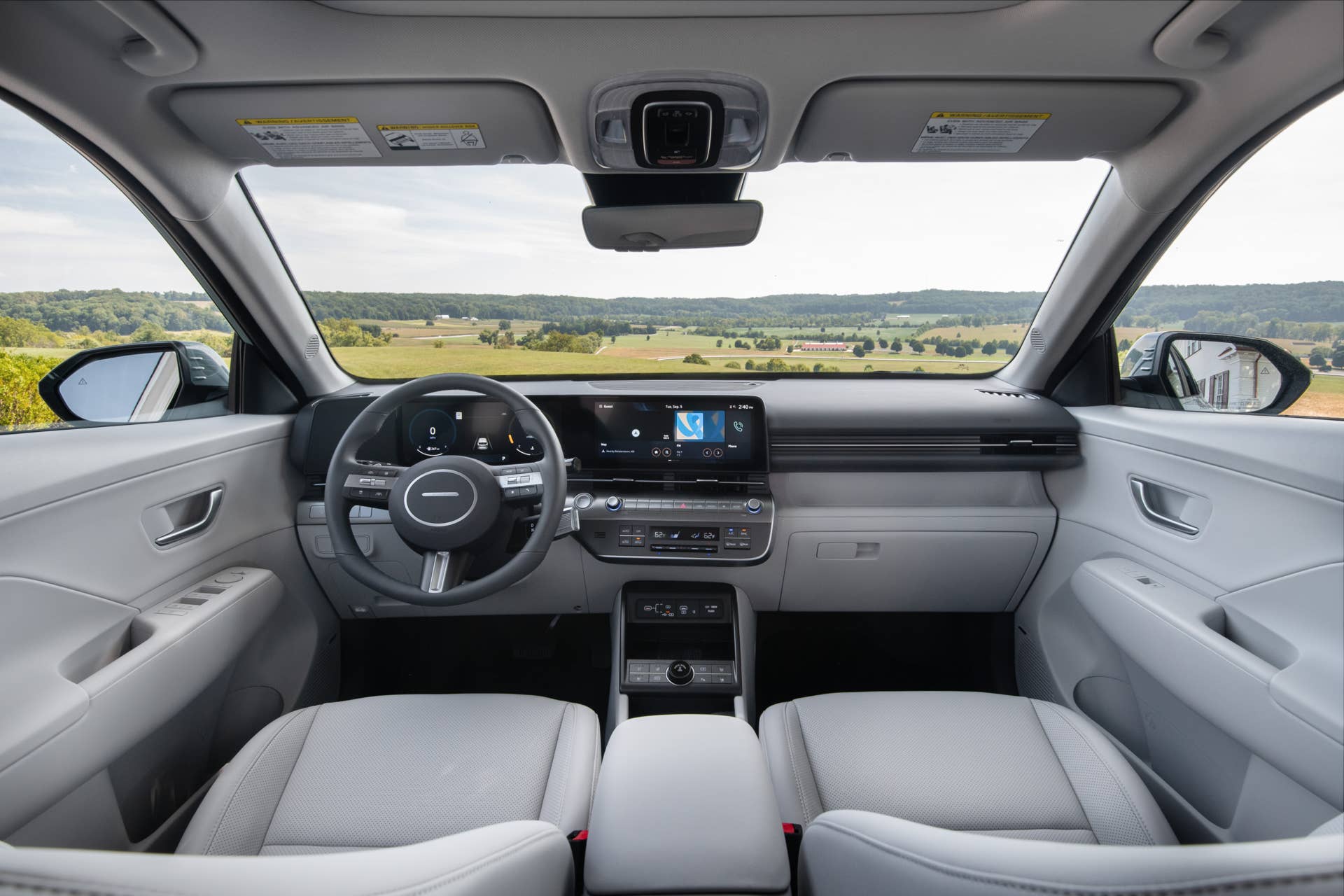
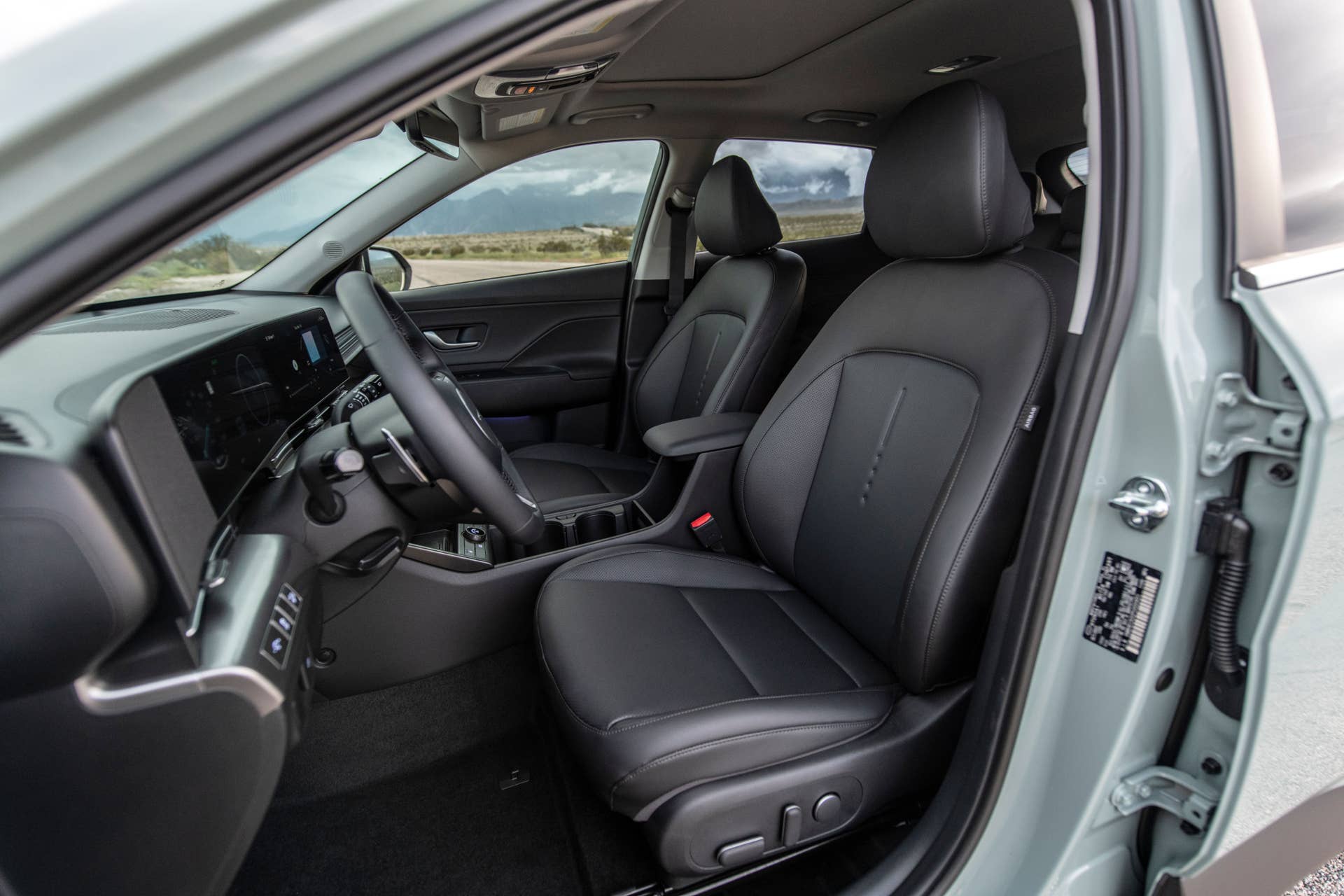
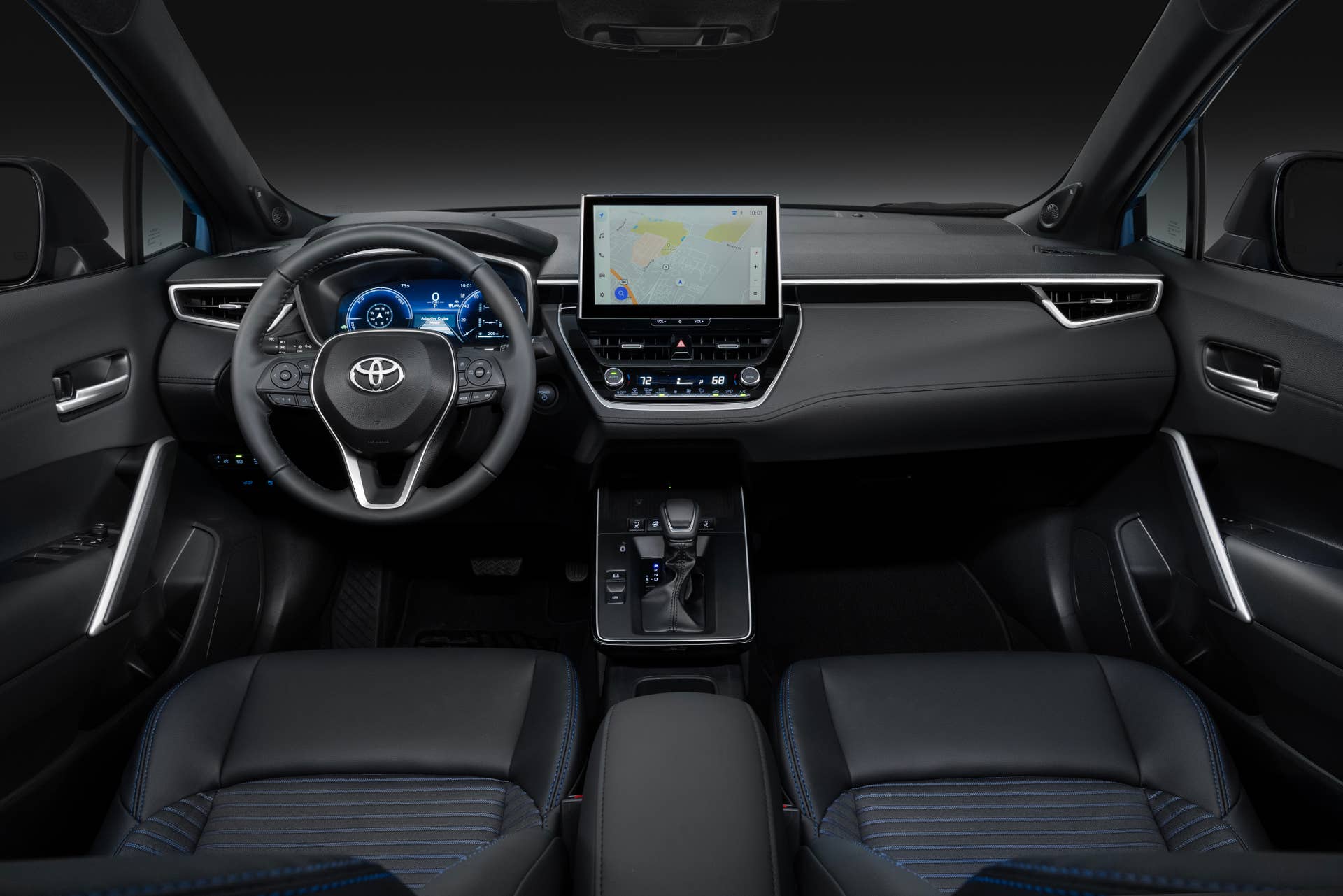
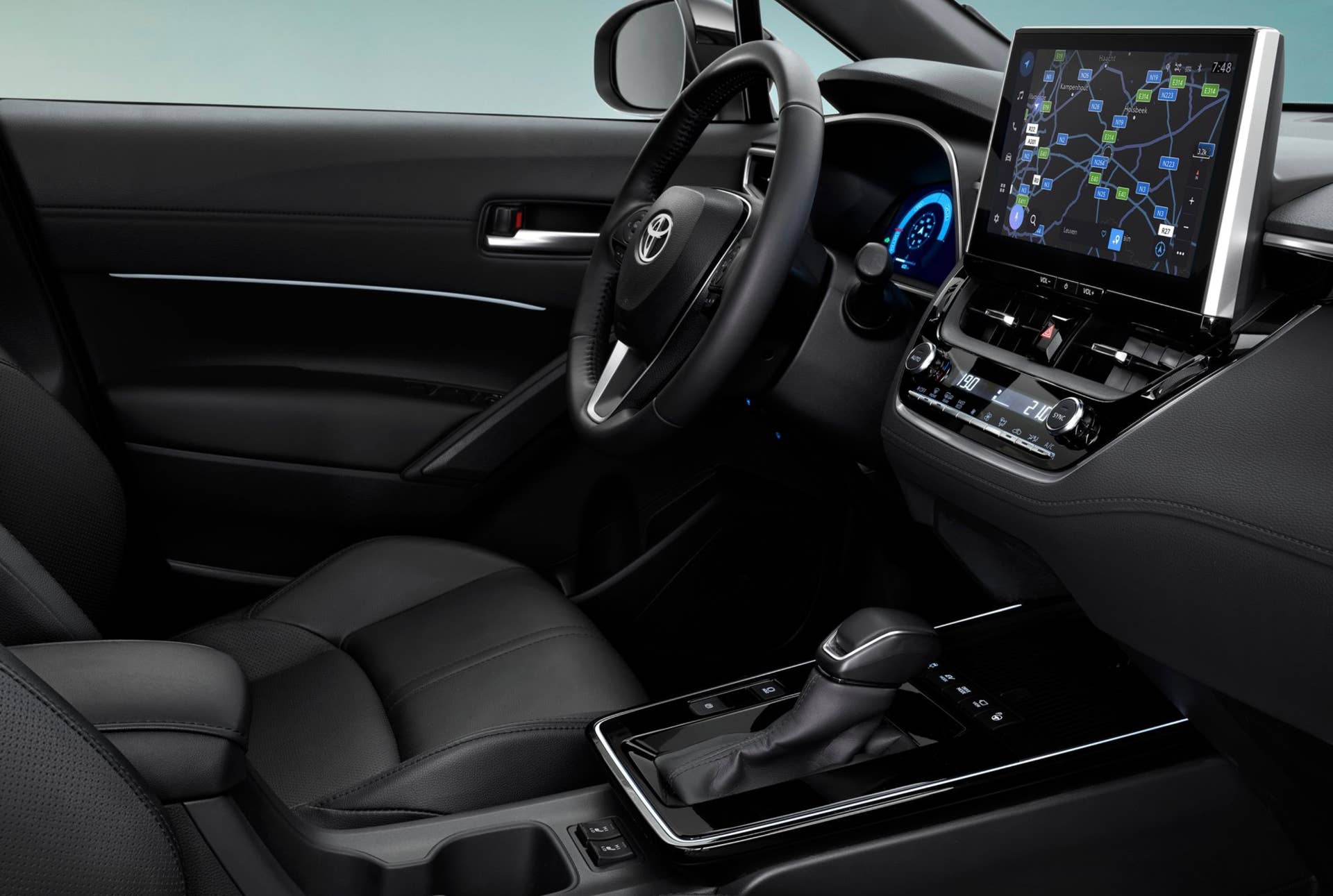
If you want a bit more comfort and technology, you may want to look at the top trim levels, which will be the Corolla Cross Hybrid XSE and Kona Limited. Both offer nicer materials than lower trims, such as leatherette upholstery covering the seats, but the Kona Limited has a slight edge.
In the top-spec Kona, you get ventilated front seats, a 12.3-inch touchscreen with navigation, an eight-speaker Bose sound system, a surround-view monitor, and an auto-dimming rearview mirror. The Corolla Cross Hybrid XSE has a smaller 10.5-inch touchscreen, and it doesn’t offer ventilated seats or the surround-view camera. You also have to pay extra for the upgraded nine-speaker JBL sound system in the Corolla Cross.
Both top trims get a power driver’s seat, heated front seats, blind-spot monitoring, and dual-zone automatic climate control.
5. Hyundai Has A Better Warranty
Hyundai
For the Toyota, the Japanese marque’s usual three-year/36,000-mile basic warranty and five-year/60,000-mile warranty come standard. Furthermore, the Corolla Cross Hybrid gets coverage for its hybrid components lasting eight years or 100,000 miles, and the hybrid battery itself is covered for ten years or 150,000 miles. Adding further peace of mind is the Toyota’s complimentary scheduled maintenance program that runs for two years or 25,000 miles.
Hyundai convincingly wins this category. The Kona gets a five-year/60,000-mile basic warranty, matching the Toyota’s, but Hyundai has a class-best ten-year/100,000-mile powertrain warranty. It also has a more generous complimentary maintenance program that runs for three years or 36,000 miles.
Final Thoughts
Hyundai
Toyota
Pricing needs to be considered before making a decision between these two vehicles. For 2026, the Corolla Cross starts at $24,635, increasing to $28,995 for the cheapest hybrid. The lineup tops out with the hybrid XSE for $33,030.
The Kona starts at $25,350, while the much more desirable turbo model starts at $28,550. The top-spec Limited will cost you $32,650. For the Kona Electric, you’ll pay $32,975 for the base SE and up to $41,150 for the Limited. Ultimately, the basic Corolla Cross is a bit cheaper, while the turbo Kona slightly undercuts the Corolla Cross Hybrid.
The 2026 Corolla Cross has a bolder look than before, but the Kona remains the more adventurously styled crossover of these two, inside and out. It also has better rear-seat space, a slight edge for driving enjoyment, and a superior warranty. The Corolla Cross leans more on its reputation for reliability, is cheaper at the lower end of the range, and the hybrid has the best performance/efficiency blend of any individual model here.
We’ll give the slightest edge to the more modern Kona, which has more attitude but also maintains a sensible side.
About the author

Karl Furlong
Senior Editor, Autoblog