
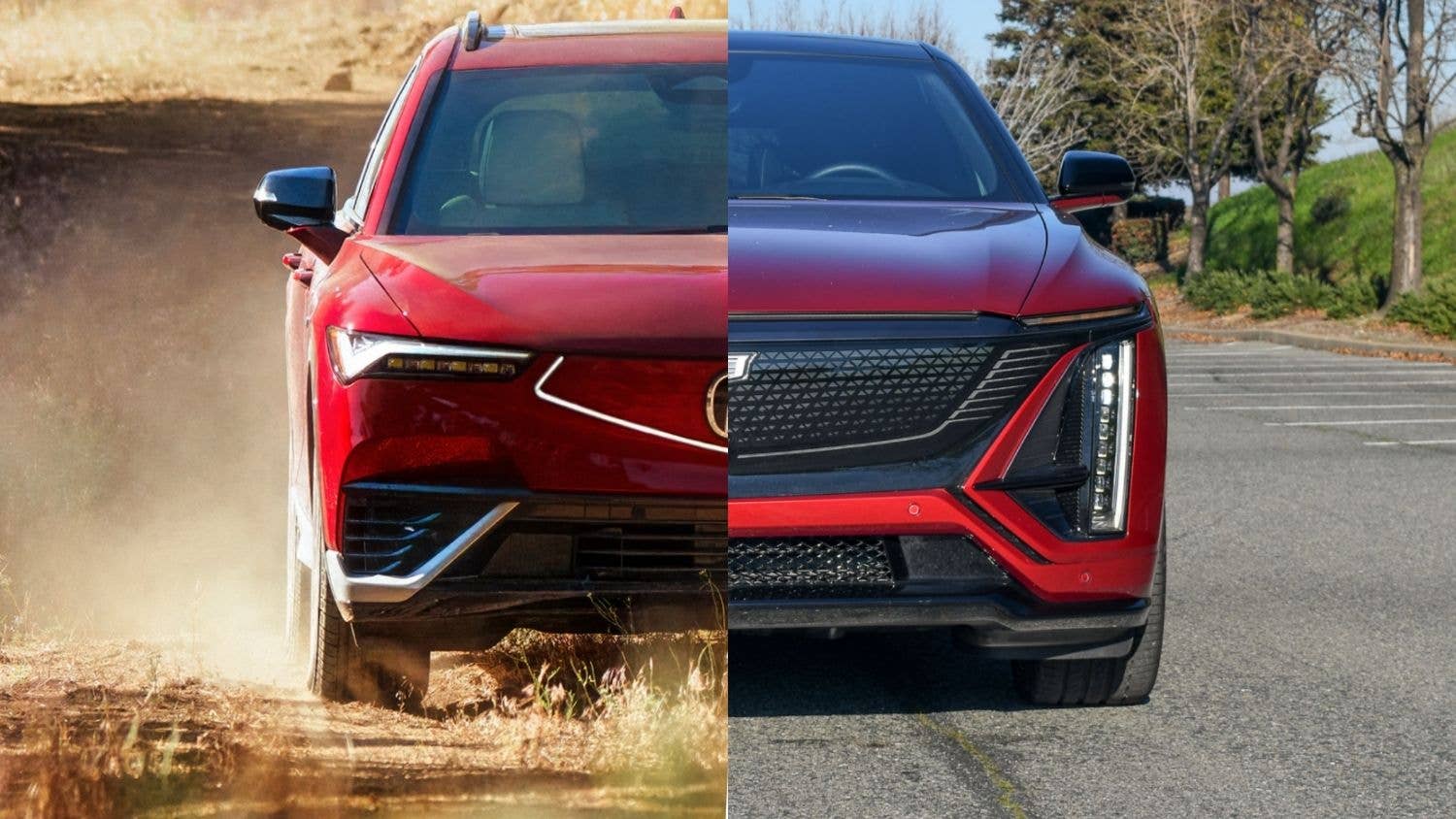
The fact that Honda (and therefore Acura) partnered with General Motors to produce their inaugural EVs isn’t insider knowledge. The Ultium platform from GM is the foundation for both the Honda Prologue and the Acura ZDX, as well as ten other electric vehicles, including models from Cadillac, Chevy, and GMC. Specifically, the Honda and Acura vehicles share a common platform with the Chevy Blazer EV, Equinox EV, Cadillac Lyriq, and Cadillac Optiq. All that is to establish that the Acura ZDX Type S and Lyriq-V come on a great platform, and with excellent software to power them. The same could be said for the Cadillac Lyriq and Lyriq-V. There hasn’t been an EV on that platform that I didn’t like.
Kristen Brown
Kristen Brown
But, it did make me wonder: if I had to choose between my two favorites, the Acura ZDX or the Cadillac Lyriq-V, which would I choose? Even though they’re powered by the same software and built on the same platform? They cost a similar amount, they have similar features, and nearly identical horsepower figures, but they offer distinct experiences.
Both are built for comfortable speed
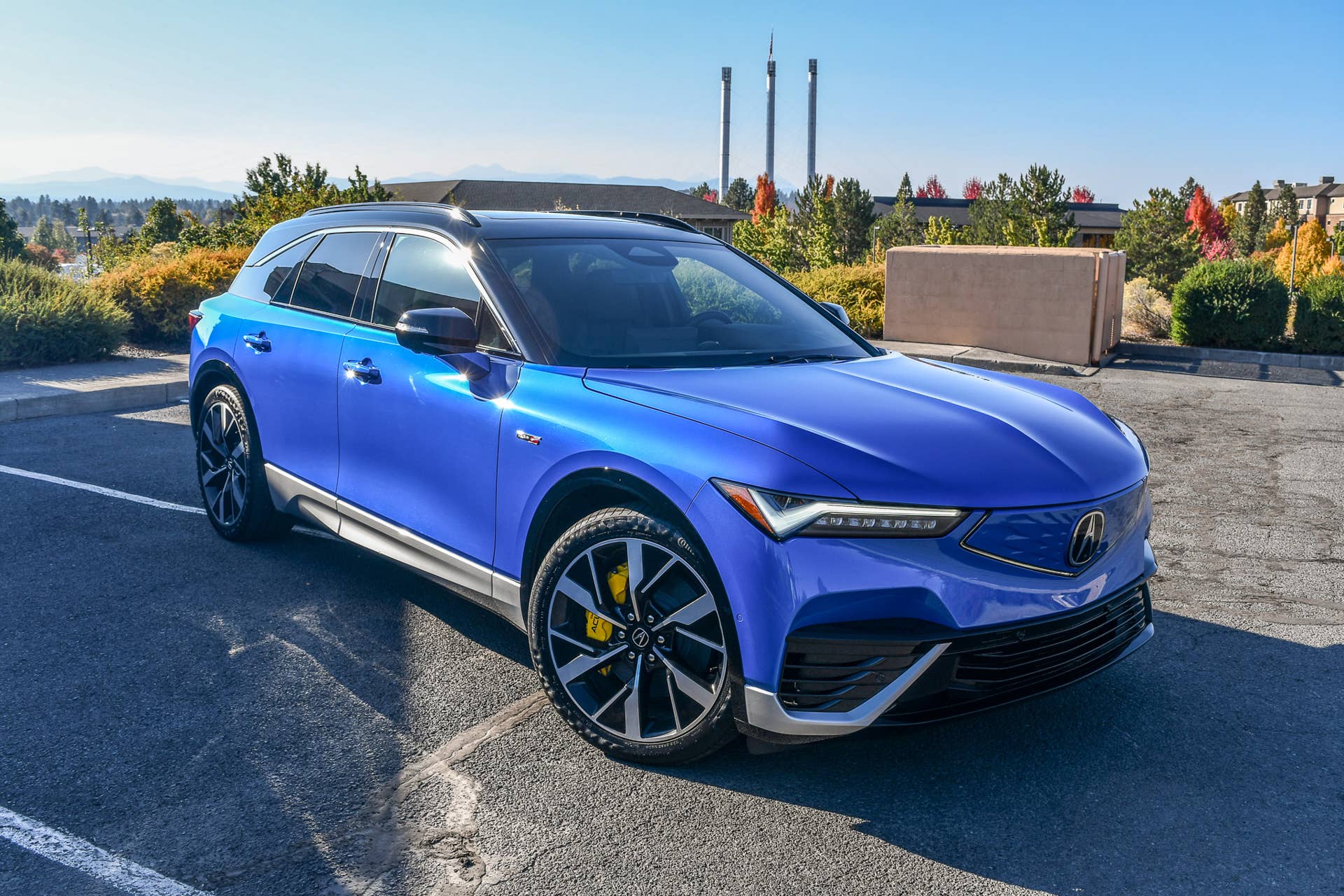
I’m still mourning the loss of the Acura ZDX. It was axed after just one model year, largely thanks to a high price compared to the Honda Prologue (and other affordable EVs built on that platform), the loss of the federal tax credit, and a myriad of other issues. But it was a great EV. It came with 499 horsepower, a zero-to-sixty time of 4.3 seconds, a maximum range of 278, and a set of some of the biggest, bright yellow Brembo brakes I’ve ever seen. The styling was sleek and not at all suggestive of it being an EV. In fact, it took a minute to convince my in-laws that it was an EV and not a hybrid. My mother-in-law, to this day, says it was the most comfortable car she’s sat in. Though it had a completely different attitude once it was put into Sport mode.
Kristen Brown
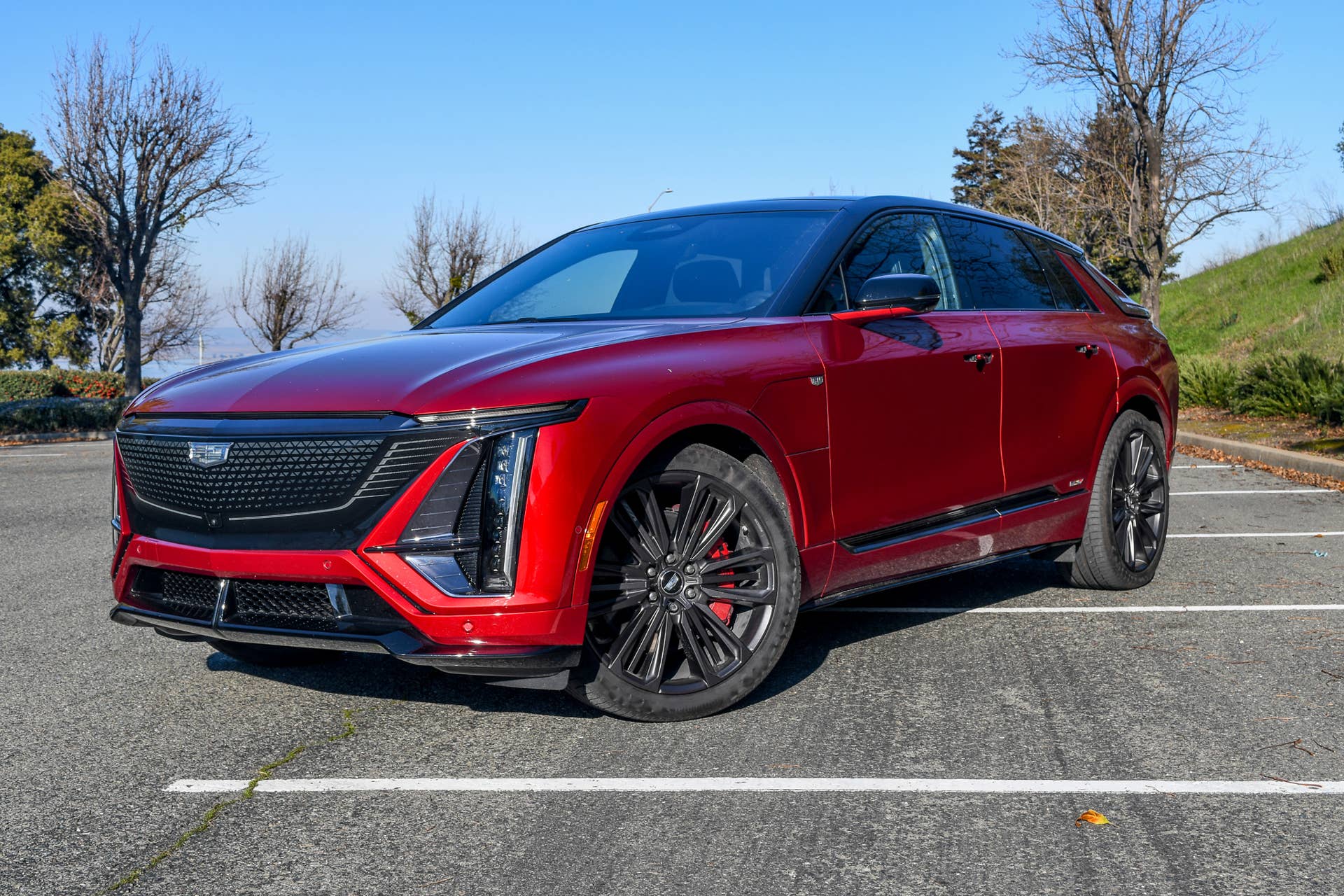
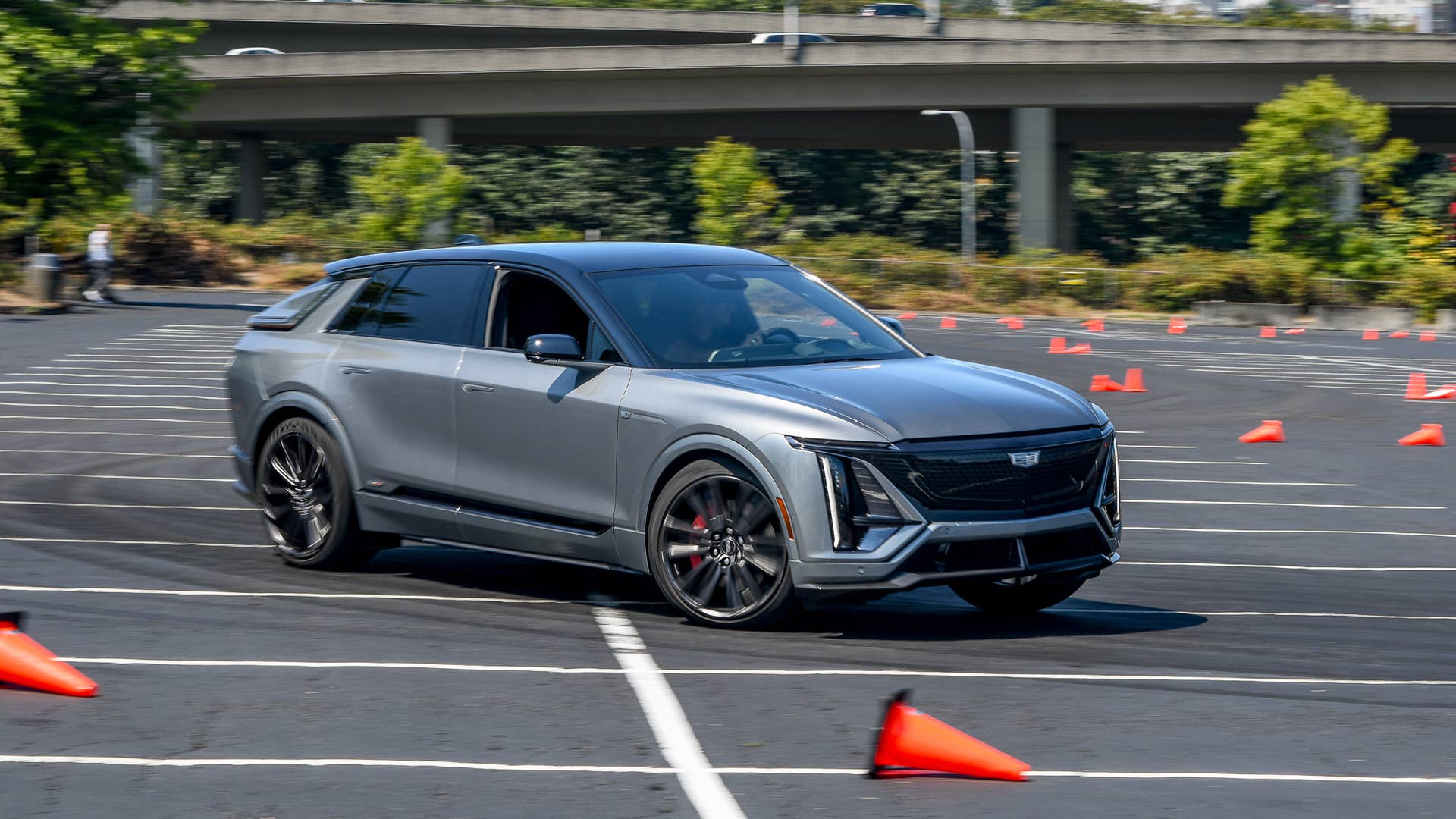
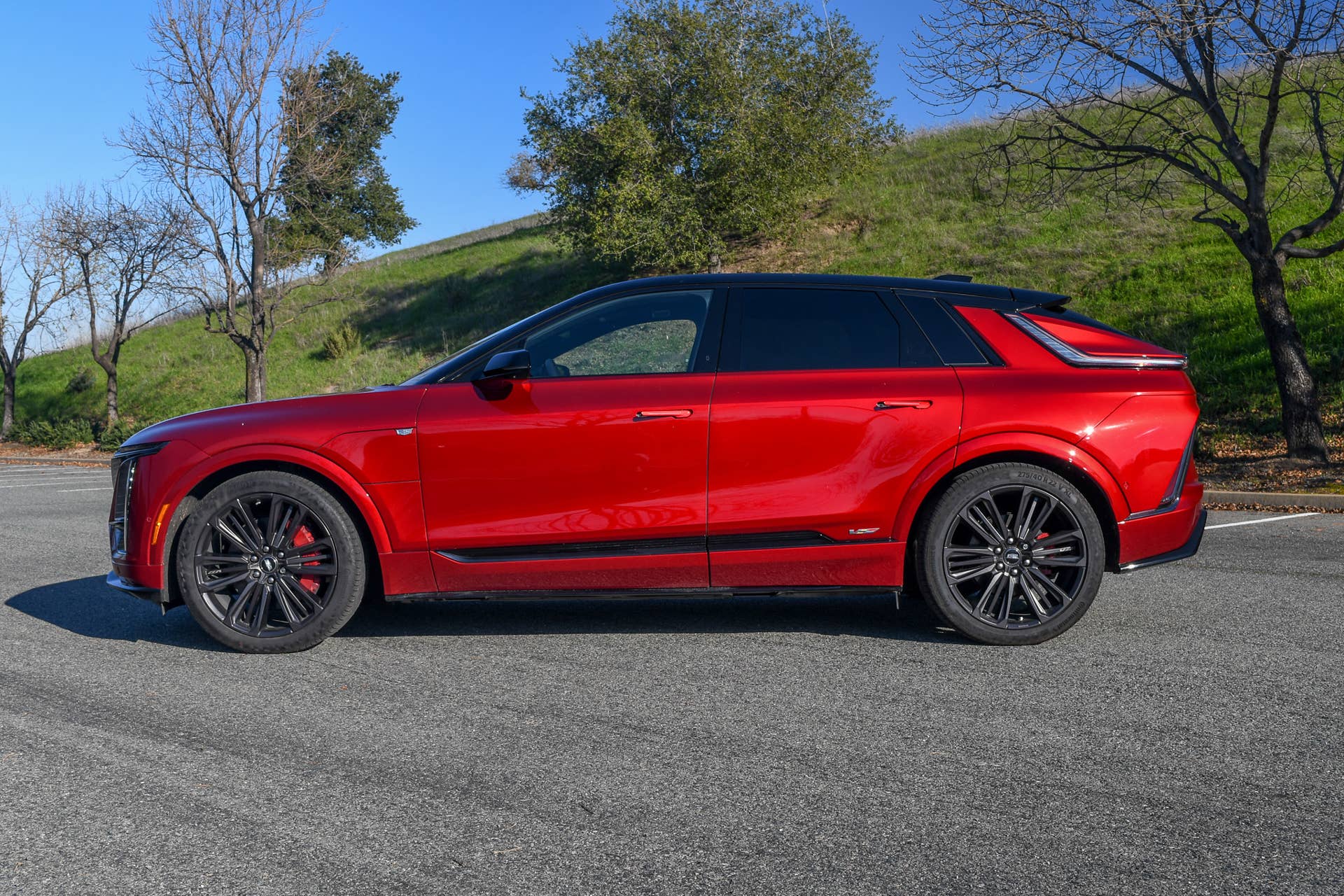
Once in Sport, it felt like a completely different car, and its width, all-wheel drive, adaptive air suspension, and large summer tires kept it planted in the corners. It was an absolute blast to take on a spirited drive. The Cadillac felt similar, with 615 horsepower and performance-specific all-wheel drive. With more horsepower, it had a faster zero-to-sixty of 3.3 seconds with a maximum range of 287 miles, with a dedicated (and very fun) launch mode. However, the Lyriq-V did feel a lot heavier, so there was a bit more body lean in the corners, but not by too much. Both EVs were tame when you needed them to be, but wild when you wanted them to be, and that made them both versatile, stylish, and quick.
Kristen Brown
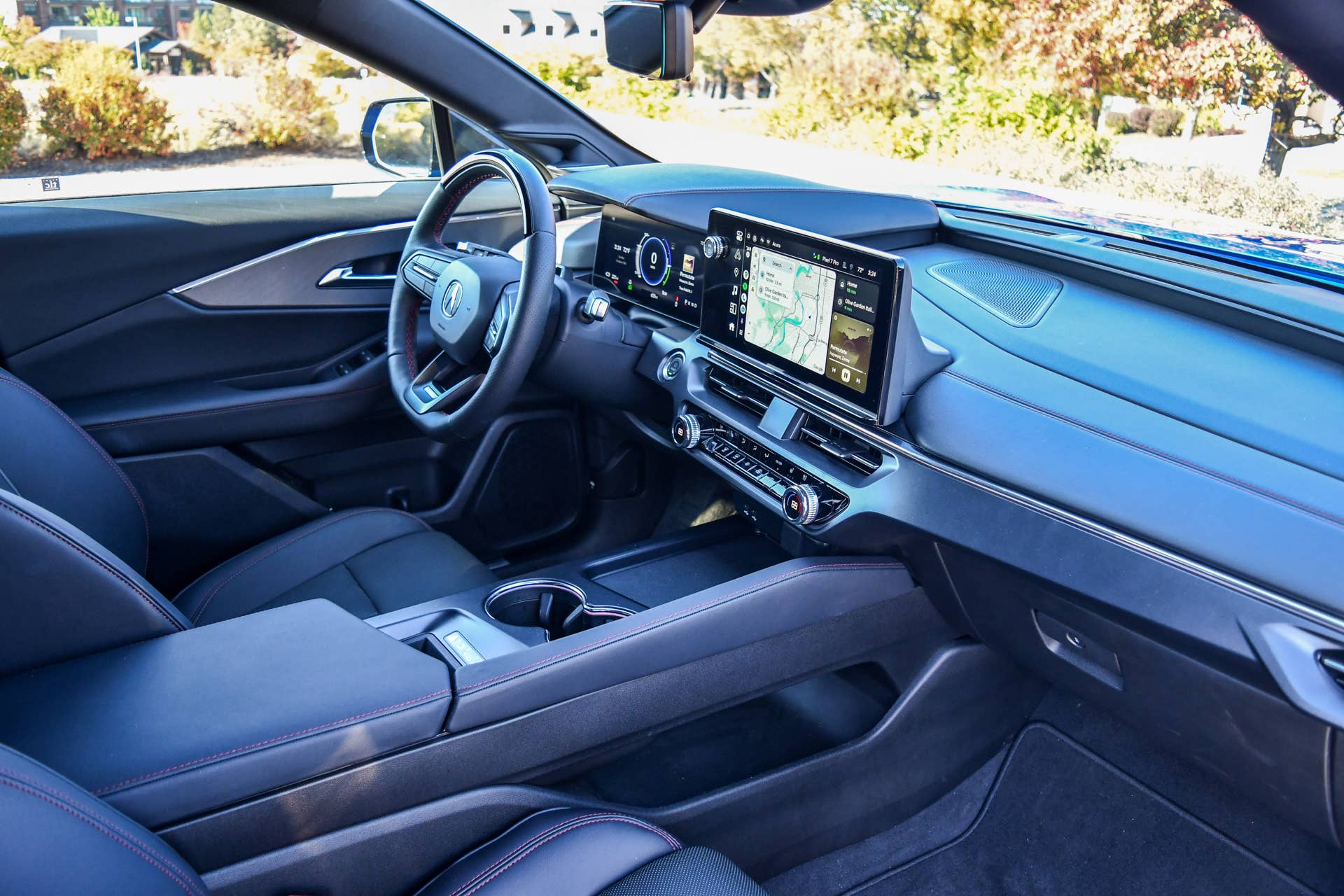
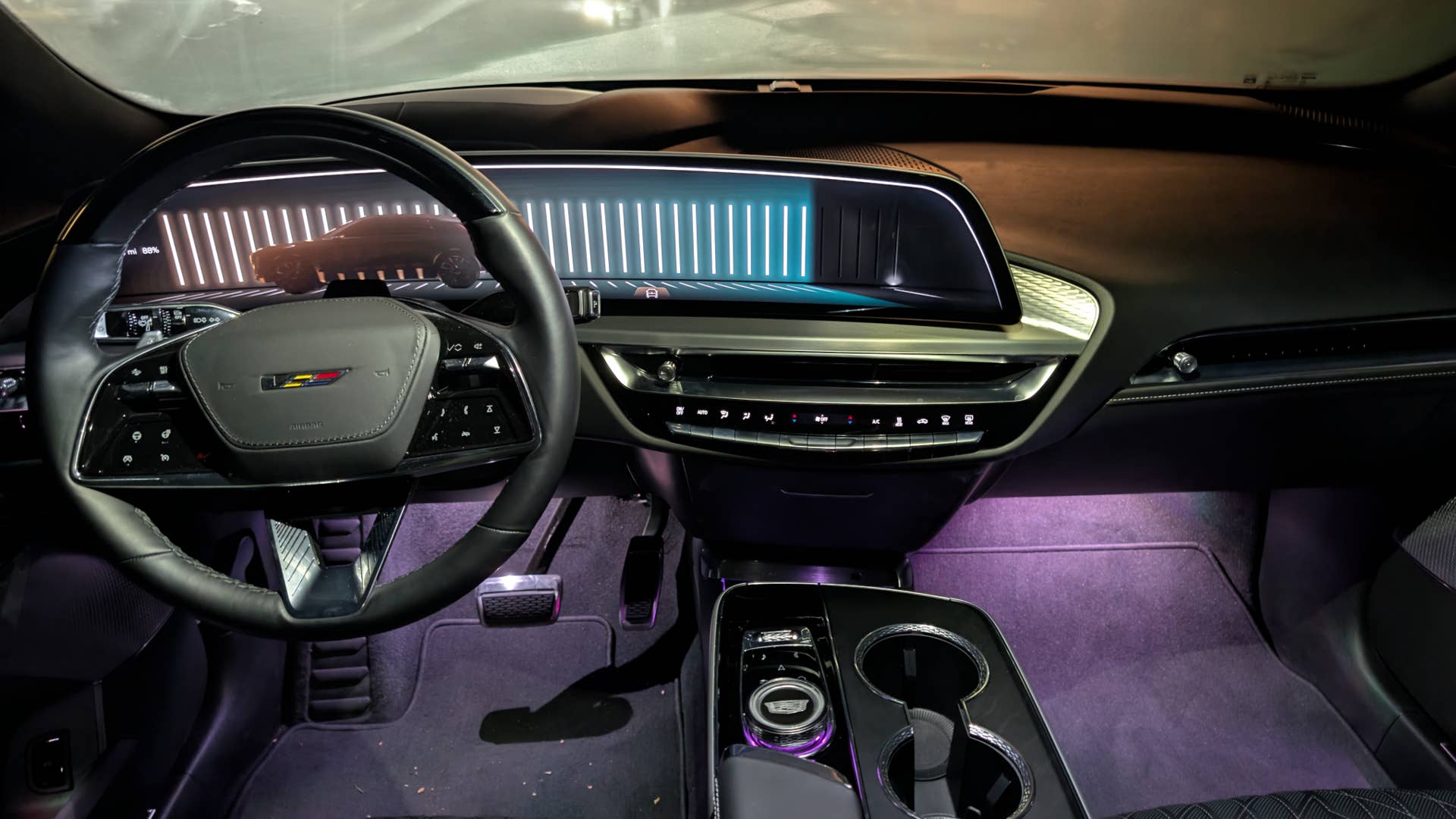
The interiors of both the Caddie and the Acura ZDX were nice and intuitive, though I did prefer the tech-forward interior of the Lyriq-V. I loved the 33-inch curved LED display over the Acura’s 11.3-inch touchscreen, and the ambient lighting compared to the Acura was just a cherry on top. The design and layout were barely comparable, since the Cadillac was bold and elegant, with sleek lines and varying textures. The Acura, in comparison, felt much more… Boring, which shocked me coming from Acura. It definitely looked and felt more like a GM. I feel like the Type S would look so much more handsome with the red leather that’s in the gas-only models, but that’s just me. The Prologue, which had an identical layout, had a much more attractive interior, as it was black-and-tan instead of black-on-black.
Because of their shared GM hardware, both are easy (and quick) to charge
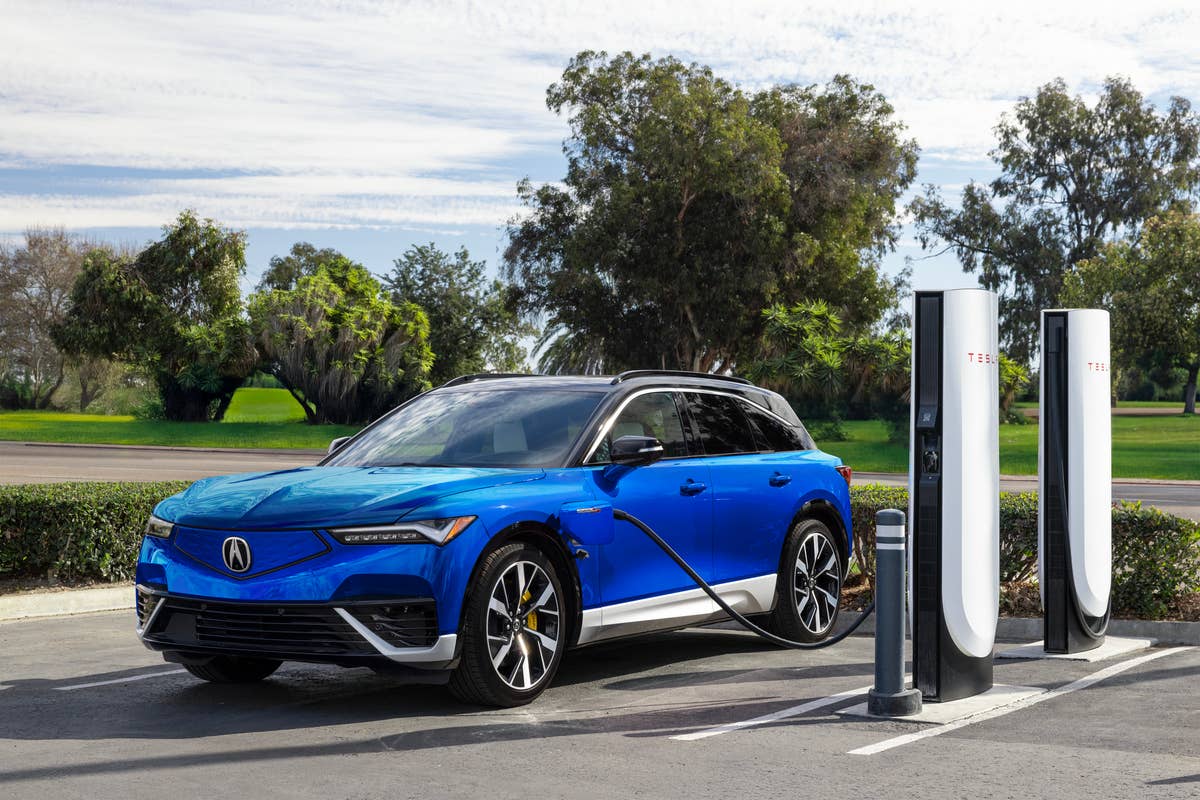
Both have a peak charging rate of 190 kWh, since they’re both built with GM’s 400-volt architecture (since, again, they’re both built on the Ultium platform). Both are rated for high-speed DC fast charging capability, adding about 77–81 miles of range in 10 minutes. While they share similar charging hardware, the Acura ZDX has been highlighted by several other reviewers for slightly faster DC charging, achieving a 20-80% charge in approximately 42 minutes. The Cadillac Lyriq can achieve a 10-80% charge in approximately 30-35 minutes. So, not too different, but it’s worth noting if you have to utilize public chargers regularly. If you’re charging at home, this is nothing.
Acura
With all those similarities, though, the Cadillac does elbow its way ahead of the Acura in terms of range. As I mentioned before, the Caddie gets about 287 miles as a V model, and the Acura gets 278 miles of range as the Type S. Though, you can get a Lyriq that isn’t a V model that can achieve a range of over 300 miles. You can get an Acura ZDX A-Spec, which gets 313 miles of range, but then you’d lose the all-wheel drive capabilities because you’d need rear-wheel drive for that range. With all-wheel drive in the A-Spec trim, you still get 304 miles, though.
Now that hardware’s out of the way, let’s talk software
Even though both vehicles run GM’s software stack, the user experience couldn’t feel more different. The Acura earns some points in simplicity. Google Built‑In is familiar, predictable, and easy to use, especially if you’re already living in the Google ecosystem (like I am, with a Google Pixel phone). Voice commands worked better in the ZDX, and the navigation felt more accurate in weird suburban neighborhoods where every cul‑de‑sac looks the same. The Lyriq‑V’s system is flashier, but occasionally overthinks things—like a smart home assistant that insists on showing off. Both are good, but the Cadillac feels like a luxury tech experience, while the Acura feels like a well‑executed tool.
Kristen Brown
I did, though, appreciate that both of them had similar, easy-to-use interfaces. Every setting was easier to find, all the controls were where you’d assume they’d be, and everything was customizable. Though the Lyriq-V had more to manipulate in terms of driving dynamics, sound settings (though I adored the Bang & Olufsen system in the Acura), and more. Both came with hands-free highway driving assistance, too. The Lyriq-V came with Super Cruise, while the Acura came with the company’s AcuraWatch 360+, which isn’t as vast as Super Cruise, because AcuraWatch’s system covers 400,000 miles of compatible highways, while Super Cruise has 750,000 miles of roads mapped. Both are excellent systems, though.
Kristen Brown
The Lyriq‑V’s Super Cruise system is one of the best hands‑free systems I’ve used, period. On long highway stretches, it felt confident and smooth, and I trusted it enough to adjust the climate controls or hand snacks back to my kids without worrying the car would suddenly ping‑pong between lane lines. The Acura’s system, while competent, didn’t feel quite as polished. Lane centering was fine, but not as steady, and the adaptive cruise occasionally braked harder than I expected—something that always makes me glance in the rearview mirror to make sure the car behind me isn’t about to become a hood ornament. Just something to keep in mind if you’re predominantly using it on the highway.
Pricing is (er, was) pretty comparable, too
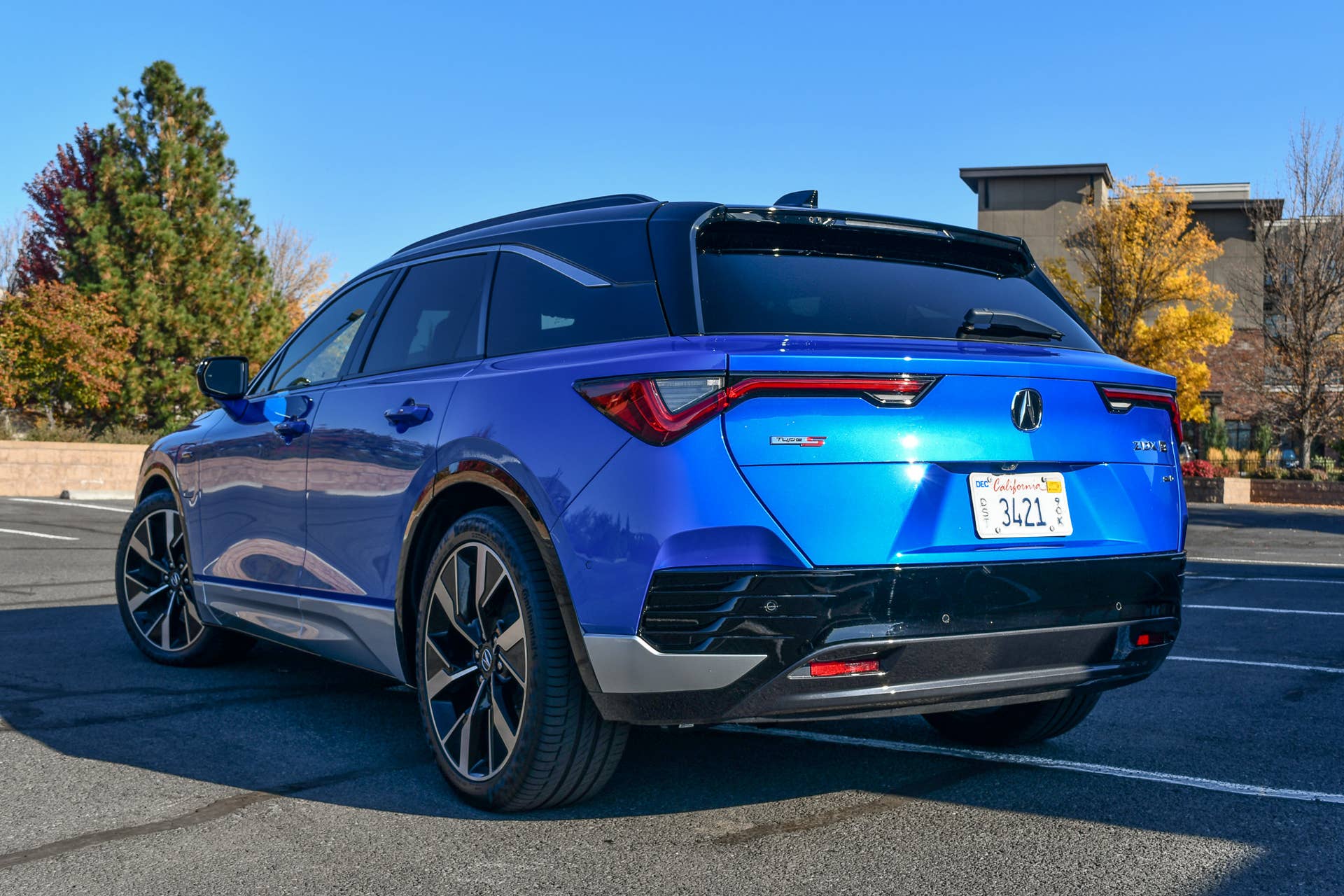
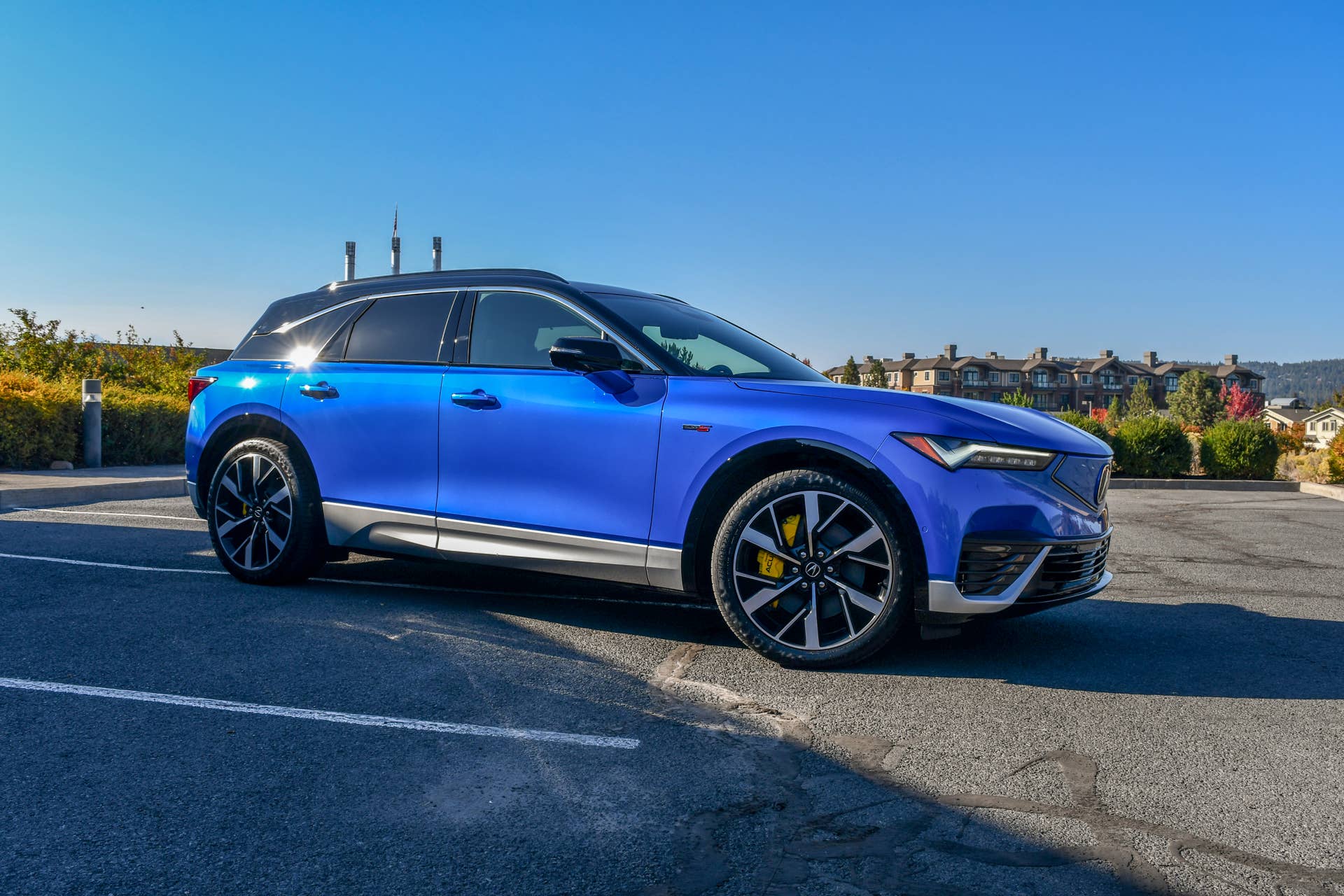
When the Acura ZDX Type S was new, it started at $73,500. When it included the wheel and tire package, the MSRP rose to $74,500, which is about how much my tester cost when I drove it late last year. The Lyriq-V model I drove was a fully-loaded Premium model, so it had a noticeably higher sticker price of $87,510 when the optional red paint color and painted brake calipers were added. Since the Acura ZDX Type S was discontinued and production was halted in September 2025, used 2024 models are predictably affordable. Looking at CarGurus, there were modes as cheap at $31,995 with only 6,280 miles on the odometer, and as “expensive” as $42,999 with just 335 miles on the clock.
Kristen Brown
And that’s a shame. If I were in the market for a family-friendly AWD EV SUV that comes with a fun and sporty side, I’d be very tempted by those prices. Especially in that Double Apex Blue…
Both are fairly family-friendly, too
Both EVs handled my kids’ car seats without complaint, which is already a win in my book. But once you start loading strollers, backpacks, snacks, and the random assortment of “treasures” kids insist on bringing everywhere, differences start to show. The Lyriq‑V’s cargo area is wider and more usable, especially with the under‑floor storage. I could stash charging cables, emergency snacks, and a blanket without sacrificing trunk space. The ZDX Type S has decent cargo room, too, with plenty of space for a family’s daily or even weekly needs. You could fill either one with luggage and not have it be an issue.
Kristen Brown
Inside the cabin, the Cadillac also feels more family‑friendly. The door pockets are bigger, the center console has more usable storage, and the giant sunroof kept my daughters entertained for entire drives. The Acura’s interior is comfortable and well‑designed, but it doesn’t have the same sense of openness. The visibility wasn’t as good in the Lyriq‑V, which matters when you’re backing out of a school parking lot filled with unpredictable pedestrians. The B and C pillars were incredibly thick, and the mirrors were small. The Acura wasn’t the easiest to see out of, either, thanks to the low seating position, but it was definitely better than the Caddie. Both work for families, because of the large amount of legroom in the rear, plentiful amenities for rear passengers, and large windows.
Final Thoughts: The Acura ZDX could have kept the Lyriq-V on its toes if it weren’t discontinued
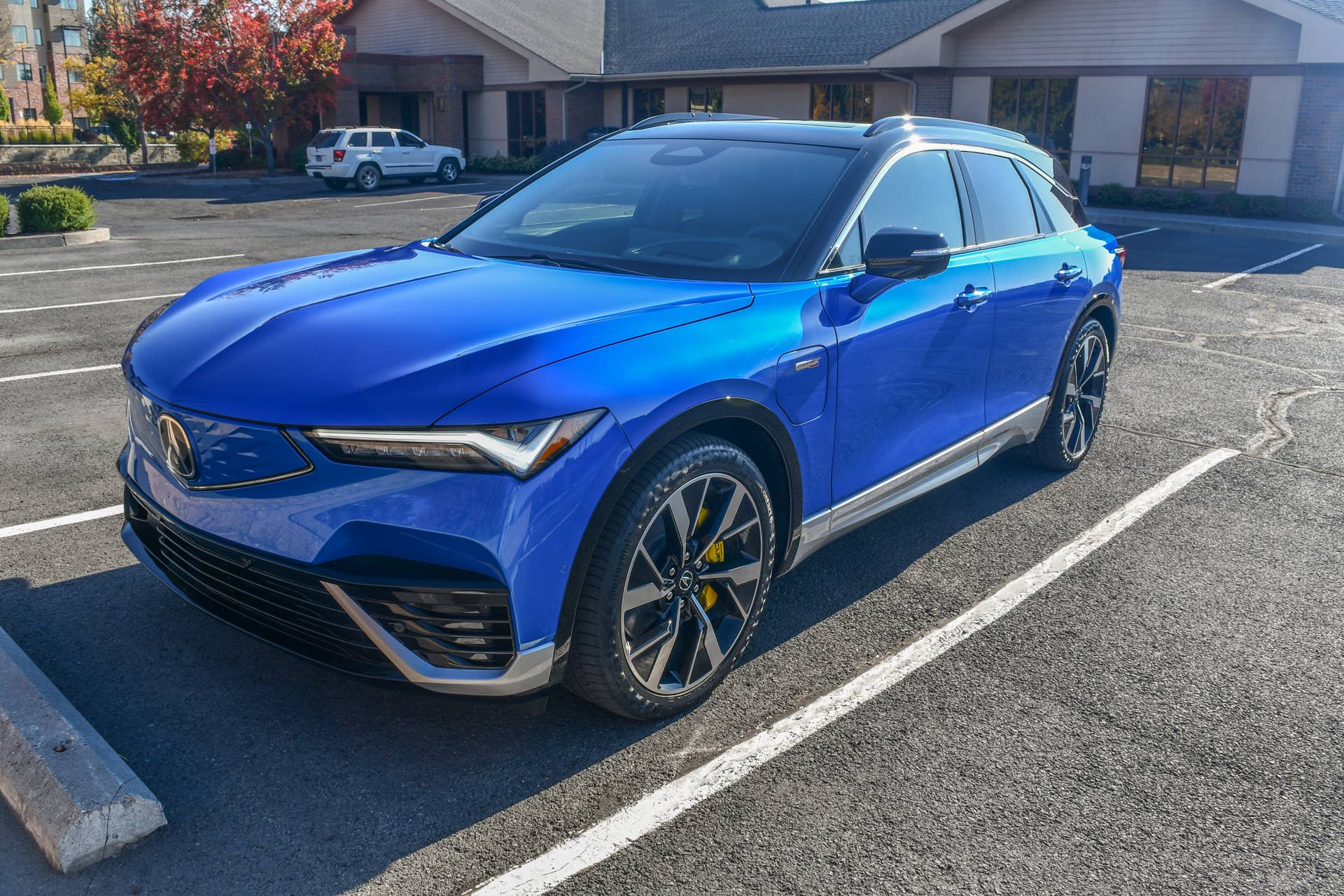
The ZDX Type S’s cancellation after one model year feels like a missed opportunity. It had the performance, the styling, and the platform to be a real contender in the luxury EV space. But timing, pricing, competition with Honda’s Prologue, and the loss of the federal tax credit stacked the deck against it. It’s hard to convince buyers to spend over $70,000 on an EV when its Honda sibling is cheaper, comes with the same software, an identical (and more attractive) interior, and is eligible for incentives. The ZDX Type S deserved a longer runway, and I genuinely think it would have found its audience if Acura had stuck with it.
Kristen Brown
Meanwhile, the Lyriq‑V is benefiting from Cadillac’s full EV push. It’s positioned as a halo model, and it feels like one. The contrast between the two makes the ZDX’s short life even more frustrating—it had the bones to be great, but not the market conditions. If anything, driving both made me appreciate how flexible the Ultium platform is, and how much potential Acura left on the table. The Lyriq‑V gets to shine because Cadillac committed. The ZDX Type S never got that chance.
About the author

Kristen Brown
Contributing Writer, Autoblog