
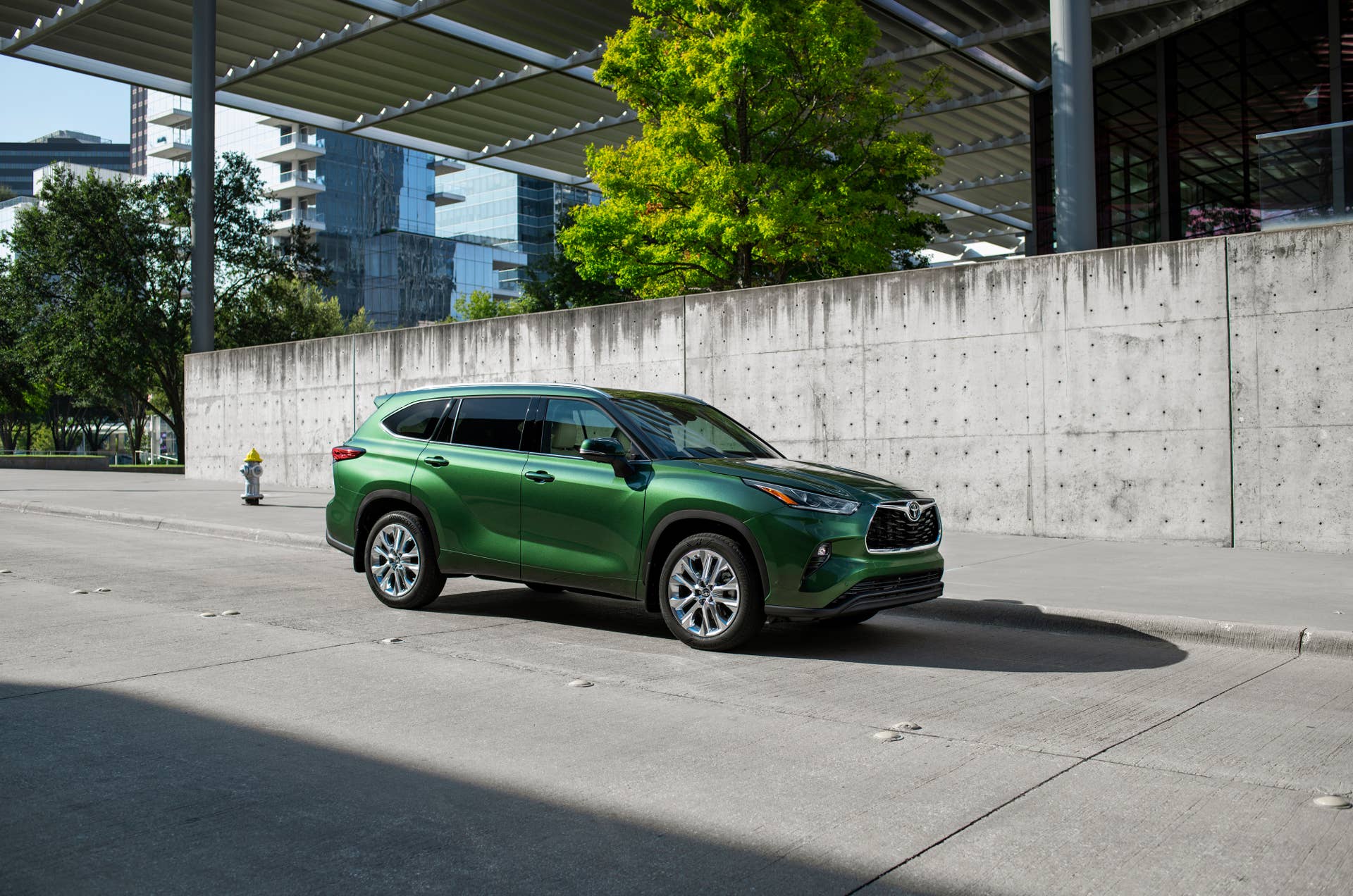
MSRP: $40,320
Use the table of contents to jump to a section
Overview
The 2025 Toyota Highlander has a 25-year legacy as one of America’s most trusted and dependable midsize three-row SUVs. Sitting on Toyota’s proven TNGA-K platform and with an emphasis on efficiency, practicality, and comfort, the Highlander is appreciated for being an honest SUV that delivers what American families need without unnecessary frills and frivolities. Its turbocharged four-cylinder engine strikes a good balance between punchy mid-range torque and good fuel efficiency, and the roomy cabin can accommodate up to eight humans at a pinch, even if the third row is more suited to kids.
Despite not being brilliant in any specific discipline, the 2025 Highlander continues to offer the smooth ride, comprehensive safety suite, and Toyota’s ironclad reputation for reliability that make it such a sensible choice in this highly competitive and overpopulated segment. It may not be as upscale, roomy, or refined as some of its rivals, but it still appeals immensely thanks to its straightforward operation and durability. It’s ideally suited to suburban commuters who prioritize reliability and efficiency, growing families with young children, buyers valuing Toyota’s proven dependability over cutting-edge features, and people looking for a comfortable daily driver with an occasional third row.
Toyota
What’s New for 2025
The Highlander goes into the 2025 model year with very few changes, maintaining the basic exterior and interior design we saw on this fourth generation at its MY2020 launch. The minor updates mostly have to do with the availability of certain features and paint colors. The turbocharged 2.4-liter four-cylinder engine still produces 265 hp and 310 lb-ft of torque, with drive going through an eight-speed automatic transmission to the front wheels on the LE, XLE, and Limited trims, with AWD optional across the lineup. On the XSE, Limited, and Platinum trims, the AWD system features dynamic torque vectoring for enhanced handling dynamics.
Toyota’s comprehensive Safety Sense 2.5+ suite is still standard across the board. There are five trim levels – LE, XLE, XSE, Limited, and Platinum – and you can also get the Highlander with a hybrid powertrain, but only in XLE, Limited, and Platinum trims. Toyota is offering a Limited 25th Edition Hybrid based on the Limited Hybrid AWD trim this year only, to celebrate a quarter of a century of the Highlander in America. The hybrids are AWD only and produce 243 combined horsepower, achieving up to 35 mpg combined.
Toyota
Toyota
Toyota
Exterior
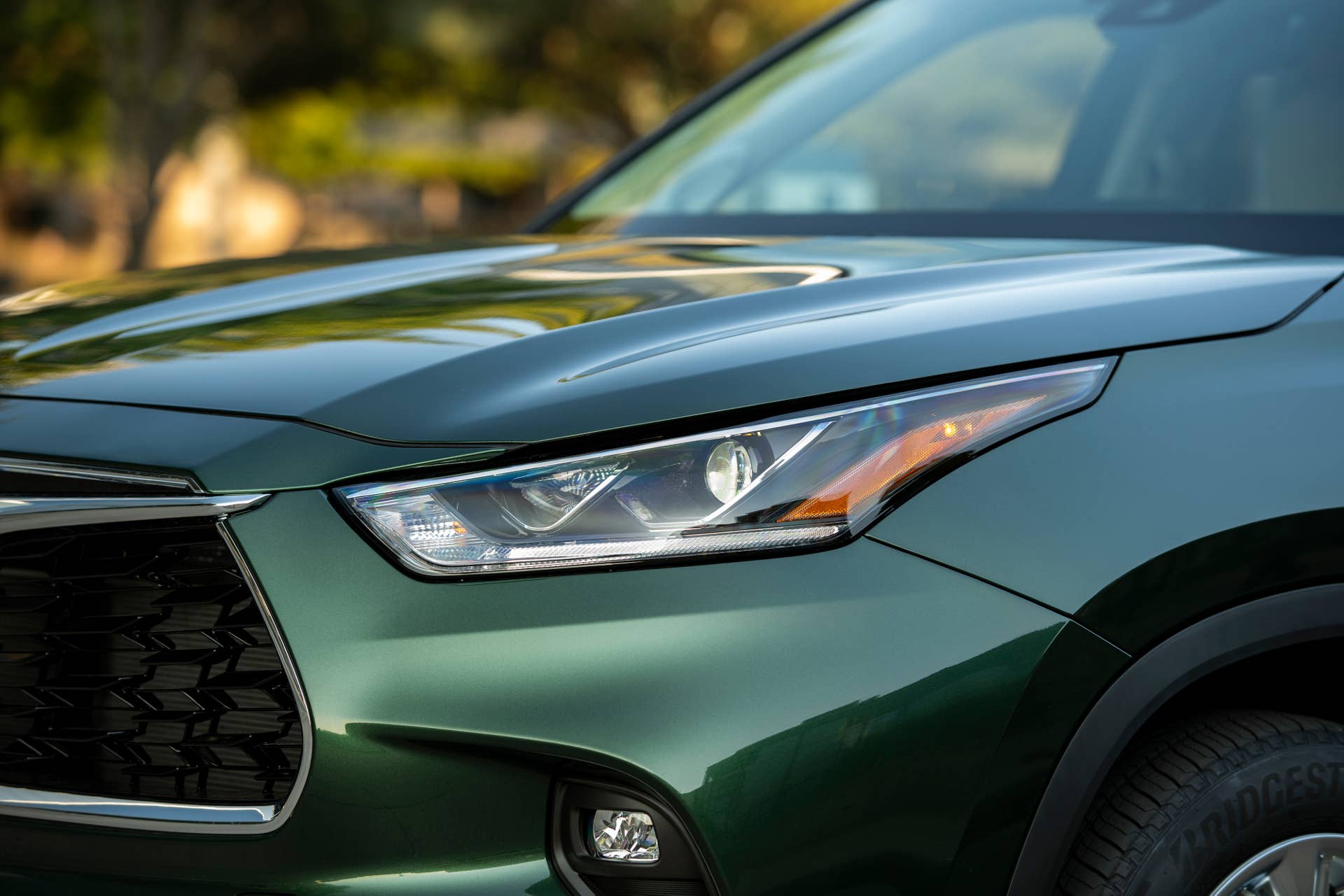
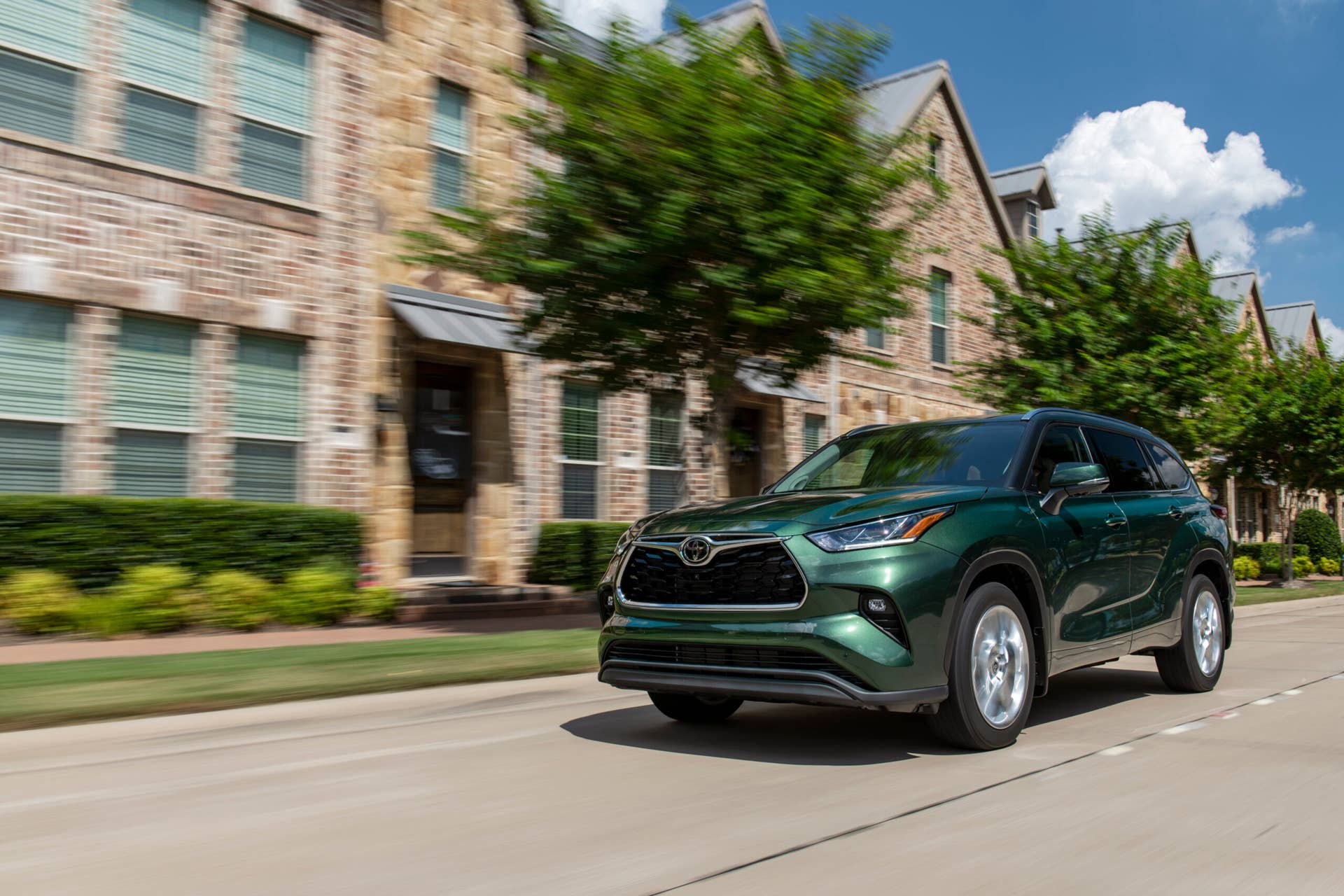
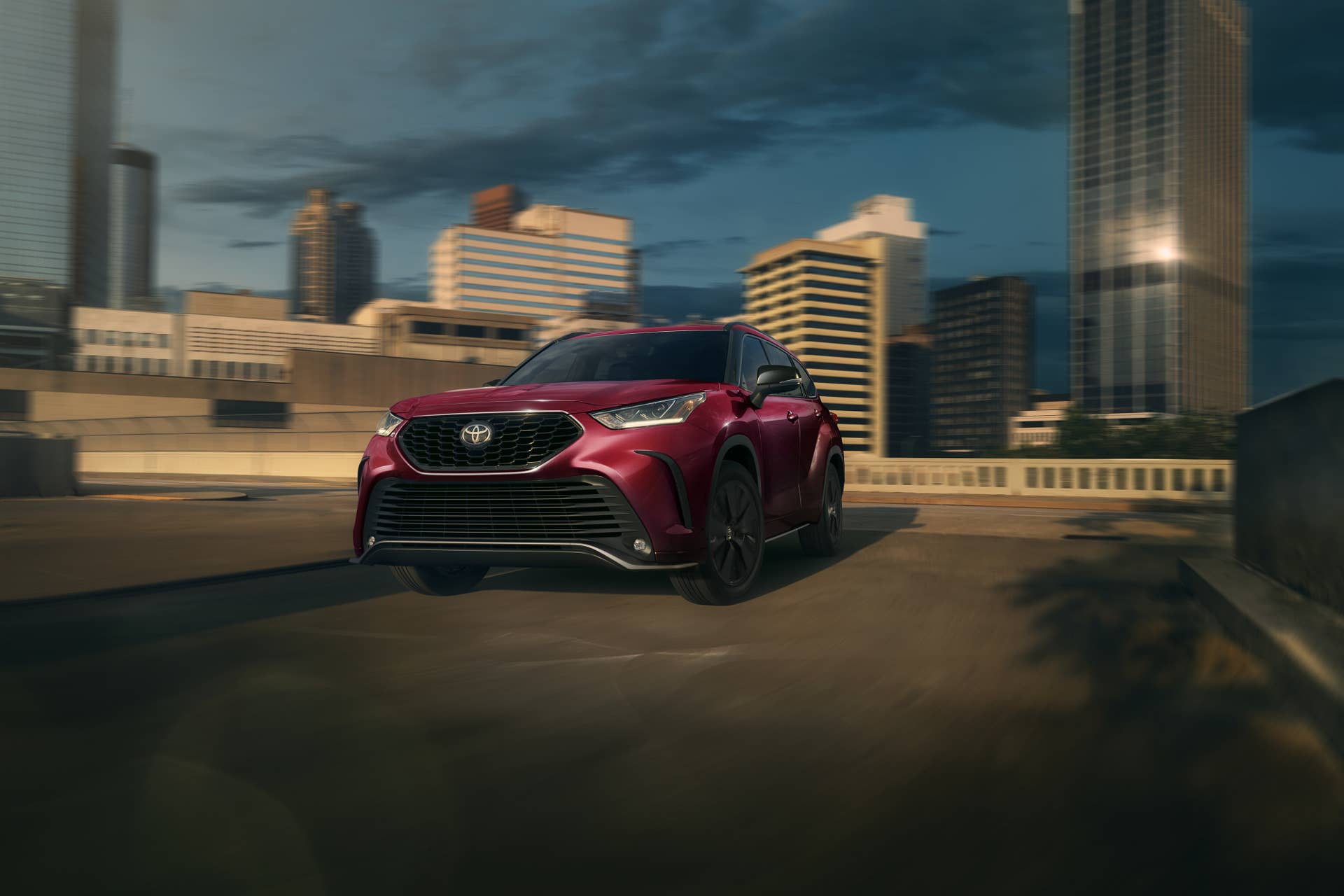
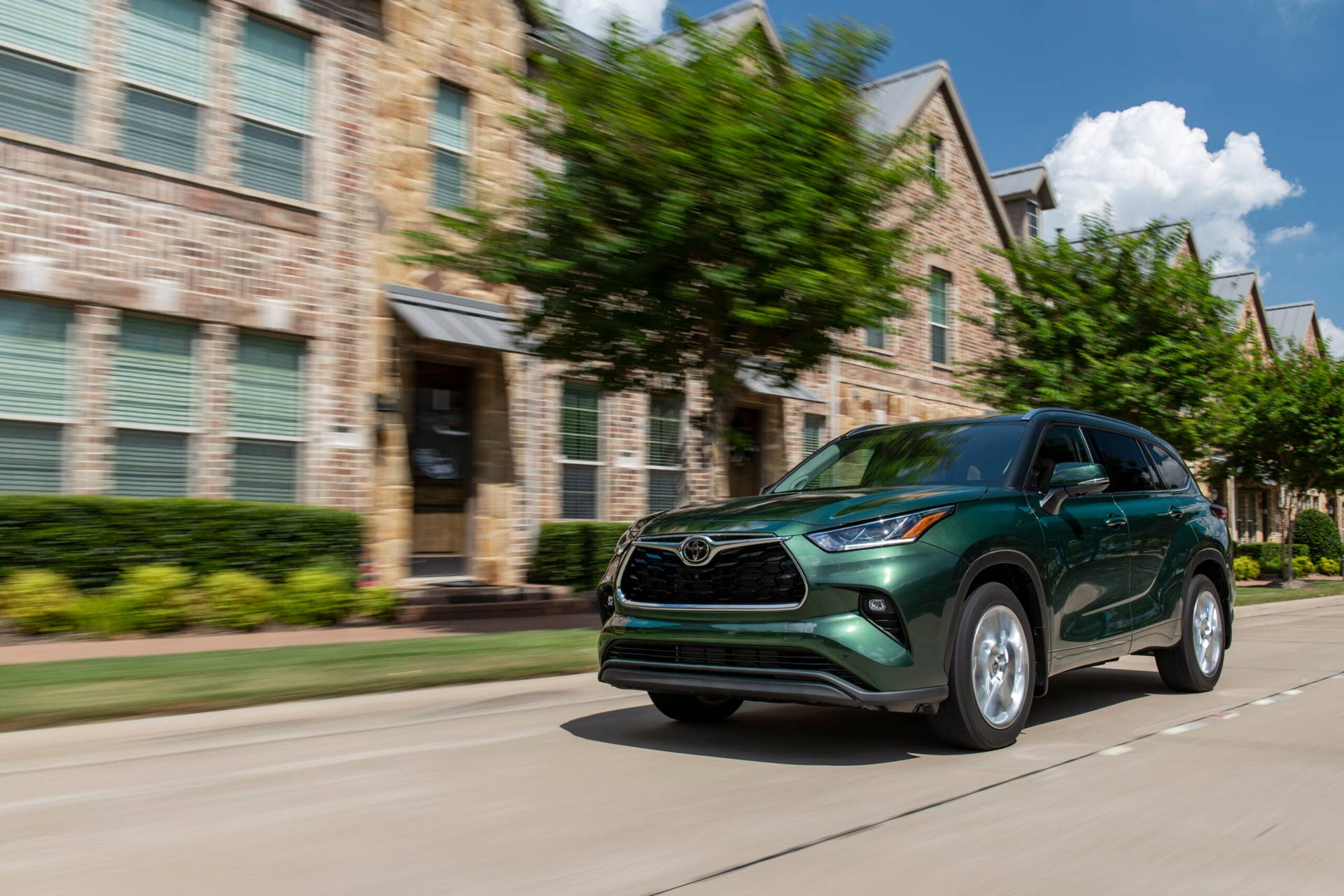
The exterior design of the Highlander echews dramatic styling in favor of muscular functionality, and the face is the same bold face with the prominent grille and angular LED headlights that we’ve known since the current model’s introduction. It has a modern and assertive appearance, with an elevated hood and a sculpted lower fascia with integrated fog lights, hinting at its capabilities without overt aggression.
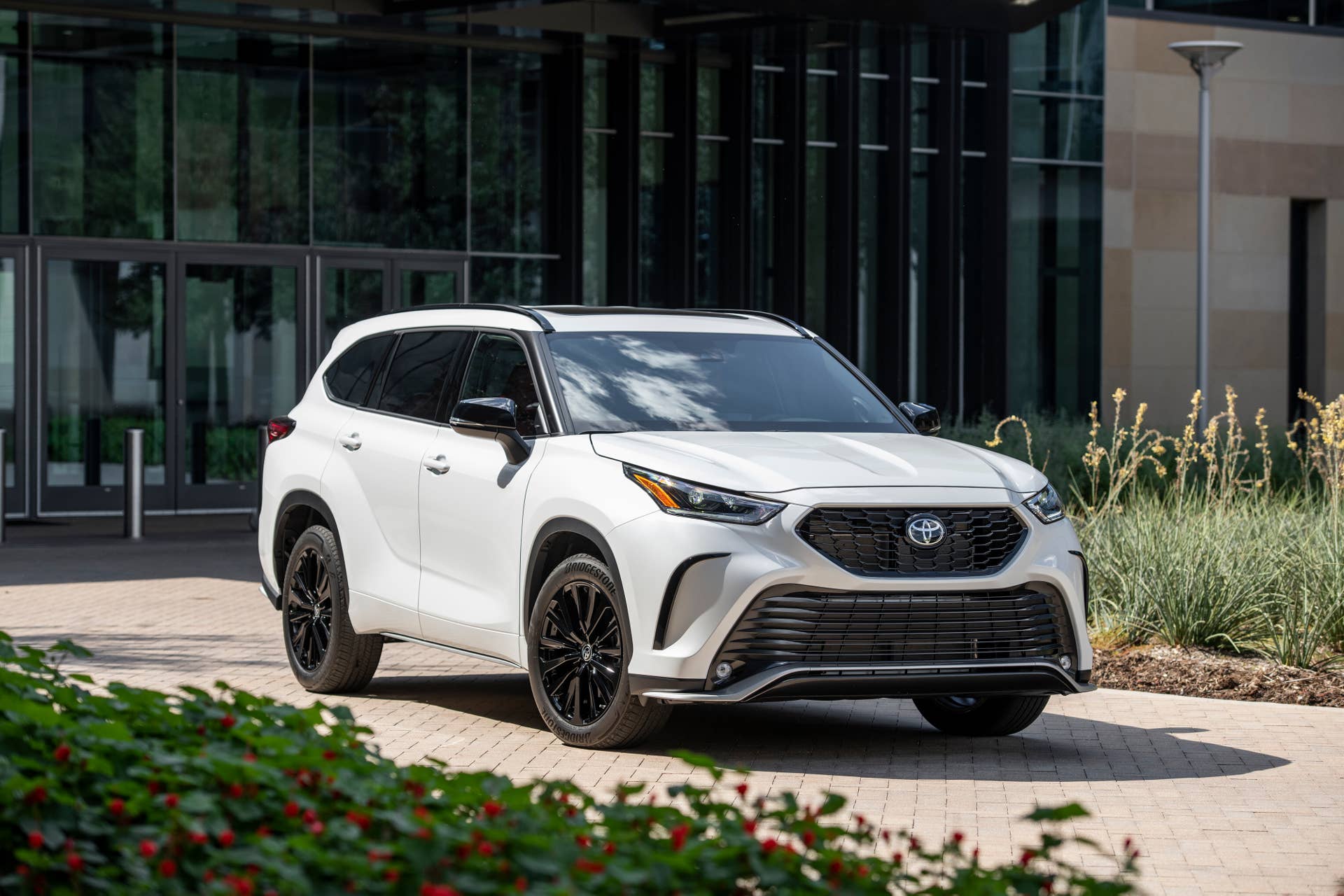
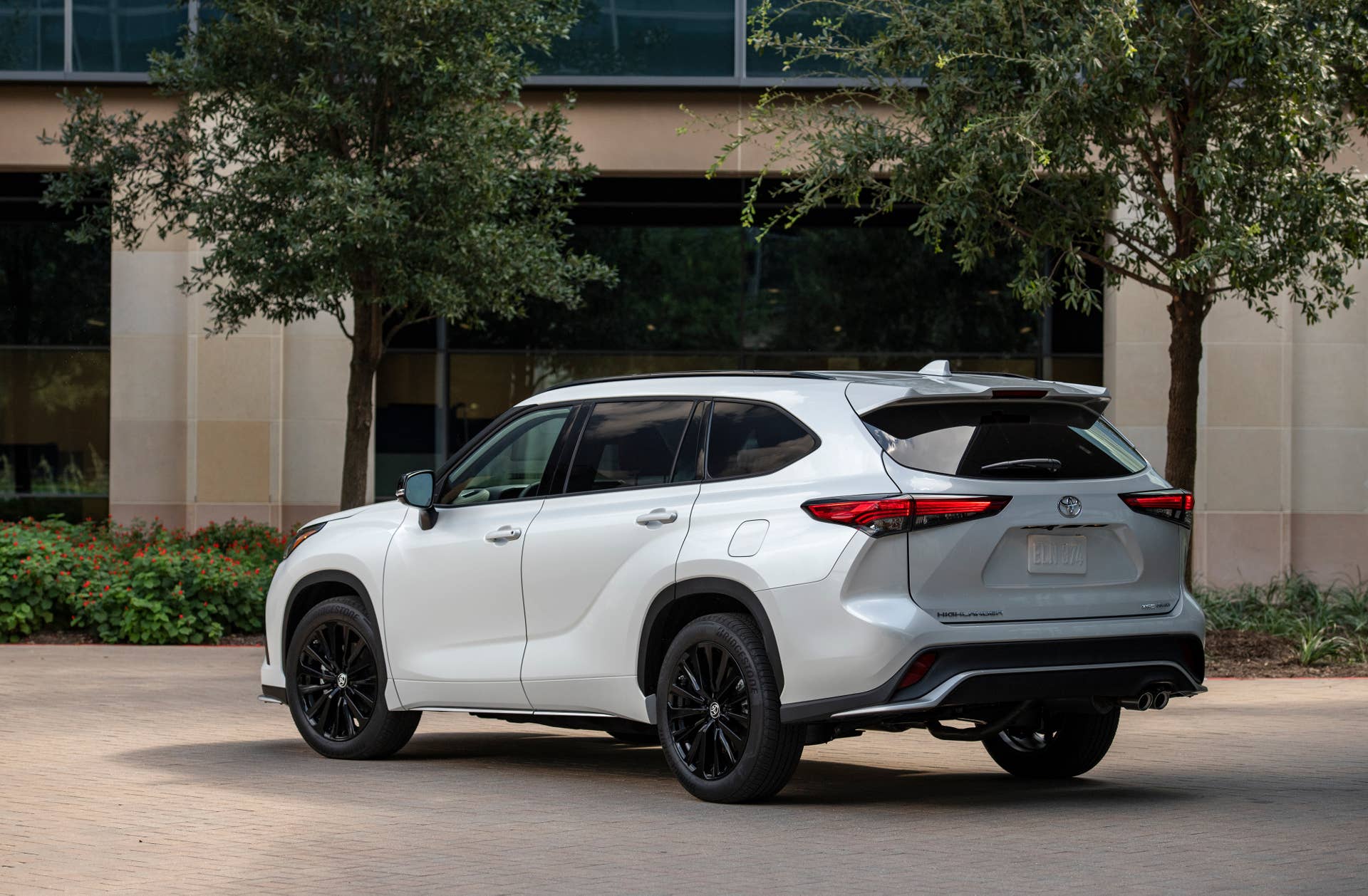
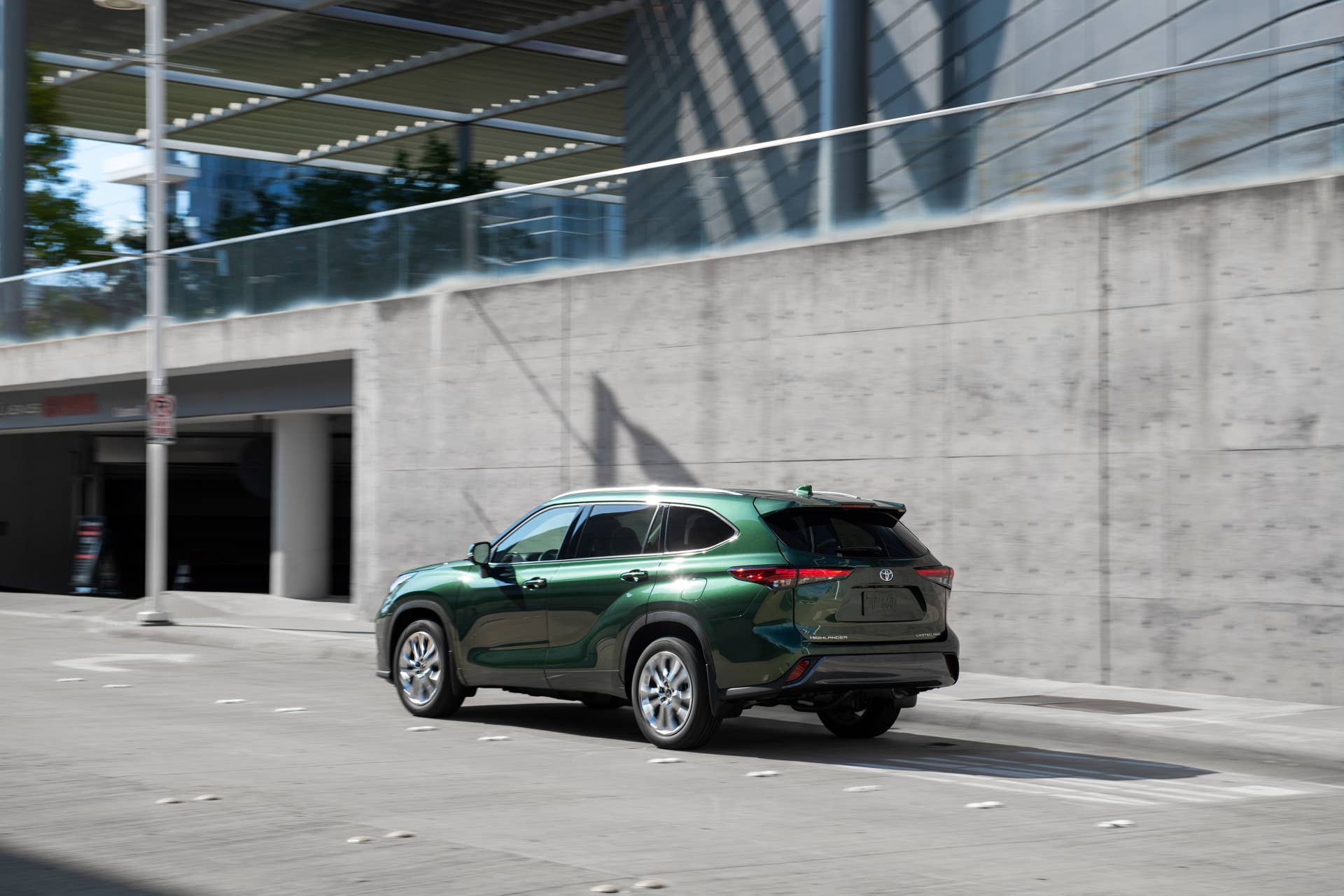
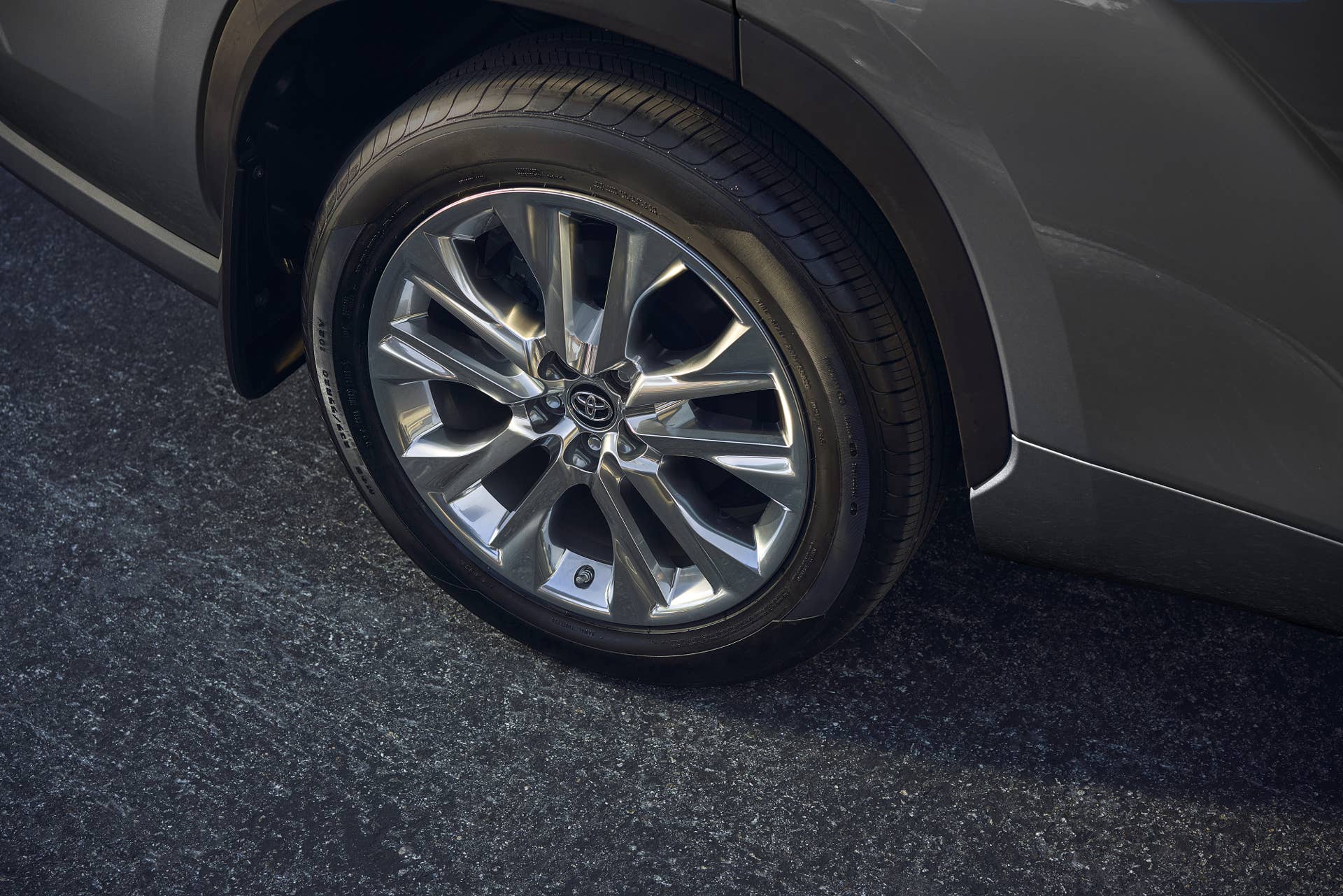
The clean lines flow rearward purposefully, culminating in bulging haunches that sweep up from the front doors, but retaining a practical shape for the cabin, along with a stretched wheelbase and upright stance, to combine maximized interior space with sound aerodynamics. Chrome touches add a touch of class, but the XSE has blacked-out trim elements and unique wheels for a more dynamic air. Wraparound LED taillights finish off the shape in contemporary fashion and extend onto a power liftgate. The Platinum’s premium aesthetic is enhanced by available 20-inch wheels.
Toyota
Toyota
Toyota
Interior
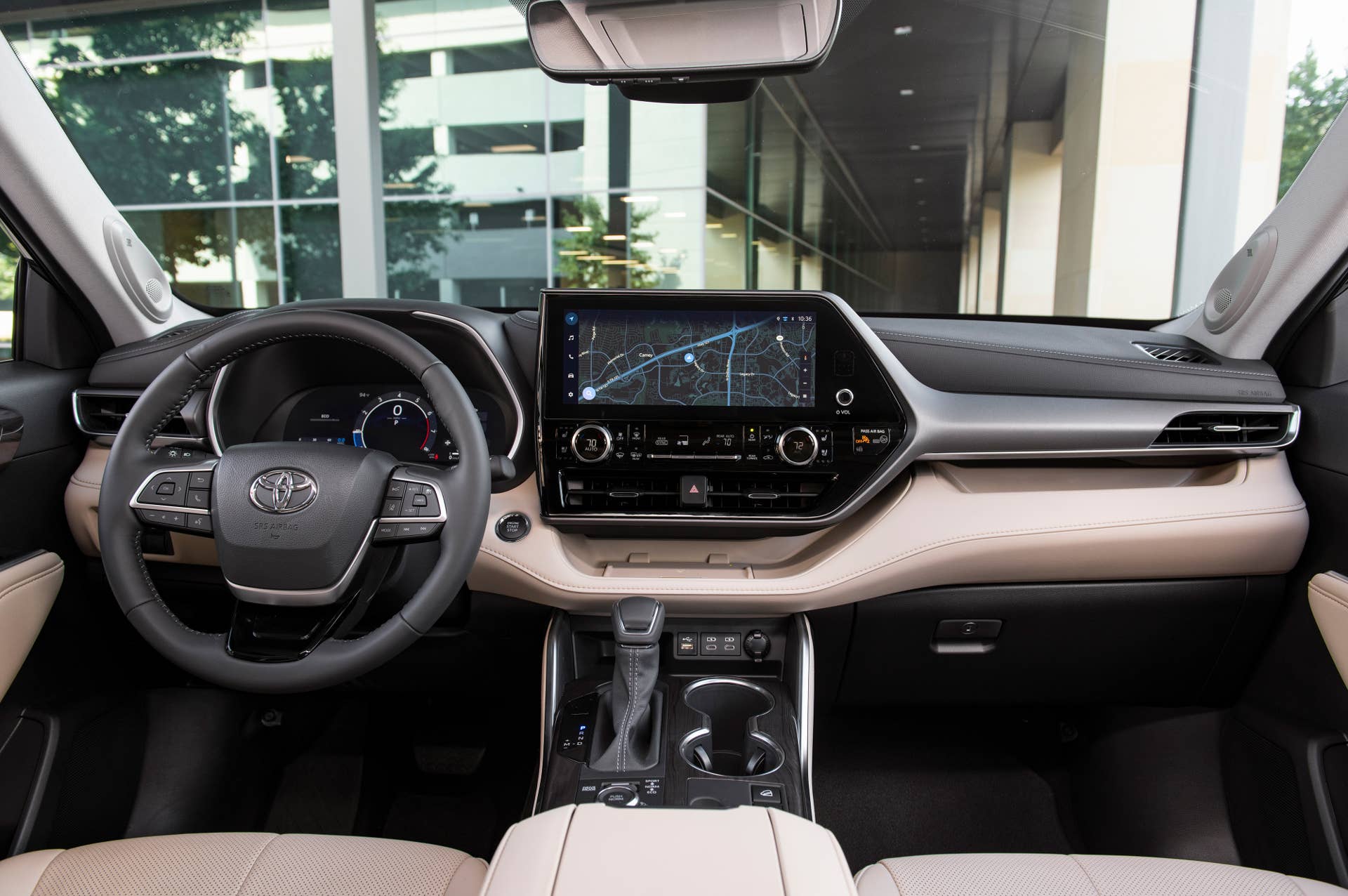
Like the exterior, the Highlander’s interior also focuses on usability, not visual drama, so the dashboard layout is straightforward and logical, with clearly labeled controls that fall to hand naturally. Base trims come with an 8-inch touchscreen, but higher trims can upgrade to a 12.3-inch item; either way, wireless smartphone integration is standard. We welcome the retention of physical controls for the HVAC and audio systems.
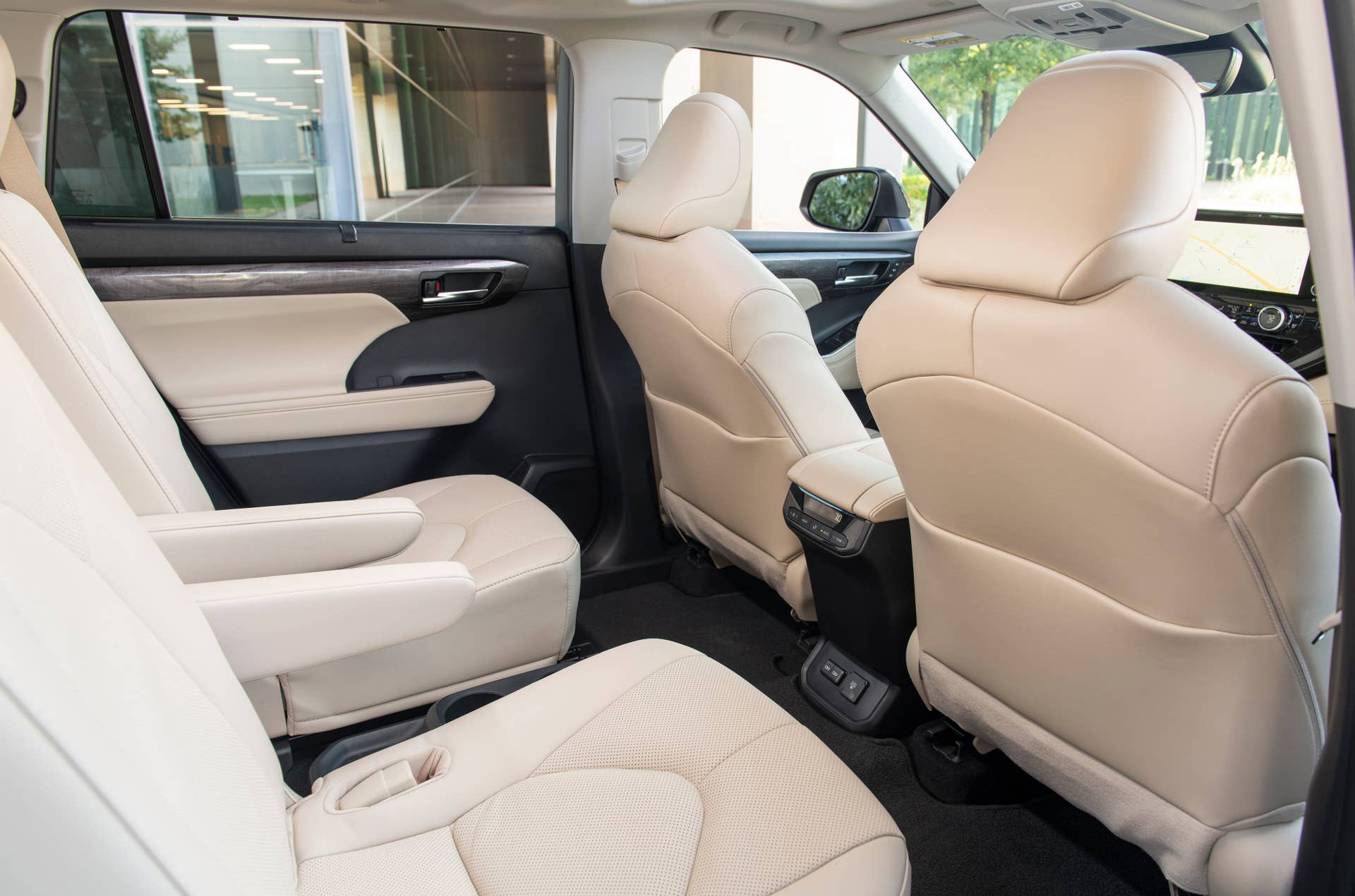
The front seats are supportive and generously cushioned, with heating and ventilation added as you progress up the trim ladder. The second row features very comfortable captain’s chairs that offer unhindered access to the third row on most trims, but can be replaced with a three-seater bench that ups seating capacity to eight. That third row is the Highlander’s main compromise by dint of its thinly padded seats and lack of legroom, making it suitable for children only.
Material quality is generally good, but the ambience is more one of workmanlike durability than luxury, though key contact points have a soft-touch finish. There are plenty of places to stow stuff, including multiple cupholders, a large center console storage bin, and dash-mounted shelves. Three-zone automatic climate control is standard on all trims.
Toyota
Toyota
Toyota
Price Range and Best Value Trim
| Category | Trim | Price |
| Base trim | LE | $40,320 |
| Top trim | Platinum Hybrid | $54,475 |
| Best value trim | XLE | $43,470 |
The base LE 2025 Toyota Highlander’s price comes in just over $40k, but the best value in the range belongs to the XLE, which gains the bigger 12.3-inch touchscreen, leather-trimmed seats, heated front seats, blind-spot monitoring, and an upgraded audio system for a premium of just $3,150 over the LE. It’s also the hybrid top buy, adding exceptional fuel efficiency to the mix.
2025 Toyota Highlander Key Specs
Powertrain Options
| Engine | HP | Torque | Transmission | Drivetrain |
| 2.4L Turbo I4 | 265 hp | 310 lb-ft | 8-speed automatic | FWD or AWD |
| 2.5L Hybrid | 243 hp | NA | CVT | AWD only |
Dimensions & Capacity
| Specification | Measurement |
| Seating Capacity | 7-8 passengers |
| Cargo Space (3rd row up) | 16.0 cu ft |
| Cargo Space (3rd row down) | 48.4 cu ft |
| Cargo Space (max) | 84.3 cu ft |
Fuel Economy (MPG)
| Configuration | City | Highway | Combined |
| Gas FWD | 22 mpg | 29 mpg | 25 mpg |
| Gas AWD | 21 mpg | 28 mpg | 24 mpg |
| Hybrid AWD | 35 mpg | 35 mpg | 35 mpg |
Warranty
Toyota’s standard warranty coverage includes a 3-year/36,000-mile basic warranty, supplemented by a 5-year/60,000-mile powertrain warranty. All hybrid components are covered for 8 years/100,000 miles. The first two years or 25,000 miles (whichever comes first) of scheduled maintenance are included. Roadside assistance runs for 2 years and unlimited miles.
| Coverage Type | Duration |
| Basic | 3 years / 36,000 miles |
| Powertrain | 5 years / 60,000 miles |
| Hybrid Components | 8 years / 100,000 miles |
| Complimentary Maintenance | 2 years / 25,000 miles |
| Roadside Assistance | 2 years / unlimited miles |
Pros and Cons
Pros:
- Smooth, quiet, and comfortable ride
- Excellent outward visibility
- Very good fuel economy for a three-row SUV (especially the hybrid)
- Comprehensive suite of standard safety features
- Typically Toyota reliability and resale value
Cons:
- Cramped third-row seating that is unsuitable for adults
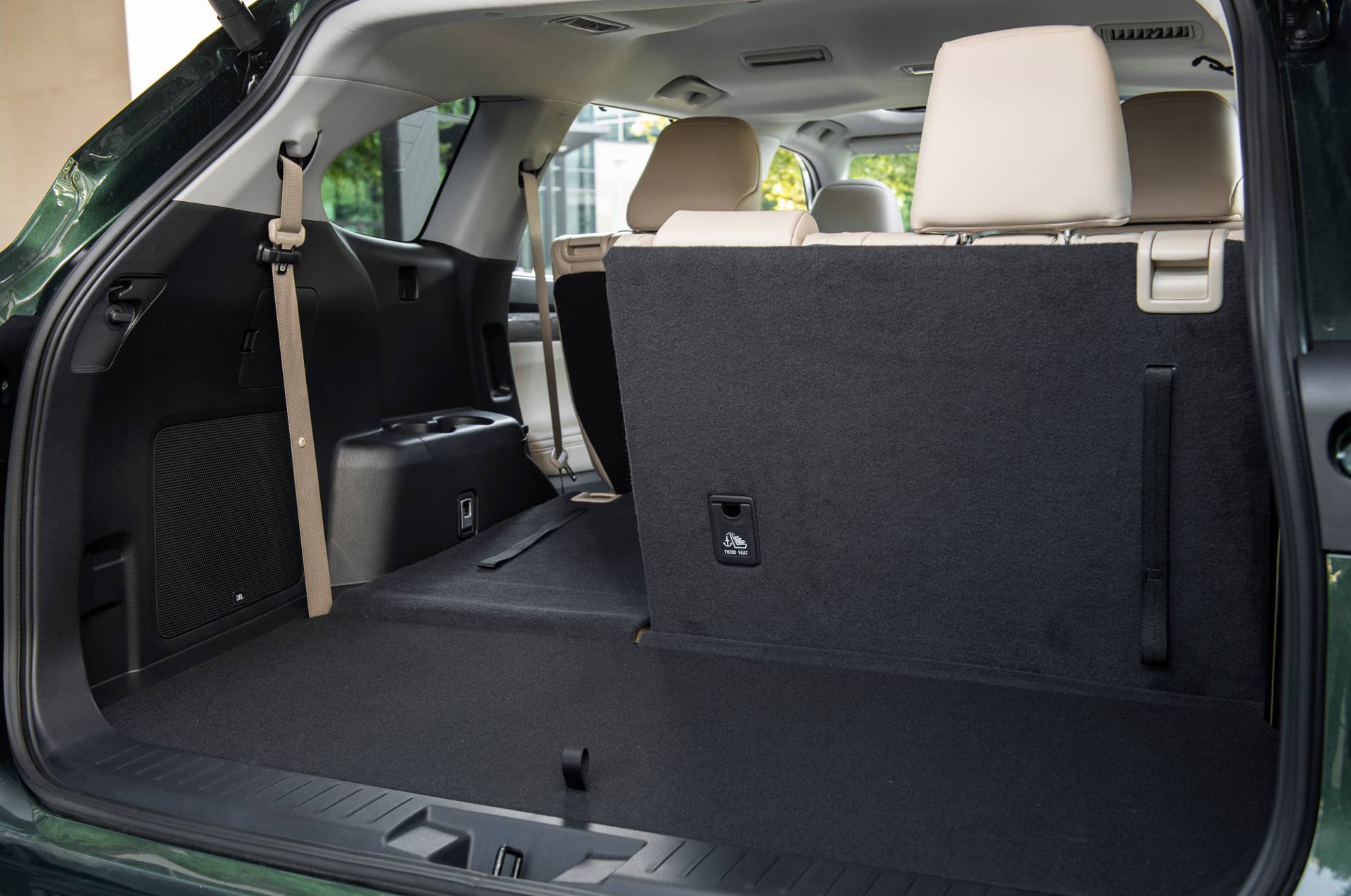
- Limited cargo space of just 16 cu-ft behind the third row
- Interior materials that are less upscale than some newer competitors
Verdict
The 2025 Toyota Highlander prioritizes efficiency, dependability, and straightforward operation over maximum interior space or cutting-edge features, and it remains a compelling choice for families that don’t need a big third row. It’s not the quickest on the block, but the turbo-four offers plenty of mid-range torque and uses less fuel than V6 rivals. The hybrid’s impressive 35 mpg combined sets the standard in the class, but demands a $6,500 premium over the gas model, so do your homework to determine if it’s worth it for you in terms of the fuel savings.
The smooth and composed ride and excellent outward visibility from all seating positions make it a pleasant, family-friendly companion, whether on the highway or school run. There’s plenty of space and comfort for adults in the first two rows, and the available captain’s chairs provide the kind of flexibility many families want, but the small third row is sized for kids only, and this puts the Highlander at a disadvantage against newer and roomier rivals like the Hyundai Palisade, Kia Telluride, and in-house Toyota Grand Highlander.
The 16 cu-ft of cargo space behind the third row is also worse than the class average, and though the cabin is perfectly serviceable – and despite its undoubted durability and solid build – it lacks the premium feel that many newer rivals now offer. However, the Highlander’s stellar reliability record, low running costs, and strong resale value make up for a lot, making it excellent long-term value.
The XLE is the sweet spot in the lineup, delivering leather seats, the larger touchscreen, and the most important key features, but without the price penalty of the upper trims. The Highlander continues to offer exactly what it’s always promised – a comfortable, reliable, and efficient family SUV that will likely outlast and outlive its competition. It’s perfect for families with small kids who prioritize Toyota’s proven dependability reputation over maximum luxury or space.
Toyota
Competitors
About the author

Cobus F. Potgieter
Reviews and Features Editor