
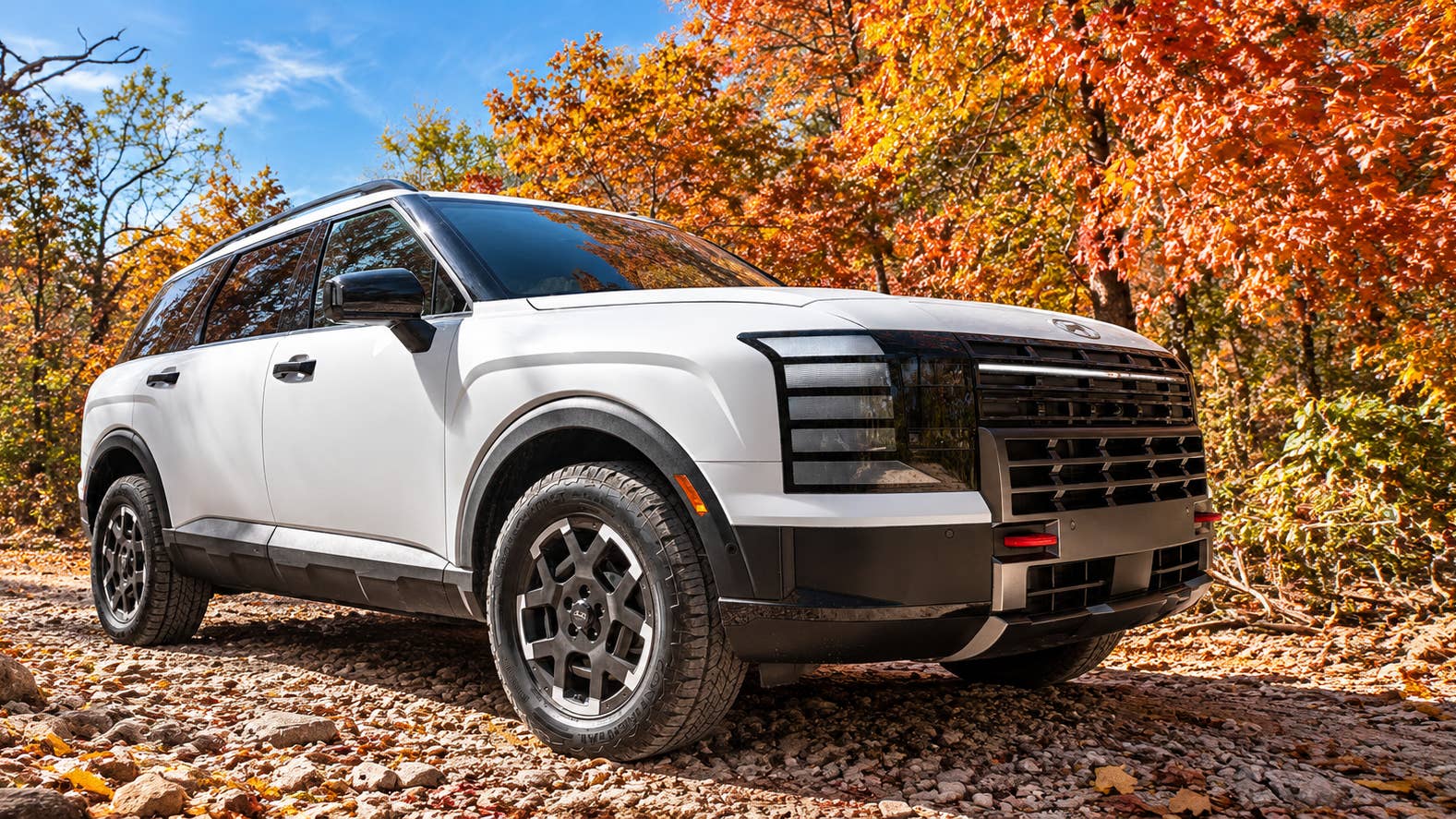
Hyundai invited us into the Ozarks to find out whether the Palisade XRT Pro could do more than look adventurous outside a sporting-goods store. Considering where the XRT badge started, that was a fair question. Earlier versions leaned heavily on dark trim, rugged styling, and the suggestion that their owners occasionally purchased hiking boots. Actual off-road improvements were less convincing. The 2027 Hyundai Palisade XRT Pro changes that equation with useful mechanical hardware, better tires, and enough trail capability to earn some dirt.
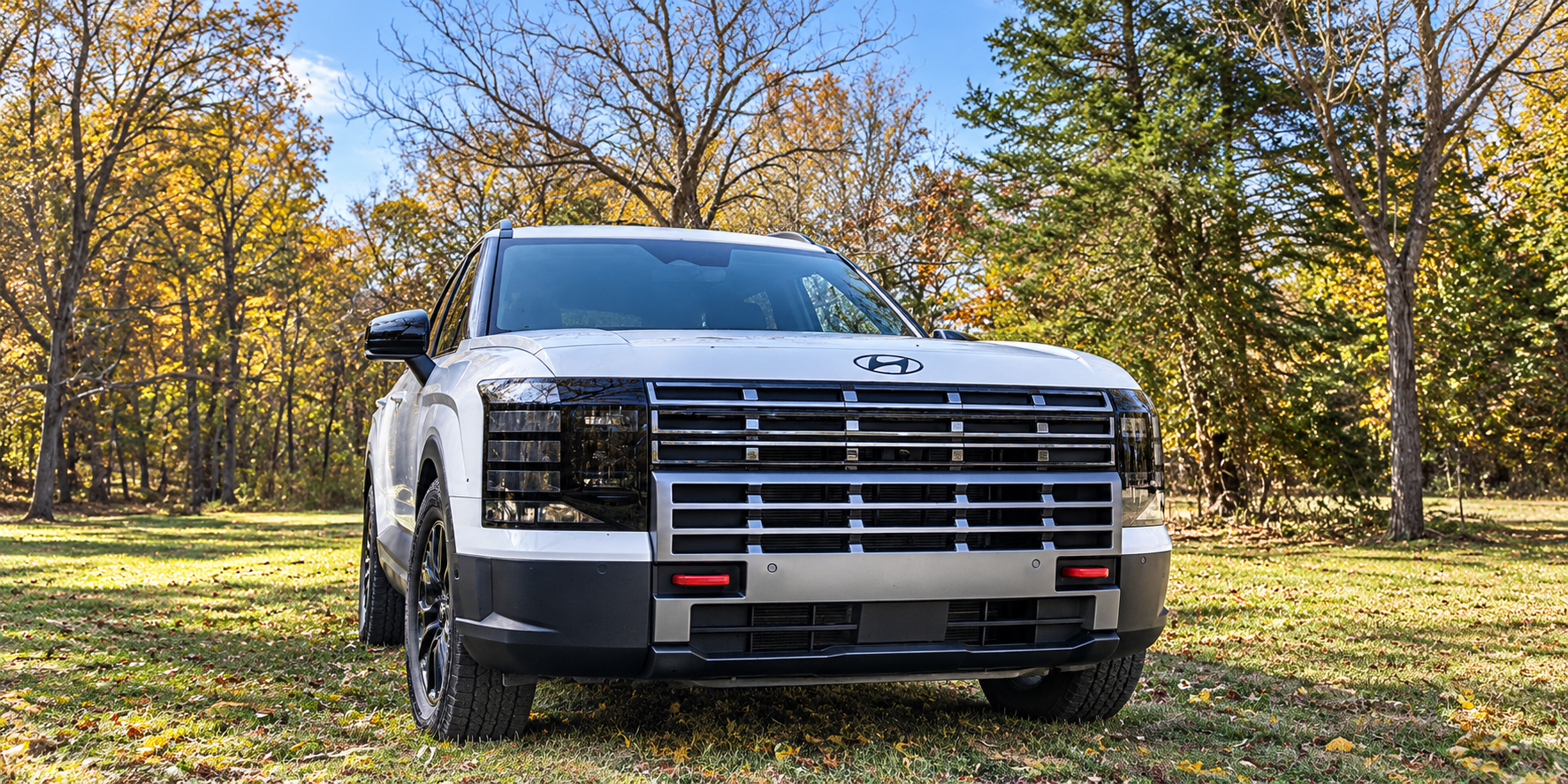
More importantly, Hyundai managed this without ruining what makes the Palisade appealing in the first place. It remains a comfortable, well-equipped, three-row family crossover. Now, when the pavement ends, there’s a little more substance behind the swagger.
What makes the XRT Pro different?
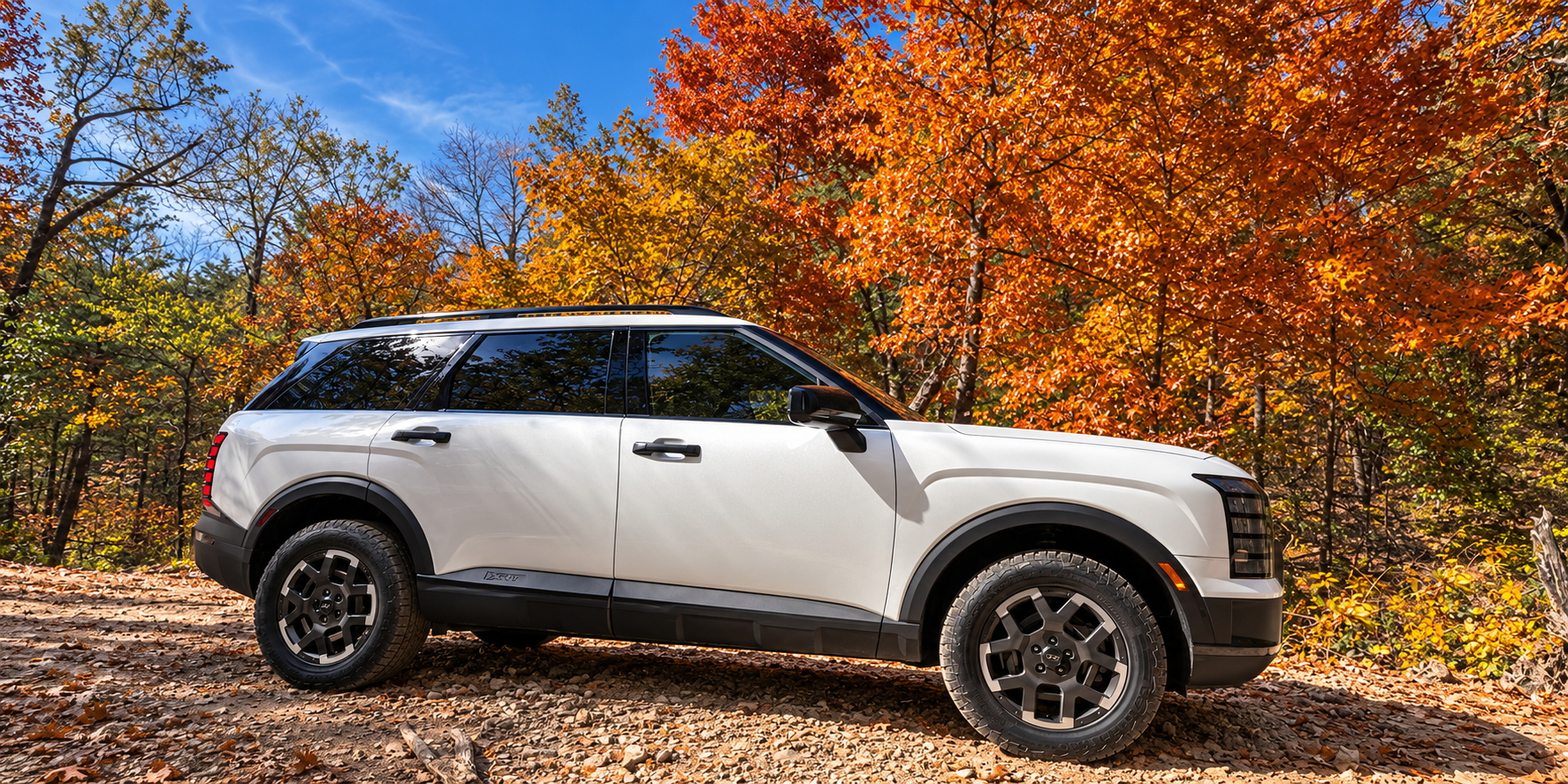
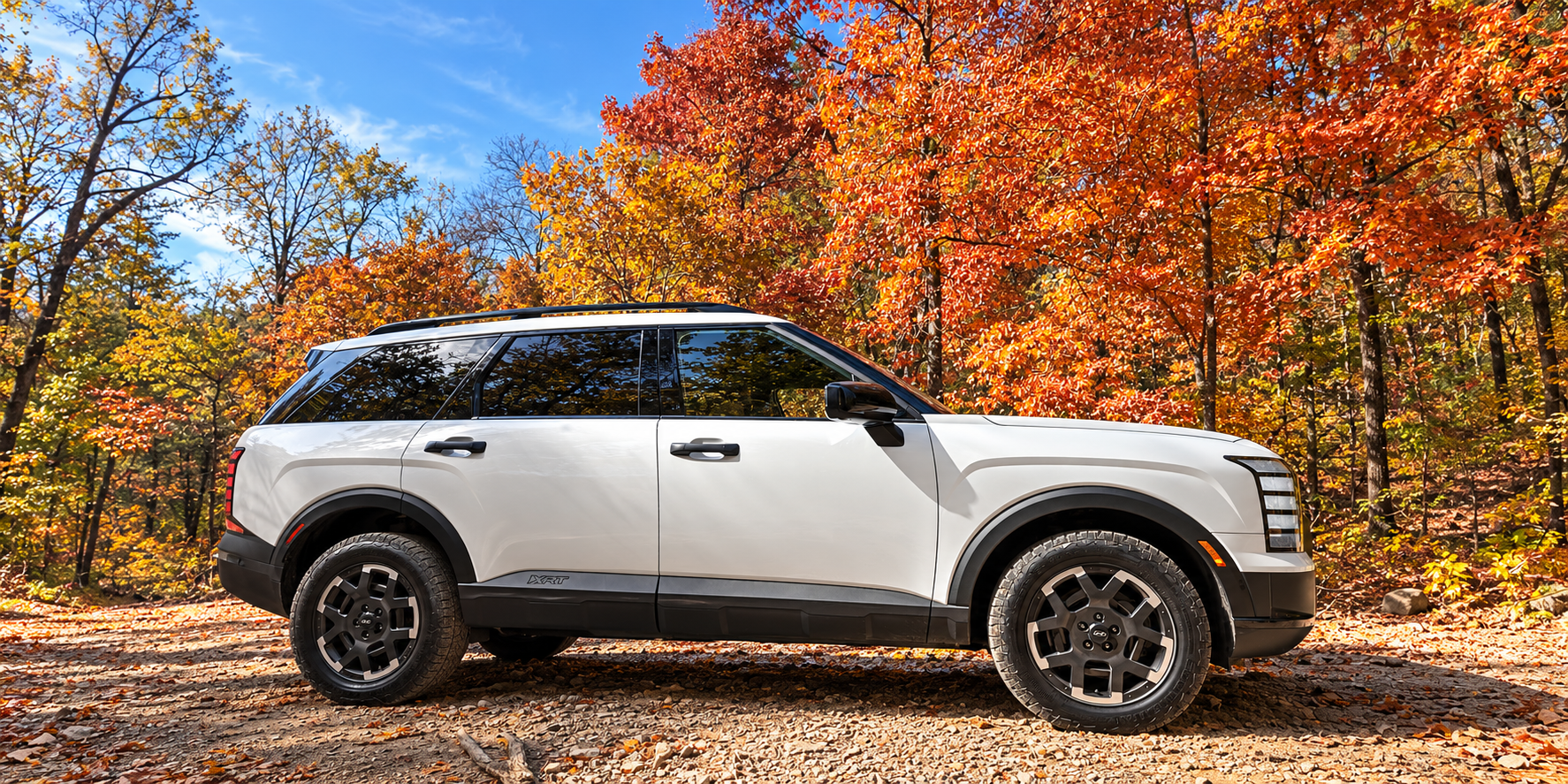
The important changes start underneath. The XRT Pro gets standard HTRAC all-wheel drive, an electronically controlled rear limited-slip differential, and an extra inch of ground clearance, bringing the total to 8.4 inches. Its 18-inch dark-finish alloy wheels wear 255/60R18 Continental all-terrain tires, giving it more useful rubber for loose surfaces than a typical street-oriented family hauler.
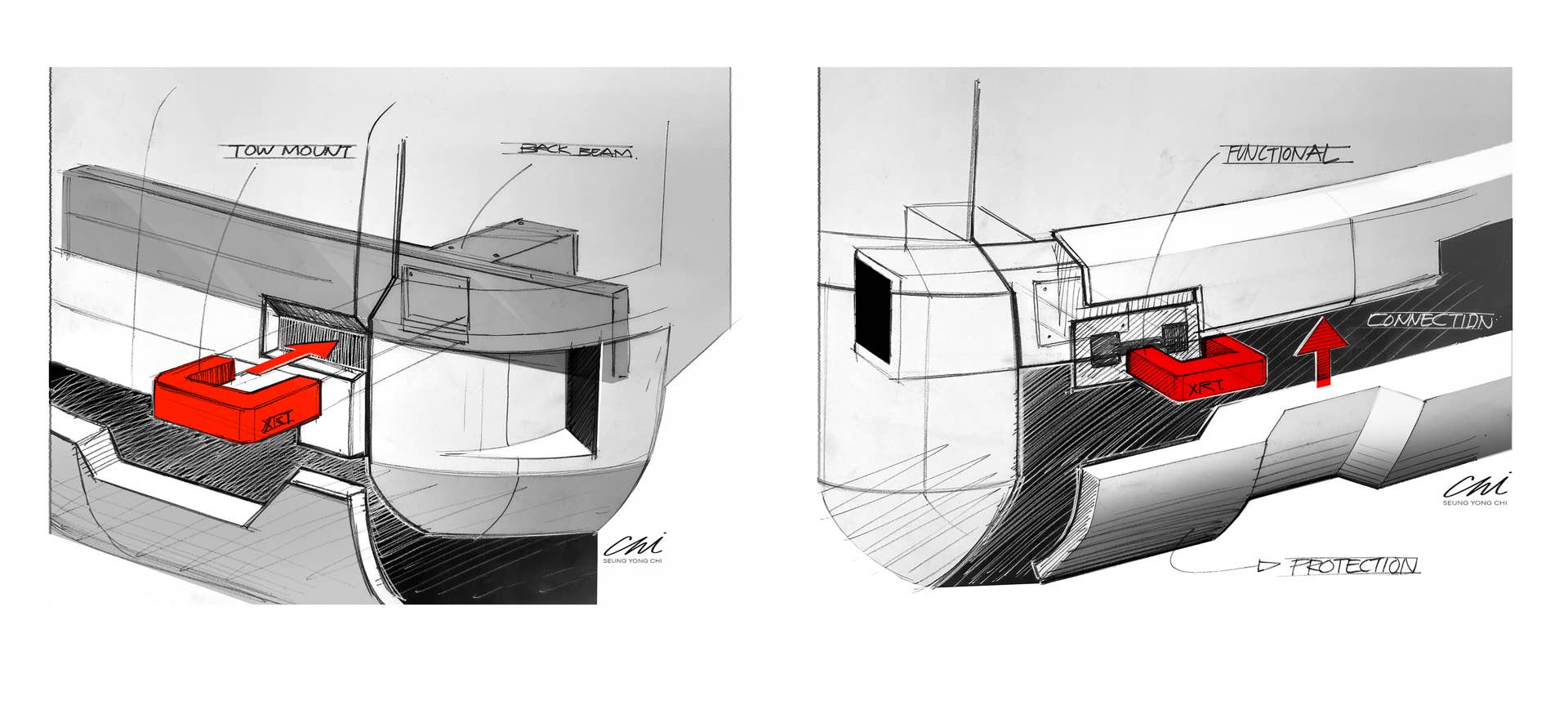
Reworked bumpers contribute to a 20.5-degree approach angle, an 18.3-degree breakover angle, and a 22.4-degree departure angle. Those numbers won’t frighten a dedicated rock crawler, but they matter when approaching a steep climb or dropping into a rut. Functional Canyon-Red recovery hooks are fitted front and rear, while Mud, Sand, and Snow terrain settings tailor the drivetrain’s response. Downhill Brake Control takes some of the workload out of descending steep sections.
ND Adlen
The rear differential deserves particular attention. Its electronically controlled clutch mechanism limits the difference in wheel speed across the rear axle, helping the tire with traction continue working when the other loses purchase. It isn’t a traditional selectable locking differential, but it provides a meaningful advantage over relying entirely on brake-based traction control.
That distinction became considerably more interesting once we reached the trail.
Powertrain and performance
Under the hood is a naturally aspirated 3.5-liter V6 producing 287 horsepower and 260 pound-feet of torque, paired with an eight-speed automatic. This is the U.S. XRT Pro’s powertrain, even though other Palisade trims offer a hybrid alternative. Maximum towing capacity is 5,000 pounds when properly equipped, and the XRT Pro includes a factory hitch and Tow mode.
The V6 is smooth, predictable, and perfectly agreeable during normal driving. It also has a substantial SUV to move. With roughly 5,000 pounds in the equation, acceleration feels adequate rather than enthusiastic. It doesn’t embarrass itself, but a little more torque would be welcome when climbing, passing, or carrying a full load of people and their belongings. EPA estimates 16 mpg city, 22 mpg highway, and 19 mpg combined. That’s mediocre.
On the trail, however, the engine’s measured delivery works in its favor. It’s easy to feed in power without getting an abrupt response. There are situations where exciting throttle behavior is desirable. Picking your way over an obstacle with passengers aboard generally isn’t one of them.
Off-road in the Ozarks
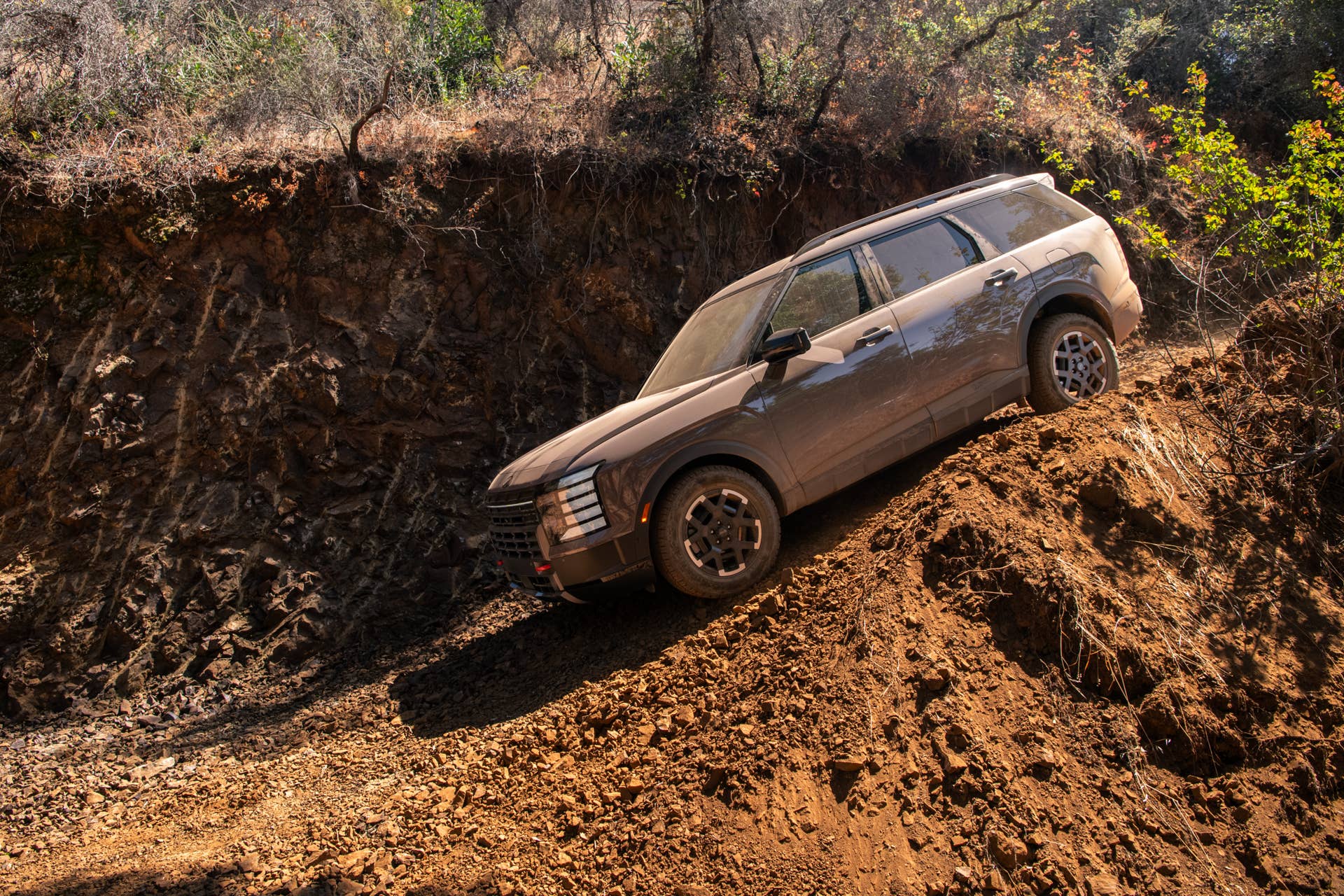
The Ozarks gave us a useful opportunity to exercise the tires, differential, and extra clearance. Hyundai’s route included uneven climbs, loose dirt, and off-camber sections that put the suspension and traction systems to work. This was an organized manufacturer event, so I wouldn’t treat it as proof that the Palisade can conquer every trail. Still, the obstacles revealed considerably more than another scenic gravel-road drive would have.
The Continental tires found purchase on loose surfaces without excessive wheelspin, and the rear differential helped the Palisade keep moving when the terrain unloaded individual wheels. In cross-axle situations, including moments with two wheels hanging, the drivetrain sorted out the available traction with surprisingly little fuss.
I deliberately stopped on certain climbs to remove momentum from the equation. That’s an effective way to expose a vehicle that has been getting by on a running start and optimism. The Hyundai pulled away and continued climbing without the drama I expected. Smooth throttle application mattered, but the hardware was clearly doing its job.
Its limitations are equally clear. This is a long, heavy family crossover with modest clearance and an 18.3-degree breakover angle. You need to choose your line, watch the underside, and respect how much vehicle follows behind the front wheels. I would welcome more substantial underbody protection before repeatedly tackling rougher trails.
Think hiking boots strapped to a hippopotamus. Surprisingly effective, provided you give it room.
Living with it on pavement
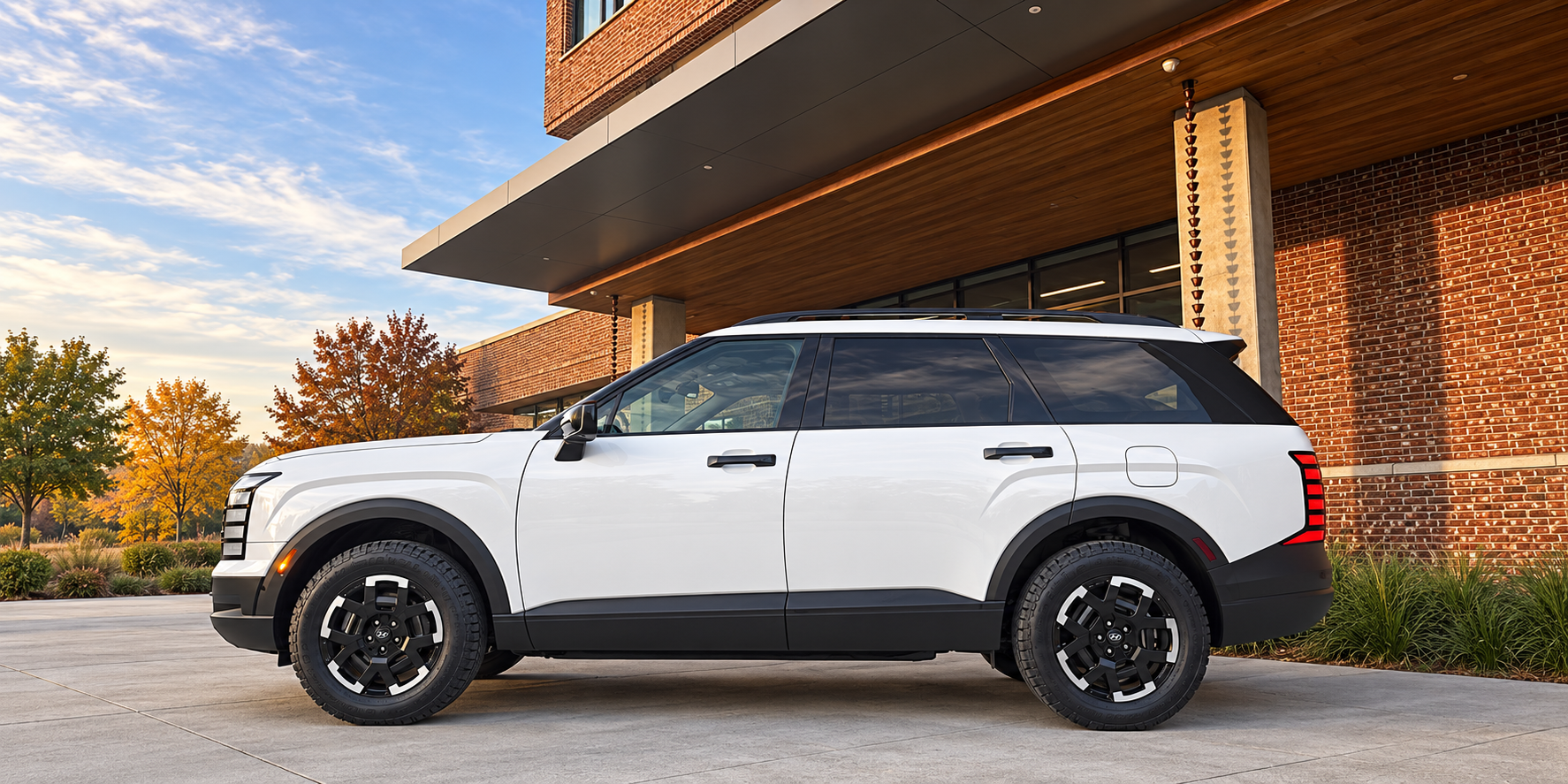
Fortunately, those boots don’t ruin the commute. The all-terrain tires introduce a little more road noise, but the difference becomes difficult to notice with the stereo playing. I didn’t find an irritating vibration or a harshness penalty that would make me regret the off-road package Monday morning.
The ride remains comfortable, and the cabin is relatively serene over longer distances. Handling is deliberate rather than playful, which is reasonable for something this large. The XRT Pro doesn’t suddenly become a sports SUV because the badge acquired another word. Parking still requires attention, although the camera systems help.
That balance is its strongest argument. Most owners will spend far more time transporting family members than lifting wheels in the Ozarks. Hyundai preserved the daily comfort while giving them a more capable escape route.
Exterior and interior design
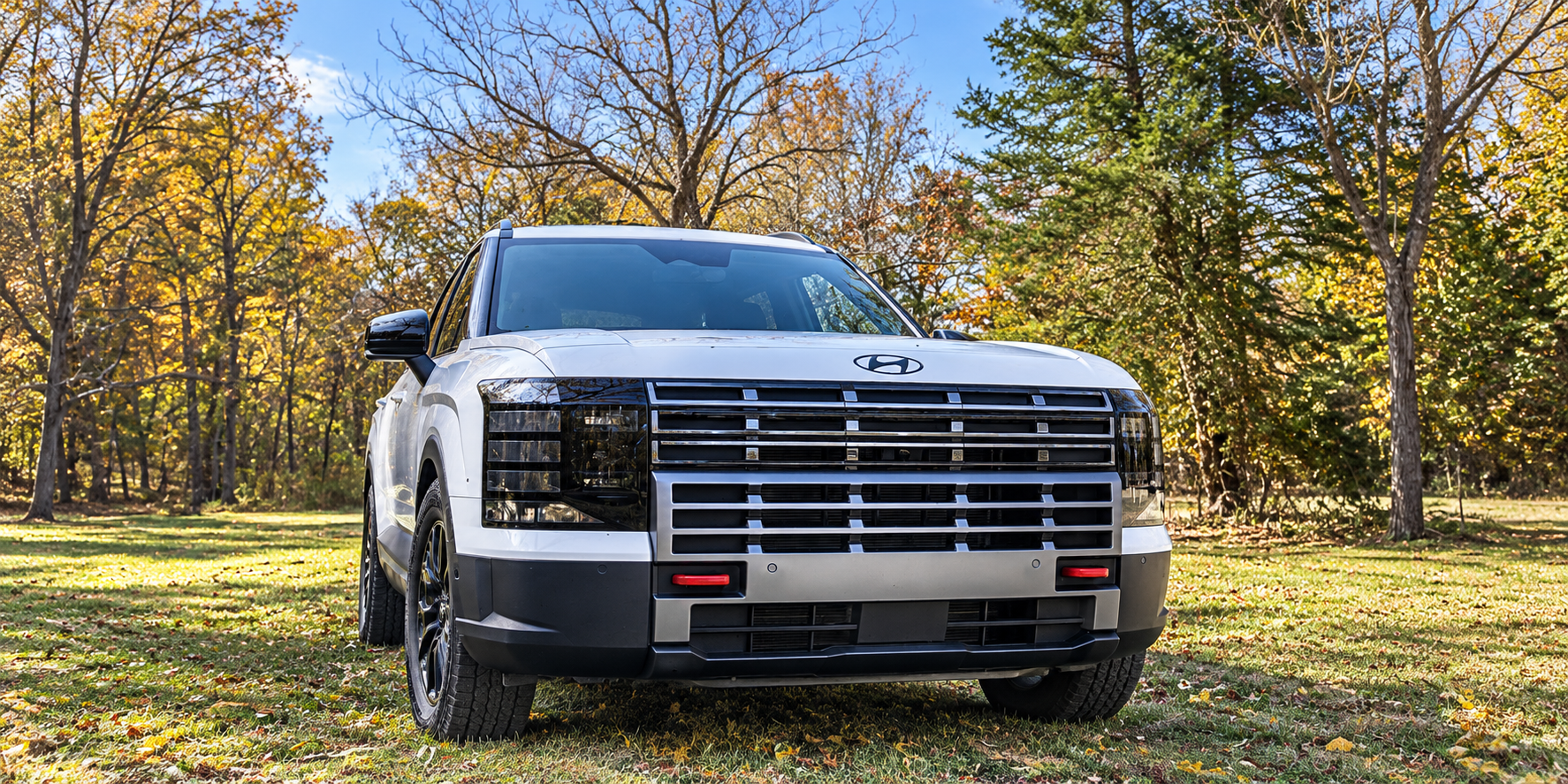
The unique bumpers, dark trim, red recovery hooks, and taller stance give the XRT Pro a convincing appearance. I find it handsome, although a little more tire would better match its visual ambition. I’m pleased Hyundai used 18-inch wheels rather than enormous rims wearing rubber bands.
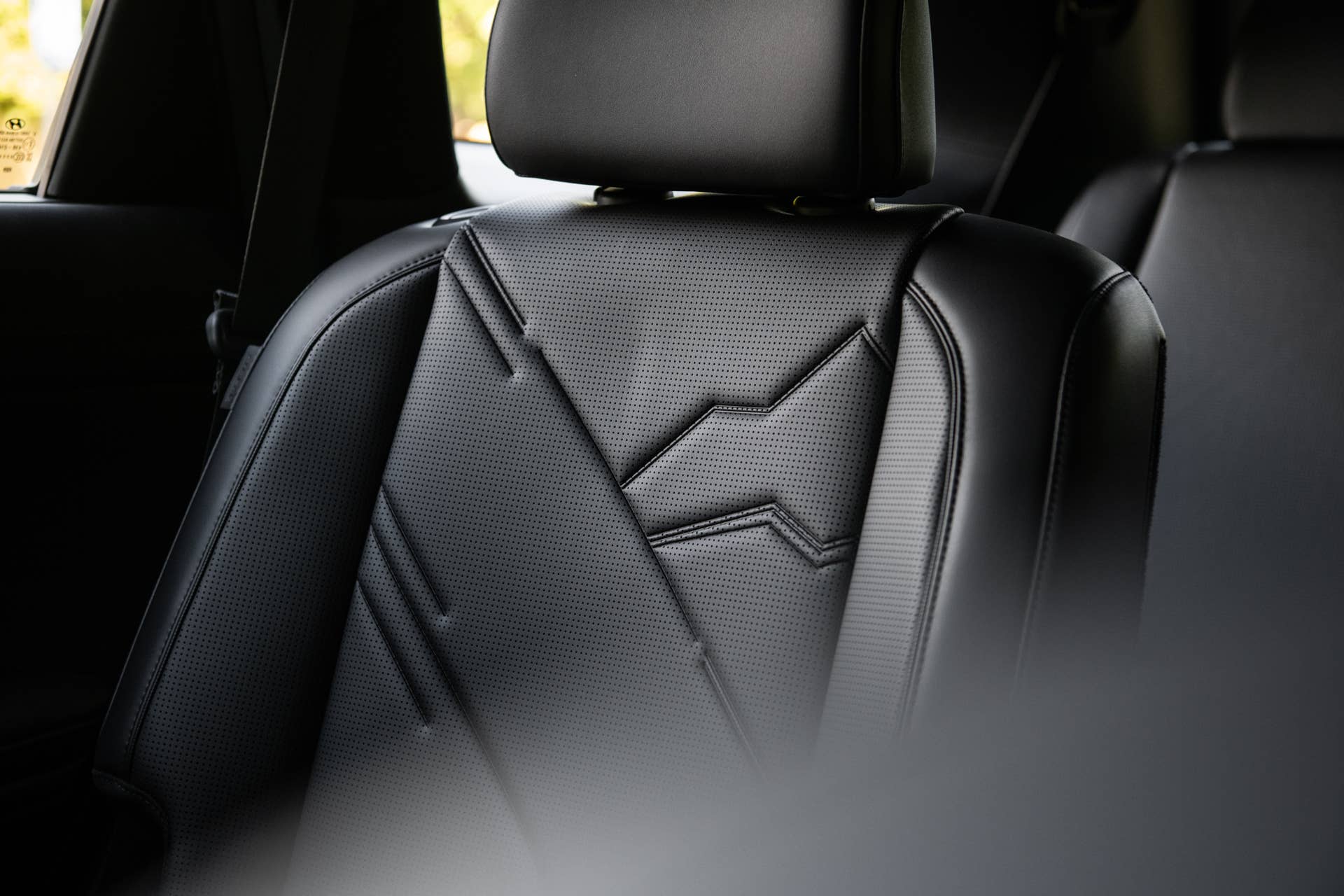
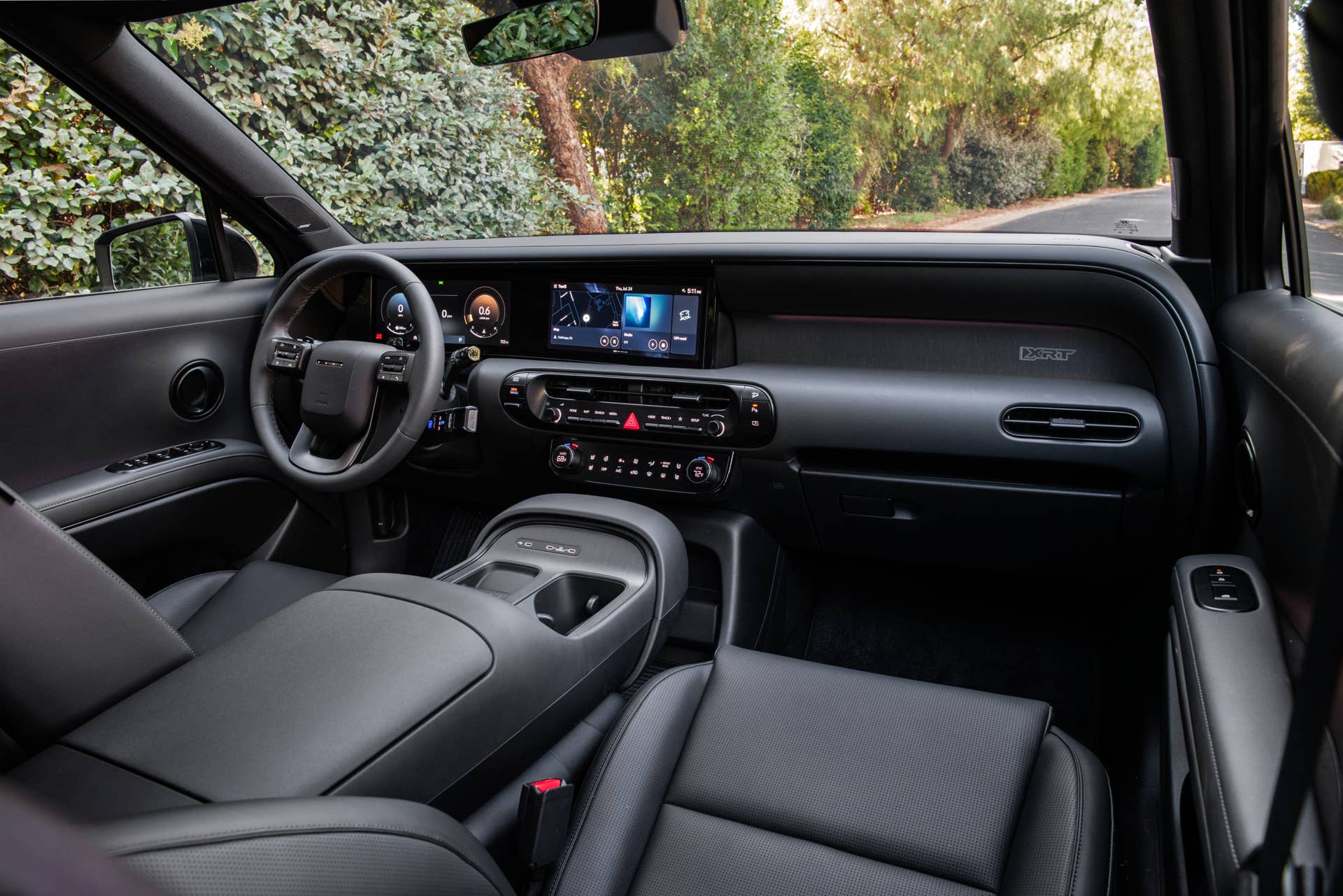
Inside, the predominantly black treatment hides some of the Palisade’s attractive shapes. The dashboard has an appealing sweep, and the cabin feels thoughtfully designed, but I would appreciate more color contrast.
Seven-passenger seating includes second-row captain’s chairs. Standard equipment brings H-Tex leatherette upholstery, heated and ventilated front seats, a heated steering wheel, a 14-speaker Bose system, and a 115-volt outlet. A 12.3-inch touchscreen pairs with a matching digital instrument display.
More relevant to this test, the off-road display provides pitch, roll, compass, and elevation information. The surround-view camera’s forward ground view also helps when the hood obscures what lies immediately ahead. Those are useful tools when placing a large vehicle on uneven terrain.
Final thoughts
The Palisade XRT Pro belongs alongside the Honda Pilot TrailSport, Nissan Pathfinder Rock Creek, Chevrolet Traverse Z71, and Kia Telluride X-Pro. Each aims to combine family utility with greater trail confidence, and Hyundai now has a credible contender.
At roughly $51,000, depending on current pricing and destination charges, the XRT Pro offers a compelling package. I’d still like more clearance, stronger protection underneath, and additional power. Nevertheless, it handled our Ozarks obstacles with composure and remained an excellent road companion afterward.
Hyundai finally gave the badge something useful to do. Getting it dirty feels appropriate.
About the author

Nathan Adlen
Contributing Writer, Autoblog