
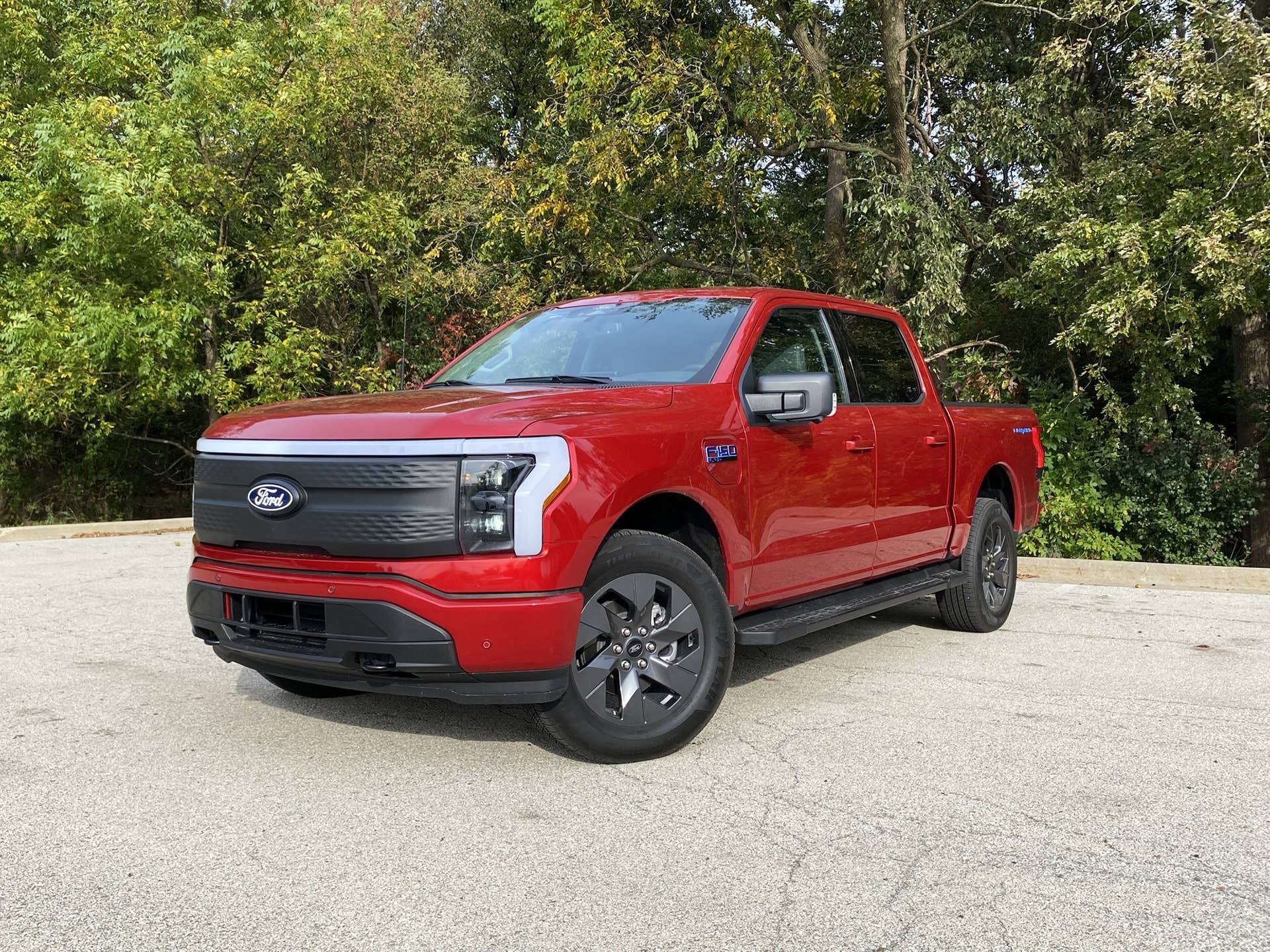
Price increases, production issues, and range hits can’t cramp its greatness
When the all-electric Ford F-150 Lightning launched in 2022, it was hailed as the future of America’s best-selling vehicle. Then reality set in. Production delays, battery hiccups, and supply chain shortages repeatedly slowed deliveries, while Ford quietly hiked prices by nearly $10,000 (in some trims) since launch. What was supposed to be a $40,000 electric workhorse now starts well into the $50,000 range, with top trims pushing close to $90,000. Even so, demand hasn’t cooled much. The Lightning remains one of the most talked-about EVs on the market, blending familiar F-150 appeal with true electric performance.
Amos Kwon
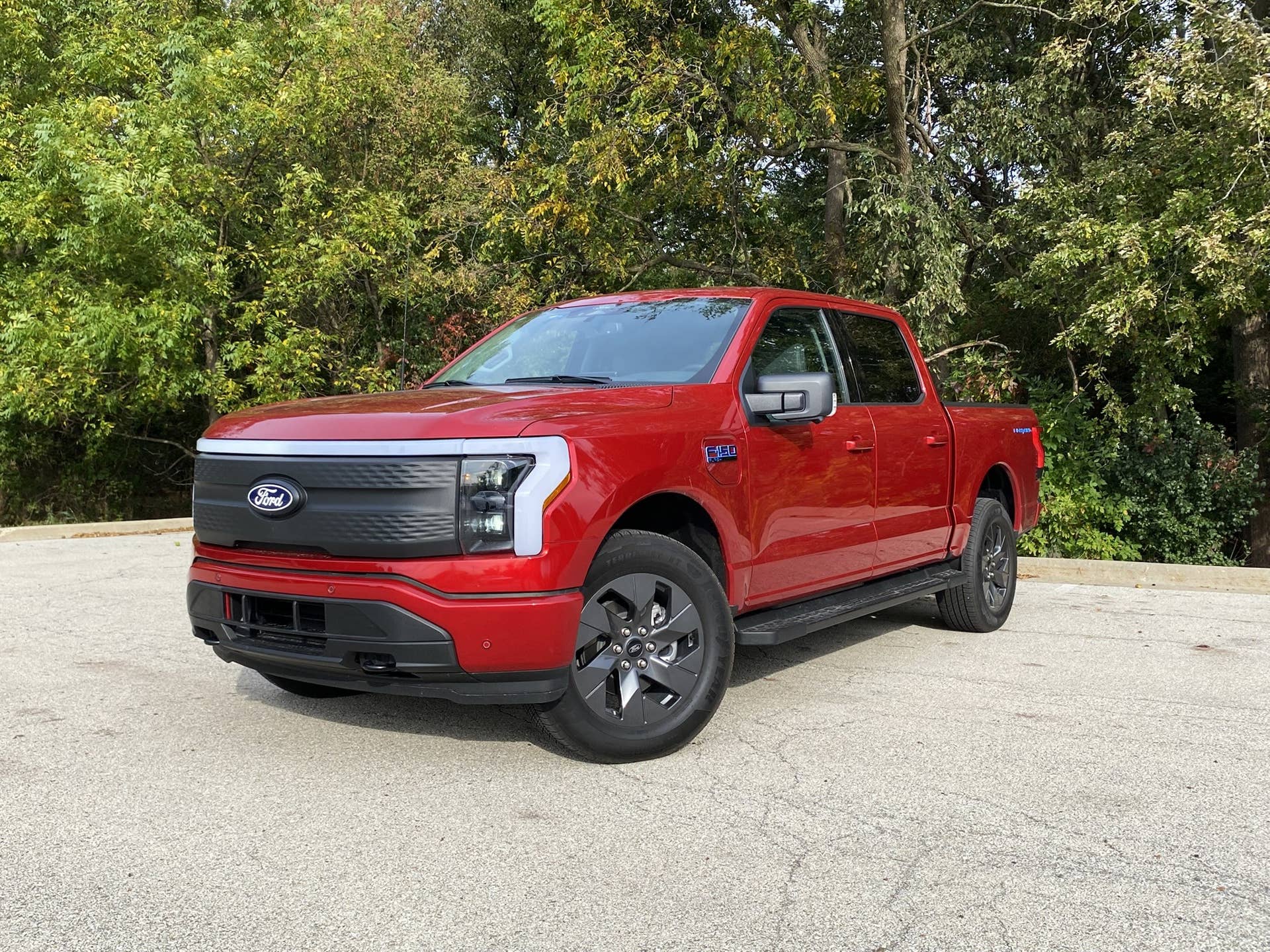
My test truck was a 2025 F-150 Lightning 4×4 Supercrew Flash with the 123 kWh Extended Battery and a base price of $67,995. Standard feature highlights included 20-inch dark alloy wheels, LED projector beam dynamic bending headlights, automatic high beams, a power-operated frunk, 10-way power front seats, a 12-inch digital instrument cluster, a 15.5-inch infotainment touchscreen with SYNC 4A, power adjustable pedals, heated front seats, heated steering wheel, dual-zone automatic climate control, a 360 camera, adaptive cruise control, wireless Apple CarPlay/Android Auto, and an 8-speaker B&O sound system.
Standard safety equipment included Evasive Steering Assist, Pre-Collision Assist with Automatic Emergency Braking, and a Blind Spot Information System with Cross-Traffic Alert. The total price with options such as Ford BlueCruise semi-autonomous driving tech, an onboard charger, Max Trailer Tow package, and a spray bedliner came to $74,685, including $2,095 destination and delivery.
Design and styling
Amos Kwon
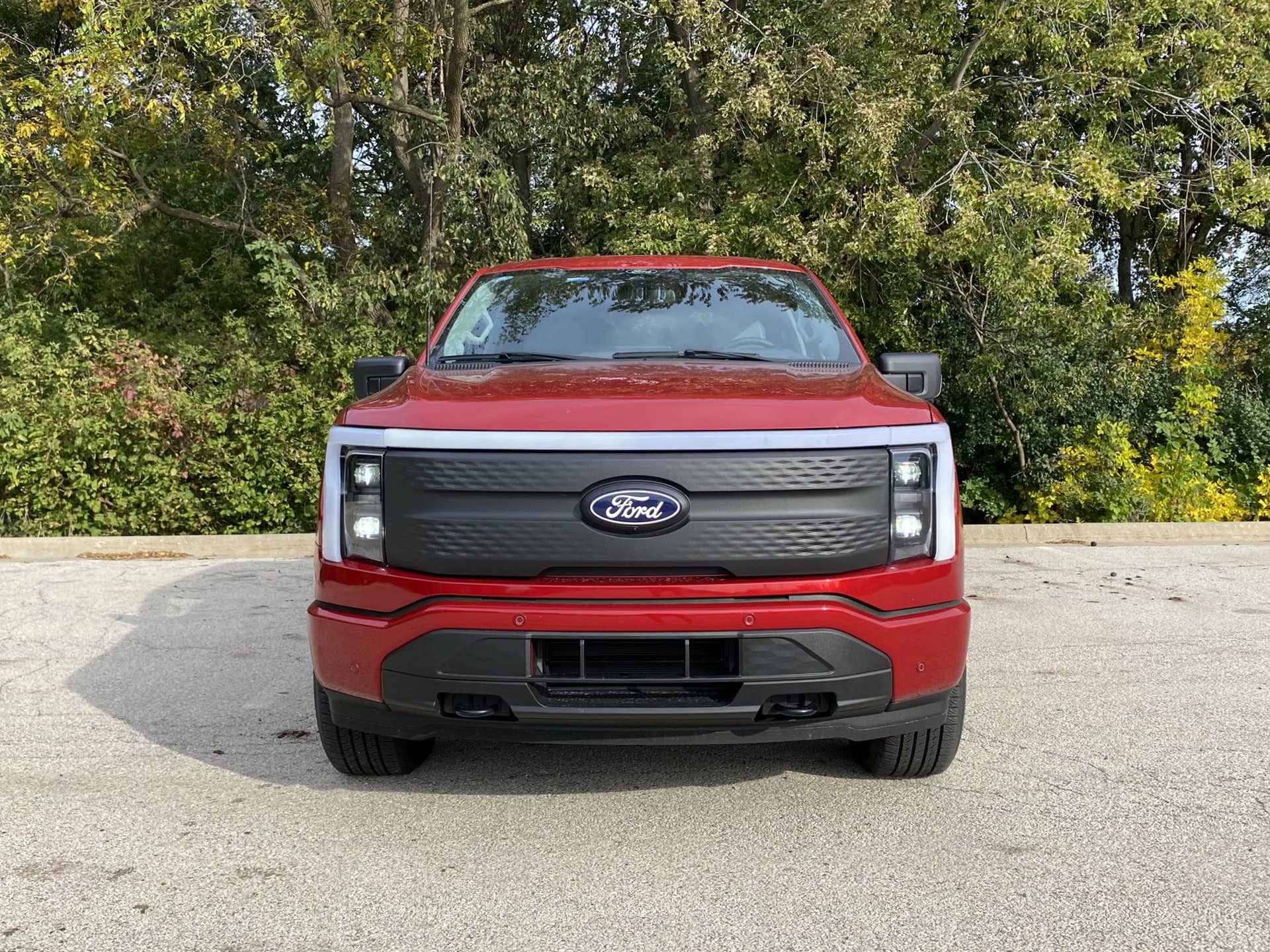
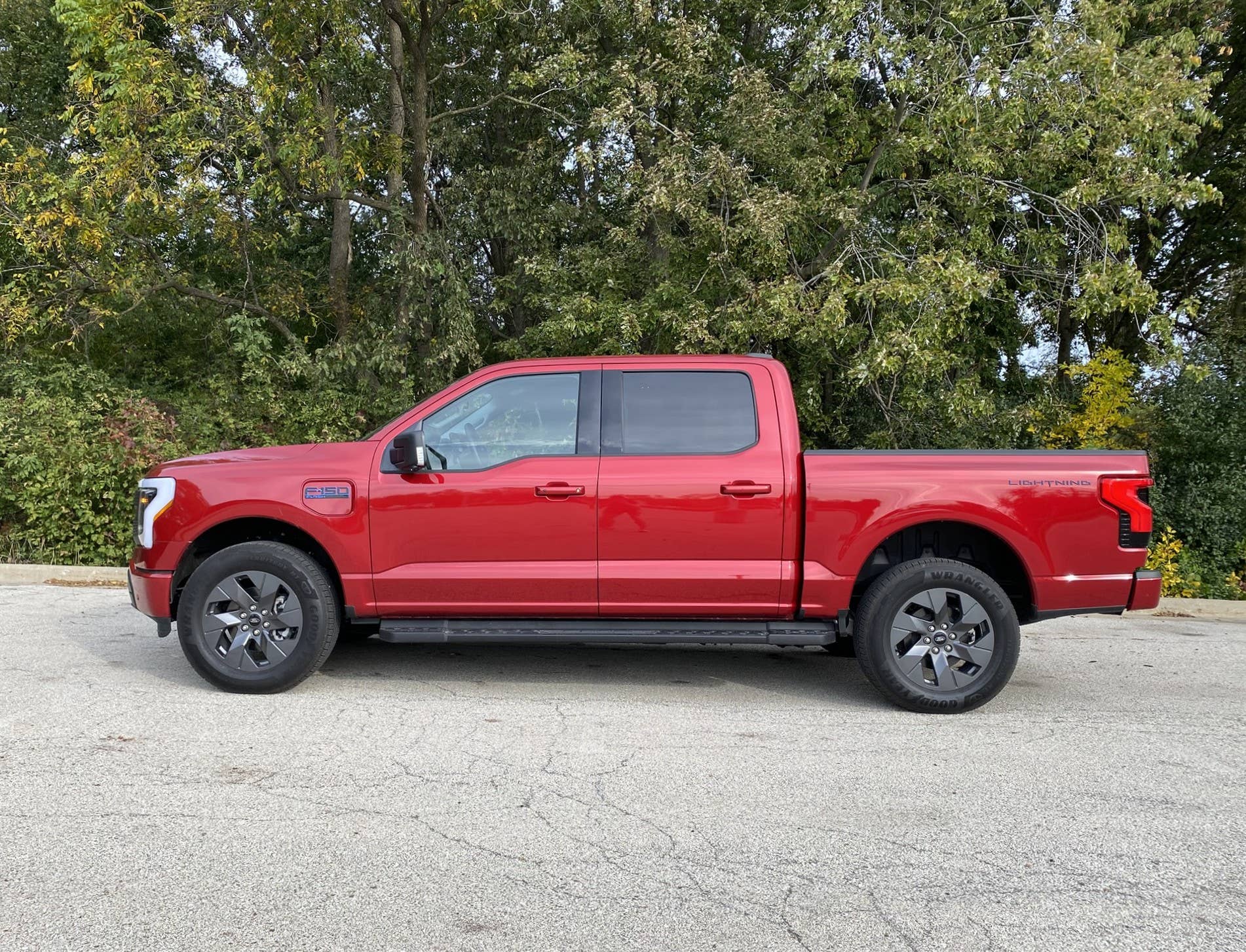
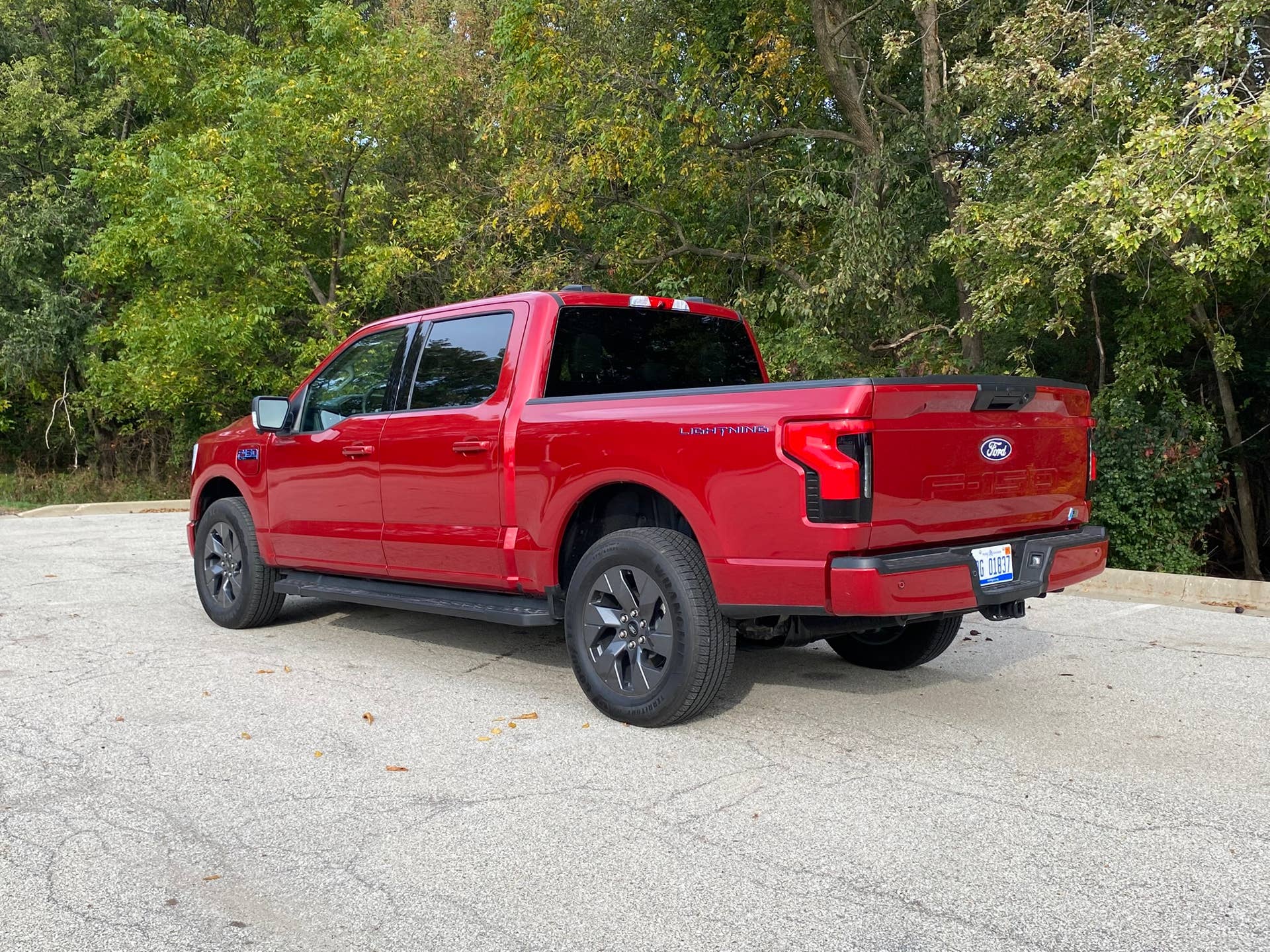
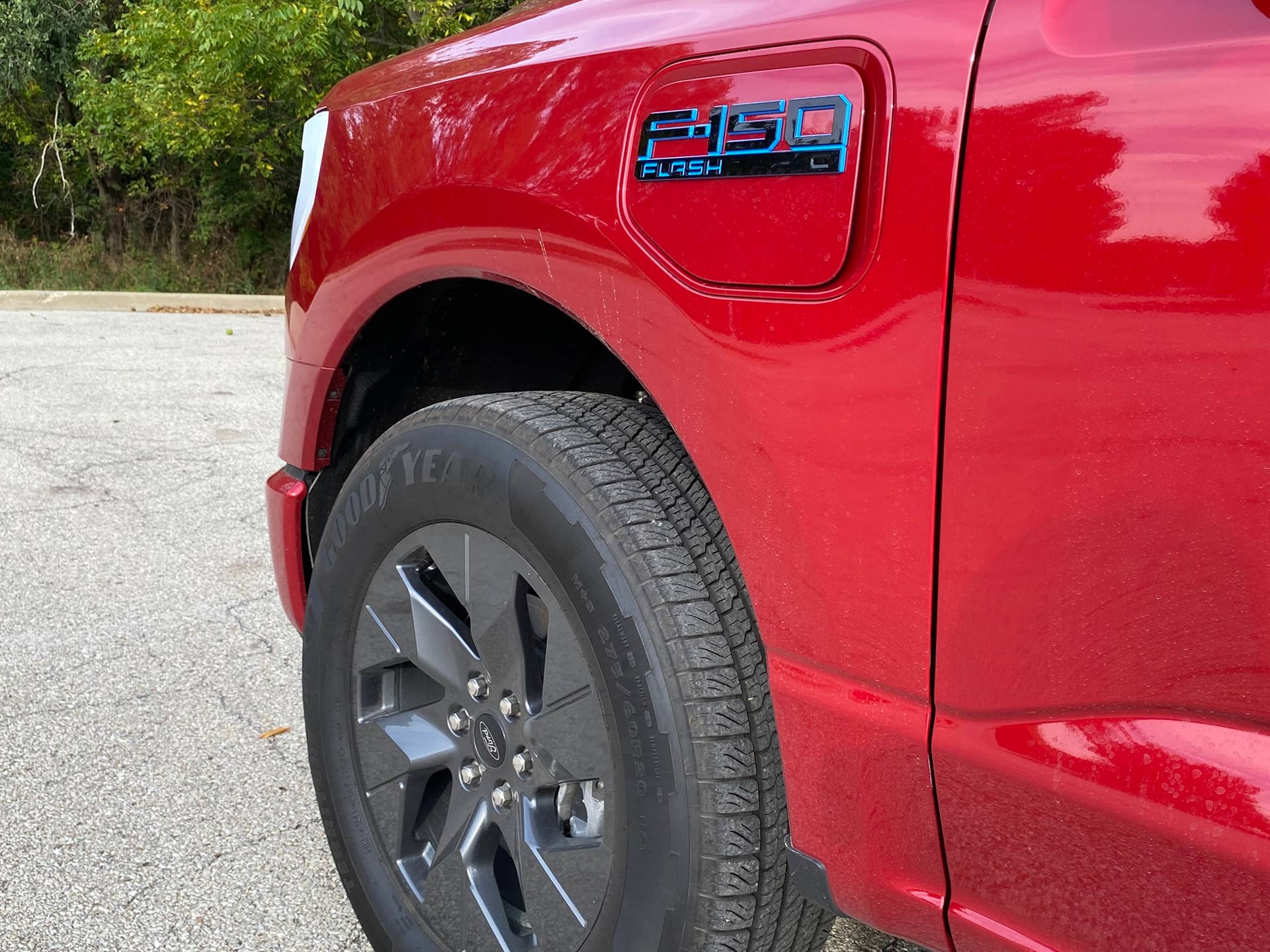
At first glance, especially from the side view, most people won’t realize the Lightning is electric. It’s blocky, bold, and unmistakably F-150. The solid and nicely darkened faux grille and the huge squared-off light bar flanked by stacked headlights give it a bolder, more modern presence than the gas trucks. Out back, shapely LED taillights are thick and superimposed on black trim pieces. Front and rear lighting elements keep with the F-150 styling cues, so it’s still very much recognizable as one of Ford’s full-sized light-duty pickup trucks. The dark aero wheels and flush charging door add subtle EV flair without shouting about it.
Amos Kwon
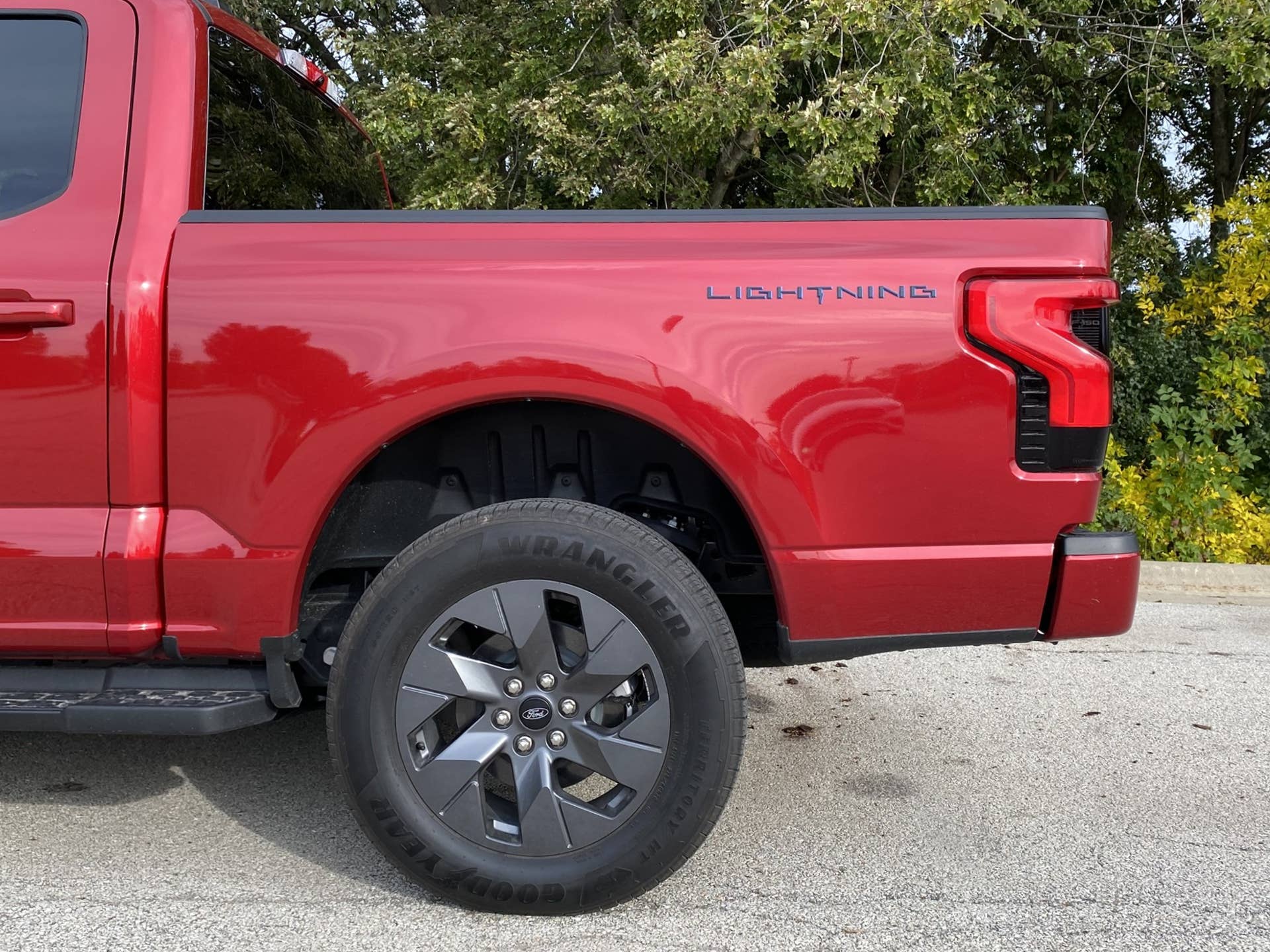
We laud Ford for giving the Lightning the right modern touches to make it slightly distinct, but not to the point of weirdness. The lettering on the bed is subtle, and the shape is very much in line with the F-Series trucks. Even the gray aero wheels aren’t dead giveaways because they have a spoked look to them.
Power and performance
Amos Kwon
Every Lightning gets dual electric motors and standard all-wheel drive. Battery size depends on trim, with the Extended-Range version delivering a stout 580 horsepower and 320 miles of range. The standard pack isn’t far behind, with 452 hp and 230 miles of range. More on the range later.
It’s hard to explain just how powerful the Lightning is. It weighs well over three tons, but the power on tap moves it in an alarming fashion. Mash the pedal, and the Lighting accelerates immediately and authoritatively. You have to be careful and make sure you can react quickly enough because the F-150 takes off like a rocket, getting to 60 mph in about 4 seconds. It’s shocking how something this large can move that quickly. Instant torque hits like a freight train, and passing power is relentless.
Amos Kwon
Handling is surprisingly tidy, thanks to the low center of gravity created by the battery pack. The ride is firm, but not punishing. The independent rear suspension (a major upgrade from the gas truck’s solid axle) makes the Lightning feel more composed on uneven pavement. It’s not a sports car, but for a full-size pickup, it’s borderline athletic.
Regenerative braking is strong but numb, offering little pedal feedback. One-pedal driving is available and adjustable; it works well in traffic but takes getting used to if you prefer traditional modulation. Steering is accurate and nicely weighted, though there’s almost no feel. Still, the Lightning feels confident and stable, especially through sweeping corners.
Tech and infotainment
Amos Kwon
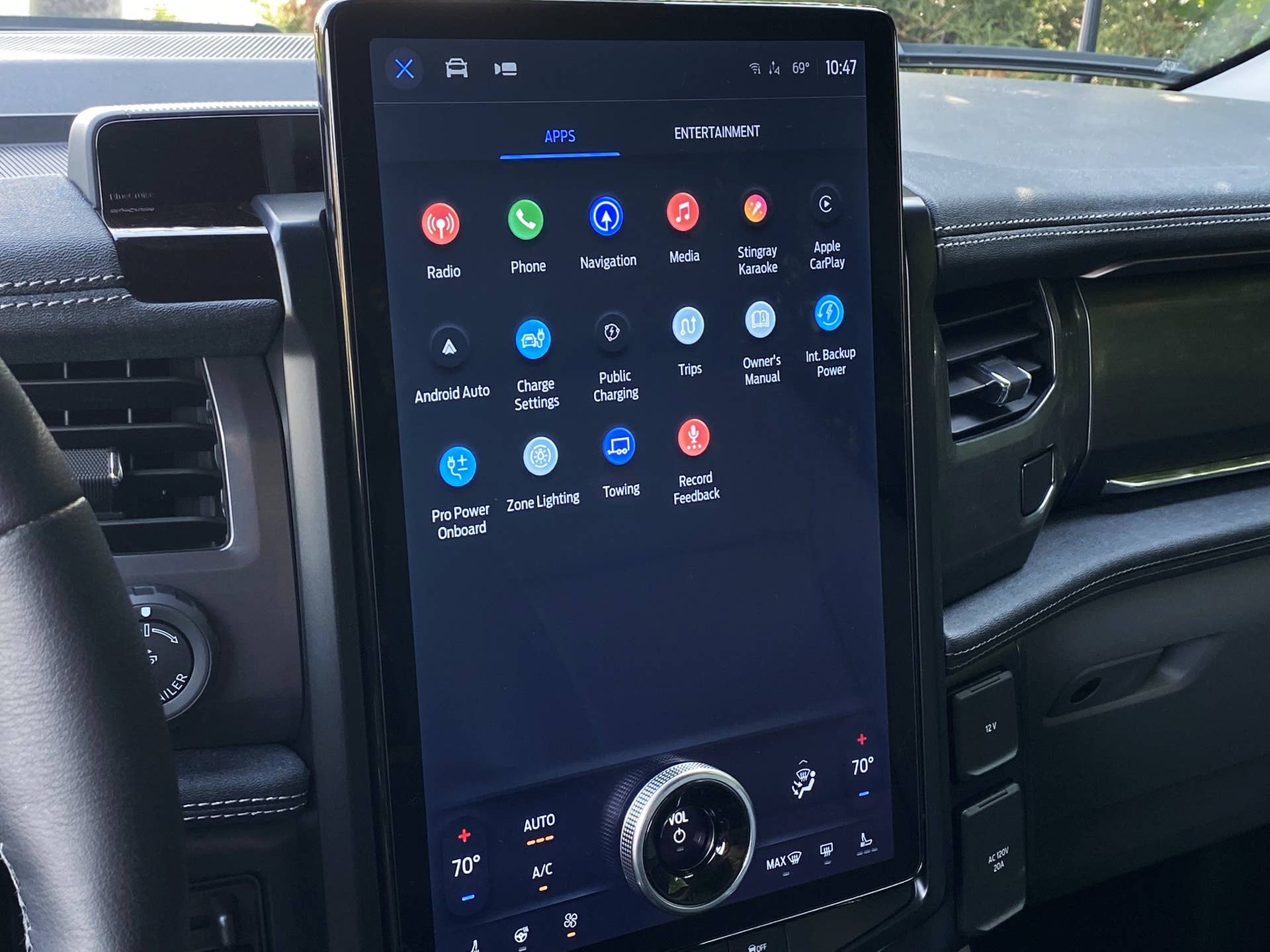
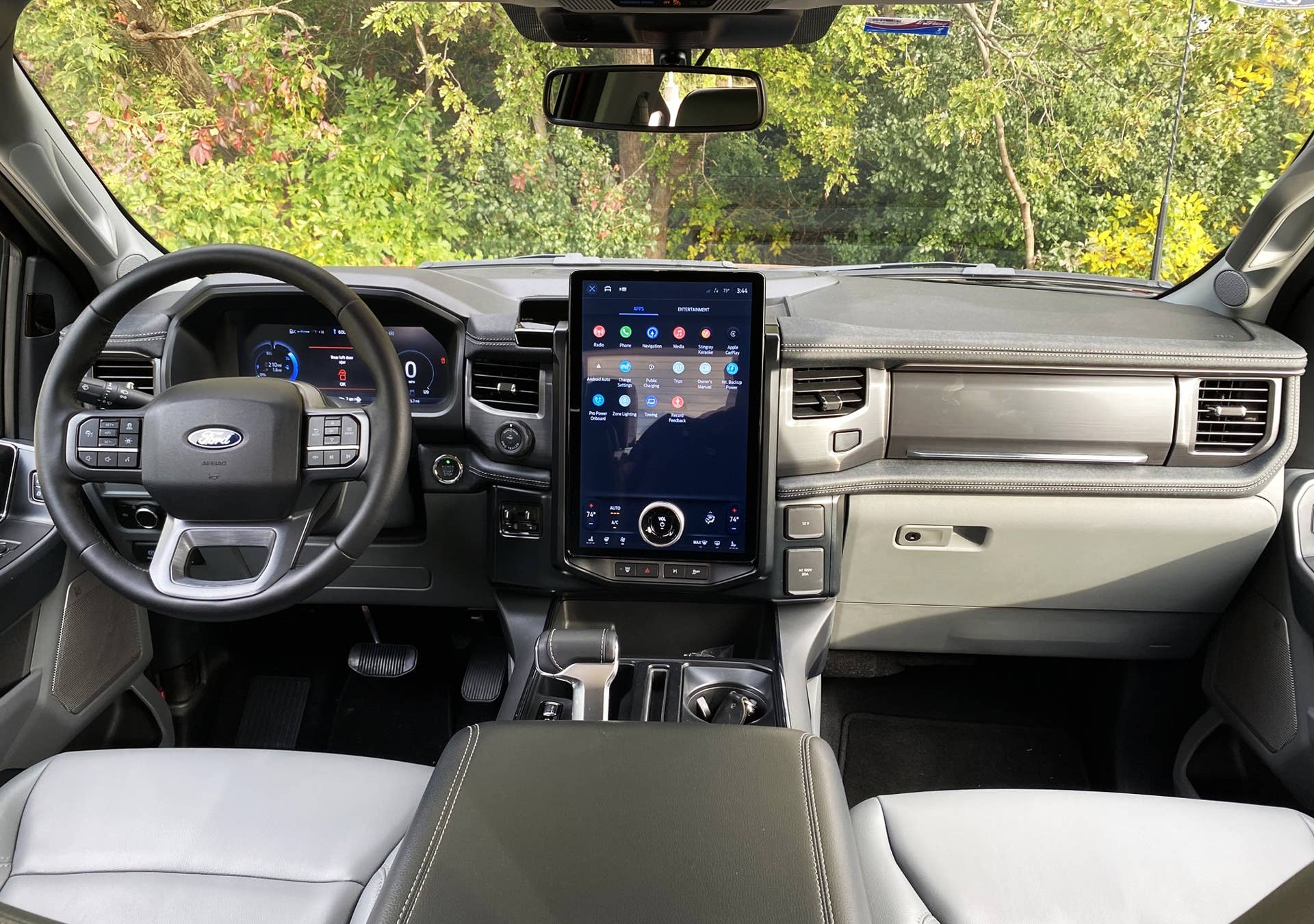
The Lightning’s cabin is huge, vivid, and tech-forward, sometimes excessively so. Dominating the dash is a 15.5-inch portrait-oriented touchscreen. It’s bright, responsive, and occasionally frustrating. Climate controls buried in menus are less than ideal, though the big physical volume knob is a welcome nod to usability. The menu buttons on the SYNC 4A system and Apple CarPlay are too small for a screen this large, especially considering all of the real estate here. Maybe it’s just my aging eyes.
Amos Kwon
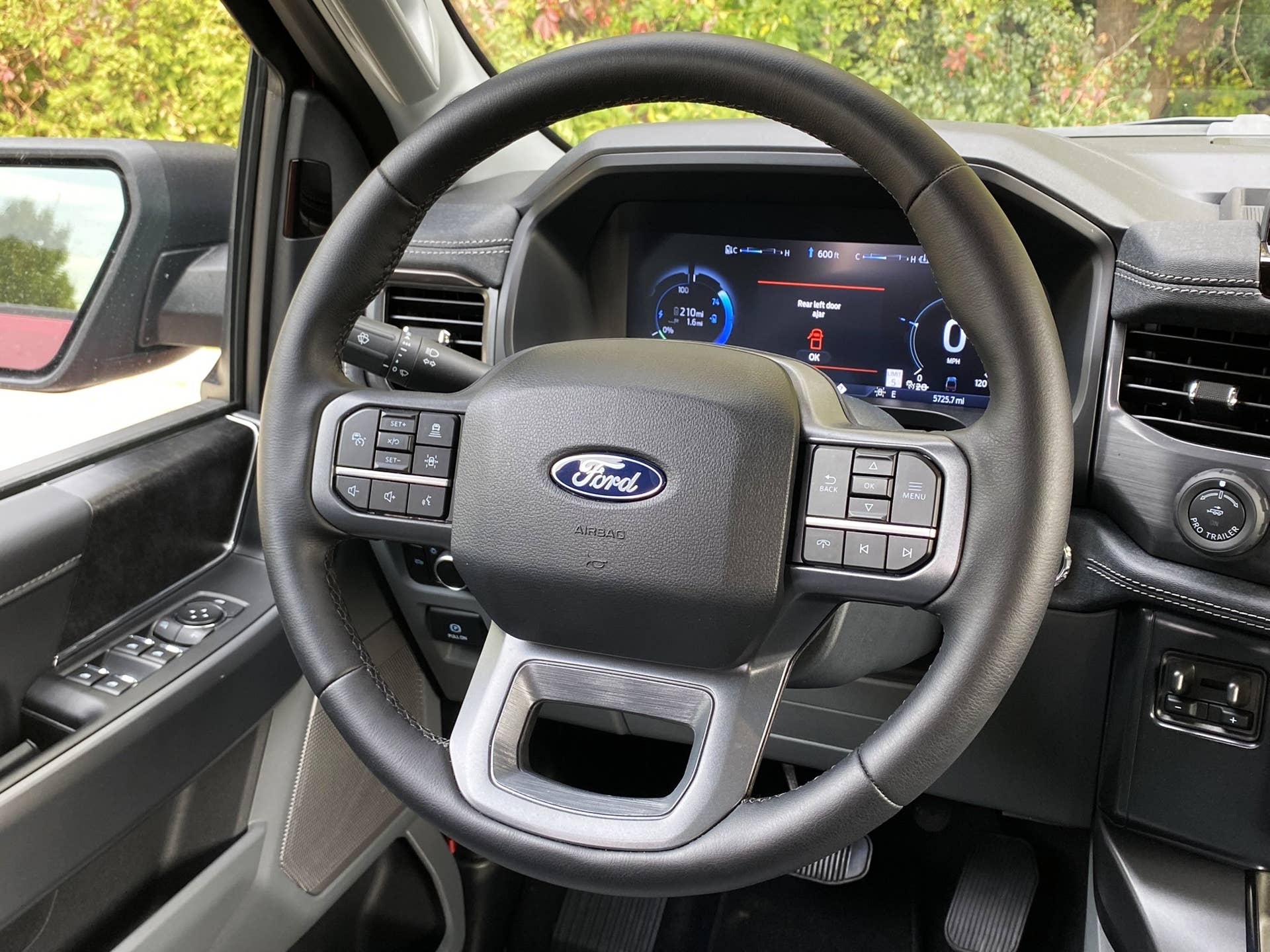
Ford did a great job with the blocky, tactile, and large steering wheel control buttons. It’s also easy to configure the digital instrument cluster to show the data you want. We’re not sure why the Bronco doesn’t have this same setup instead of the stupid bar graph layout. Simulated round analog gauges are the way to go. The Bang & Olufsen eight-speaker audio system sounds fantastic, too, with deep bass and clear highs.
Interior comfort and space
Amos Kwon
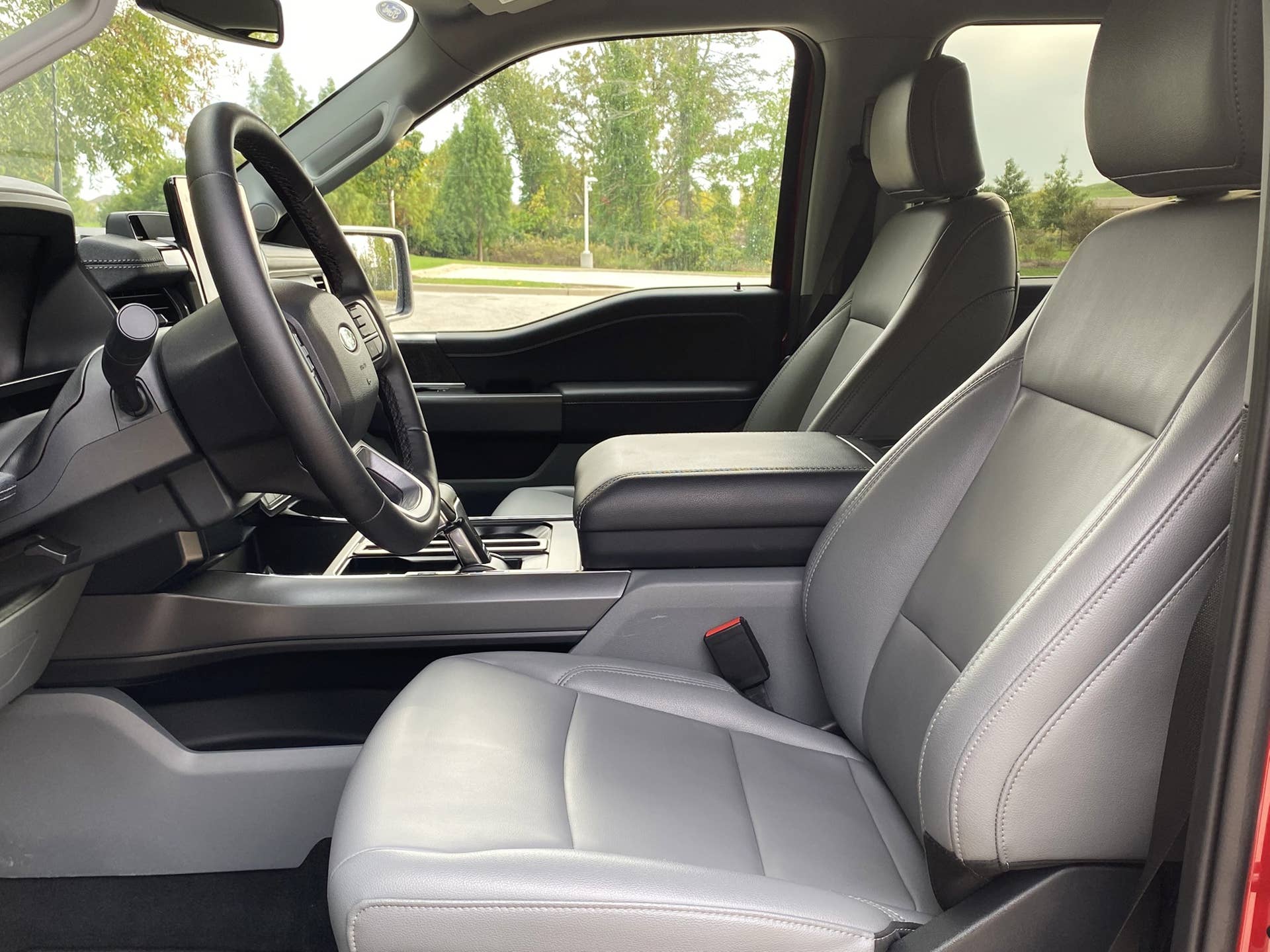
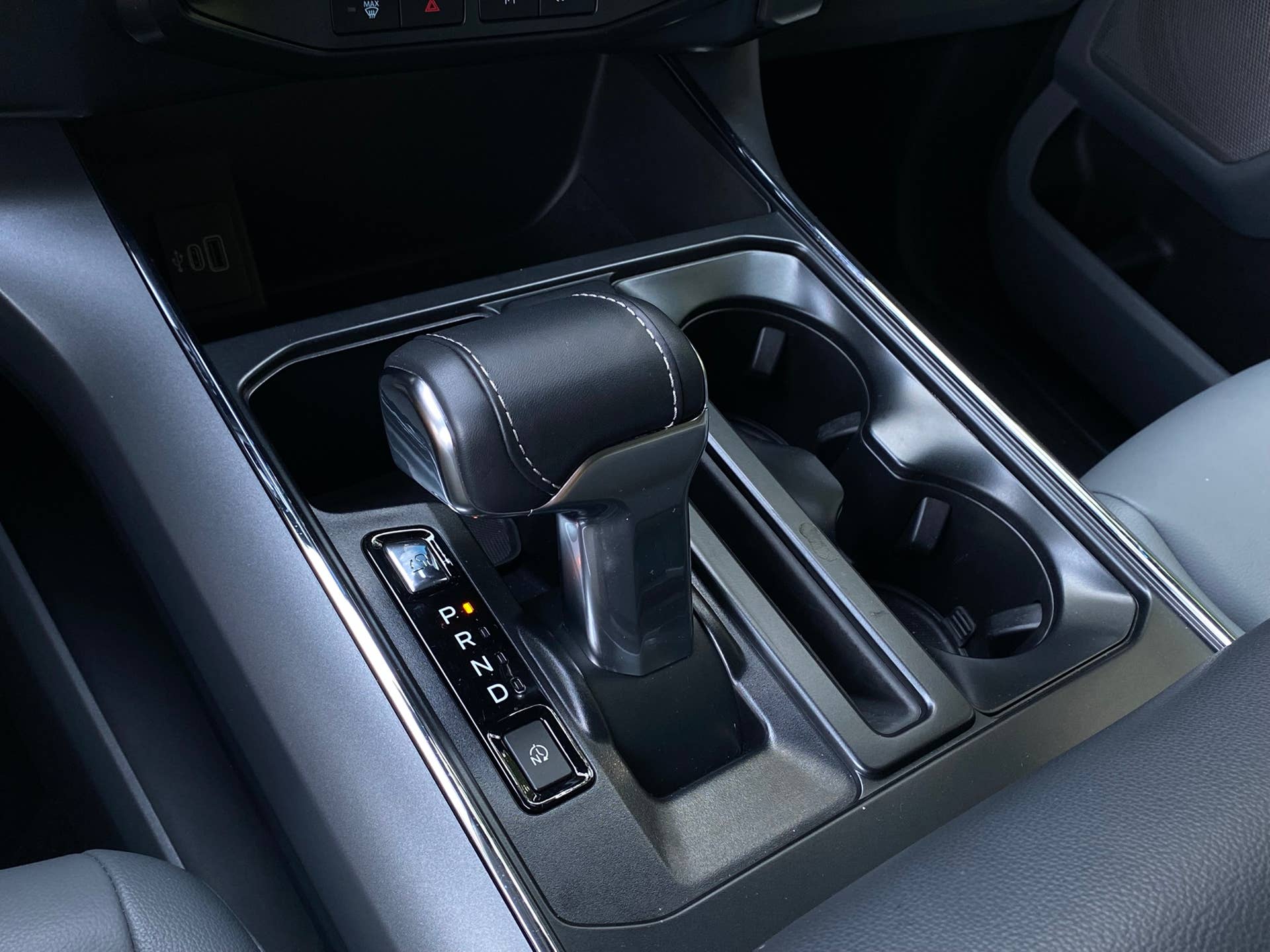
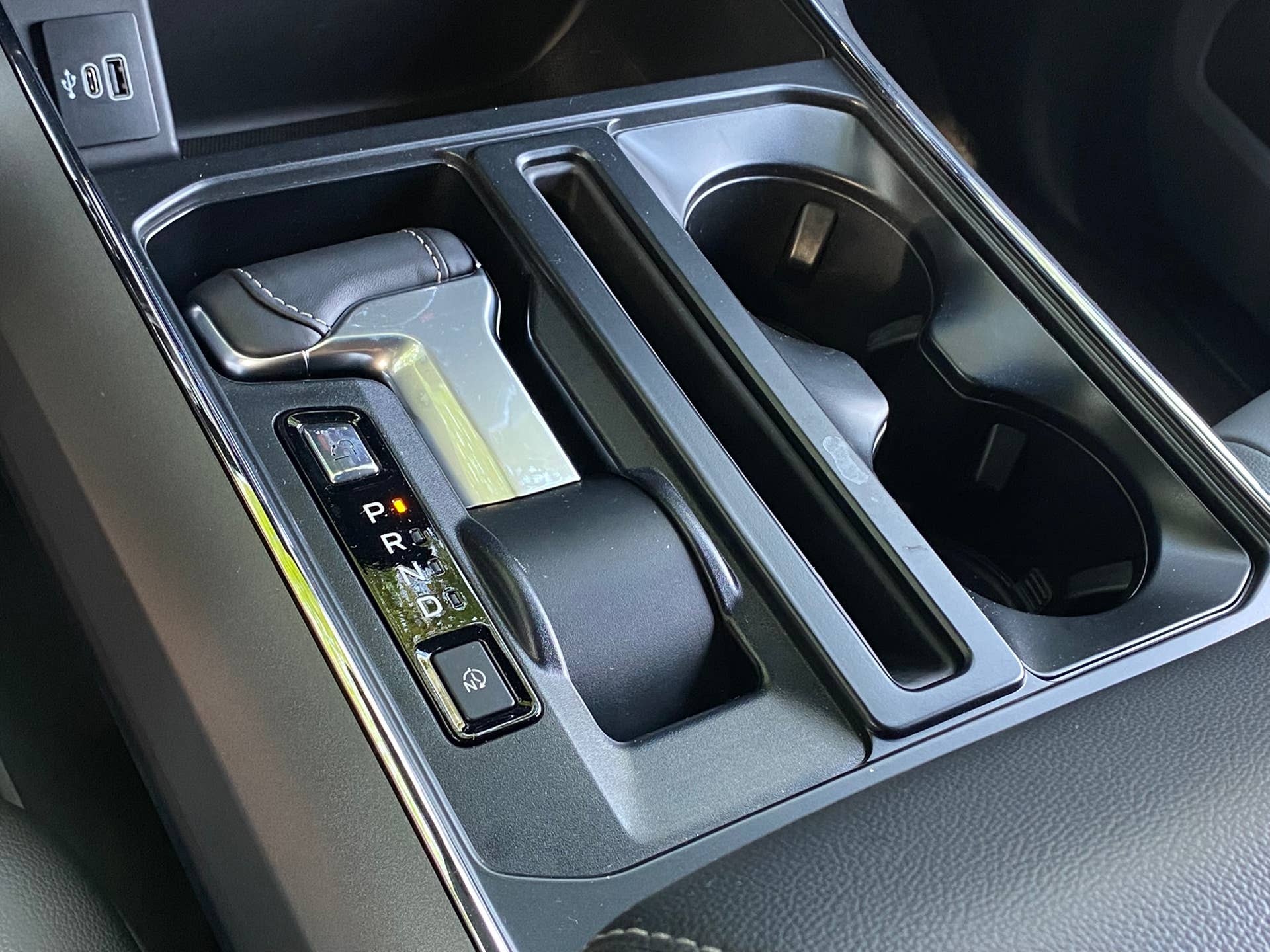
The cabin borrows heavily from the gas-powered F-150, and that’s a good thing. It’s truck-like in the best ways: roomy, functional, and comfortable. The materials are decent, though not quite $80,000-truck nice. There’s still quite a bit of hard plastic on the dash and center console. The layout is intuitive, visibility is solid, and the upright seating position feels commanding. We love the traditional shift knob that easily folds into the center console with the push of a button. It makes room for a folding desktop from the armrest compartment lid, a feature our tester didn’t have.
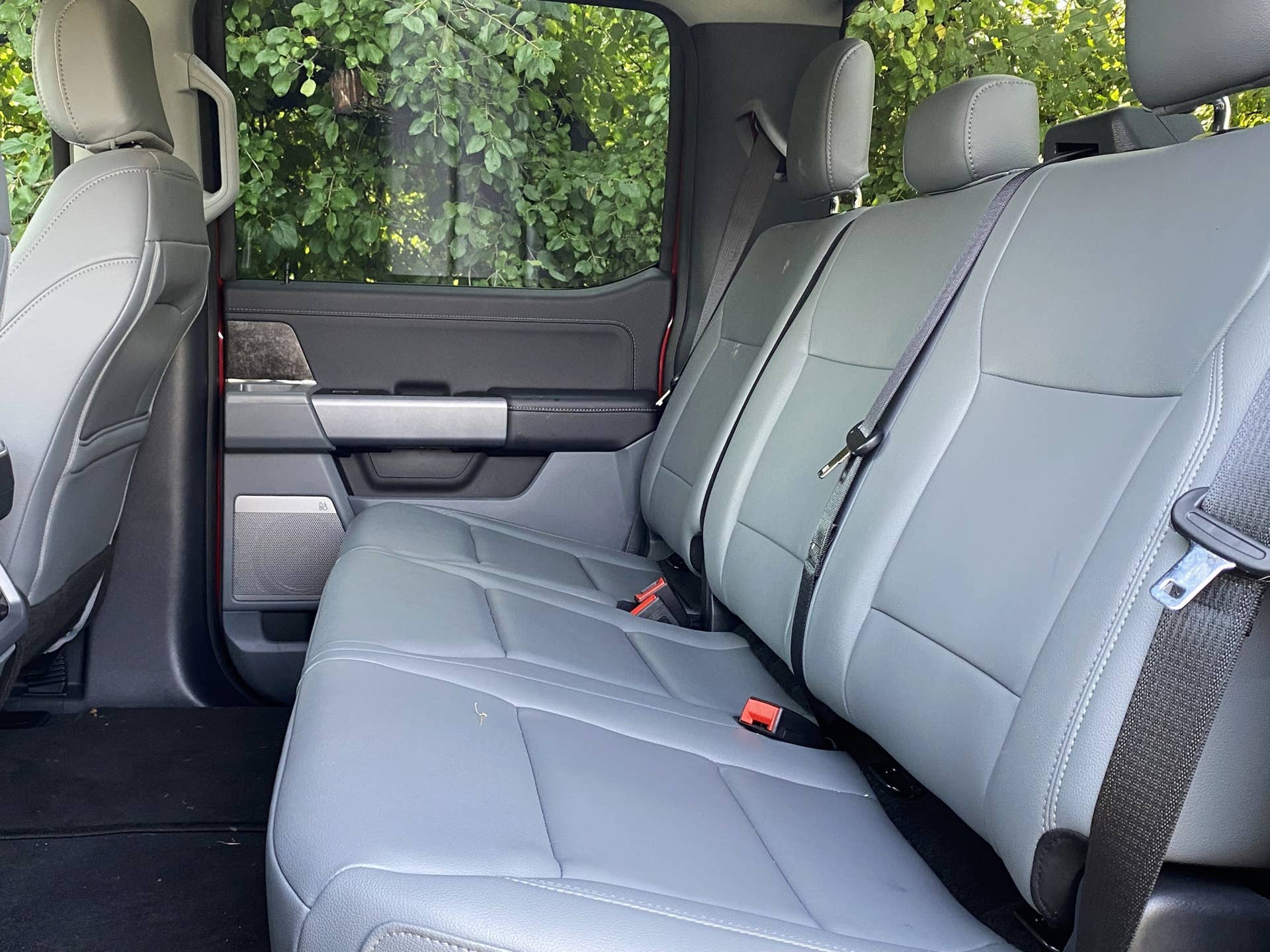
Front seats are large and supportive, with excellent heating and ventilation. The rear bench is enormous, offering 43.6 inches of legroom and a completely flat floor, perfect for adults or cargo. My kids marveled at the size of the second row, accommodating them with their loaded school bags and bags of groceries.
Amos Kwon
Amos Kwon
Amos Kwon
Amos Kwon
Noise levels are impressively low, even on the highway. There’s some mild tire and wind noise, but overall refinement is excellent. The Lightning cruises silently and smoothly, adding to its futuristic feel. It looks like a truck and feels like a truck, but its quiet road manners are up there with premium fare. Driving it on city roads and highways results in the same highly civilized pavement manners. Ford’s achievement here is nothing short of impressive.
Storage and utility
Amos Kwon
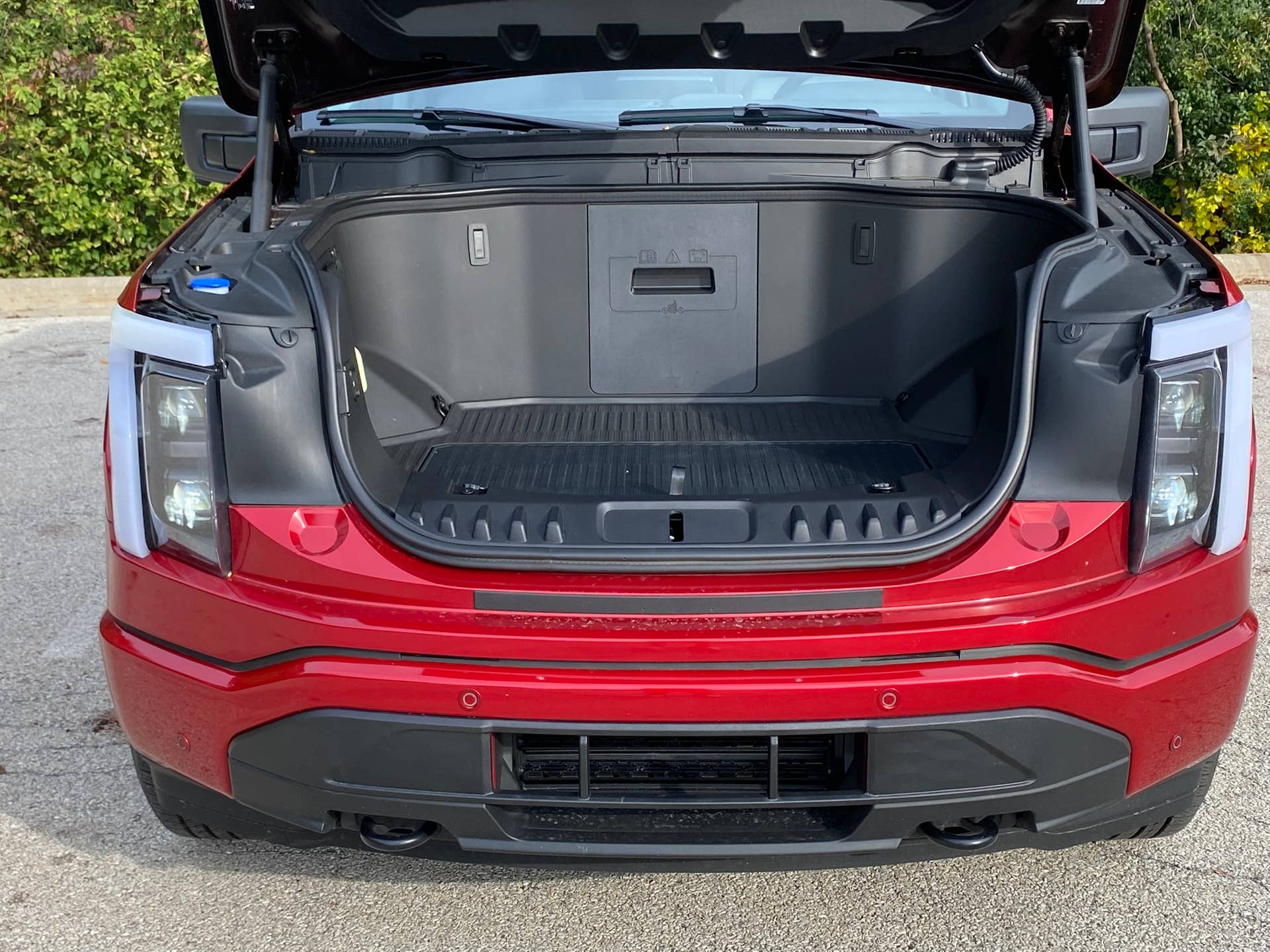
The Lightning’s cabin is loaded with smart storage solutions: large door pockets, a cavernous center armrest, the storage compartment beneath the center console, open center console binnacles, and an open dash shelf. But the real game changer is the huge frunk that boasts 14.1 cubic feet of space, the largest in the industry, and weather-sealed to boot. The power hood is also a major convenience.
Amos Kwon
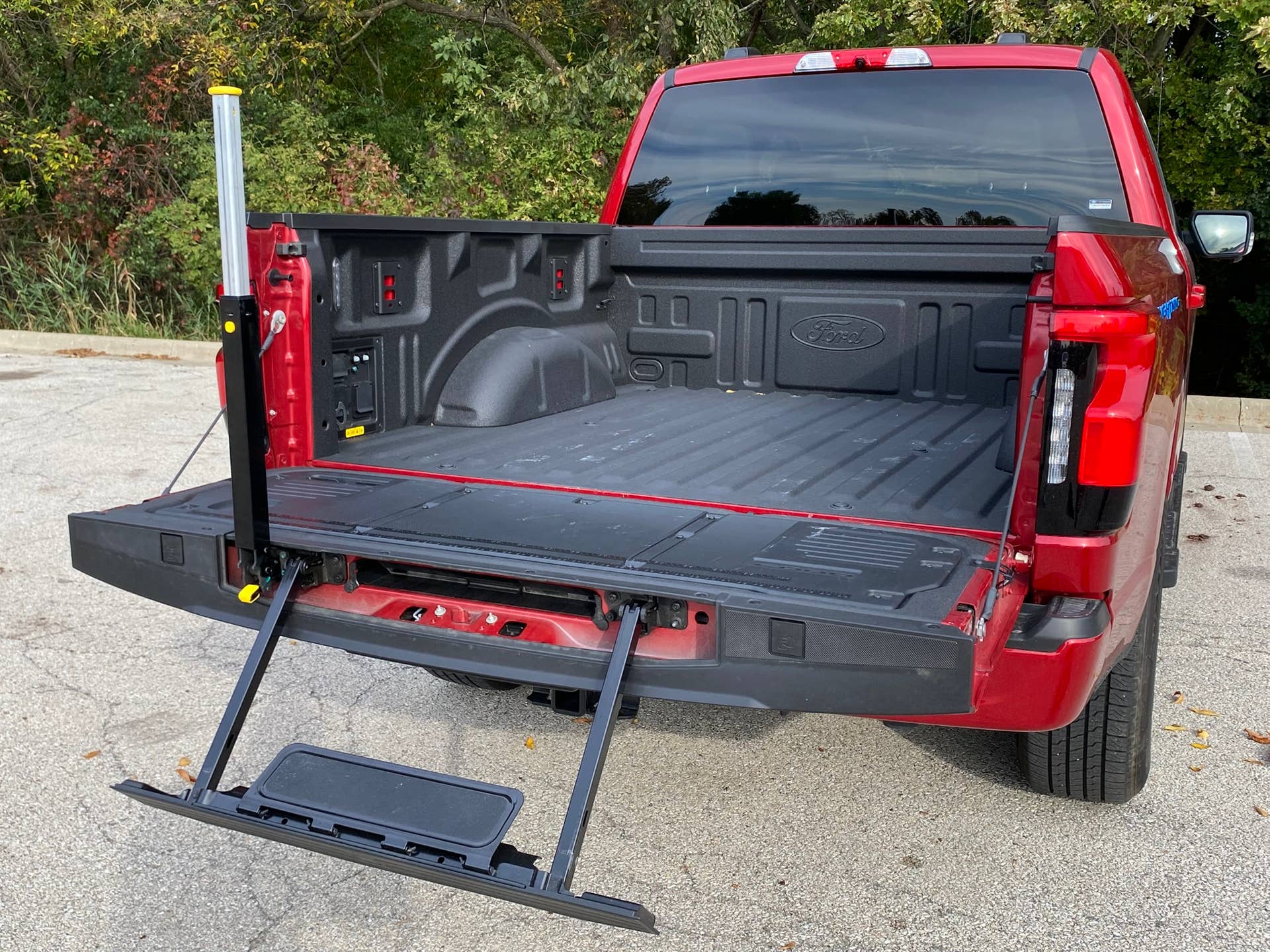
Bed length for every F-150 Lightning model is 5.5 feet because it’s built on the SuperCrew cab configuration. It’s not as big as the longer versions found on the gas F-150, but we had no trouble loading tons of gear in the back. Our tester came optioned with the 9.6-amp Pro Power Onboard, which allows tool, device, and other EV charging via power outlets in the cab, bed, and trunk. For weekend campers or contractors, that’s a serious advantage.
Range and efficiency
Amos Kwon
The 320-mile range on the Extended-Range model is solid for a truck this size. That number can drop quickly during cold weather or heavy acceleration, so the realistic range hovers closer to the high-200s in mixed use. We were able to drive seven days without having to charge, and we drove an average of 30 miles per day. After about 200+ miles, we still had about 80 miles left. That’s pretty good, and we hadn’t been mild on the throttle.
If you’re towing, expect an alarming drop in range. The maximum 10,000-pound towing capacity for the Extended Range variant is impressive, but the number can drop by more than half if you’re pulling close to the limit. You have to plan frequent charging if you’re doing so, which means you’ll probably need to plug in every 100 miles or so.
Final thoughts
The 2025 Ford F-150 Lightning proves that electrification doesn’t have to kill what makes a truck feel like a truck. It’s fast, capacious, and capable, but it’s also expensive, and range will take big hits in cold weather and especially when towing. For families or commuters with home charging, it’s a utilitarian dream. For performance lovers, it’s a hoot to hammer. It’s hard not to be impressed with the Lightning. Just be aware of its limitations, and it’ll feel worth the high price tag.
About the author
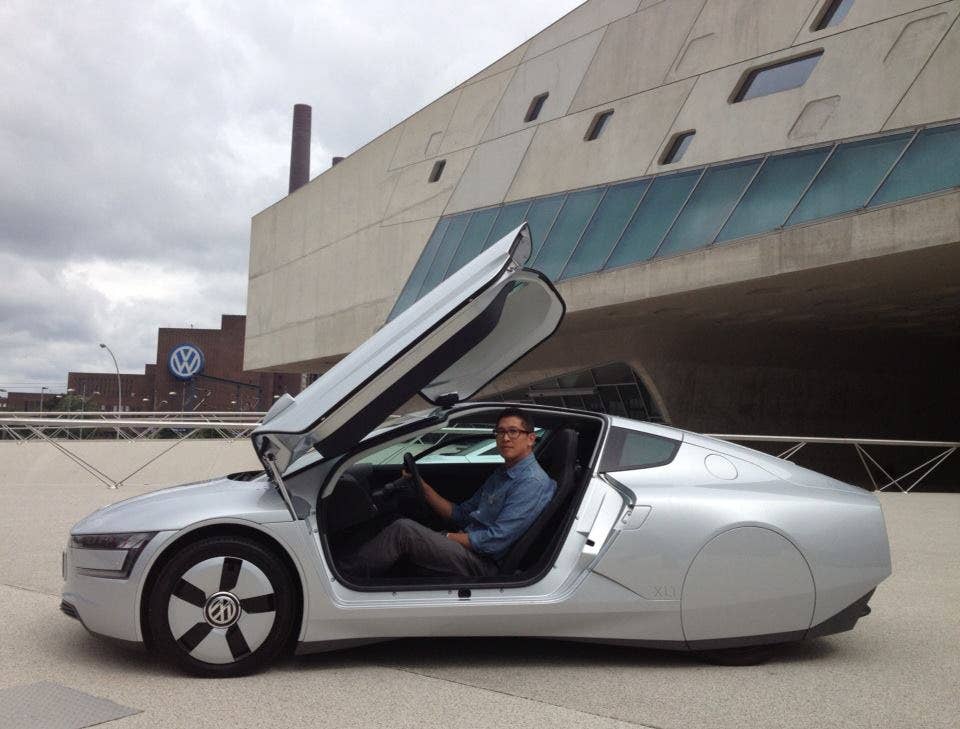
Amos Kwon
Contributing Writer, Autoblog