

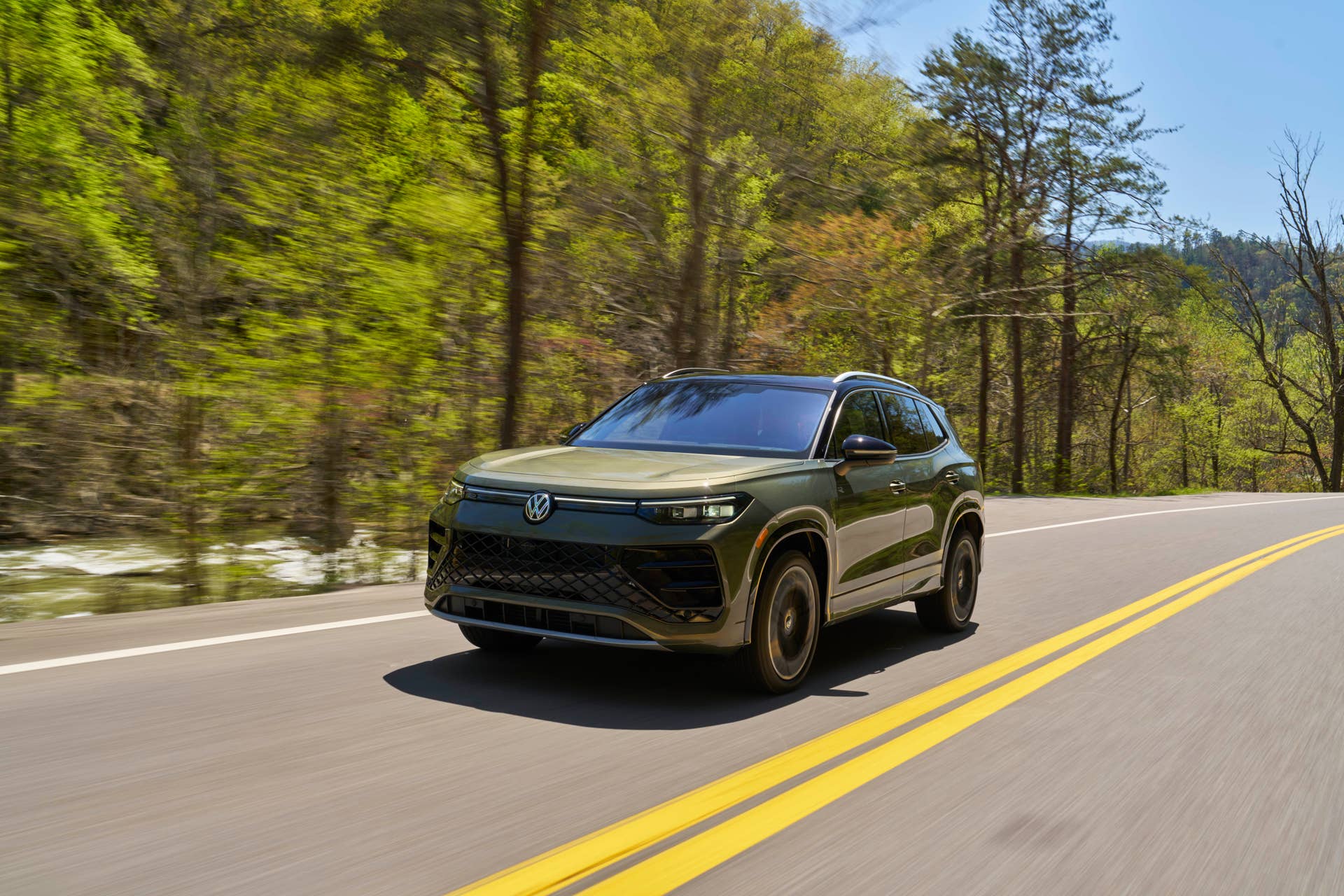
The new kid on VW’s block
Volkswagen redesigned its Tiguan compact crossover for the 2025 model year, giving it a cleaner new look, adding more driver-assist features, and doing away with the largely useless third-row seat. For 2026, VW expands the Tiguan lineup with a new SEL R-Line Turbo 4 Motion model with standard all-wheel drive, a more powerful version of the 2.0-liter turbocharged four-cylinder in other Tiguans, and more equipment.
With its added features, the Tiguan Turbo pushes toward the premium crossover segment as we outlined in our first drive review. Here we describe the reasons to love that move, as well as two reasons to think twice. You can use these insights to help you decide if the Tiguan SEL R-Line Turbo 4 Motion is right for you.
Reason to love it #1: More power

Volkswagen’s familiar EA888 turbocharged 2.0-liter four-cylinder makes 201 horsepower and 207 pound-feet of torque in front-wheel-drive versions of the Tiguan, and the torque increases to 221 lb-ft in every all-wheel-drive version other than the Turbo. The SEL R-Line Turbo 4 Motion increases turbo boost and strengthens the engine internals for an even more impressive 268 hp and 258 lb-ft of torque. It pushes the Tiguan Turbo toward the top of the class for horsepower, though the Mazda CX-5 Turbo has more torque from its turbocharged 2.5-liter four-cylinder.
The new engine unlocks a 0-60 mph time around seven seconds flat, more than a second quicker than other Tiguans. From behind the wheel, the power is more readily available, with stronger starts and better passing punch. That’s always useful.
Reason to love it #2: Roomy cabin
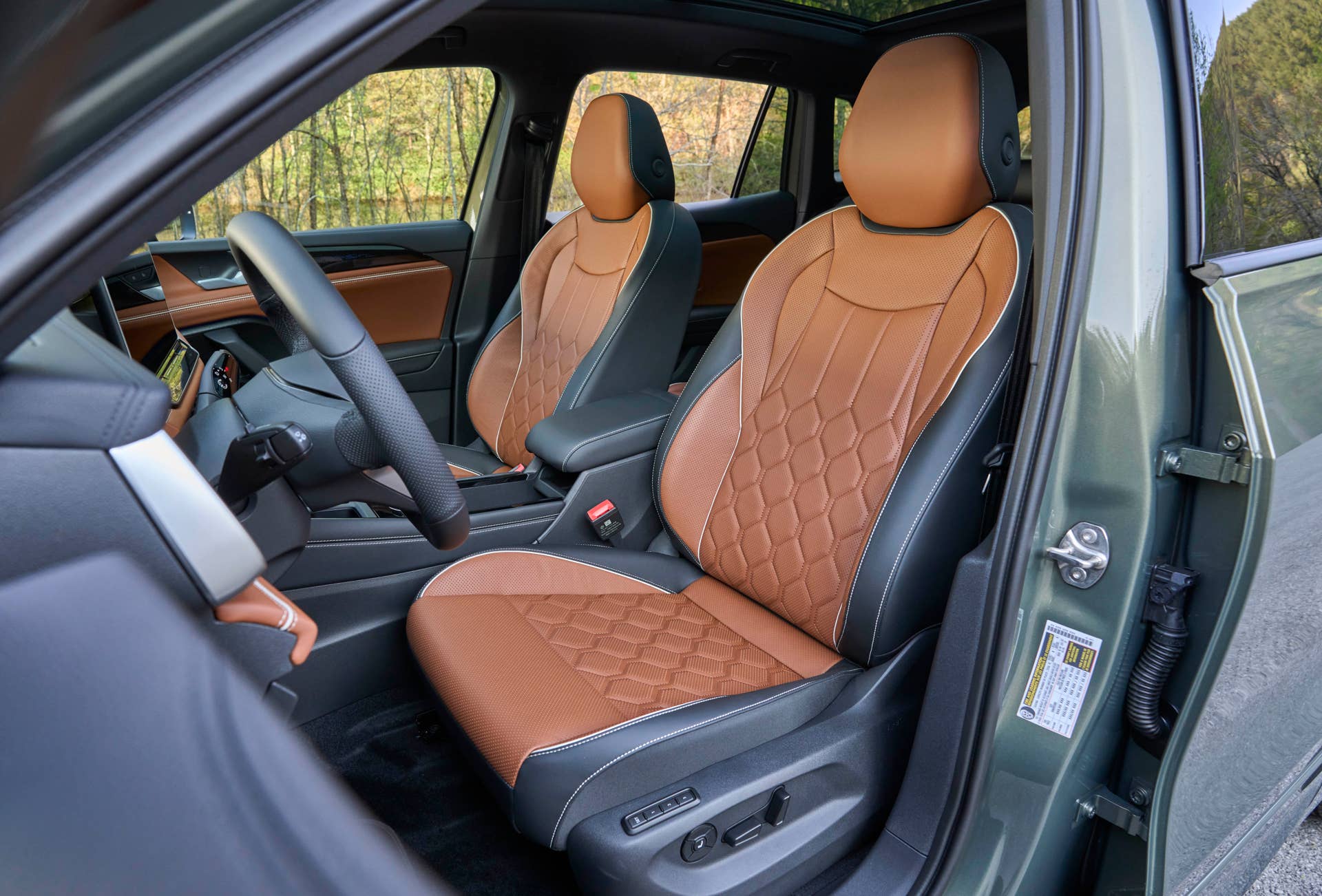
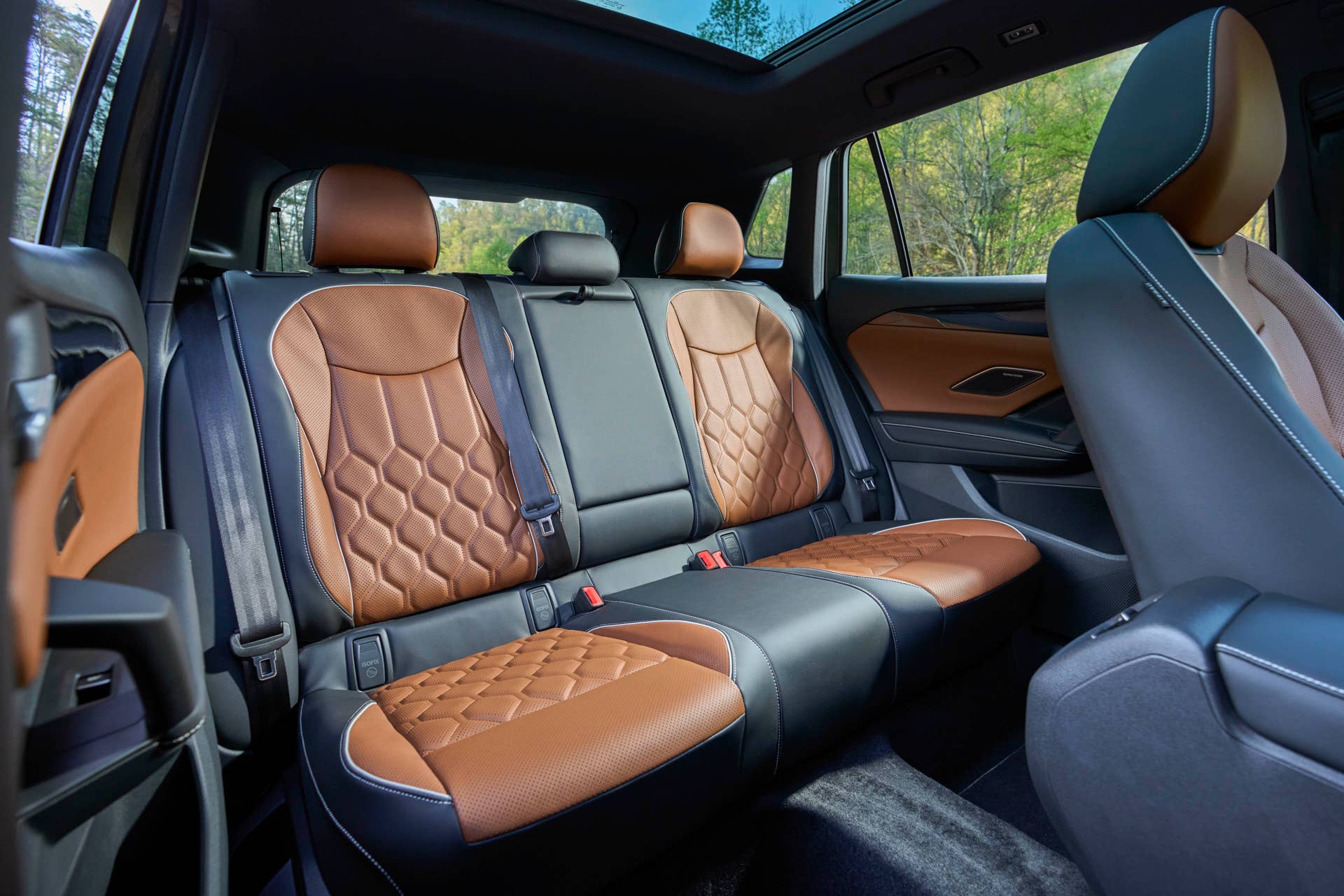
The Tiguan SEL R-Line Turbo 4 Motion gets the same interior space as the rest of the Tiguan lineup, and that means it’s among the roomiest in the compact crossover class. It has eight-way power-adjustable front seats with four-way lumbar adjustments, and the front seat has good head and legroom for even taller drivers. The back seat does, too, with enough room for a six-footer to sit behind a six-footer with room to spare. While the Tiguan seats five, three across in the back will be uncomfortable.
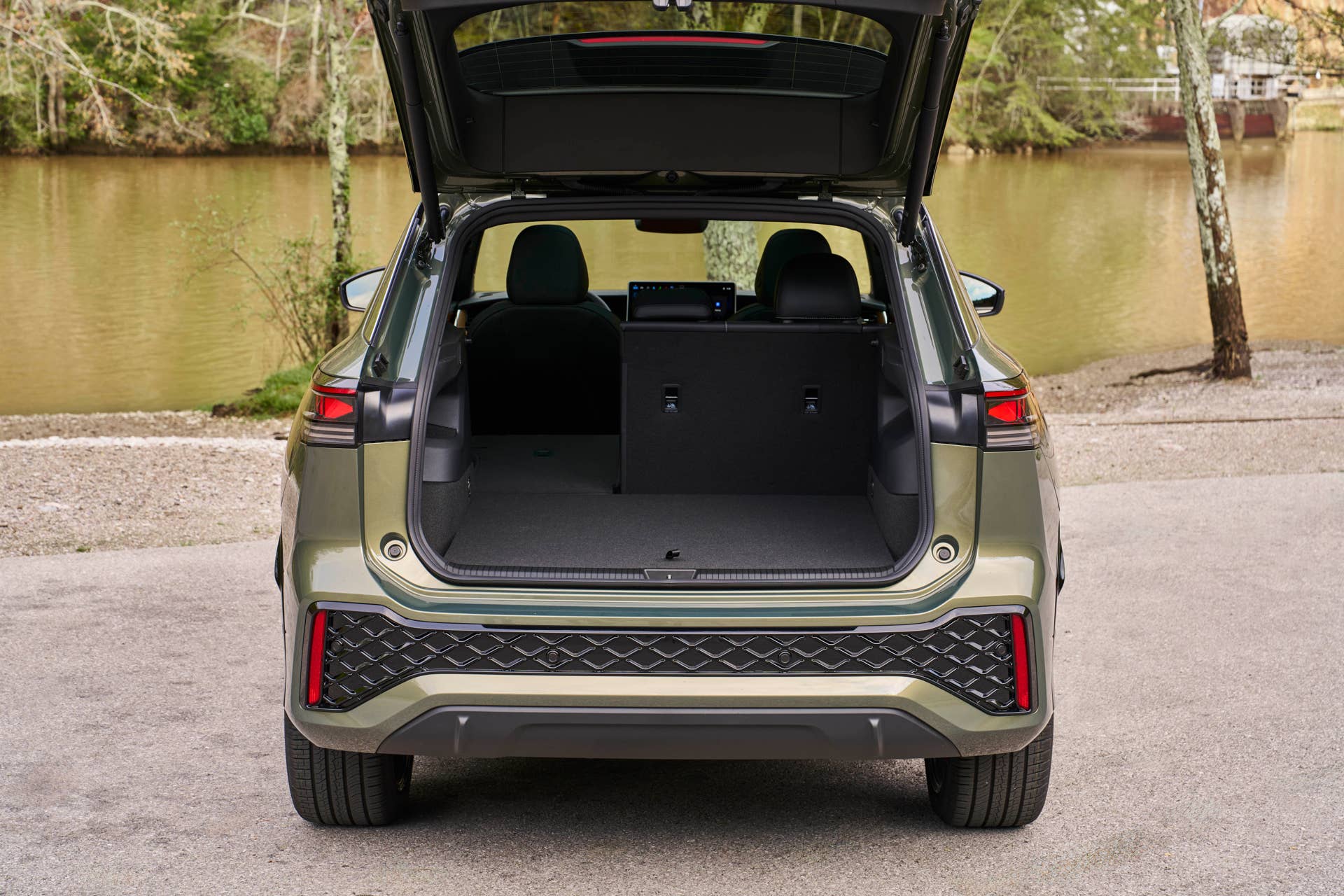
Cargo space is also generous. The Tiguan has 33.8 cubic feet behind the second row that expands to 69.8 cubic feet behind the first row with the rear seats folded flat. That’s almost exactly the same as the outgoing Toyota RAV4 and close to the 39.3 and 76.5 cubic feet of space offered by the Honda CR-V, a vehicle notorious for its smart use of space.
Reason to love it #3: Good tech
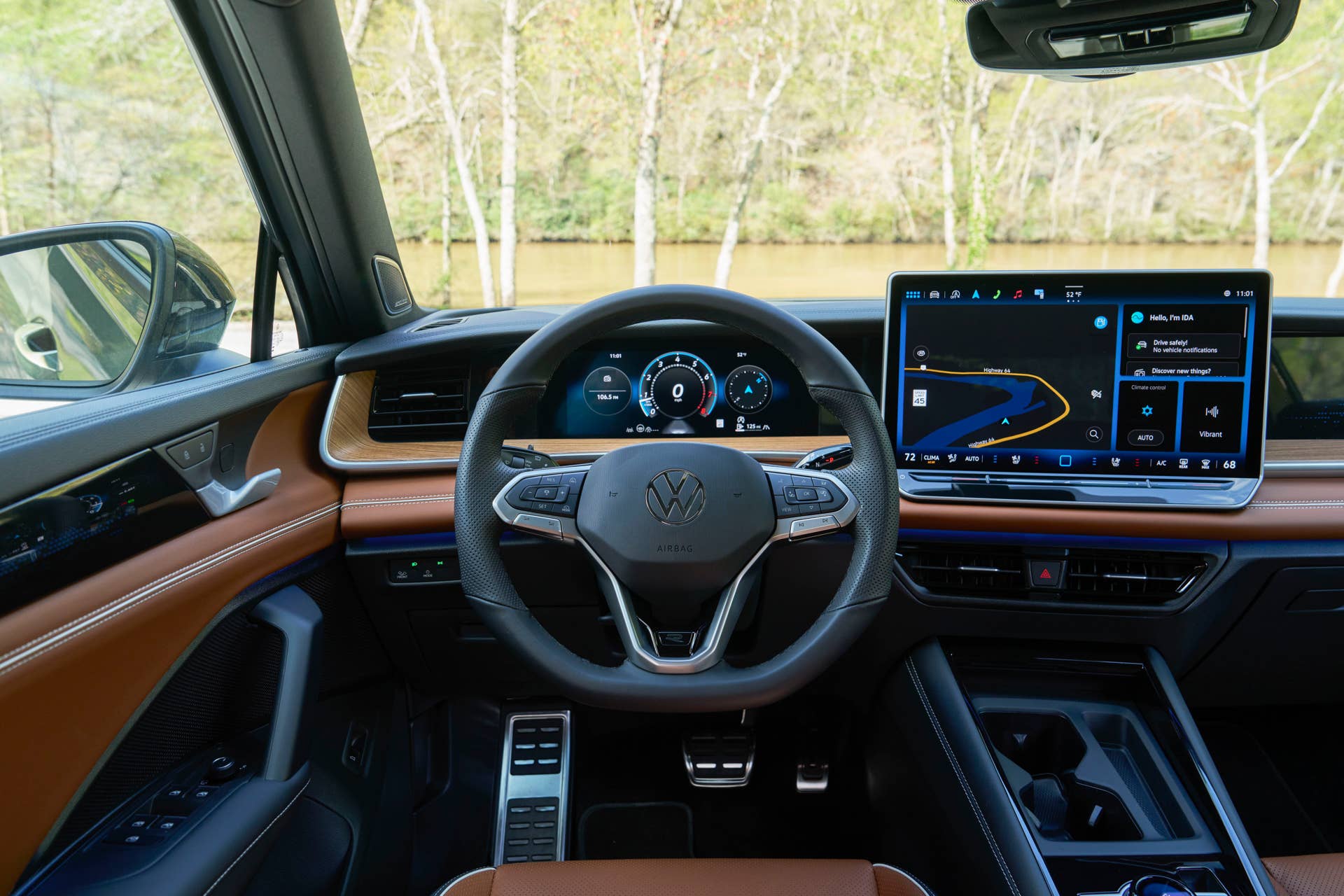
Base versions of the Tiguan have an already-large 12.9-inch infotainment touchscreen, and the Tiguan SEL R-Line Turbo 4 Motion ups that to a 15.0-inch touchscreen. The infotainment system also comes with Plus Speech with AI, a generative AI-enabled feature in the myVW mobile app that uses voice control to act as an onboard assistant. It’s free for a year and requires a subscription after that. The big screen is easy to see and reach, and its size makes the icons large enough to hit easily. It comes with wireless Apple CarPlay and Android Auto, and it works quickly without lag.
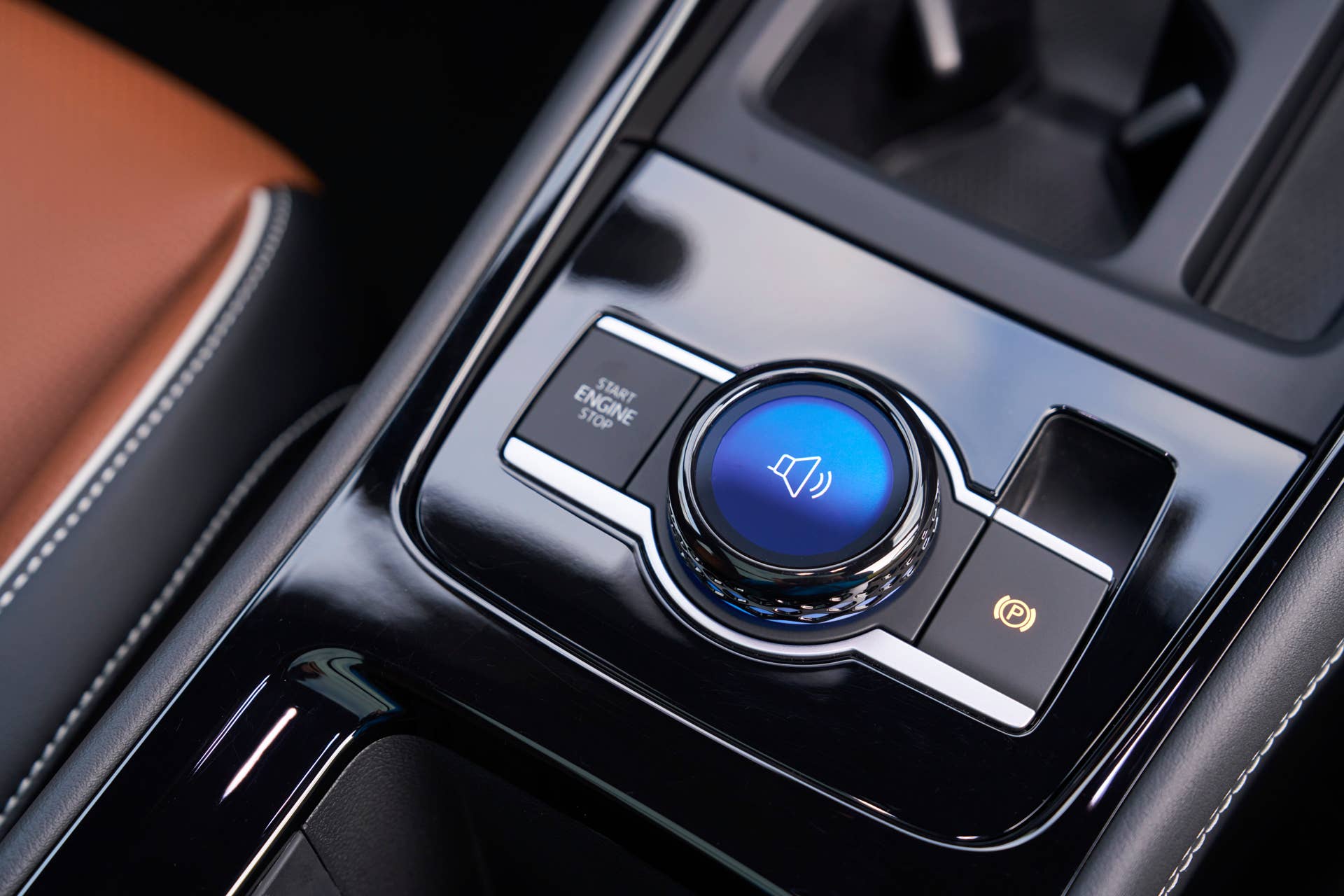
Also standard is the Digital Cockpit Pro, VW’s name for its 10.25-inch digital instrument cluster, which can be customized with the information the driver wants most. How it looks is also subject to the Atmospheres feature controlled through a dial on the center console. The Tiguan Turbo offers 30 colors of ambient lighting, with the color around the car and in the instrument cluster changing based on the Atmospheres theme. Atmospheres also adjusts audio and equalizer presets to best fit the overall mood. It’s a way to tailor the interior aesthetics to the driver’s liking, though without the relaxing effect of more involved systems like Mercedes’ Energizing Comfort.
Reason to love it #4: Lots of driver-assist features
Safety is an important purchase consideration for many buyers, and the Tiguan SEL R-Line Turbo delivers. It adds a few key features versus other Tiguans, including a surround-view camera system, traffic sign recognition, and automatic parking. That’s in addition to the healthy set of driver-assist features that other Tiguans get, which includes automatic emergency braking with pedestrian detection, adaptive cruise control with stop and go, lane-keep assist, blind-spot monitors with steering assist, rear cross-traffic alerts, an exit warning system, front and rear parking sensors, and automatic high beams.
Travel Assist is another standard safety and convenience feature, combining the adaptive cruise control and lane-keep assist functions to control speed, steering, braking, and distance from the vehicle ahead above 20 mph. The system requires the driver to keep their hands on the wheel, and it can even perform lane changes after the driver signals for them.
Reason to think twice #1: Could use even more power
As good as the Tiguan Turbo’s power is, it could be better. It doesn’t feel as strong as the better turbocharged 2.0-liter four-cylinder engines from luxury brands such as BMW and Mercedes, and it’s not as quick as the turbocharged 2.5-liter four from Mazda. That engine motivated the CX-5 Turbo from 0-60 mph in 6.2 seconds in Car and Driver testing, thanks to its 320 pound-feet versus 258 lb-ft for the VW. More torque equals more immediate grunt, and the Tiguan Turbo is missing that.

Reason to think twice #2: Pricey
The Tiguan SEL R-Line Turbo 4 Motion starts at $44,560. That’s $4,340 more than the next closest model, the Tiguan SE R-Line Black, when equipped with all-wheel drive. The extra money buys extra power, plus equipment I’ve already mentioned, including the driver-assist features, 30-color ambient lighting, larger infotainment screen, and lumbar adjustments. It also brings luxury features like leather upholstery, front seat back massagers, a sound-insulating windshield, three-zone automatic climate control, a padded and double-stitched center console, American walnut dash trim, front seat memory, heated outboard rear seats, and a Harman Kardon 12-speaker audio system with 700 watts of power. On top of that, it gets larger rear brakes, illuminated front and rear light bars, and paddle shifters. That all adds up to a luxury feel and a model that nudges into premium pricing.
For instance, the Acura RDX starts at $45,450, the Volvo XC60 starts at $50,995, and the Lincoln Corsair starts even lower at $41,230. The Tiguan Turbo has the power and equipment to take them on, but all of these vehicles have more cachet, and their dealer experience should be more personal.
Final thoughts
Overall, VW imbued the 2026 Tiguan SEL R-Line Turbo 4 Motion with enough power to be fun, looks that impress, and plenty of tech to fit a car of this era. However, its comparatively lacking torque figures and high price tag put it at a disadvantage against more affordable competitors that offer similar features. That’s not to say it doesn’t have its merits, but perhaps test drive its rivals as well before opting for the Tiguan.