
Key Points
- Honda Prelude vs. 2026 Mazda MX-5 RF Comparison
- Prelude excels in practicality, efficiency, and daily commuting; MX-5 shines in driving engagement.
- Honda offers tech-rich, comfortable hybrid coupe; Mazda delivers pure enthusiast-focused rear-drive manual.
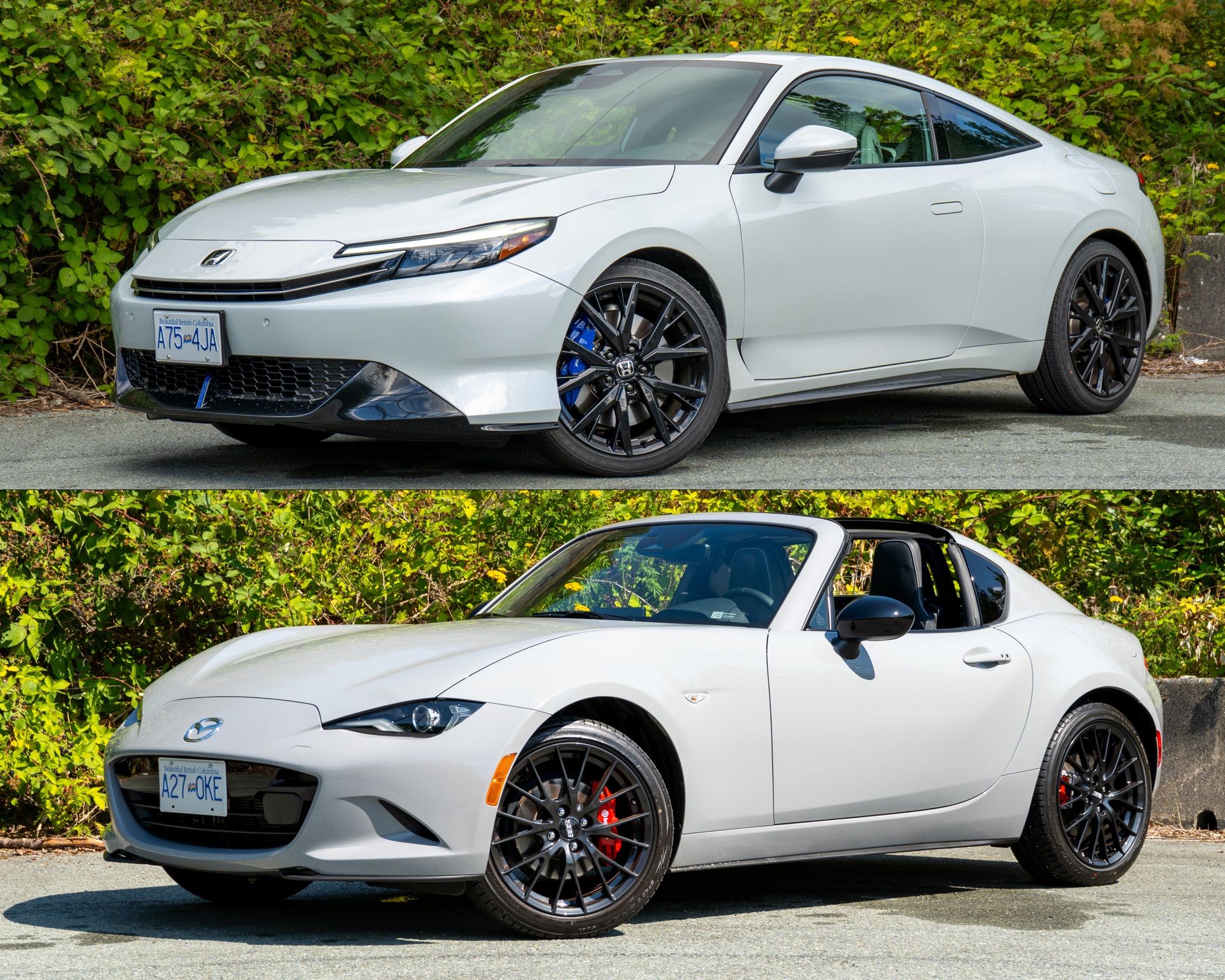
The 2026 Honda Prelude and 2026 Mazda MX-5 RF are both small Japanese sports cars in the same way a smartwatch and a mechanical chronograph both tell the time. One is clever, efficient, convenient, and built with modern life in mind. The other exists because gears, elaborate roof mechanisms, clutch pedals, and balanced weight distributions are things worth remembering.
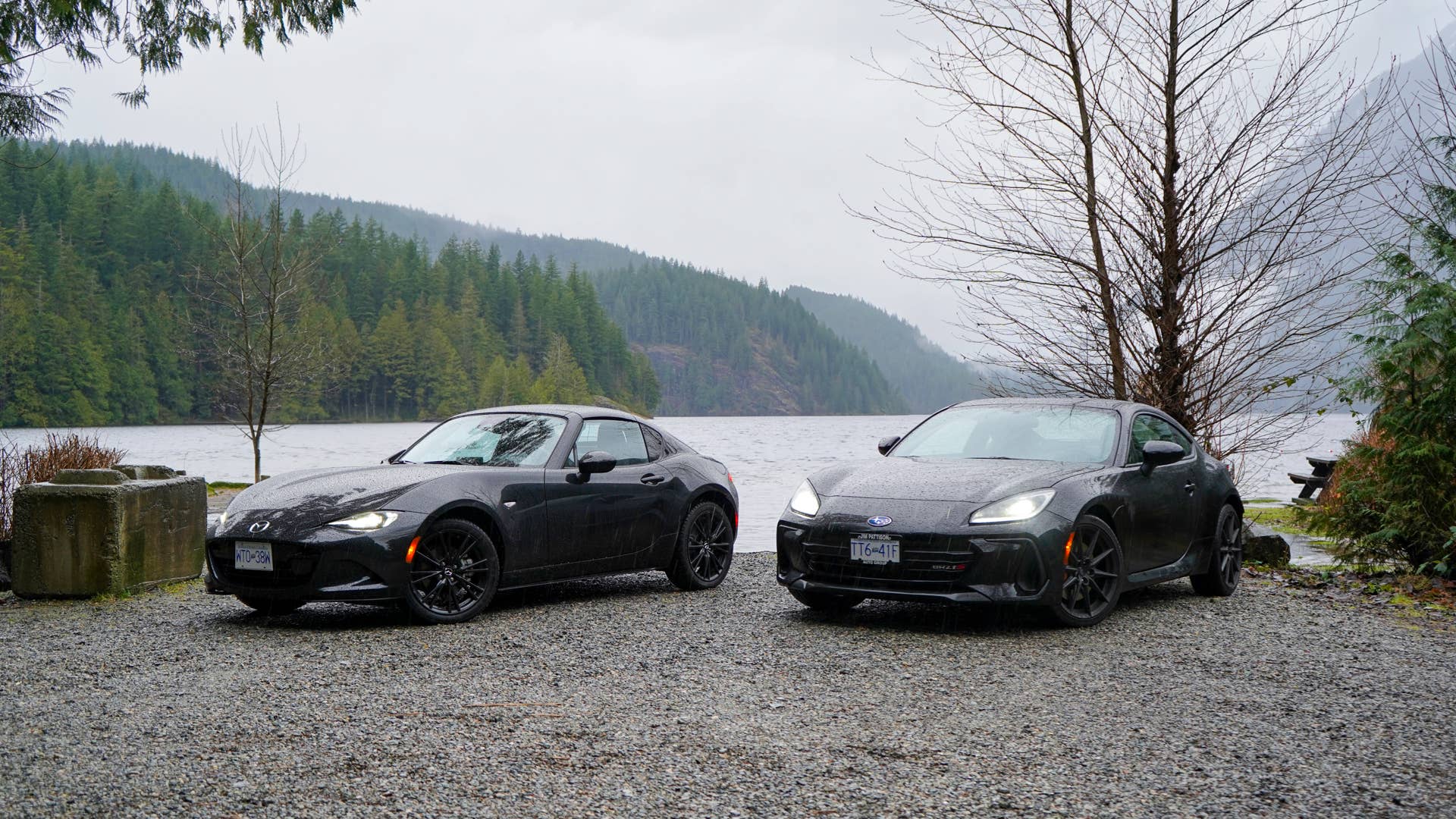
That isn’t to say the Prelude and MX-5 are obviously rivals. In many ways, they aren’t. The Honda is a front-wheel-drive, four-seat hybrid coupe with simulated gear shifts, 200 horsepower, and enough efficiency and daily functionality to make commutes feel almost painless. The Mazda is a two-seat, rear-wheel-drive roadster with a naturally aspirated engine, a six-speed manual transmission, and a retractable roof that still feels like a party trick every time it folds itself away. But in 2026, where compact coupes feel like rare contraband, they both seem as though they attempt to answer the awkward question: what should a small sports car be now?
Honda’s answer is efficiency, usability, and technology wrapped in a dramatic two-door shape. Mazda’s answer is the same as it has always been: make it light, make it manual, make it talk to its driver. I drove around Vancouver, B.C., for a week each, and on the same winding Sea-to-Sky Highway along British Columbia’s Pacific Coast. The Honda was better in traffic, better on fuel, better for cargo, and easier to live with. The Mazda, on the other hand, was better at almost everything that makes a person wake up early on a Sunday simply because the road will have less traffic.
Cole Attisha
Specs And Pricing
| Category | 2026 Honda Prelude Hybrid | 2026 Mazda MX-5 Miata RF Club |
|---|---|---|
| U.S. starting MSRP | $42,000 | $41,900 |
| U.S. price incl. destination | $43,195 | $43,135 |
| Canadian price | $52,987 CAD incl. delivery/fees | $47,100 CAD MSRP for RF GS-P Sport Package; $49,495 CAD incl. Aero Grey and freight/PDE |
| Engine | 2.0L Atkinson-cycle I4 hybrid | 2.0L Skyactiv-G I4 |
| Total output | 200 hp / 232 lb-ft | 181 hp / 151 lb-ft |
| Drivetrain | Front-wheel drive | Rear-wheel drive |
| Transmission | Direct-drive hybrid system with Honda S+ Shift | 6-speed manual |
| Fuel economy | 46 / 41 / 44 mpg city/highway/combined | 26 / 34 / 29 mpg city/highway/combined |
| Curb weight | 3,261 lb / 1,479 kg | 2,467 lb / 1,119 kg |
| Seating | 4 | 2 |
| Cargo volume | 15.1 cu-ft / 427 L | 4.48 cu-ft / 127 L |
| As-reviewed score | 7.8/10 | 9.6/10 |
Thinking about selling your car? Get an instant cash offer online now. Click here to get started.
Cole Attisha
The Prelude Wins The Weekday. The MX-5 Wins The Weekend.
The Prelude’s best argument comes in the least romantic environment possible: traffic. In the city, where every other lane seems to contain either a landscaping truck, a distracted rideshare driver, or a cyclist dressed for the Tour de France, the Honda is excellent. Its hybrid system is quiet and smooth, making driving easy and painless. The only downside was its poor outward visibility—shoulder checking is a tiresome task in the Prelude. But it runs on regular gas, and averaged 5.5 L/100 km (~43 mpg) in my hands. It does stop-and-go driving better than almost anything else that looks this sporty.
The MX-5 isn’t better at any of that stuff. It’s smaller, louder, less practical, and thirstier. It also has hard-to-see blindspots in RF-top form. It has two seats, a tiny trunk, and a fascinating roof mechanism that adds charm but not cargo space. It doesn’t try to make your commute painless, but the MX-5 was never designed with commuting at the forefront of its mission—which is why we love it as much as we do.
Cole Attisha
Honda S+ Shift Vs. Mazda’s Six-Speed Manual
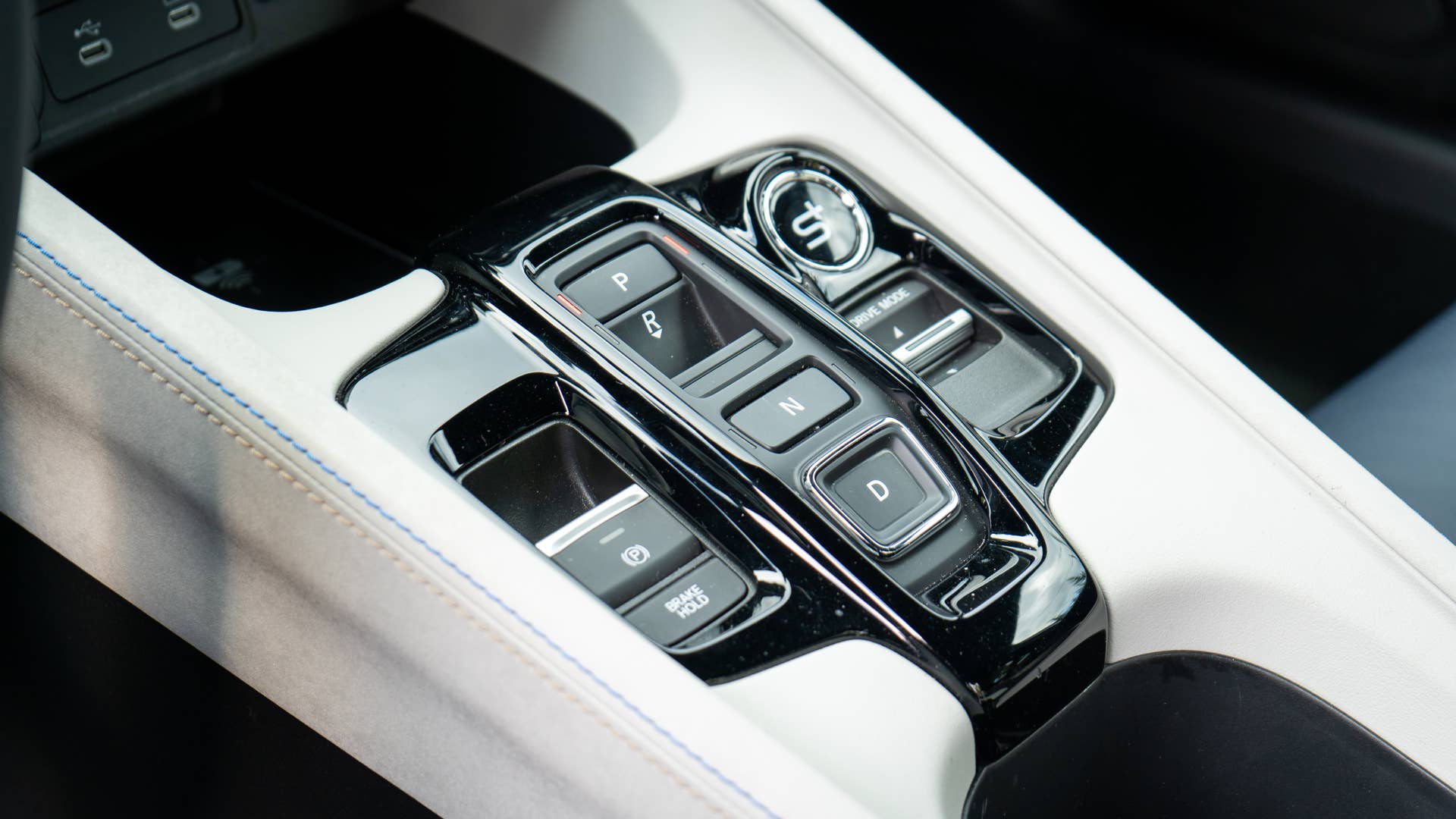
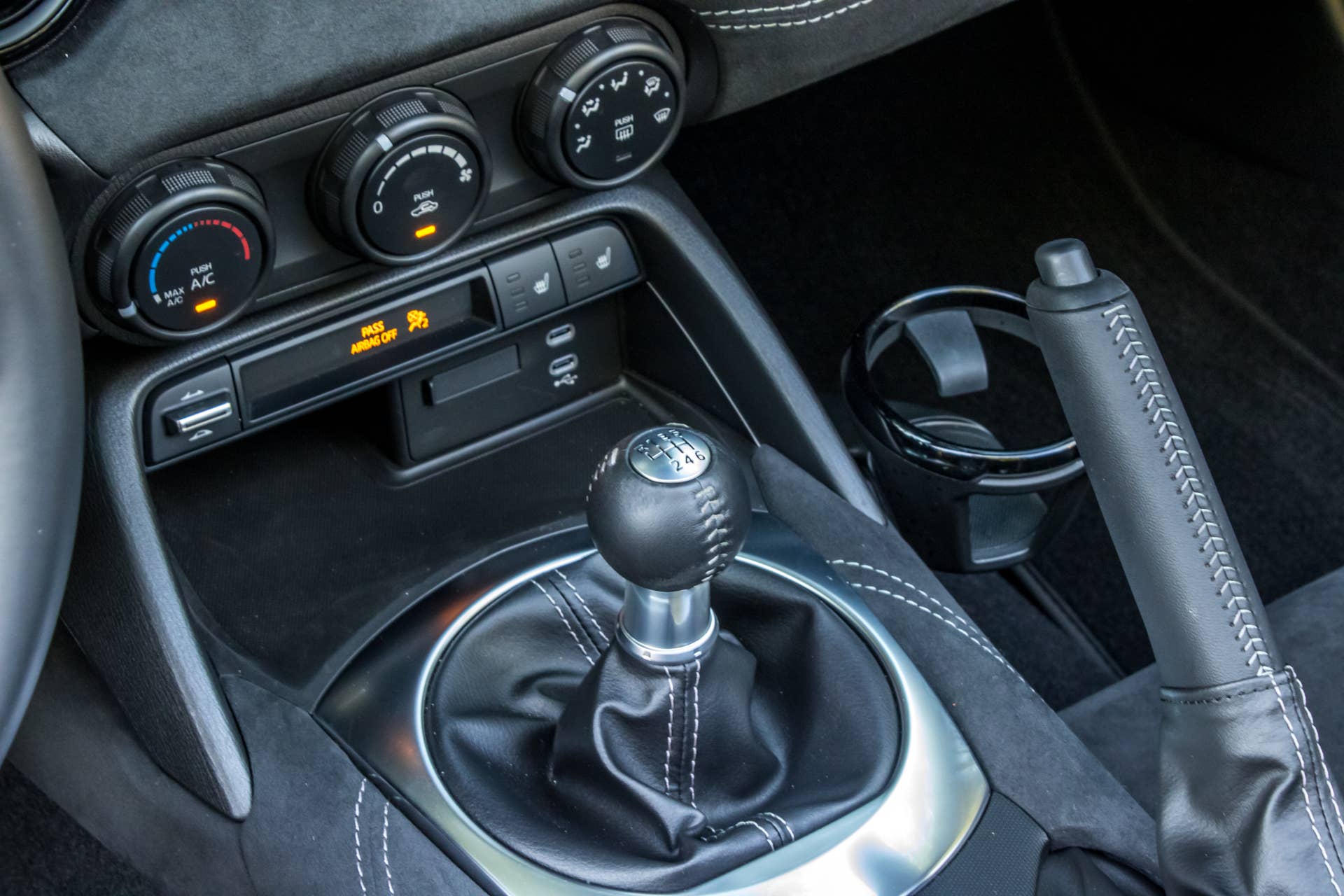
Honda S+ Shift is clever—too clever. The system really does create the sensation of shifting gears, despite the Prelude’s hybrid drivetrain not using a conventional multi-gear transmission, or really any sort of gearbox at all. It gives the car more character than a normal hybrid, and under hard acceleration, it adds enough sound and stepped motion to make the experience feel more mechanical than expected. But truth be told, it’s not much different from using paddle shifters to play with the simulated shift points in a CVT-equipped Subaru, aside from the sharpness of the actual shifts.
Chase Bierenkoven
You can ask for a shift, and the Prelude will briefly indulge you, but then the system takes back control like a parent letting a toddler hold the steering wheel in a parked car. It isn’t entirely useless, but it doesn’t quite count as real involvement either. It’s an impressive simulation of a thing enthusiasts would rather just have. The MX-5 gives enthusiasts just that. In my MX-5 RF review, I called its six-speed one of the most intuitive and engaging manual gearboxes I have ever experienced. The lever, clutch, and gearing all work together so naturally that the car feels like something tapped directly into your nervous system. The Prelude considers driver inputs, but the MX-5 becomes a natural dancing partner.
Shopping for a new car? Click here to get a great deal on your next vehicle. Powered by Carvana, no haggle pricing, 100% online.
Cole Attisha
The Same Road Told Two Different Stories
British Columbia’s Sea-to-Sky Highway is one of the best roads out there for sports-car testing because it has absolutely zero tolerance for excuses. Its meandering high-speed twists along the coast and up into the mountains don’t care about spec sheets, nostalgia, press releases, or whether a car has a famous badge glued to its trunk in cursive. It gives you sweepers, climbs, rough surfaces, breathtaking views of the Pacific, and enough rhythm to reveal whether a car converses with you or simply provides you with on-screen fuel consumption data.
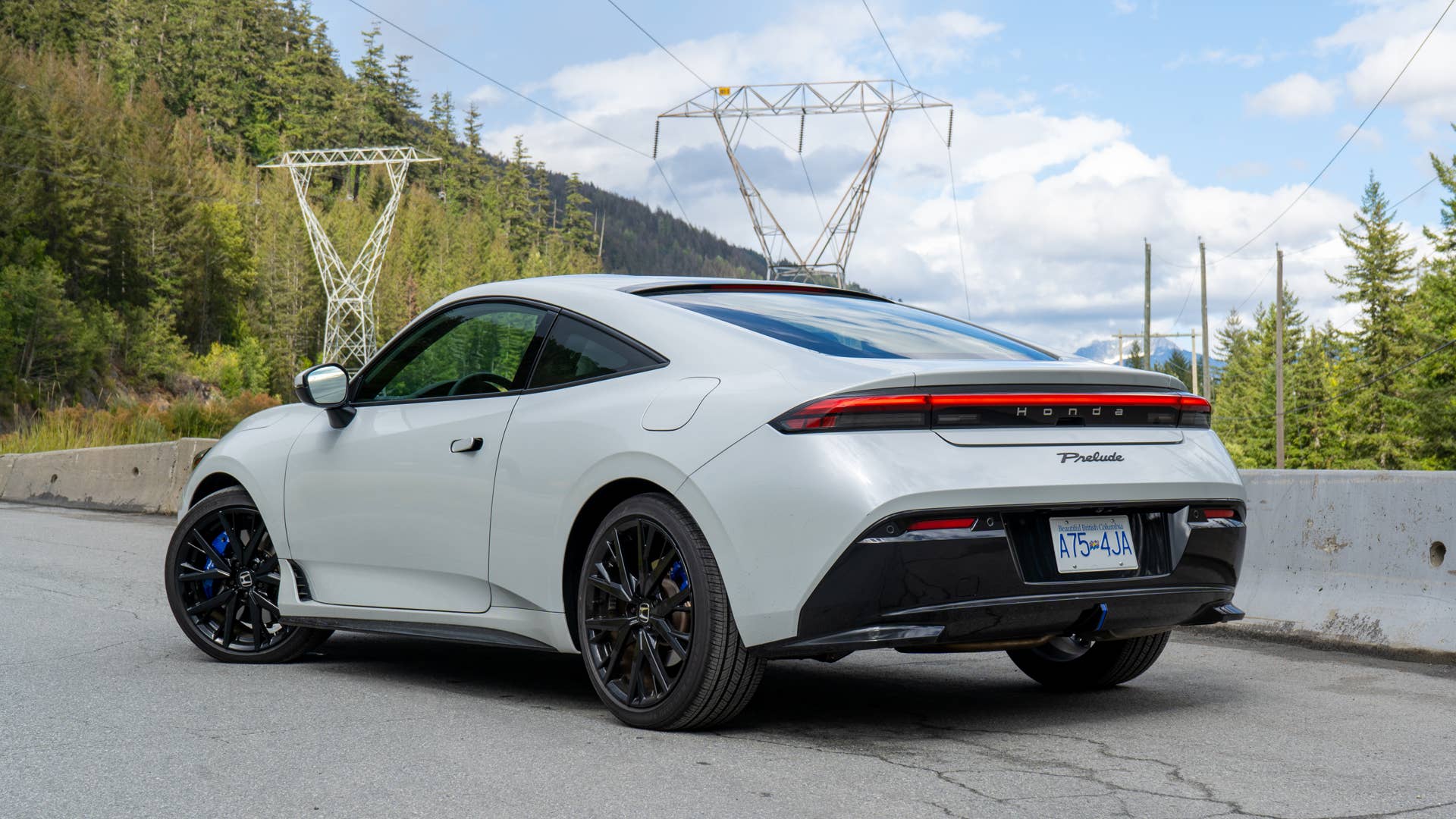
For the Prelude, that road became a problem. On tighter sections, the Honda felt quick enough; it was planted, direct, and tidy, if a bit numb. But on longer, more meandering crests, it felt thoroughly underwhelming. The chassis was competent, but the experience lacked any sort of theatre or visceral engagement. After one proper Sea-to-Sky drive, my urge to keep finding excuses to drive it faded. That never happens in the MX-5.
On the same road, the Mazda turns the scenery into a meaningful part of the driving experience. In my RF review, I wrote that the Miata made the Sea-to-Sky less about itself and more about the turns, surface, and surroundings; with the top down, ocean on one side, and mountains on the other, it felt like playing in a park with a favourite toy. The Prelude drives the road, but the MX-5 makes the road feel like it belongs to you.
Cole Attisha
Handling: Honda Has The Hardware, Mazda Has The Handshake
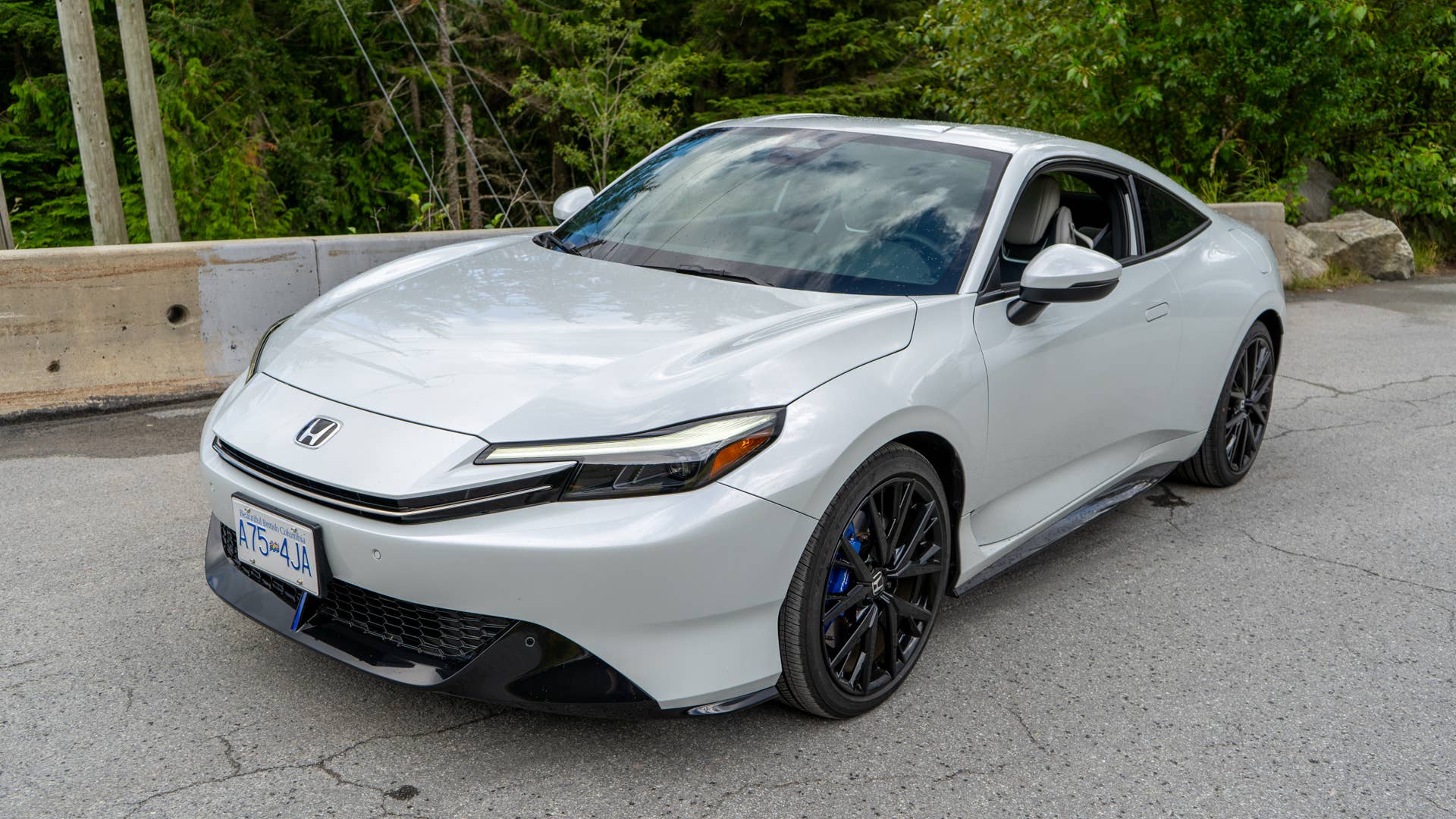
The Prelude’s chassis is one of its greatest attributes. Honda didn’t phone this in—the Prelude gets dual-axis front suspension, adaptive dampers, Brembo front brake callipers, 19-inch wheels, and a properly sorted front-drive setup. It feels planted and secure, and the steering is direct, though a bit numb and too light outside Sport mode. The brakes are strong, and the car doesn’t feel especially heavy, though there is some front-end weight to its character. It’s a good chassis underused by a car that never quite decides how badly it wants to make you smile.
Cole Attisha
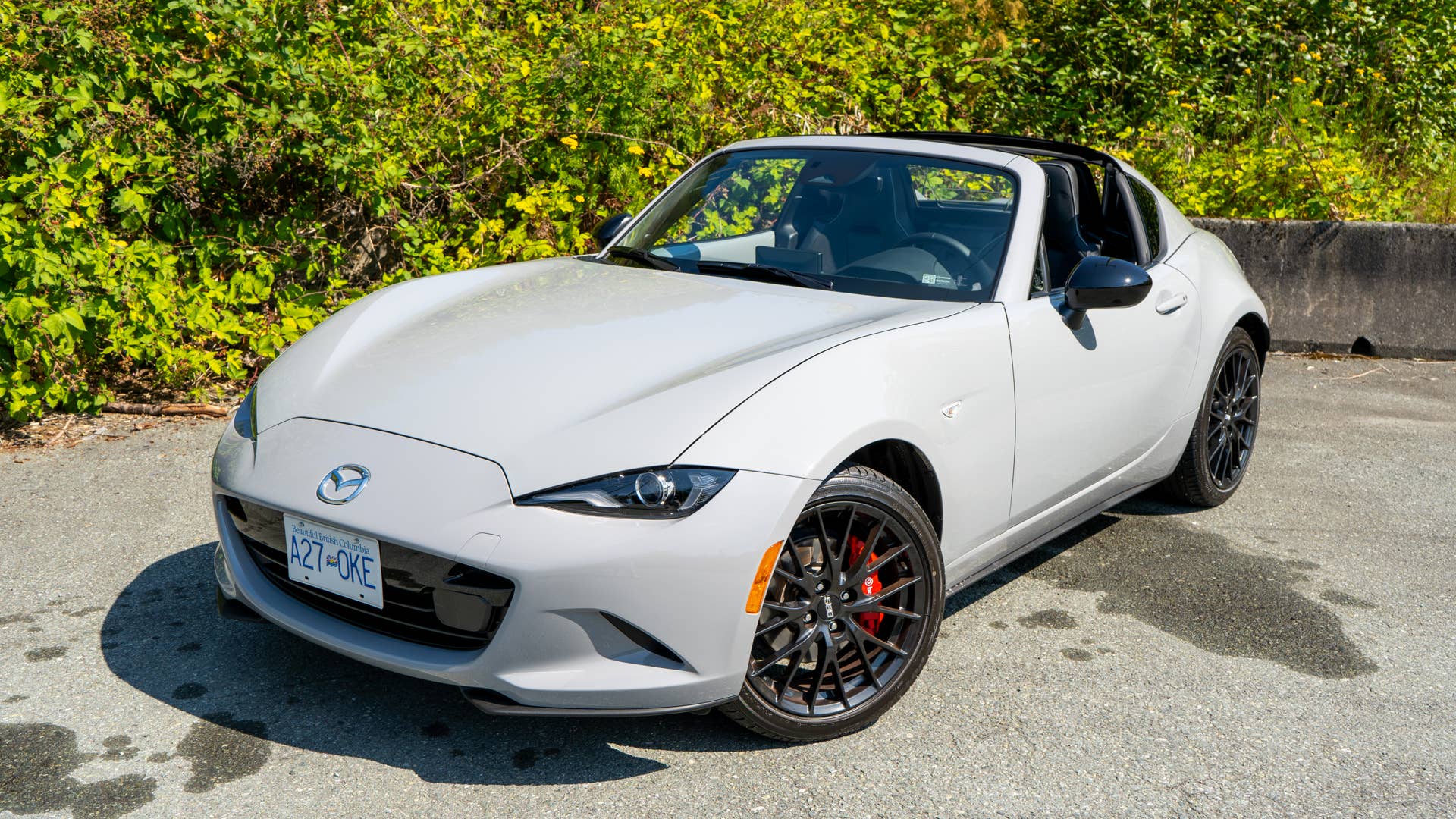
The MX-5 is less serious on paper, but more alive in practice. It rolls in corners, and that roll is one of its most definitive features. The Miata’s communicative body movement serves as a gauge for judging lateral momentum, letting you feel where the weight is moving, where the rear end is hanging, and when grip is beginning to run out. Though the Prelude might feel more planted on those long, sweeping bends, the MX-5 actually feels like it has a pulse.
Cole Attisha
Cole Attisha
Exterior Design: The Prelude Wins The Parking Lot Battle
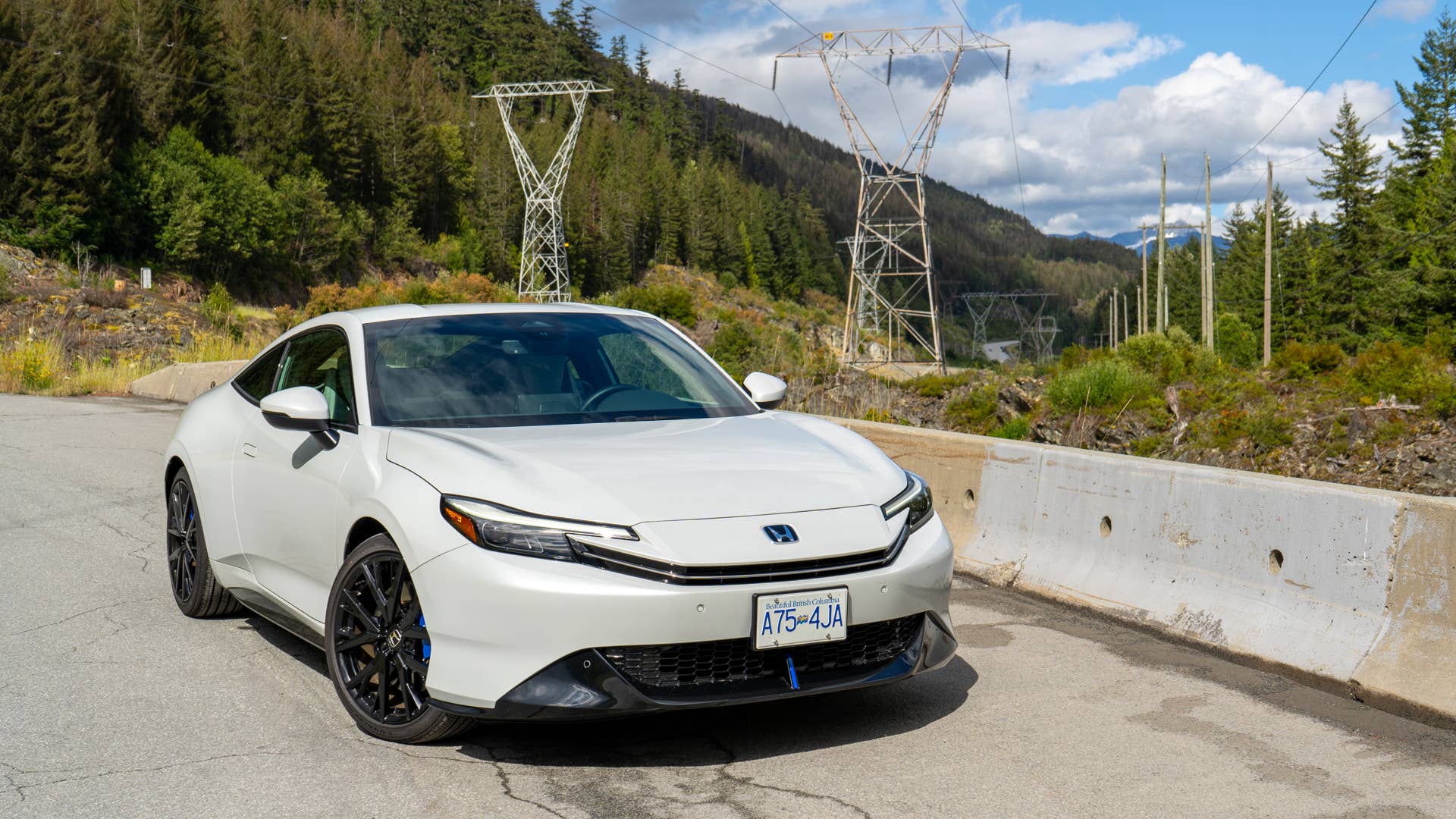
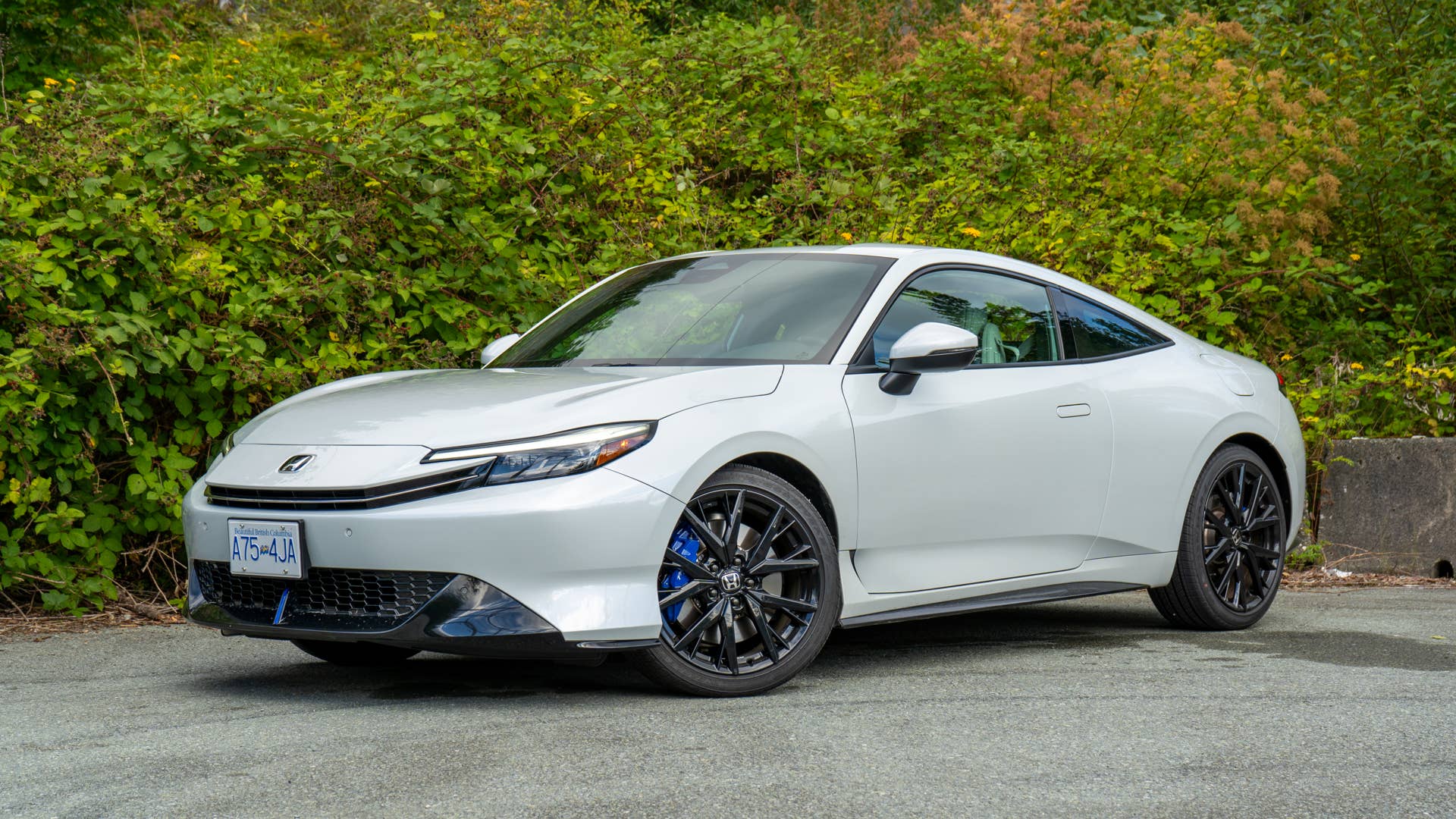
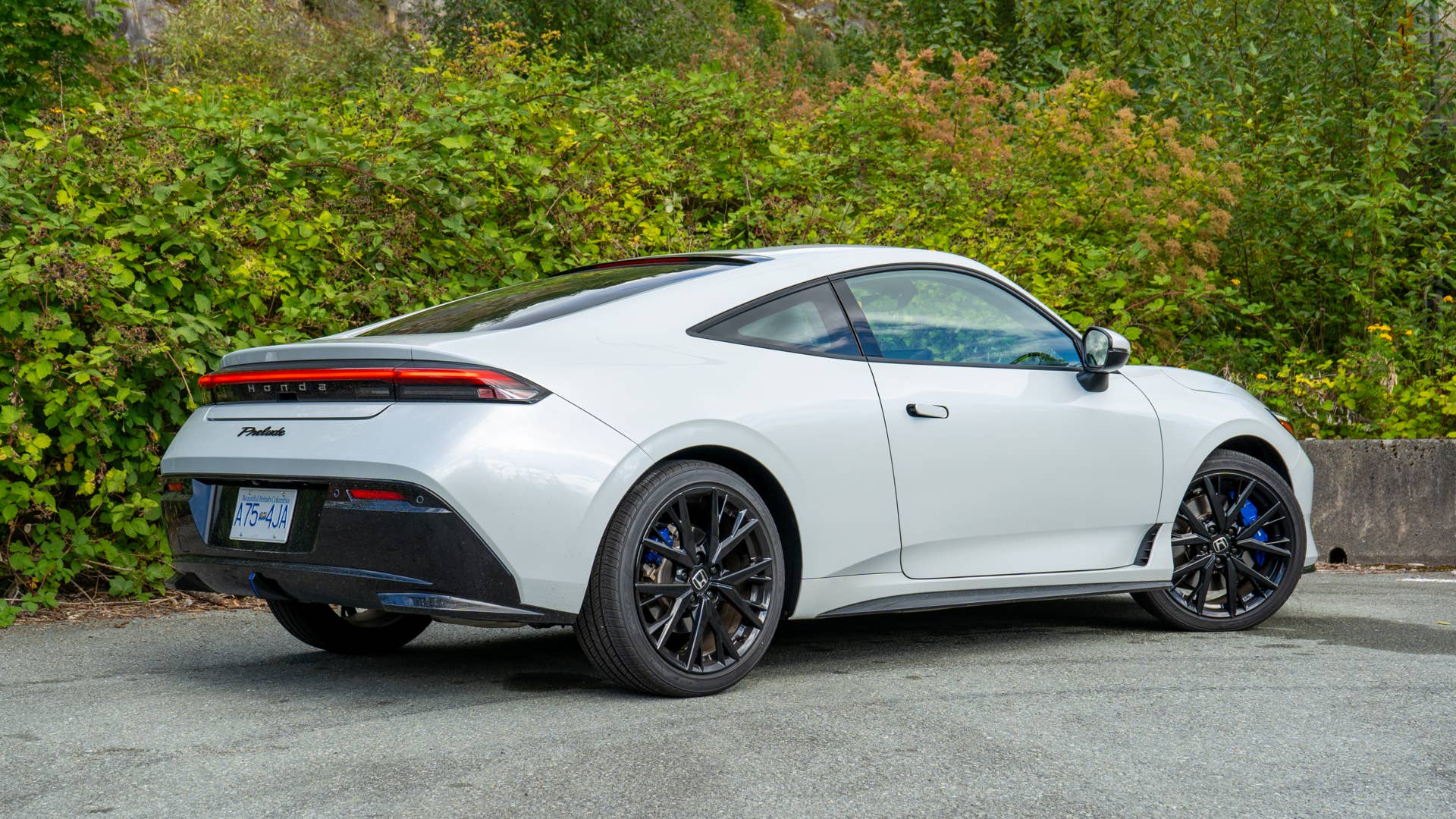
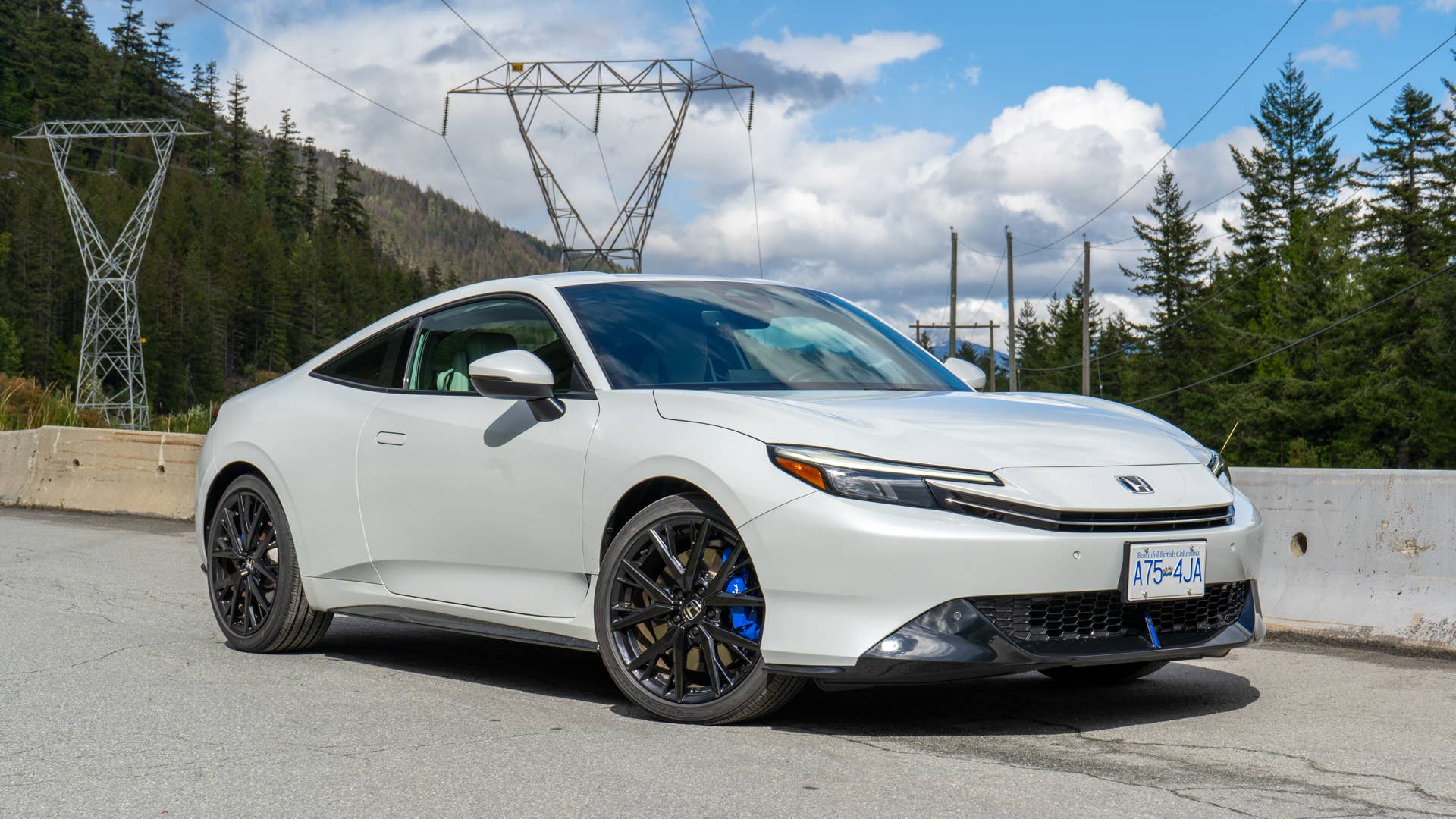
The Honda is the better-looking of the two at first glance, and, to be fair, it was designed long after the ND MX-5—which has been around now for an entire decade. The Prelude is genuinely striking in person. It’s low-slung, wide, clean, and futuristic without leaning too hard into retro cosplay. In white, as tested, especially with the blue accents and brake callipers, it has proper concept-car street presence. It looks expensive, modern, and special enough to make people ask questions. Unfortunately, one of those questions was: “What new Tesla is that?”
That would bother me more than it probably should. Still, it reveals something important. The Prelude’s shape is dramatic, but not immediately familiar. It looks new before it looks Honda, and, if anything, it looks a bit too much like the Toyota Prius. That might help it with casual buyers, but it also makes the nameplate feel slightly detached from the old Prelude lineage.
Cole Attisha
Cole Attisha
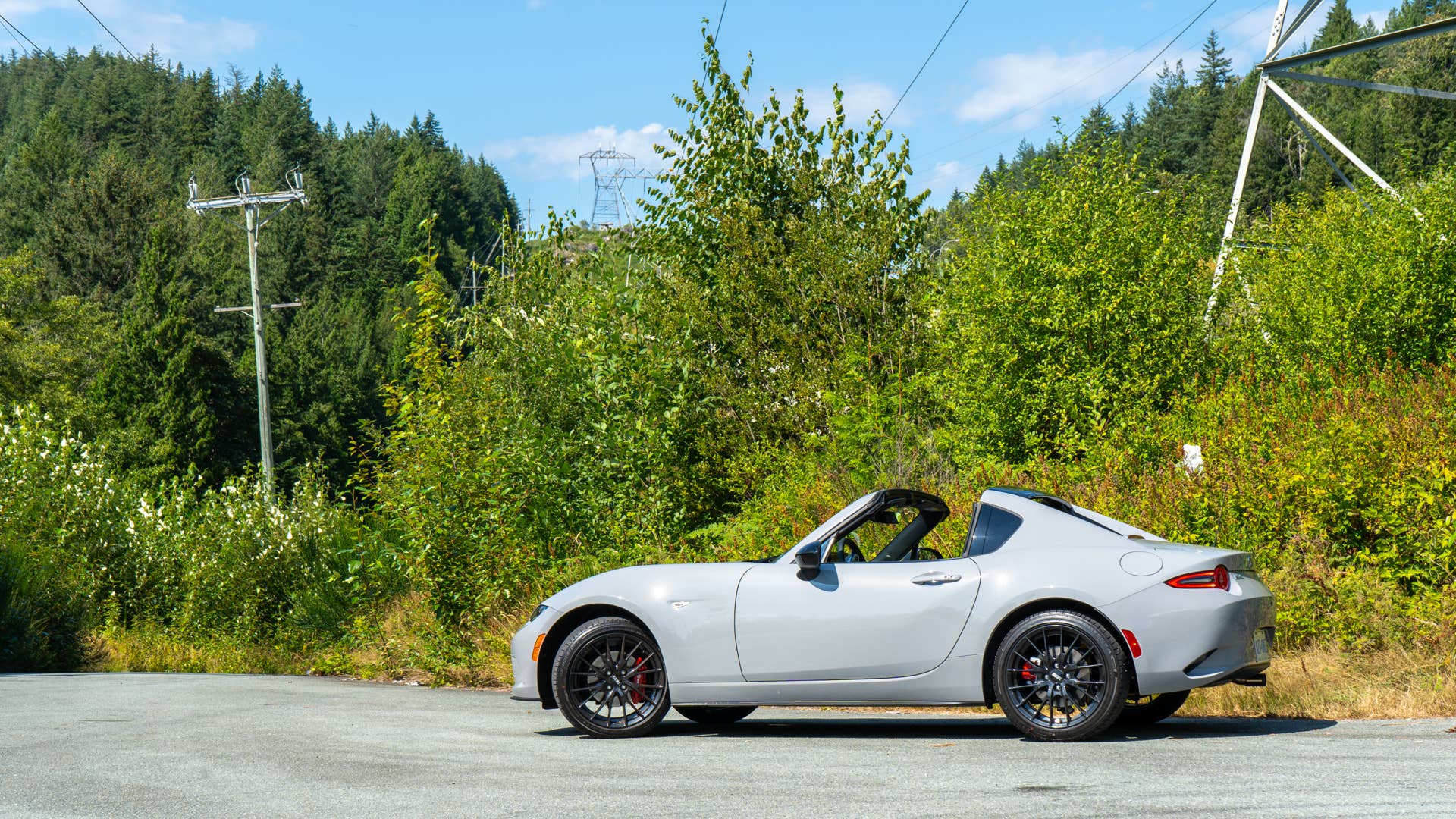
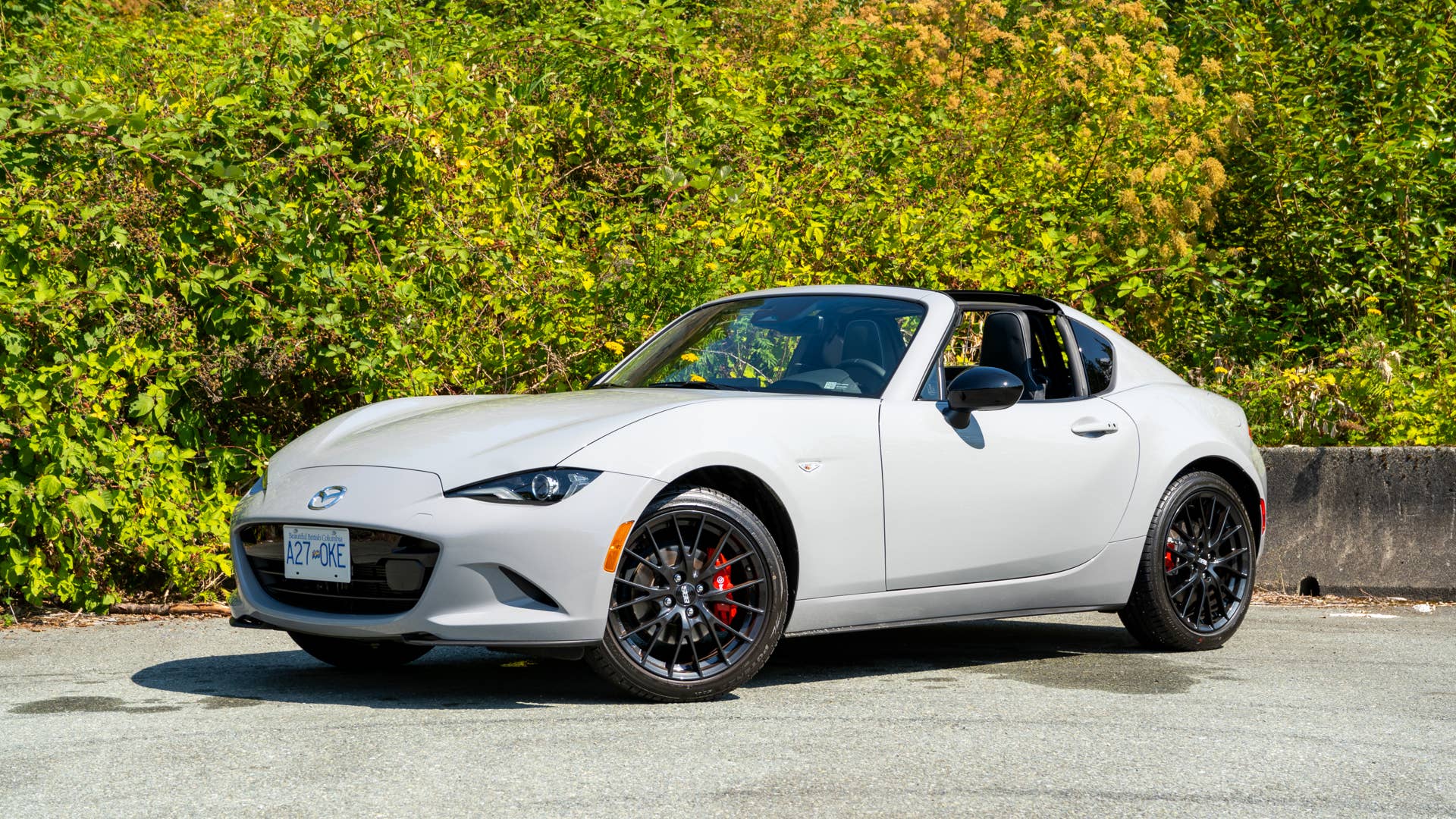
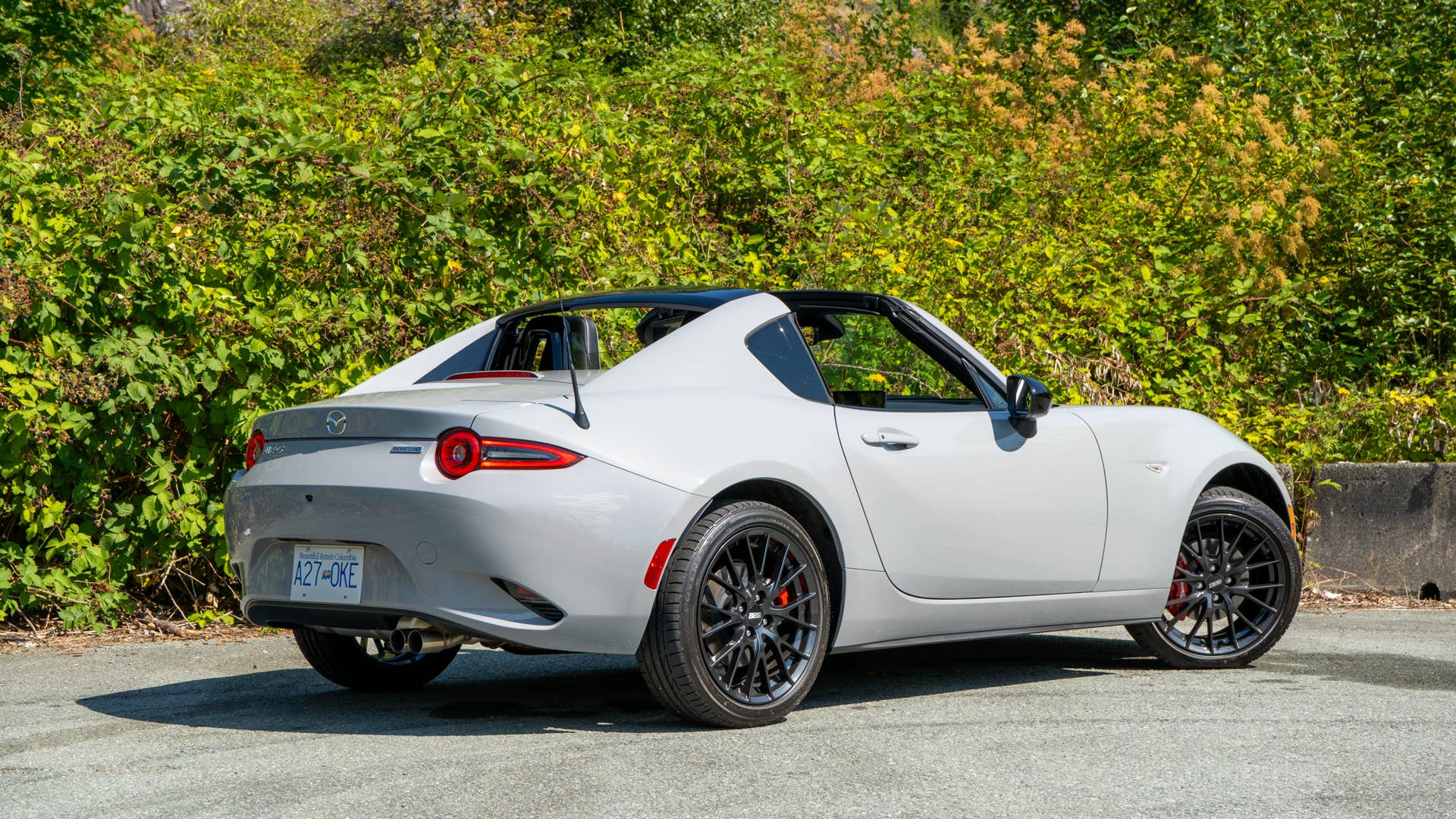
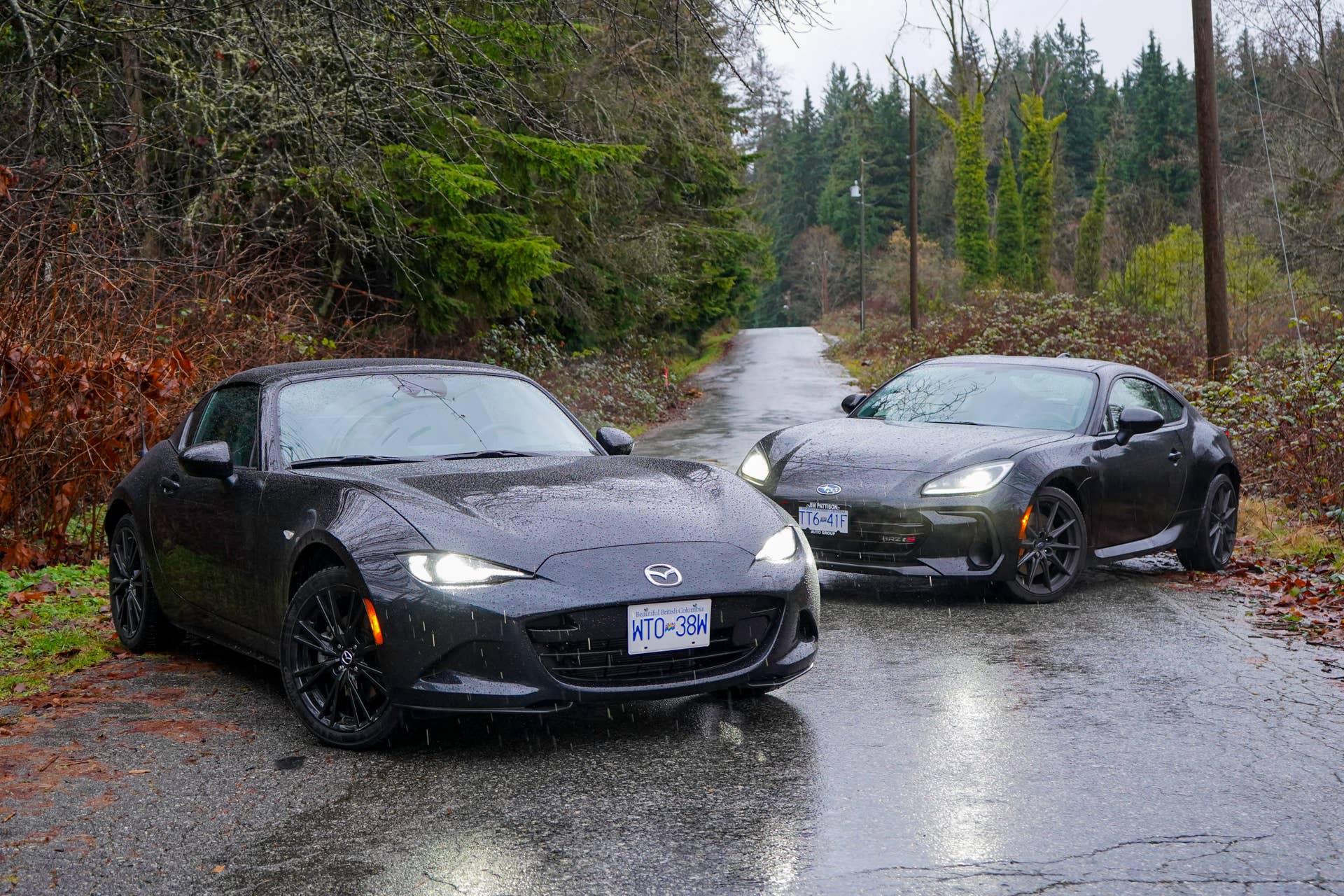
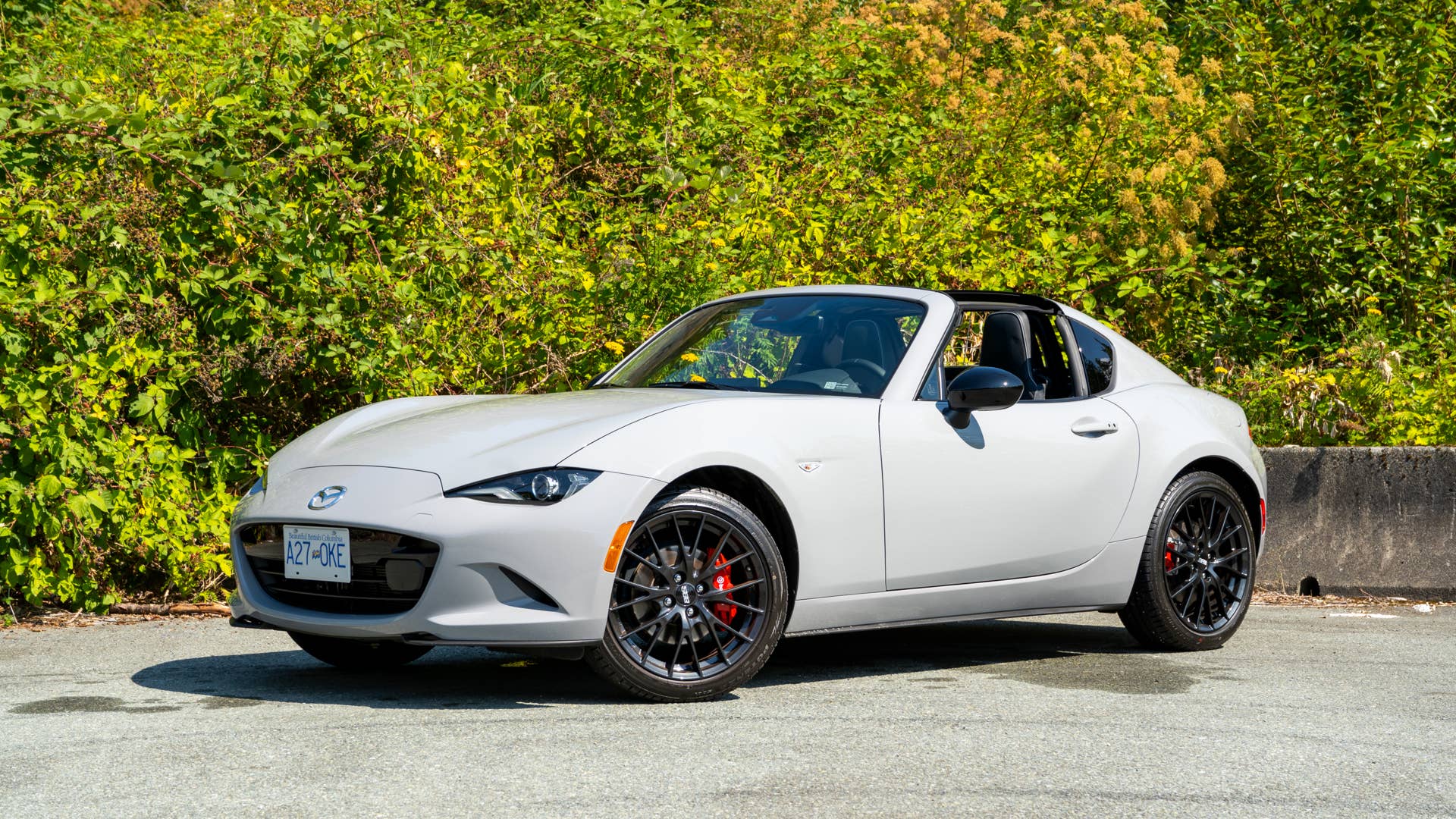
The MX-5 RF does not have that problem. It’s tiny, cheerful and unmistakably Miata. The RF roof lends it an added targa-like elegance, and it opens or closes in just 13 seconds. Recent updates give the ND3 MX-5 refreshed LED headlights and taillights, but not much else changes on the outside, and even those details are incredibly small. The MX-5 hasn’t changed much because it simply doesn’t need to—it still looks modern, it still looks fun, and it still looks like a Miata. On the inside, though, the new MX-5’s updates go a lot further.
Cole Attisha
Cole Attisha
Cole Attisha
Interior: Honda Usability Vs. Mazda Intimacy
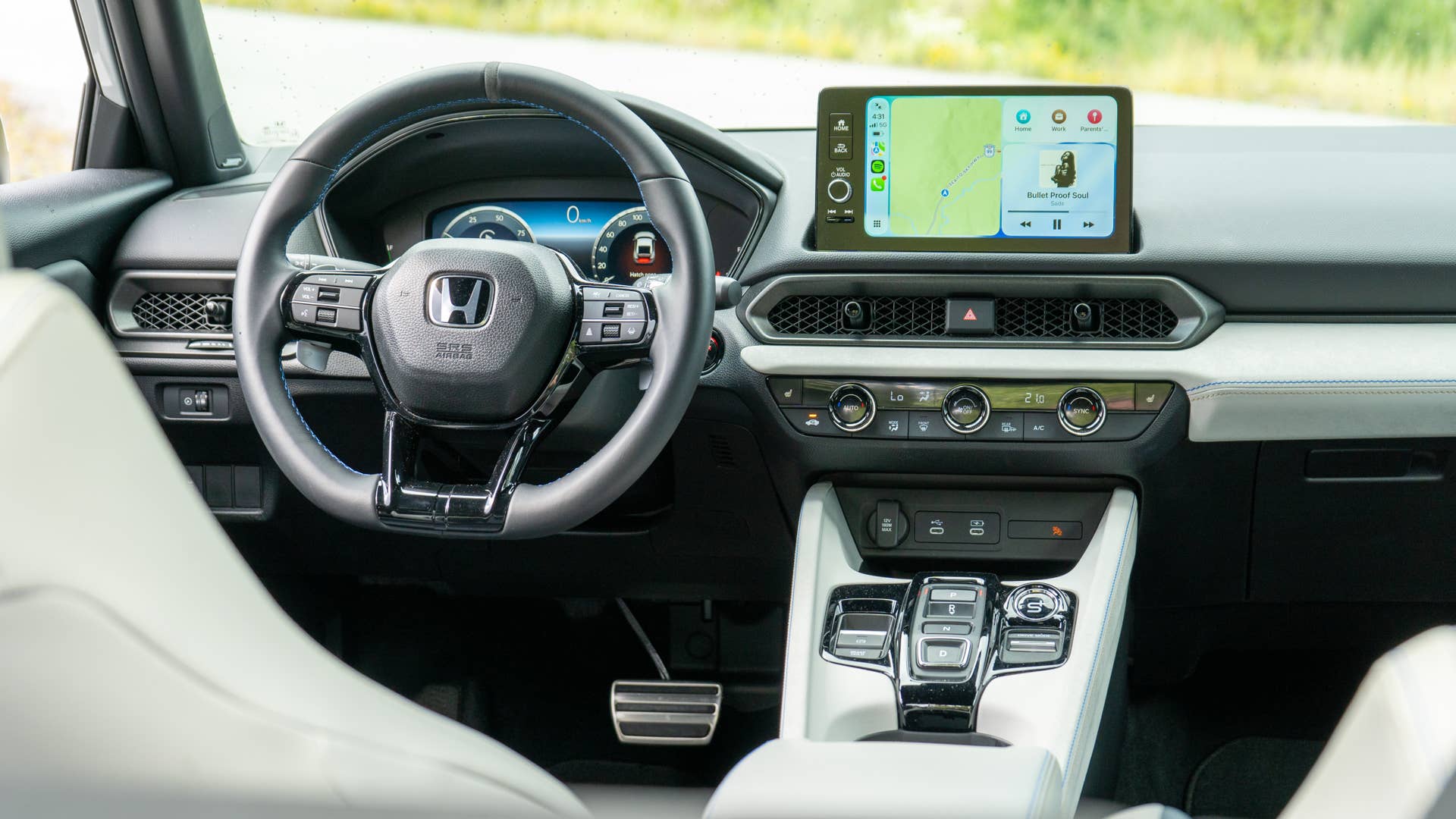
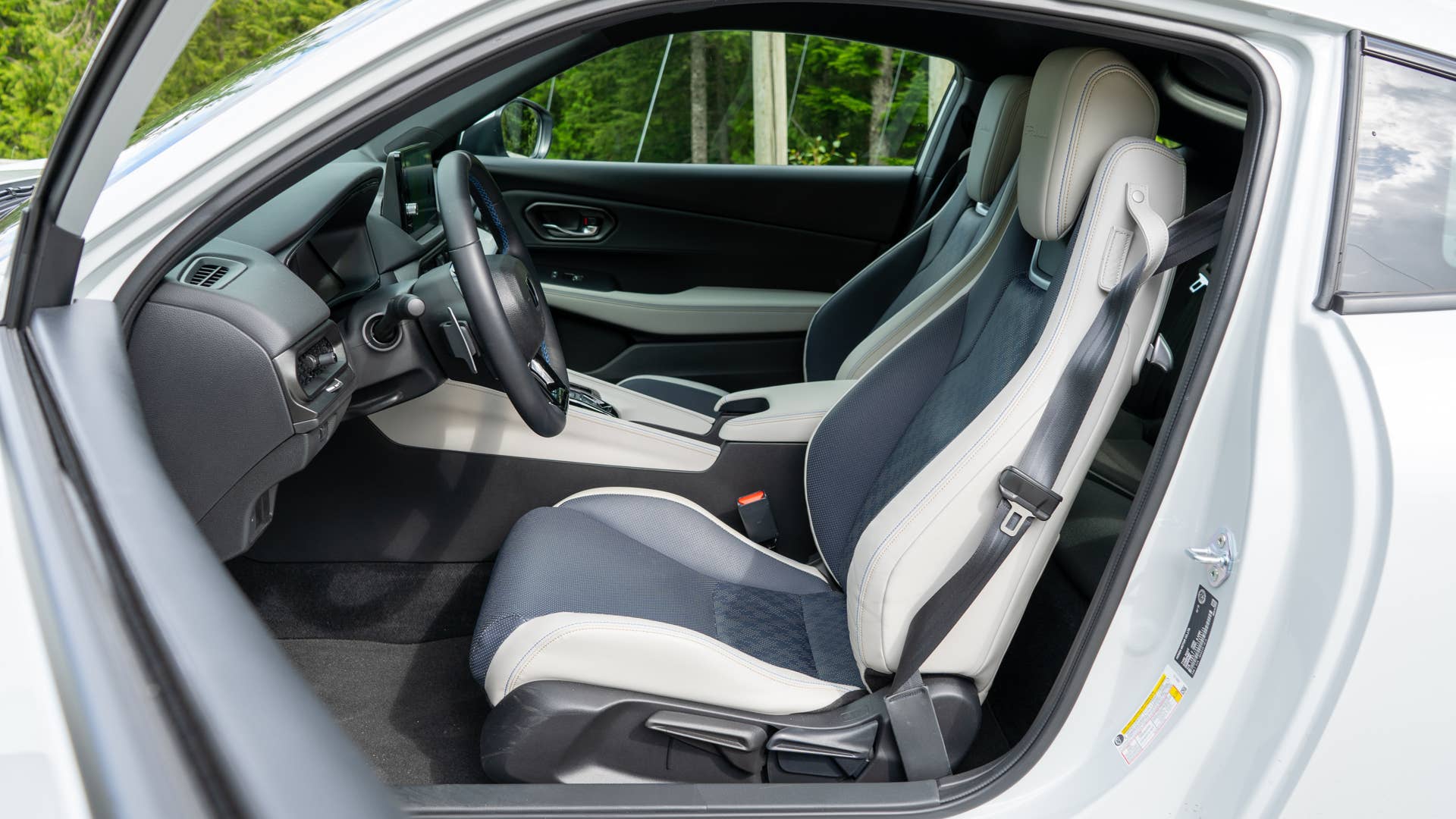
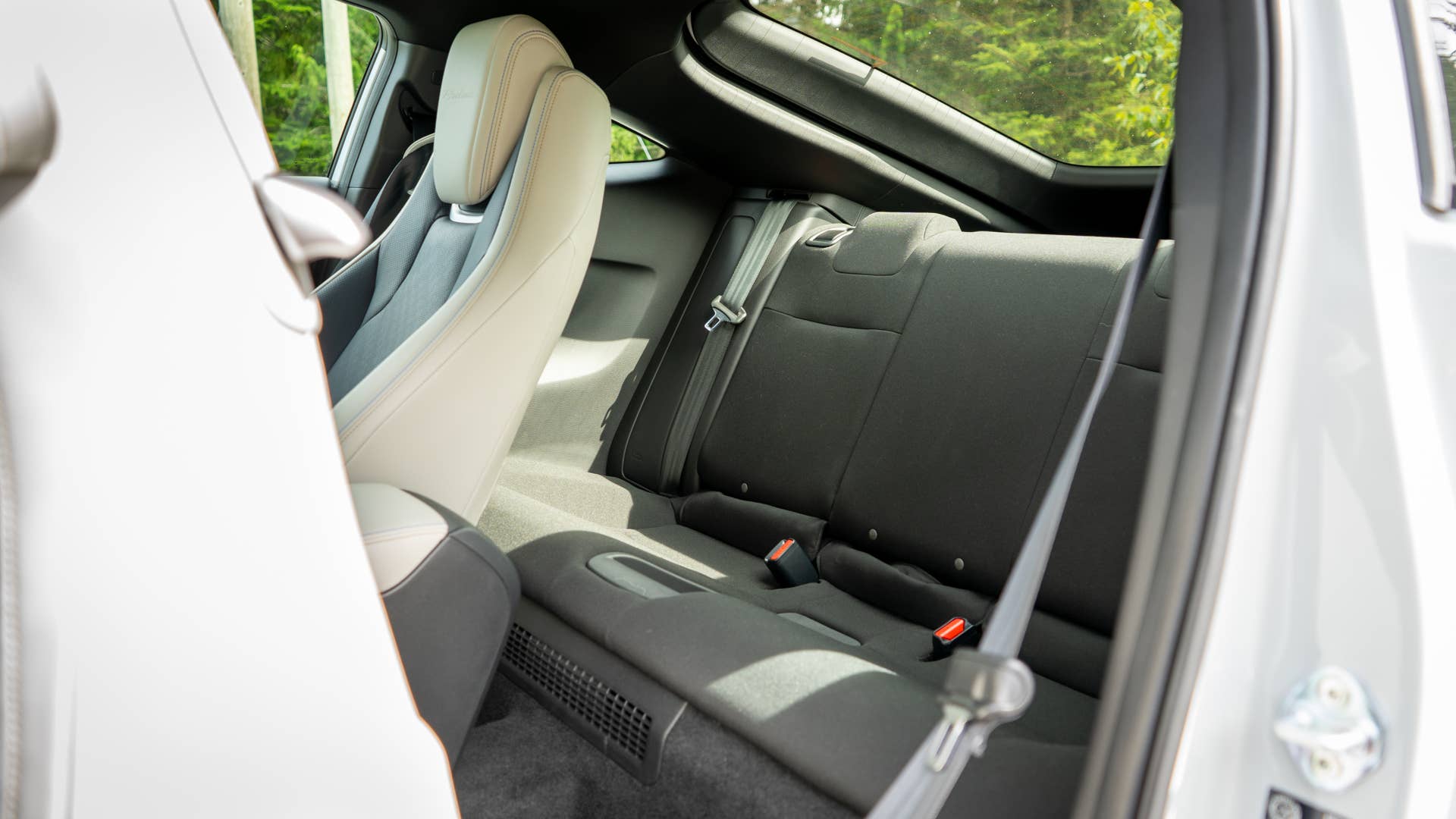
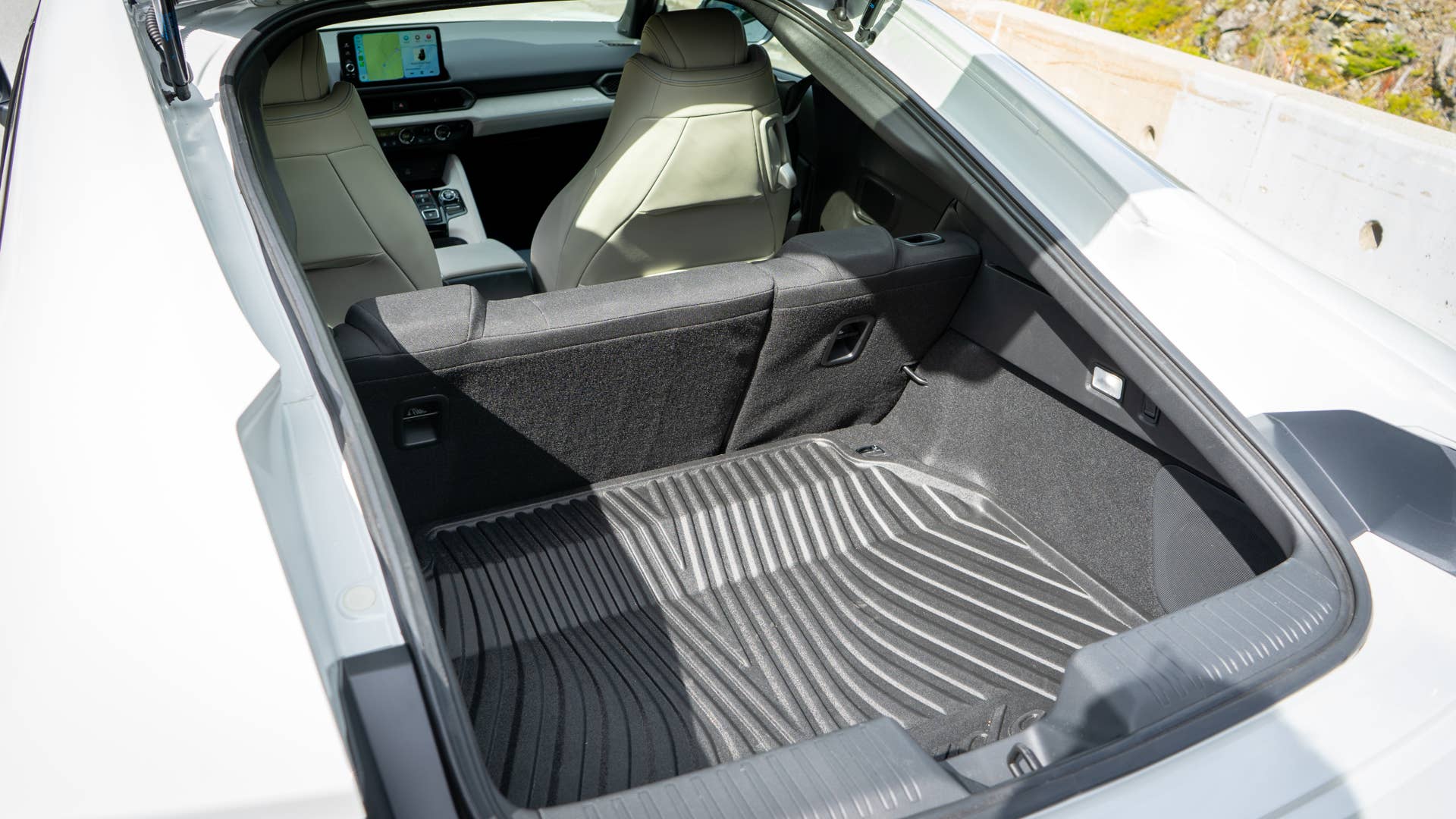
The Prelude undoubtedly has the easier cabin to live with. Its dashboard looks a bit older than the exterior would suggest, but that is, for the most part, actually a compliment. It’s straightforward, clear, and blessedly filled with physical controls. In a world where too many interiors now operate like someone mounted a smart TV sideways and called it luxury, the Prelude’s simplicity feels refreshing. The front seats look great too, combining blue and white elements that add visual drama to the cabin, but the rear seats are cheaper-looking black cloth, breaking the blue-stitching theme, and making the second row feel like it was transplanted from an entirely different car.
Cole Attisha
Cole Attisha
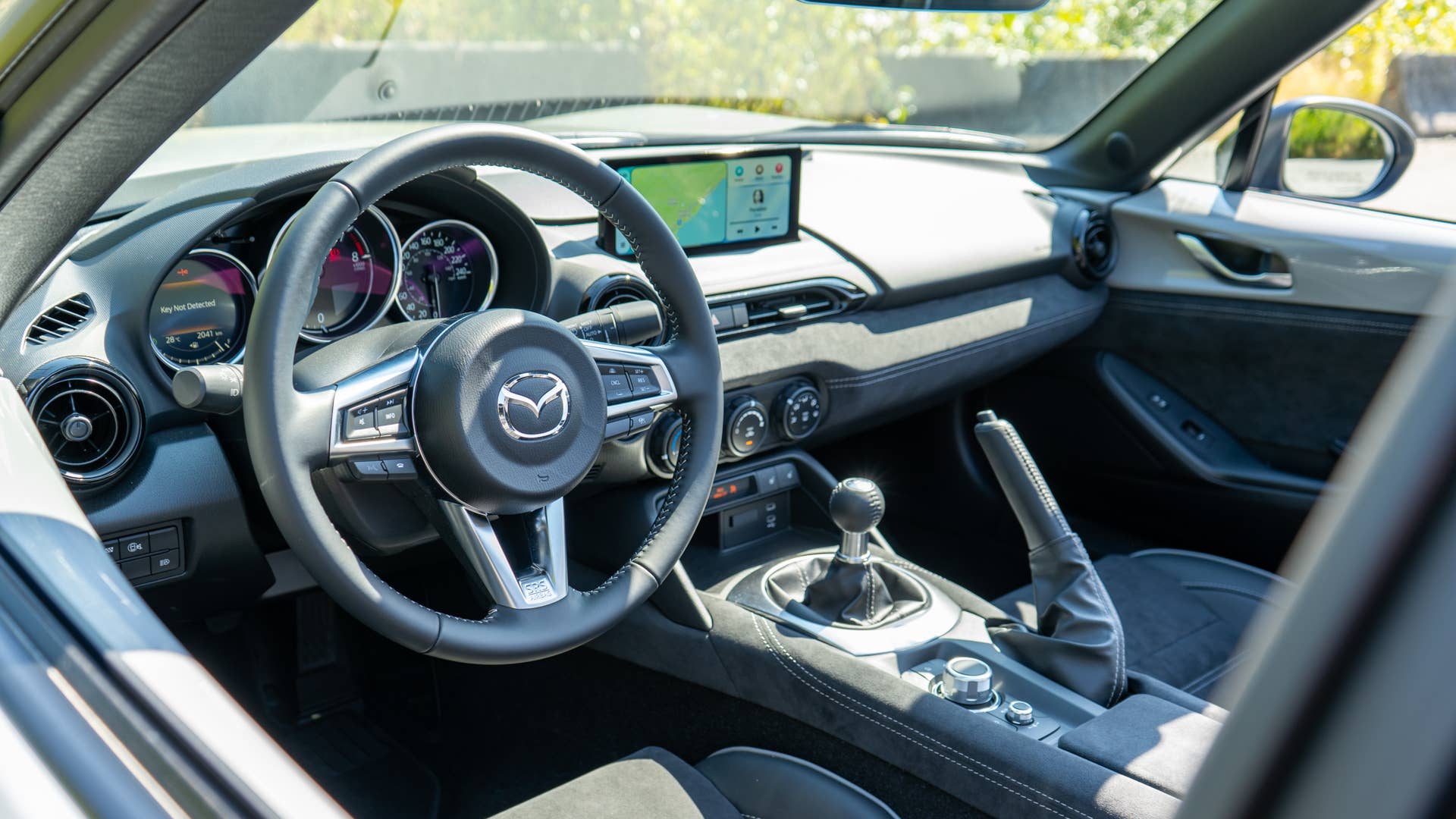
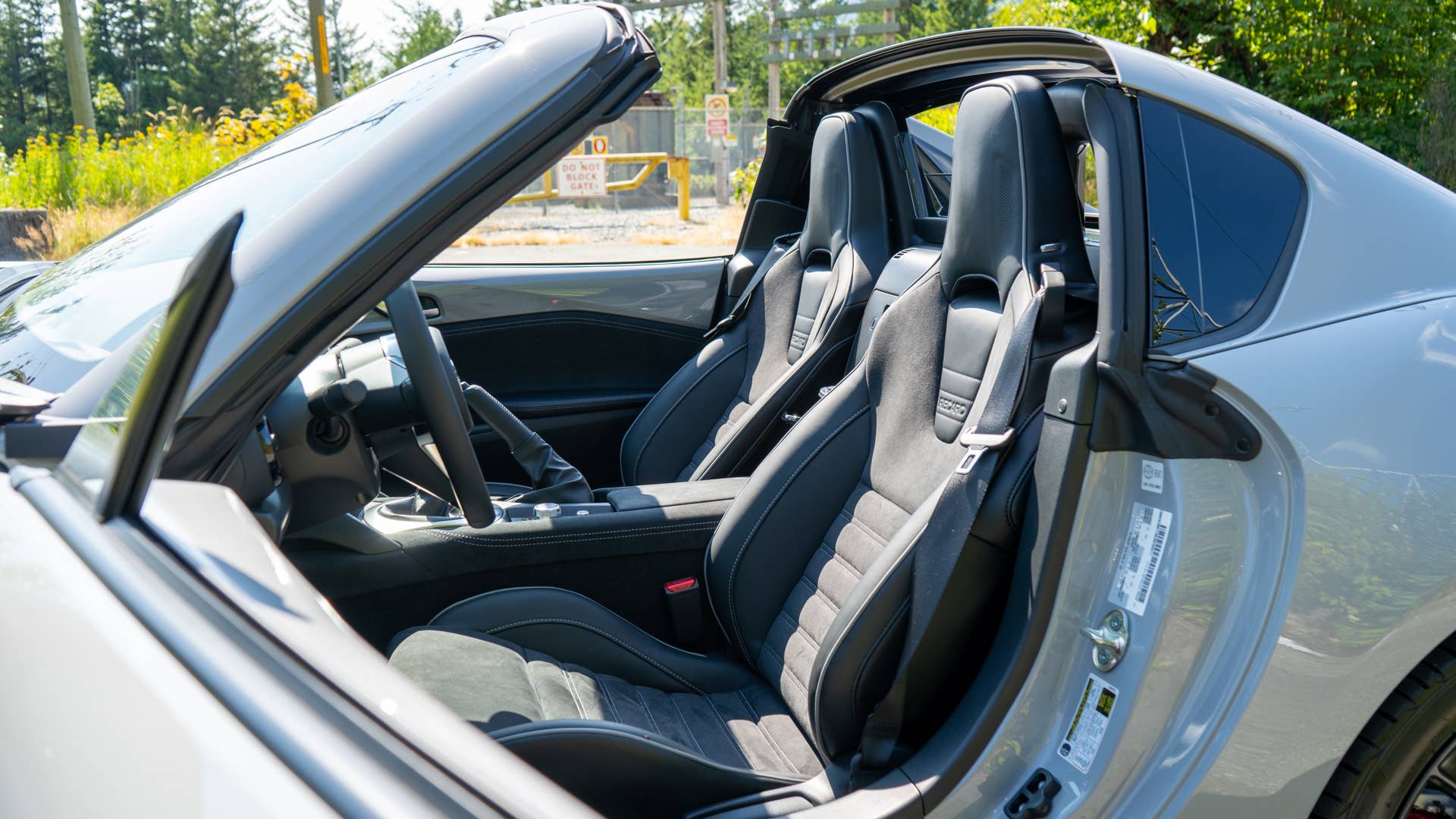
The MX-5’s cabin isn’t roomy, but it is cohesive. With supportive Recaros, palpable Alcantara upgrades, an updated infotainment system, a frameless rearview mirror, and a richer sense of touch than before, the MX-5’s interior is a nicer environment than ever. The Honda’s cabin is by far the easier one to live with, but the MX-5’s is the easier one to bond with.
Cabin And Cargo Dimensions
| Measurement | 2026 Honda Prelude Hybrid | 2026 Mazda MX-5 RF Club |
|---|---|---|
| Seating capacity | 4 | 2 |
| Passenger volume | 84.6 cu-ft | N/A |
| Cargo volume | 15.1 cu-ft / 427 L | 4.48 cu-ft / 127 L |
| Front / rear headroom | 37.2 / 33.1 in | 36.9 / N/A in |
| Front / rear legroom | 42.3 / 32.0 in | 43.1 / N/A in |
| Front / rear shoulder room | 57.1 / 53.2 in | 52.2 / N/A in |
| Front / rear hiproom | 54.2 / 48.7 in | 52.0 / N/A in |
| Wheelbase | 102.6 in | 90.9 in |
| Length | 178.4 in | 154.1 in |
| Width | 74.0 in | 68.3 in |
| Height | 53.4 in | 49.0 in |
| Curb weight | 3,261 lb / 1,479 kg | 2,467 lb / 1,119 kg |
| Weight distribution | 63/37 front/rear | 51/49 front/rear |
Cole Attisha
Practicality: The Prelude Wins. Duh…
The Prelude is obviously more practical than the MX-5. It has rear seats, a hatch, more cargo space, better fuel economy, and a calmer personality in daily use. Its rear seats are more usable than the BRZ’s, though headroom is still limited, and its hatchback cargo area gives it real usefulness. Against the Mazda, the Honda wins the practicality battle because, well, of course it does. But the Prelude’s real problem isn’t the MX-5 here—it’s the Civic Hybrid.
If efficiency, comfort and Honda reliability are the main priorities, the Civic Hybrid hatchback makes far more sense. It is substantially less expensive, much roomier, more practical, and still nearly as enjoyable to drive. The Prelude asks buyers to pay more money to lose two doors and compromise rear-seat space in exchange for sharper handling, S+ Shift, and a prettier shape. That might be worth it for someone who loves the look, but it doesn’t make the Prelude the better enthusiast car.
Chase Bierenkoven
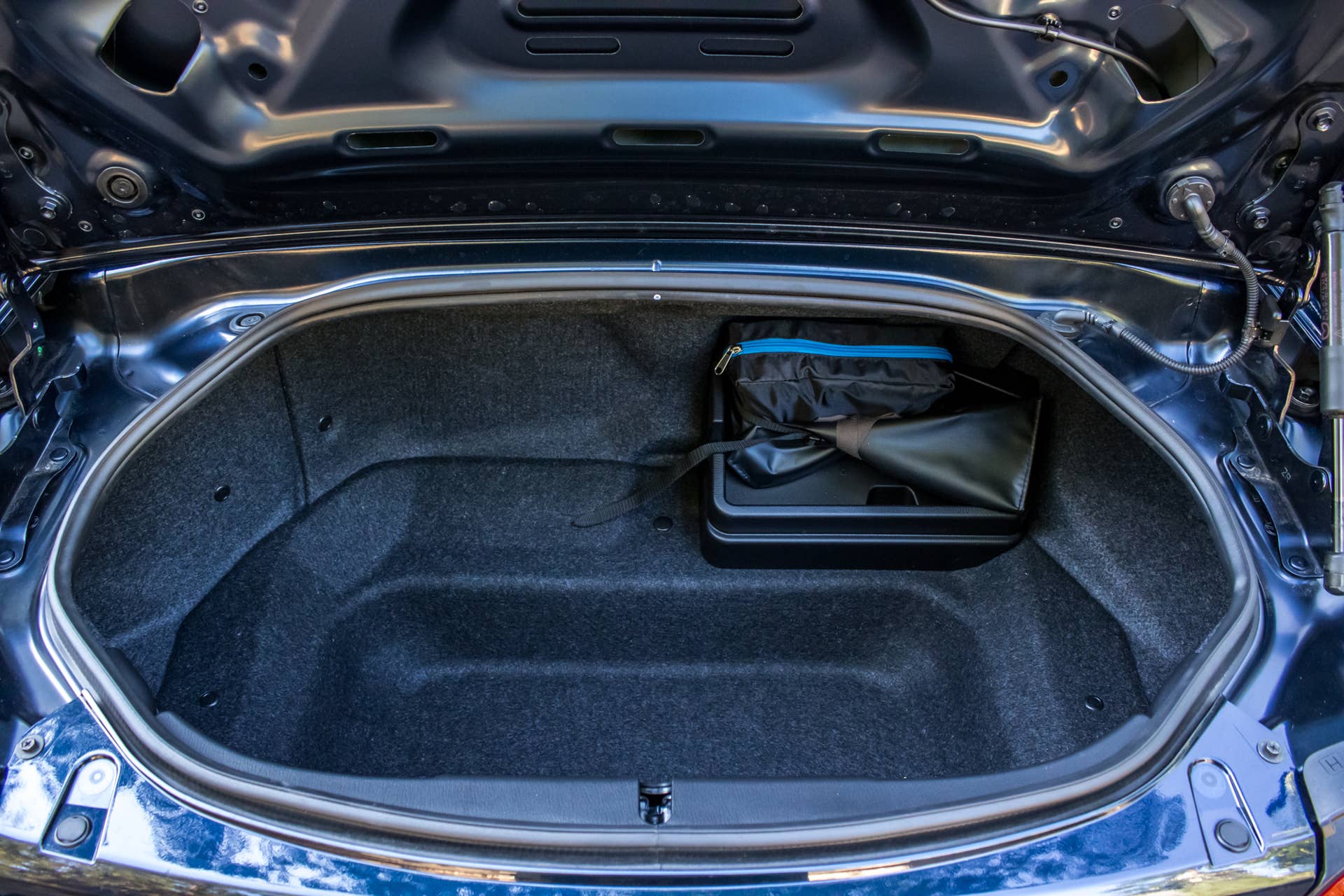
The MX-5 makes fewer practical promises, but nobody buys an RF expecting it to replace a CR-V. It has a small trunk, two seats, and limited space, but the entire car is so honest about its mission that those limitations feel intentional rather than frustrating. The MX-5 is clearly better as a secondary vehicle unless you are young, single, or unusually committed to the bit.
Cole Attisha
Value: Similar Money, Different Promises
This is where things get awkward for Honda. The Prelude starts at $42,000 before destination in the U.S., and the MX-5 RF Club starts at $41,900 before destination, making them nearly identical in price. But what they sell is completely different.
The Honda sells fuel economy, four seats, a useful hatch, daily calm, and a dramatic shape. The Mazda offers rear-wheel drive, a manual gearbox, a retractable roof, Brembo brakes, BBS wheels, Recaro seats, and a kind of intimacy that no screen, hybrid system, or simulated-shift algorithm can manufacture. So where Honda sells you what is essentially a dynamically sharpened, practically compromised Civic Hybrid Coupe replacement, Mazda sells you true enthusiast ingredients worth drooling over, all for the same money. If compact sports coupe value means miles per gallon to you, then the Prelude obviously wins. But if it’s smiles per gallon you’re after, which, if you’re cross-shopping these two cars, it probably is, the MX-5 is almost untouchable. Almost… (see the notably less expensive Subaru BRZ/Toyota GR86, for example).
Final Verdict: The Prelude Is Easier To Live With, But The MX-5 Is Easier To Love
The 2026 Honda Prelude is certainly not a bad car. It’s attractive, efficient, smooth, technically advanced, and far easier to live with than the Mazda MX-5 RF. It’s better in traffic, better on gas, better for cargo, and better for passengers. For someone who wants a stylish hybrid coupe with minimal inconvenience, it makes some sense. But this is a comparison between small sports cars, and small sports cars aren’t normally judged purely by how painlessly they run errands.
The Prelude’s issue isn’t that it lacks competence—it lacks emotional escalation. It doesn’t get better the harder you look for the fun. It begins as an intriguing shape, settles into being a very good commuter, and then runs out of conversation just as the road gets interesting. The MX-5 does the opposite. It keeps talking, as if it’s been practicing its stand-up act for decades. Through the gearbox, body roll, steering, RF roof, and the absurd smallness of the whole thing, it keeps reminding you why cars even became hobbies in the first place. In my standalone reviews, the Prelude scored 7.8/10 while the MX-5 RF scored 9.6/10, and that gap still feels accurate. The Mazda’s biggest strength is its lovability, and I wrote that almost no modern vehicle better understands human connection in an automobile than this one, especially at this price point.
The Prelude is the better commuter coupe, but the MX-5 RF is the better sports car. And if you’re buying one of these because you still believe driving should feel like more than transportation, the “Miata Is Always The Answer” rule still applies.
Autoblog aims to feature only the best products and services. If you buy something via one of our links, we may earn a commission.
About the author

Cole Attisha
Staff Writer, Autoblog