
Key Points
- The 2027 Cadillac Lyriq strengthens Cadillac’s electric lineup with distinctive styling and luxury-focused design.
- Its spacious cabin offers generous passenger and cargo room, tactile controls, and advanced technology.
- The tested Signature Sport AWD model cost $80,141 and delivers powerful, quiet performance with unmistakable Cadillac character.
It’s Cadillac’s electric era.
For generations, the name Cadillac has come to be a name that is synonymous with the American luxury car. From the Coupe DeVilles and Sixty Specials of the 50s and 60s to today’s modern marvels like the full-size Escalade SUV, Cadillac has defined itself as a brand committed to cars that offer both smooth-riding comfort and bold, stylish presence.
These days, it seems that the future of motoring is defined in large part by electrification. EVs, plug-ins and hybrid-electric vehicles have become the center of attention in today’s new-car market. In sharp contrast to its gas-guzzling image, Cadillac entered the EV arena in 2022 with the Lyriq, a boldly-styled mid-size crossover SUV that pit itself against industry rivals like the Tesla Model Y.
Since its release, Cadillac has experienced an electric renaissance. In late 2024, the Lyriq was recognized as the German Car of the Year in the luxury category, and in May 2025, the brand surpassed more than 100,000 sales. In the interim, Cadillac slowly expanded its EV lineup with SUVs of all sizes like the smaller Optiq, the three-row Vistiq, the Escalade IQ, as well as the six-figure, ultra-limited Celestiq halo sedan. While the EV market has expanded since its debut, the 2027 model year iteration of the Cadillac Lyriq shows that it has still carved a distinct place for itself among other electric midsize luxury SUVs including the BMW iX, the Mercedes EQE and Volvo EX60.
James Ochoa
James Ochoa
“What is that, an Escalade?”
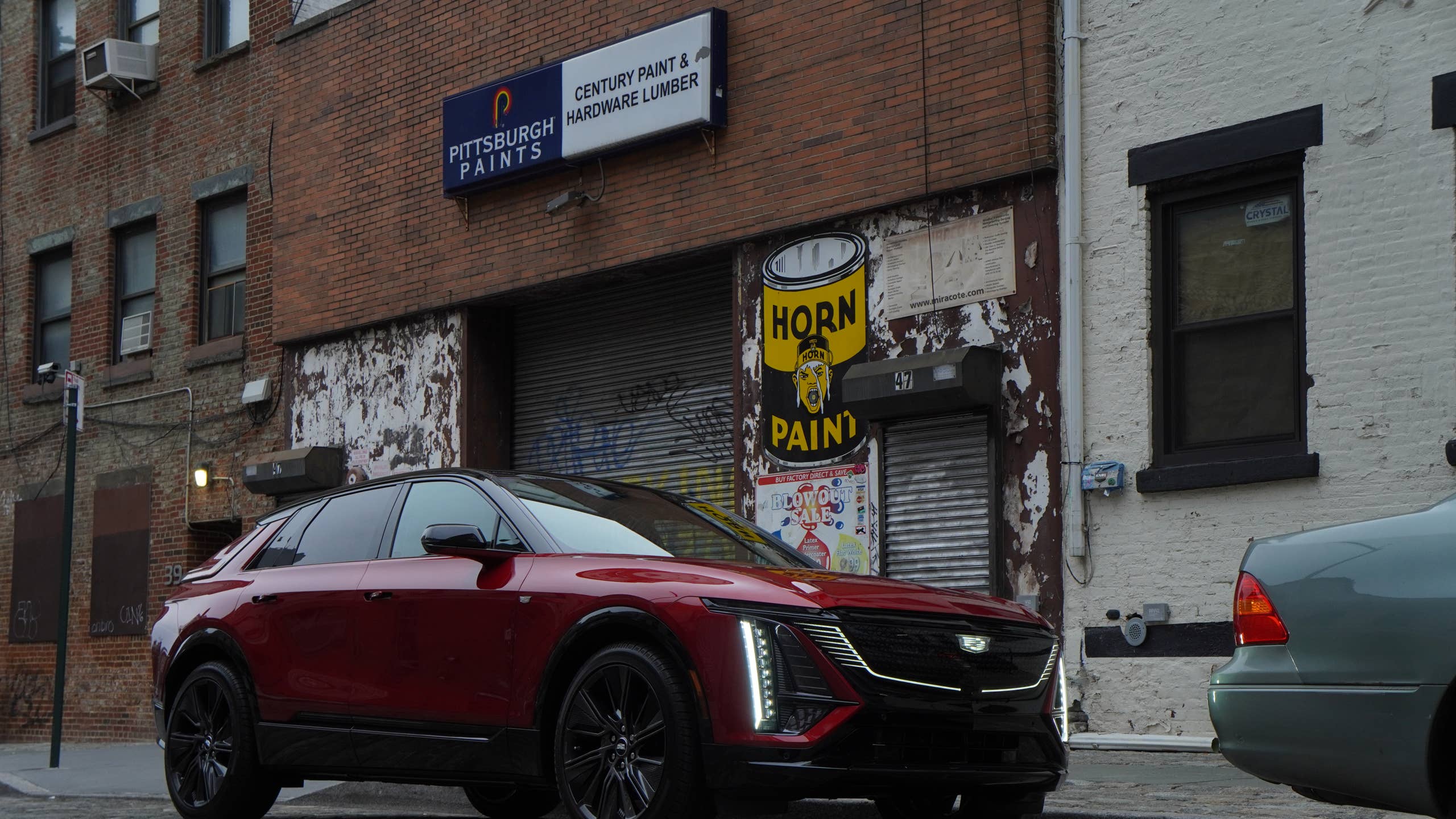
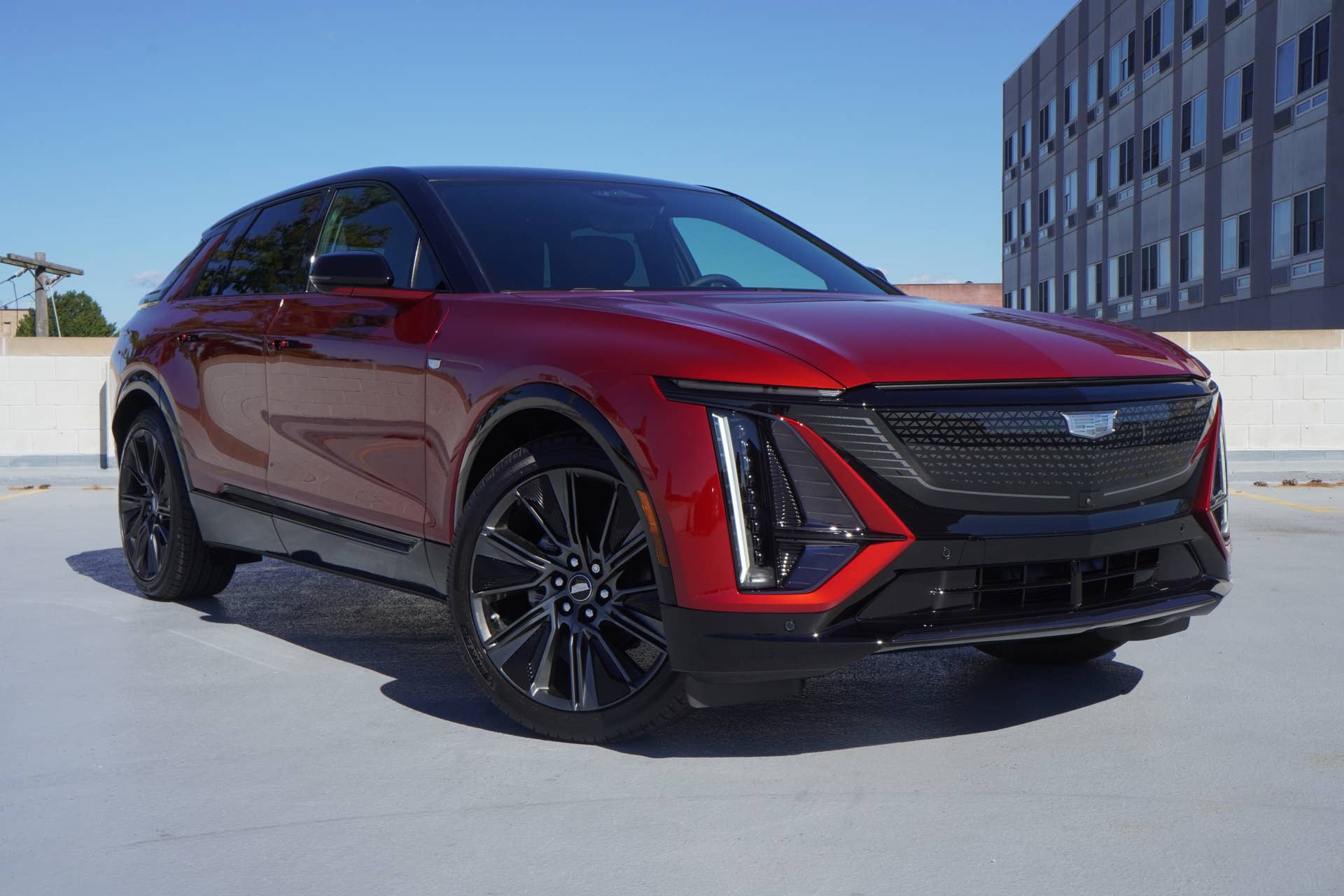
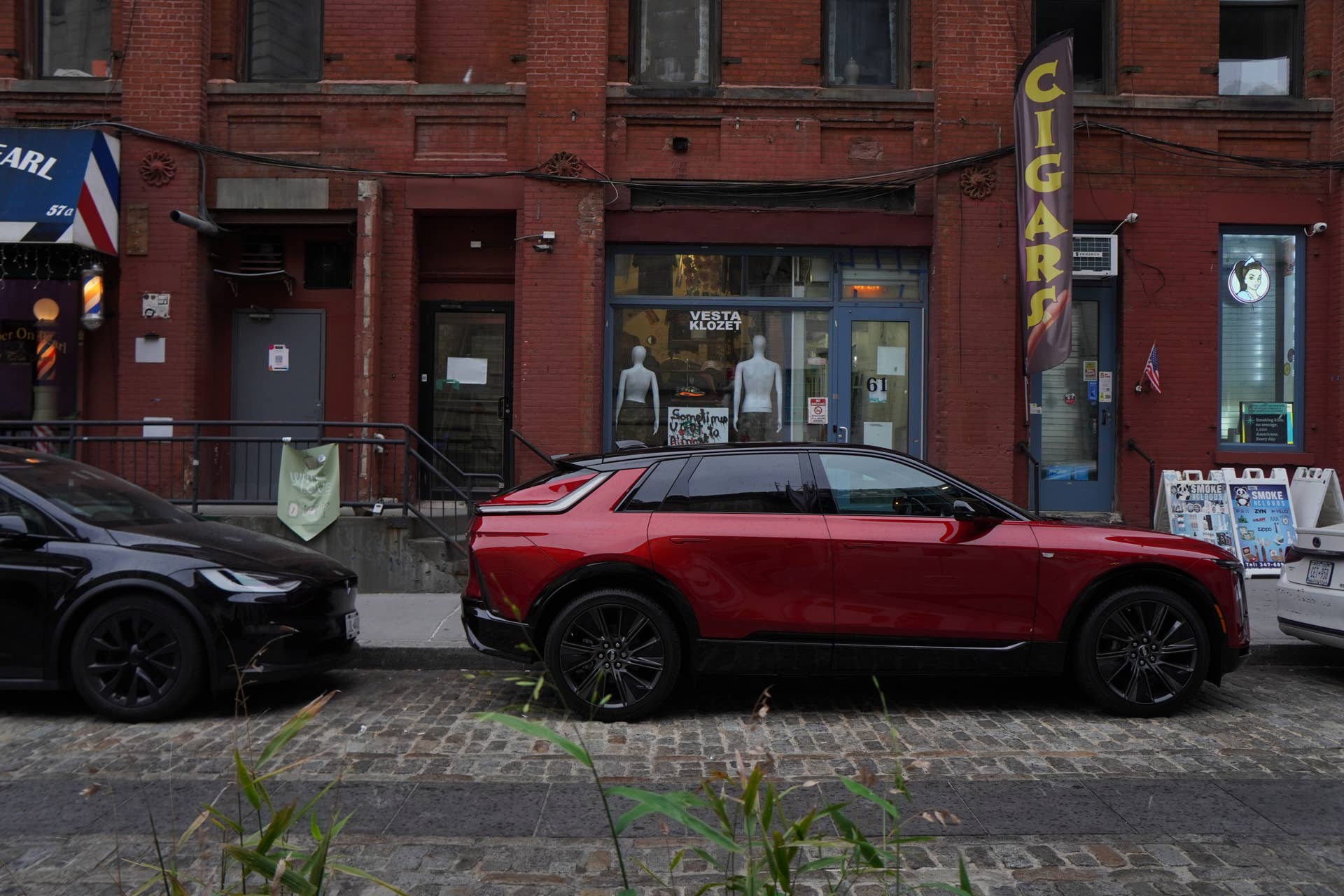
Off the bat, one of the biggest things I love about the Cadillac Lyriq is its styling. In today’s crowded EV marketplace, I feel that it is one of the biggest strengths it has against its direct competitors. Many contemporary premium EVs, including the Tesla Model Y, Mercedes EQE and EQS and even the $560,800 Ferrari have adopted this sort of smooth, formless ‘blob’-shape that some have likened to a jelly bean. You know what it looks like — mentioning those model names triggers something that enthusiasts have burned into their heads; whether on purpose or involuntarily. However, the Lyriq’s pronounced, concept car-esqe curves and chiseled lines gives it a look that can be best described as distinctly Cadillac.
James Ochoa
James Ochoa

James Ochoa
James Ochoa
James Ochoa
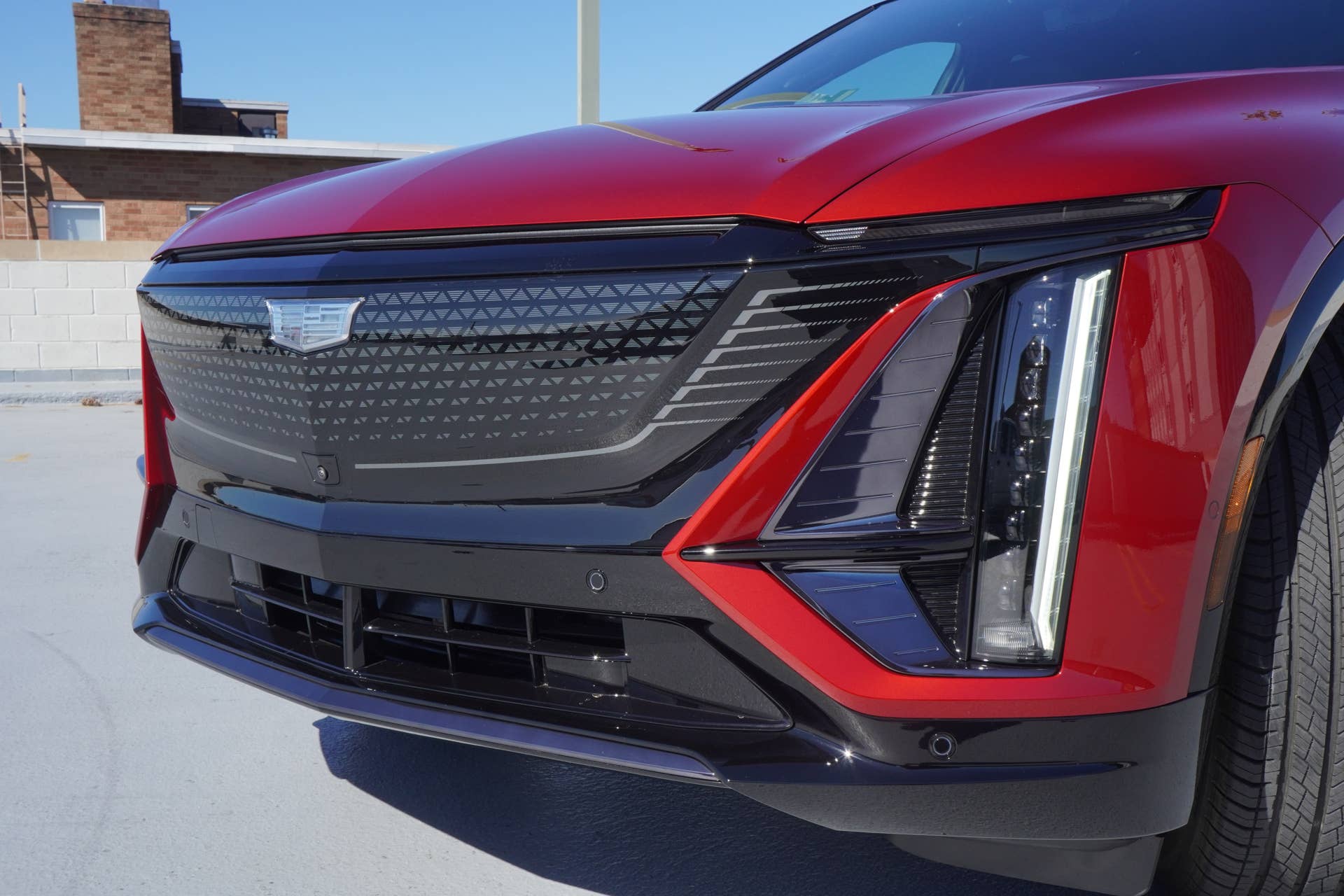
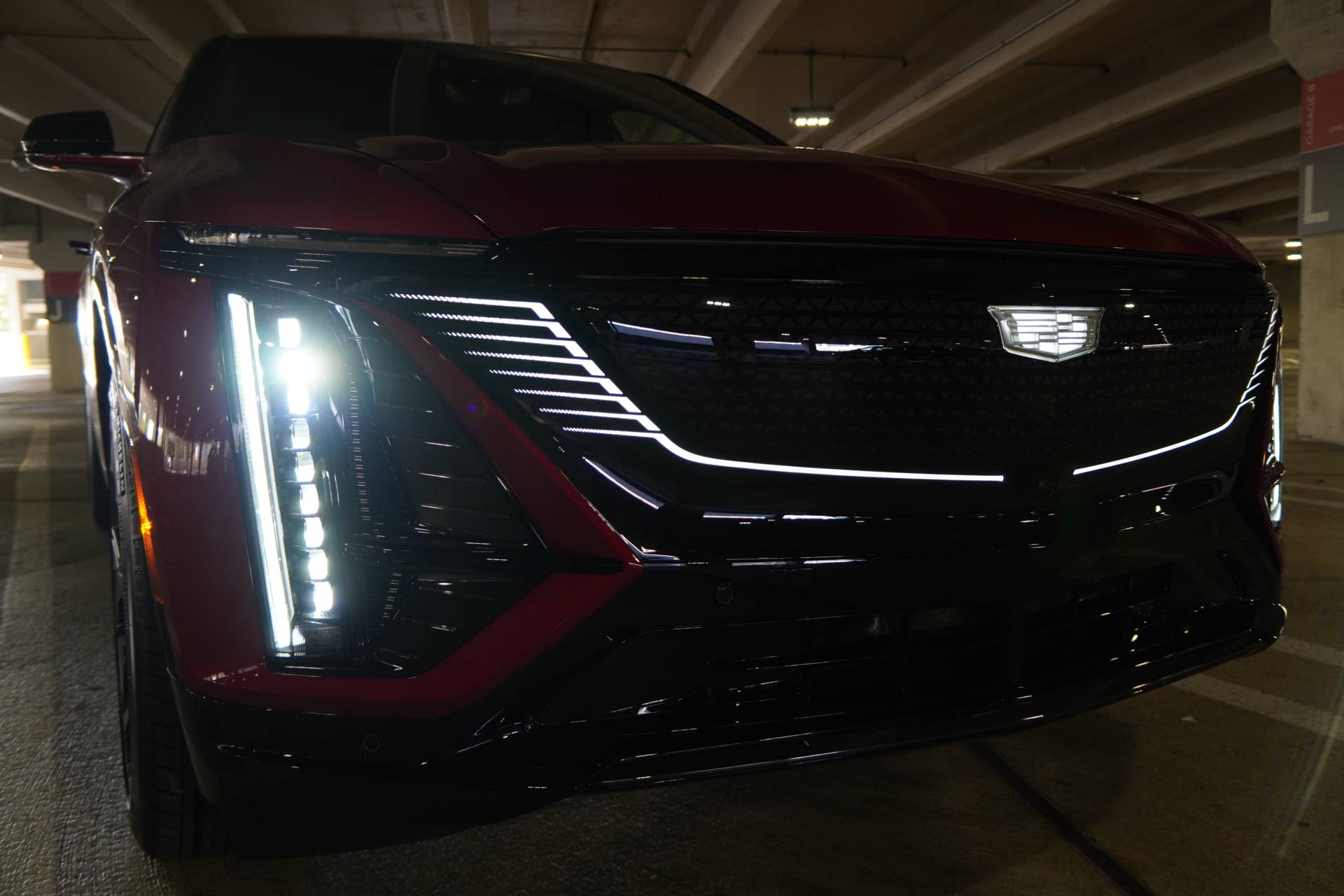
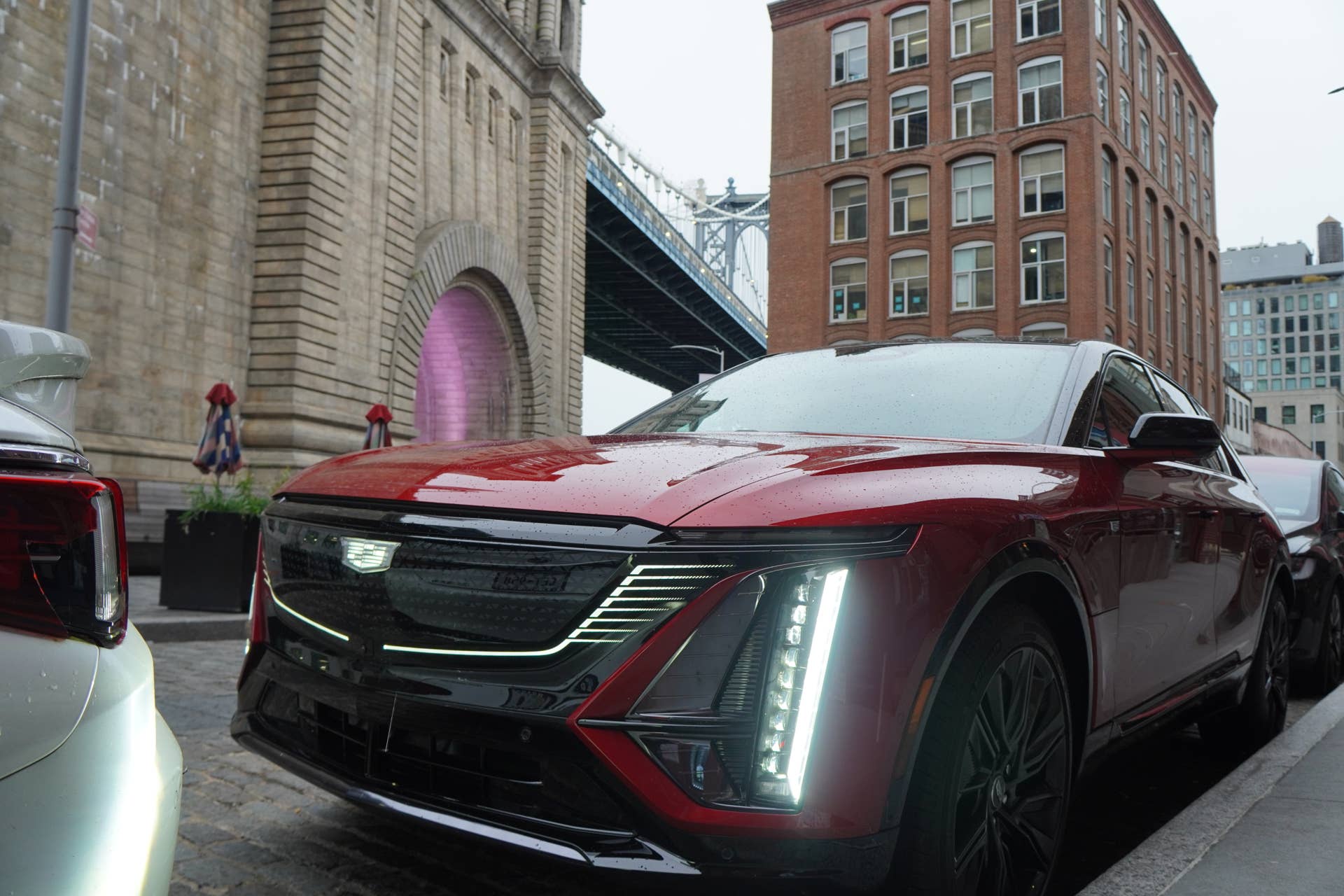
Cadillac’s design expertise is best shown in how its designers have handled the front end of the Lyriq. While competitors like Tesla with the Model Y and Ferrari with the Luce have completely done away with traditional grilles, and Mercedes’ stylists have struggled to integrate a grille on an electric vehicle without an internal combustion engine, Cadillac has seemed to have found a balance. Although the Lyriq does not feature a practical or usable front trunk like the Escalade IQ, it still features a dramatically long hood, which makes its faux grille feel like it belongs there instead of it being there for an ornamental effect.
However, it doesn’t mean that they haven’t done away with any form of pomp and circumstance. When you get within a few feet of the Lyriq, or you press the unlock button, the LEDs illuminating the Cadillac badge and “grille,” as well as its daytime-running lights and headlights flicker on in a sequence that announces its presence and welcomes you inside. It’s a feature that gets attention. In one instance at my local mall, someone in the parking garage asked “what is that, an Escalade?”
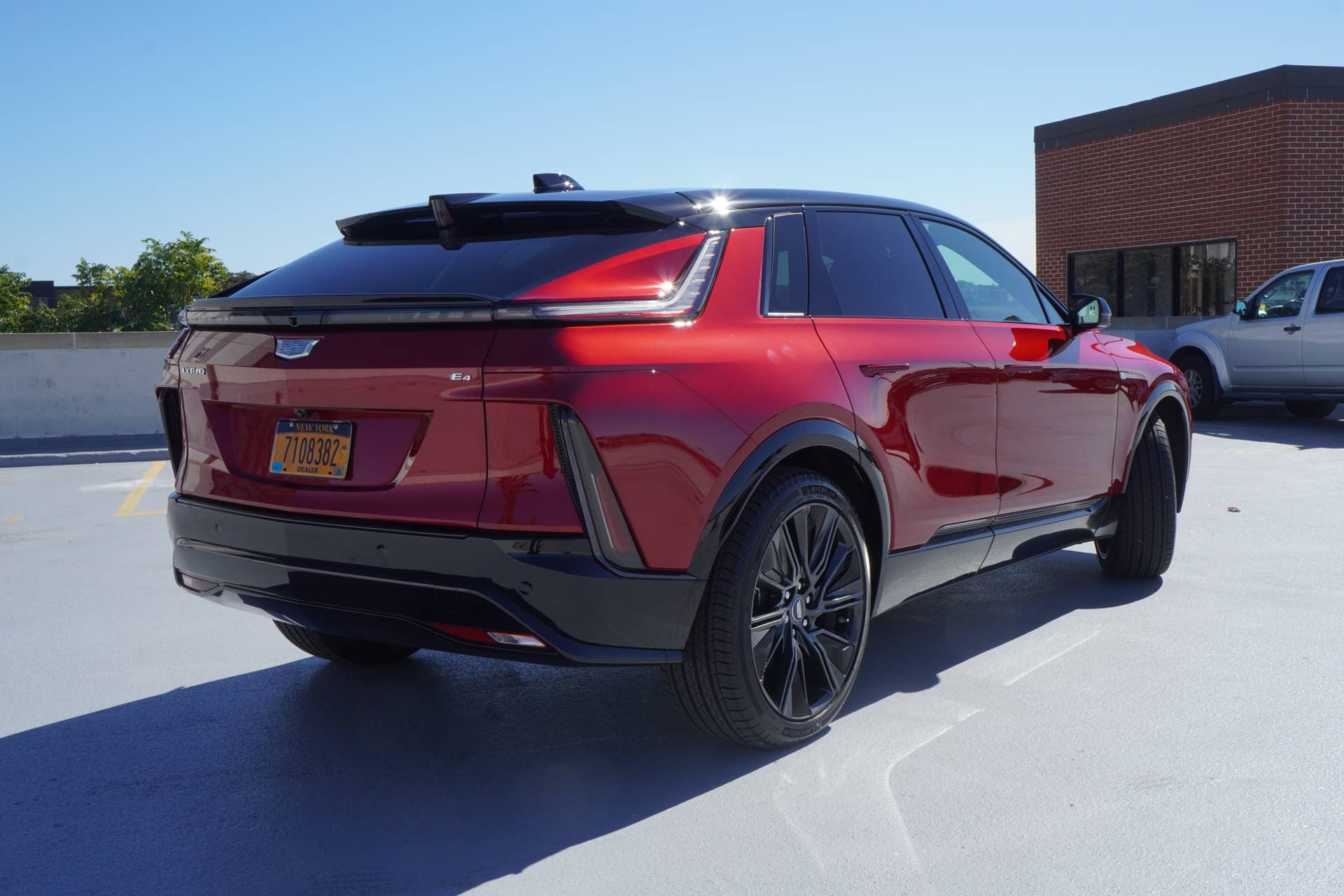
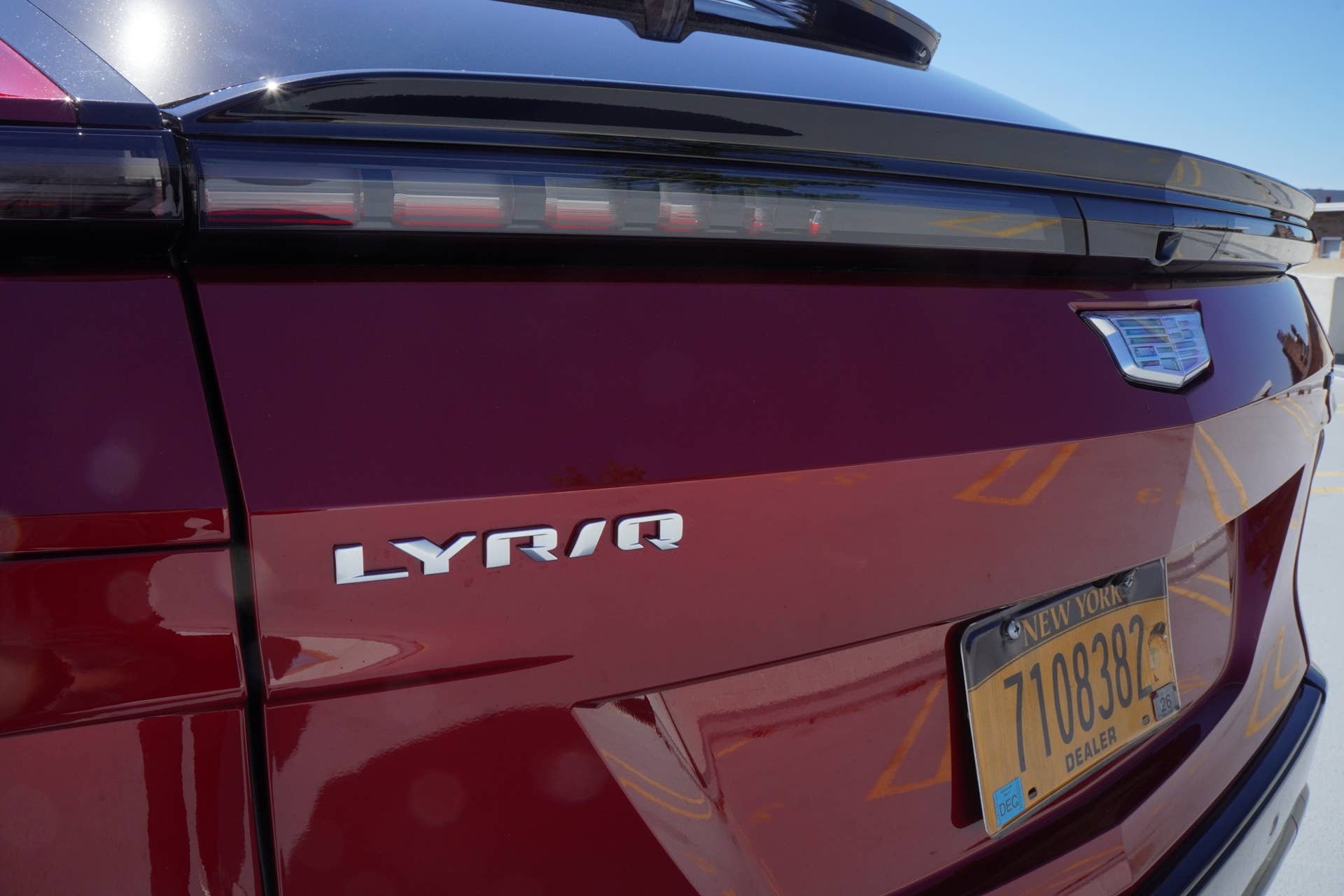
Although it isn’t an Escalade, the rest of the car is styled like something you don’t really see out on the road, let alone, it isn’t a design that has been copied by another automaker for their EV. Cadillac officially classifies the Lyriq as an SUV, but its long, elongated and somewhat low stance (for an SUV), as well as its side and rear profile give it more of the character of a shooting brake (not a wagon, sorry) than a traditional crossover. Ideally, I’d like to think that the hatchback-esque rear end is a modern-day callback to past Cadillacs like the “bustle-back” Sevilles from the 1980s, or the CTS and CTS-V Sport Wagons of the 2010s.
James Ochoa
Welcome to Tactile Paradise
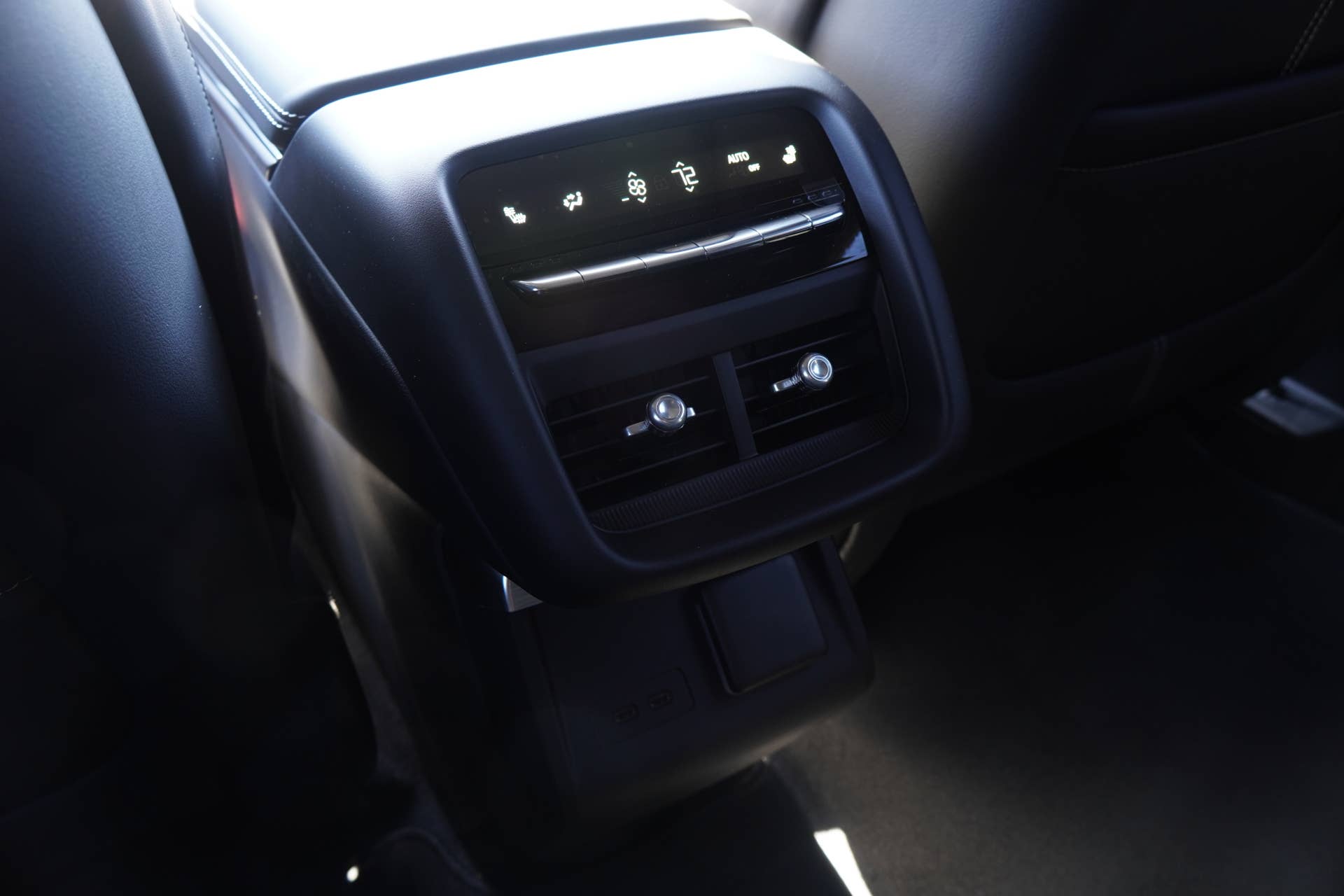
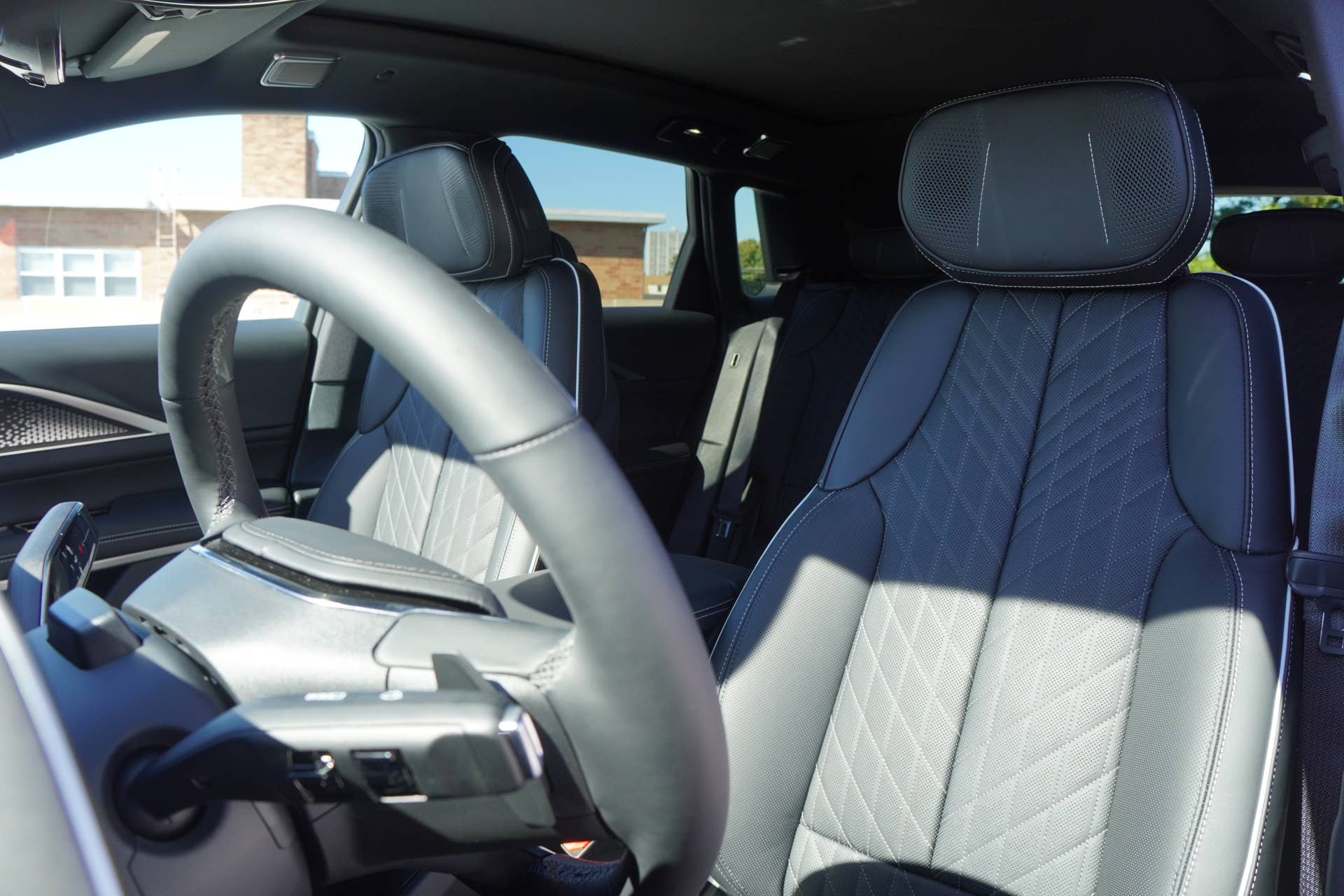
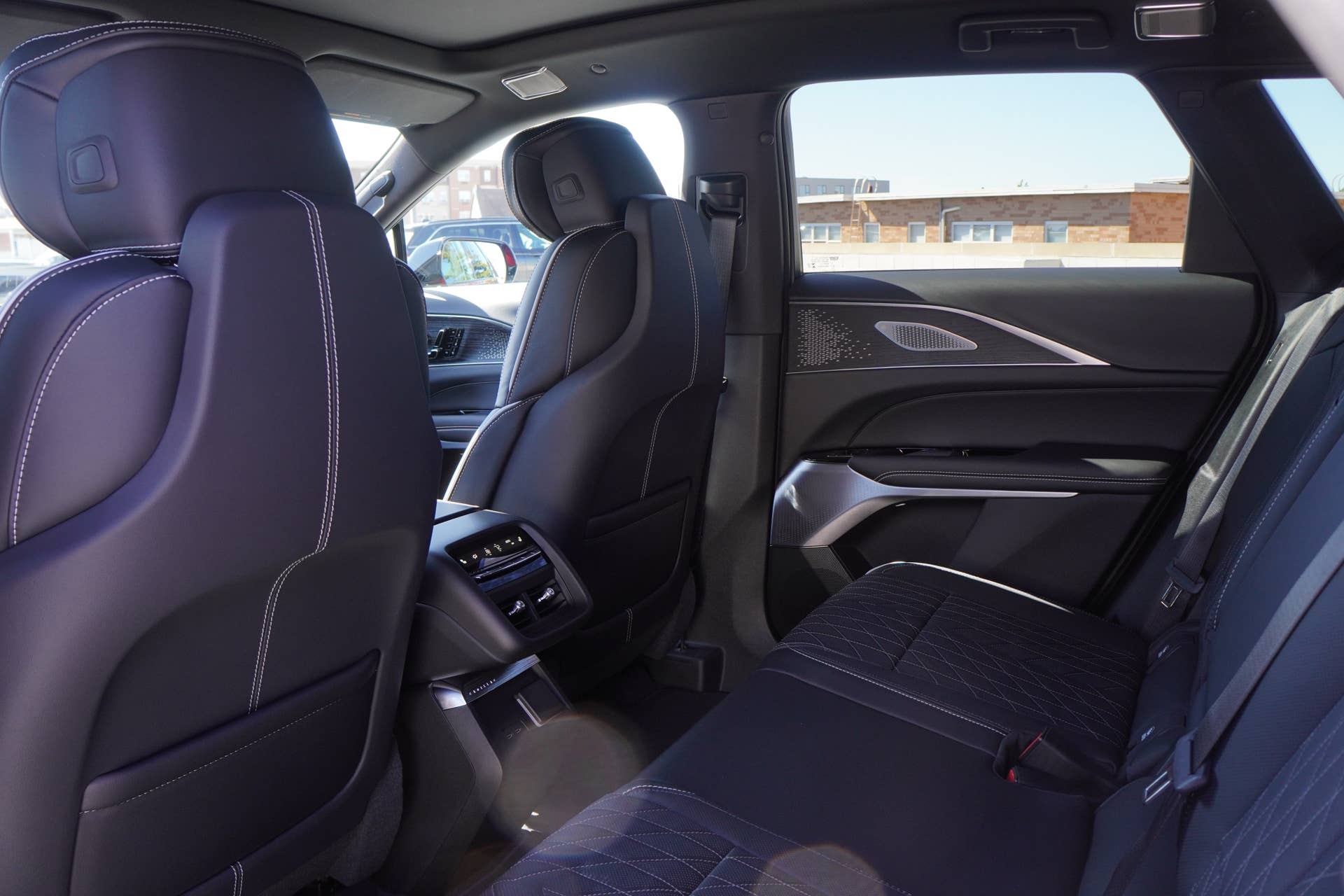
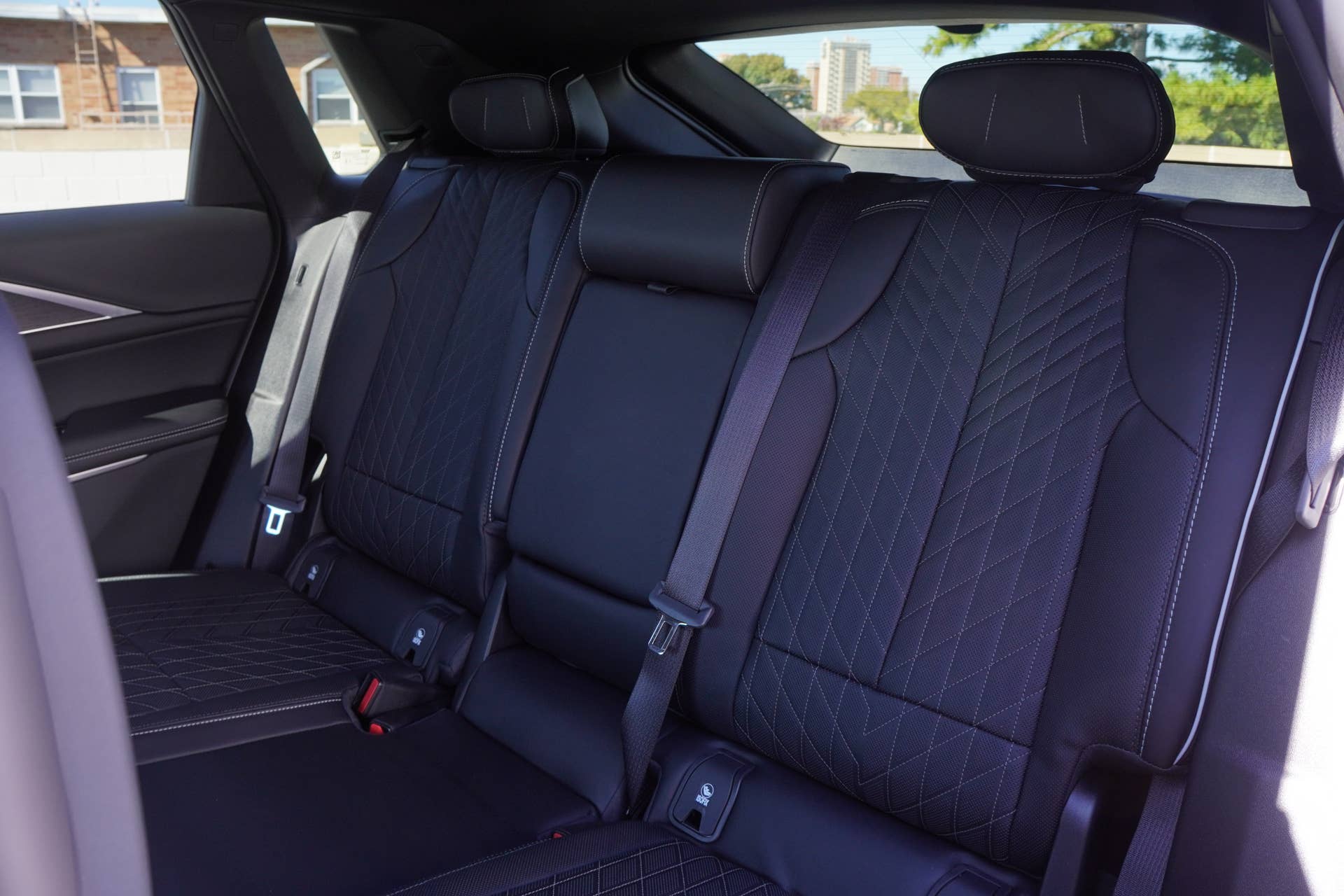
While the Cadillac Lyriq is quick and good looking, its paramount strength is in the space of its cabin; which is an amazing place to be if you are either the driver or a passenger. Your kids, friends or other passengers you might have in the rear will have all the space they need. According to Cadillac, rear seat passengers get 39.6 inches of legroom and 37.7 inches of headroom; an ample space to spread out or sit up, even if you are within the six foot territory. Backseaters also get controls for their own climate zone, heated seats, dual USB-C chargers and a full-size 120V outlet for charging a wide array of devices. Lots of cabin space doesn’t mean the Lyriq has a small trunk. Caddy says there is a cavernous 28 cubic feet of cargo space behind the seats and 60.8 cubic feet with the seats down — more than enough for a family’s Costco run with or without the kids.
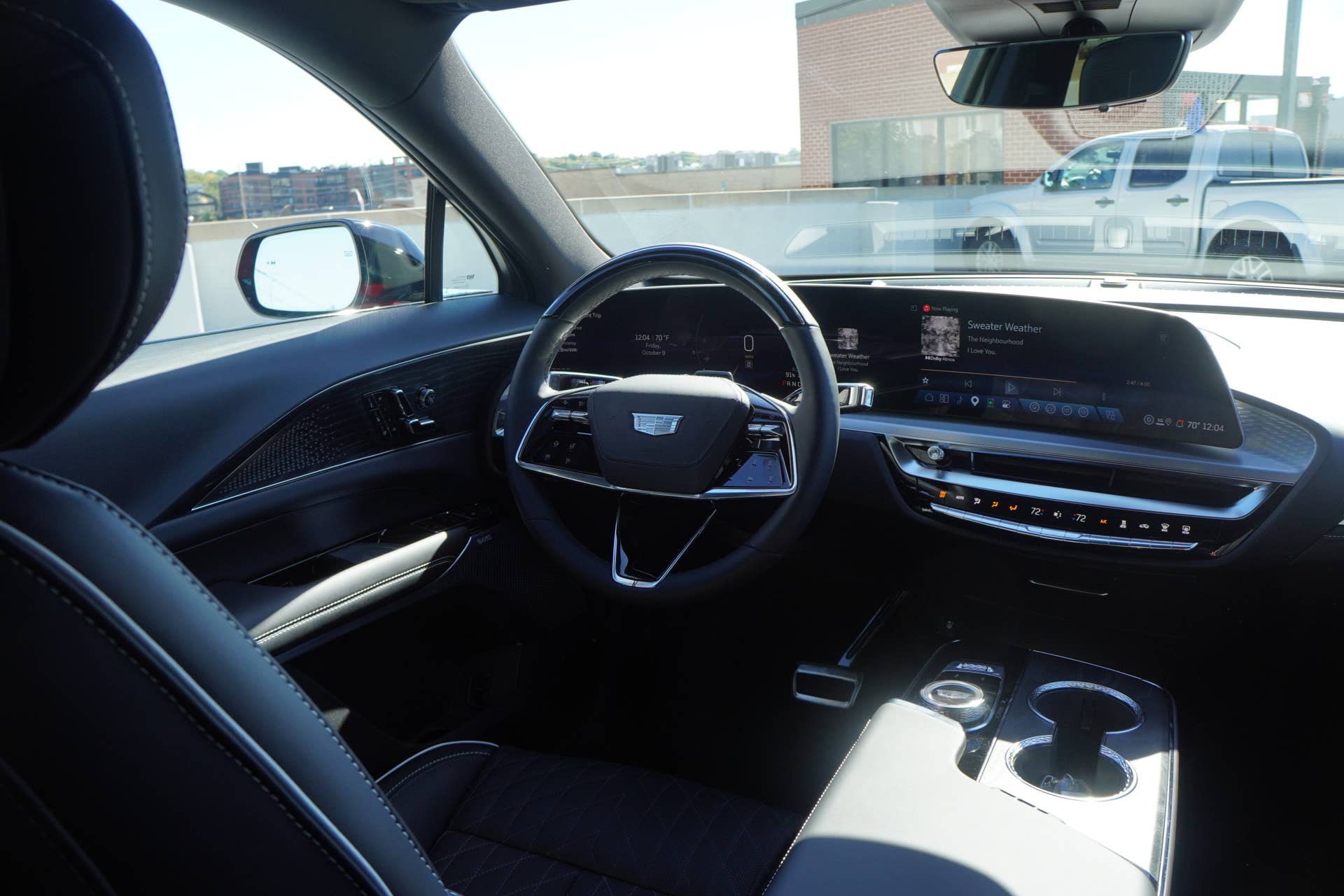
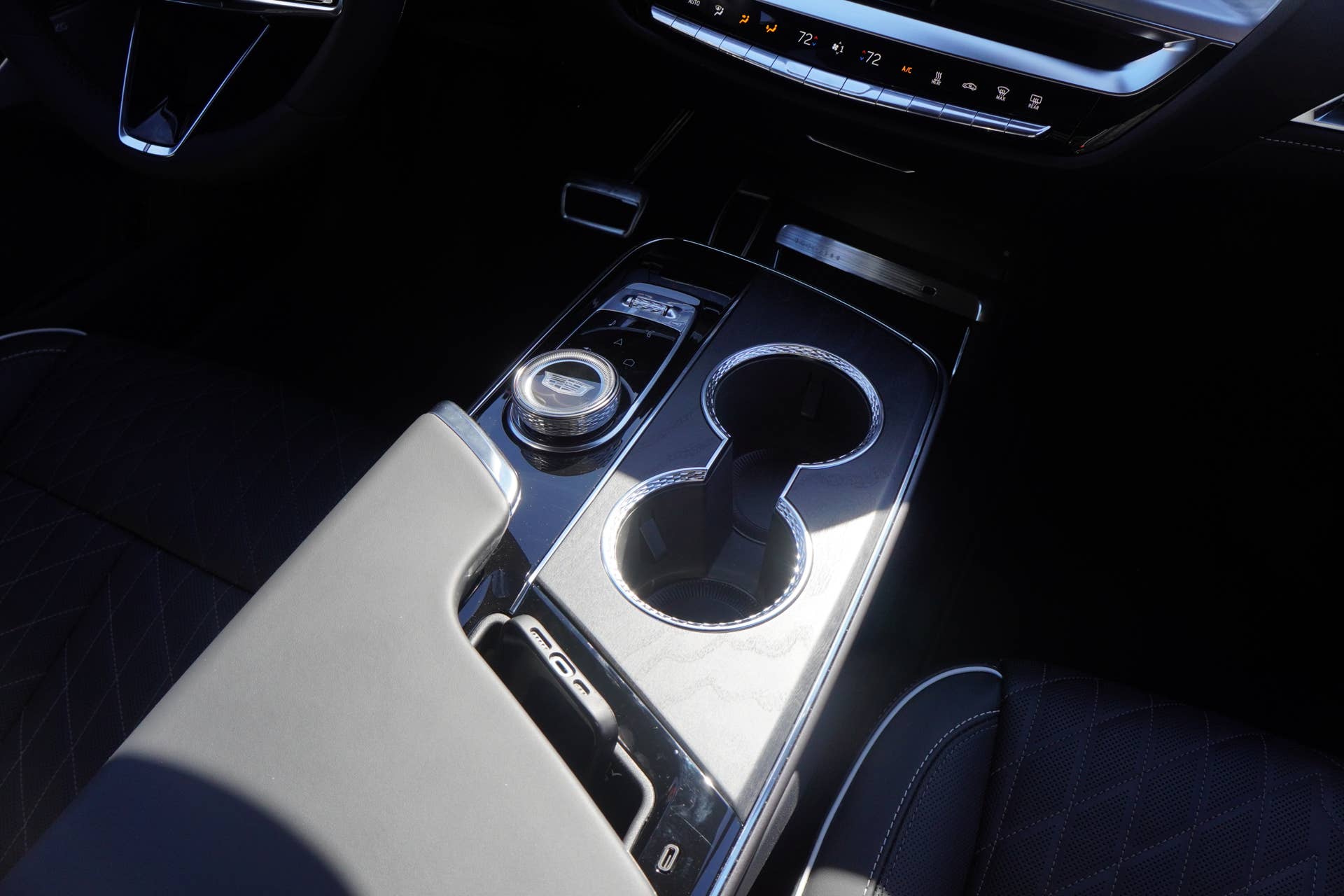
Though passengers in the back get first-class treatment, the driver is treated to a cabin that is driver-focused in both form and function. The top-trim Signature Sport model provided a level of technology and equipment that didn’t diminish from the driving experience, rather, it provided a tactile experience that other brands seem to be shying away from. The dashboard is highlighted by a massive 33-inch touchscreen that acts as its both gauge cluster and infotainment portal, but it isn’t the vehicle’s nexus, it isn’t the center of everything.
James Ochoa
James Ochoa
James Ochoa
James Ochoa
James Ochoa
James Ochoa
James Ochoa
Shifting from park to drive to reverse is still done using a dedicated stalk in around the same place as a traditional old-school column shifter, while the HVAC controls are still rocker switches that are at an easily touchable height level on the dashboard. In addition, resting your right arm on the center console enables use of a scroll wheel, volume controls and an easy-to-temember shortcut pad with buttons for important infotainment functions like maps/navigation and audio controls. Wireless Android Auto and Apple CarPlay are available, but I felt that the Cadillac’s Google built-in applications for services like Google Maps and Apple Music were sufficient.
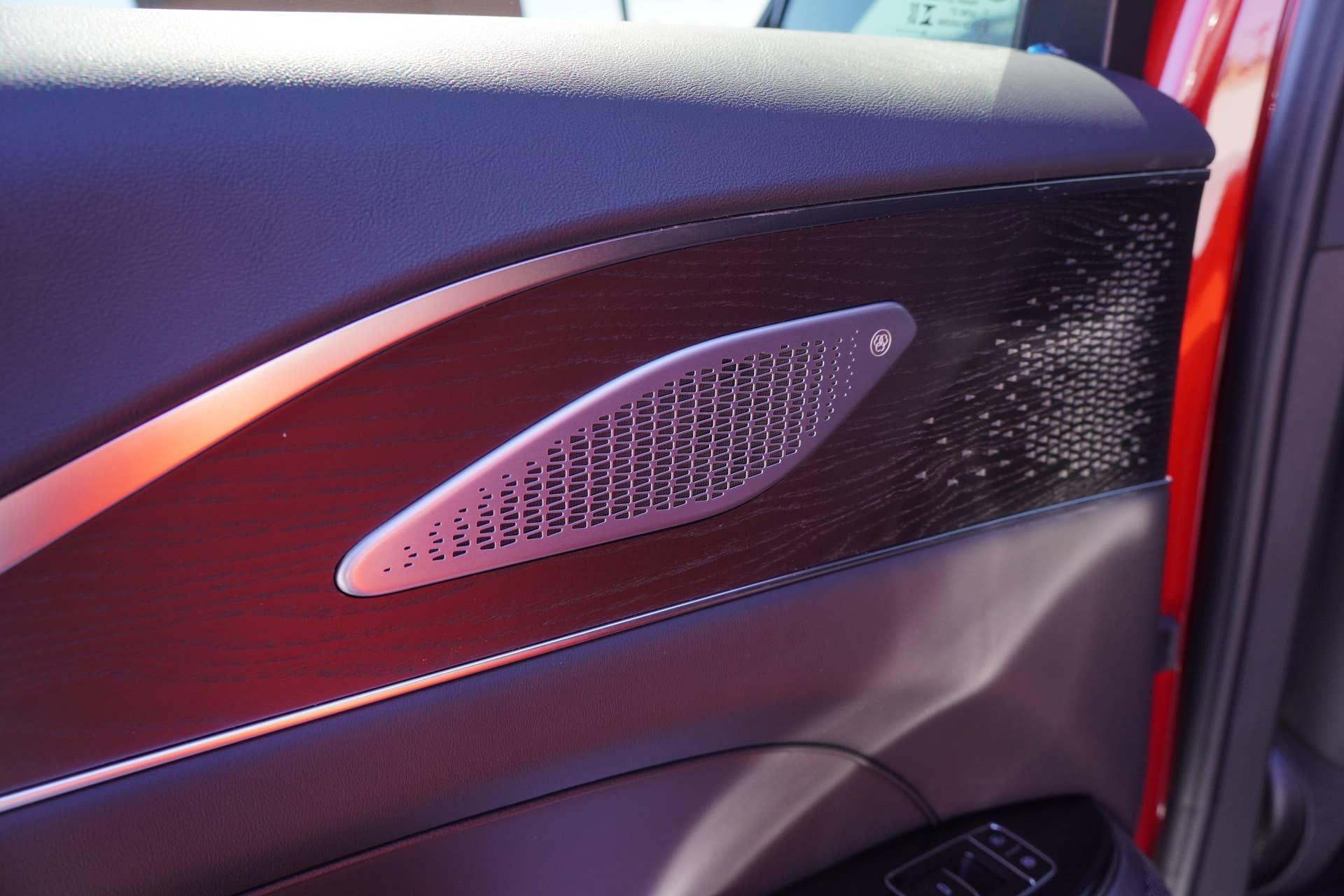
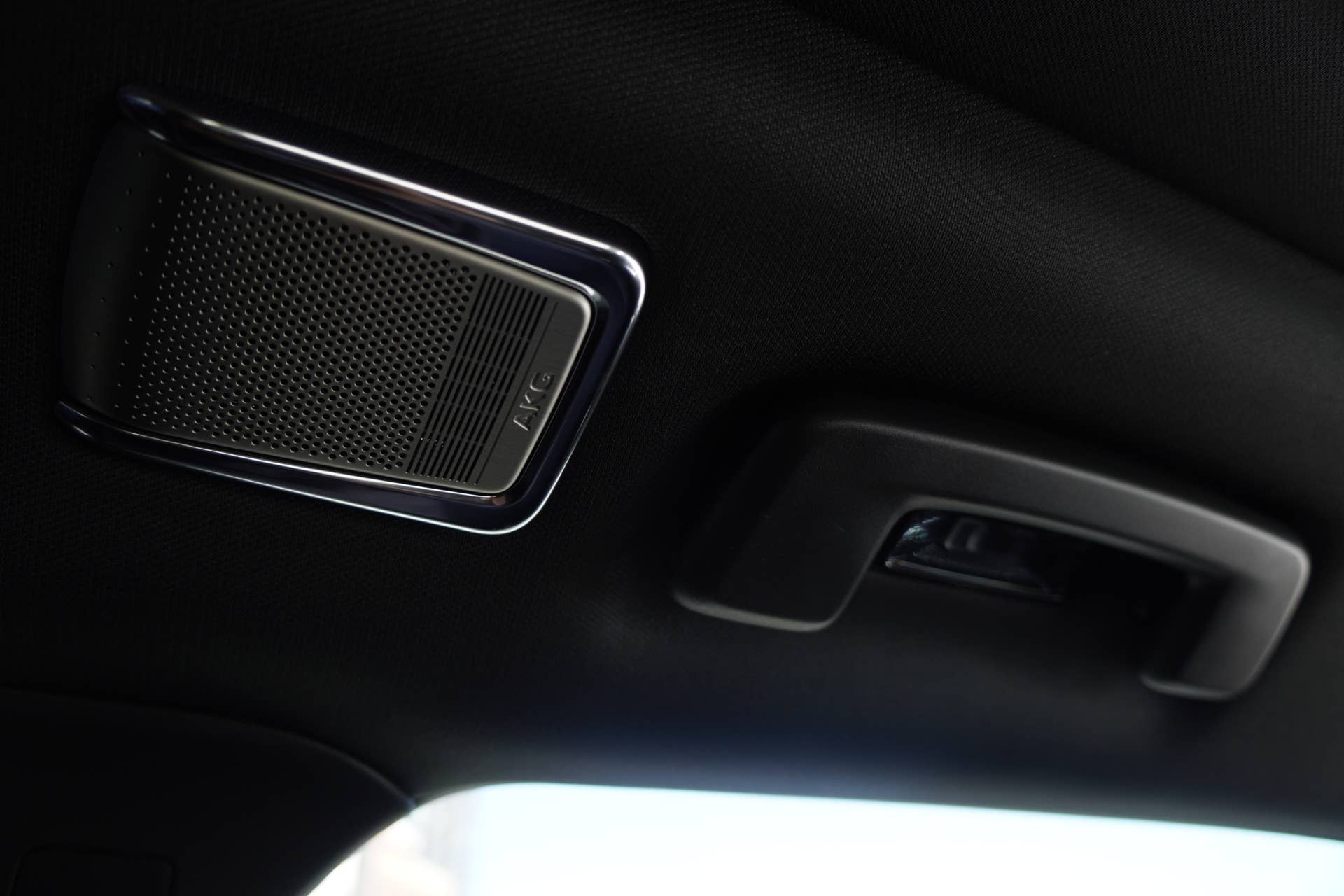
Up top, a panoramic glass roof with a power shade can help bring sunlight by day and moonlight to the cabin, while ambient lighting around the cabin helps illuminate the mood. However, my favorite feature inside was the 23-speaker AKG Studio audio system, with speakers all over the cabin, including the headliner and even the front-seat headrests. I wrote about how this vehicle’s Dolby Atmos made listening to music while driving a 360-degree experience beyond words in a separate piece, but all I could say is that there is a way to use all 23 speakers and that it sounds amazing.
James Ochoa
The Cadillac of EVs or The EV That Happens to be a Cadillac?
The 2027 Cadillac Lyriq I tested was the top-line Signature Sport AWD model, which has an MSRP of $67,300. Our vehicle was equipped with a $3,790 Nappa Leather Package, $3,500 AWD system, the $1,480 optional 19.2 kW AC charging module, $1,325 Radiant Red paint, $695 Black Roof, as well as NACS adapters for both CCS1 and J1172 plugs, which cost $189 and $67 respectively. In total, the out-the-door price for the Lyriq I tested, including destination, was $80,141.
After spending some time with the Lyriq, I wanted to conclude that the Lyriq is a vehicle that can be best described as the “ultimate manifestation of Cadillac.” Despite being a midsize crossover SUV, the vehicle’s design and dimensions and behind-the-wheel feel make it feel like a vehicle about one and a half to double its size. In a practical sense, its high beltline, long hood and massive turning circle made it a hoot to drive around the cramped streets of Manhattan and Brooklyn; even early in the morning when the day’s traffic slowly trickles into the madness the city is known for.
James Ochoa
While that may be an inconvenience for most, for me, that’s what screams Cadillac. Add the fact that it’s a silent EV that rewards you with gobs of power every time you advance the accelerator pedal, the immersion and feel could only intensify. This realization and the residual feelings from this experience has only made me wonder about one question that still lingers in my head: is the Lyriq the Cadillac of EVs, or is it an EV that happens to be a Cadillac?
While there’s enough evidence for interested parties to argue in the comments section to prove that it is both, it only proves to me that the Lyriq is its own unique creation that a brand like Cadillac can only offer. I feel that your conclusion on whether it lies on one side or the other is up to you to decide; no question. But, as we approach about a half-decade of production Cadillac has expanded its luxury EV presence, the 2027 model of the Lyriq only proves that Cadillac hasn’t forgotten about the vehicle that got them there in the first place. If it was good enough for the Germans to award it car of the year in the luxury category in 2024, it’s certainly good enough for you.
About the author

James Ochoa
Senior Editor, Autoblog