
EV pickup trucks can be somewhat of an oxymoron
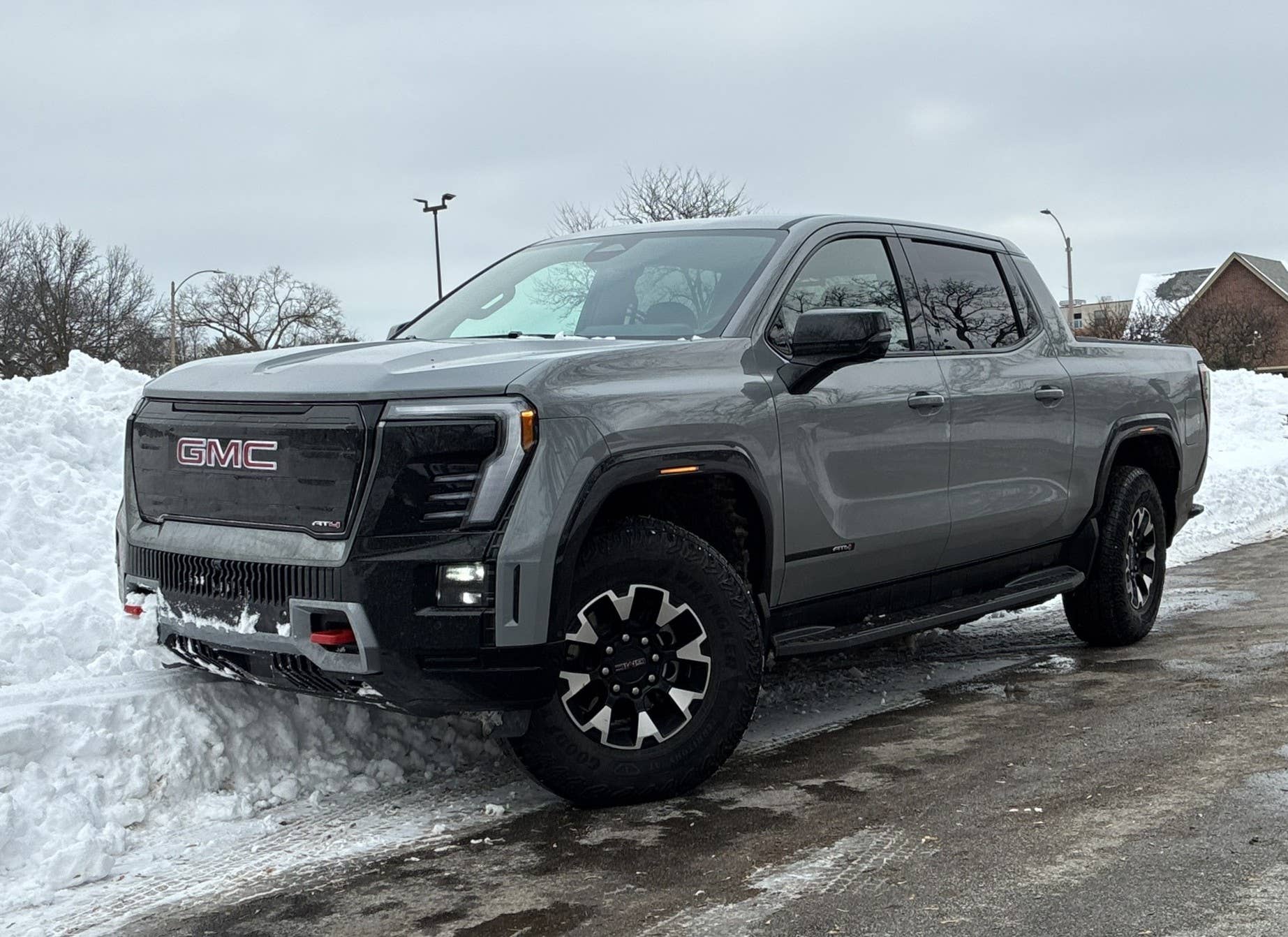
Big electric trucks run counter to the idea that EVs should be compact, affordable, and urban-friendly. Nevertheless, these heavy behemoths are a growing segment, providing power, efficiency, and utility for a new generation of pickup truck owners. The 2026 GMC Sierra EV is a full-sized electric truck that debuted in 2024. Its primary competitors are the Ford F-150 Lightning, Tesla Cybertruck, Rivian R1T, and its Chevy Silverado EV sibling. The AT4 trim level is new for 2026, and it’s aimed at buyers who want more clearance and toughness than the standard trim. It’s also a step above the Silverado EV in terms of standard features and near-luxury appointments.
Key Points
- The Sierra EV AT4 provides a 2-inch lift, off-road suspension, skid plates, and torque vectoring by braking for increased off-road capability. However, it has some limitations due to the lack of a locking differential.
- Features such as a deployable midgate and a multi-function tailgate provide additional hauling capabilities.
- A refined interior, a stunning center display, a huge frunk, and top-notch driver-assist features make it comfortable and family-friendly.
Amos Kwon
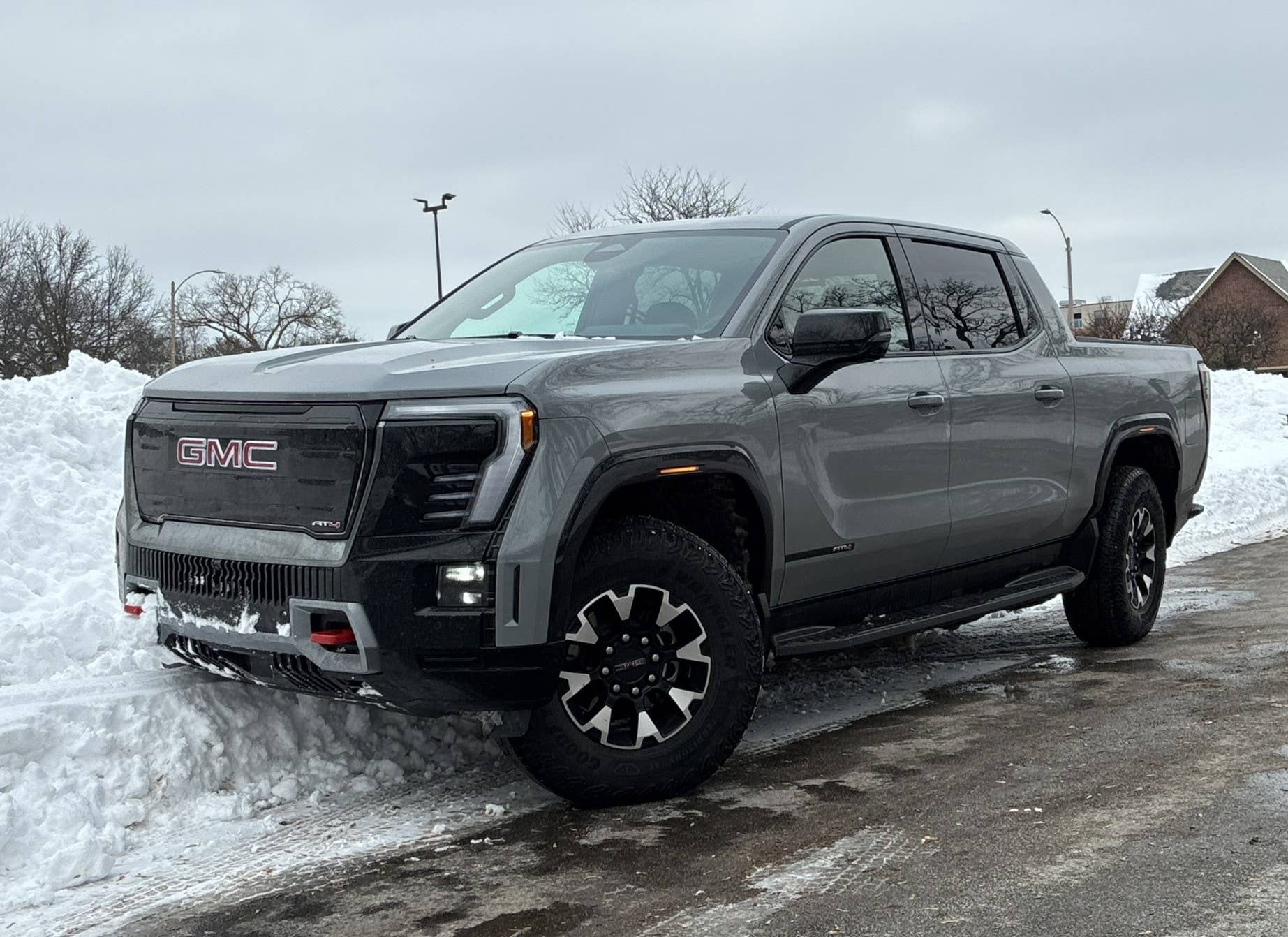
My test vehicle was a 2026 GMC Sierra EV AT4 Extended Range with a base price of $79,300. Standard feature highlights included 35-inch All-Terrain tires, GMC badge and grille illumination, red front recover hooks, front skid plate, spray on bedliner, heated and power-folding exterior mirrors,7.2 kW offboarding power & AC charge capability, seven total power outlets, E-Trunk with power hood, Multi-Pro tailgate, 4Wheel Steer with CrabWalk, dual zone automatic climate control, heated and ventilated front seats, heated rear outboard seats, a 16.8-inch infotainment screen with Google Built-In, an 11-inch driver information center display, a 14-inch head-up display, wireless phone charging, and a Bose premium audio system.
Standard safety features included Rear Cross-Traffic Braking, Reverse Automatic Braking, Front Pedestrian and Bicyclist Braking, Forward Collision Alert, Enhanced Automatic Emergency Braking, Rear Pedestrian Alert, and Intellibeam high beam assist. Options included Thunderstorm Gray Paint, the AT4 Premium Package with Technology Package, and the fold-down MultiPro Midgate. The total price came to $82,090, including a $2,095 destination charge.

Amos Kwon
Exterior & Interior Styling – 7/10
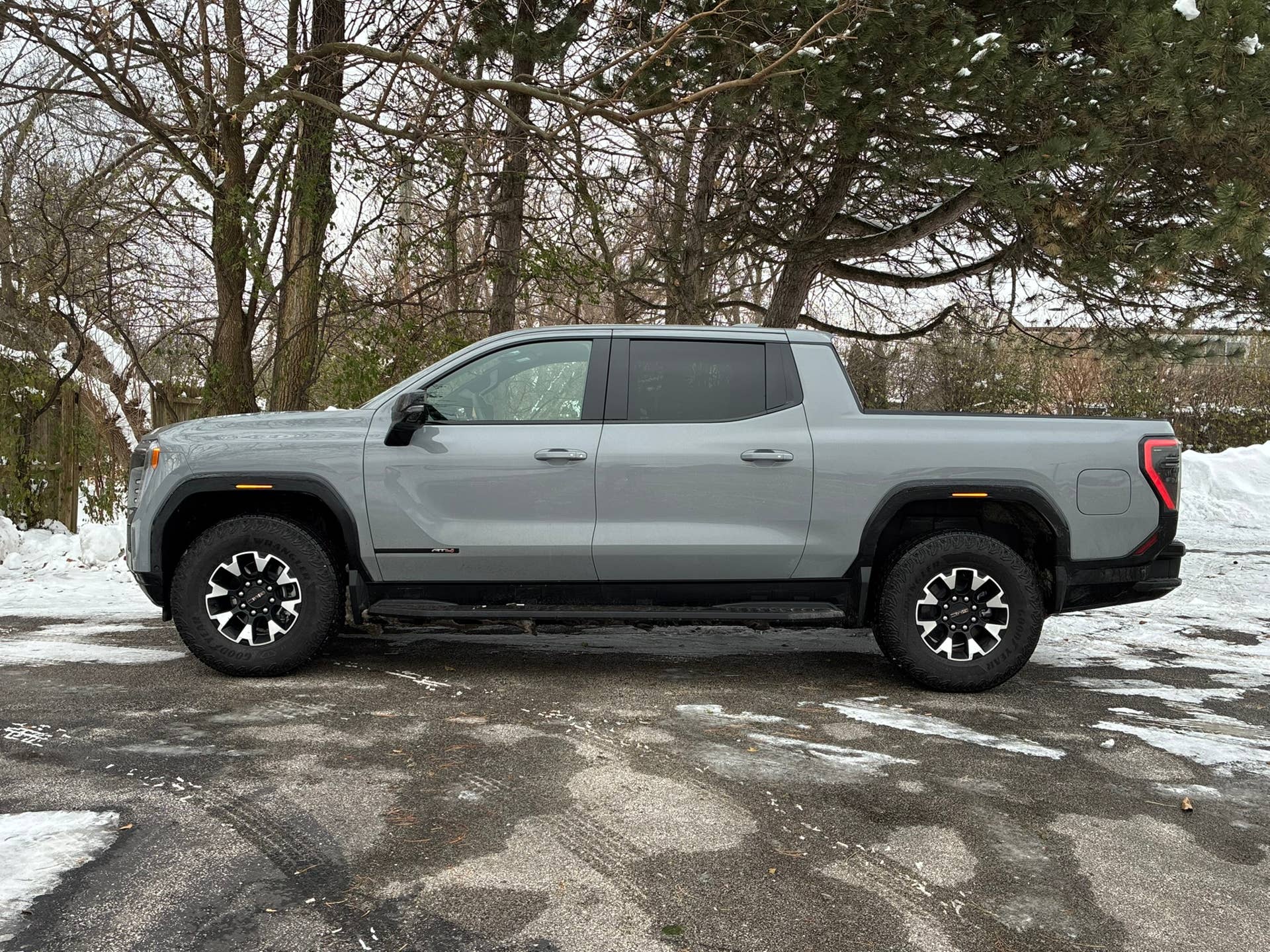
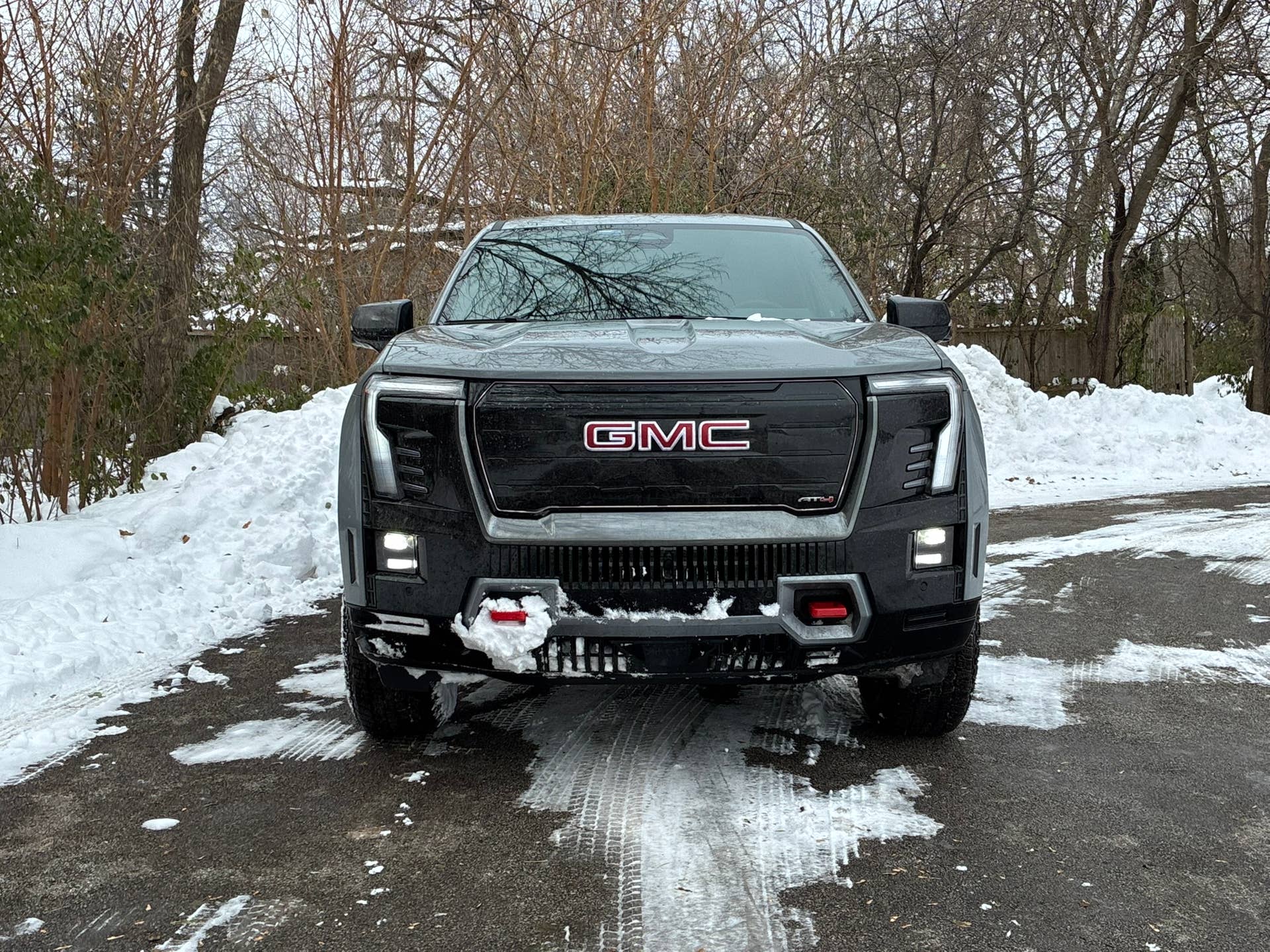
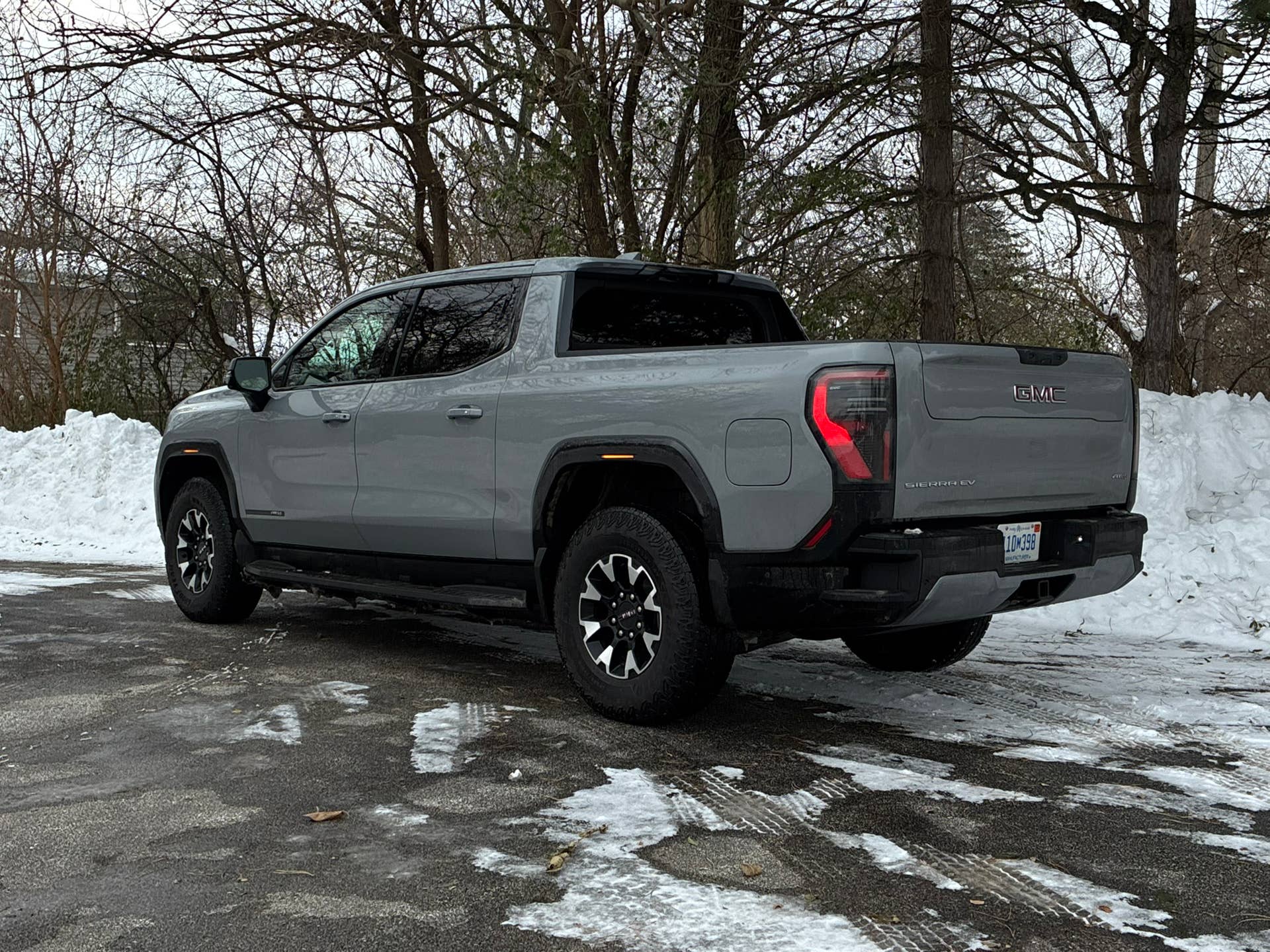
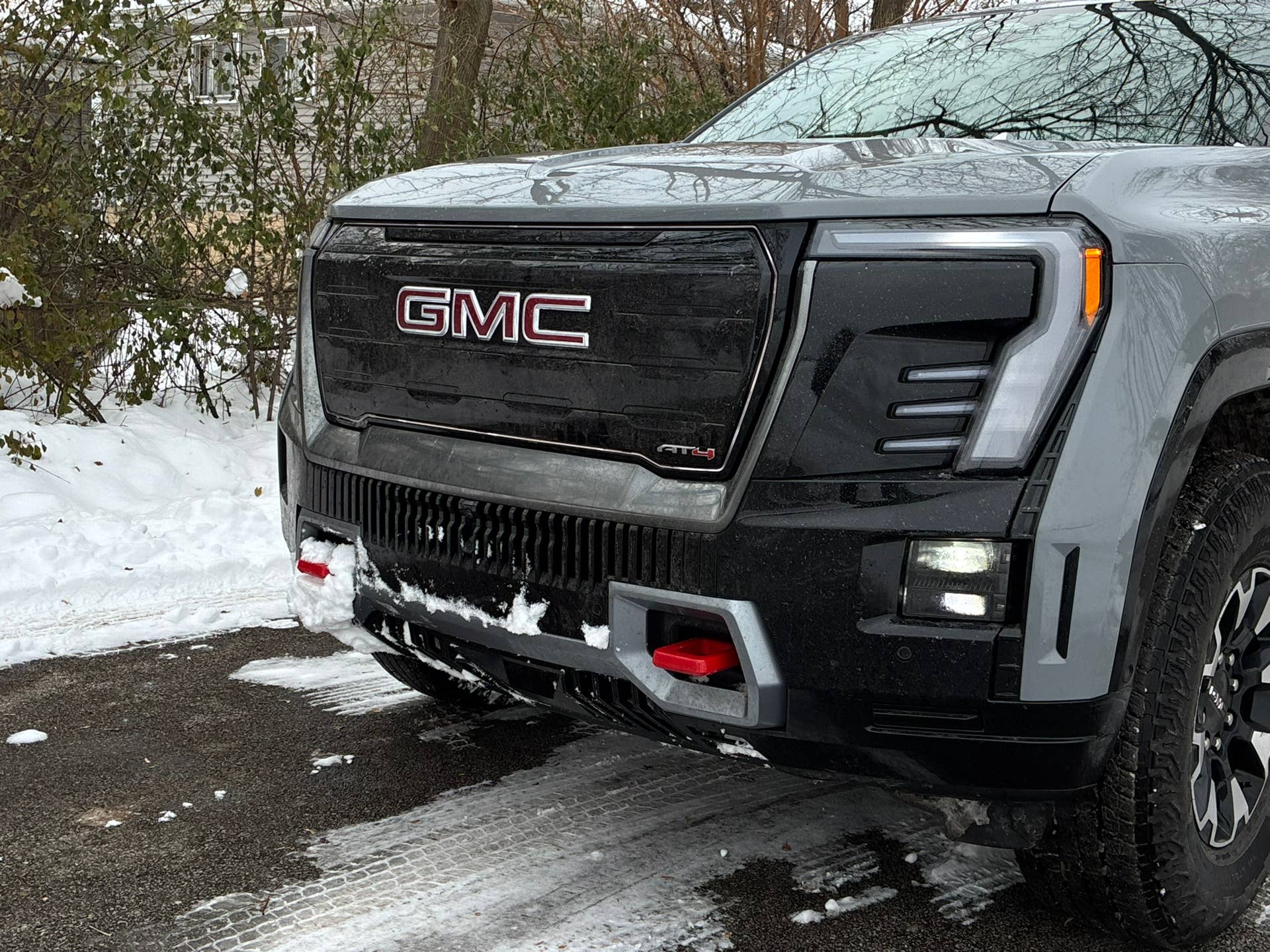
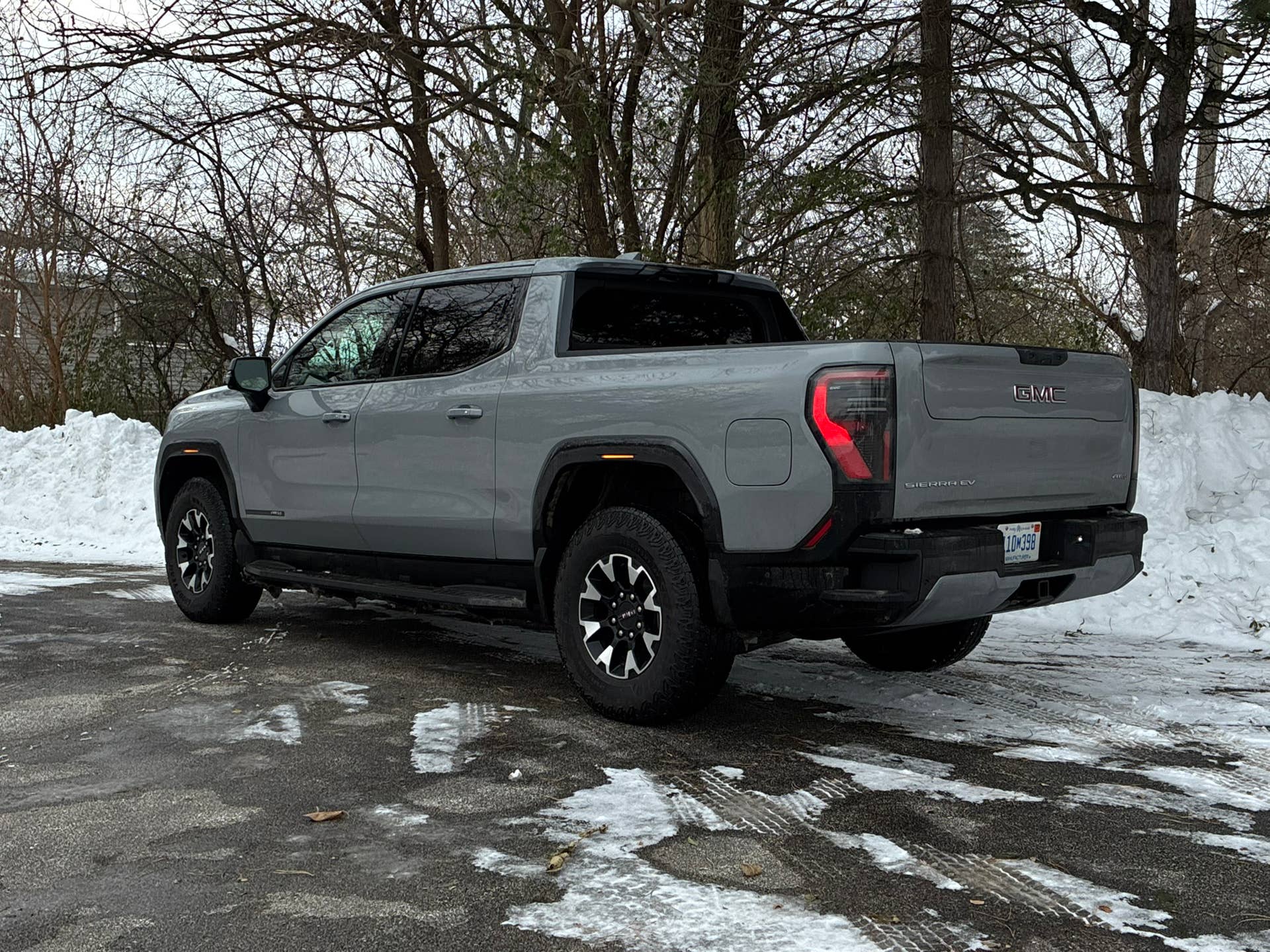
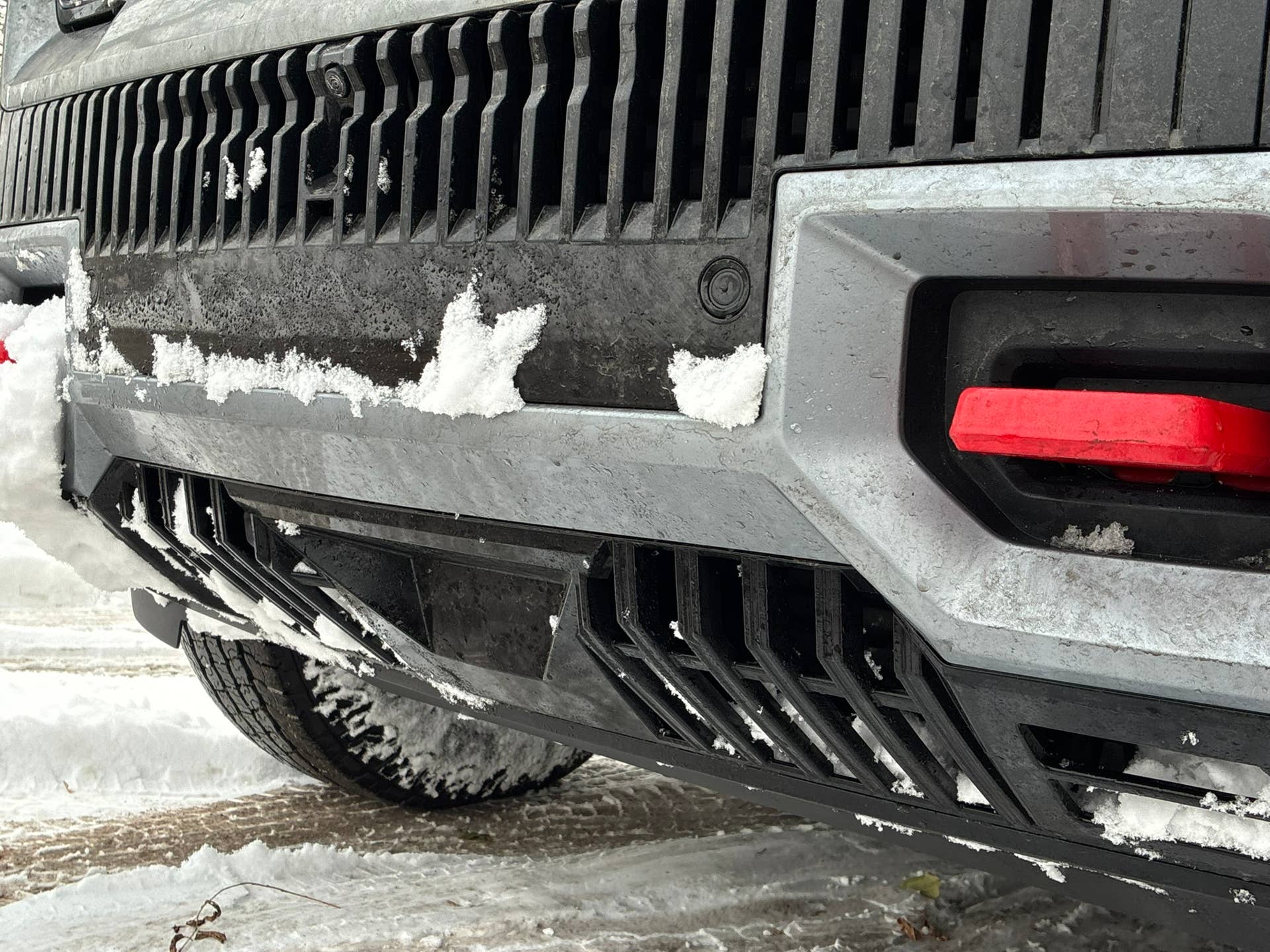
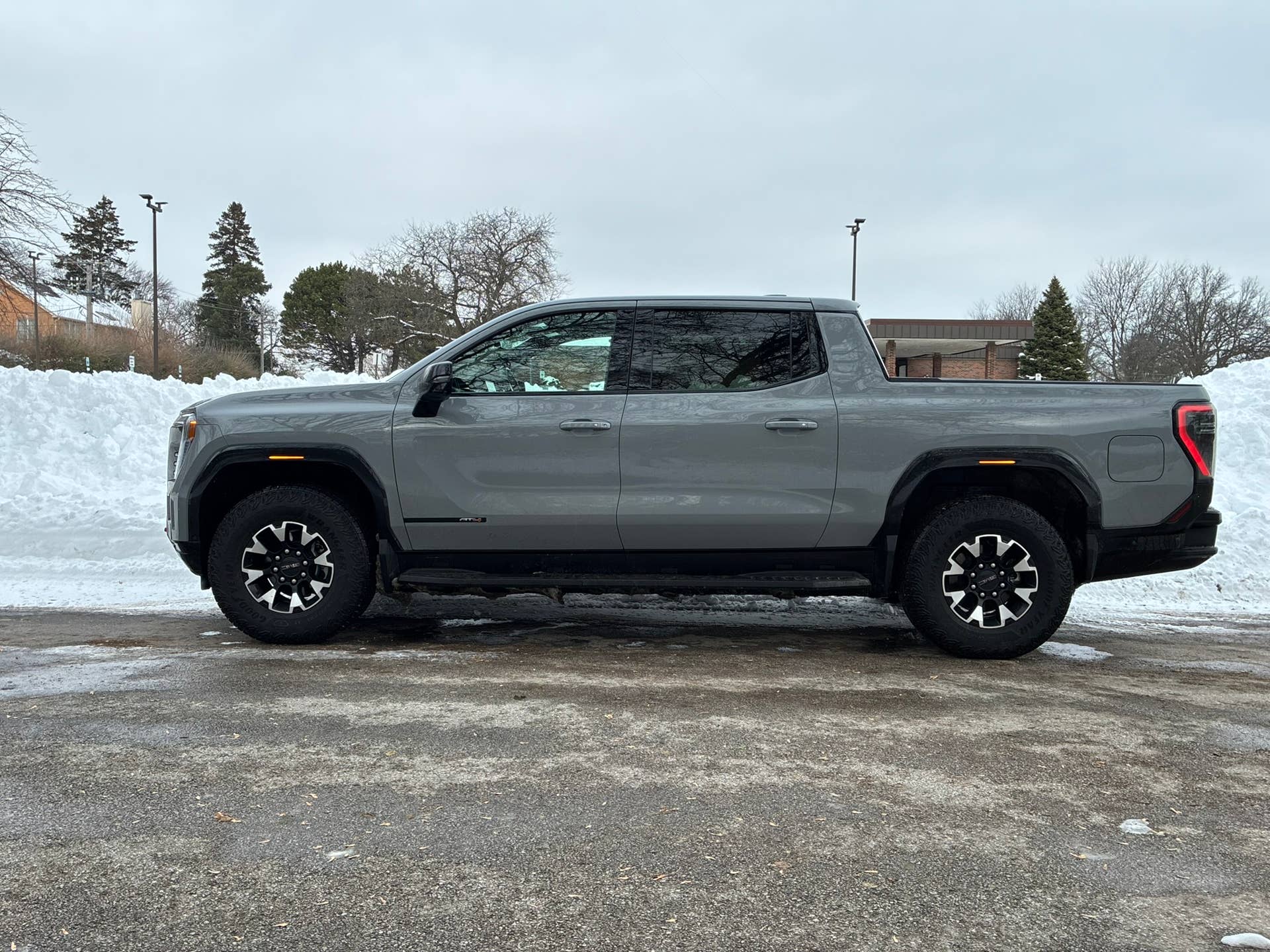
The Sierra EV has a distinct look from its gas sibling. While it still looks like every part of a full-size truck, the EV has a more modern appearance and a noticeably thicker profile, especially in profile view. The Sierra EV AT4 has real presence, not just because of its size but also because of its massive front fascia. While big grilles are de rigueur among full-sized pickups, the Sierra EV’s faux version is actually smaller than the one found on the gas Sierra. It’s the rest of the front end that makes it so noticeable with the winged grille frame, the big squared-off DRLs, and the AT4 red tow hooks framed in silver. It’s on the busy side, but it’s definitely distinct.
Amos Kwon
Amos Kwon
Amos Kwon
Amos Kwon
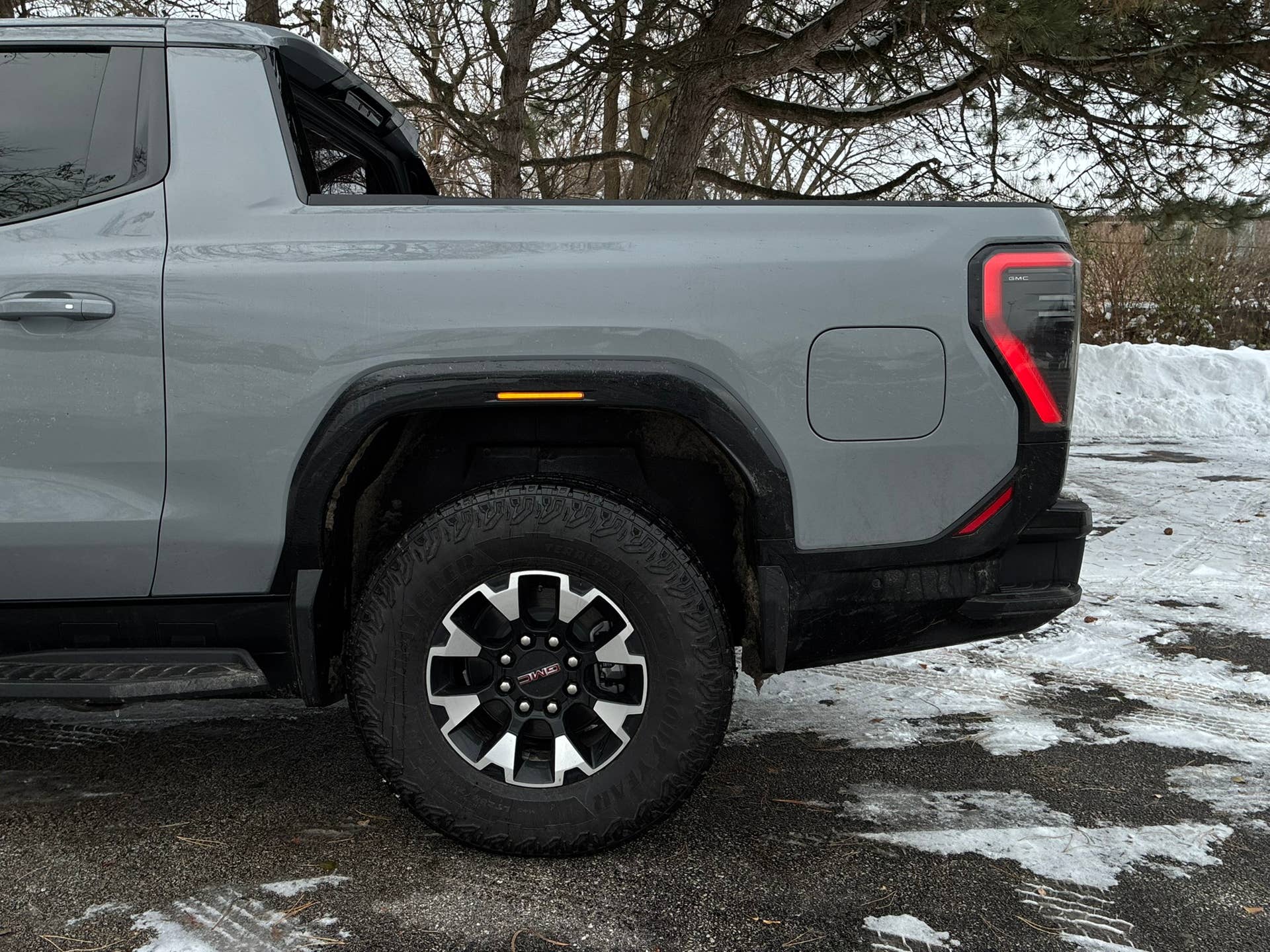
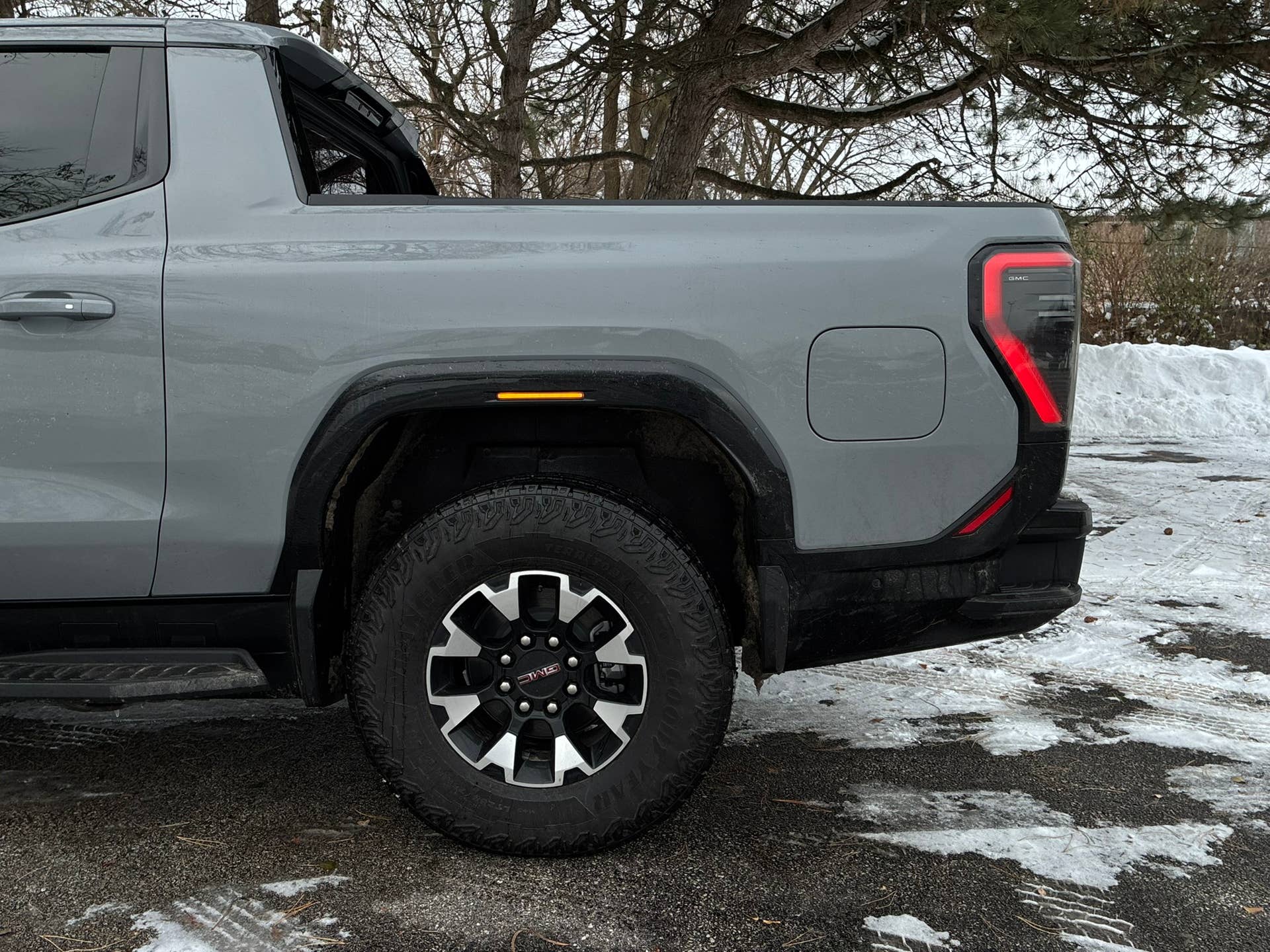
The addition of non-retractable running boards further emphasizes the chunky body. The sculpting aft of the front fender well is deep and runs past the rear door. It’s more dramatic than the one found on the regular Sierra, as is the uptick in the rear door window frame. The Sierra EV is capped off by a taillight signature that nicely matches the DRLs.
Amos Kwon
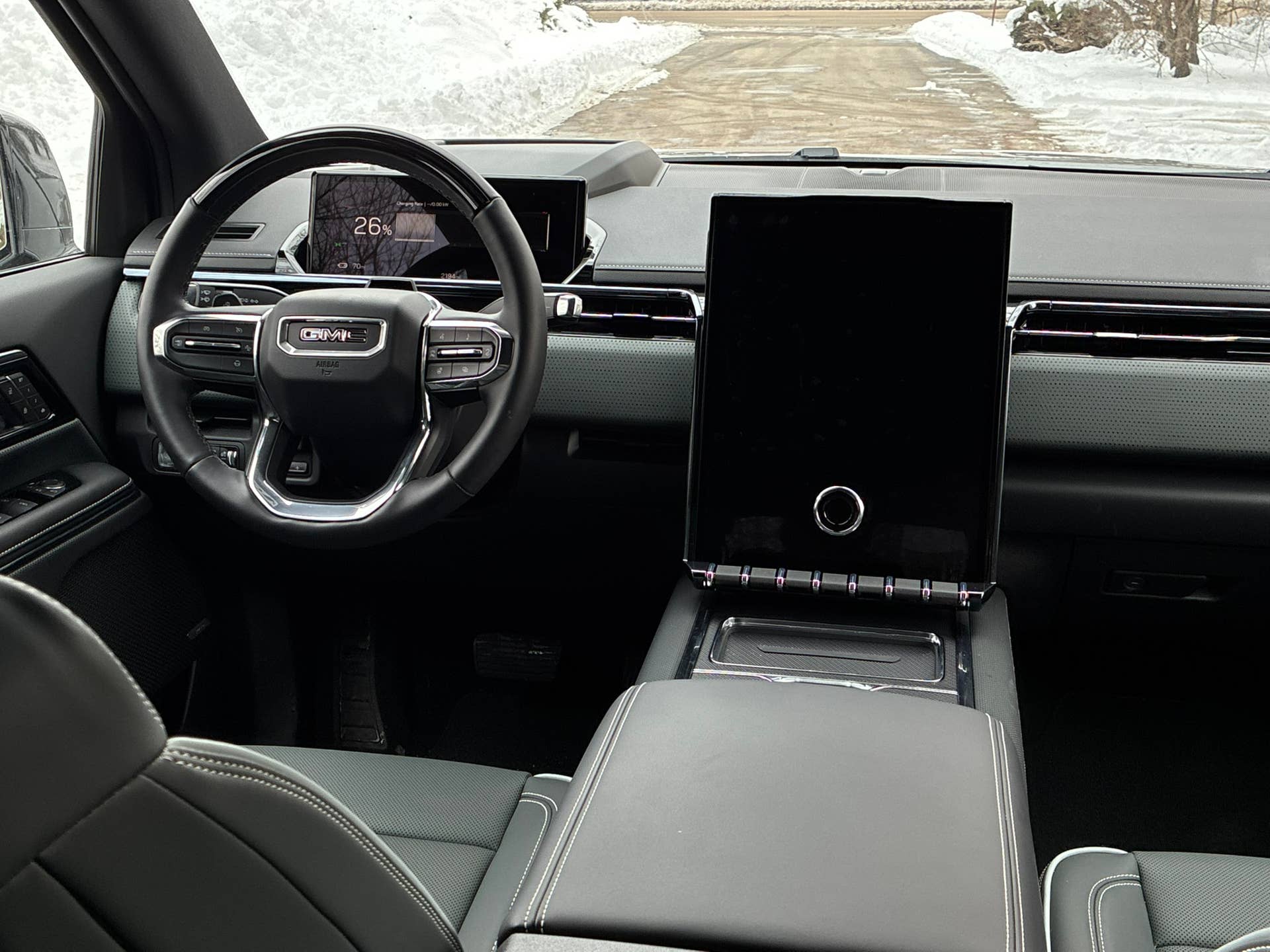
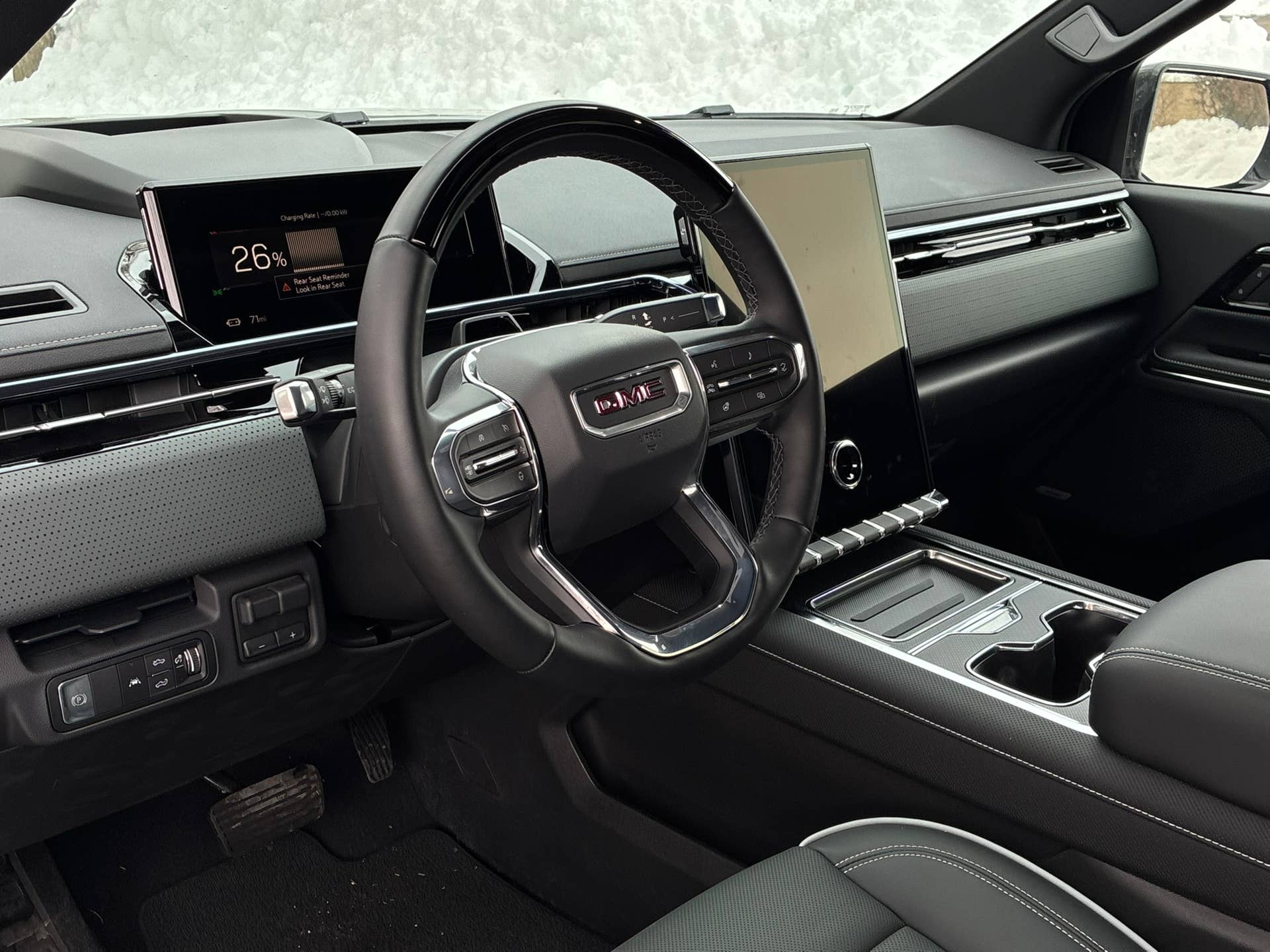
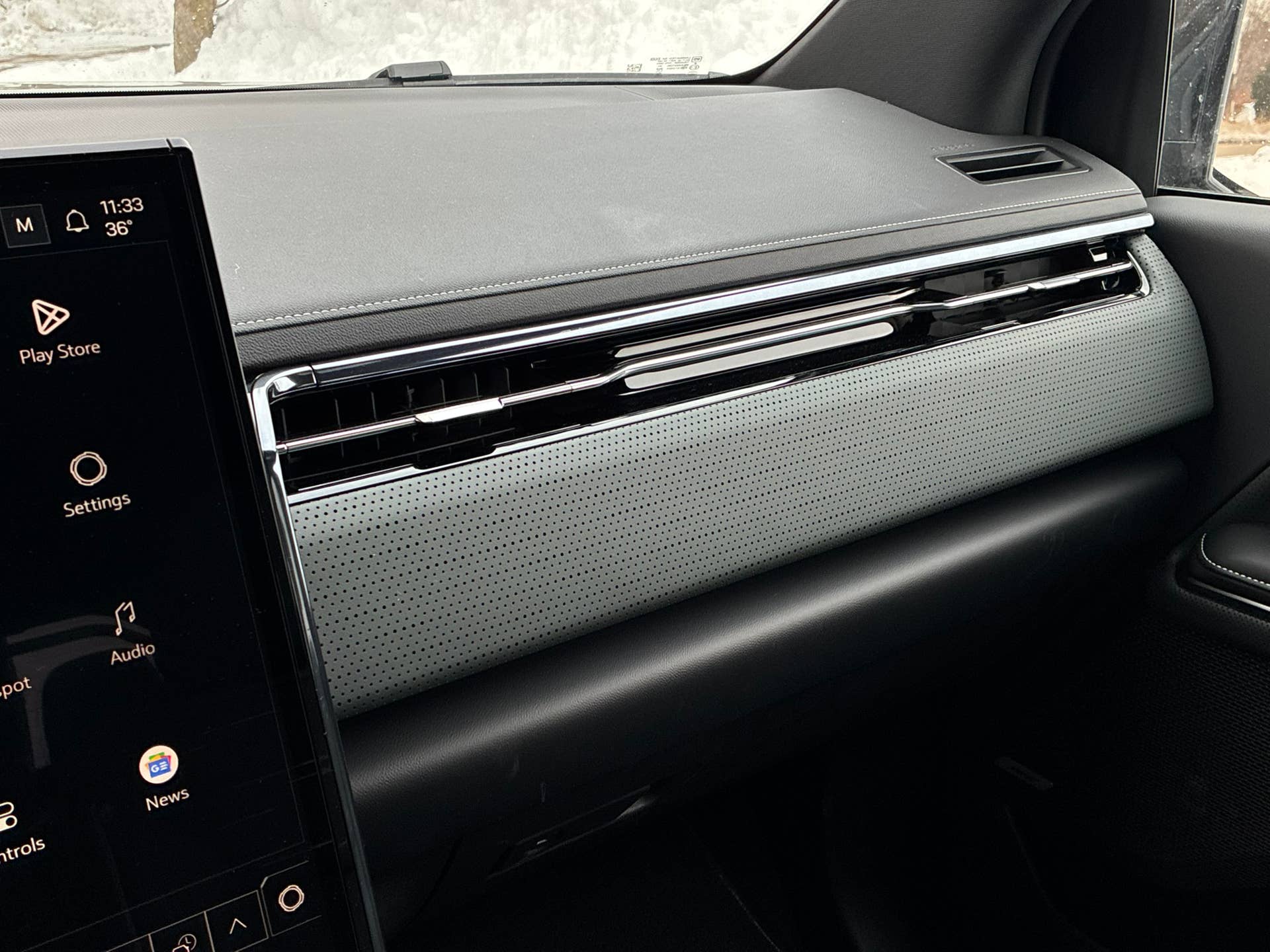
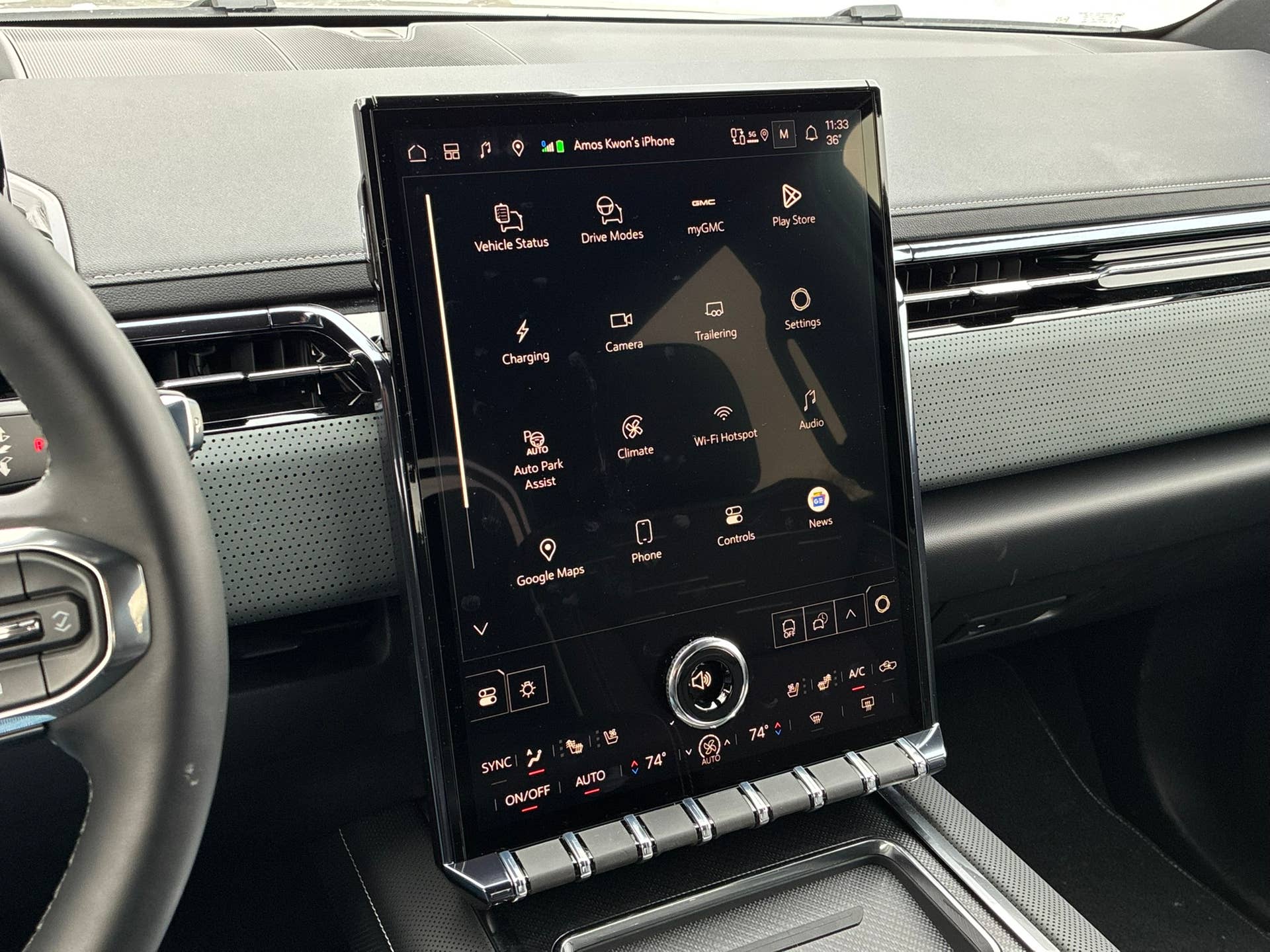
Inside, the Sierra EV AT4 exhibits a refined aesthetic dominated by the portrait-oriented 16.8-inch central touchscreen infotainment system. It’s bigger than it needs to be, but it is beautiful and crisp nonetheless. The dash incorporates the HVAC vents into the linear trim, and I appreciate the minimalist look that runs counter to big blocky details found on most trucks.
Amos Kwon
Amos Kwon
Amos Kwon
Amos Kwon
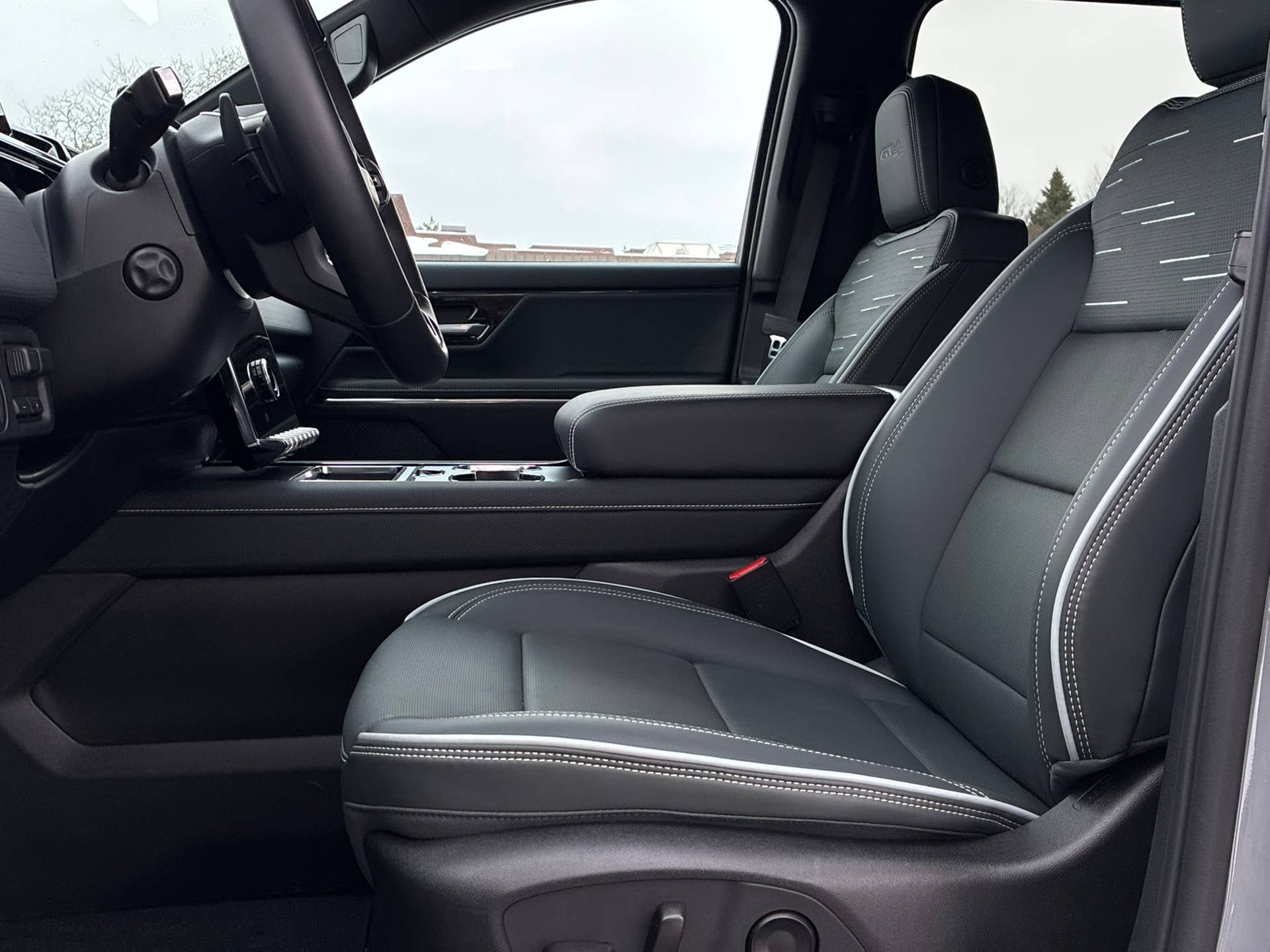
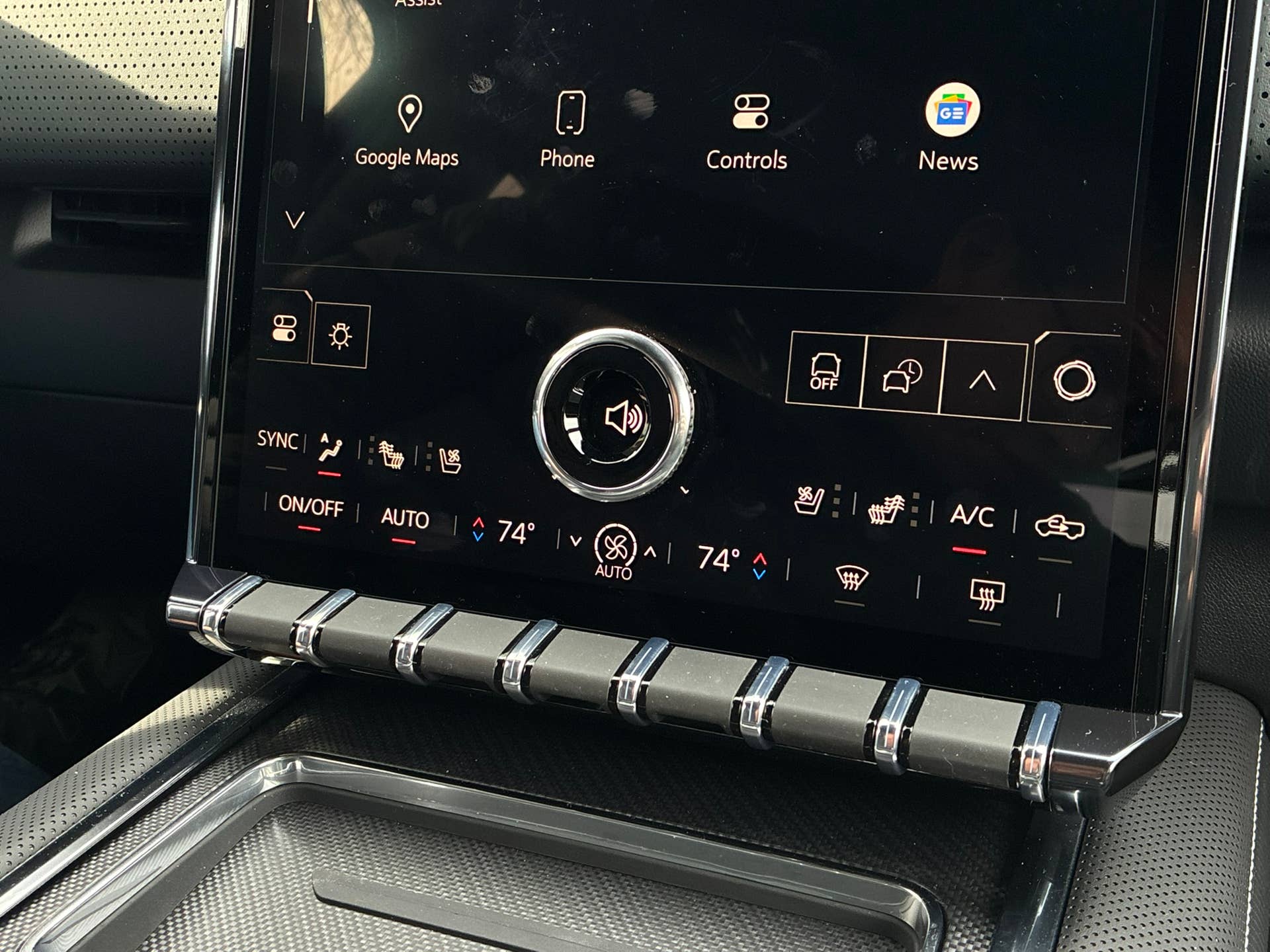
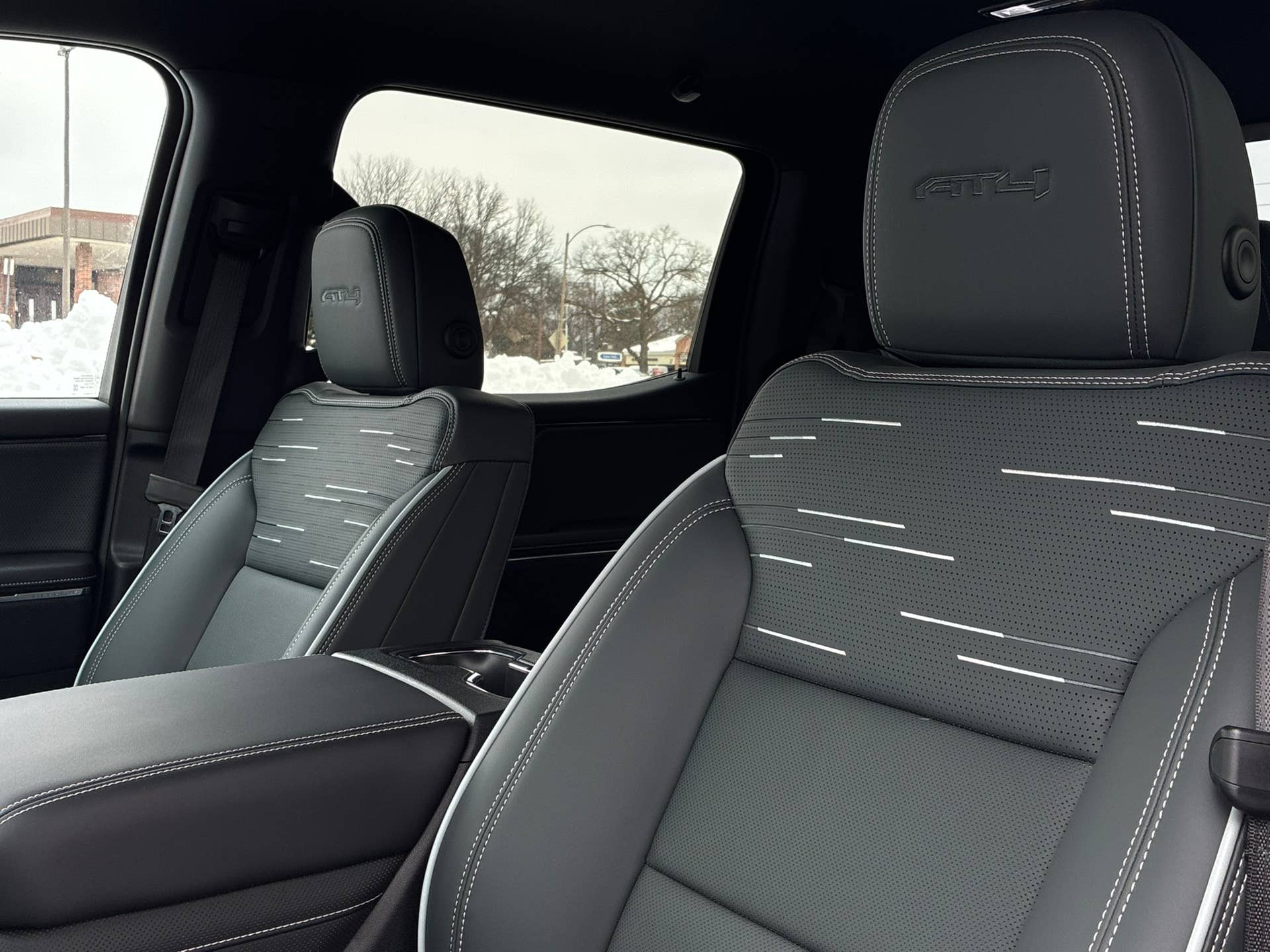
The big physical switches for climate control are super-easy to use, but their position is too low given the gargantuan screen. The supple faux-leather seats are wide and handsome, with contrast stitching, piping, and detailing. As with most GMC products, there is a preponderance of gray inside, but a noticeable and much-appreciated lack of piano-black trim.
Amos Kwon
Comfort, Space, and Utility – 9/10
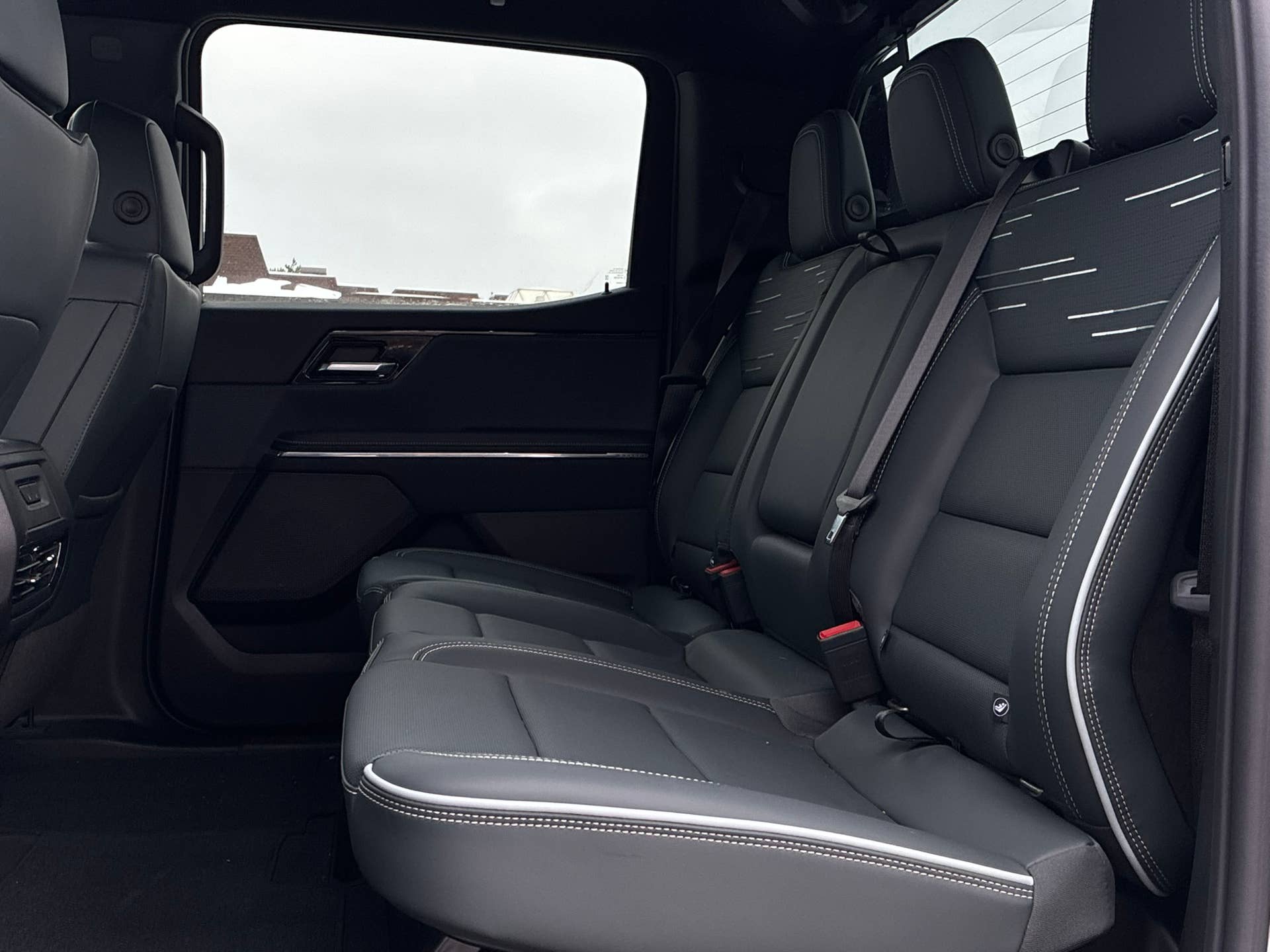
The cabin exhibits impressive levels of comfort and space. The front seats are wide and supportive with good bolstering. Soft-touch materials are located in the right places. The large rear foot compartment provides 44.3 inches of legroom, with a flat floor across its full width. Six-plus-footers will have no problem sitting behind themselves with room to spare.
Amos Kwon
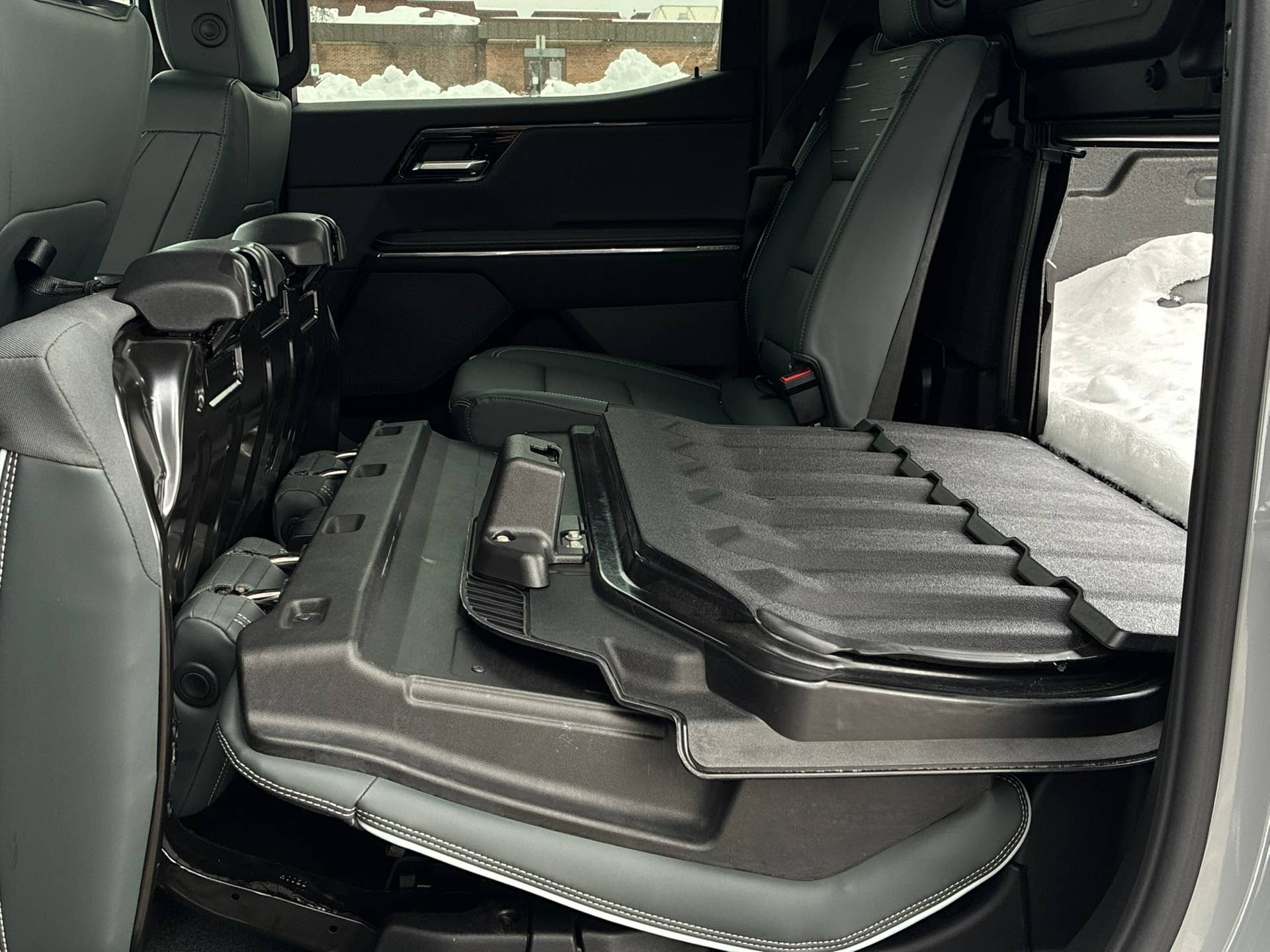
The problem occurs when you try to fold down the Midgate, which allows you to haul long items. While that’s a huge available benefit of the Sierra EV, only the 60 side of the 60/40 split folding rear seats deploys to open the back, meaning you can only transport three people (as opposed to four) when you use the Midgate feature.
Amos Kwon
On the plus side, hauling longer items is no joke. Fold down the Midgate to open up the cabin and then drop down the MultiPro tailgate to utilize its bed-extending load stop, and you’ll be able to carry items up to 10 feet 10 inches long. That’s an impressive feat that belies its 5–foot–11–inch bed length.
Amos Kwon
Amos Kwon
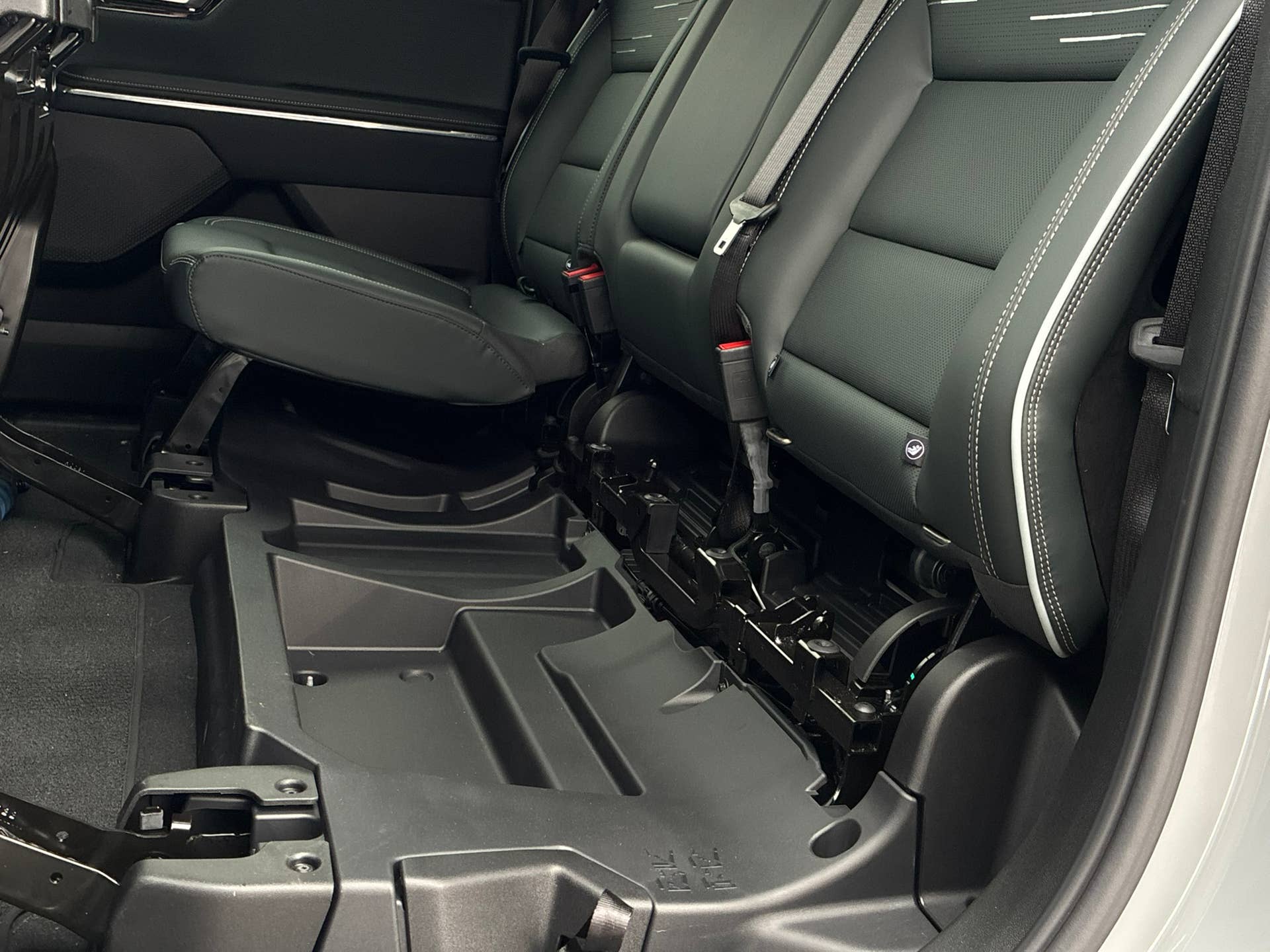
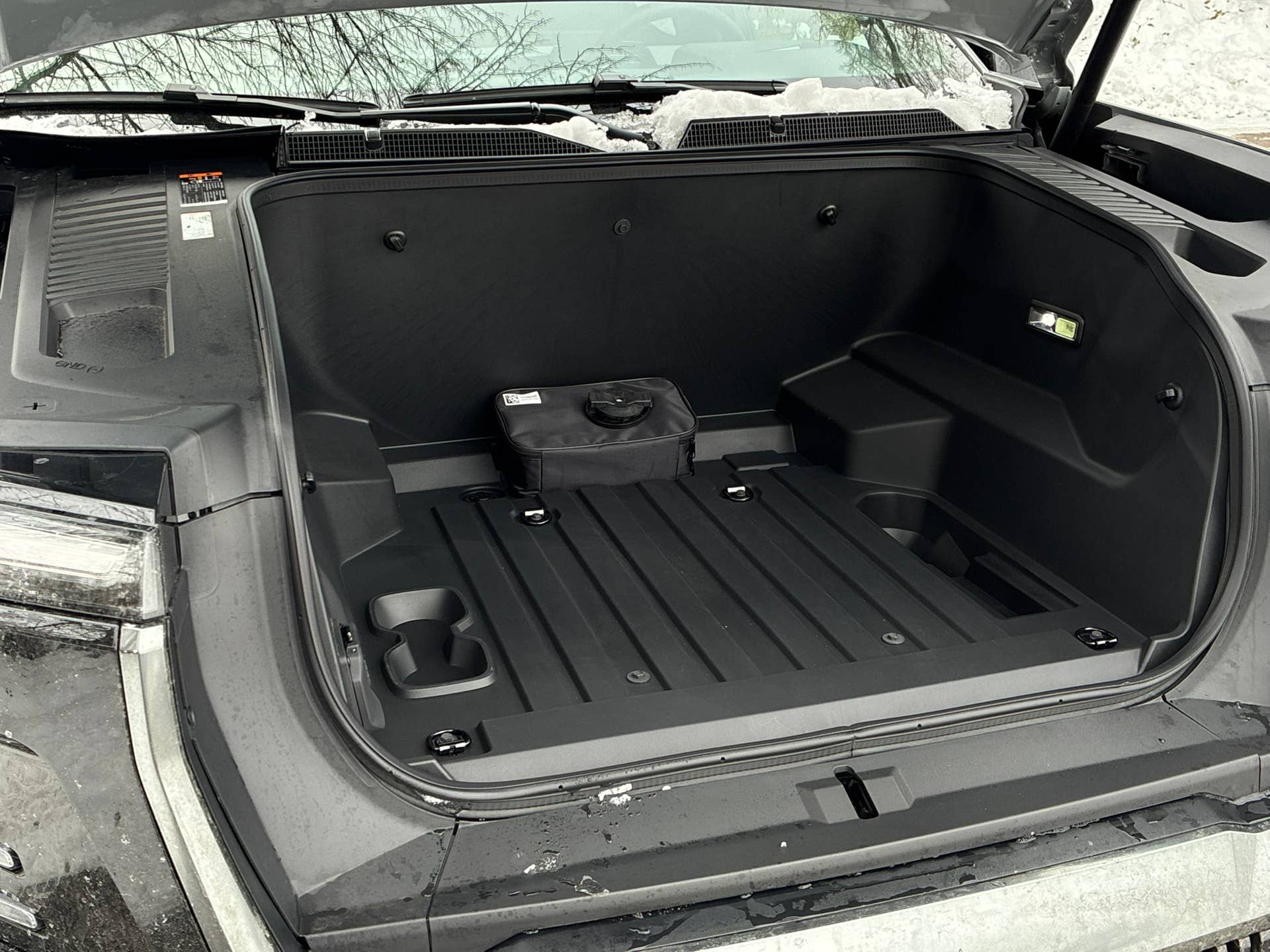
In terms of storage space, there are definite pluses and minuses. Perhaps the most significant positive is the 11 cubic foot frunk, about as big as trunks found on family sedans. It’s a handy feature petrol-powered trucks lack, and it’s also power-operated. There are small storage bins under the rear seats, but they’re not helpful for anything tall or bulky. Spare blankets, roadside emergency kits, or MREs would fit nicely for winter contingencies.
Amos Kwon
Amos Kwon
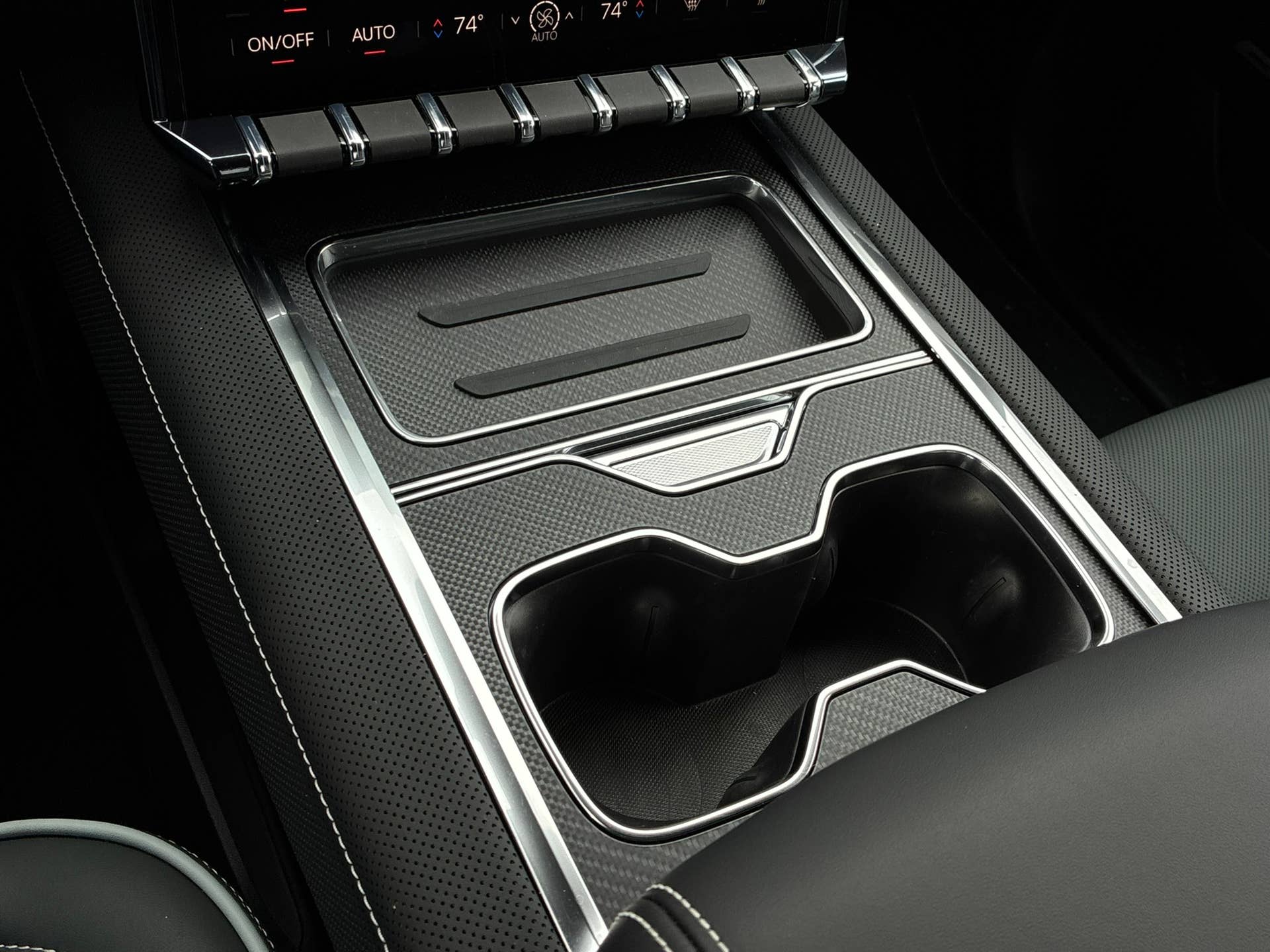
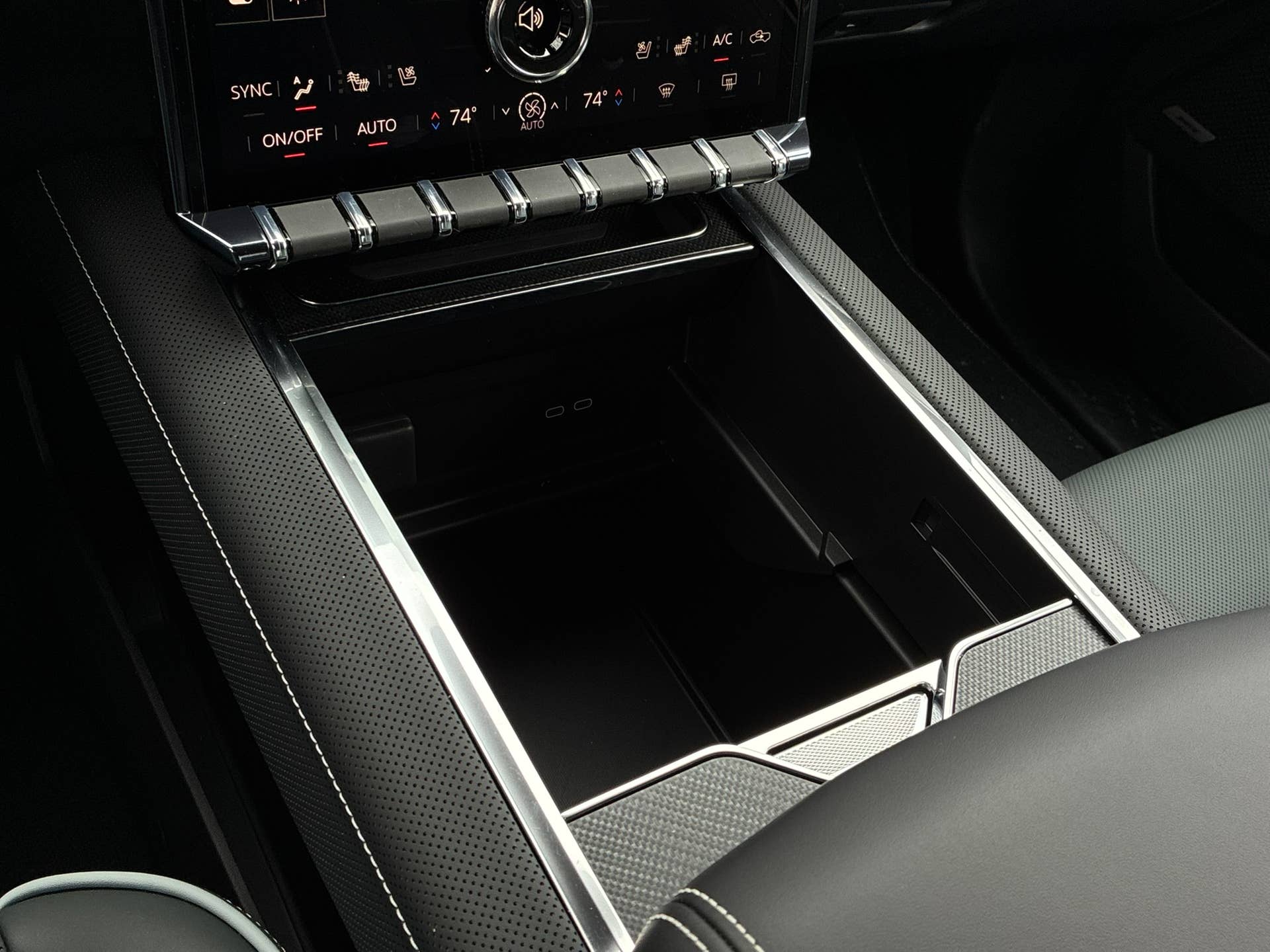
Inside, the brilliant center console has two sliding portions, the wireless charging deck and the cupholders, that retract to provide access to the deep compartment. I was able to put a gallon of milk in there, no small feat. There’s still a deep armrest compartment, too. I prefer this setup to an ample side-access open storage space that’s found in larger EVs. You can put small bags, purses, and valuables well out of sight. It’s the annoyingly short door pockets that are almost useless for travel mugs, documents, and other items. No big pickup truck should have door pockets this shallow.
Amos Kwon
Technology – 9/10
The Sierra EV AT4’s 16.8-inch touchscreen is a lot of technological real estate. While that seems excessive, it’s actually remarkably useful. It uses space effectively, with intuitive menus and well-sized icons that make it easy for fingers to find while driving. I never understood why some vehicles have giant screens with tiny icons that are hard to read (especially with my aging eyes) and even harder to find with your finger.
I always prefer physical controls to on-screen controls, but the Sierra EV AT4’s setup is right-sized and well-executed. The big switches are easy to press, even with gloved hands. The interface eschews Apple CarPlay and Android Auto in favor of Google Built-in, which is very responsive. Phone mirroring, however, is noticeably absent where familiarity is generally preferred. With a screen this big, I didn’t miss Apple CarPlay for my iPhone all that much, but that also means it takes a little more time to get acclimated to the system.
The Driving Experience – 7/10
Amos Kwon
Power from the 205 kWh battery is delivered to two electric motors: one for the front axle and the other for the rear axle. Output totals 625 horsepower and 775 lb-ft of torque. The Sierra EV AT4 Extended Range will accelerate to 60 mph in about 4.5 seconds. That’s not exceptional for an EV, but it’s swift for a truck that weighs well over four tons and can tow 12,300 pounds.
Amos Kwon
The Sierra EV AT4 is undoubtedly large, measuring 19.5 feet long, 6.6 feet high, and nearly 7 feet wide. The last two dimensions make it bigger than the gas-powered Sierra 1500. It’s also heavier at almost 9,000 pounds. The good news is that it drives a little smaller than what’s on paper, thanks to its good steering, body control, and nimble rear-wheel steering, which allow it to navigate tight situations with almost alarming agility. Combine that with its CrabWalk feature, which enables it to turn both sets of wheels in the same direction, and you have a hippo in ballet flats.
Amos Kwon
It also benefits from 2 additional inches of ground clearance, bringing the total to 10. Along with the 35-inch all-terrain tires and special suspension tuning, the AT4 version provides more off-road capability than the regular Sierra EV. We didn’t get to use the AT4’s trim-specific Terrain Mode that acts like off-road cruise control, providing quicker braking response with more bite at speeds up to 25 mph.
Amos Kwon
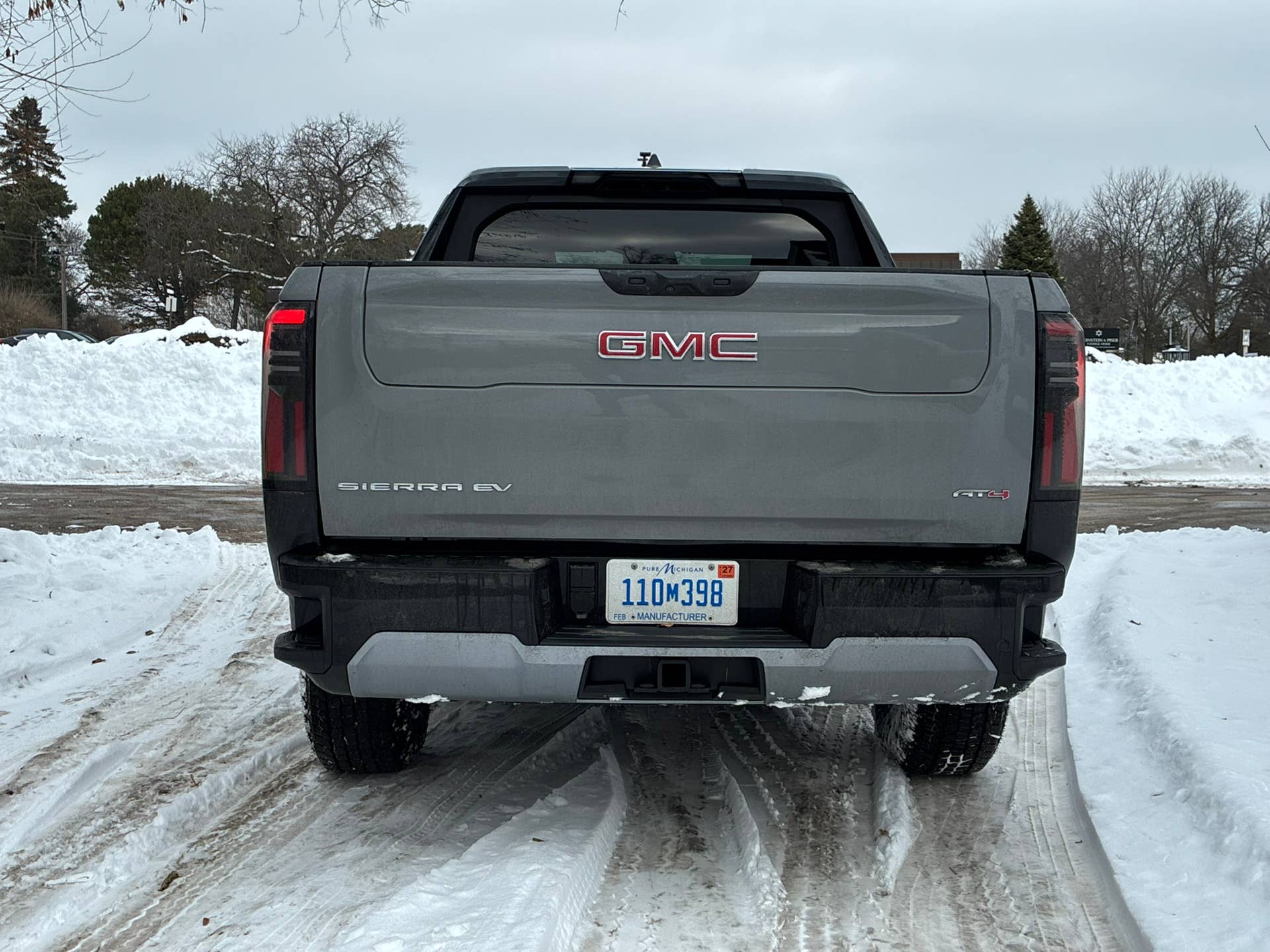
What we did get to test was the Sierra EV AT4’s winter capability. This week, there’s been almost a foot of snow on the roads, and one morning the plows hadn’t finished yet. The Sierra EV AT4’s tall clearance and all-wheel drive traction provided confidence, but the big 285-section tires made it feel ponderous at times. I was wary of losing control with this much weight to manage. Entering an uncontrolled slide with almost 9,000 pounds and a high center of gravity is a concern. Otherwise, it proved quite capable of getting through bad roads and negotiating an awful parking lot at my daughter’s swim meet.
Amos Kwon
Unfortunately, anything approaching severe deep snow and ice, or off-roading, is off-limits for the Sierra EV, even in AT4 trim. The problem is the lack of a physical locking differential that would send power to the wheels with traction. Instead, it uses a brake-based torque vectoring system that applies brakes to wheels without traction rather than routing power to the wheels with traction. This is great for pavement, where it applies the brakes to the inside wheel in curves, thereby enhancing performance, but this kind of system is virtually useless off-road. The AT4 badge is more of an appearance and packaging add-on than a functional one.
Range and Efficiency – 9/10
Amos Kwon
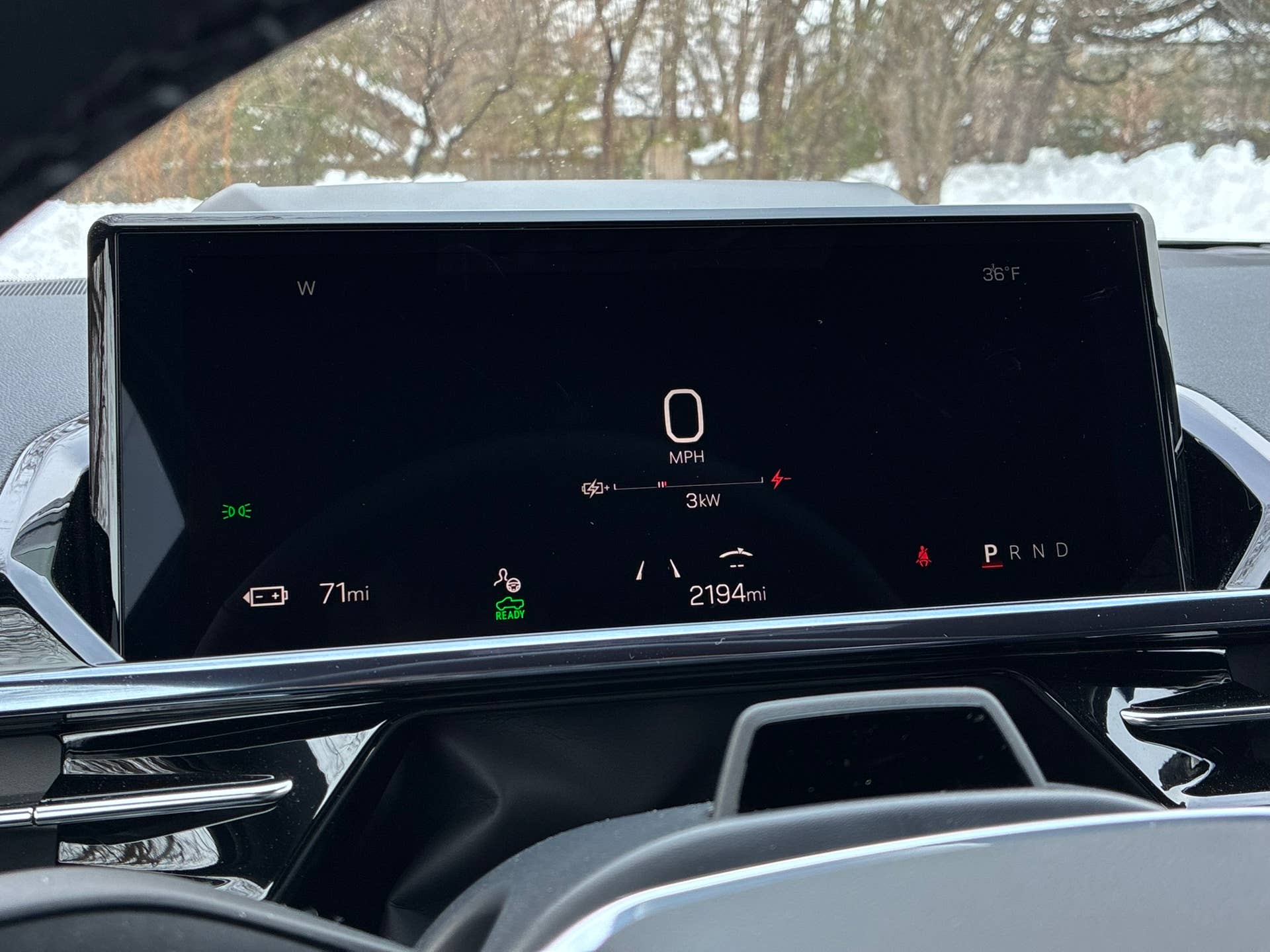
The Extended Range trim delivers 390 miles of range from the 205 kWh battery. DC fast charging lets the Sierra EV add 100 miles in just 10 minutes, a considerable benefit on top of its impressive range. The Max Range trim provides even more at a whopping 478 miles, coming close to the Chevy Silverado EV Work Truck’s 492 miles. My tester was delivered with 330 miles of range, short of its full capacity.
During the frigid (between 12 and 30 degrees) and very snowy (9 inches) week of testing, I ran the heater and heated seats (front and rear) at near full beans along with the wipers and infotainment. Range didn’t drop precipitously, but after about 120 miles of driving over the course of five days, the Sierra EV AT4 read 160 miles. That’s 280 miles compared to the 330 at dropoff, a rate of about 15 percent so far.
Final Verdict – 8/10
Big electric pickup trucks are a contradiction. They’re painfully heavy but also efficient. The Sierra AT4 Extended Range impresses on many levels but is a letdown when it comes to the driving experience, limited off-roading capability, and its overly bulky and busy appearance. 390 miles of range for something that weighs over four tons is astounding. Add more clearance, big tires, skid plates, and Terrain mode for increased ruggedness, but it’s not a formula for serious off-roading or truly challenging snow and ice conditions because of its lack of a locking differential and immense weight. What you get is power, efficiency, impressive range, cutting-edge tech, hauling and towing prowess, and immense passenger space.
About the author
Amos Kwon
Contributing Writer, Autoblog