
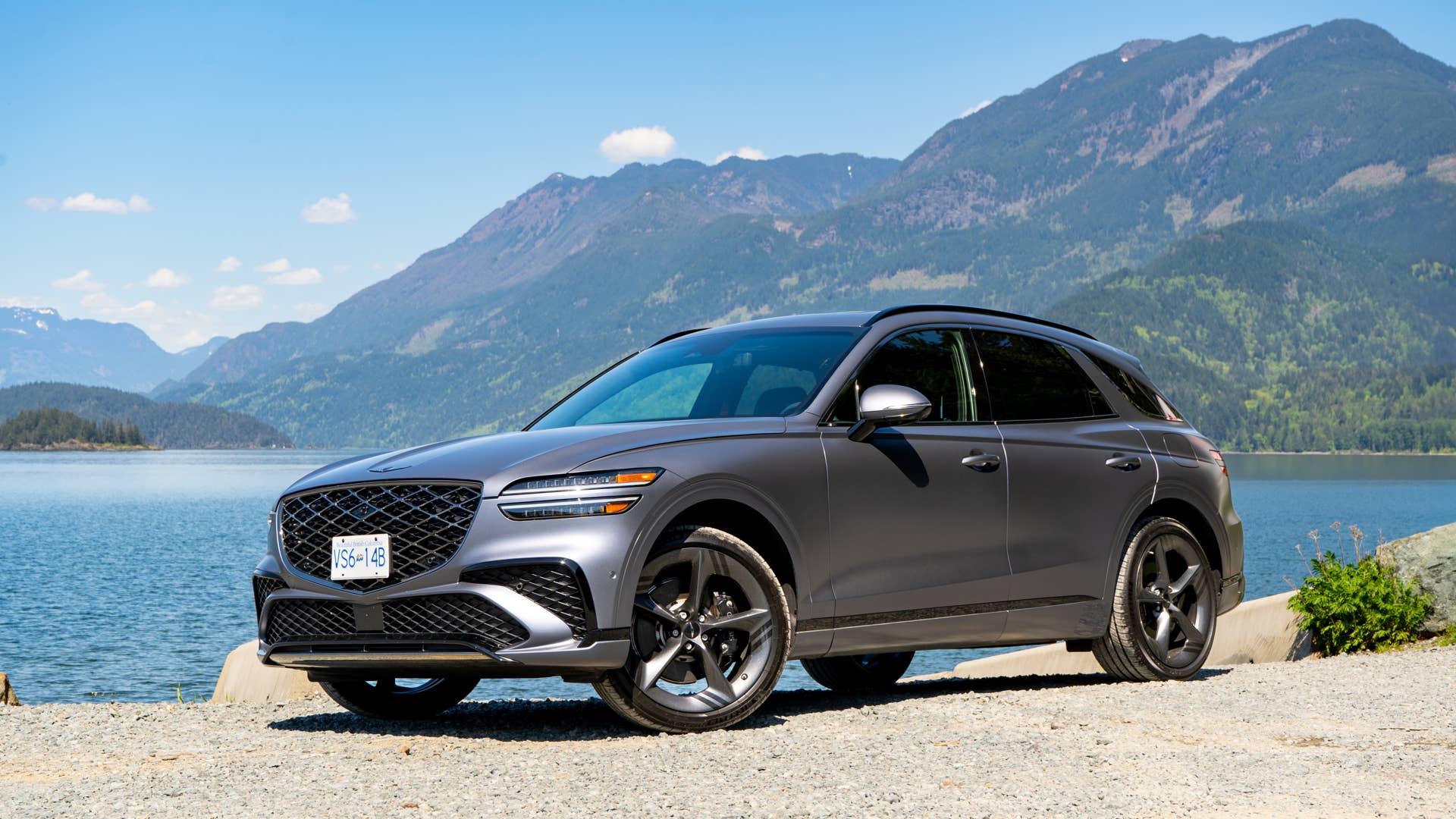
Genesis has spent the better part of a decade doing something that should, by all means, be impossible: convincing luxury car buyers to walk past the BMW, Mercedes-Benz, and Porsche badges and consider something from Korea instead. It has largely succeeded, and the GV70 is the most compelling and best-selling argument in its lineup. For 2026, Genesis has given its compact luxury SUV a meaningful mid-cycle refresh—fresh face, overhauled interior tech, revised suspension—and slipped the twin-turbocharged 3.5-litre V6 Sport into the range as the performance-oriented flagship variant.
I spent a week with a Canadian-market 2026 GV70 Sport 3.5T AWD, optioned to C$85,700, to find out whether Genesis has finally built the car that can genuinely embarrass Stuttgart and Munich. In the U.S., the GV70 Sport 3.5T AWD starts at $71,095 before fees. The short answer after my week behind the wheel: they’ve almost done it. The longer answer requires some nuance—and a frank conversation about what “Sport” actually means when the engine beneath it was designed for a different vehicle entirely.
The GV70 3.5T exposes a type of automotive frustration that is rarely spoken about: the frustration of a car that is genuinely, objectively excellent, and yet somehow not quite what it could have been. It isn’t disappointment—disappointment implies reasonable expectations and a car that failed to meet them. This is something even more difficult to articulate. It is the persistent awareness of a minor unresolved tension in an otherwise beautifully composed thing. You admire it completely. You recommend it without reservation. And some small part of you still thinks about what might have been, had a few minor tweaks been made. That, in essence, is how I feel about the 2026 Genesis GV70 Sport 3.5T AWD.

Cole Attisha
Exterior Design: 9.5/10
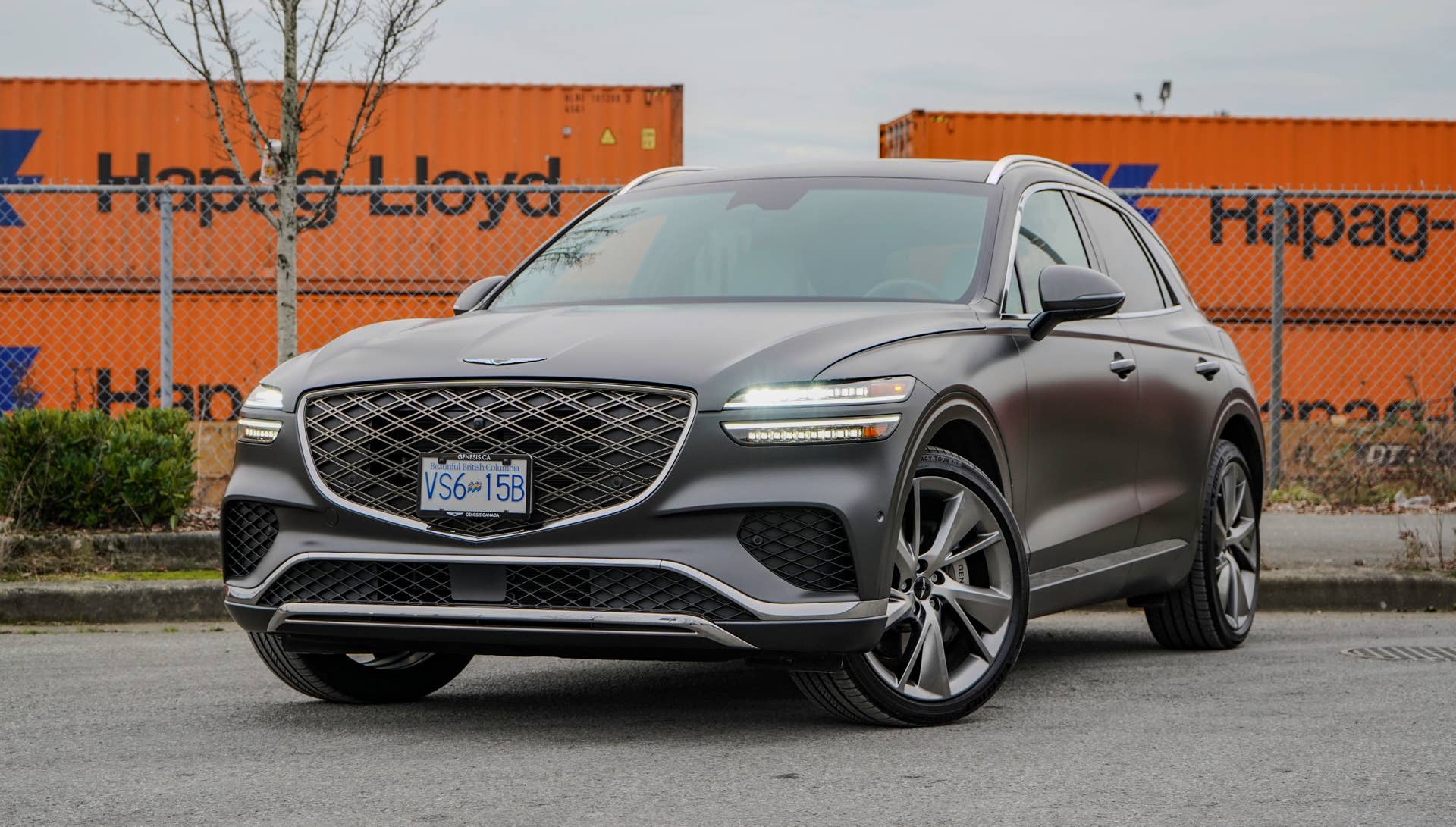
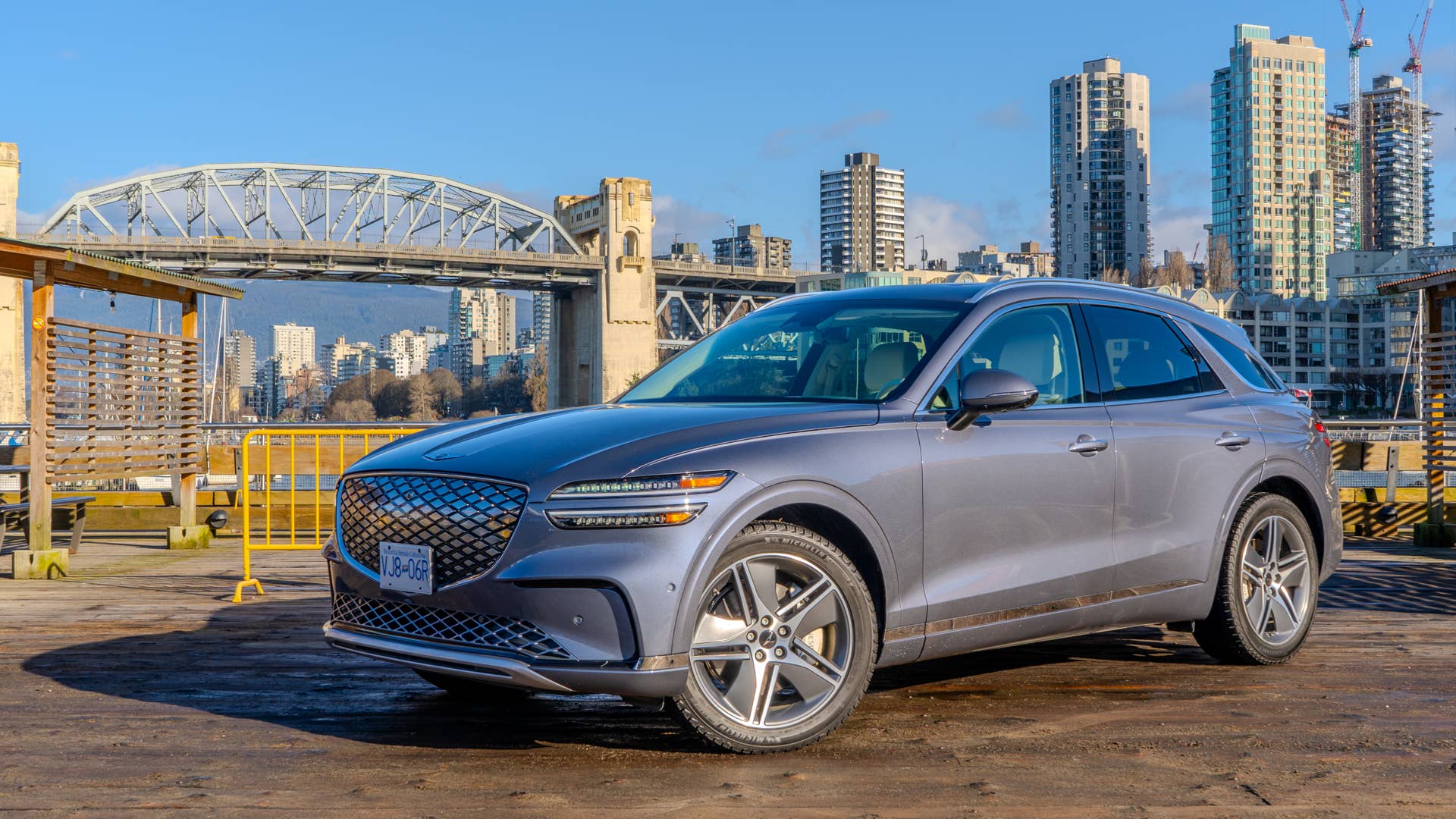
Genesis has spent its single decade of life crafting one of the few genuinely distinctive aesthetic identities in the contemporary luxury SUV segment, and the 2026 GV70 represents that effort at its most resolved. Its recent refresh is surgical rather than sweeping. Genesis has not redesigned the GV70 so much as sharpened it, aligning it more deliberately with the G90 flagship’s design language. The grille now features a dual lattice weave that adds visual depth and textural sophistication compared to the outgoing car’s simpler treatment. The Micro Lens Array headlights are slimmer and crisper than before—their beam pattern tighter, their housings almost impossibly thin—and at the rear, revised taillights and repositioned, genuinely functional exhaust tips (pay attention, Audi) complete a look that feels more resolved and more expensive than the pre-facelift car in every meaningful way.
In Sport trim specifically, on 21-inch alloy wheels that fill the arches with real authority, the 3.5T reads as a significantly more aggressive proposition than any 2.5T or electrified variant. My Canadian tester arrived in Ceres Blue Matt—a satin, light-absorbing blue that subtly shifts shades depending on the angle and the light—and it was, without question, the most visually arresting colour I have encountered on a GV70. I have driven matte-painted GV70s and Ceres Blue GV70s, but never one that paired both elements until now. It attracted more unsolicited attention over the course of one week than almost any vehicle I have driven this year: from enthusiasts who recognized it immediately, and especially from Koreans, who always seem extra friendly to those who drive products from their homeland.
A large part of the GV70’s design authority traces back to Luc Donckerwolke, Hyundai Motor Group’s design chief, whose prior work at Lamborghini and Bentley is written into the car’s surfacing if you know where to look. There’s real tension in the bodywork—clean, taut lines stretched over athletic proportions that never tip into aggression or ostentation. Compared to the BMW X3 and Mercedes-Benz GLC, which are handsome but somewhat generic-looking these days, the GV70 is immediately recognizable as itself. That is an increasingly rare and valuable quality in our ever-homogenized world. The one imperfection, if I must point one out: the windscreen wiper sits proud of the bodywork rather than being tucked beneath the spoiler, a small inelegance that jars against otherwise immaculate surfacing. It is the kind of detail Genesis will address in the next full redesign, and until then, the only thing worth changing.
Need New Tires? Save Up To 30% at Tire Rack
Find the perfect tires for your exact vehicle and driving style. Click here to shop all top-tier brands, including Michelin, Bridgestone, and more, directly at Tire Rack.

Cole Attisha
Powertrain & Driving Dynamics: 8/10
This is where my honest thoughts seem to diverge from my boy-racer car-enthusiast intuitions. The 3.5-litre twin-turbocharged V6 is not a new engine. Genesis developed it for heavier, larger vehicles—the G90 flagship saloon and the GV80 full-size SUV—where its fundamental character—smooth, composed, and unhurried—makes perfect sense. Installed in the GV70’s smaller, lighter, and pointedly sportier body, it should, in theory, have a similar effect to when Caroll Shelby shoved the Ford Galaxie’s 427-cubic-inch boat anchor into the much smaller AC Cobra—a match made in car-lover heaven. In practice, though, it seems to have quite the opposite impact. Sure, the V6 makes more power than the GV70’s standard 2.5T, but the power is drawn out, untheatrical, and wafty in the way you’d expect from a cushy luxury saloon, but not from a compact SUV that brands itself as “sporty.” What use is more power in such an application as this if it’s not any more fun to drive?
Flatten the throttle from a standstill, and there is a noticeable pause before the turbos build sufficient pressure. When the surge arrives—and it does arrive, impactfully, at 375 horsepower and 391 lb-ft of torque delivered across a broad plateau from 1,300 to 4,500 rpm—it is strong but undramatic. There is no urgency, no theatre, no sense that the engine is really excited about the road ahead. The exhaust note, while present, is heavily muted; it informs rather than inspires. The power delivery is even and composed regardless of which drive mode you select, and Sport+ sharpens the responses at the throttle and the wheel without altering the fundamental character of the experience. At no point did the engine add any real colour to the sensation of driving on a clear, open road on a sunny afternoon. At no point did it feel like a mismatch, either—only like a powertrain doing exactly what it was calibrated to do, in a car that perhaps deserved something slightly more expressive.

Cole Attisha
The GV70 3.5T is not, to be entirely clear, a slow car by any means. Genesis claims a 0–60 time of 4.9 seconds, and that figure aligns with real-world experience: highway overtaking is effortless, and the car’s ability to cover distance at pace—such as along the Trans Canada Highway towards Harrison Hot Springs—is genuinely impressive. But it never feels like a dedicated driver’s SUV the way a Porsche Macan S does, or the way its branding might imply. It feels like a very fast, very composed luxury SUV, which is an admirable and desirable thing to be. It’s just not exactly what was advertised.
The adaptive suspension, on the other hand, is a genuine highlight of the 2026 update. In Comfort mode, it is outstanding: the revised suspension bushings and new Highway Body Motion Control system have meaningfully reduced body float over undulating surfaces compared to the outgoing car. At highway speed, the GV70 feels planted and serene, making long-distance travel effortless rather than exhausting. Switch to Sport+, and things tighten noticeably—steering weights up, throttle response sharpens, the chassis communicates more through the seat—but it never crosses into truly athletic territory. It is a grand tourer in sport clothing: capable and composed, elegant under pressure, and better suited to devouring distance gracefully than attacking corners with genuine enthusiasm.
Fuel economy is EPA-rated at 18 city / 25 highway for U.S. models. In practice, and particularly if Sport+ proves as tempting as it will, expect the city figure to drift lower into the mid-teens. The Canadian-spec label rates the tester at 13.1 L/100 km city and 9.4 L/100 km highway—figures that will soften in real-world driving. This is, of course, the predictable cost of a turbocharged V6 at this end of the market. It is neither surprising nor unreasonable, and is worth filing away rather than worrying about.

Cole Attisha
Technology: 9/10
The 2026 GV70’s headline technology upgrade is the new 27-inch curved OLED display—a single continuous screen that merges the digital instrument cluster on the left with the infotainment and navigation touchscreen on the right. It is one of the finest implementations of the format I have encountered in any vehicle at any price point. The screen is genuinely beautiful, and the curvature draws both panels into the driver’s natural sightline, reducing the need to look away from the road to interact with the system. Colours are vivid without being garish; its resolution is sharp enough to read fine text at a glance; and the integration between the two panels is seamless—no visible bezel or sense of two separate systems bolted together. It is, by some margin, the best interior display in any compact luxury SUV currently on sale.
The software running underneath it is a meaningful improvement over the outgoing car. Wireless Apple CarPlay and Android Auto are now standard, as is Genesis Connected Services—a long-overdue update that brings the GV70 in line with what buyers at this price point reasonably expect. The new voice assistant is appropriately responsive, and the relocated climate controls—now on a lower touchpad strip below the main screen—require a brief reorientation before they feel entirely logical. The Blind-Spot View Monitor, which projects a live camera feed of the adjacent lane onto the instrument cluster when you signal, is one of the more genuinely useful driver-assist features in this segment. Highway Driving Assist, Lane Following Assist, and Adaptive Cruise Control with Stop-and-Go round out a comprehensive suite of semi-autonomous features that behave predictably and without drama in real-world traffic.
The remote parking function via key fob—allowing the car to move forward and backward in tight spaces without anyone behind the wheel—remains one of the GV70’s most effective party tricks, and is genuinely useful in the kind of narrow urban parking structures that Vancouver specializes in. The one caveat worth noting: the 2026 GV70’s interior has been substantially reorganized compared to the outgoing car, and existing GV70 owners will spend their first few days reorienting. New buyers, approaching the system fresh, will find it largely intuitive within a day or two of regular use.

Cole Attisha
Interior Design & Quality: 9.5/10
Step inside the 2026 GV70 Sport 3.5T, and the first thing you notice is that it does not feel like a $70,000 car. It feels like something considerably more valuable—and it sustains that impression throughout a full week. My Canadian tester was trimmed in blue Nappa leather with suede inserts and bright orange contrast highlights—a combination that elevates the cabin from premium to genuinely, breathtakingly special. The Diamond-quilted leather seats are beautifully stitched and deeply supportive over long distances, and heated as standard. The suede inserts add warmth and tactile depth that most rivals reserve for much higher price points, and merely running your hands along the bolstering is the kind of sensory experience that reminds you why materials matter so much in a luxury car. Carbon fibre trim runs across the dashboard, door cards, and centre console in a way that complements rather than overwhelms. Panel gaps throughout the cabin are tight and consistent, to a level that would embarrass some significantly more expensive vehicles. The steering wheel—heated, power-tilt, two-tone leather—is the kind of thing you reach for appreciatively every time, because someone clearly spent considerable time getting its weight, texture, and diameter exactly right.
The Ergo Motion driver’s seat, standard in this trim, adds powered thigh extension and adjustable lumbar support, and is genuinely excellent on longer drives. The tri-zone automatic climate control keeps the cabin temperature precisely calibrated from front to rear, and the head-up display projects speed and navigation instructions cleanly onto the windscreen without requiring you to take your eyes off the road. Compared to the BMW X3 and Porsche Macan at comparable price points, the GV70’s interior is more dramatic, more considered, and more visually distinctive. The Germans build excellent cabins—precise, logical, and well-assembled—but they lack the GV70’s sense of occasion. Sitting in the Genesis, you feel as though someone made an intentional set of aesthetic choices designed to delight rather than simply to satisfy. It is the difference between a well-tailored suit and a bespoke one: from a distance, both will do. Up close, only one of them matters.

Cole Attisha
The rear seats are where the GV70’s sleek roofline extracts its customary toll. Headroom in the back is adequate for most adults but begins to feel snug for anyone approaching six feet tall, and the sloping rear glass reduces usable cargo volume for bulkier items. These are known and accepted compromises in the GV70’s design—they were true in 2022 and remain true in 2026—and buyers who regularly carry tall adult rear passengers should factor them in accordingly, or perhaps enact a hierarchy for who gets to call “shotgun” first. For those who prioritize the driver’s environment above all else, this is simply the best compact luxury SUV interior available at this price point, measured against any rival.

Cole Attisha
Pricing & Value: 9/10
My Canadian-market 2026 GV70 Sport 3.5T AWD stickered at C$85,700 as tested, finished in Ceres Blue Matt over a Nappa leather-and-suede interior. American buyers will find the GV70 3.5T Sport Prestige AWD—the closest U.S. equivalent—starting at $71,095, with a comparably equipped example landing around $72,000–74,000 depending on options and destination charges. By either measure, it positions itself in direct competition with a BMW X3 M50 or Porsche Macan S, both of which require the better part of $80,000 once comparably equipped.
The Genesis warranty package remains the most compelling in the industry at this price point: five years / 60,000 miles bumper-to-bumper, ten years / 100,000 miles on the powertrain, three years of complimentary scheduled maintenance, and Genesis’s concierge service collecting and returning the car when it needs attention. This is a meaningful differentiator in the real cost of long-term ownership—the kind of detail that the showroom tends to understate.
The tariff-driven price increase for 2026 will be mildly irksome for American buyers, though the upgrades—particularly the 27-inch OLED display, the revised suspension, and the expanded standard equipment list—provide genuine and substantial justification for it. The fuel economy penalty is the expected tax on a turbocharged V6 in a compact performance SUV and warrants no further hand-wringing. Taken in full, the GV70 3.5T Sport Prestige offers considerably more car for considerably less money than its German rivals, backed by a warranty package that reminds you what comparably sport-oriented European SUVs will probably look like ten years in the future: parked in a messy driveway with cardboard sheets stacked beneath them.

Cole Attisha
Final Verdict: 8.5/10
The 2026 Genesis GV70 Sport 3.5T AWD is a genuinely exceptional luxury SUV—one that falls fractionally short of the complete package only because its powertrain and identity are not quite in agreement. The twin-turbo V6 is refined, torquey, and meaningfully fast—but it was designed for larger, heavier vehicles, and it carries that comfort-first disposition into the GV70’s sharper, sportier body without fully bridging the gap between the two personalities. Buyers who approach it expecting the driver engagement of a Porsche Macan S or the sharp-edged dynamism of a BMW X3 M50 will come away feeling short-changed from behind the wheel, but pampered from the passenger seat.
That caveat exists, however, within the context of a car that is outstanding in almost every other dimension. The 2026 GV70’s exterior is the most distinctive and beautiful design in the compact luxury SUV segment, full stop. Its cabin—particularly in the Nappa leather and suede specification of my Canadian tester—is the most dramatic, most considered, and most tactilely satisfying interior at this price point, measured against any rival. Its 27-inch OLED display is class-leading technology by a meaningful margin. Its value proposition, backed by a ten-year powertrain warranty and three years of complimentary maintenance, makes the German alternatives seem like costly exercises in loyalty to a badge that no longer means what it once did. And the 2026’s revised suspension delivers ride-quality refinements that make long-distance travel a genuinely serene experience. My recommendation, however, is this: consider the 2.5T first. Boy, would seventeen-year-old me hate to hear myself make such a claim.
Having driven both variants in the same model year, the 300-horsepower four-cylinder feels more naturally at home in the GV70’s chassis—lighter over the front axle, sharper in its everyday responses, and more cohesive in the dynamic personality the Sport body implies. It starts at a lower price point, offers the same warranty and maintenance package, and delivers a more integrated driving experience. The 3.5T makes complete sense in the GV80 and G90, where its composure and torque character suit the larger platform entirely. In the GV70, it often feels out of place.
If, however, the 3.5T is what you want—drawn by the V6’s breadth of torque, the 4.9-second sprint time, the 3,500-pound tow rating, or simply the knowledge that you have the most powerful non-electric GV70 available—buy it without hesitation. You will be delighted most of the time. You will be occasionally reminded, on a demanding road, that the chassis has a quicker intuition than the engine. But, you will do all of that from inside one of the most beautifully crafted, most thoughtfully appointed luxury SUV cabins in the world, at a price that makes BMW, Porsche, and Mercedes-Benz feel greedy. Genesis is no longer a brand you consider in spite of where it comes from, just to save a few bucks; it is one you consider because of the genuine merit of what it builds. Buy it if you want the most visually striking, most lavishly appointed compact luxury SUV at this price, and you measure driving excitement by pace, presence, and refinement rather than outright engagement. Consider the 2.5T instead if you want all of the above—the design, the cabin, the technology, the value—with a powertrain that feels more naturally at home in the GV70’s chassis.
Canadian market 2026 Genesis GV70 Sport 3.5T AWD, as tested: C$85,700. U.S. 3.5T Sport Prestige starting MSRP: $71,095. EPA: 18 city / 25 highway / 21 combined mpg. 0–60 mph: 4.9 sec. Power: 375 hp / 391 lb-ft. Engine: 3.5L V6 DOHC Twin Turbo. Transmission: 8-speed automatic. Towing capacity: 3,500 lbs. Warranty: 5yr/60K bumper-to-bumper; 10yr/100K powertrain; 3 years complimentary maintenance.
About the author

Cole Attisha
Staff Writer, Autoblog