
Key Points
- The 2026 Dodge Charger R/T uses a twin-turbo inline-six, not a V8.
- Design, presence, and practical liftback cargo space stand out as major strengths.
- Identity crisis persists due to EV-first launch, V8 absence, and fake engine sound.
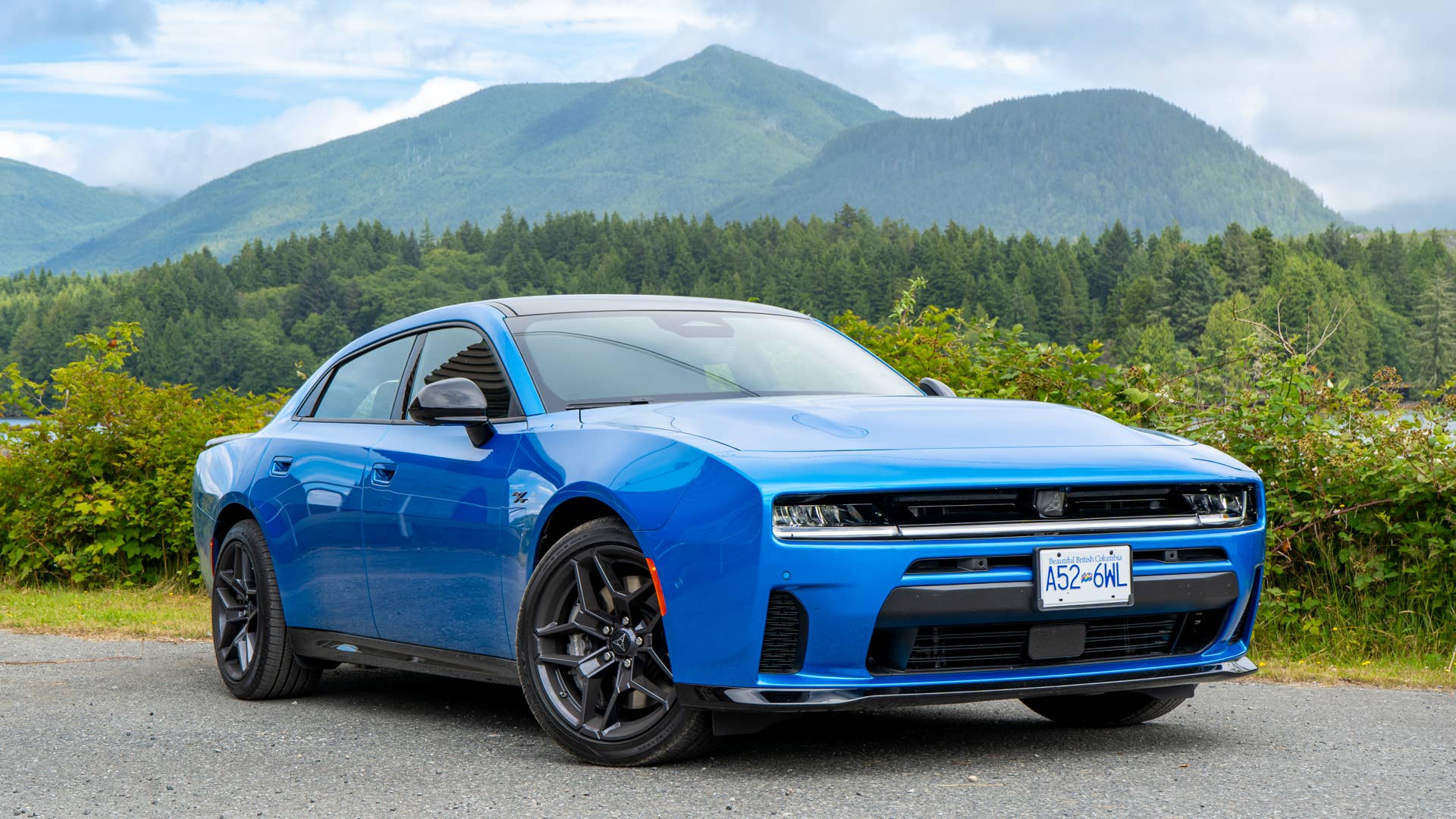
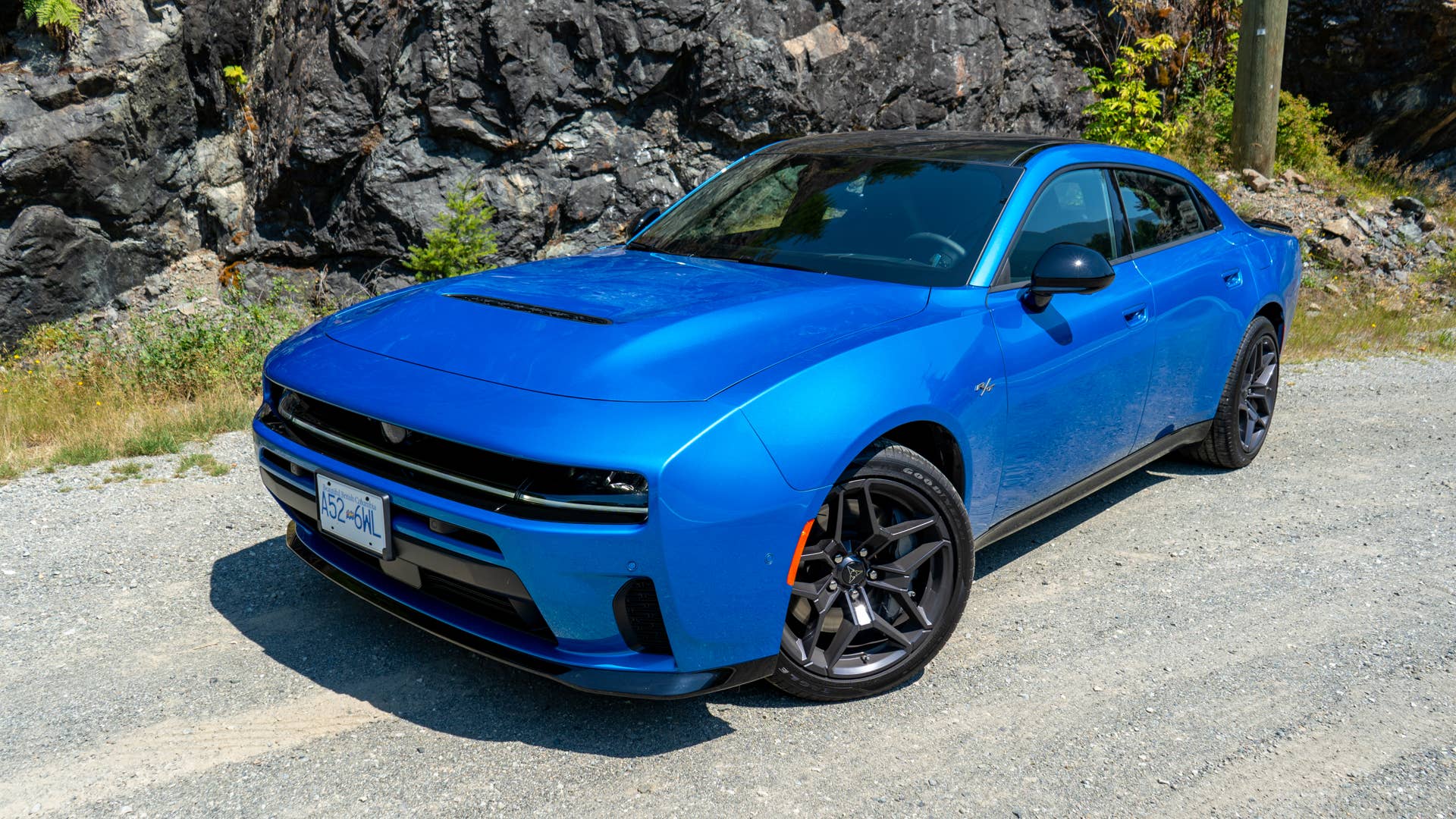
The first thing I learned about the 2026 Dodge Charger Sixpack R/T is that almost nobody knows what it is. Park it somewhere, and people notice. They have to. My tester was dressed in eye-catching “Bludicrous” paint, which is a hilarious name for a colour that I couldn’t stop saying during my week with it. It has the stance of a full-size sedan, the roofline of a fastback coupe, the face of a retro-futurist muscle car, and the kind of road presence that makes everything else in a parking lot feel like supporting cast. Then someone walks by and says, “That’s the new electric Charger. Ew.” Except it isn’t.
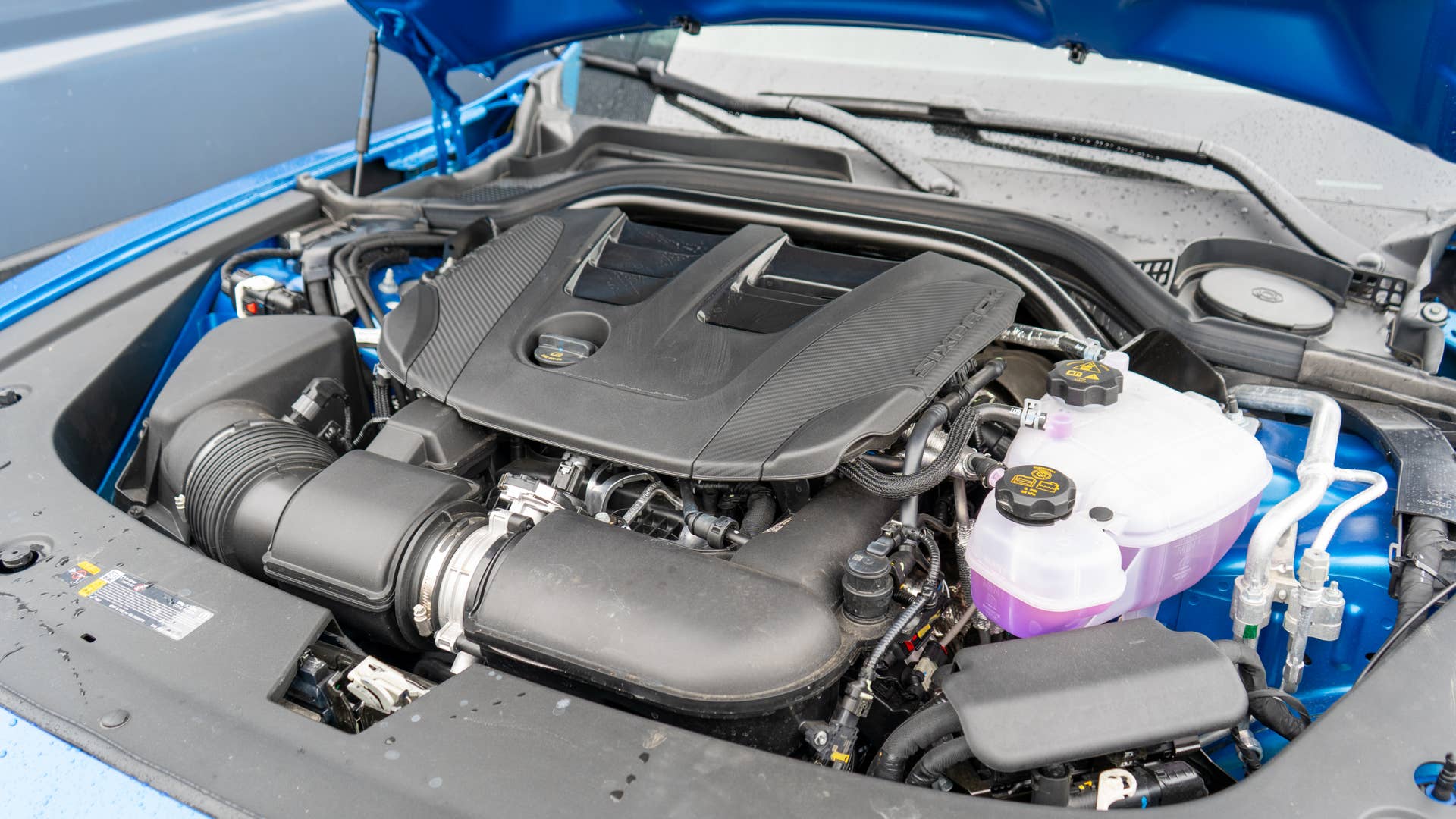
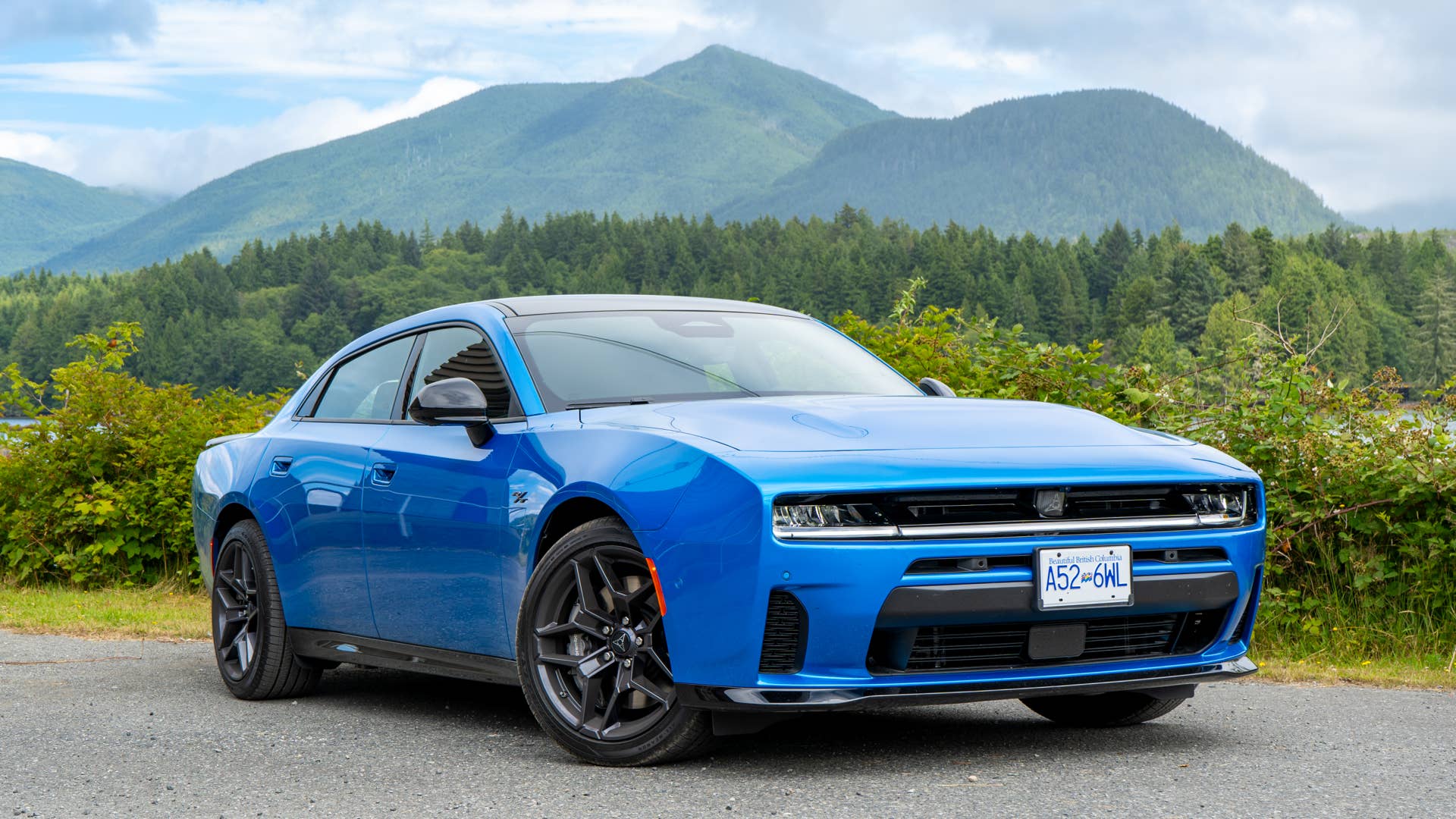
That was a recurring punchline during my week with the new gas-powered Charger R/T. Random people assumed it was the Charger Daytona EV because Dodge launched this new generation as an electric car first, leaving the later-arriving gas version to enter public consciousness as the correction nobody heard, probably because it doesn’t pack the Hemi V8 everybody wanted. Instead, this one has a 3.0-litre twin-turbo straight-six under the hood. It has real exhaust pipes, makes real noise, runs on gasoline, but also exists in the shadow of a missing V8, a controversial EV debut, and about 60 years of Charger baggage.
My Canadian-market tester was a 2026 Dodge Charger R/T Plus 4-Door AWD finished in Bludicrous over a black leatherette/suede interior, powered by the 3.0L Hurricane SO twin-turbo inline-six and an eight-speed automatic transmission. Base price was $62,995 CAD, while my heavily optioned tester came to $82,160 CAD before taxes and fees.
In the U.S., Dodge prices the 2026 Charger R/T from $49,995 for the two-door and $51,995 for the four-door, before tax, title, and destination fees. The R/T’s SIXPACK S.O. engine makes 420 horsepower and 468 lb-ft of torque, good for a claimed 0-60 mph in 4.6 seconds, and a 12.9-second quarter mile.
Cole Attisha
The Road Trip Test
During my week with it, I took the Charger on a road trip from Vancouver, B.C. to the coastal island town of Tofino—a picturesque beachfront destination where many of Canada’s top professional surfers originate. The route felt fitting for such a vehicle. I took the ferry from Tsawwassen to Swartz Bay, spent a night with my parents in Saanich, then headed up island the next day toward Tofino for kayaking, surfing, and beachside wandering. On the way back, I took the Nanaimo-to-Horseshoe Bay ferry, which gave the Charger one of those properly Pacific Northwest grand-touring tests that mix long highway cruising, ferry-line people watching, narrow island roads, and occasional opportunities to see whether a large, bright-blue Dodge can still behave when the road gets curly.
In Vancouver, it felt absolutely nautical. It wasn’t unmanageable, nor always stressful, and not impossible to place, but it was big enough that it always reminded me of its size. On the island, it felt much more at home. It works best when it can stretch out its legs, and that might be the key to understanding this car. The old Charger often felt like an antisocial full-size muscle sedan that appealed directly to everyone’s inner child. This new one feels more mature—more like a grand tourer wearing a Dodge hoodie. The question is whether a Dodge Charger should even grow up in the first place.
Cole Attisha
Specs And Pricing
| 2026 Dodge Charger R/T Plus 4-Door AWD | Specs / details |
|---|---|
| Canadian base price | $62,995 CAD |
| Canadian as-tested price | $82,160 CAD |
| U.S. four-door R/T starting price | $51,995 USD before tax, title, and destination |
| Engine | 3.0L Hurricane SO twin-turbo inline-six |
| Output | 420 hp / 468 lb-ft |
| Transmission | 8-speed automatic |
| Drivetrain | AWD with selectable RWD mode |
| 0-60 mph | 4.6 seconds |
| Quarter mile | 12.9 seconds |
| EPA-estimated fuel economy | 17 city / 26 highway / 20 combined mpg |
| Observed average fuel economy | 20.1 mpg |
| Exterior color | Bludicrous |
| Interior | Black leatherette/suede performance seats |
Thinking about selling your car? Get an instant cash offer online now. Click here to get started.
My tester’s R/T Plus package added features like ventilated front seats, heated front and second-row seats, a 16-inch driver display, head-up display, navigation, performance pages, a power hatch, and premium interior trim. The Performance Handling Group added launch control, high-performance brakes, high-back bucket seats, power 12-way front seats, a black one-piece performance spoiler, performance suspension, 275/40ZR20 Goodyear all-season tires, and line lock.
Cole Attisha
The Straight-Six Isn’t The Problem
Let’s deal with the obvious thing first: No, this doesn’t have a V8. People tend to conflate muscle cars with V8 engines because, historically, they’ve had plenty of reason to do so. A Charger without a V8 was always going to feel a bit spiritually incomplete to some buyers, especially when the previous-generation car built so much of its personality around Hemi theatre (even if most of them were sold with V6 engines anyway).
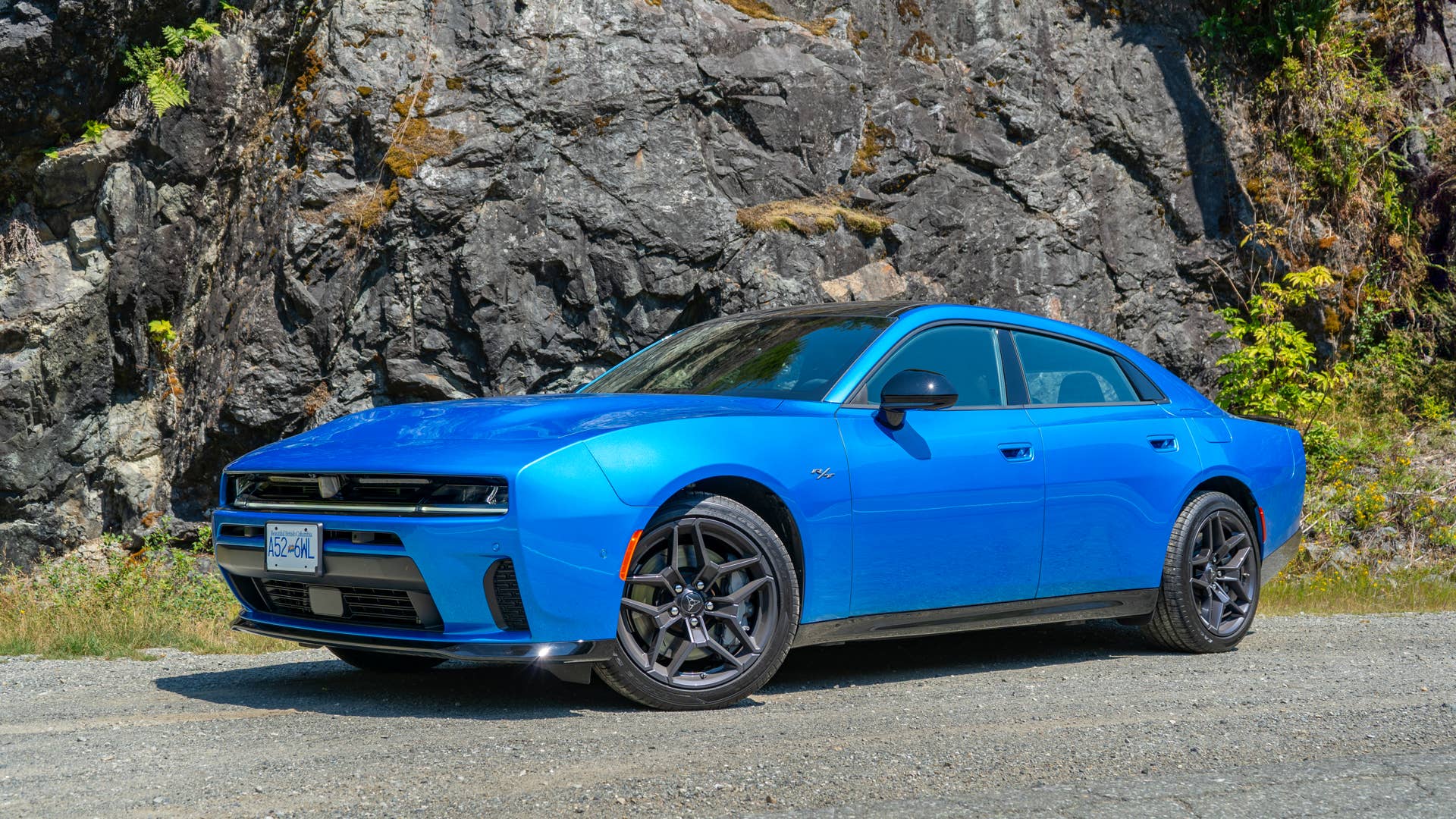
But the part that surprised me most was that I didn’t miss the V8 nearly as much as I expected to. In fact, compared with the old 5.7L Hemi, the Hurricane straight-six feels more sophisticated, more interesting, and less lumpish. It doesn’t deliver the same old-school rumble, but it has character of its own. The startup sound is legitimately enticing. It’s not as raucous or muscular as a V8, but it’s still provocative. Turn off the augmented engine sound, which is, frankly, dreadful, and the real exhaust has enough aggression to make the car feel special.
That fake engine sound that comes on automatically in Sport mode, which honestly doesn’t even sound like an engine, somehow feels like Dodge apologizing for the absence of a V8, and that is the wrong strategy. The straight-six already sounds good on its own, and it’s noticeably more aggressive here than it was in the Grand Wagoneer I drove with the same powertrain. Trying to mask the six-cylinder character only makes the car feel insecure. Dodge shouldn’t be apologizing for this engine—it should be teaching people to appreciate it.
Cole Attisha
The R/T isn’t necessarily “throw you back in your seat” fast, but it is powerful enough to justify the badge. This isn’t the full-fat Scat Pack, and so it doesn’t need to be. It feels quick, confident, and appropriately muscular for an R/T. Dodge also offers a 550-hp Charger Scat Pack with the high-output version of the same twin-turbo inline-six, starting at $54,995 for the two-door and $56,995 for the four-door in the U.S.
Would I be curious to try the Scat Pack? Obviously. But the R/T also made me wonder how much the upgrade really changes the experience. If the Scat Pack meant a 6.4L Hemi V8, the emotional case would be obvious. With the same engine in a higher state of tune, it might appeal mostly to buyers who just want the bigger number to brag about. The cars even look fairly similar, apart from a more aggressive hood scoop and badging. Part of me hopes Dodge keeps the six in the R/T and eventually gives the Scat Pack a V8 again.
Cole Attisha
How It Drives
The Charger R/T is heavy, and you certainly feel its stockiness from behind the wheel, but that’s not always a bad thing. On the highway, the weight gives it a planted, substantial feel. Over long distances, the Charger settles into a big grand-touring kind of rhythm. It cruises well, feels secure, and has the kind of presence that makes a long road trip feel like an event. It’s easy for me to forgive it for its heftiness, given that the Charger was never really much of a lightweight to begin with. If anything, its weight makes it feel truer to its heritage.
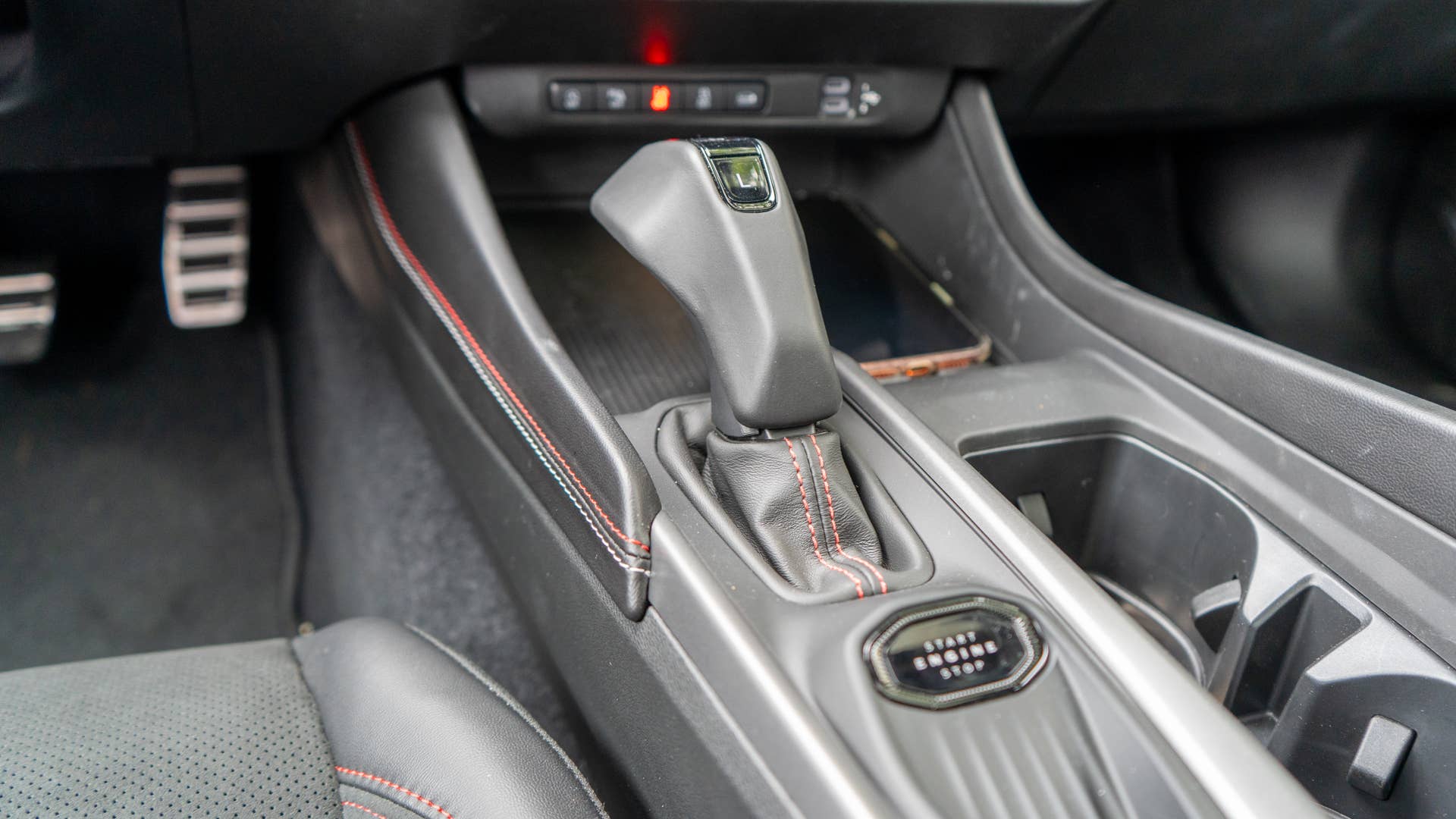
On tighter roads, though, you absolutely need to account for the mass. The Charger will not happily be jerked into corners like a small sport sedan. Try that, and you risk unsettling it. Drive it smoothly, let the weight come around naturally, and it becomes far more satisfying. The front end is responsive enough, but the steering is a bit too light and sometimes more vague than I would like. The eight-speed automatic is generally competent—it occasionally stuttered on shifts under aggressive throttle input, even in full automatic mode, but most of the time it faded into the background. The paddle shifters were responsive, but the car felt more natural when left to shift for itself. My preferred setup became a custom mode: fake sound off, suspension in Comfort, steering in Sport. That made the Charger feel just right.
Shopping for a new car? Click here to get a great deal on your next vehicle. Powered by Carvana, no haggle pricing, 100% online.
Cole Attisha
The AWD system also helps tremendously. It makes the car feel more secure, especially in mixed weather, though it was still possible to find some slippage in slightly rainy conditions. The R/T uses standard AWD with an on-demand rear-wheel-drive mode capable of sending 100% of torque to the rear wheels, and the available Performance Handling Group brings launch control, line lock, performance suspension, and upgraded brakes.
My observed average fuel economy was 20.1 mpg with mostly highway driving, some Vancouver city driving, and twistier road use mixed in—not to mention a right foot attached to my ears, which wanted nothing more than to listen to the purr of the Charger’s boosted straight-six at all times. That feels acceptable for something this large, heavy, and powerful, and it lives up to the EPA-estimated rating of 20 combined mpg. That’s not necessarily an impressive figure, but it also didn’t feel outrageous given the car’s size, power, and AWD layout.
Generally speaking, the ride was somewhat harsh over rougher pavement, but it’s about what I expected from a heavy performance-oriented car on 20-inch wheels and 275/40ZR20 all-season tires. Tire noise was never a major issue, brakes felt confidence-inspiring, and the whole car felt more composed than rebellious, but that maturity is both the Charger’s greatest achievement and its most complicated problem.
Cole Attisha
The Design Does A Lot Of Heavy Lifting
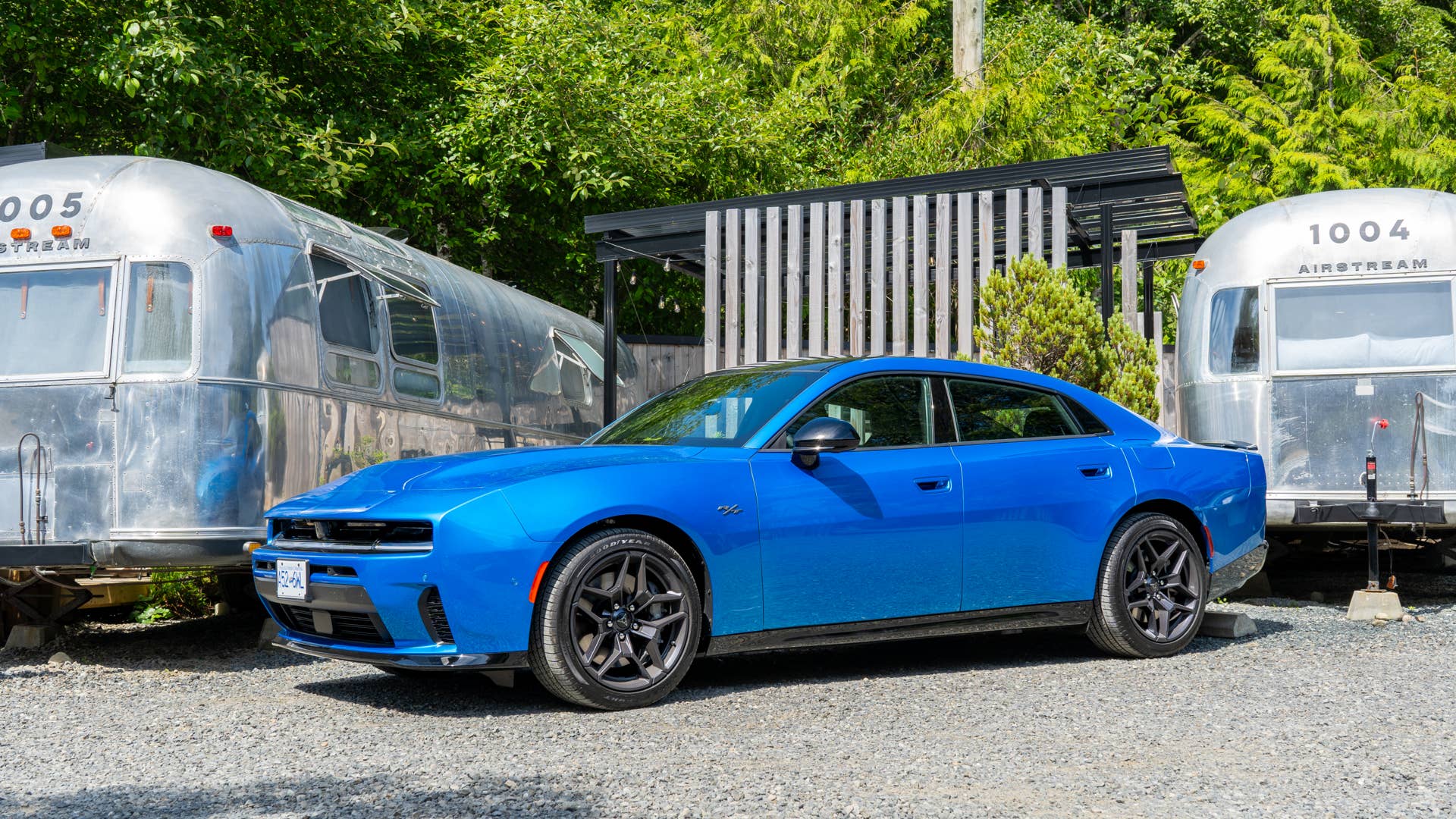
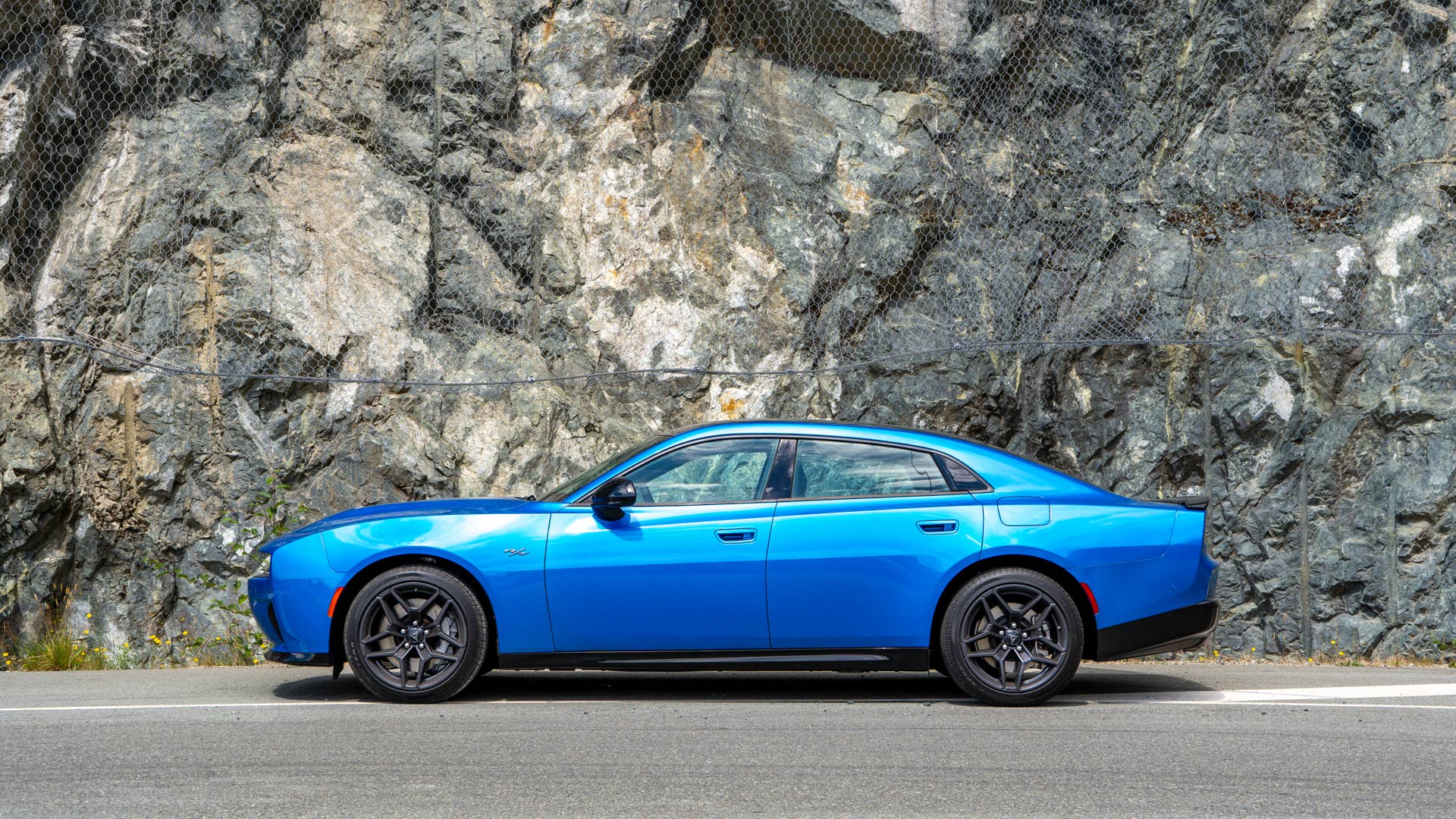
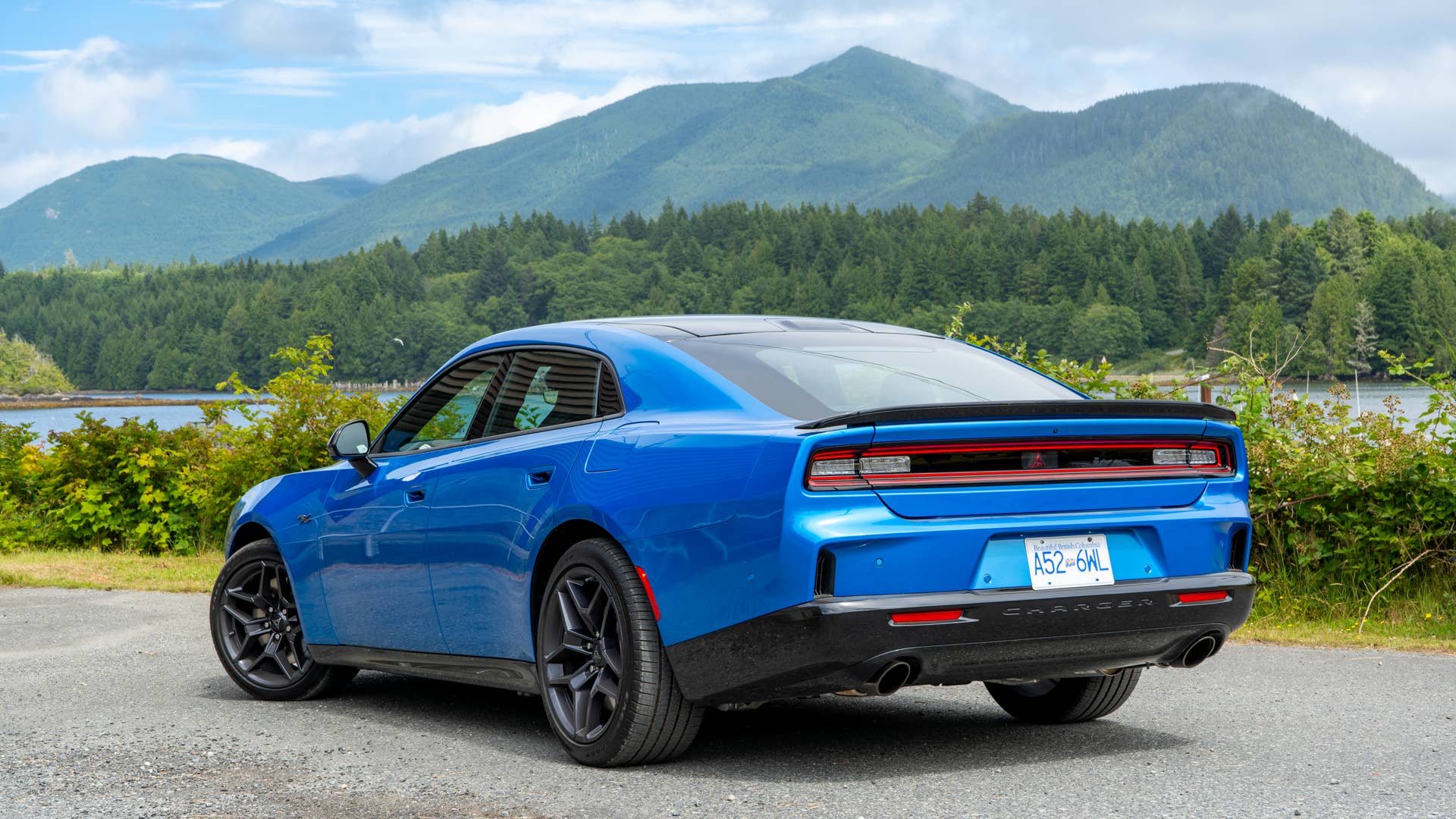
The new Charger looks fantastic in person. Photos don’t fully capture how much presence it has in the flesh. Next to normal cars, it has serious main-character energy. The Bludicrous paint helps, but so does the shape itself. The side profile might be its best angle, largely because of that long fastback roofline and liftback tailgate.
Much like Christopher Nolan’s The Odyssey, its design is also more historically authentic than some critics give it credit for. The old, ever-so-iconic second-generation Charger was never a traditional sedan with a stubby trunk. It had a long, sweeping roofline and a confident sense of drama. This new four-door fastback taps into that energy far better than a conventional three-box sedan would have, and even better still, at least in my opinion, than its predecessor.
Cole Attisha
The subtle black one-piece performance spoiler does a lot of work visually, too, and helps justify the R/T badging from a design standpoint. The whole thing could perhaps use more distinctive cues to better differentiate the gas model from the Daytona EV, maybe through more obvious exhaust details or additional front-bumper openings, but overall, I think the mistaken-electric identity comes down more to the model’s poor first impression than the design itself. Dodge launched this generation as an EV first, and that shaped the public’s understanding of the car before the gas version had a chance to impress on its own merits.
Cole Attisha
The Liftback Is Brilliant
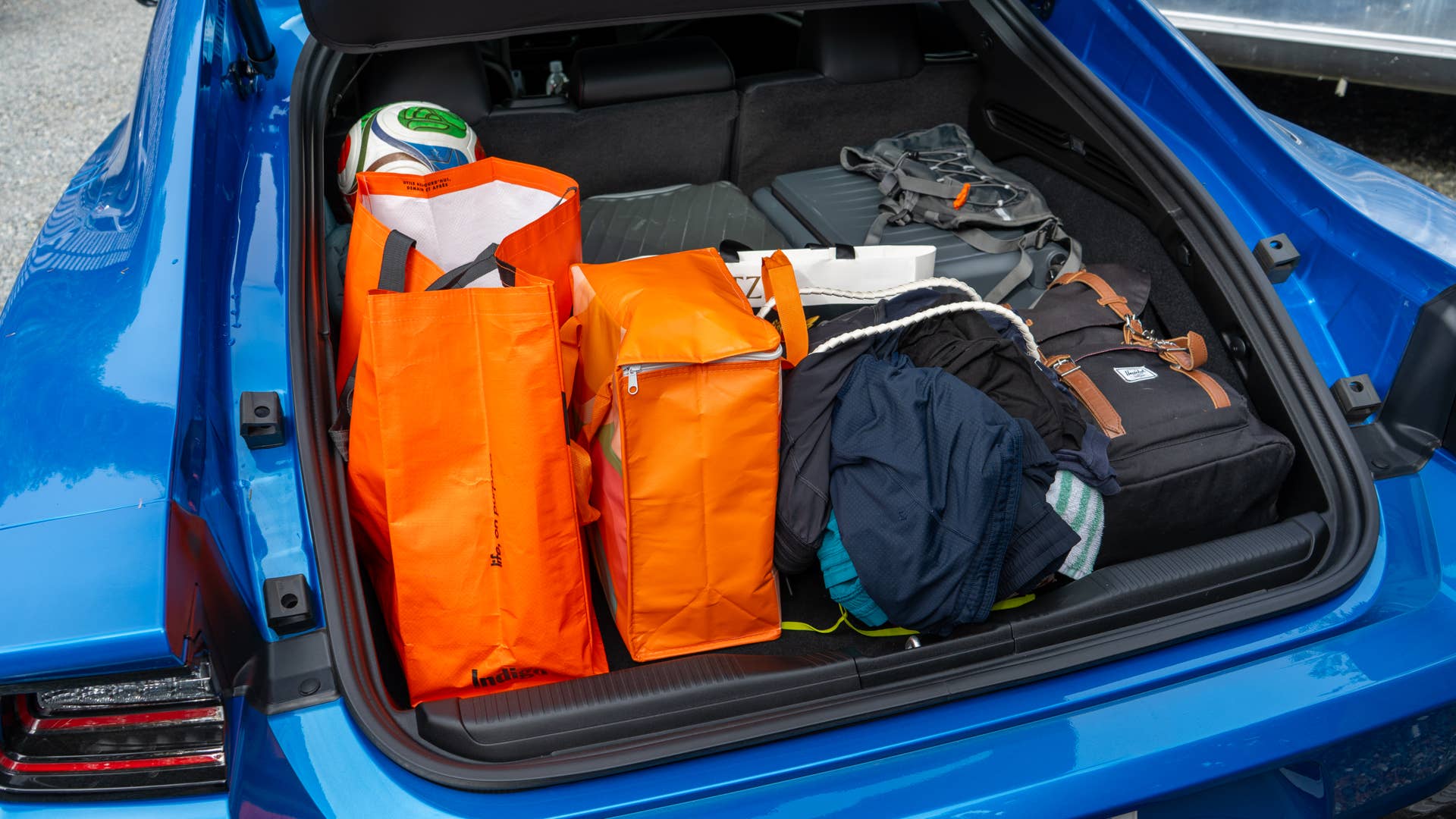
One of my favourite features of the new Charger wasn’t the engine, the colour, or the launch control. It’s the fastback liftgate. Dodge calls it a hidden hatch, and says the new Charger offers 37.4 cubic feet of cargo space with the rear seats folded flat, along with substantially more cargo flexibility than the outgoing model. In practice, it was hugely useful.
The Audi A7-style fastback tailgate made my Vancouver-to-Tofino trip far easier than it could have been. I wasn’t exactly loading kayaks into the back, but for luggage, beach gear, and road-trip clutter, the wide opening and deep cargo area were a major advantage. It gave the Charger a level of real-world practicality the old sedan can’t quite match. It also helps the car’s identity tremendously. The new Charger isn’t just a muscle car desperately trying to survive in 2026—it’s also a big, fast, usable grand tourer with a hatchback, which makes it unusual in the best way. Annoyingly, I couldn’t close the tailgate using the key button, which feels like a strange oversight on something this expensive. But the space itself is excellent.
Cole Attisha
Cole Attisha
Interior: Better Looking, Still Cheap Feeling
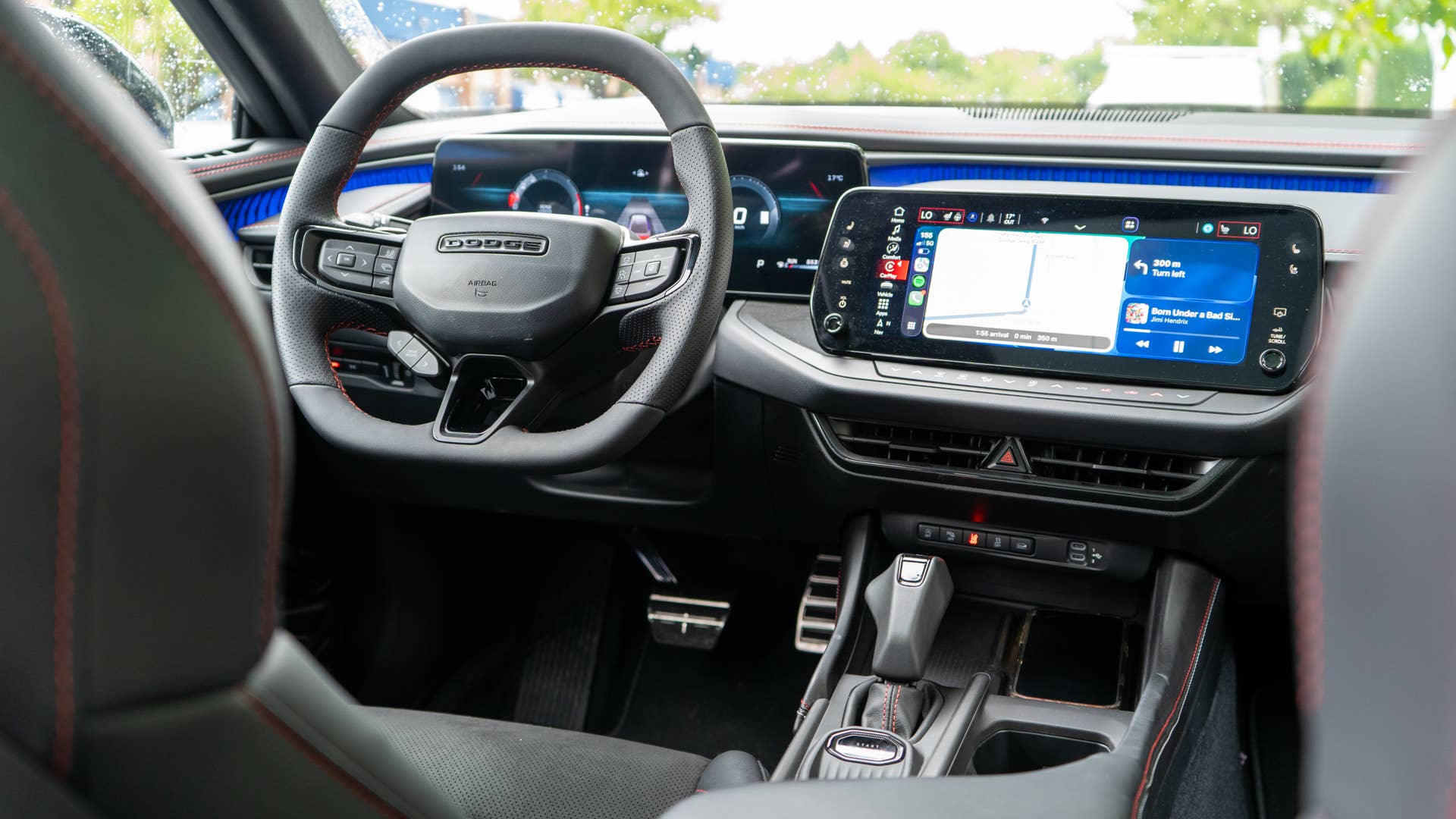
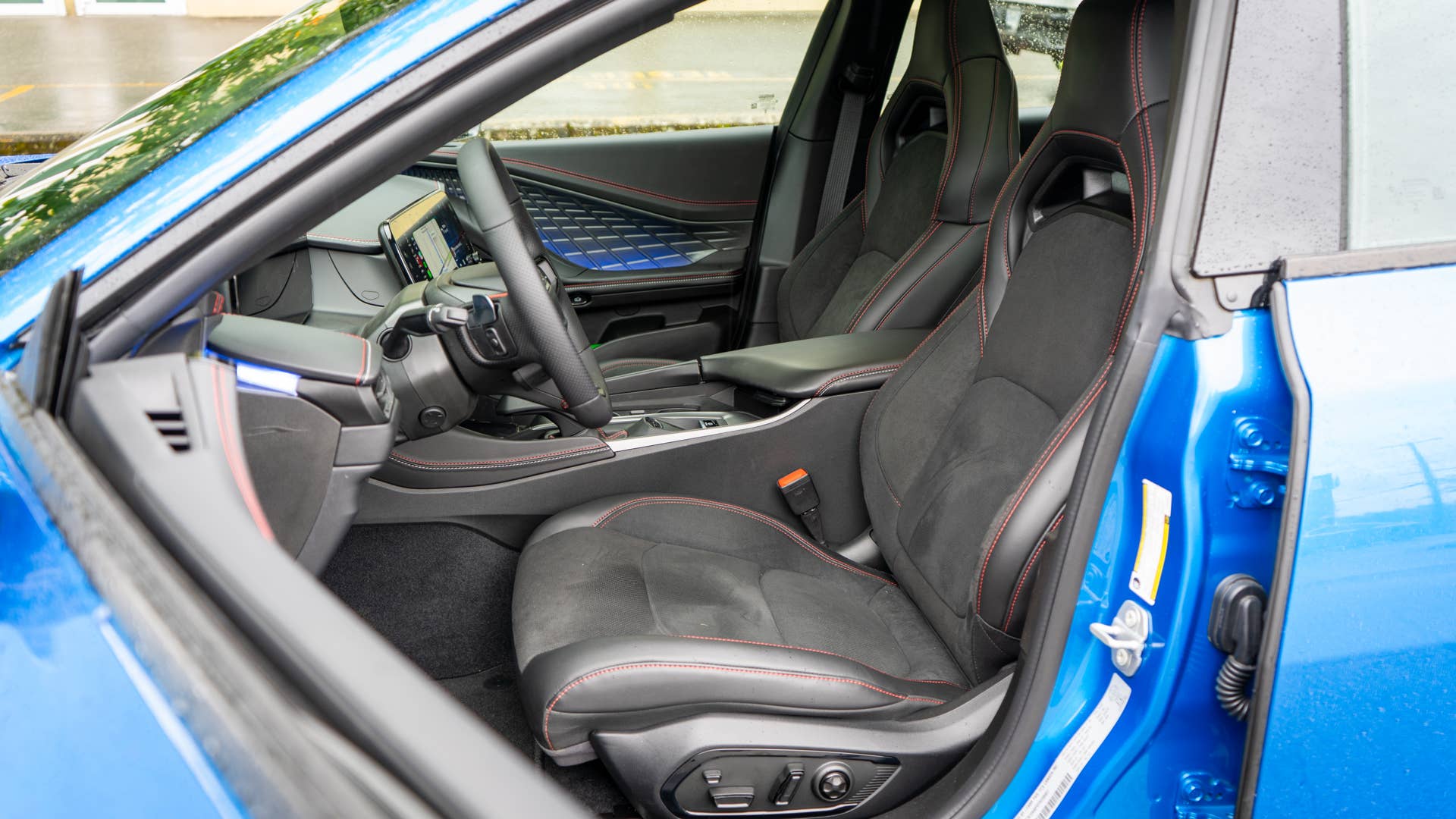
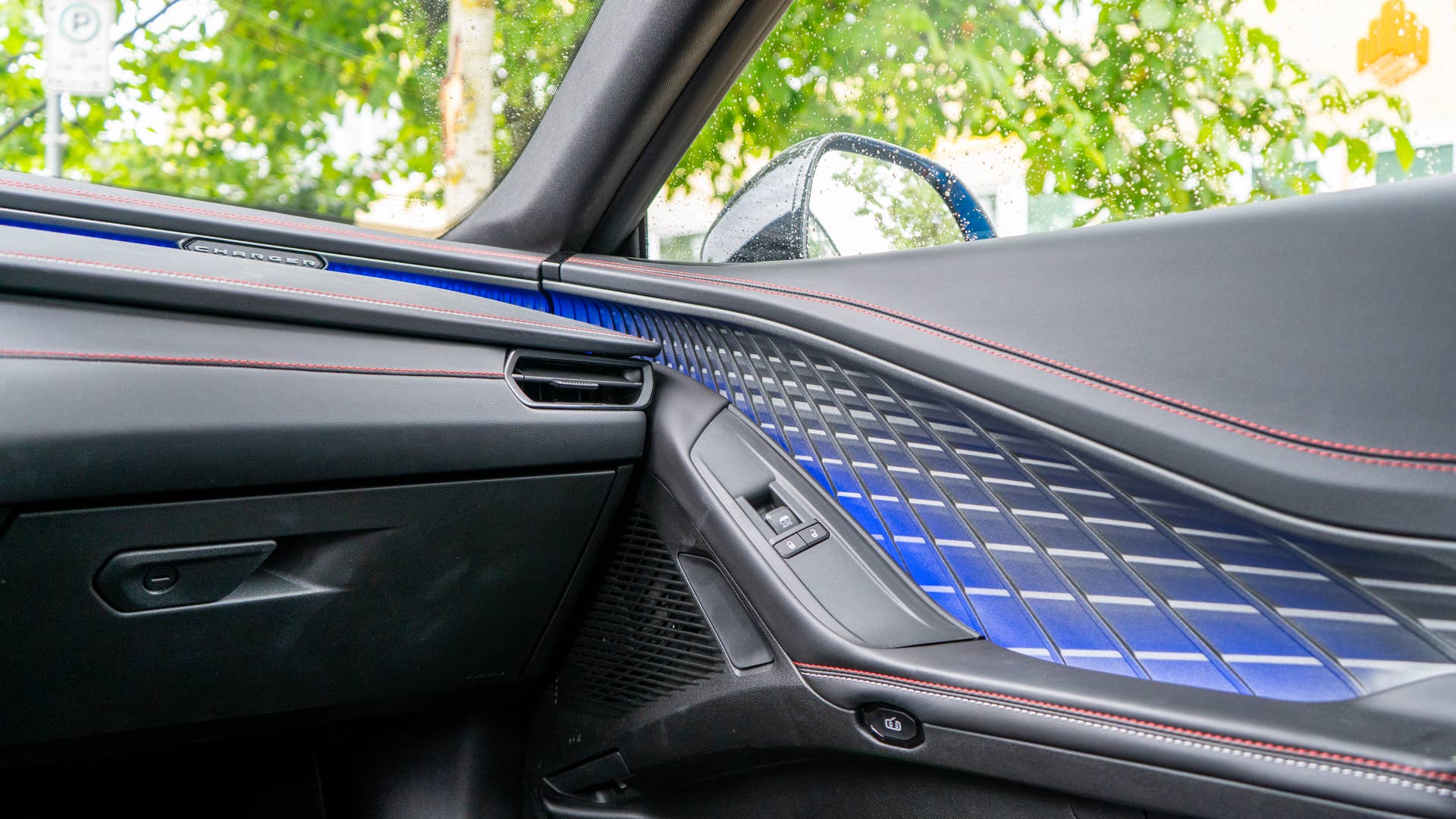
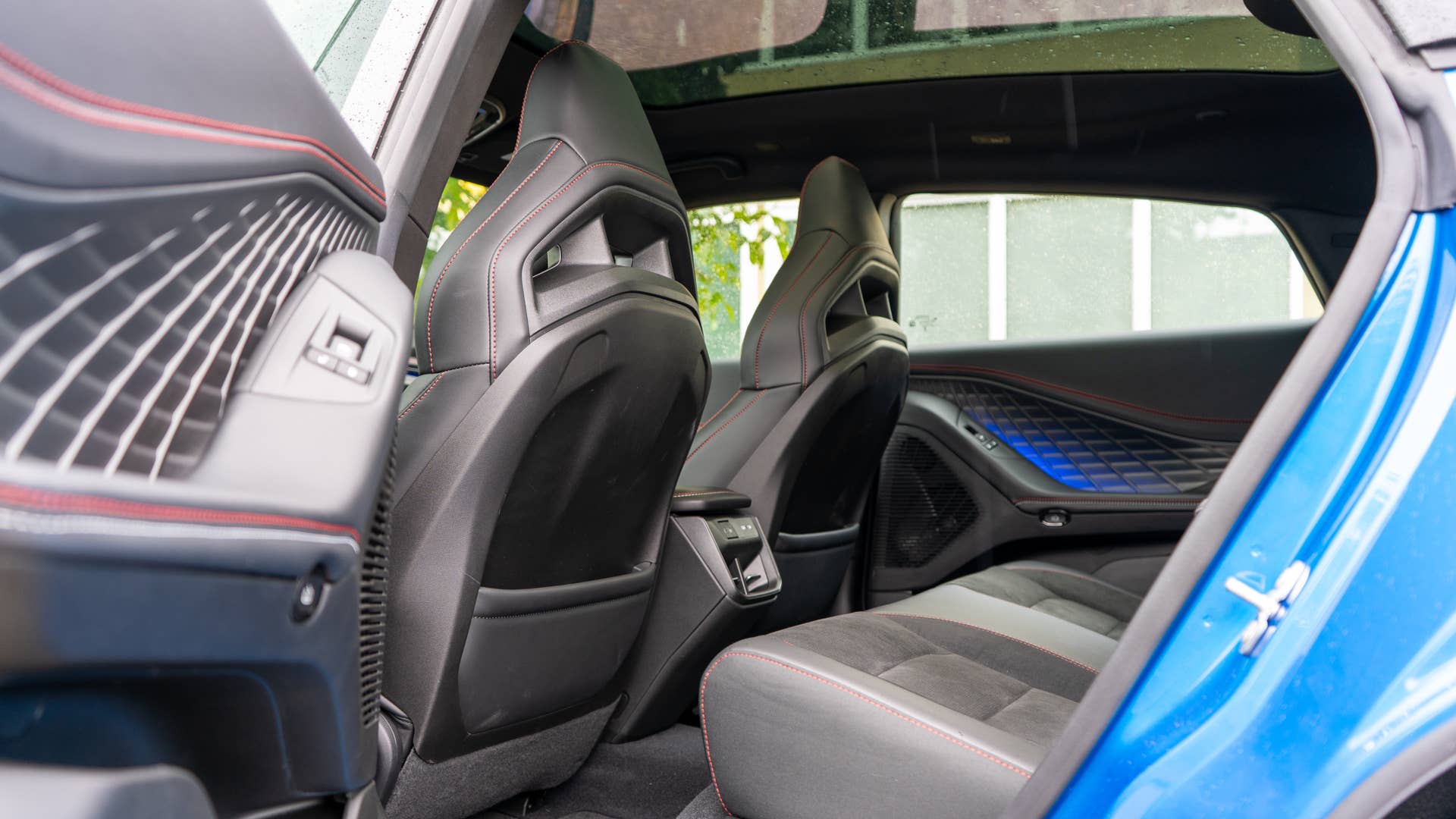
The cabin looks far better than the previous Charger’s. The old car’s interior always felt like a rental counter with a good bit of horsepower. This one is more modern, more dramatic, and more visually interesting, especially with the blue ambient lighting, red stitching, full glass roof, and broad digital displays. The R/T Plus package added a 16-inch driver display, head-up display, heated and ventilated front seats, heated second-row seats, performance pages, and a power hatch. But at $82,160 CAD, the materials don’t feel up to snuff.
The cabin plastics still feel a bit cheap and, for lack of a better word, dinky. The design is a major step forward, but the tactile experience doesn’t match the price tag. The leatherette/suede performance seats looked good and were comfortable at first, but over longer distances, the bucket-like bolstering started to take a toll on my back. Rear-seat space, however, was plentiful, and the full glass roof made the cabin feel airy.
Cole Attisha
Cole Attisha
The infotainment system worked well overall, and Apple CarPlay behaved properly. The 18-speaker Alpine audio system was satisfactory. The head-up display and 16-inch driver display were genuinely useful, but the climate-control touchbar below the screen was annoying to use and would have been better as a simple set of physical buttons. There was also one strange software glitch where the speed unit randomly switched from km/h to mph on startup. It only happened once, and wasn’t catastrophic, but it is the sort of thing that causes concern in a car that already has to work harder than most to earn trust.
Cole Attisha
Verdict: 8.2/10
The 2026 Dodge Charger Sixpack R/T is better than skeptics expect, and also a genuinely good car, but it suffers from an identity crisis. The engine isn’t the problem, no matter what online commenters might otherwise tell you. The twin-turbo straight-six has enough real character to stand on its own, especially with the abysmal fake sound turned off. The car looks incredible, the liftback is genuinely useful, its road-trip manners are strong, the AWD system makes it feel more secure, the cargo area makes it more practical, and the whole thing feels more mature than the previous Charger ever did. But that maturity is complicated.
The old Charger was rebellious—almost antisocial. It appealed to people’s inner children, and that was a huge part of its charm. This one appeals more to people’s grown-up appetites. The new Charger is like a cheeseburger packed with a few too many vegetables—it might be better for you, but it’s not the greasy patty melt you really wanted deep down. It’s a large, hefty, modern sport sedan with a turbo straight-six—almost like a BMW or Audi alternative for buyers who want size, drama, and power without stepping into a luxury badge. That all makes it a better daily driver, but it doesn’t necessarily make for a better Dodge Charger.
Unlike the fully electric Daytona Scat Pack I tested, I would still recommend this one for the right buyer: someone who appreciates the childish appeal of the Charger nameplate but wants something more mature, more usable, and more road-trip friendly. Maybe the BMW enthusiast who needs a large sedan with a turbocharged straight-six but can’t justify a loaded 5 Series. Maybe the Dodge loyalist who is open-minded enough to admit a good engine doesn’t need eight cylinders. But anyone who insists a muscle car must have a V8 will struggle with it. So will anyone who hates driving large cars in tight city streets.
Its biggest strengths are design, presence, and character. Its biggest flaw isn’t really the engine, the interior, or even the size. It is Dodge’s insecurity about what the car is. The fake sound, the EV-first launch and the broader confusion around the Charger lineup all make the Sixpack feel like the unloved child of the family before people have even driven it, and I think that’s honestly a shame. Because after a week with it, including a multi-day road trip to Tofino and back, I kept dreaming about the colour, the shape, the sound, and how good it felt to walk up to it every morning. I didn’t miss the V8 as much as I thought I would—Dodge just needs to stop acting as if I should.
Autoblog aims to feature only the best products and services. If you buy something via one of our links, we may earn a commission.
About the author

Cole Attisha
Staff Writer, Autoblog